
Opinion & Analysis
Starting a wedge business? I can help with that


Let’s say you have temporarily abandoned your plan to introduce a full set of woods and irons, but your passion to be in the golf equipment business still burns. In desperation, you contact me to help with your wedge business and pay my upfront fee of a dozen low compression golf balls (you know, the ones designed for swing speeds that are barely moving). With the mutual understanding that you are definitely going forward, I take a few days and devise a plan.
Since you told me the golf balls had to wait a few weeks while your credit card balance dropped, it’s fair to say that unless a benefactor appears this will be a shoestring effort and I should advise accordingly. In the old days, I used statistical analysis on the cause and effect of ball flight. I determined that golf clubs are used in separate and distinct environments — namely ball on tee, ball on ground (including rough), ball in sand and ball on green. This may sound simplistic, but this type of analysis wasn’t the norm when I started on my own 27 years ago (or 40 years ago when I was hanging out with Dave Pelz). For example, fairway woods used to look like mini drivers and were not designed with a “ball on fairway” mentality save increased lofts.
First a bit of good news. Every currently significant golf club company (except Nike) had one club that got market attention and grew from there.
- Adams and the Tight Lies
- Callaway and the Big Bertha
- Cleveland and its wedges
- Cobra and the Baffler
- Ping and the Anser putter
- TaylorMade and metal woods
- Titleist and the Bulls Eye putter
With a bit of a stretch, I could also point to Mizuno and irons and also Wilson Staff and irons, but Wilson is not a major player today. I include this bit of trivia to show that starting with one product doesn’t restrict a company from future growth.
The point is that if you become significant with a wedge it could open the door to other products, but first things first. As I said, we have ball on ground, ball in rough and ball in sand as three completely different design environments for wedges. Given our cost effective approach, ball on ground and ball in rough doesn’t fit. It’s not that you can’t make a great wedge; it’s the issue of marketing. There are dozens of wedge companies out there and they all have good designs and strong marketing stories. You are just starting and need the best chance of getting a clear message to the hearts and minds of millions of golfers.
In the literature you sent me, you had a design for a nice looking wedge and its appeal is the use of a soft metal which, in turn, produces a great feel and sense of control at impact. I don’t mean to belittle your effort but what you have done applies to maybe 5 percent of golfers — some of whom are given wedges as a promotional effort. Further, there is no significant relationship between soft metals and feel.
If you want to store this away, differences in feel for more than 98 percent of the golfing population are actually the brain reacting to sound. Put earplugs in, go to the range and test for yourself. The other 1+ percent are tour professionals, and I gained great respect for their sense of feel and never tried the sound blocking experiment with them. Ping has certainly been successful with golfers of every level, and I remember back when their clubs were supposed to be “too hard.” Turns out, they were very good!
So, with all this background my advice is to concentrate on one club (actually two, as you’ll see), the sand wedge.
We will call the sand wedge the “Beauty” — actually the “Beauty-1” and “Beauty-2.” If that name causes nausea, it’s your nickel. Finding a name for a golf club that isn’t being used or isn’t registered in some attorney’s office is a major project. You would never know unless you become successful. I picked “Beauty” because it’s so off the wall there is a chance that no one uses it, but I strongly advise you spend the money and get that name (or your name) verified.
The design of a sand wedge is all about dynamic bounce, which is the relationship between the bounce angle, sole width, face loft and type of sand. I’ll let you do the final design, but I suggest you research underslung head designs. Having the hosel somewhat removed addresses the shank, the bane of the average golfer.
- Beauty-1 has a very wide sole with some bounce for soft, fluffy sand.
- Beauty-2 is slightly narrower, but it still has a wide sole and essentially no bounce for hard-packed sand.
You said you have access to a machine shop where you can get samples made and you can test in different sands.
This is NOT a project for good players — this wedge is for those who approach sand traps with trepidation hoping to get out in one swing. Why? It’s simple: by far the biggest market. Your website should be technically accurate and enjoyable while showing both wedges’ designs and the types of sand that work best for each. It will explain “dynamic bounce” in detail, which will help you get to the heart of the average golfer and sell product. I will review the site when finished as part of my dozen balls payment. If I might intrude on your design, take a long look at the concept of “underslung.” It will certainly be a different look and maybe provide the claim of being shankless.
As for shafts, let’s go with one flex (stiff) and one type (steel). Why? Cost, and steel works fine. The challenge will be a controlled inventory after you fully test the machined heads to verify your concept. “Make them in China” is the easy answer, but you will need some leads on trustworthy suppliers and you will pay for tooling, initial samples and an agreement on an initial order. Make it as small as possible to save money, but small can easily be 1000 heads, a minor production run. I think I can dig up a couple of Asian sources when the time comes.
Setup your website and try to get some wedges in the hands of known instructors with an arrangement resulting in you getting quotes. Set a competitive price and sell direct over the net. I’ve just given you enough to do that. I’ll long run out of balls before you have more questions.




This past Monday, I played in the U.S. Amateur local qualifier at Rock Creek Country Club in Portland, Oregon. A full tee sheet from 7:30 a.m. to 1:55 p.m., the top 11 scores would make it to the U.S. Amateur final qualifying.
I teed off at 10:48 a.m.. With the 7:30 am tee time, you can get a feel for the leaders’ pace, and they were off and running on the challenging setup at Rock Creek.
View this post on Instagram
Getting to the highlight of the round on the par five 17th, a drive up the left side and 212 yards left to the front hole location. I took out a 5-iron with plans of middle of the green. The ball ended up 8 feet left of the hole, pin high. A slight downhill putt dropped in for an eagle 3 on the 17th. With the cut line looking to be anywhere from -2 to even par. This was the boost I had been waiting for all day.
With making par from the trees on 18, it was time to wait for a potential playoff with a posted score of one under par 71.
Three hours later, it was playoff time. 8 players for 6 spots. I made par on the playoff hole, which was good enough to advance to the U.S. Amateur final qualifying in July. USGA qualifiers sure deliver on all of the emotions in golf!
Club Junkie
Building my 2026 gamer WITB: Ranking the contenders and new putter projects – Club Junkie Podcast

The annual What’s In The Bag build is underway, and on this episode of Club Junkie, Brian breaks down the clubs currently leading the race for a spot in his 2026 gamer setup. From drivers and fairway woods to irons, wedges, and shafts, he ranks the equipment that’s performing best and explains what’s separating the front runners from the rest of the field.
Brian also heads into the workshop to discuss several putter projects currently on the bench. From head options and shaft choices to build ideas and testing plans, he shares what he’s working on and which putters could become serious contenders for the bag this season.
If you’re a gear junkie who loves equipment testing, club building, and the never-ending pursuit of the perfect setup, this episode is for you.
Follow Club Junkie:
Instagram: @clubjunkiepod
TikTok: @clubjunkiepod
Threads: @clubjunkiepod
X: @ClubJunkiePod
Club Junkie
Tour Edge Exotics mini driver review + TaylorMade Spider ZT Max first look – Club Junkie

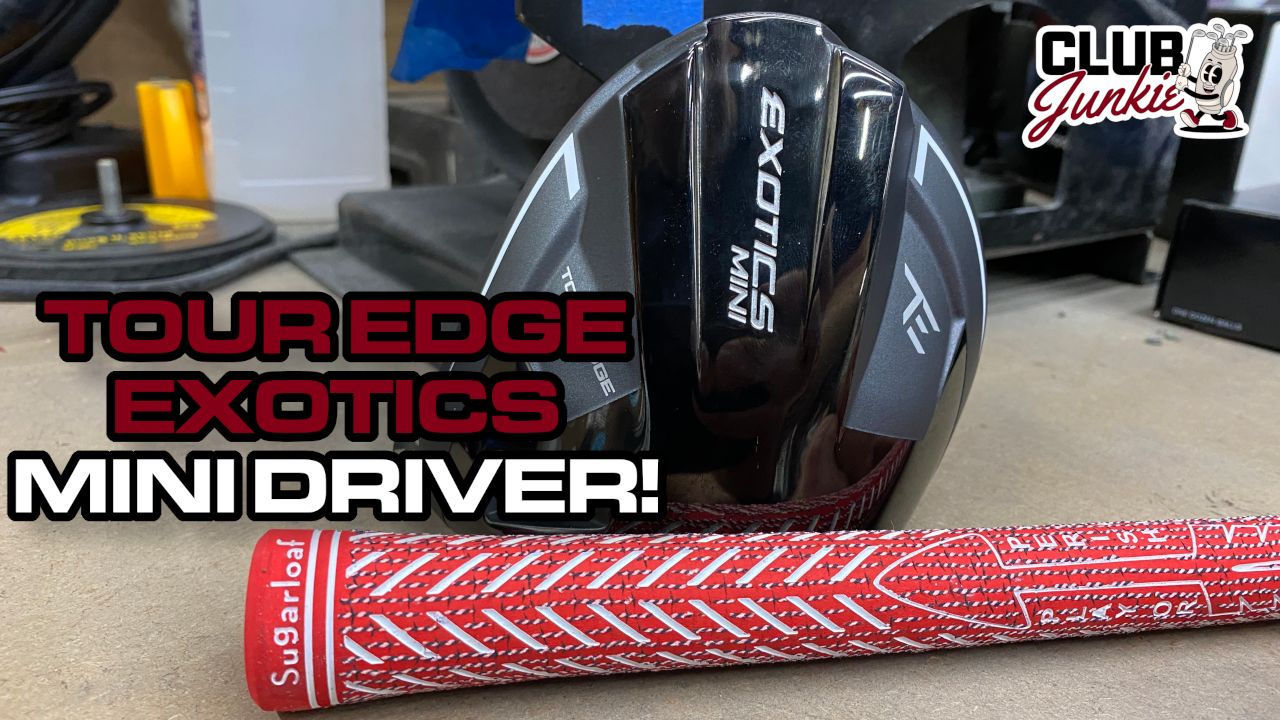
On this episode of Club Junkie, I put the new Tour Edge Exotics Mini Driver to the test and break down the performance, forgiveness, distance, and where it fits compared to a traditional driver or strong fairway wood. If you have been curious about adding a mini driver to the bag, this one is worth a look.
I also dive into the new TaylorMade Spider ZT Max putter that was recently spotted and discuss the growing zero torque putter trend. Plus, there is a closer look at the new Project X Titan Yellow shaft showing up on the PGA Tour and what makes it different from other profiles currently out there.

What’s the story behind Webb Simpson’s custom-stamped irons?

Memorial Tournament Tour Report: Rory McIlroy, Cameron Young switch up drivers, and more

Cadillac Championship Tour Report: Spieth’s sizable changes, McLaren Golf launches, and more

Russell Henley’s winning WITB: 2026 Charles Schwab Challenge

Kristoffer Reitan’s winning WITB: 2026 Truist Championship

Best irons 2026: Best irons overall, most forgiving irons, and more

J.T. Poston’s winning WITB: 2026 Memorial Tournament

Aaron Rai’s winning WITB: 2026 PGA Championship

Cameron Young’s winning WITB: 2026 Cadillac Championship

Details on Jason Day’s latest prototype Avoda iron setup


Christiaan Maas WITB 2026 (June)
Driver: TaylorMade Qi4D LS (8 degrees) Shaft: Fujikura Ventus TR Blue 6 X 3-wood: TaylorMade Qi10 (15 degrees) Shaft: Fujikura Ventus Black...


Ryan Palmer WITB 2026 (June)
Driver: Callaway Quantum Triple Diamond (9 degrees) Shaft: Project X HZRDUS Smoke Blue RDX 60 TX 3-wood: TaylorMade Qi10 (15 degrees) Shaft:...


Bud Cauley WITB 2026 (June)
Bud Cauley had >14 clubs in his bag when photographed prior to the Memorial Tournament. Driver: Titleist GTS2 (8 degrees) Shaft: Fujikura...


Hannah Green WITB 2026 (June)
Driver: Titleist GTS3 (10 degrees, D4 SureFit setting) Shaft: Mitsubishi Chemical Diamana RB 53 S 3-wood: Titleist GT3 (15 degrees,...
-
 Equipment6 days ago
Memorial Tournament Tour Report: Rory McIlroy, Cameron Young switch up drivers, and more
-
 News2 weeks ago
Russell Henley’s winning WITB: 2026 Charles Schwab Challenge
-
 Equipment3 days ago
Best irons 2026: Best irons overall, most forgiving irons, and more
-
 Whats in the Bag4 days ago
J.T. Poston’s winning WITB: 2026 Memorial Tournament
-
 Equipment1 week ago
Details on Jason Day’s latest prototype Avoda iron setup
-

 Equipment3 weeks ago
CJ Cup Byron Nelson Tour Report: Koepka and Kim’s newest putters finally get hot
-

 News2 weeks ago
Charles Schwab Challenge Tour Report: MacIntyre, Åberg and Spaun all switch putters, TaylorMade launches new Spider
-

 Equipment2 weeks ago
Details on J.J. Spaun’s surprise putter switch


Andy W
Dec 15, 2014 at 12:46 pm
Barney,
Love your “breakout” club listing as I call it. Same list I have, but did not know the Bullseye putter was “it” for Titliest.
Just sent to your email my job application to Taylormade who needs to grab me and my breakout putter I have developed “overnight” for 10 years. Well, it would have been overnight if could have avoided a 10-year battle with the USGA, which finally gave approval last year. LOL, we do this because it is fun and it’s our passion, right?
Read your WOW book three times, every word, once out-loud to my wife.
Asuume you now have some stock in TMag/Addidus, right?
Thanks, and you are an inspiration.
Andy
Roger in raining NZ
Dec 13, 2014 at 12:42 pm
Barney, love the pairings to Fame!
Cally Big Bertha, Adams Tight Lies,Cleveland 588
And i have renewed confidence in my Ping S58 made from Hard Non Soft Cast Metal !! A priceless comment, Thanks!!
You Beauty!
Straightdriver235
Dec 11, 2014 at 8:35 pm
Here’s my idea, forget the wedges, we have too many of them, and only a few are decent. As a Marxist/critical/meritocratic golfer I desire to upset the status quo. I’m an older guy who walks for the health and enjoyment. I don’t think I am anywhere near alone on that. There is a market for what I am about to describe, a market that could take off. Frankly, 14 clubs might suit your company and the present state of the golf industry which wants to sell a lot of clubs, but after giving it quite a bit of analysis I believe less would be more. I believe sets need to be made smaller, requiring more skill, and bigger gaps between irons; also making the game more healthy and returning it to the intent that it be a walking game. I have an ultralite bag and carry only 5 balls, etc. but 14 clubs is way too heavy for this 54 year old frame to lug… it was always too heavy even though I was once young and strapping… as I have said before, elsewhere, this is more meritocratic–the ability of young players to carry their own clubs and play well is vastly underrated in the development of excellent players and future stars. Altering the degrees of existing irons is not sufficient as it messes with standard bounces. Instead of having a standard set with Lob/SW-58*, Gap-52*, PW-46*, 9 iron-42*, 8 iron-38*, 7 iron-34*, 6 iron-30*, 5 iron-26*, 4 iron-23*, hybrid-21*, hybrid-18*, 3 wood-14*, driver-9*, putter=14 clubs. You can see way to many WITBs where there are one or two clubs in the top players bag with almost no difference between the distances they hit. Simultaneously we need to advocate to reduce the club limit for tournament play, but even if that doesn’t work there are enough people who would like this. Someone, myself, needs to start manufacturing something along these lines–engineered for serious players… SW-55.5; Gap-50.5; PW/9 iron-45*; 9/8 iron-40*; 8/7 iron-35*; 6 iron-30*; 5/4 iron-24.5*; hyrbrid 19.5*; Driver/3 wood–13* with fairly large head, but no large that it can’t be hit off the ground, with the putter that gets you 10 clubs…. I’m seeing an alternate version with slightly wider spacing for 9 clubs. It is amazingly fun to carry your own bag with 9 or 10 clubs, and not so fun for 14. The cost of clubs goes down, people start walking, carrying their own clubs, their kids can caddy for them, instead of being surrounded by obese, arrogant, costly and slow we can have healthy, meritocratic, affordable and quick.
Play would be a lot faster due to less need for deliberation, golfers would develop more skill in the ability to work the ball, hit partial shots.
To brag about my system… I do this already, but am not satisfied with the grinds on the clubs…. however, my game has improved from a 4.5 to a 2.3 handicap. I strengthened the PW, and 9 iron one degree, the 8 iron two degrees, dropped the 7 entirely, weakened the 6 one degree, kept the 5 the same, and strengthened the 4 iron one degree. Tonight I had my second hole in one hitting a six iron where the shot would have normally called for a 7. Presently no company makes a small headed driver in the 420 CC range that is very square, and has a higher loft. When they sell the higher loft driver they always want a hook face on it and put a regular shaft in it because they assume you must not be very good if you are playing a high lofted driver… the interchangeable heads are an option.
What’s my point? This could work… the game is messed up as it is, and the business model, starting with homes around the course, golf carts, over-manicured greens, courses that emphasize freakish distance have made the game not palatable.
BOB KNOX
Dec 28, 2014 at 10:47 pm
I have to say a lot of what you write in your article makes sense.
I’m 68 (closer to 69) and I used to walk all the time until my knees and respiratory condition
won’t let me walk and carry any more.
But I like the concept of stronger lofts and less clubs, also which would enable the player to go
to go to a lighter “Sunday” bag as it used to be called to help the player in reducing the load on the back.
Good article, and very interesting. Good concept.
Bob
Stephen Finley
Feb 26, 2018 at 2:19 pm
Yeah, that’s good. Really.
riehlg
Dec 4, 2014 at 2:19 pm
I really think you should get the paperclip from the old MS Office to be saying the title of the article for the picture at the top. “Starting a wedge business? I can help with that!”
Jonny B
Dec 4, 2014 at 9:02 am
There are a lot of fringe companies in the golf equipment industry that seem to be concentrating on doing one thing – a driver, wedge, ball, etc. Look at Krank, Bombtech, Kick X, etc. I’ve never tried any of their products though.
Remember the Warrior hybrid club that the company was giving away for free with all those commercials? I wonder what happened to them. Just goes to show that even “free” products can’t generate enough buzz to make a successful equipment company. It’s a tough industry with some major barriers to entry.
Jonny B
Dec 4, 2014 at 9:05 am
As far as wedges go, there is SCOR, Hopkins, and now even Cleveland looks to be moving away from irons and woods and concentrating only on wedges.
I love the point made about how “feel” is really only a product of sound. I’m going to try the ear plugs experiment at the range next time. I can see that being that case with drivers/woods, but I’m pretty sure that there’s more too it than sound, because I know I have hit some harsh feeling irons.
Justin
Dec 16, 2014 at 7:05 pm
Try it. You’ll be surprised. I got the idea from Ralph Maltby’s “11 Steps” fitting manual. Totally killed the “forged/carbon steel is softer than cast/stainless steel” myth for me.
Sully
Dec 4, 2014 at 2:58 pm
Jonny B,
Thanks for throwing us in the mix. (BombTech). A fringe company is where I want to be. Because through our performance products and direct to consumer approach you have heard of us somehow, but the average Joe hasn’t and that’s the point. I could spend millions and sponsor pros in order to get exposure to golfers and non-golfers, but the industry has changed. Just like the craft brew industry. Yes beer…
Small companies with high quality ingredients or materials – aka our 2 piece production process can survive (and dual cavity design)….Well..Only if you product that performs…and you still will face challenges. I am very fortunate to have had so much success but it is because of our story, expensive production process and press we have received (Entrepreneur Magazine, PGA Tour Radio, Golf Digest…etc.)
I am always looking to learn from our customers and potential customers so if you have any additional insight or just want to talk. Call me (802) 448-2094.
I could say more, but I can’t give away all of our secrets.
Barney – Check your email…
– Sully
“Pull the pin!”
Jafar
Dec 3, 2014 at 4:34 pm
Great article.
Where can you have prototypes made?
I’d like to design a wedge or even a putter, even if it’s just for my own amusement.
Barney Adams
Dec 3, 2014 at 6:17 pm
Ask the guys at Dog Leg Right or Tom Wishon. Remember you are embarking on an expensive hobby
Mike
Dec 9, 2014 at 1:55 pm
I’m not in the golf industry so don’t know about specific issues but I would offer a couple of ideas. There is an internet-based e-machine shop that hobbyists use for example to get obscure car parts made. They even have a web page about putters:
http://www.emachineshop.com/machine-shop/Custom-Golf-Putters/page423.html
Also you could look to a 3D printing company to get your part printed directly in steel. One that I’ve heard of is 3D Systems but there are others. I would guess that you’re looking at a bill around $2500 to print a wedge or putter and there’s no bulk discount with 3D printing so it’s not currently an option for mass-production.
ptjn1201
Dec 3, 2014 at 2:16 pm
Finally, somebody understands that the packed sand many of us face at our local muni needs low to no bounce. Now I hope more people start listening to you
golfiend
Dec 3, 2014 at 1:33 pm
Wedges tend to be replaced quicker than other clubs in the bag. Wedges can also be specialized for different courses and condition. I’m certainly not the only one that play different wedges for different courses. Generally speaking, a low bounce gap wedge and a high bounce sand wedge is adequate for many people including myself when I’m going to an unknown course. Then there is the material. Unless you’re vokey and can make cast wedges like they do and have the marketing power behind it, forged wedges tend to be favored by the enthusiast. But like the restaurant business, it’s not worth the risk. Still I agree that among the clubs we use, it is the entry point with the lowest, albeit still high, barrier.
golfiend
Dec 3, 2014 at 1:36 pm
I’m sure you’re going to write something about the putter because there are many types and people can go through many putters as well … like I have.