
Opinion & Analysis
Are golfers wasting their time icing injuries?

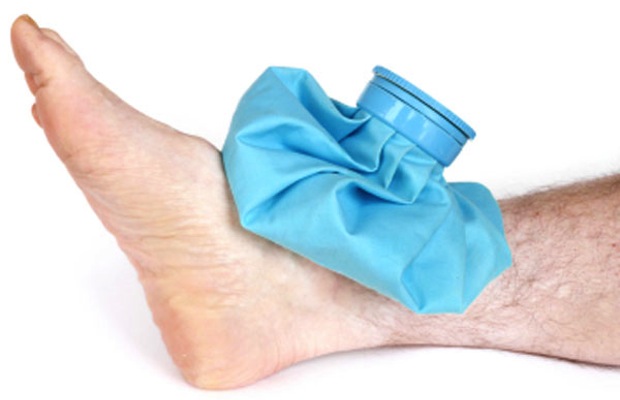
Even in a world of “doctors used to say it was good for you, now they say it’s bad,” this one is a shocker: The doctor who coined the acronym RICE (rest, ice, compression, elevation) in 1978 has decided that the (complete) rest and ice are not beneficial to treating injuries.
Dr. Gabe Mirkin, whose RICE treatment plan has been the standard method of dealing with sports injuries for more than 30 years, recently published a blog post that says, in part:
When I wrote my best-selling Sportsmedicine Book in 1978, I coined the term RICE (Rest, Ice, Compression, Elevation) for the treatment of athletic injuries … Ice has been a standard treatment for injuries and sore muscles because it helps to relieve pain caused by injured tissue. Coaches have used my “RICE” guideline for decades, but now it appears that both ice and complete rest may delay healing, instead of helping.
You can read the entirety of Dr. Mirkin’s post here.
This information is significant and could represent a paradigm shift in the treatment of sports injuries in general and golf-related injuries in particular. Simply, reducing inflammation was previously seen as essential to healing. Now Dr. Mirkin and others view inflammation as vital to the healing process. Certainly, there is a gross parallel here with allowing your body to fight off infection vs. antibiotic overkill. As I am not a doctor, however, I’ll leave it at that.
Returning to the matter at hand, as anti-icing advocate Josh Stone of Stone Athletic Management writes: “A shift in paradigmatic treatment is on the horizon. Exercise is heating up and ice is melting down.” By “exercise,” it seems, Stone means load bearing and rehabilitation (alternated with rest) is the advisable course of action. In another post on his website, Stone gives the example of an athlete with a stress fracture to the leg whose been advised to wear a non-weight bearing boot. Stone’s remedy? “An intricate balance between rest and mechanical loading of bone to obtain optimal healing”
In keeping with this idea: Generally, Dr. Mirkin’s advice following injury is as follows:
- Stop exercising immediately.
- If possible, elevate the injured part to use gravity to help minimize swelling.
- If the injury is limited to muscles or other soft tissue, a doctor, trainer or coach may apply a compression bandage.
- Ice may be applied to reduce pain, however, it’s pointless to apply ice more than 6 hours after injury.
- If the injury is severe, follow your doctor’s advice on rehabilitation.
- If the injury is minor, you can usually begin rehabilitation the next day.
The entirety of the new direction of treatment following Dr. Mirkin’s study may only be apparent only to the most progressive doctors, kinesiologists, trainers and exercise physiologists. It is clear, however, that if Mirkin’s current suggestions catch on in the same way as his directions in 1978 did, your rehab and treatment for injury (golf or otherwise) won’t involve anything that lives in the freezer.



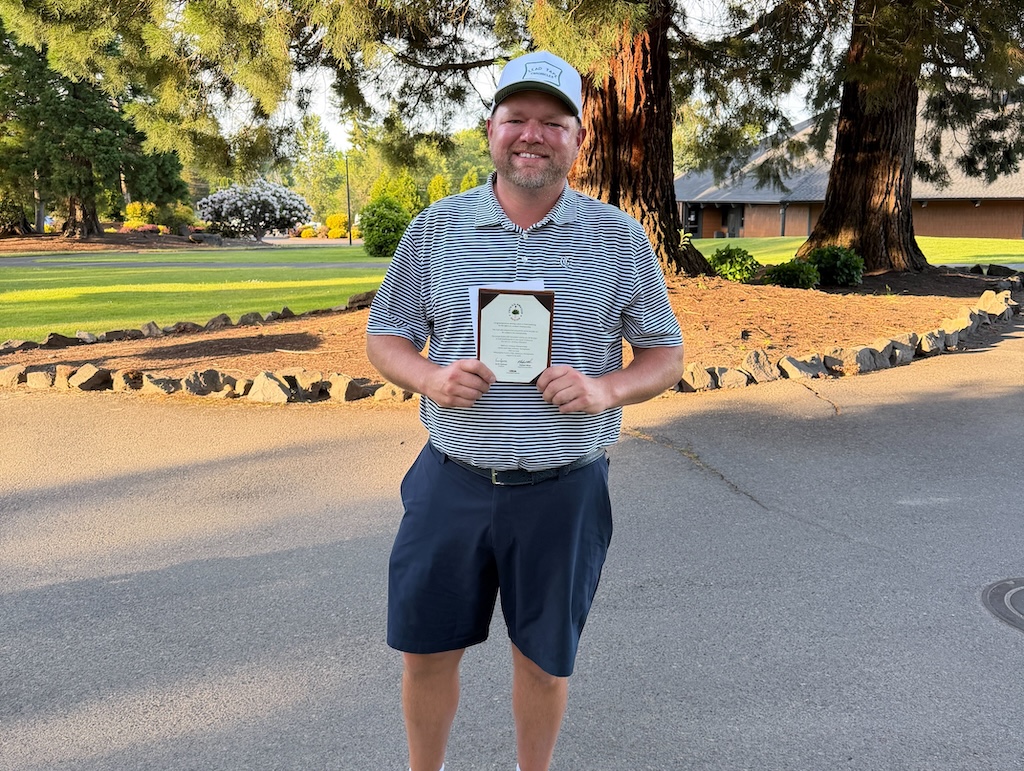
This past Monday, I played in the U.S. Amateur local qualifier at Rock Creek Country Club in Portland, Oregon. A full tee sheet from 7:30 a.m. to 1:55 p.m., the top 11 scores would make it to the U.S. Amateur final qualifying.
I teed off at 10:48 a.m.. With the 7:30 am tee time, you can get a feel for the leaders’ pace, and they were off and running on the challenging setup at Rock Creek.
View this post on Instagram
Getting to the highlight of the round on the par five 17th, a drive up the left side and 212 yards left to the front hole location. I took out a 5-iron with plans of middle of the green. The ball ended up 8 feet left of the hole, pin high. A slight downhill putt dropped in for an eagle 3 on the 17th. With the cut line looking to be anywhere from -2 to even par. This was the boost I had been waiting for all day.
With making par from the trees on 18, it was time to wait for a potential playoff with a posted score of one under par 71.
Three hours later, it was playoff time. 8 players for 6 spots. I made par on the playoff hole, which was good enough to advance to the U.S. Amateur final qualifying in July. USGA qualifiers sure deliver on all of the emotions in golf!
Club Junkie
Building my 2026 gamer WITB: Ranking the contenders and new putter projects – Club Junkie Podcast

The annual What’s In The Bag build is underway, and on this episode of Club Junkie, Brian breaks down the clubs currently leading the race for a spot in his 2026 gamer setup. From drivers and fairway woods to irons, wedges, and shafts, he ranks the equipment that’s performing best and explains what’s separating the front runners from the rest of the field.
Brian also heads into the workshop to discuss several putter projects currently on the bench. From head options and shaft choices to build ideas and testing plans, he shares what he’s working on and which putters could become serious contenders for the bag this season.
If you’re a gear junkie who loves equipment testing, club building, and the never-ending pursuit of the perfect setup, this episode is for you.
Follow Club Junkie:
Instagram: @clubjunkiepod
TikTok: @clubjunkiepod
Threads: @clubjunkiepod
X: @ClubJunkiePod
Club Junkie
Tour Edge Exotics mini driver review + TaylorMade Spider ZT Max first look – Club Junkie

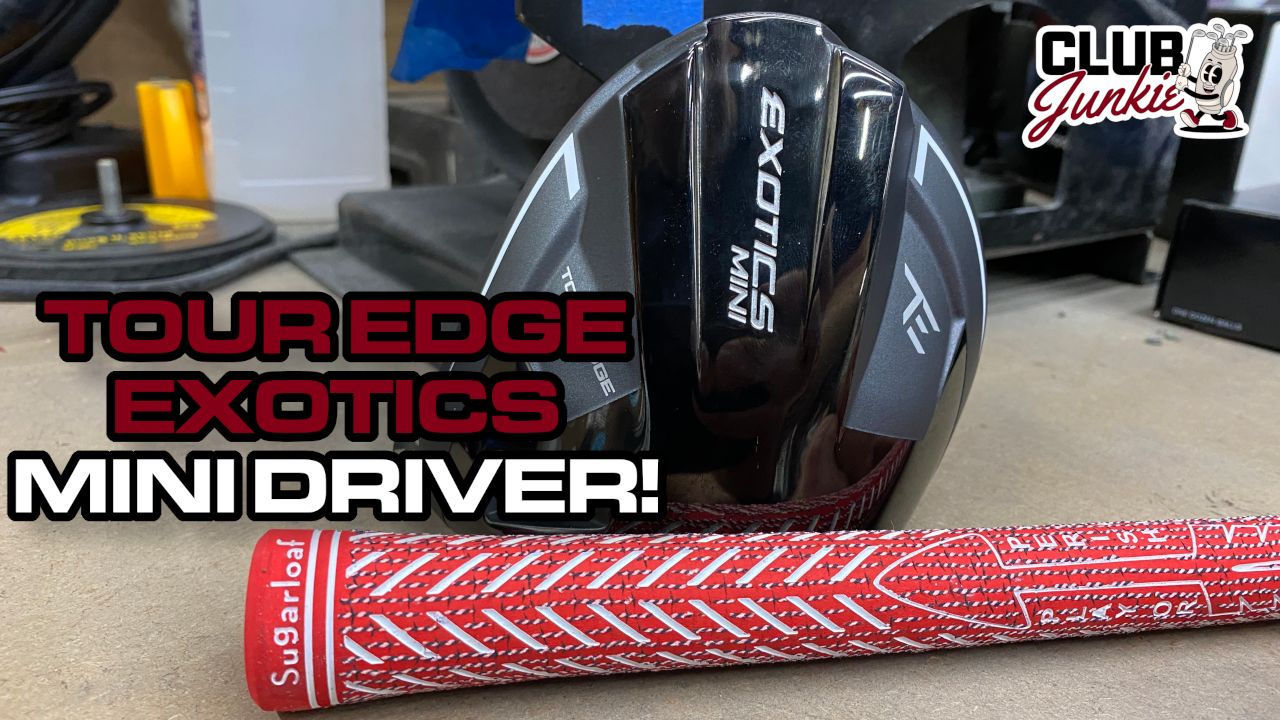
On this episode of Club Junkie, I put the new Tour Edge Exotics Mini Driver to the test and break down the performance, forgiveness, distance, and where it fits compared to a traditional driver or strong fairway wood. If you have been curious about adding a mini driver to the bag, this one is worth a look.
I also dive into the new TaylorMade Spider ZT Max putter that was recently spotted and discuss the growing zero torque putter trend. Plus, there is a closer look at the new Project X Titan Yellow shaft showing up on the PGA Tour and what makes it different from other profiles currently out there.

What’s the story behind Webb Simpson’s custom-stamped irons?

Memorial Tournament Tour Report: Rory McIlroy, Cameron Young switch up drivers, and more

Cadillac Championship Tour Report: Spieth’s sizable changes, McLaren Golf launches, and more

Russell Henley’s winning WITB: 2026 Charles Schwab Challenge

Kristoffer Reitan’s winning WITB: 2026 Truist Championship

Best irons 2026: Best irons overall, most forgiving irons, and more

J.T. Poston’s winning WITB: 2026 Memorial Tournament

Aaron Rai’s winning WITB: 2026 PGA Championship

Cameron Young’s winning WITB: 2026 Cadillac Championship

Details on Jason Day’s latest prototype Avoda iron setup


Ryan Palmer WITB 2026 (June)
Driver: Callaway Quantum Triple Diamond (9 degrees) Shaft: Project X HZRDUS Smoke Blue RDX 60 TX 3-wood: TaylorMade Qi10 (15 degrees) Shaft:...


Bud Cauley WITB 2026 (June)
Bud Cauley had >14 clubs in his bag when photographed prior to the Memorial Tournament. Driver: Titleist GTS2 (8 degrees) Shaft: Fujikura...


Hannah Green WITB 2026 (June)
Driver: Titleist GTS3 (10 degrees, D4 SureFit setting) Shaft: Mitsubishi Chemical Diamana RB 53 S 3-wood: Titleist GT3 (15 degrees,...


Asterisk Talley WITB 2026 (June)
Driver: TaylorMade Qi4D (9 degrees) Shaft: Fujikura Ventus Blue 6 S 3-wood: TaylorMade Qi4D (16.5 degrees) Shaft: Fujikura Ventus Blue...
-
 Equipment6 days ago
Memorial Tournament Tour Report: Rory McIlroy, Cameron Young switch up drivers, and more
-
 News2 weeks ago
Russell Henley’s winning WITB: 2026 Charles Schwab Challenge
-
 Equipment3 days ago
Best irons 2026: Best irons overall, most forgiving irons, and more
-
 Whats in the Bag4 days ago
J.T. Poston’s winning WITB: 2026 Memorial Tournament
-
 Equipment1 week ago
Details on Jason Day’s latest prototype Avoda iron setup
-

 Equipment3 weeks ago
CJ Cup Byron Nelson Tour Report: Koepka and Kim’s newest putters finally get hot
-

 News2 weeks ago
Charles Schwab Challenge Tour Report: MacIntyre, Åberg and Spaun all switch putters, TaylorMade launches new Spider
-

 Equipment2 weeks ago
Details on J.J. Spaun’s surprise putter switch


leftright
Apr 30, 2014 at 8:08 pm
Icing an injury, especially an acute tendonitis, mild muscle injury or a joint that has been over extended works quite well. I have been observing results for 4 decades and despite the good doctor’s turn around it is still preferable to doing nothing at all. I can even say, observable results from non-iced to iced injuries will take longer to heal and can actually cause chronic conditions. Instead of RICE, maybe another acronym like NIE would be better, NSAIDS, Ice and elevation. Compression usually does not work and if done incorrectly will cause more injury and swelling. ACE wraps are more for mild immobilization than compression anyway. To do away with ice in a sports environment, especially at a higher level of play is tantamount to negligence and assuredly will cause exacerbation of conditions in the long term. This article reminds me of the “Sugar Blues” book that came out in the 70’s that ended up not being worth the paper it was printed on.
Dean ATC
Apr 30, 2014 at 11:34 pm
There are so many things wrong with this post….I don’t even know where to start. So I’ll do it this way…
1. Compression DOES work; and it’s even more effective when used with exercise
2. Compression will NOT cause more injury and swelling (seriously, where did you come up with that one?)
3. ACE wraps don’t immobilize anything (and unless something is fractured, there is really no reason to completely immobilize anything)
4. The only thing ice is good for is mild analgesia. That’s the only reason I use it on my athletes. After 24 hours…..no more ice.
Dr. G
Apr 29, 2014 at 6:37 pm
Stone gives the example of an athlete with a stress fracture to the leg whose been advised to wear a non-weight bearing boot. Stone’s remedy? “An intricate balance between rest and mechanical loading of bone to obtain optimal healing”
Any physician not recommending nearly complete offloading for a stress fracture is beyond ludacris. Should that stress reaction turn into a frank fracture due to a lack of informing a patient that it is a possibility with “loading of bone”, the physician will find themself in a sticky situation. Wait 4-6 weeks, observe films along with signs and symptoms, then move on with loading.
Em
Apr 30, 2014 at 8:28 pm
Ludacris? You mean ludicrous? You ain’t no Dr.
Chris
Apr 30, 2014 at 11:35 pm
Ain’t? Do you mean are not? I love the grammar battles.
Travis
May 1, 2014 at 8:44 am
Maybe he’s talking about the rapper… so perhaps he means “beyond controversial”.
Alex the Athletic Trainer
Apr 29, 2014 at 2:35 pm
Ben, first of all please refrain from calling us “trainers” we go to school for 4-6 years to become a certified athletic trainer from an accredited program at an accredited university as opposed to “trainers” who take an online class and teach people how to lift. Secondly, I have been following this article for a while now, and have done a lot of research on my own. Ice is important to help with pain management as well as to keep inflammation at a manageable level. I agree that icing after 24 hours is more or less a placebo/band aid for what is going on. Rehab is the only thing that will help to repair the damage done from an acute injury.
There is still a lot of research that needs to be done, but ice is not the enemy like Dr. Mirkin and his followers like to portray.
The Dr
Apr 29, 2014 at 12:01 pm
Just take an anti-inflammatory medication instead, as long as you are not allergic. But – ice is definitely good for concentrated, directed use onto the area immediately inflamed by impact.
But lets not bring up bone fractures into this mix – you’re confusing different issues there, entirely. No amount of ice is going to HEAL bone fractures. It will, however, still alleviate some of the pain in the area surrounding the bone fracture IF there is any inflammation of the muscle or tissues.
Reducing inflammation is the issue, and ice is OK for those who do not want to ingest any kind anti-inflammatory medication.
Dean ATC
Apr 30, 2014 at 11:42 pm
But that gets to the central question around this entire issue….which is why do we want to stop inflammation? Somewhere along the way we have gotten it into our heads that inflammation is the devil. When in fact, it is necessary for healing. It is our bodies natural reaction to injury and illness…..so it’s obviously supposed to occur (our body is pretty smart). Yet we want to ice and take NSAIDS and intentionally stop our bodies natural healing mechanism. Makes no sense.
Chris
Apr 29, 2014 at 10:44 am
While I agree that sharp, sudden injuries may not benefit from ice (ACL, torn muscle, dislocated shoulder) I think it is important to understand that ice treatment can be greatly beneficial to long term injury prevention.
If someone has tendinitis, but still wants to play the sport that is causing the tendinitis, frequent icing will keep the inflammation at a manageable level allowing the athlete to continue to compete. For example, you’ll see most basketball players icing their knees after a game. Similarly baseball pitchers will ice their entire throwing arm after an outing. Again, this helps control the inflammation and pain to allow the athlete to continue to be healthy and effective throughout a long season.
Joe
Apr 29, 2014 at 3:20 pm
It is becoming more common for pitchers to limit their icing. More influence is coming from Japan, where pitchers don’t ice their arm and have far fewer arm injuries. Correlation is not causation but it has been noticed. Active stretching and heat are becoming en vogue.
leftright
Apr 30, 2014 at 8:13 pm
I would be more inclined to cite genetics versus treatment of chronic arm conditions, especially in pitchers at the professional level. Another thing that contributes is the way young people are taught to play the game versus Japan. A study, maybe by one of those educated trainers trying to get his MS or PhD. would provide more insight into Japan versus the US pitchers.
Pete
Apr 29, 2014 at 10:28 am
On most occasions the bullet: Stop exercising immediately is struck over and the round or what ever payed scheduled tennis court or alike is exploited to it’s full extent. Unless one cannot do anything but roll in pain and agony.