
Opinion & Analysis
The 2012 Masters champion could have easily been a different lefty

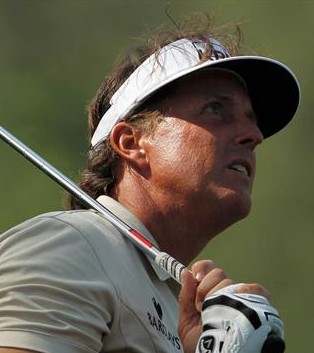
It’s said that a player needs a break to win a major championship. In Phil Mickelson’s case at the 2012 Masters, it took two bad breaks for him not to win.
Mickelson did something neither Bubba Watson nor Louis Ooosthuizen did during the 72 holes of this year’s Masters tournament. He made a triple bogey. Actually, he made two, and he still only finished two shots out of the playoff and a possible fourth Green Jacket.
Not to take anything away from Bubba, whose creativity allowed him to make 19 birdies at Augusta National Golf Club without carding anything worse than a bogey. But Mickelson was the original Bubba, or the “Second Seve,” depending on your generation.
Pure Mickelson, to me, was the third shot Lefty played on No. 15 in Round 3 of the tournament. Mickelson bombed a drive down the middle of the par-5 15th, but his second shot bounced over the green, setting up one of the most delicate chip shots on the course. From a tight lie with water behind and little green to work with, Mickelson made a full slash with his wide-opened 64-degree wedge, which seemed like an impossible amount of swing speed for such a short shot. A nod to the gods? No, this shot went high enough to touch them. And when the ball came down, it landed a few feet from the cup and set up a short birdie putt that Mickelson converted in route to his third-round 66.
But with Mickelson, there are most always high highs and low lows. In Round 1, he found disaster at No. 10, a 495-yard par 4, where he hit his tee shot miles left into the trees. Despite the huge gallery that he always draws, no one was able to find his ball. If they had, Mickelson could have likely found a way to salvage at least bogey or double-bogey. But a little bad luck sent him back to the tee and resulted in a triple-bogey seven.
On Sunday, Mickelson had three chances to make birdie putts on the first three holes, but was unable to convert any of them. The leaderboard had changed dramatically in that short time. Oosthuizen holed out for double eagle on No. 2, the first deuce recorded on No. 2 in Masters history, vaulting him to the top of the leader board at 10-under. Third-round leader Peter Hanson got off to a sluggish start, falling to 7-under after three holes, three shots back of Oosthuizen and one back of Mickelson.
Mickelson said that his strategy as he approached No. 4, a 240-yard par 4, was to hit a 4 iron either on the left edge of the green, in the left bunker or even on the hill to the left of the bunker. From there, he could easily get up and down for par, he said. But his shot struck the metal railing of the grand stands to the left of the green and bounded into the trees. A shot in the grand stands would have been fine — he would have gotten a free drop. A shot that landed just short in the crowd would have been fine as well. With his short game, Lefty would have probably made at worst a bogey, probably a par. But’s that’s not what happened.
Mickelson was in a tough spot. His ball was buried deep enough that he was forced to lift his ball to identify it. Once he was sure it was his, had had to choose between three unpleasant options.
No. 1 — Play the shot right handed, and try to chop his ball a few yards forward into an unobstructed area where he could pitch over the greenside bunker and onto the green.
No. 2 — Take an unplayable lie, which he said did still not allow him to make a backswing.
No. 3 — Go back to the tee and try again (he would be hitting his third shot).
Mickelson, as he almost always does, went with the riskier shot, No. 1. He flipped his lefty club upside down and chopped at his Callaway right handed. The ball moved a foot or so forward — not much improvement. He was forced to play a similar shot, again right handed, one that almost hit him in the left leg as it scampered a few yards toward the green. Mickelson, now playing his fourth shot from tight, trampled down grass, attempted his signature super flop, but was not as successful as he was the previous round. He hit the shot slightly fat, which put him in the greenside bunker lying four. He nearly holed that shot, setting up a tiny putt for triple-bogey six.
A conservative estimate is that Mickelson’s two bad breaks cost him three shots — one shot in Round 1 where he lost a ball, two shots in Round 4 where he hit the grand stands. In reality, however, the bad breaks probably cost him more. But the conservative estimate of three shots still would have given him his fourth Green Jacket.
Should Mickelson have gone back to the tee on No. 4 in the fourth round, which should have resulted in no worse than a double-bogey on the hole? Probably. But that’s not Mickelson’s style. Fans think of Lefty as a swashbuckler — a gambler who sometimes doesn’t know when to fold ’em. But like his flop shot in Round 3 on No. 15, Mickelson pulls off shots other players can’t, and more importantly, he prepares as thoroughly as anyone to help his imagination become reality.
A good example of Mickelson’s meticulous nature is an iron shaft switch he made during the final round of the WGC-Cadillac Championship. Since the mid 1990s, Mickelson had been using Project X shafts in his irons. But at Doral, he put a set of KBS shafts in his 4-PW. The change was helped by the relationship between Mickelson and Kim Braly, designer of KBS (Kim Braly shafts). Braly was lead designer of the Project X iron shaft as well, and the person that fit Mickelson for his iron shafts more than a decade ago. In 2008, Braly started KBS, and Mickelson briefly tried the company’s KBS Tour shafts at that time. He liked the shafts in his long irons, but said his mid irons and short irons put too much spin on the ball, and opted to return to his Project X shafts.
Braly and his team worked hard to develop a lower-launching, lower-spinning product for Mickelson, which became the KBS Tour V2. The midsection of the stepped shafts is slightly wider in diameter than the KBS Tour shafts (about 0.1 inch), which accounts for the difference in performance.
What separates Mickelson from other players on Tour is the way Mickelson tests his irons. Lefty tests each club individually, where as a player like Ernie Els switched to a full set KBS shafts after hitting a few shots with his 6 iron. Mickelson’s testing process resulted in him using the original KBS Tour shaft in his 3 and 4 iron (x-flex, 130 grams, tipped 1 inch), while using the KBS Tour V2 shafts in his 5-PW. But Mickelson’s shafts weren’t the only things to change — the switch also forced him to change the lie angle on his irons. During testing, Mickelson noticed that his shots were flying more consistently, but slightly to his right at launch. Braly said that this was because the new and more stable shaft doesn’t “droop” as much at impact, and he suggested that Mickelson have his clubs bent 1 degree flatter to account for the change.
“A lot of players would have seen the ball start a little off their target line and gone back to what they were comfortable with,” Braly said. “But not Phil. He’s very excited about the new shafts, and worked hard to get them right.”
Braly and Mickelson still have some work to do according to Braly to get the 3 iron and 4 iron shafts perfect, and fit Lefty for KBS shafts in his 56-degree and 64-degree wedges.
Like the game of golf itself, equipment changes seem to be a never-ending quest for perfection for Mickelson. After all, he’s the guy who switched equipment sponsors shortly before the 2004 Ryder Cup, played two drivers when he won the 2006 Masters and played the 2008 U.S. Open without a driver in the bag. He’s not scared to try any club, and likewise, not scared of any shot.
This week Mickelson should have won his fourth Masters title, but for one reason or another, it wasn’t meant to be. But one thing’s for sure — at 41, he’s still trying to get better. And win or lose, he’s always fun to watch.
Click here for more discussion in the “Tour Talk” forum.
You can follow Zak on Twitter @zakkoz.



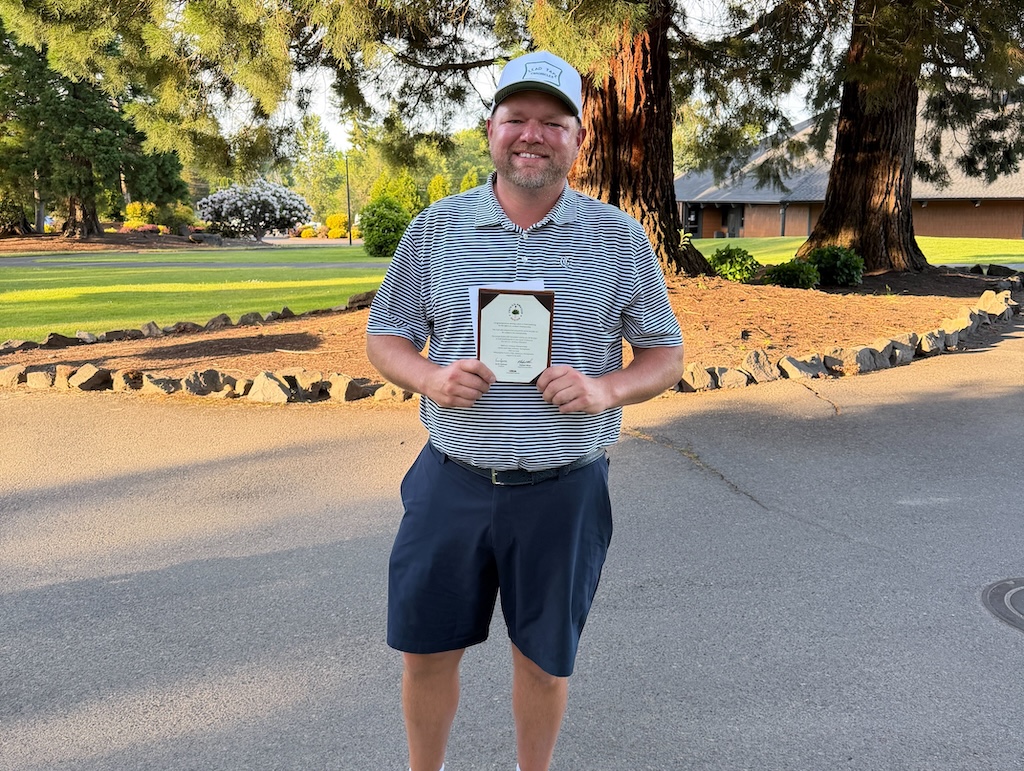
This past Monday, I played in the U.S. Amateur local qualifier at Rock Creek Country Club in Portland, Oregon. A full tee sheet from 7:30 a.m. to 1:55 p.m., the top 11 scores would make it to the U.S. Amateur final qualifying.
I teed off at 10:48 a.m.. With the 7:30 am tee time, you can get a feel for the leaders’ pace, and they were off and running on the challenging setup at Rock Creek.
View this post on Instagram
Getting to the highlight of the round on the par five 17th, a drive up the left side and 212 yards left to the front hole location. I took out a 5-iron with plans of middle of the green. The ball ended up 8 feet left of the hole, pin high. A slight downhill putt dropped in for an eagle 3 on the 17th. With the cut line looking to be anywhere from -2 to even par. This was the boost I had been waiting for all day.
With making par from the trees on 18, it was time to wait for a potential playoff with a posted score of one under par 71.
Three hours later, it was playoff time. 8 players for 6 spots. I made par on the playoff hole, which was good enough to advance to the U.S. Amateur final qualifying in July. USGA qualifiers sure deliver on all of the emotions in golf!
Club Junkie
Building my 2026 gamer WITB: Ranking the contenders and new putter projects – Club Junkie Podcast

The annual What’s In The Bag build is underway, and on this episode of Club Junkie, Brian breaks down the clubs currently leading the race for a spot in his 2026 gamer setup. From drivers and fairway woods to irons, wedges, and shafts, he ranks the equipment that’s performing best and explains what’s separating the front runners from the rest of the field.
Brian also heads into the workshop to discuss several putter projects currently on the bench. From head options and shaft choices to build ideas and testing plans, he shares what he’s working on and which putters could become serious contenders for the bag this season.
If you’re a gear junkie who loves equipment testing, club building, and the never-ending pursuit of the perfect setup, this episode is for you.
Follow Club Junkie:
Instagram: @clubjunkiepod
TikTok: @clubjunkiepod
Threads: @clubjunkiepod
X: @ClubJunkiePod
Club Junkie
Tour Edge Exotics mini driver review + TaylorMade Spider ZT Max first look – Club Junkie

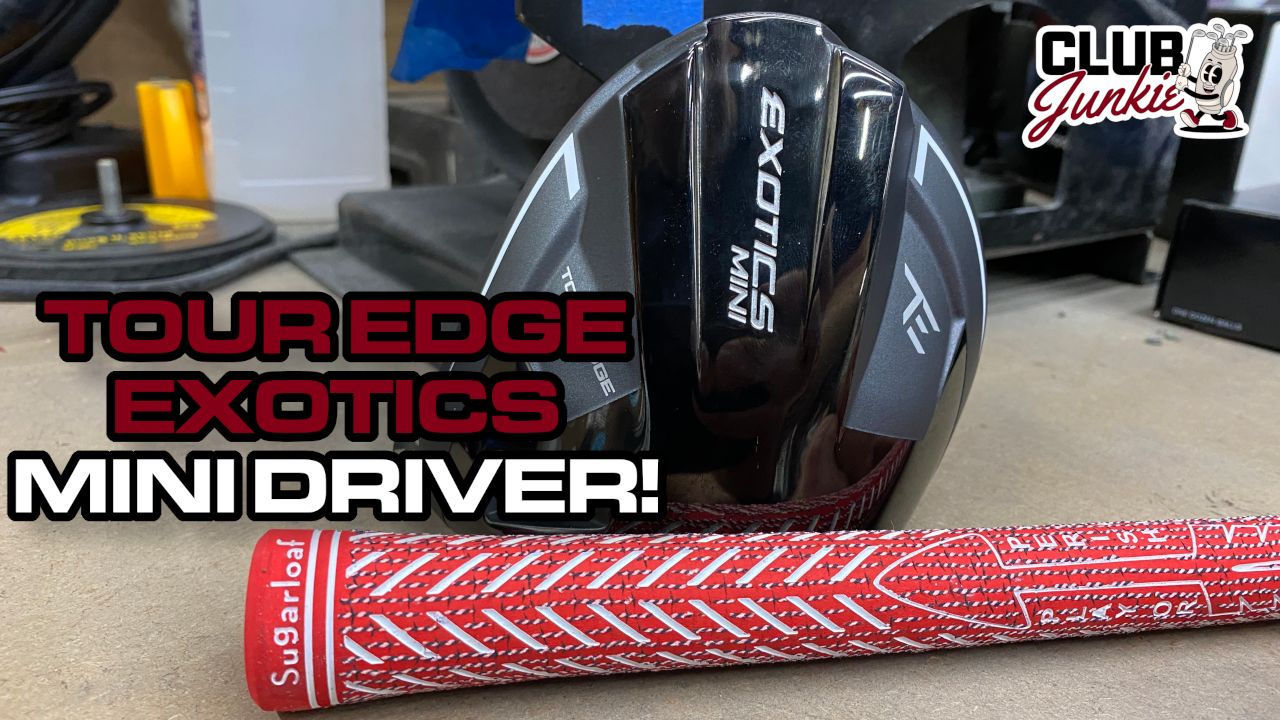
On this episode of Club Junkie, I put the new Tour Edge Exotics Mini Driver to the test and break down the performance, forgiveness, distance, and where it fits compared to a traditional driver or strong fairway wood. If you have been curious about adding a mini driver to the bag, this one is worth a look.
I also dive into the new TaylorMade Spider ZT Max putter that was recently spotted and discuss the growing zero torque putter trend. Plus, there is a closer look at the new Project X Titan Yellow shaft showing up on the PGA Tour and what makes it different from other profiles currently out there.

Justin Rose WITB 2026 (April): Full WITB breakdown with new McLaren irons

What’s the story behind Webb Simpson’s custom-stamped irons?

Memorial Tournament Tour Report: Rory McIlroy, Cameron Young switch up drivers, and more

Cadillac Championship Tour Report: Spieth’s sizable changes, McLaren Golf launches, and more

Russell Henley’s winning WITB: 2026 Charles Schwab Challenge

Kristoffer Reitan’s winning WITB: 2026 Truist Championship

J.T. Poston’s winning WITB: 2026 Memorial Tournament

Best irons 2026: Best irons overall, most forgiving irons, and more

Aaron Rai’s winning WITB: 2026 PGA Championship

Cameron Young’s winning WITB: 2026 Cadillac Championship


Bud Cauley WITB 2026 (June)
Bud Cauley had >14 clubs in his bag when photographed prior to the Memorial Tournament. Driver: Titleist GTS2 (8 degrees) Shaft: Fujikura...


Hannah Green WITB 2026 (June)
Driver: Titleist GTS3 (10 degrees, D4 SureFit setting) Shaft: Mitsubishi Chemical Diamana RB 53 S 3-wood: Titleist GT3 (15 degrees,...


Asterisk Talley WITB 2026 (June)
Driver: TaylorMade Qi4D (9 degrees) Shaft: Fujikura Ventus Blue 6 S 3-wood: TaylorMade Qi4D (16.5 degrees) Shaft: Fujikura Ventus Blue...

Brianna Do WITB 2026 (June)
Driver: Callaway Quantum Triple Diamond (9 degrees) Shaft: KBS PGW 3-wood: Callaway Elyte Titanium (15 degrees) Shaft: KBS PGW 5-wood:...
-
 Equipment6 days ago
Memorial Tournament Tour Report: Rory McIlroy, Cameron Young switch up drivers, and more
-
 News1 week ago
Russell Henley’s winning WITB: 2026 Charles Schwab Challenge
-
 Whats in the Bag3 days ago
J.T. Poston’s winning WITB: 2026 Memorial Tournament
-
 Equipment3 days ago
Best irons 2026: Best irons overall, most forgiving irons, and more
-

 Equipment1 week ago
Details on Jason Day’s latest prototype Avoda iron setup
-

 Equipment3 weeks ago
CJ Cup Byron Nelson Tour Report: Koepka and Kim’s newest putters finally get hot
-

 News2 weeks ago
Charles Schwab Challenge Tour Report: MacIntyre, Åberg and Spaun all switch putters, TaylorMade launches new Spider
-

 Equipment2 weeks ago
Details on J.J. Spaun’s surprise putter switch


Jim England
Jun 18, 2012 at 9:36 am
Please answer with projected cost!
Jim England
Jun 18, 2012 at 9:30 am
See above!
Jim England
Jun 18, 2012 at 9:27 am
I would like to be fitted for a full set of KBS Tour V.2 X-Flex Shafts. 4 thru PW. and three pitching wedge’s.
What would be the price for this fit?
I live in St Petersburg, Florida, is there a pro-shop close by?
Thanks.
Jim
Jim
Apr 14, 2012 at 8:17 am
I was right under Phil’s ball on # 4… if it hadn’t hit that high on the stands it would have still have most likely ended up in the same place. Same said if it had hit the hill… it slopes severely right to where his ball ended up.
I was very surprised the bamboo thicket wasn’t marked as a hazard… it certainly looks like a bog down there.
Anyways his ball was left and going letter… he didn’t get a bad break.
Pingback: The 2012 Masters champion could have easily been a different lefty « wgtgolf
Pingback: The 2012 Masters champion could have easily been a different lefty | Augusta Blog