
Equipment
5 Reasons why last week’s PGA Merchandise Show was the best in a decade


For someone who’s attended about 30 of these extravaganzas, the 2014 PGA Merchandise Show stood out. And not for any earth shattering product launches. I’m sure avid users of GolfWRX knew about—indeed, had seen photos of–most of the hard-goods introductions well before the show.
See photo galleries from the 2014 PGA Show here.
When the show “Product of the Year” is a modified, motorized skateboard–the GolfBoard—it suggests a low bar for product breakthrough. There were no great parties—not like the old days when you needed secret sites and rationed ID badges to keep things under control—or split-level booths or dancing girls or even a show floor you couldn’t walk in a single day.
But beyond reasonably healthy traffic (1,000 exhibitors and 40,000 buyers), this show mattered because it embodied an industry finally facing reality.
Preamble. The game we play, the game of golf itself, is fine. And we’ll continue to love it and play it like we always have. But the industry that must attract and keep new players in the game is not fine. It’s like a range picker that’s leaving half the balls behind. It’s behind. Which is why this year’s show was a breath of fresh air. It owned up to that in a big way.
Five ways the 2014 Show really worked
1. It confronted real participation numbers. For all of the research done on golf participation and spending, and there is tons of it, little of the hard data makes its way to the public. Leaders express “concern” over “declining play,” but rarely present unpleasant statistics in the unvarnished way that Dr. Joe Beditz, the normally cautious president of the National Golf Foundation, did the night before the show at a TaylorMade-sponsored gathering on getting golf going. “Two or 3 years do not a trend make,” said Beditz. “But 10 years does make a trend. We’re leaking golfers—5 million in 10 years.” It got darker: “One in four core golfers has left the game,” he said. Adding, “Core golfers (eight rounds or more) account for 90 percent of golf spending.” This “cancer” reported Beditz, is exacerbated by a nagging image problem. Only 25 percent of non-golfers see it as fun. I saw Beditz the next day. He said he hated playing the role of “the doom and gloom guy.” But it was critical that the room of several hundred pros and media heard it just that way. This is why we need new ideas, it said.
[youtube id=”Tmw6QTPAtQg” width=”620″ height=”360″]
2. It produced an intriguing vehicle for generating unconventional new ideas: Hack Golf. At the same presentation TaylorMade President Mark King, the host, introduced Dr. Gary Hamel, a golfer and management expert who has used crowdsourcing to take companies forward. Crowdsourcing is, basically, a public suggestion box. Similar to the way that code is open-sourced, so are ideas for a business’s strategy. This solicitation of outside ideas is known as “hacking” the business. Hack Golf is the program Hamel devised to help golf get out of its own way, to listen to ideas from non-golfers and former-golfers alike. Many of these ideas, it’s thought, might suggest alternative forms of golf—FootGolf, a kind of combination soccer-golf played in Las Vegas with 21-inch holes—for example. From thousands of suggestions, King, PGA President Ted Bishop and Hamel hope, will come a few hundred solid ones, a handful of brilliant ideas, and two or three to take to market now. Hack Golf is the boldest thing golf has done to reinvent itself. It’s brave. And controversial. Will operators embrace ideas that complicate their lives? We’ll see. Let’s hope it makes a dent. Check out HackGolf.org or find it on Twitter Make a suggestion.
3. It took on the Millennials issue. The show included seminars on marketing to Millennials, teaching Millennials, understanding Millennials. Golf Digest led the way here, presenting research on this group of “non-conforming conformists” ages 18 to 34 who are a key to golf’s future, and a lot of other industries’ as well. Right now significantly fewer Millennials (11 percent vs. 14 percent) are playing than their predecessors. (So are the 35-39-year olds). The Millennials who do play represent great additions. They respect golf’s traditions—they would love to join a country club and don’t think denim should be worn on the course, for example—but they don’t necessarily feel like they are welcome, or have earned the status of “real golfer.” They love numbers and overwhelm teachers with their desire for measurement and tracking. “Sometimes you have to turn off the video and say, ‘Let’s just go chip,’ said one teacher,” and they tend to be very visual. But they also love to inject a bit of added fun into the game and aren’t above, say, playing music on the course. I played with two young Millennials at the hot new Streamsong Resort the day after the Show. Matt was a former NCAA D-3 golfer and his friend Gretchen was a Speed Golf competitor. Good players. A serious runner, she took up golf only five years ago and now shoots in the 70s. Once they got to know me, they introduced me to their music game. Out came the iPhone and on came the Stones. The player who won a hole chose the next 3 songs. I played well, but not well enough to call up Van Morrison!
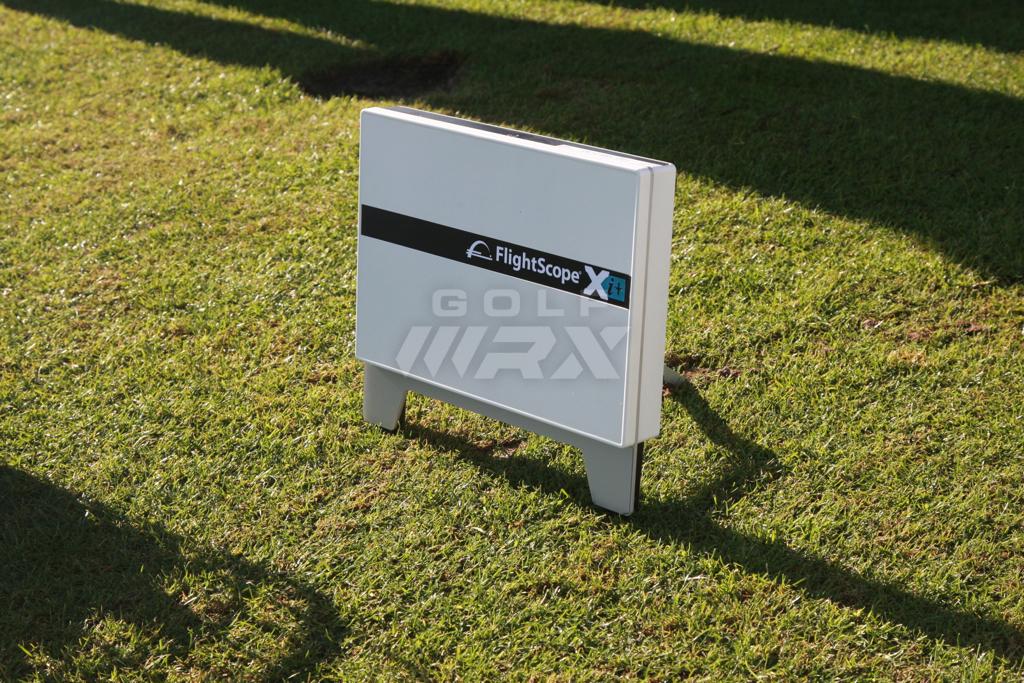
4. It featured dazzling and increasingly affordable technology and tracking. By my estimate, digital devices that track balls, trace swings, depict great courses that you can play virtually and measure your progress, took up fully three and a half pages in the Show directory—a record, and about 60 percent of hard-goods pages—as well as a huge “share of voice” at the show. GoPro was there, but so was Ion Cameras, that in addition to taking video, links to PowerChalk, a swing-analysis software. Trackman was there, as well as FlightScope, which showed off how its X2 launch monitor can be paired with a BodiTrak, a mat that measures set-up, weight placement and weight shift.
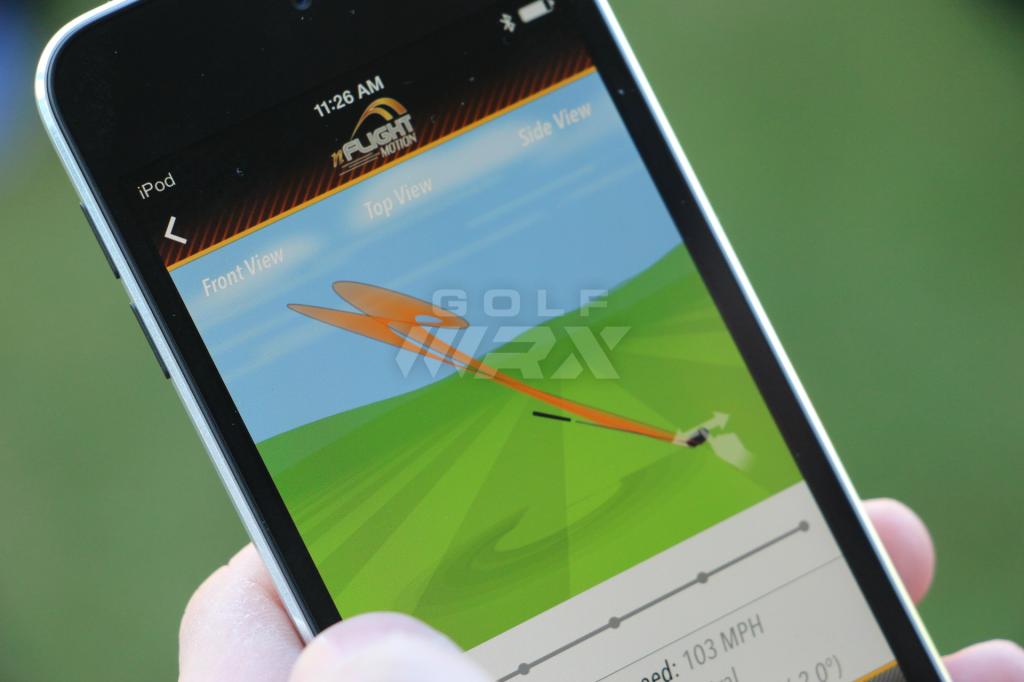
There were software programs that allowed for real or almost real-time communication with your teacher and gave him or her the ability to chalkboard your swing on a video you’d sent. Golf Coach Direct was one. Then there was Game Golf, which during your round, “in the background,” records your shots and stats. This desire to measure and track, somewhat lost on those of us with “caddy” swings built entirely on feel, is nonetheless a huge part of the game for most of the next generation of golfers. They live in a corporate world where data reigns, and they want quantitative answers to everything from spin rate to launch angles. Half the fun for some of these golfers is the charting and tracking and measuring itself. And young tour players and coaches are no exception. Sean Foley, according to someone who’s watched him, will teach one player while watching the TrackMan stats of another as that player hits balls. The Ping nFlight Motion attachment brings that kind of digital feedback to fitting. Which is why it was one of GolfWRX’s “Showstoppers.”
For weekend amateurs, playing virtual golf may be part of the deal. I ran into my old friend Doug White in Orlando. The former head professional at Barton Hills in Ann Arbor, Mich., Doug is now teaching and managing OntheDunesSports, an indoor golf training facility where during the winter Avids play rounds on virtual versions of Pebble, Pinehurst, you name it, and during the summer watch (or play) beach volleyball outside. Doug runs pro-ams on virtual tour courses opposite tour events, and walks the line making suggestions on how players can improve their ball-striking. “The screen doesn’t lie,” says this transformed “old school” pro. “The feedback is immediate.” And so, mostly, is the fun. Go to the “Dunes” web site and the first thing you see is the bar. (Reminding one of the Top Golf site). Not that there’s anything wrong with that.
5. It demonstrated, more convincingly than ever, how “hard” science is helping coaches keep golfers physically and mentally fit. In the tiny booths tucked along a lane leading to the hitting area, we found some very cool things. This is the part of the show I love. At a corner booth there I spent time with Dr. Debbie Crews, a mental-side consultant to Arizona athletes and tour players, whose new book, “The Science of Golf and Life,” makes the connection between our body’s chemistry and our emotions. She was promoting program called THINQ Golf, a kind of Lumosity for golfers. (Sign up and try a “brain game.”)
In a small booth near the hitting range David Leadbetter was promoting Juvent, a device that looks like a scale but transmits “micro impacts” to your leg and spine bones that increase blood flow and promotes bone health. That, too, evolved from hard science: NASA’s efforts to keep astronaut bones stimulated while mostly motionless in space. Fitness devices abounded. One I liked a lot was a collection of slick fitness and balance devices called SmartBodyGolf, promoted by Jeff Ritter, Nike Golf Schools director of instruction, and Randy Myers, of Sea Island, a fitness consultant to many tour players. SmartBody’s “Performance Pack” is about all you need to get and stay fit for golf. I was also curious about HHP2, by Hydro Family Fitness, a source of weight and fitness aids that use water in tubes to strengthen your motion as you swing and shake them. It’s called “Hydrokinetics.” Changing water into muscles? I guess.



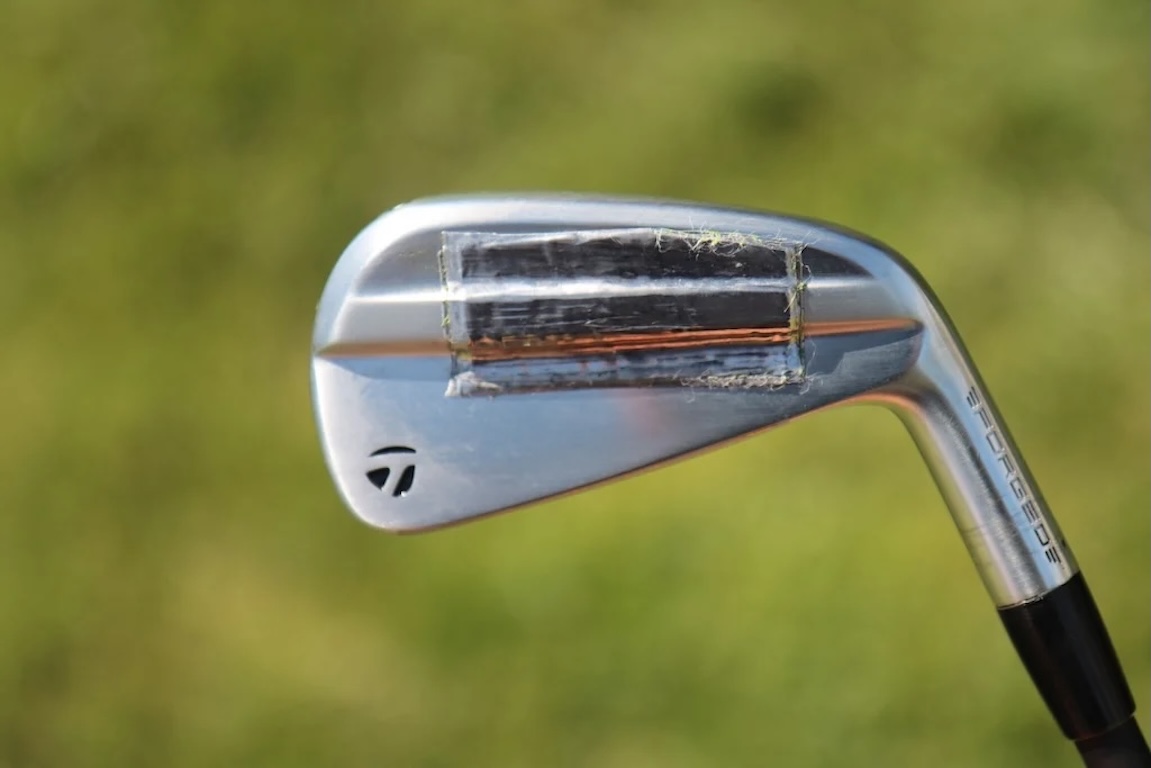
Driver: TaylorMade Qi4D LS (8 degrees)
Shaft: Fujikura Ventus TR Blue 6 X
3-wood: TaylorMade Qi10 (15 degrees)
Shaft: Fujikura Ventus Black 9 TX
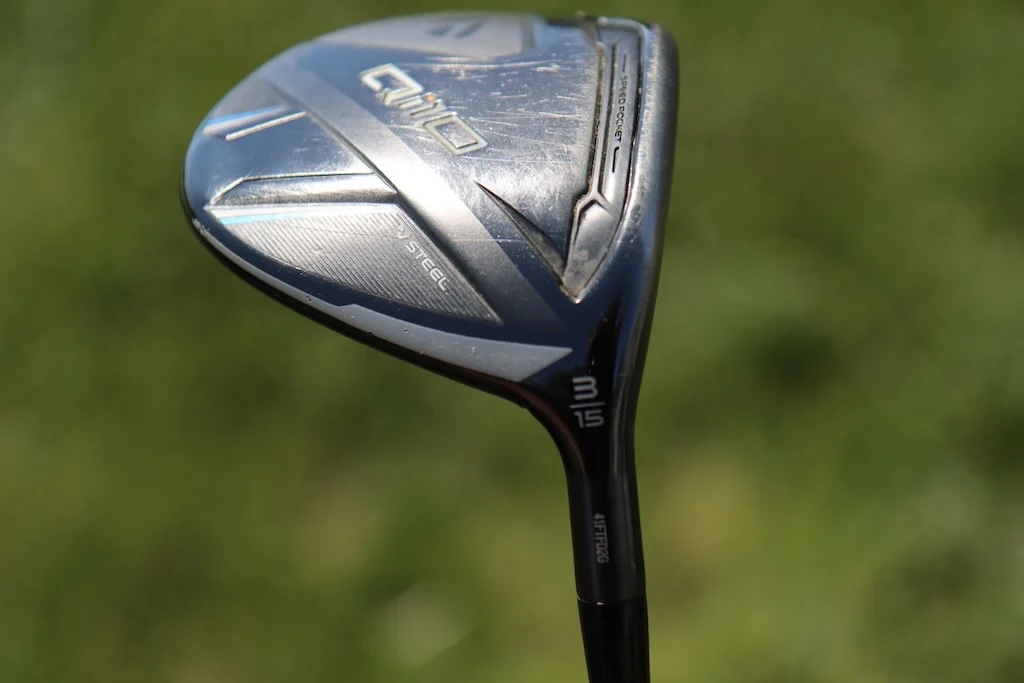
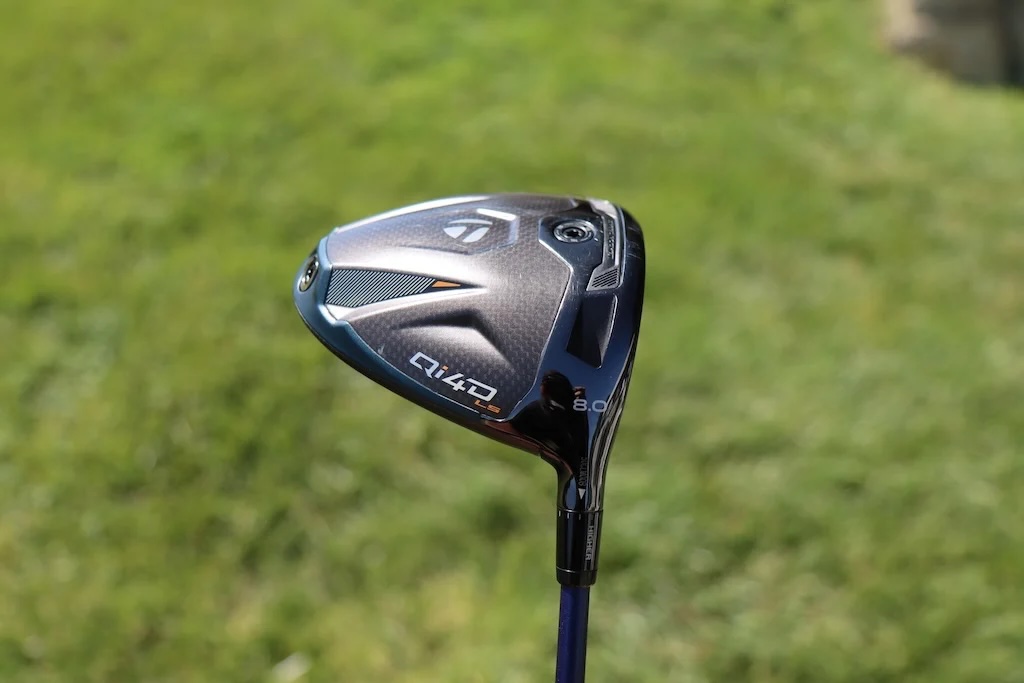
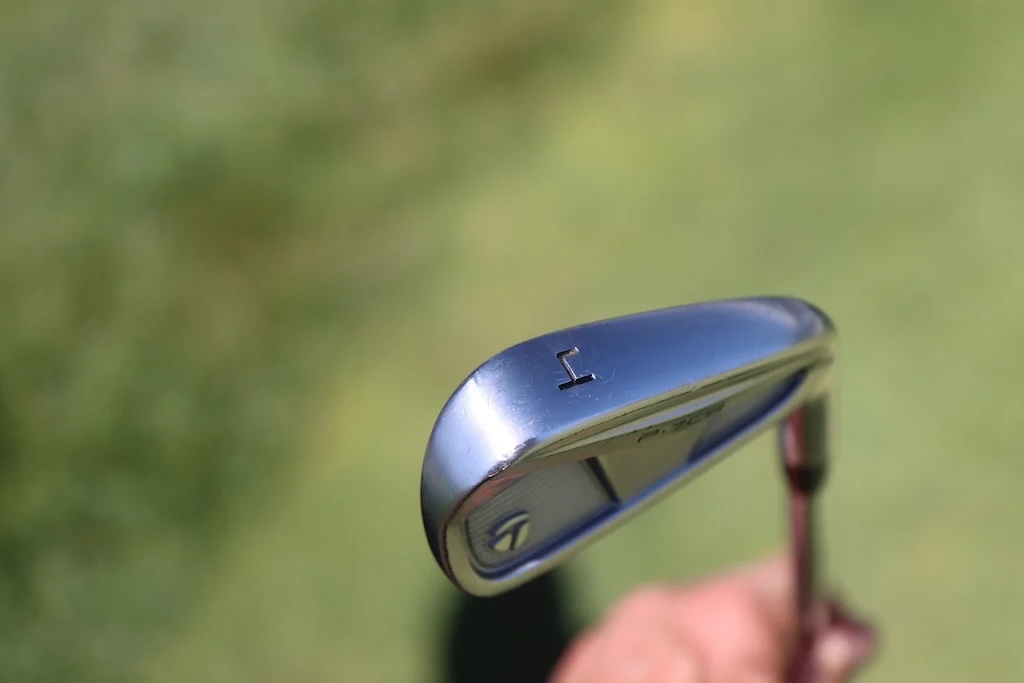
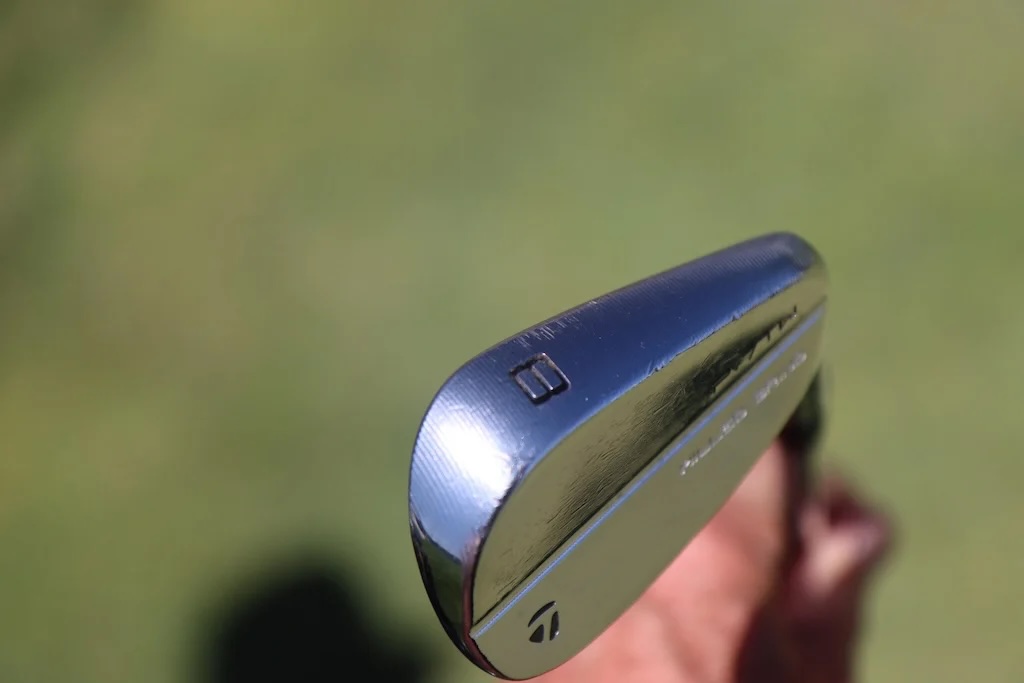
Irons: TaylorMade P770 (3), TaylorMade P7CB (4), TaylorMade P7TW (5-PW)
Shafts: Fujikura Ventus Black HB 10 X, True Temper Dynamic Gold X100
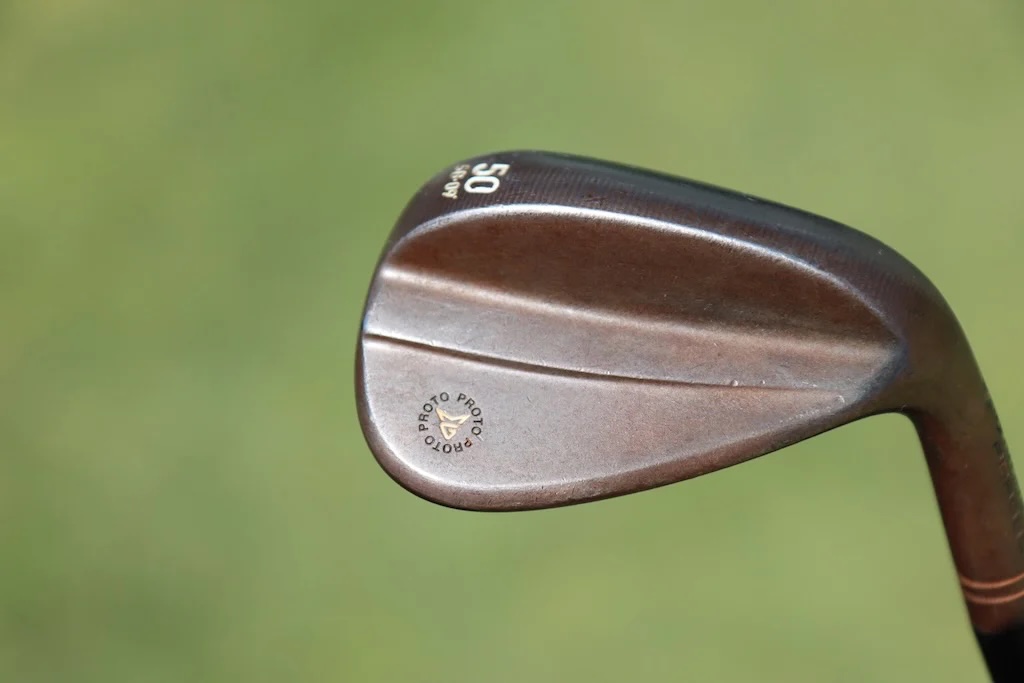
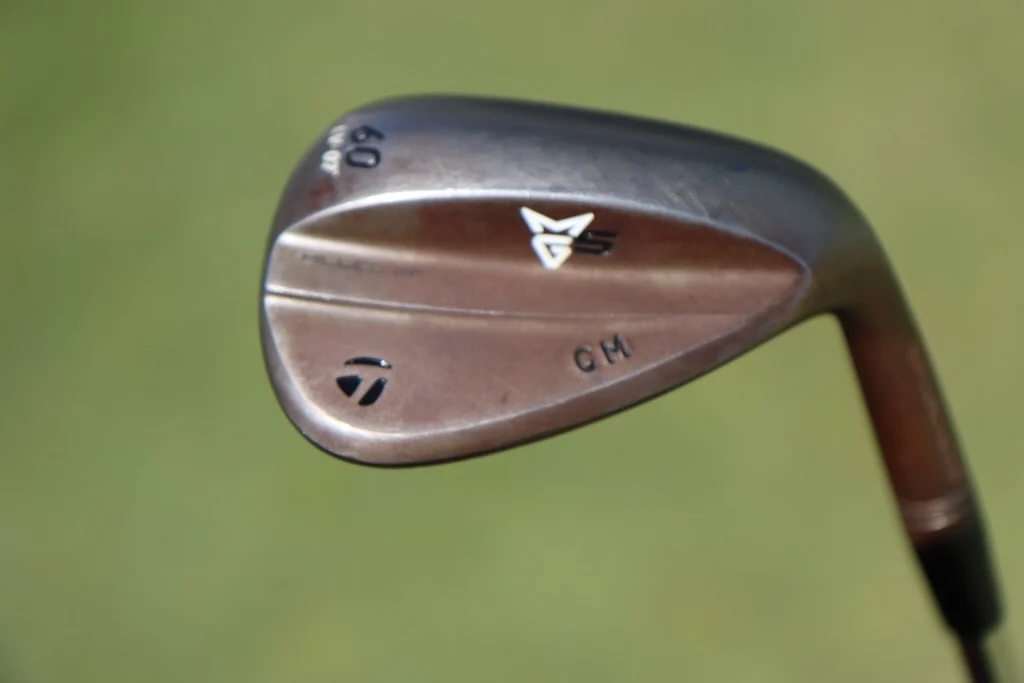
Wedges: TaylorMade Prototype (50-SB09), TaylorMade MG5 (56-HB12, 60-LV07)
Shafts: True Temper Dynamic Gold S400
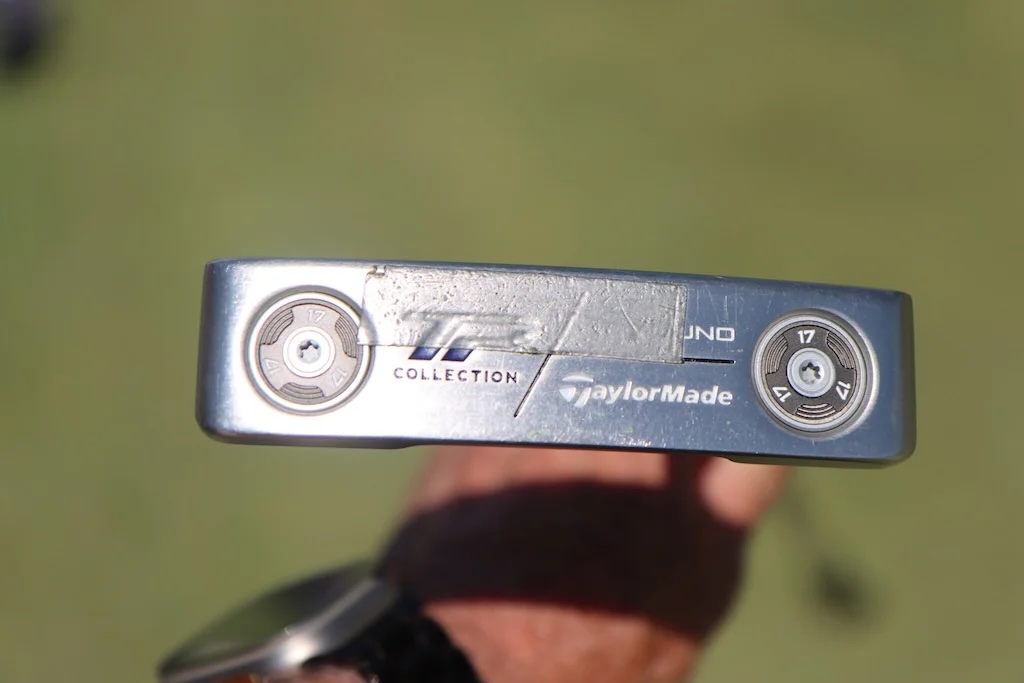
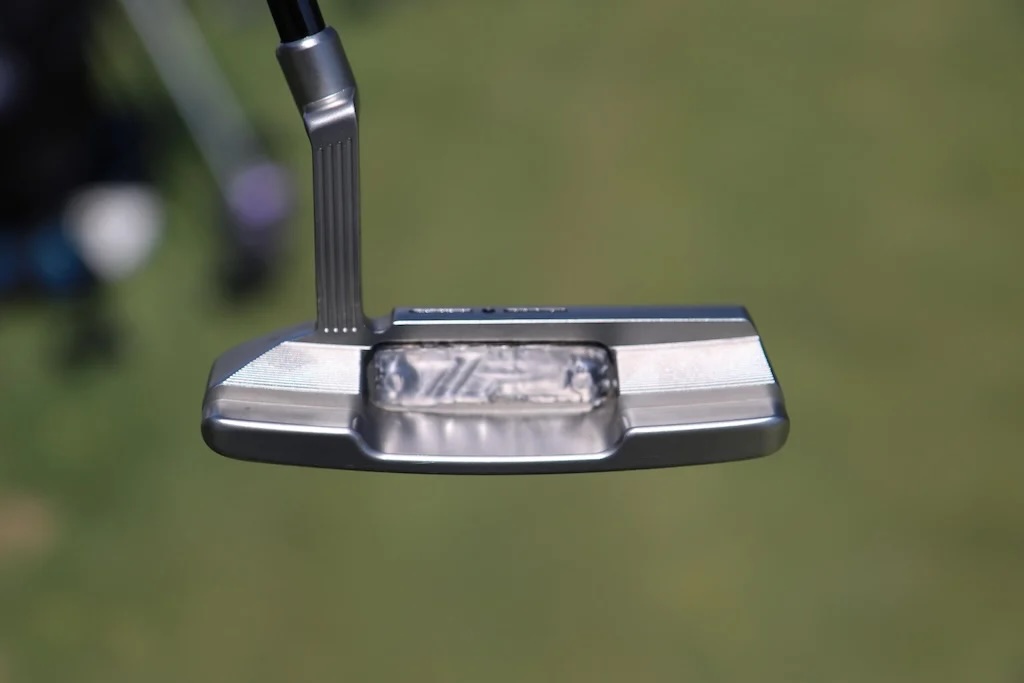
Putter: TaylorMade TP Juno
Ball: Titleist Pro V1x
Grips: Golf Pride Tour Velvet Cord
Check out more in-hand photos of Christiaan Maas’ clubs here.
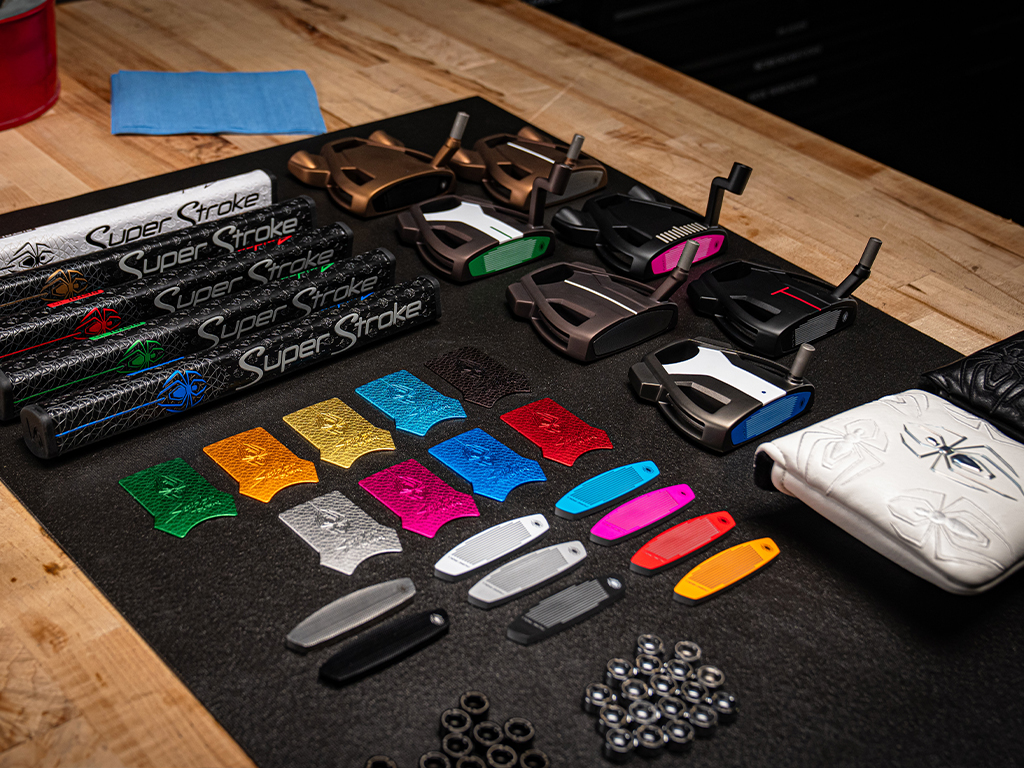
TaylorMade Golf’s MySpider program underwent a substantial overhaul over the last month. Firstly, the company launched the option to customize the Spider ZT model, and now the program has returned with the MySpider Tour and MySpider Tour X.
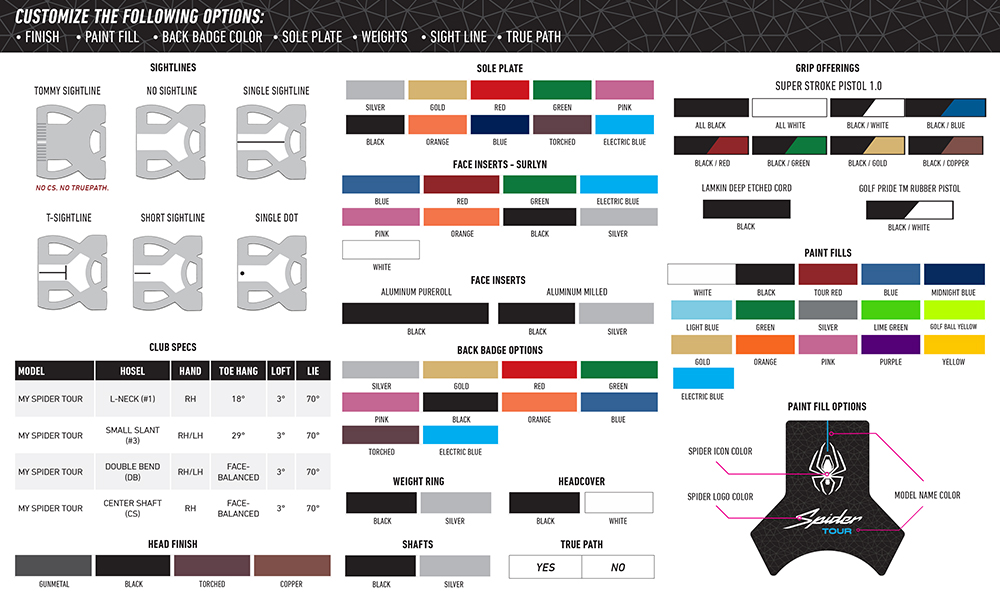
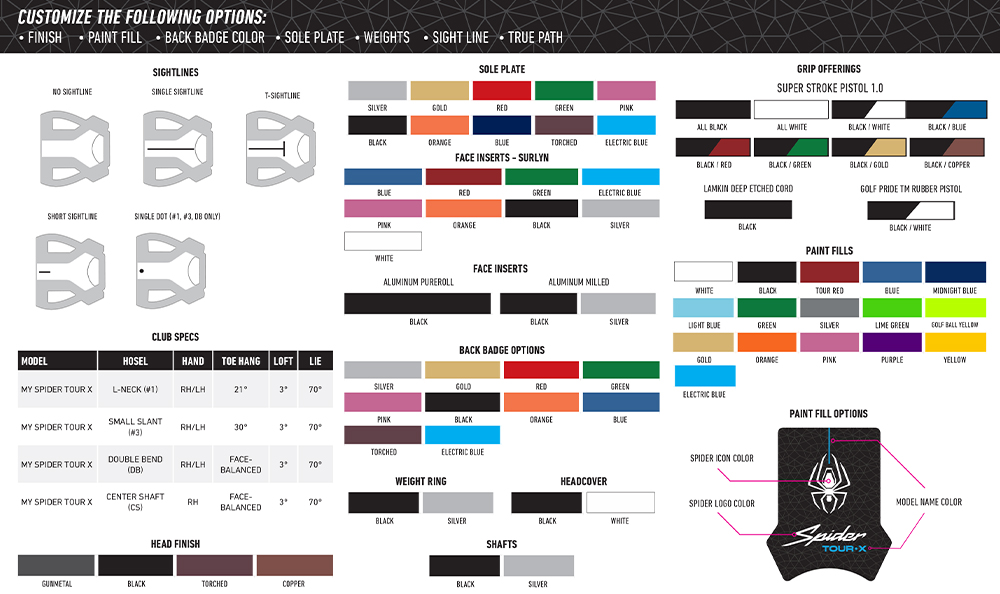
The revamped page now gives golfers complete control over every visual and functional detail of their putter on the popular Tour and Tour X head, with every cosmetic idea thought of. In MySpider Tour, golfers can choose from four head finishes, 16 paint fill colors, nine Surlyn face insert colors, three aluminum insert options, six sightline configurations, and four hosel options — L-neck, small slant, double bend, center shaft. Six sightline options are available in MySpider Tour, including the optically engineered True Path alignment system. MySpider Tour X gives builders the option of four head finishes, four hosel configurations, and five sightline options, also including True Path alignment.
One of the more interesting features of the new MySpider program is the availability of three distinct face insert options. Along with the usual Surlyn Pure Roll insert trusted by Scottie Scheffler and Rory McIlroy, which can be customized from nine colors, golfers can now also select firmer options. Two are offered with the black aluminum Pure Roll insert, slightly firmer than the traditional insert, or for the firmest feel, golfers can choose from two colors of milled aluminum inserts.
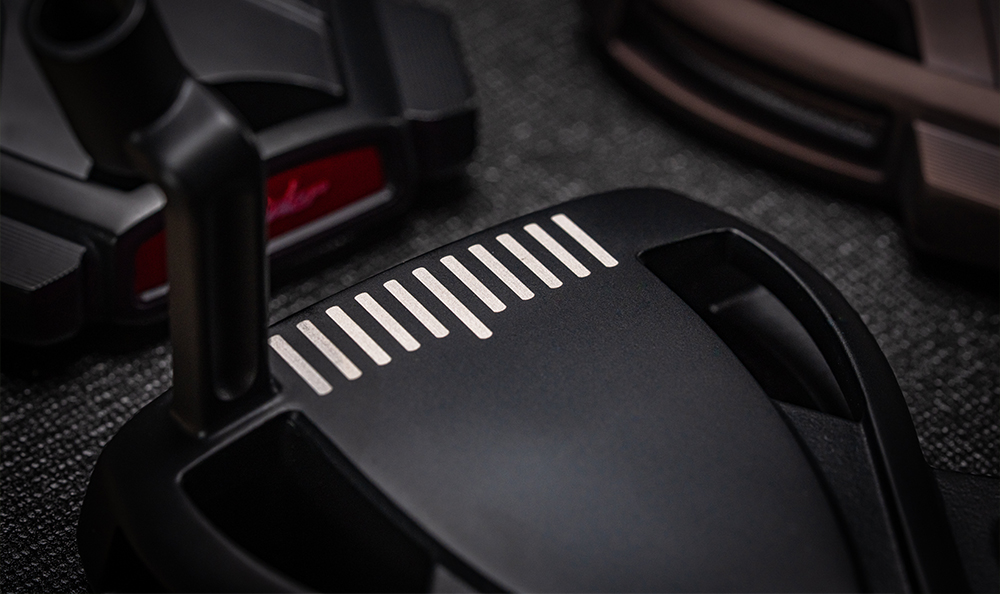
Another fun addition to the MySpider Tour is the ability to use the “Tommy Sightline.” The custom alignment aid design, which was first drawn onto Tommy Fleetwood’s putter by PGA Tour Rep James Holley, is based on the milled sightline on his Spider ZT head. There are five shorter lines on the left and right of a longer central line serving as the traditional short line alignment aid.
See below for the full specifications sheet for MySpider Tour and Tour X:
MySpider Tour
MySpider Tour X
Equipment
Then and now: Comparing Rory McIlroy’s current setup to his record-breaking 2019 Canadian Open victory

In Rory McIlroy’s first appearance at the 2019 RBC Canadian Open, he crushed the record books to earn his 16th PGA Tour title in dominating fashion, winning by seven shots over Shane Lowry and Webb Simpson.
McIlroy’s score of 22-under-par 258 is the lowest 72-hole score to date at the Canadian Open, and his closing 61 is also the best final-round score in the history of one of golf’s oldest tournaments. Finally, with his win in 2019, McIlroy became only the sixth player to win the career Triple Crown, adding to his victories at the U.S. Open in 2011 and The Open Championship in 2014, joining Tommy Armour, Walter Hagen, Arnold Palmer, Lee Trevino and Tiger Woods in a coveted list.
So, with that, why not compare his current setup to the clubs he used to break all the records?
Driver
2019: TaylorMade M5 (9 degrees), Shaft: Mitsubishi Tensei CK Pro White 70 TX
2026: TaylorMade Qi4D (9 degrees @8), Shaft: Fujikura Ventus Black 7X (45 5/8 inches)
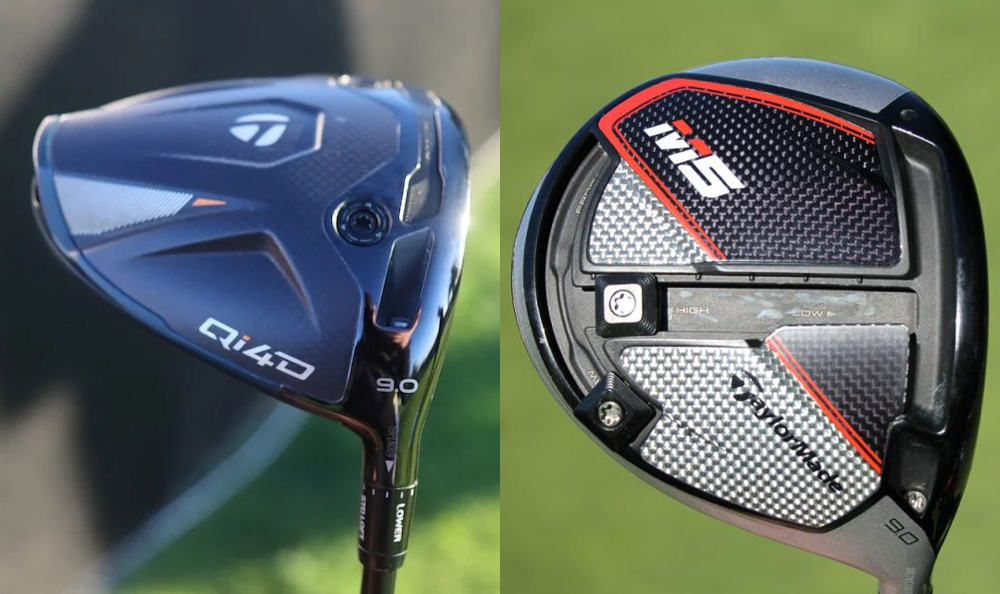
McIroy led the Tour in Strokes Gained: Off-the-Tee in 2019; he’s doing the same in 2026. Between now and then, McIlroy has switched from the Mitsubishi Tensei CK Pro White 70 TX (a shaft with slightly more feeling in the tip) to the original Fujikura Ventus Black 7X, having just made the change to the heavier version from playing the 60X.
What’s interesting about McIlroy’s 2019 setup is that the weighting on his driver is actually set in the high-draw setting, using the T-Track weighting system, whereas in the Qi4D, he’s currently using a heavily rear-weighted setup. (Two 13-gram weights in the rear and only two 4-gram front weights.)
The TaylorMade M5 driver he played in during his Canadian Open win was the company’s first head that they claimed to design to initially exceed the USGA’s COR limit, and then injected with tuning resin to bring it back in bounds.
Fairway woods
2019: TaylorMade M6 3-wood (15 degrees), Shaft: Mitsubishi Tensei CK Pro White 80 TX; TaylorMade M5 5-wood (19 degrees), Shaft: Mitsubishi Tensei CK Pro White 90 TX
2026: TaylorMade Qi4D 3-wood (15 degrees), Shaft: Fujikura Ventus Black 8X; TaylorMade Qi4D 5-wood (18 degrees), Shaft: Fujikura Ventus Black 9X

The TaylorMade M6 fairway wood that McIlroy was using during the 2019 season is still in the bag of some of the best golfers on Tour in 2026. Just check out Justin Rose’s winning setup from the Farmers Insurance Open earlier this year. This year, though, McIlroy has still been searching for his top-end-of-the-bag setup, having played both the new Qi4D and the Qi10, which he won the Masters with.

The same shaft swap can be seen in the fairway woods as the driver, along with slightly less loft on the 5-wood.
Irons
2019: TaylorMade P750 (4) Buy here, TaylorMade P730 (5-9), Shafts: Project X 7.0
2026: TaylorMade P760 (4), TaylorMade Rors Proto (5-9), Shafts: Project X 7.0

The biggest difference between McIlroy’s custom set and the stock P730s is the groove design. While the P730s were constructed with 14 MX-9 grooves on their milled faces, McIlroy’s proto heads instead use the higher-spinning, 16-groove layout of the TW2 grooves. Other big differences between the sets are that McIlroy’s 7- and 8-irons have thinner toplines, are 1 degree stronger in loft, and are 1/4 inch longer than the original P730 builds.
With McIlroy’s 4-iron, the switch from P750 to P760 sees a transition to a two-piece construction with Speed Foam in it, which allows McIlroy to launch the ball slightly higher, with more workability.
Wedges
2019: TaylorMade Milled Grind (48-09SB), TaylorMade MG Hi-Toe (52-09SB, 56-09SB, 60-LB09), Shafts: Project X Rifle 6.5
2026: TaylorMade MG5 (46-09SB, 50-09SB, 54-11SB, 60-08LB @61), Shafts: Project X 6.5 (46-54), Project X 6.5 Wedge (60)

Between 2019 and 2026, McIlroy’s focus on his short game has been much more apparent. It was the reason why he switched back to the TP5 golf ball, to help with launch, spin and control with his wedges leading up to his career Grand Slam victory in 2025. The most apparent changes to McIlroy’s wedge setup are his lofts and bounce. He’s slowly delofted his pitching to a sand wedge, but has increased the loft on the lob wedge, bending his current 60-degree to 61. With that, adding more loft to his lob wedge also slightly increases the bounce and leading-edge sit point, so, as a result, he plays a lower-bounce lob wedge compared to 2019. The MG5 wedges are also softer than the first Milled Grind option from 2019. McIlroy also no longer plays the full-face grooves found on the Hi-Toe.
Putter
2019: TaylorMade Spider X
2026: TaylorMade Spider Tour X
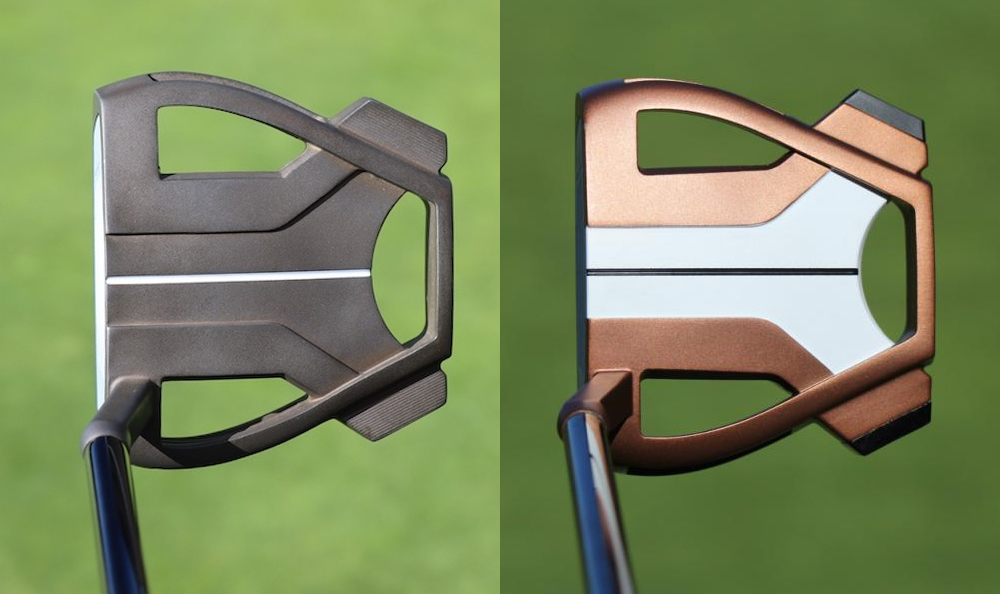
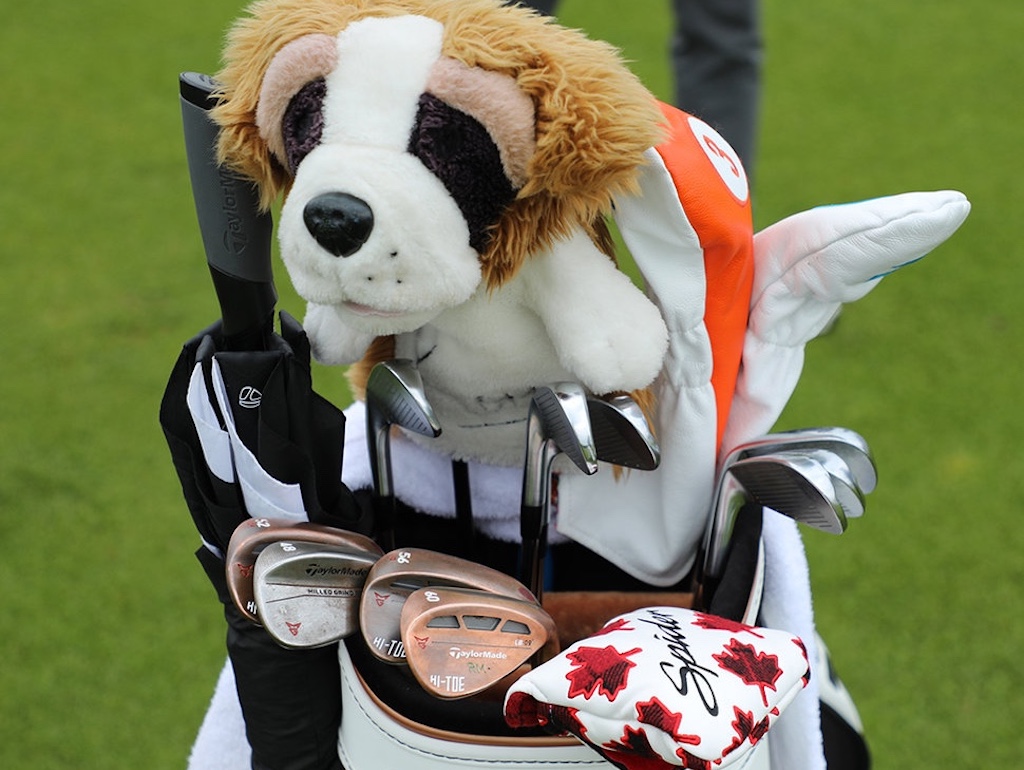
Notice anything similar. Yes, the copper finish on Rory McIlroy’s Spider X putter in 2019 is a slightly more reflective finish than the recently released torched PVD finish. McIlroy was using the True Path alignment system, but now uses only a single white sightline.
Ball
2019: 2019 TaylorMade TP5 (#22)
2026: 2025 TaylorMade TP5 (RORS)
As mentioned above, McIlroy had transitioned from the TP5 to TP5x golf ball since his victory in Canada in 2019, but now is black with the same style of golf ball as his victory at Hamilton Golf & Country Club.
Grips
2019: Golf Pride Tour Velvet Cord
2026: Golf Pride MCC
Interesting, McIlroy actually used Golf Pride’s Tour Velvet Cord grips during his victory in 2019 (it was during a 2+ year switch to the corded TV) as opposed to his usual MCC grips, which he has played for most of his career.

What’s the story behind Webb Simpson’s custom-stamped irons?

Memorial Tournament Tour Report: Rory McIlroy, Cameron Young switch up drivers, and more

Cadillac Championship Tour Report: Spieth’s sizable changes, McLaren Golf launches, and more

Russell Henley’s winning WITB: 2026 Charles Schwab Challenge

Kristoffer Reitan’s winning WITB: 2026 Truist Championship

Best irons 2026: Best irons overall, most forgiving irons, and more

J.T. Poston’s winning WITB: 2026 Memorial Tournament

Aaron Rai’s winning WITB: 2026 PGA Championship

Cameron Young’s winning WITB: 2026 Cadillac Championship

Details on Jason Day’s latest prototype Avoda iron setup


Christiaan Maas WITB 2026 (June)
Driver: TaylorMade Qi4D LS (8 degrees) Shaft: Fujikura Ventus TR Blue 6 X 3-wood: TaylorMade Qi10 (15 degrees) Shaft: Fujikura Ventus Black...


Ryan Palmer WITB 2026 (June)
Driver: Callaway Quantum Triple Diamond (9 degrees) Shaft: Project X HZRDUS Smoke Blue RDX 60 TX 3-wood: TaylorMade Qi10 (15 degrees) Shaft:...


Bud Cauley WITB 2026 (June)
Bud Cauley had >14 clubs in his bag when photographed prior to the Memorial Tournament. Driver: Titleist GTS2 (8 degrees) Shaft: Fujikura...


Hannah Green WITB 2026 (June)
Driver: Titleist GTS3 (10 degrees, D4 SureFit setting) Shaft: Mitsubishi Chemical Diamana RB 53 S 3-wood: Titleist GT3 (15 degrees,...
-
 Equipment6 days ago
Memorial Tournament Tour Report: Rory McIlroy, Cameron Young switch up drivers, and more
-
 News2 weeks ago
Russell Henley’s winning WITB: 2026 Charles Schwab Challenge
-
 Equipment3 days ago
Best irons 2026: Best irons overall, most forgiving irons, and more
-
 Whats in the Bag4 days ago
J.T. Poston’s winning WITB: 2026 Memorial Tournament
-
 Equipment1 week ago
Details on Jason Day’s latest prototype Avoda iron setup
-
 Equipment3 weeks ago
CJ Cup Byron Nelson Tour Report: Koepka and Kim’s newest putters finally get hot
-

 News2 weeks ago
Charles Schwab Challenge Tour Report: MacIntyre, Åberg and Spaun all switch putters, TaylorMade launches new Spider
-
 Equipment2 weeks ago
Details on J.J. Spaun’s surprise putter switch


daveb
Feb 14, 2014 at 5:58 pm
Affluent boomers and greed-heads (e.g., developers) have sucked the air out of golf, period. It is a demographic problem for sure. Kids can’t go play because of the old men elbowing each other out of the way on the courses where they’ve driven up the green fees to $90 a pop on what used to be affordable muni courses.
Ask this: where are the kids going “play”? The sport is backpedaling to the days when kids with numbers after their names will be the only participants.
Developers built a course by the old dump in our town — it opened up with $88 green fees, stamped with “Troon Golf” on the front door. Ha, Troon at the dump! And this fee to play on dead sod under twig-trees held up by stakes in the ground…
Another private course opened out on the plains: a “links course” charging $50K to join and $10K annual fees. Guess what, they went bankrupt too. Everyone wants to cater to the rich, with delusions like they’re Pebble Beach — and not deal with the poor unwashed masses — i.e., the kids who have no money and are looking for somewhere to “play”.
When I was a kid anybody who wanted could walk to the school and play the practice holes cut next to the corn field. Or you could play with your grandpa who was a member of the city course — for free or little of nothing.
Munis are dead, affordability is dead. Golf since 1980 has been a march toward disaster. Heck, maybe it should die. If things don’t change all our kids will be playing frisbee golf or hackey-sack golf, because fun, cheap, fast, friendly games will oust DULL, EXPENSIVE, SLOW, UNFRIENDLY ones every. single. time.
Evan
Feb 21, 2014 at 11:39 am
a bit doomsday, yet making a lot of great points. I’ve said many times that much of what golf and it’s “professionals” care about is profit. Sure, operators and manufactures will claim they care about golf’s future, but only the short term future that benefits them. If golf truly cared about it’s future and the number of players, it wouldn’t sell out to equipment manufactures, golf cart manufactures and chemical companies (pesticides, etc). Most communities should have a muni or public facility (even if it’s 9 holes) that is available and responsible to the community as a whole. Golf carts, equipment sales, artificial turf management, have all contributed to a “elite” environment on most courses. Most operators cater to the customer who buy equipment every year and spends extra in the bar.
Pingback: Juvent Sports
Roger
Feb 2, 2014 at 11:24 am
Driving Accuracy and speeding up the game for ALL people
Yesterday i picked up some 1990 Hogan BH Irons…
Tee’d up the 3 iron on 6 holes of the 9 i played!
Very accurate….could i start a new trend???
ps BH grind and Apex 4 shafts…..my search is over!
Andrew
Feb 1, 2014 at 12:26 pm
It is simply absurd to think that basis points 1 and 2 in this article have anything to do with the premise that the 2014 show was the best in a decade.
Golf participation is down, get the word out (like the author was the only bloke in the room that found this to be an epiphany)…. what a great Show!!!!!
Hack Golf is live (since when do “intriguing ideas” amount to a great show? Last I checked, innovative and salable products do) ….what a great show!!!! Really?
Joe
Jan 31, 2014 at 1:54 pm
One of the main killers is the sheer and amazingly huge arrogance of golf courses and their refusal to change, improve, listen or take action.
Insanity: doing things the same way and expecting different results!
I see this daily at the courses in my area: So many fail at the fundamentals that is laughable, how are they going to get the bigger stuff right.
mlamb
Jan 31, 2014 at 9:39 am
As a few have already noted, the problem is driving accuracy and its negative effect on pace of play.
Go to any public course on a weekend and sit at the first tee. The amount of wayward drives is astounding. Almost every group ends up becoming a search party.
paul
Jan 30, 2014 at 11:42 pm
As a 31 year old who discovered the game only two years ago, I didn’t mind the money or time it took to get confident at it… But my wife sure doesn’t like it. I bought everything in my bag used and on demo sales (thanks Golf Town). Also used coupons. Costs me about $1000 per year to play. Can’t imagine what you guys all pay. I can’t imagine spending $450 for a single club, My wife would shoot me to.
?!?!?!?!
Jan 31, 2014 at 12:25 pm
Grow a pair perhaps? You have every right to spend cash that YOU worked for on golf, Its not drugs or anything lol. She probably spends $100 bucks on a damn haircut, has 50 pairs of shoes at $40-$150 a pop. And spends close to 500 on make-up. Dont Feel bad at all, unless you dont work and pay nothing to contribute.
Baka
Feb 12, 2014 at 8:50 am
If you are not honest with her and set boundaries it will only get worse. Don’t feel bad about getting out of the house and having fun. Encourage her to do the same.
Jonny Bravo
Jan 30, 2014 at 10:04 pm
hack golf is a joke. the sheer financial burden on players and potential players is the main reason of the decline. Think about it. We currently have a tour full of the most exciting players in the game, and we’re still losing members. Is it an interest issue? – i think not. Over the last “ten years,” a lot has happened to the financial industry, and thus, most of the golfing population. A world where you could once earn 15% on a savings account in the 70’s and pay next to nothing for a city membership is over. If they want to keep the game of golf growing, the hype is here – that’s not the issue.
Jonny Bravo
Jan 30, 2014 at 10:24 pm
why would this comment be awaiting approval?
KCCO
Jan 30, 2014 at 9:58 pm
I think it’s quite simple. I have lots of friends 18-34, most REALLY enjoy playing the game. Watching? Only when tiger is playing As for them diving in and completely taking up the game? For most I hear the same thing, it’s to expensive.
I guess it all has a cause and affect. If the game were more affordable, more would play, in turn more would watch, thus making all aspects of the game more easily attainable. Majority of the group I speak of, borrow clubs to play 4 rounds at local muni, and watch when tiger plays. A very small percentage dives in completely, ie. country club, putting a reputable bag together (just meaning decent quality gear) a few outfits for the course, and could tell you who Luke Donald is. I wish it were more people, and easier to get into, but now that I think about it, it is expensive…I truly think that’s why this game lacks growth, and beside my once a week “group”, I’m playing with a new person on a decent amount of outings, and his make-up is 50 years+, 80k annual income, and 9 outta 10 times a great person. Just wish more could be done to get that younger crowd more involved.
Jonny Bravo
Jan 30, 2014 at 10:06 pm
I concur, KCCO. BTW… KCCO yourself, good man.
Baka
Feb 12, 2014 at 8:54 am
+1
Evan
Jan 30, 2014 at 6:14 pm
So much confusing and conflicting information in today’s game. You want to fix it? Try telling Taylormade/ Callaway/ Ping to start promoting accuracy and selling drivers with 13 degrees of loft and 43 inches long for 90 % of golfers. Move courses back to 6000-6500 yards and place a premium on accuracy (which will also decrease maintenance $ and shorten rounds).
That would just be a start!
Evan
Jan 30, 2014 at 7:04 pm
Here’s a crazy idea… instead of placing a limit on groove size (which is impossible to tell on a round to round basis or at an amateur tournament). Place a limit on Length of Driver (or longest club)… 43″. It would be very easy to regulate, even for amateurs and between that and 460cc/ COR manufacturing limitations, courses could be shortened and the average player would be more accurate and play faster.
I see people every day pull out there new 46″ driver which the manufacturer says is the best driver ever made and yank it into the bushes 180 yards away. How hard is it to tell the person that they spent $400 on a driver that doesn’t address the hardest part of golf? Accuracy and Consistency…
Ty Webb
Jan 30, 2014 at 8:50 pm
Tee it forward dude……
Evan
Jan 30, 2014 at 10:48 pm
Tee it forward requires guys to check their egos at the door… which most won’t. You can call it what you want, but most will still refer to forward tees as “ladies” or “seniors”. I have only met a couple people who will tee it forward because it makes the game more fun for them. Limiting driver length would help high handicaps hit the club face more consistently, shortening a course would tee it forward without having to have an individual admit that he needs to tee it forward. Average driver length on tour is 44.5″? They don’t advertise that, though… would ruin the distance marketing.
mick
Jan 30, 2014 at 4:58 pm
The proper course of action is likely the opposite of whatever Mark King thinks is a good idea.
jason
Jan 30, 2014 at 5:33 pm
if they keep pushing hack golf you lose the core and then it will die …. why does a past time have to grow its a game….. sorry if your international business is only making 1 billion a year tm/adidas is ruining the game. by pushing there bottom line as growing the game… golf it not losing golfers it losing people buying new clubs or a least in the areas I have seen with my own two eyes
Jonny Bravo
Jan 30, 2014 at 10:09 pm
haha sooooooo true
Rob
Jan 30, 2014 at 8:54 pm
HAHA!
So true; SO true…
Mikey
Feb 22, 2014 at 11:40 am
+ 1