
Opinion & Analysis
“It’s a shame that all of our golf life can’t be spent like this night”


If you are reading this, we have a lot in common. I suspect that like me, you are a boomer, reasonably intellectual, middle to upper middle class, and a golfer. You are probably pretty good at our sport, probably have an index of between 8 and 16, and above all, you are a realist about your ability and your potential for becoming the golfer you always wanted to be.
I suspect you went through a period of time when you thought that if you bought the right equipment, you would become a great ball striker and a significantly better golfer. You went through several drivers, putters, wedges, and fairway woods. When utility clubs became the rage, you bought a couple. You were happy to exchange your persimmons for metal “woods” (although like me, you never really figured out what to call them).
Then there are the irons we have both invested in. We lined up for perimeter balanced, cast, oversized, graphite shafted “stuff.” We tried this set because they were longer. We bought that set because they were more accurate. We tried this set because they were a graduated set, going from hybrid long irons to cavity-back mid irons to forged-blade short irons. We even decided that iron sets were passé. What we really should do, we told ourselves, were to buy our clubs like they did in the old days – one club at a time with each addition to our bag specially designed for the job they were bought to do.
Strangely, looking back, we came to realize that in spite of all our work, all our thought, all of the money we spent – we were not fundamentally better golfers than we had ever been. If we were better, it was probably because we came to know our limitations and our strengths. We didn’t put ourselves in positions that would turn a one-shot penalty into a three shot penalty. We worked on our swing. We learned to relax. We read books on sports psychology. We watched and thought about the lessons we took away from “The Legend of Bagger Vance,” ‘The Greatest Match Ever Played,” and even in its own twisted way, “Caddy Shack.”
[youtube id=”LGKkmpbhv9k” width=”620″ height=”360″]
We are members of a golf club (or country club) because we love playing on nice courses and we hate having our valuable time wasted by drunks and unskilled people who frequent municipal courses. We take a golf trip or two every year or so. And we probably belong to a Men’s Club. We certainly have a bunch of guys we like playing golf with.
Most of us have been playing golf for many, many years. We learned the game from our dads who are unfortunately no longer around. We learned how to be gentlemen (or women) on the course. We learned how to fix a divot. We learned how to rake bunkers, lay the flag gently onto the green or better yet, just off the green. We learned where to put our bag when we were putting. We always wanted to drive a golf cart and were secretly thrilled when we became rich enough to afford to use one. But we learned how to drive them so as to not impact fragile grass.
We came to know the pain of losing our best playing partners – our dad’s, our older brothers, our best friend, our uncle. We reached for the phone to call them when Tiger chipped in to win the Masters, only to remember at the last moment that they wouldn’t be on the line to talk to about it.
Fortunately, we have taught our children to play the game. We had to drag them at first. Baseball, basketball, and/or video games were more fun. Now they are playing pretty well. We go out together when we can. They can out-hit us but we can out putt them — our short games are better, and our guile is superior.
But it started to happen. We slowly came to feel differently about the game and where we are in relation to it. We loved things about golf that have nothing to do with the “sport” of golf. The arc of a well-struck shot, how it feels, how its sounds are much more important now than how far it went. We don’t care whether a pitch shot checks up after one bounce unless the place that it stops is the place we want it to stop. Who cares whether the shot “sucked back”? Did it stay on the green? That’s what we care most about.
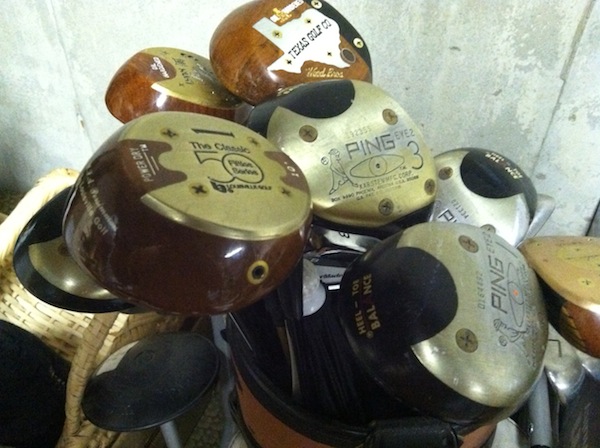
Sometimes, when the time is just right, now we walk the course by ourselves. We have that old carry bag we carried when we were in high school. We fill it with the set of Wilson Staff irons we worked all summer mowing lawns to buy. Somehow, we saved them along the beautiful MacGregor Eye-O-Matic Persimmon Woods that were Dad’s and the BullsEye putter we’ve had since college. They are in the bag, too.
They should feel heavy with only that single strap to transfer the weight to our shoulder. That shoulder had the rotator cuff fixed a couple of years ago, after all. But somehow, the weight doesn’t hurt as much as it should on this beautiful evening. It’s so quiet now. Everyone has gone home for the day. It’s so quiet that you can actually hear the sound of your drive hitting the fairway 225 yards away from the tee.
They say that persimmon drivers just don’t hit the ball as far as steel faced drivers do. They’re right, they don’t. But there is little beauty in a painted club head compared to the elegance of wood carved into a club head. The sound of steel hitting ball is abrupt and harsh. There is little information that can make it to your hands because of the muting of the graphite shaft. But the feel of the ball coming off that persimmon face races to you, literally screaming to you where the ball went. You can “see” the ball, even though the cataract that is growing slowly in your right eye makes actually seeing the flight of the ball difficult.
If the persimmon head told you about the shot, it was not the only messenger. The steel shaft told you that you “nutted” it as well. Still 320 yards out, you take out the old three-wood that you saw your dad hit so many times. You take your stance, look up a couple of times, waggle twice, set and fire. Again, you know it was hit it where you wanted it, 180 yards, down the middle.
Walking down the fairway, you listen for the ghosts you know you are walking with. You can hear them, your dad told you, but only if you are if you listen. They’re laughing and joking, talking about games that were played in the misty past. They only come out at evening-time, when the course is almost empty, They only share their joy, the joy of the game, with people who deserve to hear about it, to learn about it, and to pass it on. You know they’ve nominated and elected you into their club. It’s a feeling that makes the pain go way, lightens your step, and brings a tear to your eye.
Still, you have 105 yards left. With your set of graphite shafted, technologically marvelous irons, it would be barely a gap wedge. But you know that the loft of your modern gap wedge is the same as the loft of your Staff 9 iron. So you’re not gulled. It’s the 9 iron that you grab and set behind the ball. As you draw the club back, you remember all the great times, the great lessons, and the great people you have known because of the shepherd’s game we play.
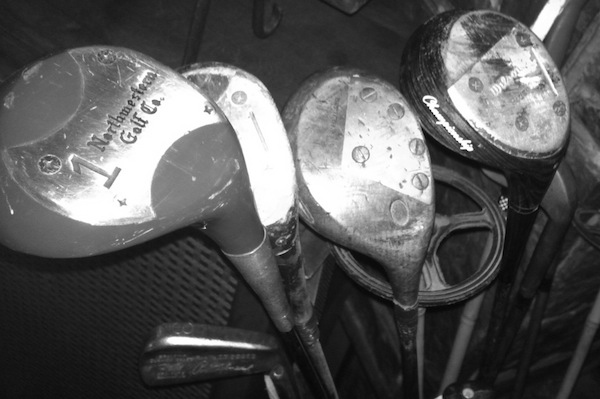
Down the club comes. You strike the ball almost at the bottom of its downward arc. The club finds the ball and dives into the ground, carving a shallow divot just in front of where the ball comes. Up the shaft comes, carrying your hands high – higher than your shoulder, almost even with your ear. Your right shoulder forces your chin to the left. Your right hip has squared itself with the left. Your body is facing the hole, now. You pick up the ball with eyes and watch it fall to the green. The ball checks up smartly, five feet below the hole.
The shot is a beautiful arc, that product of the forged steel club head. The vibration that raced up then down the shaft, through the rough, cord grips, to your hands. Whether the feeling made it to your soul like the old saying claims is debatable. But you know for sure that the feeling is like no other. Hearing the ball drop into the cup is like no other, too.
It’s a shame that all of our golf life can’t be spent like this night. It’s a shame we can’t play in the peace of a quiet course, the peace of shots purely struck with clubs that have stood up through time. It’s a shame that they have to go back to the basement to sit and wait for another day to come along. It is a shame. Isn’t it?



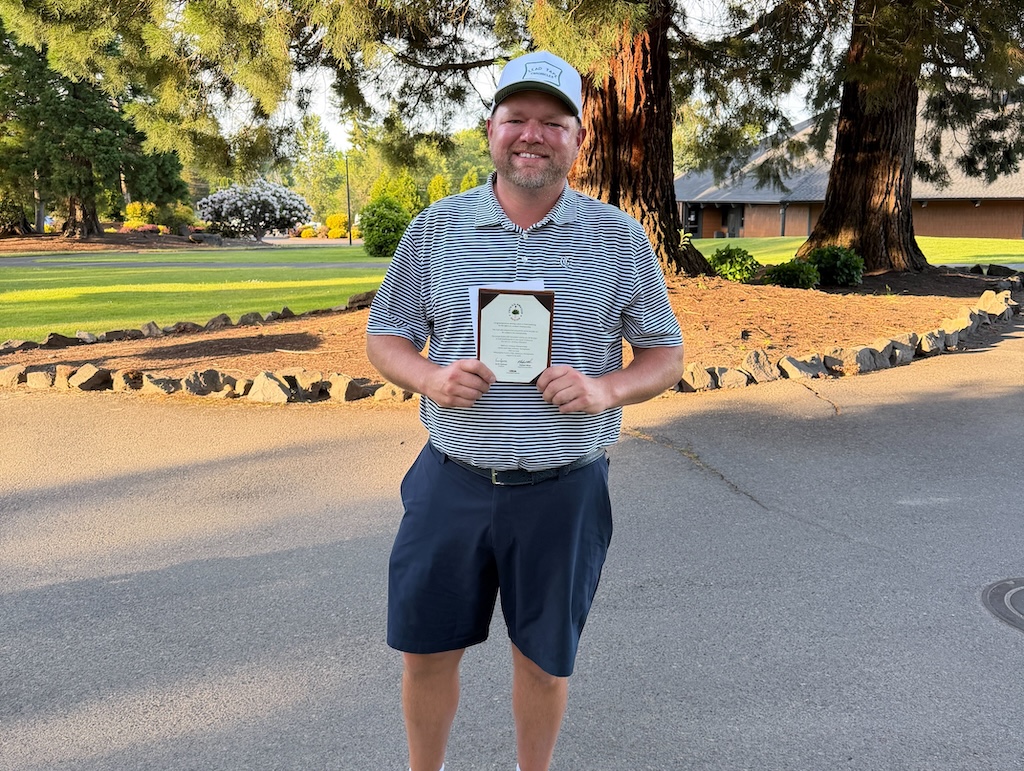
This past Monday, I played in the U.S. Amateur local qualifier at Rock Creek Country Club in Portland, Oregon. A full tee sheet from 7:30 a.m. to 1:55 p.m., the top 11 scores would make it to the U.S. Amateur final qualifying.
I teed off at 10:48 a.m.. With the 7:30 am tee time, you can get a feel for the leaders’ pace, and they were off and running on the challenging setup at Rock Creek.
View this post on Instagram
Getting to the highlight of the round on the par five 17th, a drive up the left side and 212 yards left to the front hole location. I took out a 5-iron with plans of middle of the green. The ball ended up 8 feet left of the hole, pin high. A slight downhill putt dropped in for an eagle 3 on the 17th. With the cut line looking to be anywhere from -2 to even par. This was the boost I had been waiting for all day.
With making par from the trees on 18, it was time to wait for a potential playoff with a posted score of one under par 71.
Three hours later, it was playoff time. 8 players for 6 spots. I made par on the playoff hole, which was good enough to advance to the U.S. Amateur final qualifying in July. USGA qualifiers sure deliver on all of the emotions in golf!
Club Junkie
Building my 2026 gamer WITB: Ranking the contenders and new putter projects – Club Junkie Podcast

The annual What’s In The Bag build is underway, and on this episode of Club Junkie, Brian breaks down the clubs currently leading the race for a spot in his 2026 gamer setup. From drivers and fairway woods to irons, wedges, and shafts, he ranks the equipment that’s performing best and explains what’s separating the front runners from the rest of the field.
Brian also heads into the workshop to discuss several putter projects currently on the bench. From head options and shaft choices to build ideas and testing plans, he shares what he’s working on and which putters could become serious contenders for the bag this season.
If you’re a gear junkie who loves equipment testing, club building, and the never-ending pursuit of the perfect setup, this episode is for you.
Follow Club Junkie:
Instagram: @clubjunkiepod
TikTok: @clubjunkiepod
Threads: @clubjunkiepod
X: @ClubJunkiePod
Club Junkie
Tour Edge Exotics mini driver review + TaylorMade Spider ZT Max first look – Club Junkie

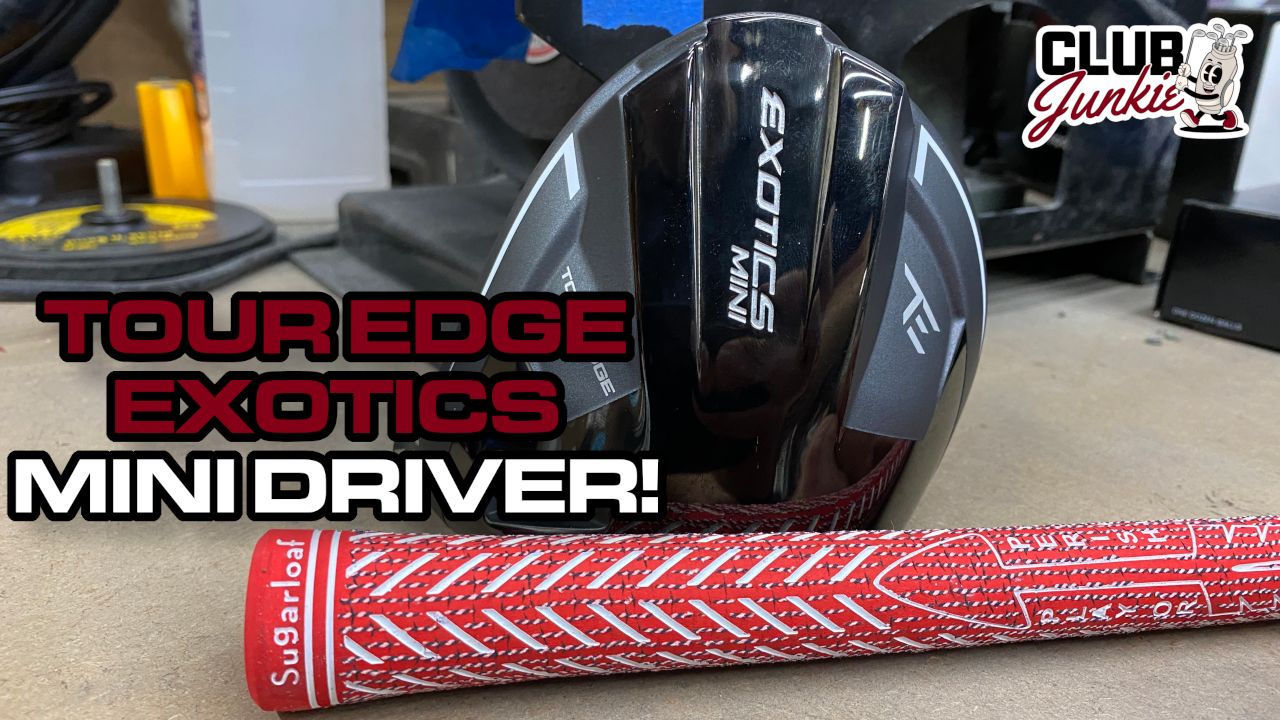
On this episode of Club Junkie, I put the new Tour Edge Exotics Mini Driver to the test and break down the performance, forgiveness, distance, and where it fits compared to a traditional driver or strong fairway wood. If you have been curious about adding a mini driver to the bag, this one is worth a look.
I also dive into the new TaylorMade Spider ZT Max putter that was recently spotted and discuss the growing zero torque putter trend. Plus, there is a closer look at the new Project X Titan Yellow shaft showing up on the PGA Tour and what makes it different from other profiles currently out there.

What’s the story behind Webb Simpson’s custom-stamped irons?

Memorial Tournament Tour Report: Rory McIlroy, Cameron Young switch up drivers, and more

Cadillac Championship Tour Report: Spieth’s sizable changes, McLaren Golf launches, and more

Russell Henley’s winning WITB: 2026 Charles Schwab Challenge

Kristoffer Reitan’s winning WITB: 2026 Truist Championship

Best irons 2026: Best irons overall, most forgiving irons, and more

J.T. Poston’s winning WITB: 2026 Memorial Tournament

Aaron Rai’s winning WITB: 2026 PGA Championship

Cameron Young’s winning WITB: 2026 Cadillac Championship

Details on Jason Day’s latest prototype Avoda iron setup


Christiaan Maas WITB 2026 (June)
Driver: TaylorMade Qi4D LS (8 degrees) Shaft: Fujikura Ventus TR Blue 6 X 3-wood: TaylorMade Qi10 (15 degrees) Shaft: Fujikura Ventus Black...


Ryan Palmer WITB 2026 (June)
Driver: Callaway Quantum Triple Diamond (9 degrees) Shaft: Project X HZRDUS Smoke Blue RDX 60 TX 3-wood: TaylorMade Qi10 (15 degrees) Shaft:...


Bud Cauley WITB 2026 (June)
Bud Cauley had >14 clubs in his bag when photographed prior to the Memorial Tournament. Driver: Titleist GTS2 (8 degrees) Shaft: Fujikura...


Hannah Green WITB 2026 (June)
Driver: Titleist GTS3 (10 degrees, D4 SureFit setting) Shaft: Mitsubishi Chemical Diamana RB 53 S 3-wood: Titleist GT3 (15 degrees,...
-
 Equipment7 days ago
Memorial Tournament Tour Report: Rory McIlroy, Cameron Young switch up drivers, and more
-
 News2 weeks ago
Russell Henley’s winning WITB: 2026 Charles Schwab Challenge
-
 Equipment4 days ago
Best irons 2026: Best irons overall, most forgiving irons, and more
-
 Whats in the Bag4 days ago
J.T. Poston’s winning WITB: 2026 Memorial Tournament
-
 Equipment1 week ago
Details on Jason Day’s latest prototype Avoda iron setup
-

 Equipment3 weeks ago
CJ Cup Byron Nelson Tour Report: Koepka and Kim’s newest putters finally get hot
-

 News2 weeks ago
Charles Schwab Challenge Tour Report: MacIntyre, Åberg and Spaun all switch putters, TaylorMade launches new Spider
-

 Equipment2 weeks ago
Details on J.J. Spaun’s surprise putter switch


Fred
Aug 12, 2013 at 3:00 pm
As the president of the American Purple Prose Society, I give this maudlin, cliched and trite article our highest award, the Tin Eyeball.
8thehardway
Aug 11, 2013 at 11:49 am
I kept the post brief hoping to lure the author out of hiding but it’s a difficult position to defend. I think more words allows more places for the author to hide behind, but here’s the full scope of my thoughts and feelings and thanks for asking…
I wouldn’t expect many “drunks” (in the author’s sense, perpetually inebriated) to golf but when they do, why would they frequent the one venue that doesn’t serve alcohol? Any conclusion must speak to an indifference or tolerance that occurs throughout America’s 2000+ municipal courses and, until clarified, exists as a blanket indictment of every participant.
Does the author believe the random distribution of golfing drunks gravitates toward municipal courses because of universally bad management and indifferent staff or an exceedingly tolerant golfing public? Does it seem to him even remotely possible that a mix of golfers including parents playing with their children and golfers with the authority to enforce, or even make laws would endure six-hour rounds, dodge drives and tolerate alcohol-fueled vandalism or that management/staff would show a continued indifference to on-course complaints, higher maintenance budgets, confrontations and lawsuits?
I’ve played hundreds of rounds on seven local municipal courses and find no basis for such a provocative and offensive statement; it demeans all who contribute to and enjoy the experience of municipal golf and negatively influences those considering it. It promotes an ‘us/them’ approach that is out of place within the community of golfers and it’s inclusion makes absolutely no sense within the theme of the article itself.
Why introduce such discordance, other than to promote a divide so deeply embedded that its uncritical acceptance constitutes an integral part of his ideal life. It seems the ghosts who speak to him are country club ghosts; not surprisingly, they also make judgements about who deserves to hear them expound on ‘the joy of the game.’ I’d have a hard time understanding that paradox but apparently the author’s ears are perfectly attuned.
The author wrote that he learned to be a gentleman on the course; I hope completes the remainder of his education.
8thehardway
Aug 9, 2013 at 9:49 pm
” We are members of a golf club (or country club) because we love playing on nice courses and we hate having our valuable time wasted by drunks and unskilled people who frequent municipal courses. ”
What makes you think drunks frequent municipal courses?
chris franklin
Aug 8, 2013 at 3:31 pm
Stick with the day job……
Arnold
Aug 7, 2013 at 11:48 pm
Smitty,
I’ve done many an evening as you have so articulately and so aptly described, yet there is something to be said for the first light, the first to marked the dew filled course with but your foot prints. How I loved the sight of the rooster tail but not the ball falling well short. It always took until the 4th hole for the greens to dry out, and then to the sixth hole for my pant legs to dry.
It’s been a while back yet I seem to still remember. Thanks Smitty for reminding me of those favorite things that I’d thought that I’d forgotten.
Thanks Buddy
Mac
Rob
Aug 7, 2013 at 5:15 pm
I’m still young but I live for playing alone at that time of day! There is nothing like being alone on the course when the shadows are getting long, the air is getting brisk, and the only sound you hear is the clacking of your clubs. It’s so peaceful, and so relaxing – I love it.
RLL
Aug 7, 2013 at 3:59 pm
Great article, George. There are lots of us who know what you describe so well. I like playing alone at that time of day, too.
paul
Aug 6, 2013 at 10:17 pm
Nice writing. kind of depressing though. not my style. and i am still young. makes me want to stay that way.
Dee
Aug 7, 2013 at 3:57 pm
Good luck with that, son…
Martin
Aug 6, 2013 at 5:54 pm
Great read, I don’t have my old stuff anymore but the thrill of a perfectly executed knockdown 5 iron still send shivers down my spine and makes the club twirl automatically in my hands. Watching the ball fly when you know it’s perfect is one life’s great feelings.