
Opinion & Analysis
English wins in Memphis, but he won’t play the U.S. Open


Another week in the books on the Tour and another PGA newcomer, Harris English, won a PGA Tour Event by taking the title at the St. Jude Classic in Memphis. English finished two shots ahead of elder statesman, Phil Mickelson, and two-time Tour winner, Scott Stallings. If it seems like the level of competition on the PGA Tour is tightening up, you’re right.
No longer can one of the world’s top-10 golfers stroll in expecting to win week-in and week-out on the PGA Tour. It seems more than ever that new and unknown golfers are climbing up the leader boards each week, and many have actually made a name for themselves.
Heck, in just a short amount of time, guys who were relative unknowns just a few years ago are the ones garnering much of the attention. Familiar names like Keegan Bradley, Brandt Snedecker, Dustin Johnson and Rickie Fowler have become mainstream in the past few years not just to those who follow Tour every week, but to fans outside the Tour’s core audience as well.
Since Harris English is just 23 years old, it is worth noting that he (and Derek Ernst just a few weeks ago, who won the Wells Fargo Championship) are the youngest players to have won on the Tour this year. Noting their young age, it made me wonder if we are seeing an uptick in younger players winning Tour events. So, I turned to the stats to find out!
English’s win represents the eighth win by a player in his 20s this year on Tour. Add that to the number of winners in their 20s the entire season last year, and the total is 23 players to have won in 70 total tournaments. That means that players in their 20s have won 33 percent of the events in the past 18 months. Here’s what else I found in sorting through the numbers based on age (rankings are based on 2013 earnings):
- Players in their 20s make up 30 percent of the Tour’s top 150 players.
- Of the top 150, the average age of a PGA professional is 33 years old.
- Players in their 20s have made the top 10 in a tournament 33 percent of the time (94 of 288).
- In fact, in just about all key categories (cuts made, top-10 finishes, earnings and events) players under 30 are carving out about 32 to 35 percent of the pie, just over what would be expected based on the percentage of Tour.
Digging deeper, a study performed by Texas A&M from 10 years ago concluded that golfers peak between the ages of 30 and 35. So, in this small sample, the numbers may be showing that the collective skill of professional golfers is trending younger. Granted, it’s not an earth-shifting amount based on the data above, but certainly worth noting.
Now, this may all be a bubble and the ship will right itself, but it does feel like the “Young Guns” are beginning to put their stamp on the PGA Tour even more now than has been the case in the past.
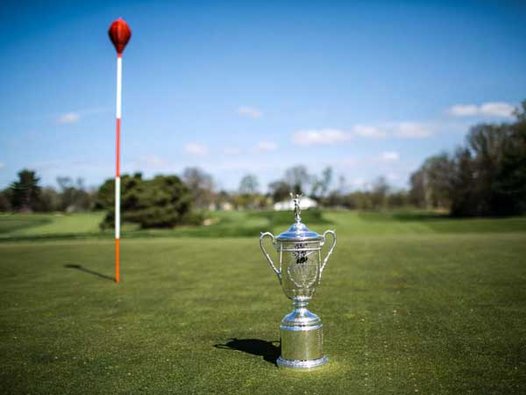
It’s a win on tour, but English is still free next weekend!
Following the win, English said that the most special part about the victory is that it has granted him the boyhood wish that he has always dreamed of: qualifying for the 2014 Masters. Being a native Georgian has to make it even that much more sweet when he makes the drive down to Augusta next April. But, before English makes any plans to fly straight to Merion this weekend to lace them up for the U.S. Open, think again. Winning on the PGA Tour doesn’t automatically qualify a golfer for the U.S. Open. As a result, English’s schedule will remain free for Father’s Day weekend this year.
So, how does someone qualify for the U.S. Open? It’s complicated and the deck is pretty stacked against the newcomers, but there are numerous avenues for making it in. Here’s every way possible to make the field of 156 can make it in (and yes, weekend duffers…there is hope for you, as well!):
- Win a U.S. Open in the last 10 years.
- Win or finish runner-up in the previous year’s U.S. Amateur.
- Win the previous year’s Amateur Championship.
- Be the previous year’s top-ranked amateur golfer in the world.
- Win the Masters, British Open or PGA Championship in the last five years.
- Win one of the last three The Players Championships.
- Win the current year’s BMW PGA Championship.
- Win the last U.S. Senior Open.
- Finish in the top-10 and ties in the previous year’s U.S. Open.
- Qualify for the previous year’s Tour Championship.
- Be in the top-60 in the Official World Golf Ranking (OWGR) as of two weeks before the start of the tournament.
- Be in the top-60 in the OWGR as of the tournament date.
- All remaining spots after the second top-60 OWGR cutoff date filled by alternates from qualifying tournaments.
Whew!
So, with a field of 156 to fill each year’s U.S. Open, once all of those exemptions have filled-up, players with a handicap index of 1.4 or better are allowed to go through the qualifying process. It’s a two-stage process where first players must get through local qualifying in order to move on to Sectional qualifying.
In the Sectionals, the local qualifiers are joined by many of the leading players (who are exempted from needing to make through the locals). Thirty-six holes are played in one day across the U.S. (aka “Golf’s Longest Day”). Winners of these events have qualified for the U.S. Open, giving them a shot at their biggest and wildest dreams.
But don’t get your hopes too high, duffers. Think about it this way: English won the FedEx St. Jude Classic on June 9, but five days earlier shot 71-74 in a U.S. Open Sectional Qualifier to finish 37th, six shots out of an alternate spot that was earned by — get this — FexEx St. Jude Classic runner-up Scott Stallings.
So yes, you can be talented enough to win on the PGA Tour one day, but the next you might not be able to qualify for the U.S. Open. What a tough game!



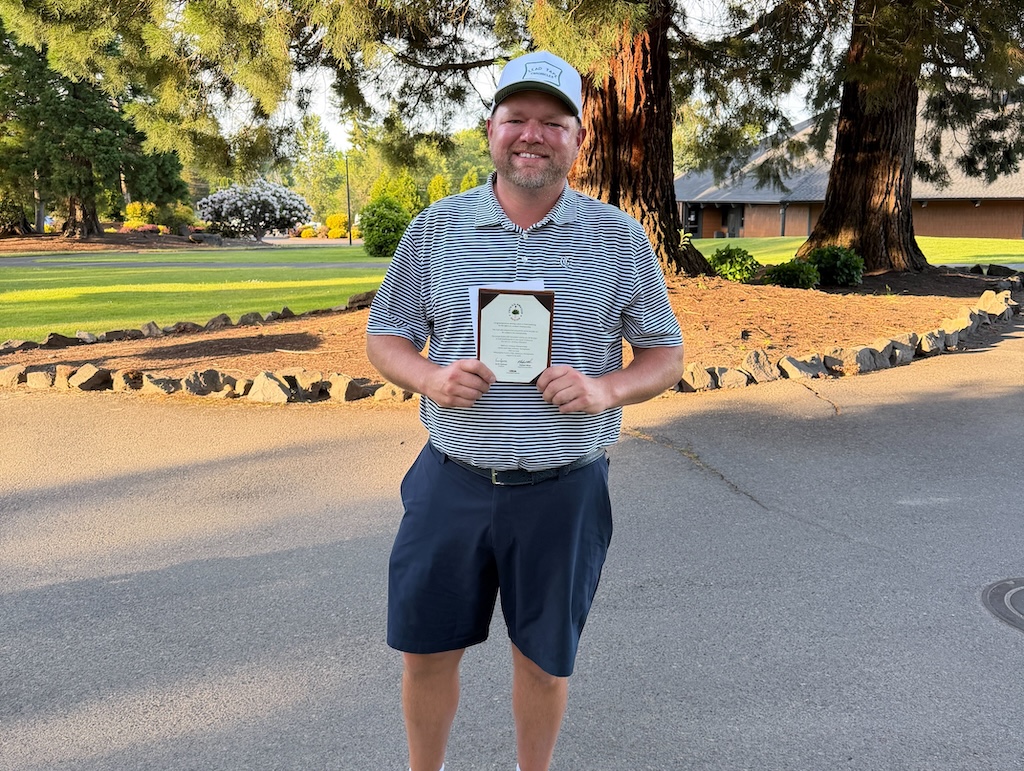
This past Monday, I played in the U.S. Amateur local qualifier at Rock Creek Country Club in Portland, Oregon. A full tee sheet from 7:30 a.m. to 1:55 p.m., the top 11 scores would make it to the U.S. Amateur final qualifying.
I teed off at 10:48 a.m.. With the 7:30 am tee time, you can get a feel for the leaders’ pace, and they were off and running on the challenging setup at Rock Creek.
View this post on Instagram
Getting to the highlight of the round on the par five 17th, a drive up the left side and 212 yards left to the front hole location. I took out a 5-iron with plans of middle of the green. The ball ended up 8 feet left of the hole, pin high. A slight downhill putt dropped in for an eagle 3 on the 17th. With the cut line looking to be anywhere from -2 to even par. This was the boost I had been waiting for all day.
With making par from the trees on 18, it was time to wait for a potential playoff with a posted score of one under par 71.
Three hours later, it was playoff time. 8 players for 6 spots. I made par on the playoff hole, which was good enough to advance to the U.S. Amateur final qualifying in July. USGA qualifiers sure deliver on all of the emotions in golf!
Club Junkie
Building my 2026 gamer WITB: Ranking the contenders and new putter projects – Club Junkie Podcast

The annual What’s In The Bag build is underway, and on this episode of Club Junkie, Brian breaks down the clubs currently leading the race for a spot in his 2026 gamer setup. From drivers and fairway woods to irons, wedges, and shafts, he ranks the equipment that’s performing best and explains what’s separating the front runners from the rest of the field.
Brian also heads into the workshop to discuss several putter projects currently on the bench. From head options and shaft choices to build ideas and testing plans, he shares what he’s working on and which putters could become serious contenders for the bag this season.
If you’re a gear junkie who loves equipment testing, club building, and the never-ending pursuit of the perfect setup, this episode is for you.
Follow Club Junkie:
Instagram: @clubjunkiepod
TikTok: @clubjunkiepod
Threads: @clubjunkiepod
X: @ClubJunkiePod
Club Junkie
Tour Edge Exotics mini driver review + TaylorMade Spider ZT Max first look – Club Junkie

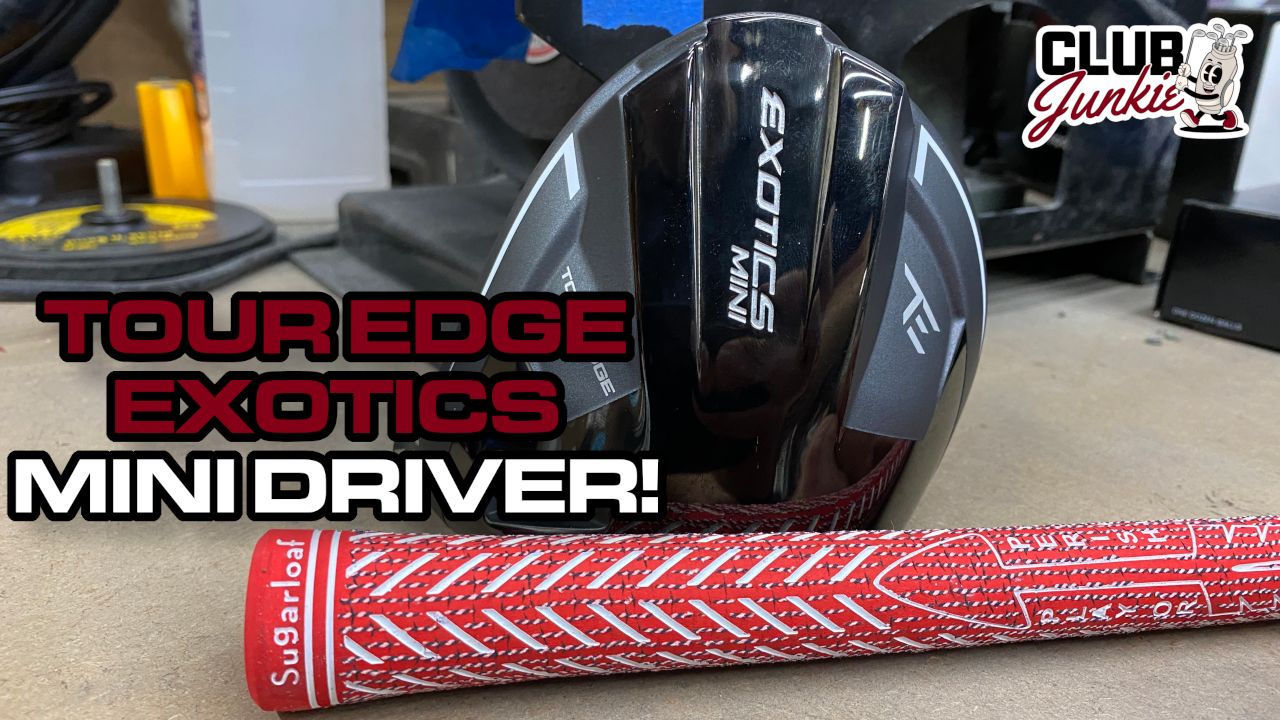
On this episode of Club Junkie, I put the new Tour Edge Exotics Mini Driver to the test and break down the performance, forgiveness, distance, and where it fits compared to a traditional driver or strong fairway wood. If you have been curious about adding a mini driver to the bag, this one is worth a look.
I also dive into the new TaylorMade Spider ZT Max putter that was recently spotted and discuss the growing zero torque putter trend. Plus, there is a closer look at the new Project X Titan Yellow shaft showing up on the PGA Tour and what makes it different from other profiles currently out there.

What’s the story behind Webb Simpson’s custom-stamped irons?

Memorial Tournament Tour Report: Rory McIlroy, Cameron Young switch up drivers, and more

Cadillac Championship Tour Report: Spieth’s sizable changes, McLaren Golf launches, and more

Russell Henley’s winning WITB: 2026 Charles Schwab Challenge

Kristoffer Reitan’s winning WITB: 2026 Truist Championship

Best irons 2026: Best irons overall, most forgiving irons, and more

J.T. Poston’s winning WITB: 2026 Memorial Tournament

Aaron Rai’s winning WITB: 2026 PGA Championship

Cameron Young’s winning WITB: 2026 Cadillac Championship

Details on Jason Day’s latest prototype Avoda iron setup


Christiaan Maas WITB 2026 (June)
Driver: TaylorMade Qi4D LS (8 degrees) Shaft: Fujikura Ventus TR Blue 6 X 3-wood: TaylorMade Qi10 (15 degrees) Shaft: Fujikura Ventus Black...


Ryan Palmer WITB 2026 (June)
Driver: Callaway Quantum Triple Diamond (9 degrees) Shaft: Project X HZRDUS Smoke Blue RDX 60 TX 3-wood: TaylorMade Qi10 (15 degrees) Shaft:...


Bud Cauley WITB 2026 (June)
Bud Cauley had >14 clubs in his bag when photographed prior to the Memorial Tournament. Driver: Titleist GTS2 (8 degrees) Shaft: Fujikura...


Hannah Green WITB 2026 (June)
Driver: Titleist GTS3 (10 degrees, D4 SureFit setting) Shaft: Mitsubishi Chemical Diamana RB 53 S 3-wood: Titleist GT3 (15 degrees,...
-
 Equipment6 days ago
Memorial Tournament Tour Report: Rory McIlroy, Cameron Young switch up drivers, and more
-
 News2 weeks ago
Russell Henley’s winning WITB: 2026 Charles Schwab Challenge
-
 Equipment3 days ago
Best irons 2026: Best irons overall, most forgiving irons, and more
-
 Whats in the Bag4 days ago
J.T. Poston’s winning WITB: 2026 Memorial Tournament
-
 Equipment1 week ago
Details on Jason Day’s latest prototype Avoda iron setup
-

 Equipment3 weeks ago
CJ Cup Byron Nelson Tour Report: Koepka and Kim’s newest putters finally get hot
-

 News2 weeks ago
Charles Schwab Challenge Tour Report: MacIntyre, Åberg and Spaun all switch putters, TaylorMade launches new Spider
-

 Equipment2 weeks ago
Details on J.J. Spaun’s surprise putter switch

