
Opinion & Analysis
Do Fairways Hit Equal Low Scores?


If you’ve played this game long enough, you know how important it is to hit the fairway. It allows any of us to control the ball’s spin and flight far easier than out of the rough or in a bunker.
With that being the case, one would think that the men winning on the PGA Tour week-in and week-out would be the leaders of fairways hit. It is easy to come to this conclusion but a look at the stats is surprising. Tiger Woods, the greatest golfer of our time, is no straight hitter off the tee and neither is Phil Mickelson, the next winningest player on Tour. So how is it that they win so frequently? Because driving accuracy is not as important as you might think.
Driving the golf ball straight is important, but there are far more important stats like Strokes Gained-Putting and scoring. Driving the ball straight is far less important than putting and getting up and down from 100 yards and in.
Of course, golfers can’t hit it all over the planet; they have to keep it in bounds and out of hazards. So if you’re hitting 70-yard slices and hooks that should be a addressed, but if your stats show you miss fairways but keep it within the tree line and you’re still not scoring, hitting it straighter might not be the pace to focus.
The top-10 players leading in driving accuracy on the PGA Tour are probably not who you think they are. There is definitely something to the adage “drive for show, putt for dough.” Below are two graphs, the first is showing the top-five leaders in driving accuracy, the second is showing the top FedEx Cup points leaders.
Jeff Maggert is fifth in driving accuracy on Tour at 71.46 percent. He also has a very respectable GIR percentage (Greens in Regulation) at 68.20 percent, which ranks him 3oth on Tour. With numbers like that, it would be easy to conclude he would be having a standout year and be ranked high in the FedExCup Standings.But he’s not even close. Maggert is ranked 156th in the FedExCup standings.


Once again, it is all what you do 100 yards and in on a hole. When looking at the first graph, only one man on it is having a stellar year, Graeme McDowell. Why is that? Well, it is easy to see when you move across the graph and look at his scrambling stat. He is a grinder with a scrambling stat of 74.49 percent, which means he makes par 74.49 percent of the time when he misses a green. Jeff Maggert on the other hand only makes par 59.38 percent of the time under those same circumstances.
And the five men leading in driving accuracy are not leading in the strokes gained putting category. All of them, with the exception of McDowell and Kohles, are giving shots back to the field putting.
The first shocking thing noticeable is that Woods and Mickelson are no better than 56 percent in driving accuracy. Tiger, on the other hand, is lapping the field in the strokes gained putting, not so much for Mickelson, but he is very respectable at .345 in that category. Seve Ballesteros was never ever a great driver of the ball but that man could get up and down from the moon.
Snedeker is the most consistent member in this group, because he does everything well. He is not leading in any of the categories, but he is near the top in most. He is a straight hitter with both his woods and irons and he can scramble. It is not hard to see why he is having a standout year this year. Kevin Streelman, who won his first tournament this year at the Tampa Bay Championship, is havign a Snedeker-type season — he’s doing everything well, too.
So what is separating Tiger Woods, who has won three times in 2013, from everyone else? Putting, putting, putting. I’ll take some literary freedom here and draw what I think is the most important thing about Tiger: He is never out of a hole. He may hit it into a bunker or the trees, but he fights it out knowing there is a great chance if he can get on the green with a stroke to spare he will make that putt.
These stats show that we as amateur golfers probably spend too much time working on the long game. A golfer’s time would be far better spent practicing the game from 100 yards and in. With half of the stats on a par 4 allotted to putting, that should tell us something. Also, if a golfer can get his wedge play to be accurate from inside 100, it will wear out the people you play — just ask Jeff Maggert.
With all of this in mind, we should head out to the putting and pitching green and commit to getting good in these areas. I realize spending 30 minutes or more putting doesn’t have the appeal of bombing out long, straight drives on the range. But keep in mind how much lower your scores will get if you only need two shots from inside 100 yards. That should be motivation enough!












This past Monday, I played in the U.S. Amateur local qualifier at Rock Creek Country Club in Portland, Oregon. A full tee sheet from 7:30 a.m. to 1:55 p.m., the top 11 scores would make it to the U.S. Amateur final qualifying.
I teed off at 10:48 a.m.. With the 7:30 am tee time, you can get a feel for the leaders’ pace, and they were off and running on the challenging setup at Rock Creek.
View this post on Instagram
Getting to the highlight of the round on the par five 17th, a drive up the left side and 212 yards left to the front hole location. I took out a 5-iron with plans of middle of the green. The ball ended up 8 feet left of the hole, pin high. A slight downhill putt dropped in for an eagle 3 on the 17th. With the cut line looking to be anywhere from -2 to even par. This was the boost I had been waiting for all day.
With making par from the trees on 18, it was time to wait for a potential playoff with a posted score of one under par 71.
Three hours later, it was playoff time. 8 players for 6 spots. I made par on the playoff hole, which was good enough to advance to the U.S. Amateur final qualifying in July. USGA qualifiers sure deliver on all of the emotions in golf!
Club Junkie
Building my 2026 gamer WITB: Ranking the contenders and new putter projects – Club Junkie Podcast

The annual What’s In The Bag build is underway, and on this episode of Club Junkie, Brian breaks down the clubs currently leading the race for a spot in his 2026 gamer setup. From drivers and fairway woods to irons, wedges, and shafts, he ranks the equipment that’s performing best and explains what’s separating the front runners from the rest of the field.
Brian also heads into the workshop to discuss several putter projects currently on the bench. From head options and shaft choices to build ideas and testing plans, he shares what he’s working on and which putters could become serious contenders for the bag this season.
If you’re a gear junkie who loves equipment testing, club building, and the never-ending pursuit of the perfect setup, this episode is for you.
Follow Club Junkie:
Instagram: @clubjunkiepod
TikTok: @clubjunkiepod
Threads: @clubjunkiepod
X: @ClubJunkiePod
Club Junkie
Tour Edge Exotics mini driver review + TaylorMade Spider ZT Max first look – Club Junkie

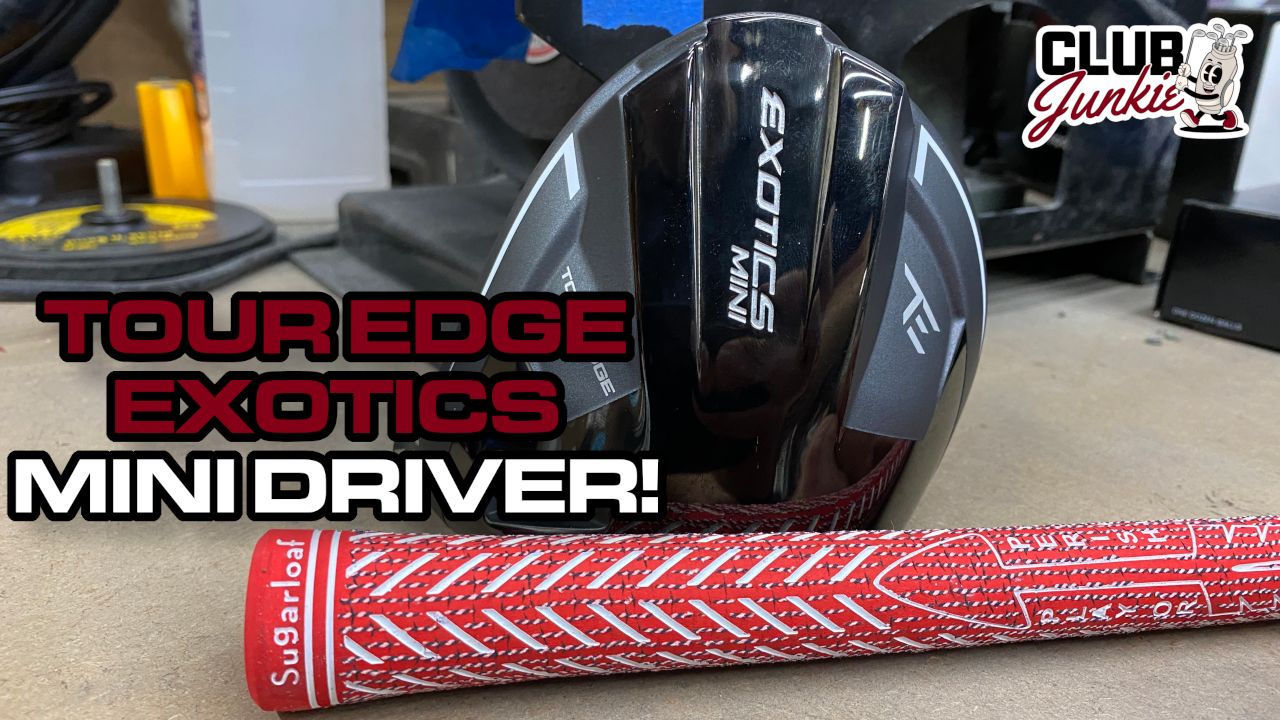
On this episode of Club Junkie, I put the new Tour Edge Exotics Mini Driver to the test and break down the performance, forgiveness, distance, and where it fits compared to a traditional driver or strong fairway wood. If you have been curious about adding a mini driver to the bag, this one is worth a look.
I also dive into the new TaylorMade Spider ZT Max putter that was recently spotted and discuss the growing zero torque putter trend. Plus, there is a closer look at the new Project X Titan Yellow shaft showing up on the PGA Tour and what makes it different from other profiles currently out there.

Justin Rose WITB 2026 (April): Full WITB breakdown with new McLaren irons

What’s the story behind Webb Simpson’s custom-stamped irons?

Memorial Tournament Tour Report: Rory McIlroy, Cameron Young switch up drivers, and more

Cadillac Championship Tour Report: Spieth’s sizable changes, McLaren Golf launches, and more

Russell Henley’s winning WITB: 2026 Charles Schwab Challenge

Kristoffer Reitan’s winning WITB: 2026 Truist Championship

Aaron Rai’s winning WITB: 2026 PGA Championship

Cameron Young’s winning WITB: 2026 Cadillac Championship

J.T. Poston’s winning WITB: 2026 Memorial Tournament

Best irons 2026: Best irons overall, most forgiving irons, and more


Bud Cauley WITB 2026 (June)
Bud Cauley had >14 clubs in his bag when photographed prior to the Memorial Tournament. Driver: Titleist GTS2 (8 degrees) Shaft: Fujikura...


Hannah Green WITB 2026 (June)
Driver: Titleist GTS3 (10 degrees, D4 SureFit setting) Shaft: Mitsubishi Chemical Diamana RB 53 S 3-wood: Titleist GT3 (15 degrees,...


Asterisk Talley WITB 2026 (June)
Driver: TaylorMade Qi4D (9 degrees) Shaft: Fujikura Ventus Blue 6 S 3-wood: TaylorMade Qi4D (16.5 degrees) Shaft: Fujikura Ventus Blue...


Brianna Do WITB 2026 (June)
Driver: Callaway Quantum Triple Diamond (9 degrees) Shaft: KBS PGW 3-wood: Callaway Elyte Titanium (15 degrees) Shaft: KBS PGW 5-wood:...
-
 Equipment6 days ago
Memorial Tournament Tour Report: Rory McIlroy, Cameron Young switch up drivers, and more
-
 News1 week ago
Russell Henley’s winning WITB: 2026 Charles Schwab Challenge
-
 Whats in the Bag3 days ago
J.T. Poston’s winning WITB: 2026 Memorial Tournament
-
 Equipment3 days ago
Best irons 2026: Best irons overall, most forgiving irons, and more
-

 Equipment1 week ago
Details on Jason Day’s latest prototype Avoda iron setup
-
 Equipment3 weeks ago
CJ Cup Byron Nelson Tour Report: Koepka and Kim’s newest putters finally get hot
-

 News2 weeks ago
Charles Schwab Challenge Tour Report: MacIntyre, Åberg and Spaun all switch putters, TaylorMade launches new Spider
-
 Equipment2 weeks ago
Details on J.J. Spaun’s surprise putter switch


Adrian
Dec 7, 2013 at 10:48 am
While I agree that the short game is very important in my opinion the long game is much more important until you get to a certain level, which is probably below a 5 handicap, when those strokes saved really come into play. The most important stat to an amateur golfer in my opinion is greens in regulation. Greens in regulation have almost a direct correlation with an amateurs score. Increasing GIR will have a much bigger impact on the score. I have always hit around 60% of my fairways but it wasn’t until this past month when I got my GIR’s up from 24 to 56 percent that my scoring really improved. My putts per round are rarely below 31 but I still shoot in the mid 70’s since I am hitting 9-10 greens and getting up and down 30 to 40 % of the time when I miss the green. Not saying short game isn’t important, but long game is what really costs most golfers.
John Scott
May 1, 2013 at 5:09 pm
Interesting article but can you correct the spelling on Seve Ballesteros please, you have his surname wrong.
Cheers.
Matt M
May 2, 2013 at 4:44 am
Sorry bout the Seve typo no disrepect meant.
Troy Vayanos
Apr 27, 2013 at 9:53 pm
Great post Matt,
It just goes to show how important the short game is and the ability to get up and down from everywhere.
My local driving range is filled with guys practising just their driver and yet the putting green is empty … go figure!
Cheers
dbamford
Apr 26, 2013 at 1:09 pm
One point I forgot to mention — there is a BIG difference between launching a 300-yard bomb from the tee into the rough, which happens to be blanketed by a crowd of spectators and PGA ball-spotters.
If average golfers don’t hit fairways, the ball might be lost. If your drives are 300+ yards, that becomes “frequently” lost. The lack of spotters and galleries reduces the payoff for the “bomb it into the rough” strategy in the real-world.
My biggest pet peeve is landing a shot in the center of the fairway and having the ball simply vanish. Maybe it hit a sprinkler head and ricocheted, maybe it fell into a hole, who knows… everyone has had this happen to them at one time or another.
Nick
Aug 6, 2013 at 10:16 am
Could not agree more. Many times I see errant drives by the big hitters that I know for a fact would be lost and gone forever for the average player. With LB being so overly penalized (should be a lateral IMO) that’s a huge impact on your average players score that the pros deal with far less frequently.
dbamford
Apr 26, 2013 at 12:52 pm
I tracked every club I hit over the last 5 or 6 rounds I played last season. It’s not something I had ever done before but it sure was eye-opening. A full 50% of the shots I hit were from my 9-iron through my LW. Another 25% were between by 6I and my 9I. I could almost throw away every club between my driver and my 5I and not be too bad off.
I guess the point I’m making is that In agreement with this article and many others that the lofted irons and putters are the most critical clubs to master. If you’re a good bunker/rough/junk player (e.g. a master of you wedges) you won’t care so much where you land. Bomb it close, plop it on the green for your GIR, and putt. If you’re not a long hitter you had better hit the green from 200+ out, and that is perhaps impossible on highly protected and fast greens. Ironically, if greens were approachable from long distances, or weren’t too slick to hold an approach shot, it might negate the long hitters’ advantage of coming into the green with a lob wedge all the time.
I really agree that it is GIR + Putting that counts. If you are getting your GIR (however you slice it) you will have scoring chances.
JChoj
Apr 26, 2013 at 11:54 am
I really wish they would make it harder for them to hit out of the rough. Pros just don’t care where the ball is. Make it more rewarding for the player to hit the fairway.
Mike
Apr 26, 2013 at 10:51 am
I get what you are saying here. But I’d love to see a statistical analysis of how much better Tiger scores when he is hitting fairways consistently, and same with Phil. Tiger and Phil’s short games are usually consistently good to great, but when they are hitting fairways it seems that they have many more birdie and eagle opportunities.