
Opinion & Analysis
Ryan: The honest truth about dishonesty in college golf

A little over a decade ago, Duke professor Dan Ariely published The (Honest) Truth About Dishonesty, a bestselling book exploring the small ways people cheat — and how they rationalize it. But in a cruel twist, Ariely’s own work was recently discredited after it was revealed that key data in the book was fabricated.
In most corners of higher education, this kind of ethical breach leads to professional exile. But in college athletics? Cheating is often just a detour on the road to promotion.
Nowhere is this more apparent than in the bloated bureaucracies of NCAA sports. Under the doctrine of “institutional control,” athletic departments are tasked with upholding the values of the universities they represent. That’s the theory. In practice, many schools pour two to three times more into sports administration than into scholarships, some spending upwards of $30 million on compliance and oversight alone. With that kind of investment, one might expect rigorous enforcement of the rules. But the reality? College athletics is a system where ethical lines blur, and cheating isn’t punished — it’s normalized.
To gauge just how bad things are, I conducted a small but revealing survey in 2023. I asked 50 Division I college golf coaches four straightforward questions. Thirty-nine responded. Here’s what they said:
1. Do you believe there is cheating in college golf?
100% said “Yes.”
2. Do you have faith that reporting a transgression would trigger a proper investigation?
Only 32% did.
3. Do coaches fear reprisals for speaking up?
20% said “Yes.”
4. Would your administration support you if you reported a fellow coach?
85% believed they would.
These numbers are damning. Two-thirds of coaches doubt the reporting process works. One in five fears retaliation for doing the right thing. And nearly as many question whether their own institutions have their backs.
Several coaches brought up the 2023 Golf Coaches Association of America Hall of Fame class as a prime example of this ethical erosion. One inductee had previously been penalized for 64 impermissible recruiting contacts with prospects and their families between 2012 and 2013. The NCAA gave him a four-year show-cause penalty — essentially a ban from coaching. Yet just a decade later, he was honored with a Hall of Fame induction. Somewhere, Pete Rose is shaking his head.
These contradictions cut to the heart of higher education’s mission. Colleges are supposed to prepare students for the real world — a world that demands good judgment, moral clarity, and resilience. Instead, we’re teaching student-athletes that power excuses misconduct and that cheating is not just tolerated, but rewarded.
In law, we trust precedent — stare decisis — to guide future judgments. In NCAA governance, Tarkanian v. NCAA (1988) established that schools bear the burden of institutional control. But the data from 2023 suggests that model has failed. If the people responsible for oversight are unwilling — or unable — to enforce the rules, what exactly are they controlling?
Dan Ariely may never work in academia again, and perhaps he shouldn’t. But the coaches who cheat in plain sight? They get second chances, new jobs, and even Hall of Fame plaques. This isn’t just hypocrisy. It’s a systemic failure. And if it’s happening in college golf — the least scrutinized of NCAA sports — what do we imagine is happening in football and basketball?
The honest truth about dishonesty in college athletics is that it’s not an anomaly. It’s a tactic. For too many in charge, it’s working exactly as intended.



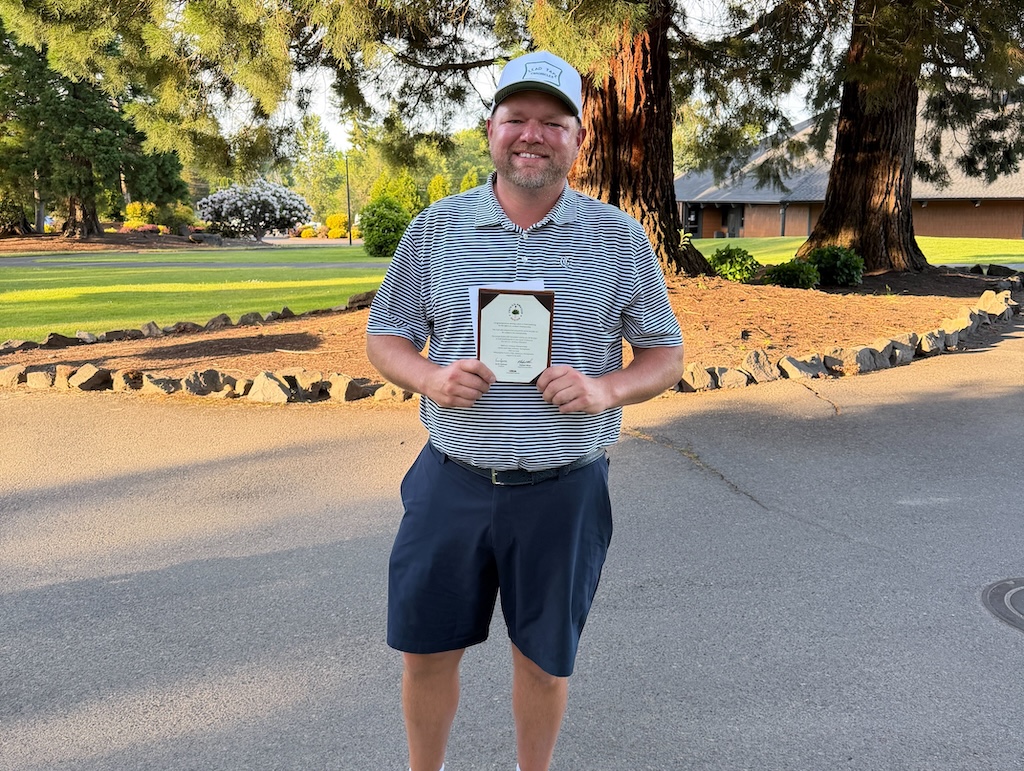
This past Monday, I played in the U.S. Amateur local qualifier at Rock Creek Country Club in Portland, Oregon. A full tee sheet from 7:30 a.m. to 1:55 p.m., the top 11 scores would make it to the U.S. Amateur final qualifying.
I teed off at 10:48 a.m.. With the 7:30 am tee time, you can get a feel for the leaders’ pace, and they were off and running on the challenging setup at Rock Creek.
View this post on Instagram
Getting to the highlight of the round on the par five 17th, a drive up the left side and 212 yards left to the front hole location. I took out a 5-iron with plans of middle of the green. The ball ended up 8 feet left of the hole, pin high. A slight downhill putt dropped in for an eagle 3 on the 17th. With the cut line looking to be anywhere from -2 to even par. This was the boost I had been waiting for all day.
With making par from the trees on 18, it was time to wait for a potential playoff with a posted score of one under par 71.
Three hours later, it was playoff time. 8 players for 6 spots. I made par on the playoff hole, which was good enough to advance to the U.S. Amateur final qualifying in July. USGA qualifiers sure deliver on all of the emotions in golf!
Club Junkie
Building my 2026 gamer WITB: Ranking the contenders and new putter projects – Club Junkie Podcast

The annual What’s In The Bag build is underway, and on this episode of Club Junkie, Brian breaks down the clubs currently leading the race for a spot in his 2026 gamer setup. From drivers and fairway woods to irons, wedges, and shafts, he ranks the equipment that’s performing best and explains what’s separating the front runners from the rest of the field.
Brian also heads into the workshop to discuss several putter projects currently on the bench. From head options and shaft choices to build ideas and testing plans, he shares what he’s working on and which putters could become serious contenders for the bag this season.
If you’re a gear junkie who loves equipment testing, club building, and the never-ending pursuit of the perfect setup, this episode is for you.
Follow Club Junkie:
Instagram: @clubjunkiepod
TikTok: @clubjunkiepod
Threads: @clubjunkiepod
X: @ClubJunkiePod
Club Junkie
Tour Edge Exotics mini driver review + TaylorMade Spider ZT Max first look – Club Junkie

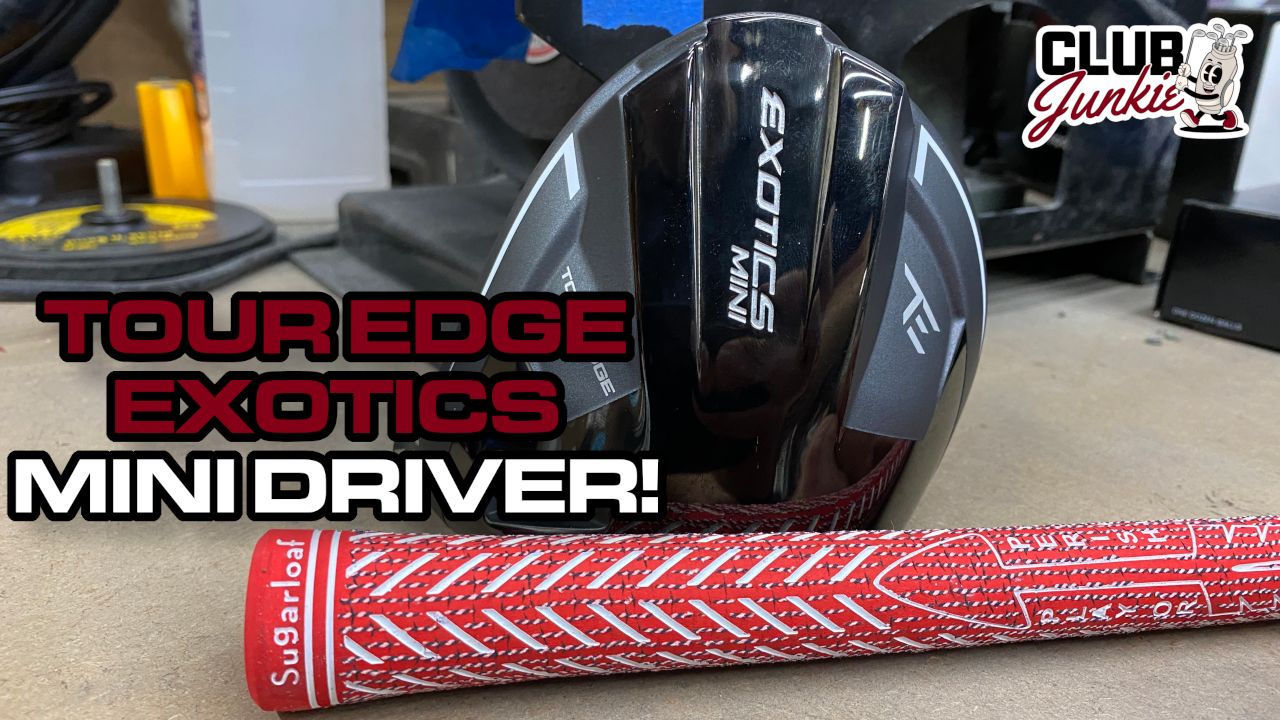
On this episode of Club Junkie, I put the new Tour Edge Exotics Mini Driver to the test and break down the performance, forgiveness, distance, and where it fits compared to a traditional driver or strong fairway wood. If you have been curious about adding a mini driver to the bag, this one is worth a look.
I also dive into the new TaylorMade Spider ZT Max putter that was recently spotted and discuss the growing zero torque putter trend. Plus, there is a closer look at the new Project X Titan Yellow shaft showing up on the PGA Tour and what makes it different from other profiles currently out there.

Justin Rose WITB 2026 (April): Full WITB breakdown with new McLaren irons

What’s the story behind Webb Simpson’s custom-stamped irons?

Memorial Tournament Tour Report: Rory McIlroy, Cameron Young switch up drivers, and more

Cadillac Championship Tour Report: Spieth’s sizable changes, McLaren Golf launches, and more

Russell Henley’s winning WITB: 2026 Charles Schwab Challenge

Kristoffer Reitan’s winning WITB: 2026 Truist Championship

Best irons 2026: Best irons overall, most forgiving irons, and more

J.T. Poston’s winning WITB: 2026 Memorial Tournament

Aaron Rai’s winning WITB: 2026 PGA Championship

Cameron Young’s winning WITB: 2026 Cadillac Championship


Bud Cauley WITB 2026 (June)
Bud Cauley had >14 clubs in his bag when photographed prior to the Memorial Tournament. Driver: Titleist GTS2 (8 degrees) Shaft: Fujikura...


Hannah Green WITB 2026 (June)
Driver: Titleist GTS3 (10 degrees, D4 SureFit setting) Shaft: Mitsubishi Chemical Diamana RB 53 S 3-wood: Titleist GT3 (15 degrees,...


Asterisk Talley WITB 2026 (June)
Driver: TaylorMade Qi4D (9 degrees) Shaft: Fujikura Ventus Blue 6 S 3-wood: TaylorMade Qi4D (16.5 degrees) Shaft: Fujikura Ventus Blue...


Brianna Do WITB 2026 (June)
Driver: Callaway Quantum Triple Diamond (9 degrees) Shaft: KBS PGW 3-wood: Callaway Elyte Titanium (15 degrees) Shaft: KBS PGW 5-wood:...
-
 Equipment6 days ago
Memorial Tournament Tour Report: Rory McIlroy, Cameron Young switch up drivers, and more
-
 News2 weeks ago
Russell Henley’s winning WITB: 2026 Charles Schwab Challenge
-
 Equipment3 days ago
Best irons 2026: Best irons overall, most forgiving irons, and more
-
 Whats in the Bag4 days ago
J.T. Poston’s winning WITB: 2026 Memorial Tournament
-

 Equipment1 week ago
Details on Jason Day’s latest prototype Avoda iron setup
-

 Equipment3 weeks ago
CJ Cup Byron Nelson Tour Report: Koepka and Kim’s newest putters finally get hot
-

 News2 weeks ago
Charles Schwab Challenge Tour Report: MacIntyre, Åberg and Spaun all switch putters, TaylorMade launches new Spider
-

 Equipment2 weeks ago
Details on J.J. Spaun’s surprise putter switch

