
Opinion & Analysis
Elliott: The “distance debate” – Why course setup, not ball rollback, is golf’s answer

In the ongoing saga of golf’s “distance problem,” the powers that be have decided that rolling back the golf ball is the solution. New regulations will limit how far the ball can travel in 2028 for professionals and 2030 for recreational players. But this broad-sweeping approach misses a simpler, more elegant solution that’s been hiding in plain sight: strategic course setup.
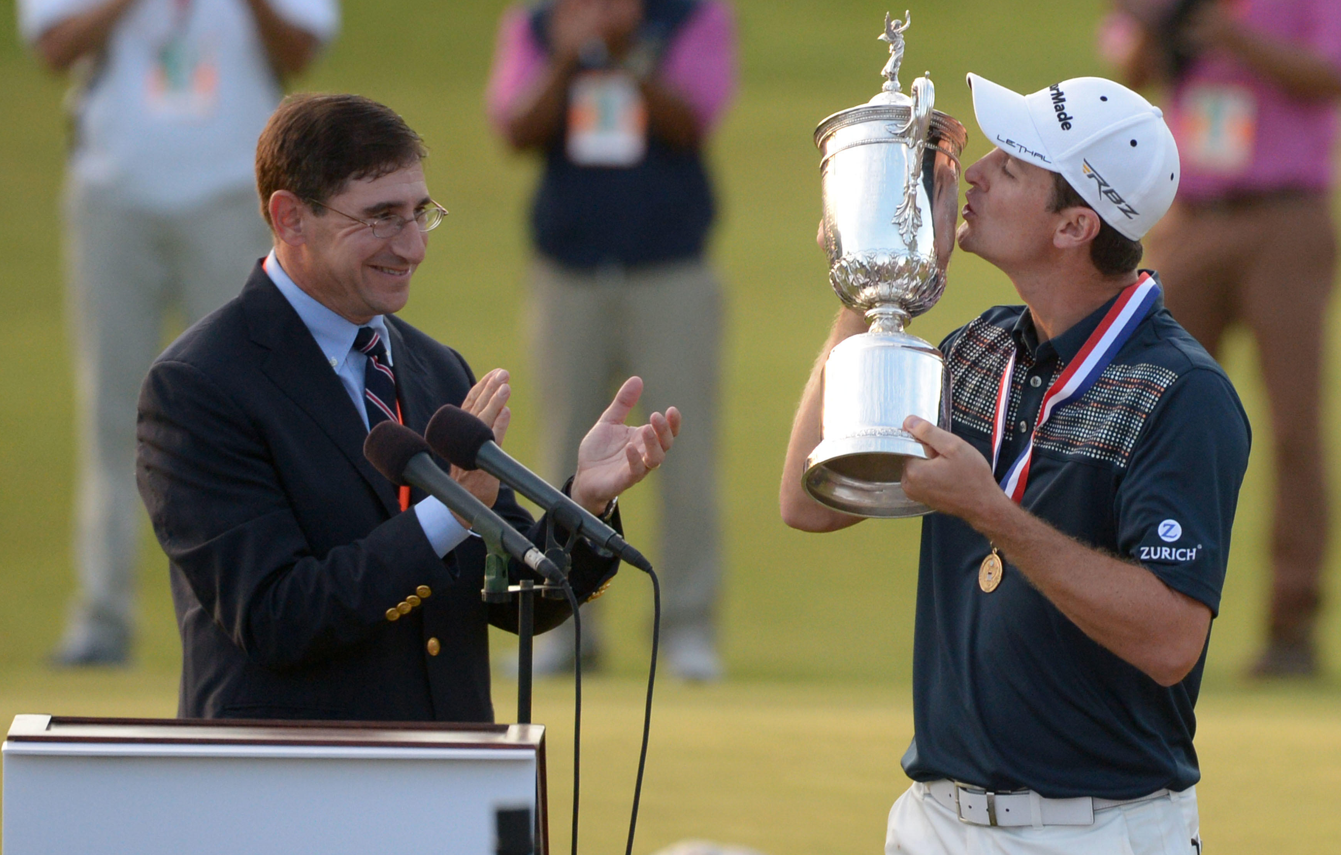
The obsession with lengthening courses to combat technology has created a one-dimensional arms race. Yet, history shows us that length alone doesn’t determine a championship test. Look no further than the 2013 U.S. Open at Merion Golf Club, where Justin Rose claimed victory with a 72-hole total of one-over-par. The tenth-place finisher was seven-over-par. The remarkable part? Merion played under 7,000 yards.
This wasn’t some anomaly from the distant past. In 2013, PGA Tour players averaged 288 yards off the tee, compared to today’s approximately 300 yards—a mere 12-yard difference. I’m confident that Merion’s 2013 setup would still thoroughly challenge today’s power players.
What made Merion so formidable wasn’t excessive length but thoughtful course management. The USGA employed several tactical elements: narrow fairways that demanded precision off the tee, punishing rough that extracted a severe penalty for wayward drives, smaller greens that rewarded accurate approach shots, and strategic pin placements that required both skill and patience.
These setup choices created a championship test that rewarded complete players, not just long hitters. The course didn’t need to be 7,500 yards to identify the best golfer that week. It needed to challenge every aspect of the game—driving accuracy, iron play, short game, putting, and perhaps most importantly, course management and mental fortitude.

The current rollback solution feels like using a sledgehammer when a scalpel would do. It’s particularly puzzling when you consider who this rule actually affects. According to recent data, the average amateur male golfer drives the ball about 216 yards, while the average female golfer manages around 148 yards. These recreational players—the vast majority of golfers worldwide—aren’t creating a “distance problem” that needs solving.
Instead of fundamentally altering equipment for everyone, why not embrace the tools already at our disposal? Tournament committees have tremendous flexibility in how they prepare courses. Growing the rough an extra inch, narrowing fairways by five yards in landing areas, reducing green sizes, adjusting green speeds, and placing pins in challenging locations can collectively create a robust test without adding a single yard to the scorecard.
This approach offers several advantages. First, it’s adaptable—the setup can be tailored to each venue’s unique characteristics. Second, it preserves the game’s traditions while acknowledging modern capabilities. Third, it creates more interesting strategic decisions for players rather than simply rewarding those who hit it farthest.
The beauty of golf has always been its variety. Some courses reward length, others precision. Some test your iron play, others your short game. By focusing exclusively on containing distance through equipment rollbacks, we risk homogenizing the game and diminishing what makes it unique.
The 2013 Merion championship reminds us that a great golf course doesn’t need excessive length to challenge the world’s best. It requires a thoughtful setup that examines every aspect of a player’s game. As we debate golf’s future, perhaps we should look to its past for wisdom. The answer to the distance debate might not be in changing the ball but in how we set up the battlefield.
Reader, please support me by checking out my three weekly columns on RG.org. On Mondays, I present “The Starter,” which recaps the week gone by in golf. On Thursdays, I give you “Fairway Focus,” which previews the week to come in golf. And on Saturdays, I dish up the “Weekend Fore-cast,” a look at what’s on tap for the upcoming weekend.
Editor’s note: “My Take” will be an ongoing weekly series where Brendon shares his thoughts and opinions on various aspects of the game and industry. These are Brendon’s opinions and do not necessarily reflect those of GolfWRX, its staff, and its affiliates.







This past Monday, I played in the U.S. Amateur local qualifier at Rock Creek Country Club in Portland, Oregon. A full tee sheet from 7:30 a.m. to 1:55 p.m., the top 11 scores would make it to the U.S. Amateur final qualifying.
I teed off at 10:48 a.m.. With the 7:30 am tee time, you can get a feel for the leaders’ pace, and they were off and running on the challenging setup at Rock Creek.
View this post on Instagram
Getting to the highlight of the round on the par five 17th, a drive up the left side and 212 yards left to the front hole location. I took out a 5-iron with plans of middle of the green. The ball ended up 8 feet left of the hole, pin high. A slight downhill putt dropped in for an eagle 3 on the 17th. With the cut line looking to be anywhere from -2 to even par. This was the boost I had been waiting for all day.
With making par from the trees on 18, it was time to wait for a potential playoff with a posted score of one under par 71.
Three hours later, it was playoff time. 8 players for 6 spots. I made par on the playoff hole, which was good enough to advance to the U.S. Amateur final qualifying in July. USGA qualifiers sure deliver on all of the emotions in golf!
Club Junkie
Building my 2026 gamer WITB: Ranking the contenders and new putter projects – Club Junkie Podcast

The annual What’s In The Bag build is underway, and on this episode of Club Junkie, Brian breaks down the clubs currently leading the race for a spot in his 2026 gamer setup. From drivers and fairway woods to irons, wedges, and shafts, he ranks the equipment that’s performing best and explains what’s separating the front runners from the rest of the field.
Brian also heads into the workshop to discuss several putter projects currently on the bench. From head options and shaft choices to build ideas and testing plans, he shares what he’s working on and which putters could become serious contenders for the bag this season.
If you’re a gear junkie who loves equipment testing, club building, and the never-ending pursuit of the perfect setup, this episode is for you.
Follow Club Junkie:
Instagram: @clubjunkiepod
TikTok: @clubjunkiepod
Threads: @clubjunkiepod
X: @ClubJunkiePod
Club Junkie
Tour Edge Exotics mini driver review + TaylorMade Spider ZT Max first look – Club Junkie

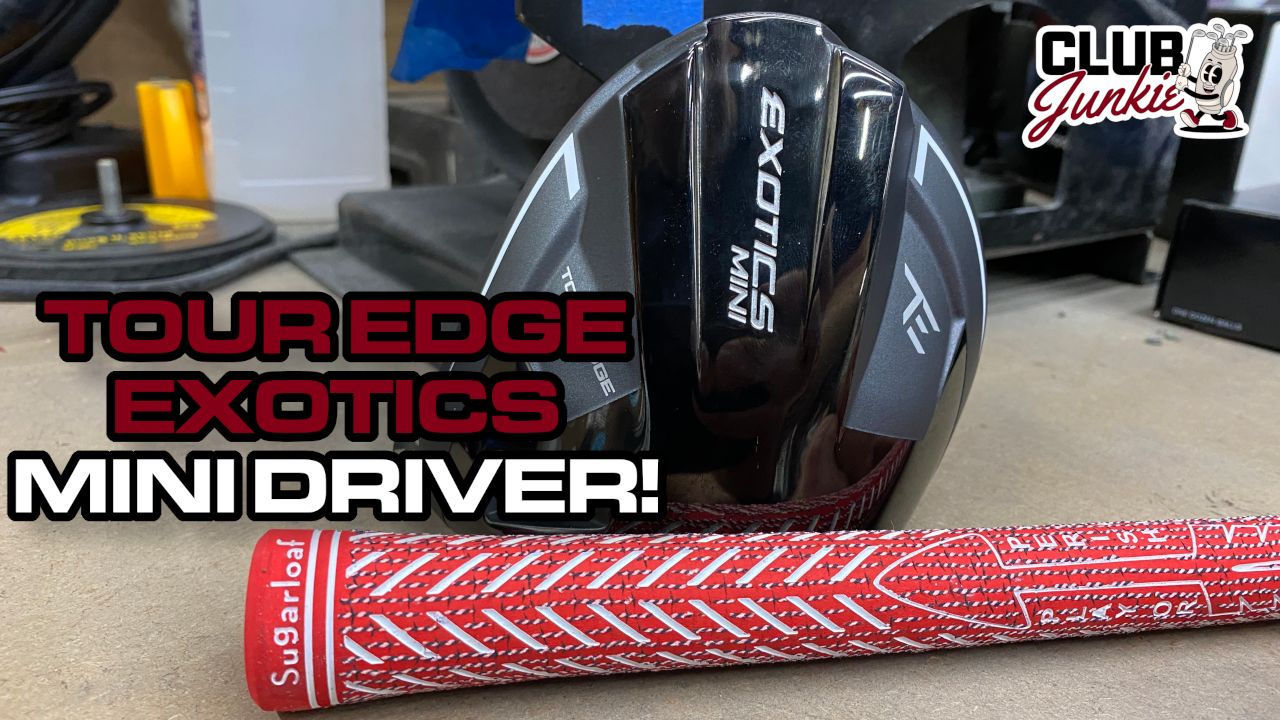
On this episode of Club Junkie, I put the new Tour Edge Exotics Mini Driver to the test and break down the performance, forgiveness, distance, and where it fits compared to a traditional driver or strong fairway wood. If you have been curious about adding a mini driver to the bag, this one is worth a look.
I also dive into the new TaylorMade Spider ZT Max putter that was recently spotted and discuss the growing zero torque putter trend. Plus, there is a closer look at the new Project X Titan Yellow shaft showing up on the PGA Tour and what makes it different from other profiles currently out there.

Justin Rose WITB 2026 (April): Full WITB breakdown with new McLaren irons

What’s the story behind Webb Simpson’s custom-stamped irons?

Memorial Tournament Tour Report: Rory McIlroy, Cameron Young switch up drivers, and more

Cadillac Championship Tour Report: Spieth’s sizable changes, McLaren Golf launches, and more

Russell Henley’s winning WITB: 2026 Charles Schwab Challenge

Kristoffer Reitan’s winning WITB: 2026 Truist Championship

Best irons 2026: Best irons overall, most forgiving irons, and more

J.T. Poston’s winning WITB: 2026 Memorial Tournament

Aaron Rai’s winning WITB: 2026 PGA Championship

Cameron Young’s winning WITB: 2026 Cadillac Championship


Bud Cauley WITB 2026 (June)
Bud Cauley had >14 clubs in his bag when photographed prior to the Memorial Tournament. Driver: Titleist GTS2 (8 degrees) Shaft: Fujikura...


Hannah Green WITB 2026 (June)
Driver: Titleist GTS3 (10 degrees, D4 SureFit setting) Shaft: Mitsubishi Chemical Diamana RB 53 S 3-wood: Titleist GT3 (15 degrees,...


Asterisk Talley WITB 2026 (June)
Driver: TaylorMade Qi4D (9 degrees) Shaft: Fujikura Ventus Blue 6 S 3-wood: TaylorMade Qi4D (16.5 degrees) Shaft: Fujikura Ventus Blue...


Brianna Do WITB 2026 (June)
Driver: Callaway Quantum Triple Diamond (9 degrees) Shaft: KBS PGW 3-wood: Callaway Elyte Titanium (15 degrees) Shaft: KBS PGW 5-wood:...
-
 Equipment6 days ago
Memorial Tournament Tour Report: Rory McIlroy, Cameron Young switch up drivers, and more
-
 News2 weeks ago
Russell Henley’s winning WITB: 2026 Charles Schwab Challenge
-
 Equipment3 days ago
Best irons 2026: Best irons overall, most forgiving irons, and more
-
 Whats in the Bag4 days ago
J.T. Poston’s winning WITB: 2026 Memorial Tournament
-

 Equipment1 week ago
Details on Jason Day’s latest prototype Avoda iron setup
-
 Equipment3 weeks ago
CJ Cup Byron Nelson Tour Report: Koepka and Kim’s newest putters finally get hot
-

 News2 weeks ago
Charles Schwab Challenge Tour Report: MacIntyre, Åberg and Spaun all switch putters, TaylorMade launches new Spider
-

 Equipment2 weeks ago
Details on J.J. Spaun’s surprise putter switch


Jim Rebey
Apr 4, 2025 at 1:14 pm
It’s not just about score, it’s about sustainability. Longer, thicker rough requires more water which is getting scarcer and costlier. Longer, thicker rough slows play, what i believe is the biggest problem in golf. Keeping golf affordable for everyone is what grows the game. Making all skills important for scoring not just bombing and gouging makes golf fun, just my two cents worth.
Jim Rebey
Apr 4, 2025 at 1:49 pm
They need to roll back driver size for the pros also, no more than 300cc. There have always been big hitters but they had to be judicious when to go for it. Most sports tighten their rules for pros.
joeconn
Mar 11, 2025 at 9:14 am
Rollback or no rollback, the longer hitters are still going to be the longer hitters, on the pro tour or in my group at home. If I normally hit a wedge into a certain hole and my partner normally hits an 8 iron in, the rollback just means I’m now going to hit 8 or 9 iron and he’ll hit 6 or 7 iron.
Evan
Mar 11, 2025 at 5:31 am
Good article Brendon! Having been in the game for many years, distance absolutely isn’t the big issue – it’s accuracy. The current ball flies further for sure (but not really any further than the original Prov1 20 years ago), BUT it also goes much, much STRAIGHTER! At the same time, when I play courses I remember from decades ago, they’re much easier off the tee – rough cut back (and what rough there is is maintained) and generally wider fairways- I know largely for pace of play/commercial reasons. So young players now are consistently presented with longer courses, but they’re more open AND they’re using a ball that doesn’t want to curve! So the game has become SMASH IT as harder as you can and then play from there.
Nick
Mar 10, 2025 at 4:32 pm
I opened this article with skepticism, thinking “there’s no way this argument could convince me the roll back is bad” and you know what? I was right. Good work me.
mike
Mar 10, 2025 at 3:21 pm
the lets just have all championship golf courses redesigned and changed instead of just updating the ball to reflect better players and equipment.
as well the USGA and R&A reviewed all these alternative options, there is a literal report where they talk about all this, maybe Brendon should give it a read.
how about golf courses have a challenge for the best players in the world that isnt knee high hack it out rough, as that tight fairways and long rough have continued to just favour the longest hitters. been studied already, if fairways are smaller then more players will miss, the shorter hitter will now havea longer appraoch just from rough. the most accurate players on tour hits 72% of fairways, the average is 60%. rory was over 326 average last year vs average of almost 300 yds. much bigger dispersion between distance vs accuracy.
Old Joe
Mar 10, 2025 at 3:02 pm
Cutting fairways from green to tee at tour events will do far more than ball rollback. Seeing PGA Tour drives get 40-50 yards of roll out (like at last week’s Arnold Palmer), sometimes into the wind, is ridiculous. Water the damn fairways, like at the courses we mere mortals play, since they are already watering the rough.
I know for a fact that LPGA and PGA Champions mow in the direction of the green to increase yardage off tee (to sell sponsors’ drivers?).
AND deepen the dimples to increase drag and spin, bringing back shot shaping and making.
And roll back pros’ driver size. Ball striking should be a skill for the elite. This would offset the bomb and gouge strategery.
There is no question launch monitors, nutrition, strength and conditioning, not to mention evolution or the attraction of gifted athletes to the money and lifestyle of professional golf. So yes, freeze the ball at current specs. The PGA guys are already hitting wedges 160 yards and 6 irons 220. They don’t need anymore distance.
Send it!
Mar 10, 2025 at 2:23 pm
I agree. I’d add: the sand in the bunkers could be more inconsistent. I find most all televised tournaments to be too perfect and not resembling what the masses have to contend with. Watching a pro hit out of 5 inch rough – especially close to the green is much more interesting than perfect lies. Keeping the status quo with golf balls so that further distance improvements are negated.
M. Coz
Mar 10, 2025 at 2:21 pm
This Rollback is not helpful in growing the game. I believe in narrowing the fairways and smaller greens. I grew up with little greens and it made one learn the short game or fail. Accuracy was the most important part of golf. With the professionals spending more time on their bodies, does anyone think that will change? In ten years or less the strengthening will continue, and they will gain back the yardage while the rest of us stay the same. What will they do then? Roll it back more??? Change something else? Many of us good amateurs have developed “feel” and that is a big part of the game. What do we then do, have to relearn the feel all over again? We can’t just look at a play making shot anymore? we have to then spend a lot of time relearning how to make a “play”? That doesn’t take a day, it could take years!!!
Nick
Mar 10, 2025 at 4:34 pm
Quit and play tennis.
Vas
Mar 10, 2025 at 1:32 pm
Disagree completely. I live 15 minutes from Merion, and what they played in 2013 was not Merion. Growing up when US Opens meant wedging the ball out of nightmarish rough, I can assure you that no one wants to watch that mess. The rollback is too little and too late. They should have capped ball tech with the Titleist Professionals, but now we’re WAY past that and grasping at straws. Only the golf powers that be would rather make million dollar changes to classic golf courses instead of changing a $5 golf ball.
84425
Mar 10, 2025 at 8:31 am
Great take: there is no reason to roll back the ball because i could find 1 (one) instance in the past 15 (fifteen) years where distance was not the issue. Really?
The Author of this article is an idiot
Mar 9, 2025 at 10:48 am
Horrible take. You should be banned from writing for 90 days.
Nick
Mar 10, 2025 at 4:34 pm
90 days isn’t long enough.
Square
Mar 8, 2025 at 1:06 pm
Rolling the golf ball back is stupid. Cap the distance on the current ball and move on. Simple. Why are we worried about the 1% of golfers who hit it that far and the rest of the 20 handicappers enjoy hitting it as far as they can?
Not
Mar 8, 2025 at 10:50 am
USGA is NOT the PGA Tour
Craig
Mar 7, 2025 at 11:53 pm
“narrow fairways that demanded precision off the tee, punishing rough that extracted a severe penalty for wayward drives”
No one wants to watch this kind of golf on TV every week, it’s boring golf. Haven’t you notice how terrible golf rates now?
Brent
Mar 10, 2025 at 11:21 am
Totally agree. Watching pros hack the ball out is boring.
Chuck
Mar 7, 2025 at 11:09 pm
Every single paragraph of this short essay is defective.
Brendon, I’d be happy to debate you on a public forum on all of this. For the record.
Are you game?
Anthony
Mar 7, 2025 at 2:09 pm
This article makes no sense. 2013 Merion was a great golf course. Therefore we should not roll the ball back.
In 2013, 13 players average over 300 yards per drive. The longest being 306. In 2025, 116 players average over 300 yards per drive. The longest being 326.
The logical conclusion to this article should be: 2013 Merion was a great golf course. Therefore we SHOULD roll the ball back.
BD57
Mar 7, 2025 at 11:46 am
I agree.
The only time of the year I really care about “course setup” is at majors. Regular tour events, it’s not so important (IMO).
The game’s going to get appreciably harder for the masses when the new ball regs kick in. USGA and R&A will need to adjust their course rating / slope regimen entirely or courses will have to become shorter for “the rest of us.”
It will be dispiriting for a lot of folks when they see how much shorter they are – not exactly what you want when you’re trying to grow the game.
Anthony
Mar 7, 2025 at 3:01 pm
The new ball will have essentially no impact on the masses. The USGA expects less than 5 yard impact to <100 mph swing speeds.
On the PGA Tour they expect a 10 yard impact. The 2025 average drive is 303. You would have to go alllll the way back to 2019 to get to an average drive of 293. If the USGA is horribly wrong by 50% and the roll back actually has a 15 yard impact you would have to go alllll the way back to 2014 to get an average drive of 288.
The hyperbole around the rollback is completely detached from the intent and expectations of what is going to happen.
Chuck
Mar 9, 2025 at 3:23 pm
“The masses” don’t even play with premium urethane balls!
They are buying less-expensive ionomer, surlyn (and other) balls. And why not? They spin less and are easier for recreational players to keep them on the golf course. Most recreational players woud be wasting their money on premium balls. We could limit the ball rollback to urethane balls and most recreational golfers might never know.
geohogan
Mar 13, 2025 at 11:32 am
Snell offer low price, two piece balls with urethane covers . .. thank you very much.
hollabachgt
Mar 7, 2025 at 11:09 am
“The USGA employed several tactical elements: narrow fairways that demanded precision off the tee, punishing rough that extracted a severe penalty for wayward drives, smaller greens that rewarded accurate approach shots, and strategic pin placements that required both skill and patience.”
Couldn’t the same have been said about Winged Foot in 2020? A tournament in which 2 of the longest players in the game found a clear advantage over the rest of the field.
Eric
Mar 7, 2025 at 12:09 pm
Played over 7,400 yards though, so would tend to favor a longer hitter regardless of setup. Plus Zach Johnson and Webb Simpson finished top 10.
Nick
Mar 10, 2025 at 4:37 pm
*12 shots behind the winner*