
Opinion & Analysis
Ryan: Rethinking what “hacking” means in golf

When you hear the word “hacker,” what comes to mind? For many, it evokes images of golfers delivering their golf club’s low point with the finesse of a rectal exam from Edward Scissorhands. But what if we broadened the definition to include something far more insidious: p-hacking?
What Is P-Hacking?
In traditional science, research begins with a hypothesis that can be tested and potentially proven false. For example, to scientifically validate the effectiveness of practice, we might hypothesize that 500 hours of practice can turn a 6-handicapper into a scratch golfer. We’d control variables, collect data, and analyze the results to see if they’re statistically significant.
P-hacking, however, turns this process on its head. Instead of starting with a hypothesis, data is collected first and then scoured for any significant relationships. These findings are then touted as scientific discoveries, even though they may just be coincidental.
P-Hacking in Golf
In the world of golf, p-hacking is the oil that drives the engine of sales. Every week, we’re bombarded with new “must-have” equipment, “secret moves,” and “game-changing” techniques, all backed by so-called research that’s often nothing more than p-hacking dressed up as science.
One of the most glaring examples comes from college golf. Many coaches rely on “qualifying”—a series of tournaments among team members to decide who will represent the school. While this may seem like a fair approach, it’s actually based on a flawed premise. Qualifying rewards performance on a familiar home course, a small data set that may not predict how a player will perform on the road. During my time as a coach, I preferred a points system: if I pointed at you, you were on the trip. It was that simple.
The Deeper Implications of P-Hacking
But the problem goes beyond golf course selection. P-hacking has infiltrated academic advising in college athletics. While advising is supposed to improve student outcomes, it’s unclear whether it actually leads to better students or just more cheating. Similarly, p-hacking has justified the widespread implementation of intense morning practices. These sessions, often rationalized with dubious data, can come at the expense of well-established scientific findings on sleep and recovery. I’d argue that the leading cause of injury in college golf isn’t the sport itself but misguided workouts in the gym.
P-Hacking and Junior Golf
The issue extends to junior golfers as well. The combination of the myth of endless practice and the misapplication of p-hacked data creates a pressure-cooker environment where every young golfer is expected to become the next PGA or LPGA star. While it’s admirable to set high goals and be self-driven, these environments stifle self-exploration and personal growth. As I highlighted in a study by The First Tee, the true values of sportsmanship and character are often lost in youth sports.
A Path Forward
There is, however, hope for the future. College golf is currently dominated by early developers and specialists—players who often leave school with a sour taste for the game. To foster long-term growth and passion for golf, instructors and college coaches must rethink their approach to data and development. By understanding the pitfalls of p-hacking and embracing a role that emphasizes values and personal development, we can create an environment where talent and passion truly rise to the top.
Reimagining what it means to be a “hacker” in golf is more than just reworking your swing; it’s about reshaping how we approach the game itself, from junior levels to college competition. By moving beyond superficial data and embracing a holistic approach to growth, we can ensure that the next generation of golfers not only plays better but enjoys the game for a lifetime.








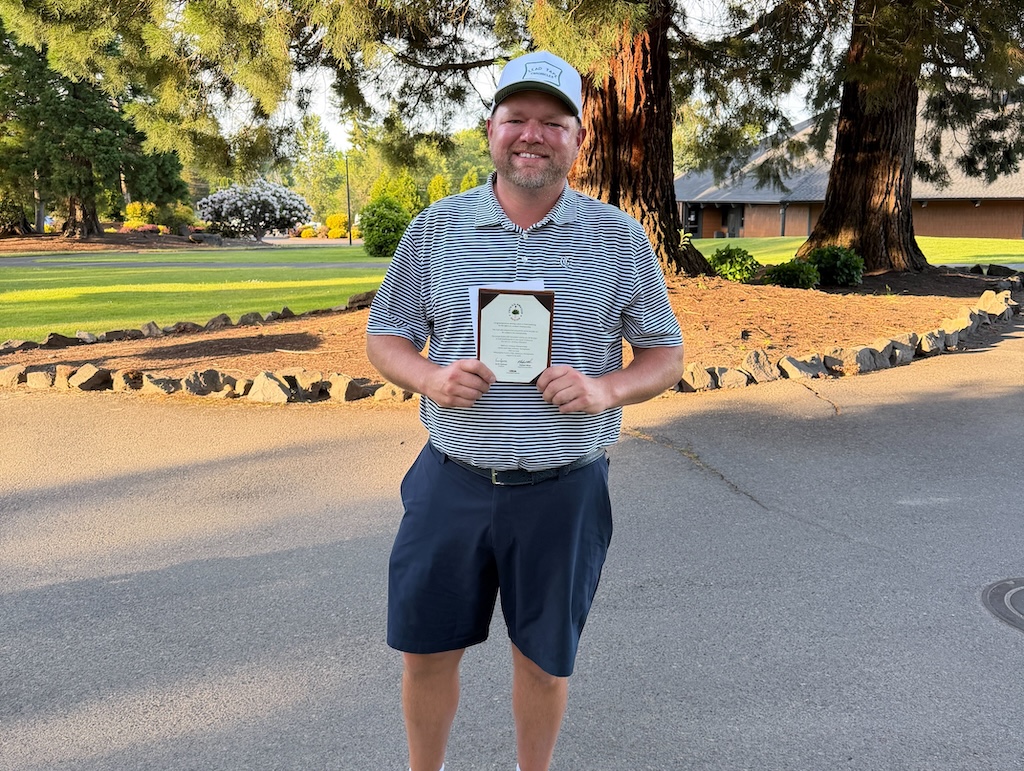
This past Monday, I played in the U.S. Amateur local qualifier at Rock Creek Country Club in Portland, Oregon. A full tee sheet from 7:30 a.m. to 1:55 p.m., the top 11 scores would make it to the U.S. Amateur final qualifying.
I teed off at 10:48 a.m.. With the 7:30 am tee time, you can get a feel for the leaders’ pace, and they were off and running on the challenging setup at Rock Creek.
View this post on Instagram
Getting to the highlight of the round on the par five 17th, a drive up the left side and 212 yards left to the front hole location. I took out a 5-iron with plans of middle of the green. The ball ended up 8 feet left of the hole, pin high. A slight downhill putt dropped in for an eagle 3 on the 17th. With the cut line looking to be anywhere from -2 to even par. This was the boost I had been waiting for all day.
With making par from the trees on 18, it was time to wait for a potential playoff with a posted score of one under par 71.
Three hours later, it was playoff time. 8 players for 6 spots. I made par on the playoff hole, which was good enough to advance to the U.S. Amateur final qualifying in July. USGA qualifiers sure deliver on all of the emotions in golf!
Club Junkie
Building my 2026 gamer WITB: Ranking the contenders and new putter projects – Club Junkie Podcast

The annual What’s In The Bag build is underway, and on this episode of Club Junkie, Brian breaks down the clubs currently leading the race for a spot in his 2026 gamer setup. From drivers and fairway woods to irons, wedges, and shafts, he ranks the equipment that’s performing best and explains what’s separating the front runners from the rest of the field.
Brian also heads into the workshop to discuss several putter projects currently on the bench. From head options and shaft choices to build ideas and testing plans, he shares what he’s working on and which putters could become serious contenders for the bag this season.
If you’re a gear junkie who loves equipment testing, club building, and the never-ending pursuit of the perfect setup, this episode is for you.
Follow Club Junkie:
Instagram: @clubjunkiepod
TikTok: @clubjunkiepod
Threads: @clubjunkiepod
X: @ClubJunkiePod
Club Junkie
Tour Edge Exotics mini driver review + TaylorMade Spider ZT Max first look – Club Junkie

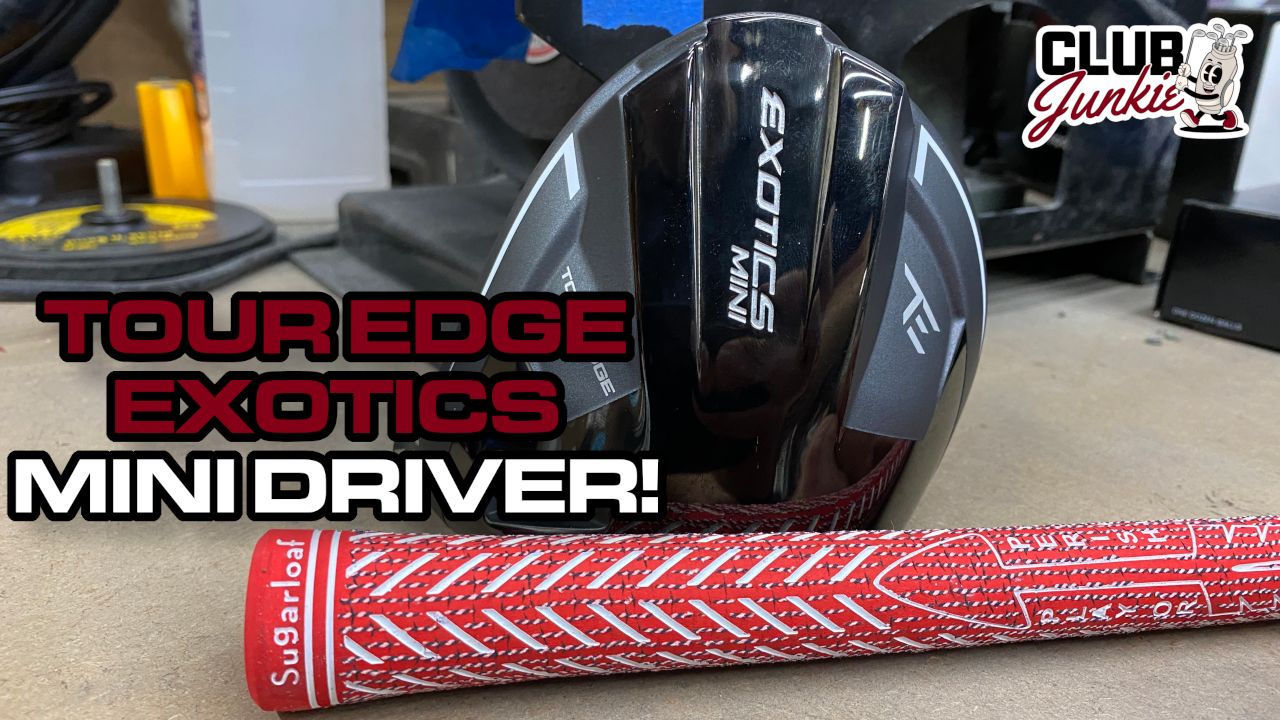
On this episode of Club Junkie, I put the new Tour Edge Exotics Mini Driver to the test and break down the performance, forgiveness, distance, and where it fits compared to a traditional driver or strong fairway wood. If you have been curious about adding a mini driver to the bag, this one is worth a look.
I also dive into the new TaylorMade Spider ZT Max putter that was recently spotted and discuss the growing zero torque putter trend. Plus, there is a closer look at the new Project X Titan Yellow shaft showing up on the PGA Tour and what makes it different from other profiles currently out there.

Justin Rose WITB 2026 (April): Full WITB breakdown with new McLaren irons

What’s the story behind Webb Simpson’s custom-stamped irons?

Memorial Tournament Tour Report: Rory McIlroy, Cameron Young switch up drivers, and more

Cadillac Championship Tour Report: Spieth’s sizable changes, McLaren Golf launches, and more

Russell Henley’s winning WITB: 2026 Charles Schwab Challenge

Kristoffer Reitan’s winning WITB: 2026 Truist Championship

Best irons 2026: Best irons overall, most forgiving irons, and more

J.T. Poston’s winning WITB: 2026 Memorial Tournament

Aaron Rai’s winning WITB: 2026 PGA Championship

Cameron Young’s winning WITB: 2026 Cadillac Championship


Bud Cauley WITB 2026 (June)
Bud Cauley had >14 clubs in his bag when photographed prior to the Memorial Tournament. Driver: Titleist GTS2 (8 degrees) Shaft: Fujikura...


Hannah Green WITB 2026 (June)
Driver: Titleist GTS3 (10 degrees, D4 SureFit setting) Shaft: Mitsubishi Chemical Diamana RB 53 S 3-wood: Titleist GT3 (15 degrees,...


Asterisk Talley WITB 2026 (June)
Driver: TaylorMade Qi4D (9 degrees) Shaft: Fujikura Ventus Blue 6 S 3-wood: TaylorMade Qi4D (16.5 degrees) Shaft: Fujikura Ventus Blue...

Brianna Do WITB 2026 (June)
Driver: Callaway Quantum Triple Diamond (9 degrees) Shaft: KBS PGW 3-wood: Callaway Elyte Titanium (15 degrees) Shaft: KBS PGW 5-wood:...
-
 Equipment6 days ago
Memorial Tournament Tour Report: Rory McIlroy, Cameron Young switch up drivers, and more
-
 News2 weeks ago
Russell Henley’s winning WITB: 2026 Charles Schwab Challenge
-
 Equipment3 days ago
Best irons 2026: Best irons overall, most forgiving irons, and more
-
 Whats in the Bag4 days ago
J.T. Poston’s winning WITB: 2026 Memorial Tournament
-

 Equipment1 week ago
Details on Jason Day’s latest prototype Avoda iron setup
-
 Equipment3 weeks ago
CJ Cup Byron Nelson Tour Report: Koepka and Kim’s newest putters finally get hot
-

 News2 weeks ago
Charles Schwab Challenge Tour Report: MacIntyre, Åberg and Spaun all switch putters, TaylorMade launches new Spider
-
 Equipment2 weeks ago
Details on J.J. Spaun’s surprise putter switch


Joey Okeville
Nov 3, 2024 at 6:34 pm
Truly comforting
Andrew J
Oct 31, 2024 at 8:35 am
Being sold on a “must have” wears thin from experience. Something to read that is the real deal:
https://www.amazon.com/dp/B0DJT2YLL9
Karsten's Ghost
Oct 30, 2024 at 2:45 pm
“What is p-hacking?”
I’ve read this twice and I still don’t have a clue. Is it P for pterodactyl?