
Opinion & Analysis
What to expect from your caddie

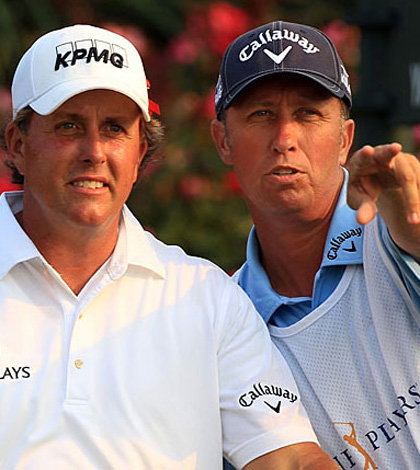
One of the great joys of golf that we don’t get to experience these days is the use of caddies. Nothing is better than walking 18 holes with a man carrying your bag. There are different levels of this breed, but all can make a round enjoyable.
Let’s face it, most of us have the dream of being in the middle of a gallery-packed 18th fairway with two shots to win the tournament. Having the opportunity to have a caddie lets us fill part of that dream. Albeit not for a tourney win, but at least you can beat your buddies — one out of two isn’t too bad.
One of the keys to getting the most out of your round with a caddie is defining the style of caddie you have. I’d like to give you some tips on how to get the most from your experience. Not all caddies are created equally and not all courses put an emphasis on the quality of their caddies. The problem golfers get into with a caddie is the expectation that they are PGA Tour quality. This is unfair to the caddie for a few reasons, mainly being he does not know your game and has to do quick assessments to help you get around the course.
So let me get started with defining the caddies out there. Just remember the main rule of having a caddie: You are the boss and you are responsible for all shots struck. I shamelessly must admit the first time I used a caddie, I showed up with a 12-inch barrel Titleist staff bag — must have been some pent-up former youth caddie rage. This is something in hindsight I don’t look back on favorably, but it is sadly the truth. To be fair to the caddies of the world, if they are carrying your clubs, please put them in a stand bag with only what you will need for that round. Don’t pack an umbrella and rain gear if there is a 2 percent chance of rain and don’t load the bag out with two dozen balls. If you’re riding and using a forecaddie, you can pack whatever you like.
The first type of caddie is the teenage caddie. Now, this is not usually the highest quality of caddie you will find. He may know the course and they may know the greens somewhat, but his experience level is not that great usually. On the occasions I’ve had a young caddie on the bag, I know going into the round that he will probably give a decent yardage, but I don’t count on his advice as gold. If you think this type of caddie is going to be like having Stevie Williams on the bag, you will be sorely disappointed. With that said, it doesn’t mean your round will be a disappointment, just enjoy walking without having to worry about carrying your bag or cleaning your clubs. I spent some of my youth toting bags around a local club. I learned a fair amount about how to treat a caddie during this time of my life. As a caddie, nothing is worse than having a good or bad golfer and having him blame any miss struck shot on you. Remember to be kind and treat caddies with respect no matter what level of caddie you have.
Type-2 caddie is the caddie that has been there for years and knows the course inside and out. This is going to be a fun round when you end up with this guy. Type-2 knows where he should be at all times and is on top of things like raking bunkers, cleaning your ball and pointing out targets to hit and avoid. He will be professional, but the trap is he may not be the best at assessing your game. As with all caddies, keep it light and have fun. Caddies are usually fun guys to be around and are good for some laughs.
While playing a very exclusive club, I had hit an OK drive with slightly too much draw into the left rough. Now the rough at this course is infamous, so as the caddie and I walk up to my ball I think, “It’s not that bad.” We talk over the number and I settle on the gap wedge. I was playing solid so I just go up and swing and shank the thing up short right of the green. The caddie said, “Well, let’s hope we don’t see that again.” What else could I do other than just laugh about it?
The yardages given by this level of caddie are usually pretty accurate but your ball striking may not be and having him club you may be a mistake — remember the rule stated earlier. I read most of my putts unless I’m perplexed by a one so I try not to ask. With that said, if I can’t read the putt and his read is incorrect, I’m not going to get upset with his read. Honestly, most caddies at this level and the next one won’t step on your read unless they know it’s wrong. If they do this and they are wrong, nothing will turn a this-caddie-is-good opinion to “Hey, let me read my own putts please,” quicker. This, once again goes back to the rule and I’ve only seen that happen once and it was with a young kid carrying a friend’s bag. This led to some very colorful language about the read and the caddie, which I didn’t mind too much because we had something on it. Better him than me.
Type-3 caddie — the best of the best — is the ex-Tour caddie. He may be at a course waiting to find a new loop or he may be sick of the grind week to week. This caddie will know the course and he will know the greens. He will not know your ability, but he will be pretty good at figuring out what your ability is by watching you warm up on the range before the round. I will let type-3 guide me around the course and I will work out the line with him. The problem high-handicappers run into with this caddie is on the greens. The caddie will be used to a consistent putting stroke and you may or may not have one. I don’t have enough fingers and toes to count the times a golfer struggling with his game during his round complains about the caddie’s lines. All this after watching that player pull or push most of his putts. Refer back to the rule if this applies, and if the caddie’s lines don’t seem to be working, don’t ask or disregard. It’s your score; you are the one hitting the shots.
You can learn a lot from this type of caddie, he is probably a solid player. He will have an idea of what types of shots to recommend for you to hit — I’d listen but it is up to you. With type-2 or -3, they will be able to save you shots, mainly acting as a sense of reason on recovery shots steering you away from haymaker shots that end up on unrecognizable parts of the course. I wonder if this is also defense mechanism on the caddie’s part, saving extra walking into unknown areas of the course, but truly being conservative on recovery shots is the best approach.
With the three types described, you will have more ability to judge what kind of help you will receive while playing with them and hopefully more enjoyment. One thing to remember is, no matter what type of caddie you have, sometimes your style of play and the way you look at a putt may be different than theirs. I have a good friend who is a plus-2 handicap and we have shared a caddie. During the round, he couldn’t seem to make a putt on the line the caddie was giving him. I was making great putts on any line he gave me. It just came down to the way I putt compared to him, or maybe it was the pre-round tip I gave the caddie. This happens, when it does you just have to rely on your ability and not the caddies.
All kidding aside this problem goes back to the rule. Like I stated earlier, one of the best joys in golf is playing a round with a caddie, for me I seem to play better with any type. Maybe it’s because I play better when I talk out a shot with someone or maybe it’s the lack of cognitive thinking I do while playing by myself. Hopefully you will be lucky enough to play a few rounds with a caddie and I hope you get as much enjoyment out of it as I do. More than anything I think it’s the way golf was meant to be played, with as cerebral as this game is two heads have to be better than one. Remember to tip the man when the rounds over, if he’s been a great caddie tip him accordingly and get his name. If you play that course again request him you’ll be surprised how often they will remember you.



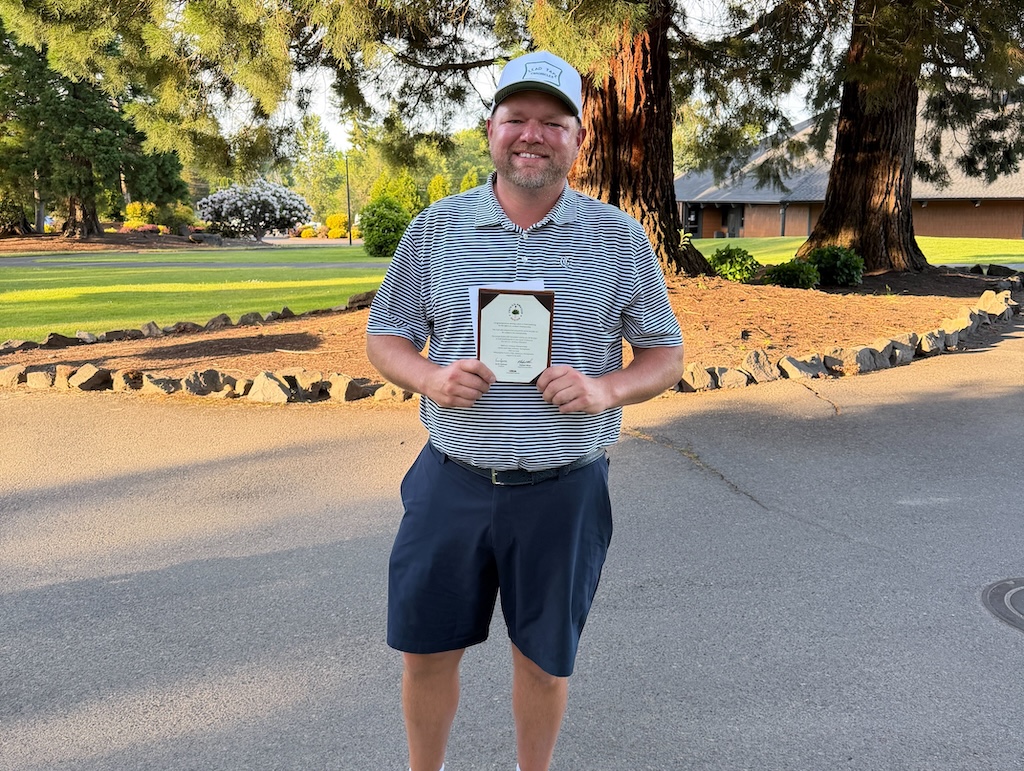
This past Monday, I played in the U.S. Amateur local qualifier at Rock Creek Country Club in Portland, Oregon. A full tee sheet from 7:30 a.m. to 1:55 p.m., the top 11 scores would make it to the U.S. Amateur final qualifying.
I teed off at 10:48 a.m.. With the 7:30 am tee time, you can get a feel for the leaders’ pace, and they were off and running on the challenging setup at Rock Creek.
View this post on Instagram
Getting to the highlight of the round on the par five 17th, a drive up the left side and 212 yards left to the front hole location. I took out a 5-iron with plans of middle of the green. The ball ended up 8 feet left of the hole, pin high. A slight downhill putt dropped in for an eagle 3 on the 17th. With the cut line looking to be anywhere from -2 to even par. This was the boost I had been waiting for all day.
With making par from the trees on 18, it was time to wait for a potential playoff with a posted score of one under par 71.
Three hours later, it was playoff time. 8 players for 6 spots. I made par on the playoff hole, which was good enough to advance to the U.S. Amateur final qualifying in July. USGA qualifiers sure deliver on all of the emotions in golf!
Club Junkie
Building my 2026 gamer WITB: Ranking the contenders and new putter projects – Club Junkie Podcast

The annual What’s In The Bag build is underway, and on this episode of Club Junkie, Brian breaks down the clubs currently leading the race for a spot in his 2026 gamer setup. From drivers and fairway woods to irons, wedges, and shafts, he ranks the equipment that’s performing best and explains what’s separating the front runners from the rest of the field.
Brian also heads into the workshop to discuss several putter projects currently on the bench. From head options and shaft choices to build ideas and testing plans, he shares what he’s working on and which putters could become serious contenders for the bag this season.
If you’re a gear junkie who loves equipment testing, club building, and the never-ending pursuit of the perfect setup, this episode is for you.
Follow Club Junkie:
Instagram: @clubjunkiepod
TikTok: @clubjunkiepod
Threads: @clubjunkiepod
X: @ClubJunkiePod
Club Junkie
Tour Edge Exotics mini driver review + TaylorMade Spider ZT Max first look – Club Junkie

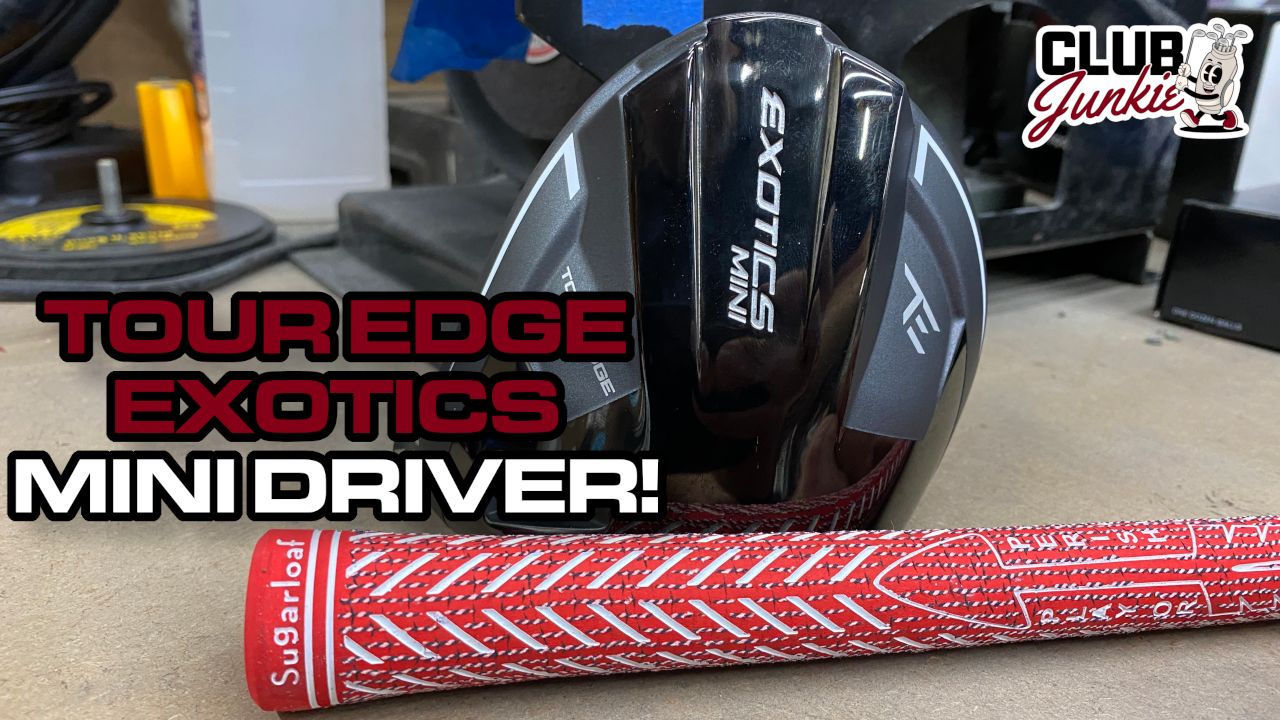
On this episode of Club Junkie, I put the new Tour Edge Exotics Mini Driver to the test and break down the performance, forgiveness, distance, and where it fits compared to a traditional driver or strong fairway wood. If you have been curious about adding a mini driver to the bag, this one is worth a look.
I also dive into the new TaylorMade Spider ZT Max putter that was recently spotted and discuss the growing zero torque putter trend. Plus, there is a closer look at the new Project X Titan Yellow shaft showing up on the PGA Tour and what makes it different from other profiles currently out there.

Justin Rose WITB 2026 (April): Full WITB breakdown with new McLaren irons

What’s the story behind Webb Simpson’s custom-stamped irons?

Memorial Tournament Tour Report: Rory McIlroy, Cameron Young switch up drivers, and more

Cadillac Championship Tour Report: Spieth’s sizable changes, McLaren Golf launches, and more

Russell Henley’s winning WITB: 2026 Charles Schwab Challenge

Kristoffer Reitan’s winning WITB: 2026 Truist Championship

Aaron Rai’s winning WITB: 2026 PGA Championship

J.T. Poston’s winning WITB: 2026 Memorial Tournament

Cameron Young’s winning WITB: 2026 Cadillac Championship

Best irons 2026: Best irons overall, most forgiving irons, and more


Bud Cauley WITB 2026 (June)
Bud Cauley had >14 clubs in his bag when photographed prior to the Memorial Tournament. Driver: Titleist GTS2 (8 degrees) Shaft: Fujikura...


Hannah Green WITB 2026 (June)
Driver: Titleist GTS3 (10 degrees, D4 SureFit setting) Shaft: Mitsubishi Chemical Diamana RB 53 S 3-wood: Titleist GT3 (15 degrees,...


Asterisk Talley WITB 2026 (June)
Driver: TaylorMade Qi4D (9 degrees) Shaft: Fujikura Ventus Blue 6 S 3-wood: TaylorMade Qi4D (16.5 degrees) Shaft: Fujikura Ventus Blue...

Brianna Do WITB 2026 (June)
Driver: Callaway Quantum Triple Diamond (9 degrees) Shaft: KBS PGW 3-wood: Callaway Elyte Titanium (15 degrees) Shaft: KBS PGW 5-wood:...
-
 Equipment6 days ago
Memorial Tournament Tour Report: Rory McIlroy, Cameron Young switch up drivers, and more
-
 News1 week ago
Russell Henley’s winning WITB: 2026 Charles Schwab Challenge
-
 Whats in the Bag3 days ago
J.T. Poston’s winning WITB: 2026 Memorial Tournament
-
 Equipment3 days ago
Best irons 2026: Best irons overall, most forgiving irons, and more
-

 Equipment1 week ago
Details on Jason Day’s latest prototype Avoda iron setup
-

 Equipment3 weeks ago
CJ Cup Byron Nelson Tour Report: Koepka and Kim’s newest putters finally get hot
-

 News2 weeks ago
Charles Schwab Challenge Tour Report: MacIntyre, Åberg and Spaun all switch putters, TaylorMade launches new Spider
-

 Equipment2 weeks ago
Details on J.J. Spaun’s surprise putter switch

