
Opinion & Analysis
The Wedge Guy: A putting experiment


One of the most fun and challenging things about this great game we all play is that there are myriad things to explore and try, keeping those that work for you and discarding those that don’t. While I realize many golfers just go out and play without giving it much thought, my bet is that most all of you who follow GolfWRX, and particularly weekly columns like mine, are always looking for ways to improve. I’m no different. In fact, I probably illustrate the extreme of experimentation because I’ve spent a lifetime in the game and over 40 years in the golf equipment industry.
In follow-up to last week’s post about the “Two putting triangles,” I thought I would share a recent experiment I’ve been conducting on my own putting. If this just gives any of you an idea that can shave a stroke or two, then I’ve earned my keep, so to speak.
I had been struggling on the greens a bit, not getting nearly as much out of my rounds as I thought I should. And one of the main culprits was that I was just not converting enough of my makeable putts. While my lag putting has been very good, leaving me very short second putts most of the time, where I thought I was sub-standard for an experienced low handicap player was in my success rate in making those “money putts” from 8-15 feet, and I felt like I missed more than my fair share of putts from three to eight feet in length.
To be honest, I tend to get a little “yippy” on those short putts sometimes, but it seemed that mostly my failure to make those putts drilled down to the face angle at impact. I might pull one and push the next one, so I decided to try something new a few rounds ago.
You all know I’m quite the follower and analyst of PGA Tour statistics as a benchmark for performance, so I started there to establish my goals. Here’s what I found.
The PGA Tour average from 4 to 8 feet is just under 69 percent. Given that these guys are the best in the world, have perfect greens every week and experienced caddies to give them a second set of eyes (which have also studied the greens extensively), I figured if I could attain a 50 percent sink rate from that range, I would be “golden”.
Moving out to the range of 10-15 feet, the PGA Tour average drops significantly, to just under 30 percent — only three out of every 10 tries from this range do the tour players make their putts. So, I figured given my recreational status, grainy greens and some very puzzling breaks on my golf course, my personal goal from 10 to 15 feet should be somewhere between one to two putts out of every 10.
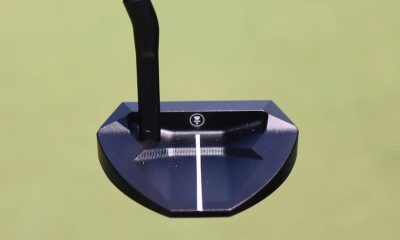
In an effort to achieve this improved performance on those shorter putts, I began to experiment on my putting track at home with a “left hand low” grip on the putter. I’ve always gravitated to blade style putters, and usually have one of my own design in the bag. Many years ago, I became convinced that a face-balanced design improve my odds of keeping the face square through impact. But a couple of months before this experiment began, I received a putter from an industry friend that exhibited what is called “lie angle balanced,” the premise being that the face angle is essentially “built in” to the path of the putting stroke.
Anyway, I began to practice making putts of 7-9 feet on my putting track at home and explored its effect with a number of different putters that lean against the wall in my office — all while working to determine the right “left hand low” grip for me. What I found was that it was really easy to get in a groove on the putting track, so it was time to take this to the course.
I quickly found that my putting from these crucial distances visibly improved immediately with the left-hand-low grip. I reduced the action to a simple back and through, and both my “yippi-ness” and face control were dramatically impacted.
So, then I began to keep some stats of my own and here’s what happened over the course of the next 10-12 rounds.
My make percentage on putts under eight feet has improved to almost 60 percent, not that far below the PGA Tour average. Wow. And on putts of 8 to 15 feet, my make percentage leaped to 22 percent, even closer to the tour average. As you can imagine, my golf buddies noticed the change and my scoring dropped by as much as 3-4 shots per round.
Where I’m keeping it different is that I putt the longer putts with my comfortable conventional grip, as it engages the fingertips of my master right hand for optimized touch and feel. So, when success is more about speed than line, I go conventional. But inside 15 feet or so, I employ the left-hand-low grip as those putts are more about line than speed.
While I have always been quite the traditionalist in my approach to this game, I like making putts and shooting lower scores as much as any of you. If you are not converting shorter putts as often as you think you should, you might give this two-grip approach a try.










This past Monday, I played in the U.S. Amateur local qualifier at Rock Creek Country Club in Portland, Oregon. A full tee sheet from 7:30 a.m. to 1:55 p.m., the top 11 scores would make it to the U.S. Amateur final qualifying.
I teed off at 10:48 a.m.. With the 7:30 am tee time, you can get a feel for the leaders’ pace, and they were off and running on the challenging setup at Rock Creek.
View this post on Instagram
Getting to the highlight of the round on the par five 17th, a drive up the left side and 212 yards left to the front hole location. I took out a 5-iron with plans of middle of the green. The ball ended up 8 feet left of the hole, pin high. A slight downhill putt dropped in for an eagle 3 on the 17th. With the cut line looking to be anywhere from -2 to even par. This was the boost I had been waiting for all day.
With making par from the trees on 18, it was time to wait for a potential playoff with a posted score of one under par 71.
Three hours later, it was playoff time. 8 players for 6 spots. I made par on the playoff hole, which was good enough to advance to the U.S. Amateur final qualifying in July. USGA qualifiers sure deliver on all of the emotions in golf!
Club Junkie
Building my 2026 gamer WITB: Ranking the contenders and new putter projects – Club Junkie Podcast

The annual What’s In The Bag build is underway, and on this episode of Club Junkie, Brian breaks down the clubs currently leading the race for a spot in his 2026 gamer setup. From drivers and fairway woods to irons, wedges, and shafts, he ranks the equipment that’s performing best and explains what’s separating the front runners from the rest of the field.
Brian also heads into the workshop to discuss several putter projects currently on the bench. From head options and shaft choices to build ideas and testing plans, he shares what he’s working on and which putters could become serious contenders for the bag this season.
If you’re a gear junkie who loves equipment testing, club building, and the never-ending pursuit of the perfect setup, this episode is for you.
Follow Club Junkie:
Instagram: @clubjunkiepod
TikTok: @clubjunkiepod
Threads: @clubjunkiepod
X: @ClubJunkiePod
Club Junkie
Tour Edge Exotics mini driver review + TaylorMade Spider ZT Max first look – Club Junkie

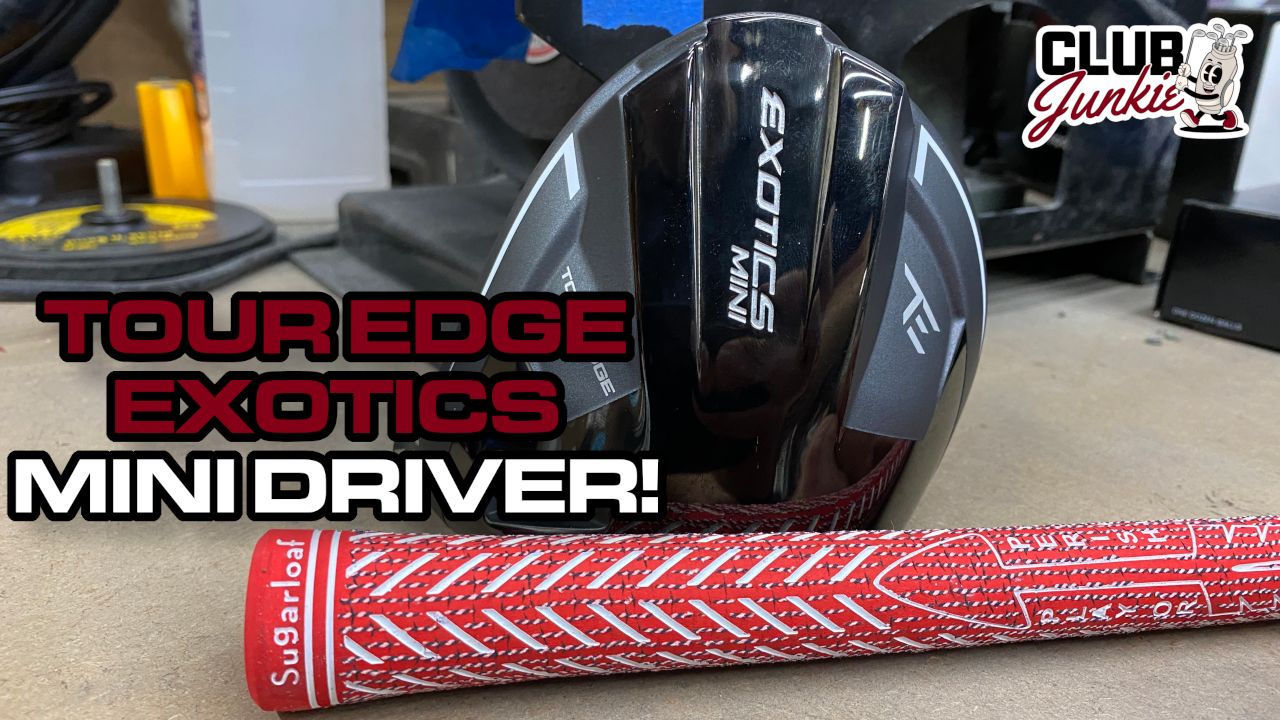
On this episode of Club Junkie, I put the new Tour Edge Exotics Mini Driver to the test and break down the performance, forgiveness, distance, and where it fits compared to a traditional driver or strong fairway wood. If you have been curious about adding a mini driver to the bag, this one is worth a look.
I also dive into the new TaylorMade Spider ZT Max putter that was recently spotted and discuss the growing zero torque putter trend. Plus, there is a closer look at the new Project X Titan Yellow shaft showing up on the PGA Tour and what makes it different from other profiles currently out there.

Justin Rose WITB 2026 (April): Full WITB breakdown with new McLaren irons

What’s the story behind Webb Simpson’s custom-stamped irons?

Memorial Tournament Tour Report: Rory McIlroy, Cameron Young switch up drivers, and more

Cadillac Championship Tour Report: Spieth’s sizable changes, McLaren Golf launches, and more

Russell Henley’s winning WITB: 2026 Charles Schwab Challenge

Kristoffer Reitan’s winning WITB: 2026 Truist Championship

Aaron Rai’s winning WITB: 2026 PGA Championship

J.T. Poston’s winning WITB: 2026 Memorial Tournament

Cameron Young’s winning WITB: 2026 Cadillac Championship

Best irons 2026: Best irons overall, most forgiving irons, and more


Bud Cauley WITB 2026 (June)
Bud Cauley had >14 clubs in his bag when photographed prior to the Memorial Tournament. Driver: Titleist GTS2 (8 degrees) Shaft: Fujikura...


Hannah Green WITB 2026 (June)
Driver: Titleist GTS3 (10 degrees, D4 SureFit setting) Shaft: Mitsubishi Chemical Diamana RB 53 S 3-wood: Titleist GT3 (15 degrees,...


Asterisk Talley WITB 2026 (June)
Driver: TaylorMade Qi4D (9 degrees) Shaft: Fujikura Ventus Blue 6 S 3-wood: TaylorMade Qi4D (16.5 degrees) Shaft: Fujikura Ventus Blue...
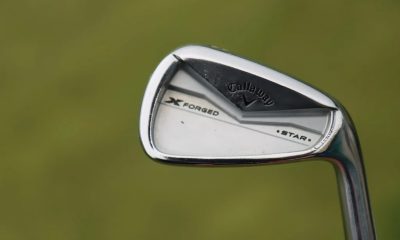

Brianna Do WITB 2026 (June)
Driver: Callaway Quantum Triple Diamond (9 degrees) Shaft: KBS PGW 3-wood: Callaway Elyte Titanium (15 degrees) Shaft: KBS PGW 5-wood:...
-
 Equipment6 days ago
Memorial Tournament Tour Report: Rory McIlroy, Cameron Young switch up drivers, and more
-
 News1 week ago
Russell Henley’s winning WITB: 2026 Charles Schwab Challenge
-
 Whats in the Bag3 days ago
J.T. Poston’s winning WITB: 2026 Memorial Tournament
-
 Equipment3 days ago
Best irons 2026: Best irons overall, most forgiving irons, and more
-

 Equipment1 week ago
Details on Jason Day’s latest prototype Avoda iron setup
-
 Equipment3 weeks ago
CJ Cup Byron Nelson Tour Report: Koepka and Kim’s newest putters finally get hot
-

 News2 weeks ago
Charles Schwab Challenge Tour Report: MacIntyre, Åberg and Spaun all switch putters, TaylorMade launches new Spider
-
 Equipment2 weeks ago
Details on J.J. Spaun’s surprise putter switch


Garrett
Aug 6, 2022 at 11:01 am
I have said this is in the forums ad nauseum, but every putter that is not a fitted LAB putter is physically fighting you, and I recommend you not play it. I have literally shaved 5+ strokes a round on the greens since I switched to a LAB broomstick 2 years ago. Putting is now the most enjoyable part of the game and my confidence is through the roof. I can not stress enough how good these things are.
Jax
Aug 4, 2022 at 3:38 am
The true missed point is lie angle. Faced balanced lie angle is very nice (if you can stand the looks of the LAB putters), but actually just getting a putter bent to the right lie angle is SUPER IMPORTANT and almost always overlooked.
SV677
Aug 3, 2022 at 4:40 pm
Congratulations, you have come to the same conclusion as Lydia Ko. While watching the women this weekend the announcers mentioned she was doing the same. I tried it. It didn’t work for me, but it was worth trying. I may stay with it for a while to see if there is any improvement.
Steve Hjortness
Aug 3, 2022 at 11:15 am
Terry, your story is one I can relate to, but I have yet to find a solution. In your discussion, you stated you made two changes: a left hand low grip and a LAB putter. That kind of makes it tough to determine which change led to the improvement. Do you believe one or the other was the main contributor to your success or the combination of both?
Terry Koehler
Sep 8, 2022 at 11:55 am
Steve,
I think the LAB putter was definitely a significant part of the equation, but the left hand low approach was instrumental in addressing my tendency to get a bit “yippy” on those shorter putts. Together, its been a super-effective combination for me.
Greg
Aug 3, 2022 at 10:54 am
Combined with your last article on the counterrotation that must be applied to square the putter face and your mention of the “lie angle balanced” putter in this one. Is this a bigger part of the equation than is being alluded to? Does this lie angle balancing reduce the amount of counterrotation that needs to be applied to square the face thereby making that squaring more repeatable?
Meet Terry Koehler
Sep 8, 2022 at 11:53 am
Yes, Greg. Having designed over 100 putters, from conventional to face-balanced, I find the LAB lie angle balancing to the “the real deal”. Controlling face angle is the single hardest part of putting in my opinion, and this practically eliminates that from the equation.