
Opinion & Analysis
The Wedge Guy: The 2 putting triangles

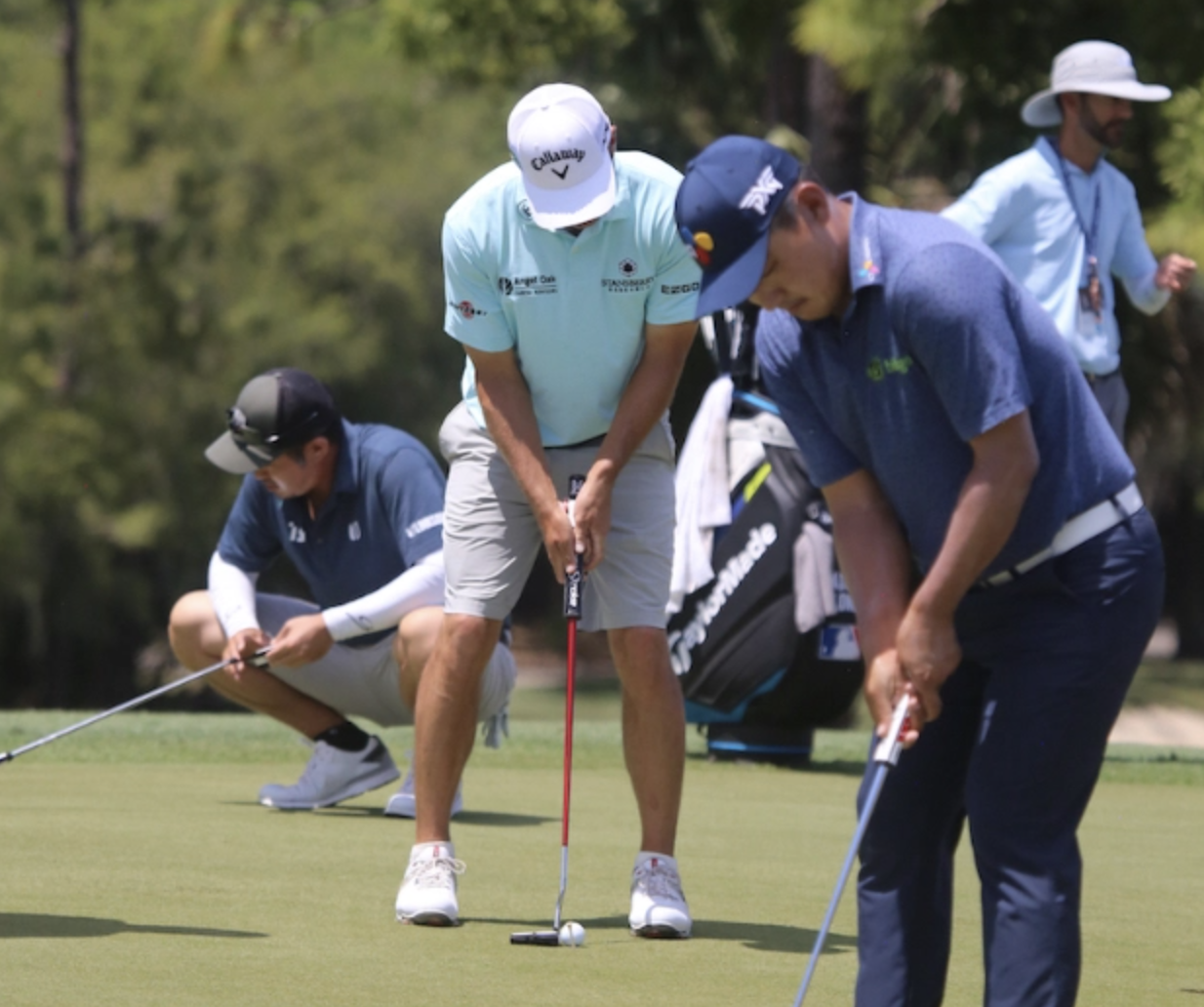
As many of you might know, I began my golf club design path in the mid-1990s by focusing on putter performance. I dove into learning all I could about all aspects of putting, starting with studying the techniques of the greatest putters in the game, as I figured putter design starts with putting technique.
What I discovered and deducted from all that discovery is that the evolution of putter design has been one part of a continuing triangular evolution that also includes putting technique and green speeds. But unlike the chicken-or-the-egg, I believe there is no question that green speeds have always driven changes in golfers’ putting techniques, which in turn has driven changes in putter design. Let me explain.
In the early days of golf, greens were not nearly as smooth or fast as they are now. So, the putter was basically a shorter iron club with a little loft and a light head, so the ball could be rapped across a green that might not have been 5-6 on the current-day Stimpmeter. Bobby Jones famous Calamity Jane and other putters of the early golf years were extremely light.
As green speeds began to pick up through the 1950s and 60s, putters got increasingly heavier to better fit the slower stroke pace that was required, and the top sellers were the Wilson 8802 and its copies, the classic Bullseye and mallet putters from Ray Cook, Otey Crisman and others.
But green speeds continued to increase into the late 1960s, causing golfers to learn to quiet the hands and arms and develop a stroke more controlled by the shoulders. Not coincidentally, an engineer named Karsten Solheim changed putter design forever with his Ping Anser at about that same time. It was the first true heel/toe balanced putter, but more importantly, it introduced the “plumber’s neck” hosel design. Very simply, what that design did was introduce the concept of “toe hang” and dramatically reduced that element of putter design. The number of very close copies to that putter design is mind-boggling, and it is said that over 95 percent of all golfers have – at one time or another – putted with that style of putter.
But the golf course agronomists weren’t done yet. Green speeds continued to increase, sending many older professional golfers home with the “yips”, and causing putters to evolve ever heavier to fit the slower, more deliberate stroke that continued to be required. The challenge of keeping a square putter face through impact at those slow stroke speeds led to the development of “face balanced” designs, then to the myriad of putting grip variations, beginning with “left-hand-low”, then evolving to the long putter, belly putter, arm-lock, and variations of the “claw”.
Who knows where it can go from here, but let’s talk about the “other” putting triangle.
Rolling the ball across a green into the hole is also a three-part process. The sides of the triangle are stroke speed, stroke path and putter face angle at impact. Of the three, research seems to prove the latter as the most difficult variable to control consistently.
Throughout history, there have been great putters with all kinds of stroke paths and speed control methods. The early golfers dealt with very slow greens compared to what we have now, and most employed somewhat of a “pop” stroke, as they had to generate some clubhead speed to move the ball suitably. Bobby Locke was said to hook all his putts with a very inside out stroke path . . . some stood very upright, while others crouched a lot.
Into the 60s and 70s, we saw great putters like Jack Nicklaus, Tom Watson and Ben Crenshaw employ very different styles, but all made putts like crazy with those differing approaches to the stroke.
But there is one constant in putting; the face angle has to be square to the starting line at impact in order for the ball to start down that line. It has been proven through slow-motion cameras that the ball will react to the face angle. Period. While it might be more efficient to groove a stroke that is also pretty square to the line at impact, there are good putters whose stroke comes into the ball a little from the inside or outside, but in order to make putts, they find a way to keep the putter face square to the intended line at impact.
What makes putting so darned difficult is this:
The majority of putter designs exhibit some degree of “toe hang” as a result of the design of the shaft/head connection and the center of mass of the putter head. When put into motion in the forward stroke, these putter heads “want” to follow the shaft motion to this same “toe hang” degree – it’s simple physics. A face-balanced putter does as well, but to much less of a degree. But with any putter, the difficulty lies in the fact that you have to square the face at impact with a subtle counter-rotational force in your grip on the putter. Since putts of different lengths require different clubhead speeds in the forward stroke, your counter-rotational force must be different for every length putt you face.
Given all this, isn’t it a wonder we make as many as we do?
I hope this generates lots of questions and comments by all of you . . . if you would like to stay on this topic for another post or two, I’m game.




This past Monday, I played in the U.S. Amateur local qualifier at Rock Creek Country Club in Portland, Oregon. A full tee sheet from 7:30 a.m. to 1:55 p.m., the top 11 scores would make it to the U.S. Amateur final qualifying.
I teed off at 10:48 a.m.. With the 7:30 am tee time, you can get a feel for the leaders’ pace, and they were off and running on the challenging setup at Rock Creek.
View this post on Instagram
Getting to the highlight of the round on the par five 17th, a drive up the left side and 212 yards left to the front hole location. I took out a 5-iron with plans of middle of the green. The ball ended up 8 feet left of the hole, pin high. A slight downhill putt dropped in for an eagle 3 on the 17th. With the cut line looking to be anywhere from -2 to even par. This was the boost I had been waiting for all day.
With making par from the trees on 18, it was time to wait for a potential playoff with a posted score of one under par 71.
Three hours later, it was playoff time. 8 players for 6 spots. I made par on the playoff hole, which was good enough to advance to the U.S. Amateur final qualifying in July. USGA qualifiers sure deliver on all of the emotions in golf!
Club Junkie
Building my 2026 gamer WITB: Ranking the contenders and new putter projects – Club Junkie Podcast

The annual What’s In The Bag build is underway, and on this episode of Club Junkie, Brian breaks down the clubs currently leading the race for a spot in his 2026 gamer setup. From drivers and fairway woods to irons, wedges, and shafts, he ranks the equipment that’s performing best and explains what’s separating the front runners from the rest of the field.
Brian also heads into the workshop to discuss several putter projects currently on the bench. From head options and shaft choices to build ideas and testing plans, he shares what he’s working on and which putters could become serious contenders for the bag this season.
If you’re a gear junkie who loves equipment testing, club building, and the never-ending pursuit of the perfect setup, this episode is for you.
Follow Club Junkie:
Instagram: @clubjunkiepod
TikTok: @clubjunkiepod
Threads: @clubjunkiepod
X: @ClubJunkiePod
Club Junkie
Tour Edge Exotics mini driver review + TaylorMade Spider ZT Max first look – Club Junkie

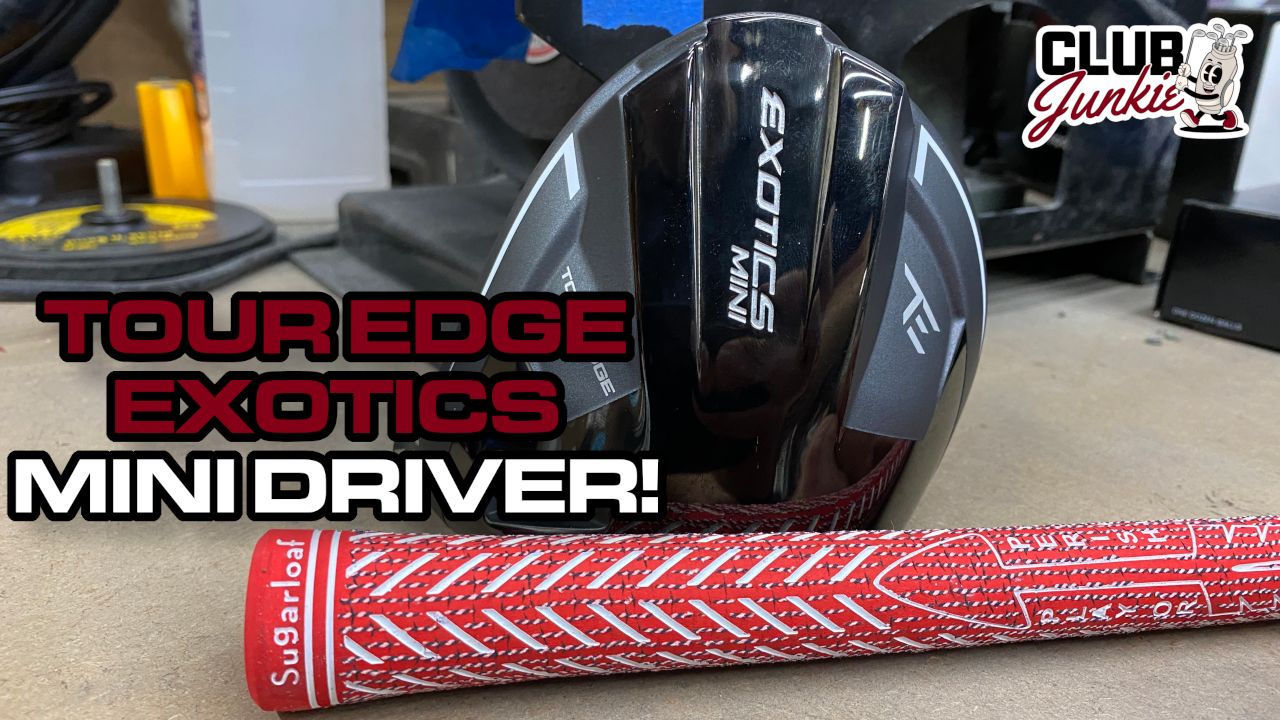
On this episode of Club Junkie, I put the new Tour Edge Exotics Mini Driver to the test and break down the performance, forgiveness, distance, and where it fits compared to a traditional driver or strong fairway wood. If you have been curious about adding a mini driver to the bag, this one is worth a look.
I also dive into the new TaylorMade Spider ZT Max putter that was recently spotted and discuss the growing zero torque putter trend. Plus, there is a closer look at the new Project X Titan Yellow shaft showing up on the PGA Tour and what makes it different from other profiles currently out there.

Justin Rose WITB 2026 (April): Full WITB breakdown with new McLaren irons

What’s the story behind Webb Simpson’s custom-stamped irons?

Memorial Tournament Tour Report: Rory McIlroy, Cameron Young switch up drivers, and more

Cadillac Championship Tour Report: Spieth’s sizable changes, McLaren Golf launches, and more

Russell Henley’s winning WITB: 2026 Charles Schwab Challenge

Kristoffer Reitan’s winning WITB: 2026 Truist Championship

Best irons 2026: Best irons overall, most forgiving irons, and more

J.T. Poston’s winning WITB: 2026 Memorial Tournament

Aaron Rai’s winning WITB: 2026 PGA Championship

Cameron Young’s winning WITB: 2026 Cadillac Championship


Ryan Palmer WITB 2026 (June)
Driver: Callaway Quantum Triple Diamond (9 degrees) Shaft: Project X HZRDUS Smoke Blue RDX 60 TX 3-wood: TaylorMade Qi10 (15 degrees) Shaft:...


Bud Cauley WITB 2026 (June)
Bud Cauley had >14 clubs in his bag when photographed prior to the Memorial Tournament. Driver: Titleist GTS2 (8 degrees) Shaft: Fujikura...


Hannah Green WITB 2026 (June)
Driver: Titleist GTS3 (10 degrees, D4 SureFit setting) Shaft: Mitsubishi Chemical Diamana RB 53 S 3-wood: Titleist GT3 (15 degrees,...


Asterisk Talley WITB 2026 (June)
Driver: TaylorMade Qi4D (9 degrees) Shaft: Fujikura Ventus Blue 6 S 3-wood: TaylorMade Qi4D (16.5 degrees) Shaft: Fujikura Ventus Blue...
-
 Equipment6 days ago
Memorial Tournament Tour Report: Rory McIlroy, Cameron Young switch up drivers, and more
-
 News2 weeks ago
Russell Henley’s winning WITB: 2026 Charles Schwab Challenge
-
 Equipment3 days ago
Best irons 2026: Best irons overall, most forgiving irons, and more
-
 Whats in the Bag4 days ago
J.T. Poston’s winning WITB: 2026 Memorial Tournament
-

 Equipment1 week ago
Details on Jason Day’s latest prototype Avoda iron setup
-
 Equipment3 weeks ago
CJ Cup Byron Nelson Tour Report: Koepka and Kim’s newest putters finally get hot
-

 News2 weeks ago
Charles Schwab Challenge Tour Report: MacIntyre, Åberg and Spaun all switch putters, TaylorMade launches new Spider
-
 Equipment2 weeks ago
Details on J.J. Spaun’s surprise putter switch


Pingback: The Wedge Guy: A putting experiment – GolfWRX
Dan G
Jul 29, 2022 at 11:52 pm
Not sure purpose of the article, I think I missed something. Also, need to pay respects to TP Mills as one of the OG.