
Opinion & Analysis
What does it really take to play college golf?


Much has been written and speculated about this question, both in popular media and by junior golfers and their parents and coaches. However, I wanted to get a more definitive answer.
In collaboration with Dr. Laura Upenieks of Baylor University, and with the generous support of Junior Tour of Northern California and Aaron R. Hartesveldt, PGA, we surveyed 51 players who were committed to play college golf for the 2021 year.
Our sample was comprised of 27 junior boys and 24 junior girls. Most of our respondents were either white or Asian. As for some other notable statistics, 67% of boys reported working with a coach once a week, while 100% of girls reported working with a coach at least once a week. In addition, 67% of boys were members at a private club, while 100% of girls were members of a private club. Here are some other interesting findings from the data:
-The average scoring differential for a boy who committed to college golf was -1.48
-The average scoring differential for a girl who committed to college golf was 3.72
-The majority of the sample reported having played over 100 tournaments
-The average boy was introduced to the game at 7 years old
-The average girl was introduced to golf at 12 years old
-The average boy first broke par at 12
-The average girl first broke par at 17
-67% of boys and girls who responded reported having won at least 10 tournaments
One of the most interesting findings of the survey was the amount of competitive golf being played. The data shows that 67% of players report playing over 100 tournaments, meaning they have close to 1,000 hours of tournament experience. This is an extremely impressive amount given all respondents were teenagers, showing the level of dedication needed to compete at the top level.
Another interesting showing was that 75% of boys surveyed reported receiving “full scholarship”. At first glance, this number seems to be extremely high. In 2016, in a GolfWRX that I did with Steph Acosta, the data we collected estimated this number was between 5-10%. This number is seven times greater, which could be due to a low sample size. However, I would also speculate that the data speaks to the extrinsic motivation of players in the data set, as they feel the need to get a scholarship to measure their athletic success.
Finally, boys in the survey report playing with a mixture of elite players (those with plus handicaps) as well as 5-9 handicaps. On the other hand, no female in the study reported playing with any plus handicaps. It also stood out that 100% of junior girls report that their fathers play golf. In ongoing research, we are examining the reasons why young women choose golf and the impact their environments have on their relationships with golf. The early data is very interesting and we hope that it can be published by the end of this year. Altogether, we suspect that girls hold lower status at golf courses and are less able to establish competitive groups to regularly play with. This could impact how long they stay in the sport of golf as well as their competitive development.



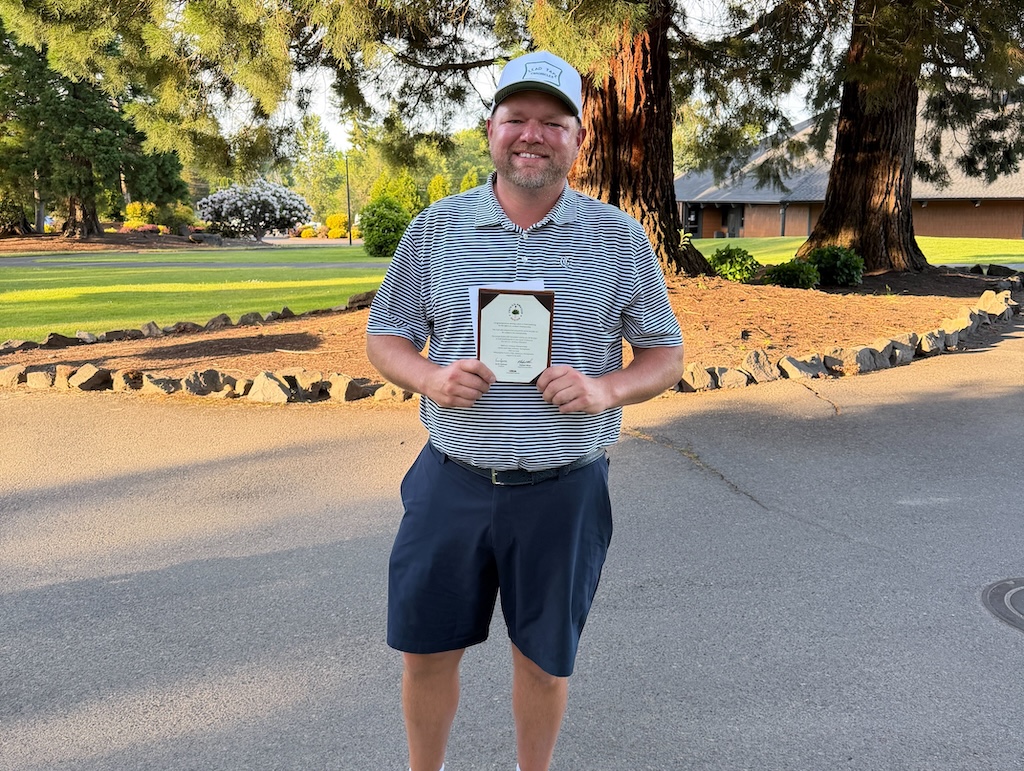
This past Monday, I played in the U.S. Amateur local qualifier at Rock Creek Country Club in Portland, Oregon. A full tee sheet from 7:30 a.m. to 1:55 p.m., the top 11 scores would make it to the U.S. Amateur final qualifying.
I teed off at 10:48 a.m.. With the 7:30 am tee time, you can get a feel for the leaders’ pace, and they were off and running on the challenging setup at Rock Creek.
View this post on Instagram
Getting to the highlight of the round on the par five 17th, a drive up the left side and 212 yards left to the front hole location. I took out a 5-iron with plans of middle of the green. The ball ended up 8 feet left of the hole, pin high. A slight downhill putt dropped in for an eagle 3 on the 17th. With the cut line looking to be anywhere from -2 to even par. This was the boost I had been waiting for all day.
With making par from the trees on 18, it was time to wait for a potential playoff with a posted score of one under par 71.
Three hours later, it was playoff time. 8 players for 6 spots. I made par on the playoff hole, which was good enough to advance to the U.S. Amateur final qualifying in July. USGA qualifiers sure deliver on all of the emotions in golf!
Club Junkie
Building my 2026 gamer WITB: Ranking the contenders and new putter projects – Club Junkie Podcast

The annual What’s In The Bag build is underway, and on this episode of Club Junkie, Brian breaks down the clubs currently leading the race for a spot in his 2026 gamer setup. From drivers and fairway woods to irons, wedges, and shafts, he ranks the equipment that’s performing best and explains what’s separating the front runners from the rest of the field.
Brian also heads into the workshop to discuss several putter projects currently on the bench. From head options and shaft choices to build ideas and testing plans, he shares what he’s working on and which putters could become serious contenders for the bag this season.
If you’re a gear junkie who loves equipment testing, club building, and the never-ending pursuit of the perfect setup, this episode is for you.
Follow Club Junkie:
Instagram: @clubjunkiepod
TikTok: @clubjunkiepod
Threads: @clubjunkiepod
X: @ClubJunkiePod
Club Junkie
Tour Edge Exotics mini driver review + TaylorMade Spider ZT Max first look – Club Junkie

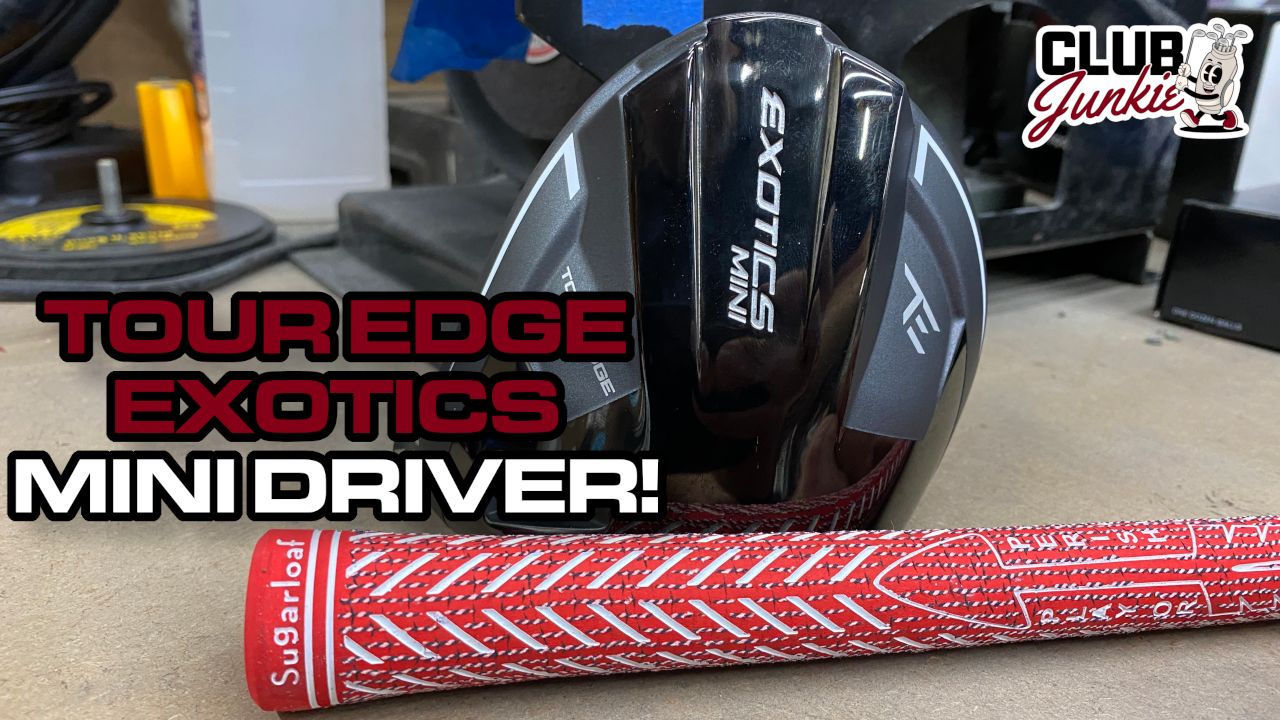
On this episode of Club Junkie, I put the new Tour Edge Exotics Mini Driver to the test and break down the performance, forgiveness, distance, and where it fits compared to a traditional driver or strong fairway wood. If you have been curious about adding a mini driver to the bag, this one is worth a look.
I also dive into the new TaylorMade Spider ZT Max putter that was recently spotted and discuss the growing zero torque putter trend. Plus, there is a closer look at the new Project X Titan Yellow shaft showing up on the PGA Tour and what makes it different from other profiles currently out there.

Justin Rose WITB 2026 (April): Full WITB breakdown with new McLaren irons

What’s the story behind Webb Simpson’s custom-stamped irons?

Memorial Tournament Tour Report: Rory McIlroy, Cameron Young switch up drivers, and more

Cadillac Championship Tour Report: Spieth’s sizable changes, McLaren Golf launches, and more

Russell Henley’s winning WITB: 2026 Charles Schwab Challenge

Kristoffer Reitan’s winning WITB: 2026 Truist Championship

Aaron Rai’s winning WITB: 2026 PGA Championship

J.T. Poston’s winning WITB: 2026 Memorial Tournament

Cameron Young’s winning WITB: 2026 Cadillac Championship

Best irons 2026: Best irons overall, most forgiving irons, and more


Bud Cauley WITB 2026 (June)
Bud Cauley had >14 clubs in his bag when photographed prior to the Memorial Tournament. Driver: Titleist GTS2 (8 degrees) Shaft: Fujikura...


Hannah Green WITB 2026 (June)
Driver: Titleist GTS3 (10 degrees, D4 SureFit setting) Shaft: Mitsubishi Chemical Diamana RB 53 S 3-wood: Titleist GT3 (15 degrees,...


Asterisk Talley WITB 2026 (June)
Driver: TaylorMade Qi4D (9 degrees) Shaft: Fujikura Ventus Blue 6 S 3-wood: TaylorMade Qi4D (16.5 degrees) Shaft: Fujikura Ventus Blue...


Brianna Do WITB 2026 (June)
Driver: Callaway Quantum Triple Diamond (9 degrees) Shaft: KBS PGW 3-wood: Callaway Elyte Titanium (15 degrees) Shaft: KBS PGW 5-wood:...
-
 Equipment6 days ago
Memorial Tournament Tour Report: Rory McIlroy, Cameron Young switch up drivers, and more
-
 News1 week ago
Russell Henley’s winning WITB: 2026 Charles Schwab Challenge
-
 Whats in the Bag3 days ago
J.T. Poston’s winning WITB: 2026 Memorial Tournament
-
 Equipment3 days ago
Best irons 2026: Best irons overall, most forgiving irons, and more
-

 Equipment1 week ago
Details on Jason Day’s latest prototype Avoda iron setup
-
 Equipment3 weeks ago
CJ Cup Byron Nelson Tour Report: Koepka and Kim’s newest putters finally get hot
-

 News2 weeks ago
Charles Schwab Challenge Tour Report: MacIntyre, Åberg and Spaun all switch putters, TaylorMade launches new Spider
-

 Equipment2 weeks ago
Details on J.J. Spaun’s surprise putter switch


John
Jul 16, 2022 at 10:51 am
This article is horrible and should never have been published. The sample size is too small. This is not journalism and there is a real lack of credible resources being used.
ChipNRun
Jul 6, 2022 at 9:42 am
Getting onto the college golf team is the first step. Staying there is the next.
Besides playing skills, golfers must master time management. In season, wrestlers spend about 1.5 to 2 hours on workout days. Golfers spend 4-5 hours, plus travel time to and from course. Plenty of Div. III and NAIA teams carry a former scholarship hotshot who crashed and burned academically at that first stop.
Radim
Jul 5, 2022 at 12:33 pm
It is very sad that young girls do not want to play golf. My daughter is alone with 10 boys.
DA
Jul 4, 2022 at 9:21 pm
Brendan, an interesting and informative article until the last two sentences ending in your opiniated conclusion. Why? Ruined it and shown light on your personal biases and beliefs. Scientific? Hardly.
ChipNRun
Jul 6, 2022 at 9:36 am
I know we’re in the 21st century. But, given women golfers still have lower access status than men at quite a few clubs, it’s not a stretch that girls would have trouble getting league access.
That said, it would have been better to at least have a couple of qualitative comments to back up the assumption.