
Opinion & Analysis
GolfWRX Interview: Writer Michael Croley


Michael Croley is a writer and a teacher. Without too much trouble, you can find his collection of yarns, Any Other Place: Stories or his magazine-published essays. What he teaches, is writing. When you interview a writer, you resist being the child of impulse, who tosses out the simplest, mundane inquiries. Instead, you do your level best to come up with questions that compel the subject to sit back and ponder their intricacy, if only for a while. I suspect I’ve done the later here, but you’ll be the arbiter.
Mr. Croley hails from Corbin, Kentucky, but that’s simply an opening for a layered, nuanced story that we won’t come close to completing today. He grew up in the southeastern portion of the commonwealth with an older brother, now deceased, who he adored. In a piece that he wrote for Golf Magazine, Mr. Croley reveals that he would tell folks his favorite basketball player was Larry Bird, because it was his brother’s favorite. In truth, it was older brother Tim who always would be his favorite baller.
While doing a bit of research on Corbin, I came across two items of interest. The first is the geographic location of the burg on interstate 75, smack dab between Lexington and Knoxville. If you want to get from UK to UT, you have to pass through Corbin. The second was a bit funnier. Listed among the most famous people to emerge from the home rule-class city was one Jerry Bird. Also a basketball player, but not nearly as famous as Larry. JBird played at UK, but he would have been no higher than third on Michael Croley’s list of favorite basketball dribblers.
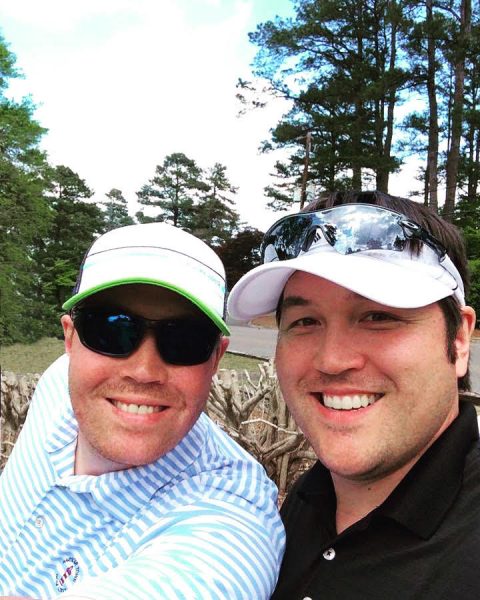
Tim Croley (left) and Michael Croley (right)
Golf prose is the better when great writers choose to write about golf. Not great golf writer, mind you, but great writers. Folks like John Updike, Billy Collins, P.G. Wodehouse, Bernard Darwin, and their ilk. Fortunately for golf and for us, Michael Croley writes about golf. His connection with our game, of course, is connected to his brother and their bond.
RM: Is there more poetry, or more prose, in golf?
MC: A little of both, right? But I guess I’d lean more towards poetry in the best architecture, which leads to better stories and debates (prose) post-round.
RM: Was golf a part of your life while growing up in Corbin, Kentucky? If so, elaborate. If not, when/how did you find the game?
MC: Not at all. We only had one course, a nine-holer at the country club and we weren’t members. Golf definitely seemed like a game for “them” when I was growing up. I found the game in my early twenties when my older brother took it up. It was a way for us to spend time together.
RM: In one of your articles on golf, you reveal the pride you felt in watching your brother hit golf shots high in the air, straight at the target. My brother and I do not share golf, so we don’t have that connection. How did the sharing of golf enhance your relationship with your brother?
MC: It was just a way for us to continue playing and competing with each other as we did when we were boys. As we got older and had families, the golf trip was a way for us to turn out some noise and we built our year around it. I don’t know that golf made us closer–we were always really close–but it gave us a lot of great memories.
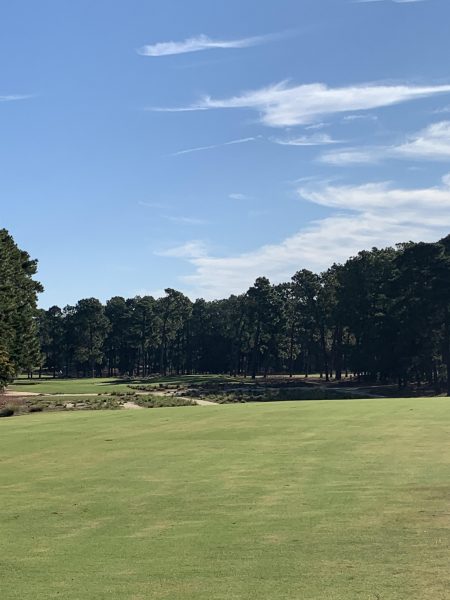
Pinehurst by day
RM: Is there a golf club in your bag that you rarely use? If so, which one, what do you fear, and why is it still there?
MC: I rarely keep the 4-iron in the bag. I’ve only hit well, seriously, twice in my life. Also, hybrids don’t treat me well, either. They’re supposed to be miracle clubs for regular golfers but they just baffle me.
RM: As a sometimes-writer on golf, do these story proposals find you, or do you begin with a notion, then seek an outlet or venue?
MC: More often than not, I’m pitching the stories to editors. I try to think of which venues will best support the story.
RM: What type of golf characters would populate your theoretical volume of stories on the game?
MC: The same ones that populate the fiction I write now, I suppose. Folks struggling to figure out who they are. Don’t what all suffer existential crisis on the golf course?
RM: There are at least two general sorts of golf writers: those whose dedication has been to tell the story of golf over the years, and others who are creative writers first, but cannot resist the siren call of golf. Do you have any to recommend, from either camp?
MC: I don’t, really. I’ve tried to read Updike’s essays and don’t enjoy them. I came to golf writing because I wanted, in part, to tell some stories about architecture and learn more about how golf courses are designed and built. Golf is a contemplative game for me, but I’m not contemplating golf when I play but my other writing and my life.
RM: In one of your articles, you mention the sect of golfers that studies the architecture of great courses. Talk a bit about this, about your entry into the coven, and the impact it had on how you played and enjoyed golf.
MC: That was due in part to my brother. He was really enamored with the work of Tom Doak as as I started playing golf I started paying more attention to how courses are built. I read Tom’s book The Anatomy of a Golf Course and that’s when I knew I wanted to write about him. I learned a lot from just talking to Tom and watching him walk the land of a golf course, which I’ve been fortunate to do twice.
RM: You have researched and profiled Anthony Ravielli, the artist who created Ben Hogan’s hands in the famous Five Lessons golf book. Select for us a historical figure from golf’s past, and why you might share 18 holes and a dram or two with that person. For bonus points, where would you play?
MC: Well, I’ll cheat and pick two. The first would be my late brother who passed away in May of 2021. I would play anywhere with him but we’d probably head to Pinehurst No. 2, where I scattered some of his ashes in September and wrote about that for Esquire. A historical figure is a tougher ask because I’m not that enamored of a good number of golfing characters but Donald Ross might be fun because I think he’s the most influential architect in the American game. Might be fun to pick his brain for a round.
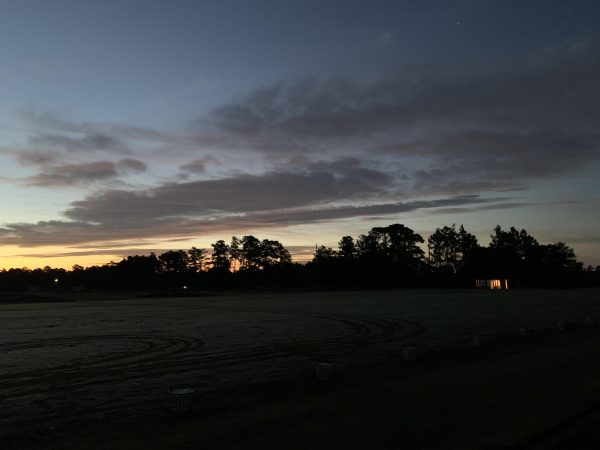
Pinehurst by night



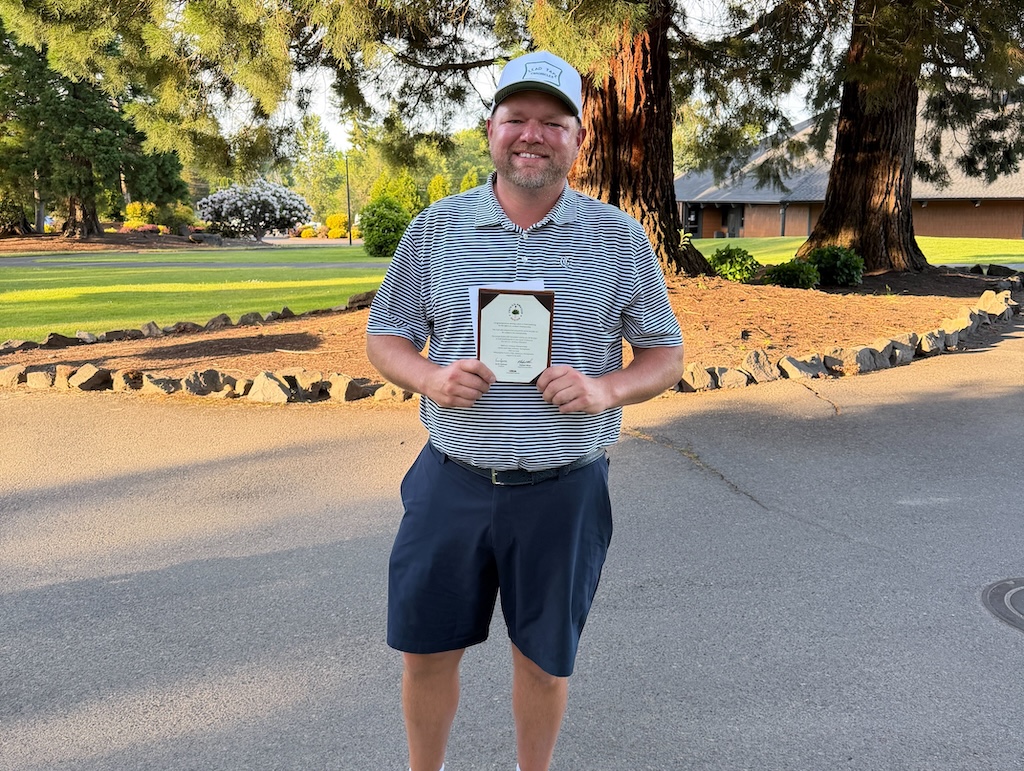
This past Monday, I played in the U.S. Amateur local qualifier at Rock Creek Country Club in Portland, Oregon. A full tee sheet from 7:30 a.m. to 1:55 p.m., the top 11 scores would make it to the U.S. Amateur final qualifying.
I teed off at 10:48 a.m.. With the 7:30 am tee time, you can get a feel for the leaders’ pace, and they were off and running on the challenging setup at Rock Creek.
View this post on Instagram
Getting to the highlight of the round on the par five 17th, a drive up the left side and 212 yards left to the front hole location. I took out a 5-iron with plans of middle of the green. The ball ended up 8 feet left of the hole, pin high. A slight downhill putt dropped in for an eagle 3 on the 17th. With the cut line looking to be anywhere from -2 to even par. This was the boost I had been waiting for all day.
With making par from the trees on 18, it was time to wait for a potential playoff with a posted score of one under par 71.
Three hours later, it was playoff time. 8 players for 6 spots. I made par on the playoff hole, which was good enough to advance to the U.S. Amateur final qualifying in July. USGA qualifiers sure deliver on all of the emotions in golf!
Club Junkie
Building my 2026 gamer WITB: Ranking the contenders and new putter projects – Club Junkie Podcast

The annual What’s In The Bag build is underway, and on this episode of Club Junkie, Brian breaks down the clubs currently leading the race for a spot in his 2026 gamer setup. From drivers and fairway woods to irons, wedges, and shafts, he ranks the equipment that’s performing best and explains what’s separating the front runners from the rest of the field.
Brian also heads into the workshop to discuss several putter projects currently on the bench. From head options and shaft choices to build ideas and testing plans, he shares what he’s working on and which putters could become serious contenders for the bag this season.
If you’re a gear junkie who loves equipment testing, club building, and the never-ending pursuit of the perfect setup, this episode is for you.
Follow Club Junkie:
Instagram: @clubjunkiepod
TikTok: @clubjunkiepod
Threads: @clubjunkiepod
X: @ClubJunkiePod
Club Junkie
Tour Edge Exotics mini driver review + TaylorMade Spider ZT Max first look – Club Junkie

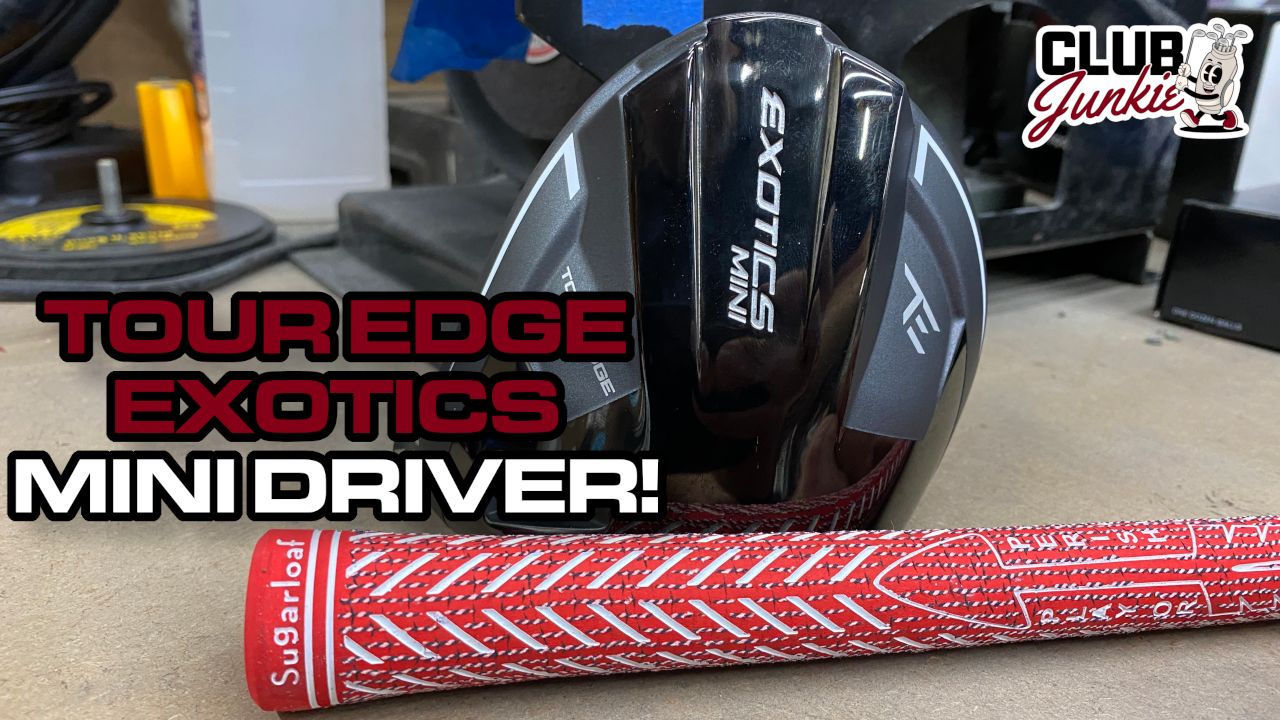
On this episode of Club Junkie, I put the new Tour Edge Exotics Mini Driver to the test and break down the performance, forgiveness, distance, and where it fits compared to a traditional driver or strong fairway wood. If you have been curious about adding a mini driver to the bag, this one is worth a look.
I also dive into the new TaylorMade Spider ZT Max putter that was recently spotted and discuss the growing zero torque putter trend. Plus, there is a closer look at the new Project X Titan Yellow shaft showing up on the PGA Tour and what makes it different from other profiles currently out there.

Justin Rose WITB 2026 (April): Full WITB breakdown with new McLaren irons

What’s the story behind Webb Simpson’s custom-stamped irons?

Memorial Tournament Tour Report: Rory McIlroy, Cameron Young switch up drivers, and more

Cadillac Championship Tour Report: Spieth’s sizable changes, McLaren Golf launches, and more

Russell Henley’s winning WITB: 2026 Charles Schwab Challenge

Kristoffer Reitan’s winning WITB: 2026 Truist Championship

Aaron Rai’s winning WITB: 2026 PGA Championship

J.T. Poston’s winning WITB: 2026 Memorial Tournament

Cameron Young’s winning WITB: 2026 Cadillac Championship

Best irons 2026: Best irons overall, most forgiving irons, and more


Bud Cauley WITB 2026 (June)
Bud Cauley had >14 clubs in his bag when photographed prior to the Memorial Tournament. Driver: Titleist GTS2 (8 degrees) Shaft: Fujikura...


Hannah Green WITB 2026 (June)
Driver: Titleist GTS3 (10 degrees, D4 SureFit setting) Shaft: Mitsubishi Chemical Diamana RB 53 S 3-wood: Titleist GT3 (15 degrees,...


Asterisk Talley WITB 2026 (June)
Driver: TaylorMade Qi4D (9 degrees) Shaft: Fujikura Ventus Blue 6 S 3-wood: TaylorMade Qi4D (16.5 degrees) Shaft: Fujikura Ventus Blue...


Brianna Do WITB 2026 (June)
Driver: Callaway Quantum Triple Diamond (9 degrees) Shaft: KBS PGW 3-wood: Callaway Elyte Titanium (15 degrees) Shaft: KBS PGW 5-wood:...
-
 Equipment6 days ago
Memorial Tournament Tour Report: Rory McIlroy, Cameron Young switch up drivers, and more
-
 News1 week ago
Russell Henley’s winning WITB: 2026 Charles Schwab Challenge
-
 Whats in the Bag3 days ago
J.T. Poston’s winning WITB: 2026 Memorial Tournament
-
 Equipment3 days ago
Best irons 2026: Best irons overall, most forgiving irons, and more
-

 Equipment1 week ago
Details on Jason Day’s latest prototype Avoda iron setup
-

 Equipment3 weeks ago
CJ Cup Byron Nelson Tour Report: Koepka and Kim’s newest putters finally get hot
-

 News2 weeks ago
Charles Schwab Challenge Tour Report: MacIntyre, Åberg and Spaun all switch putters, TaylorMade launches new Spider
-

 Equipment2 weeks ago
Details on J.J. Spaun’s surprise putter switch


Pingback: My 2021: What I enjoyed sharing most with you – GolfWRX