
Equipment
The ‘game-changing’ Autoflex shaft: A year in review


Last year in August, I introduced the now-famous AutoFlex golf shaft to the English-speaking world here on GolfWRX (Korea’s Autoflex shaft: Challenging the conventional wisdom of golf).
Created by Dumina Co. in South Korea, the upstart shaft challenged the commonly-held view that flexible shafts are not only straighter but longer as well. In the weeks that followed, the neon pink shaft exploded onto the golf scene fueled by a series of videos from TXG’s Ian Fraser and Matt Blois, who seemed equally amazed at the unexpected results. And from the depths of obscurity where so many would-be ‘game changers’ remained, the legend of the Autoflex was born.
Looking back, it may have been the perfect storm – an innovative, ultralight, and flexible shaft with a mysterious “Korea Hidden Technology” appearing at the height of the golf boom brought on by a pandemic. The fact that the manufacturer refused to patent their know-how to protect the technology only added to the intrigue.
Shortly after TXG first introduced the “mysterious Autoflex,” the pink shaft made its appearance on all the major tours. Some of the tour pros to put Autoflex in play included Adam Scott, Louis Oosthuizen, Branden Grace, Ernie Els, Fred Couples, and Michelle Wie West, with dozens more requesting to try the new shaft.
Although the specific technology behind the shaft remains hidden, tens of thousands have since taken the plunge to track down the bright pink shaft despite the high price tag.
According to Dumina, Autoflex shafts are now available in most golfing countries and major OEMs such as Titleist and Srixon/Cleveland/XXIO have added the Autoflex to their premium fitting matrix.
So what have we learned in the space of one year? Recently, I spent several days scouring the Internet to see what the people have been saying about the shaft in posts, reviews, videos, forums, and testimonials.

From the thousands of actual golfers, club fitters, and pros who have tested or played the AutoFlex, the consensus is:
- The majority of users seem to agree that the Autoflex driver shaft is the real deal in providing increased ball speed (as high as +8mph) with overall carry distance and accuracy, just by changing a shaft and without any additional effort (i.e. speed swing or physical training).
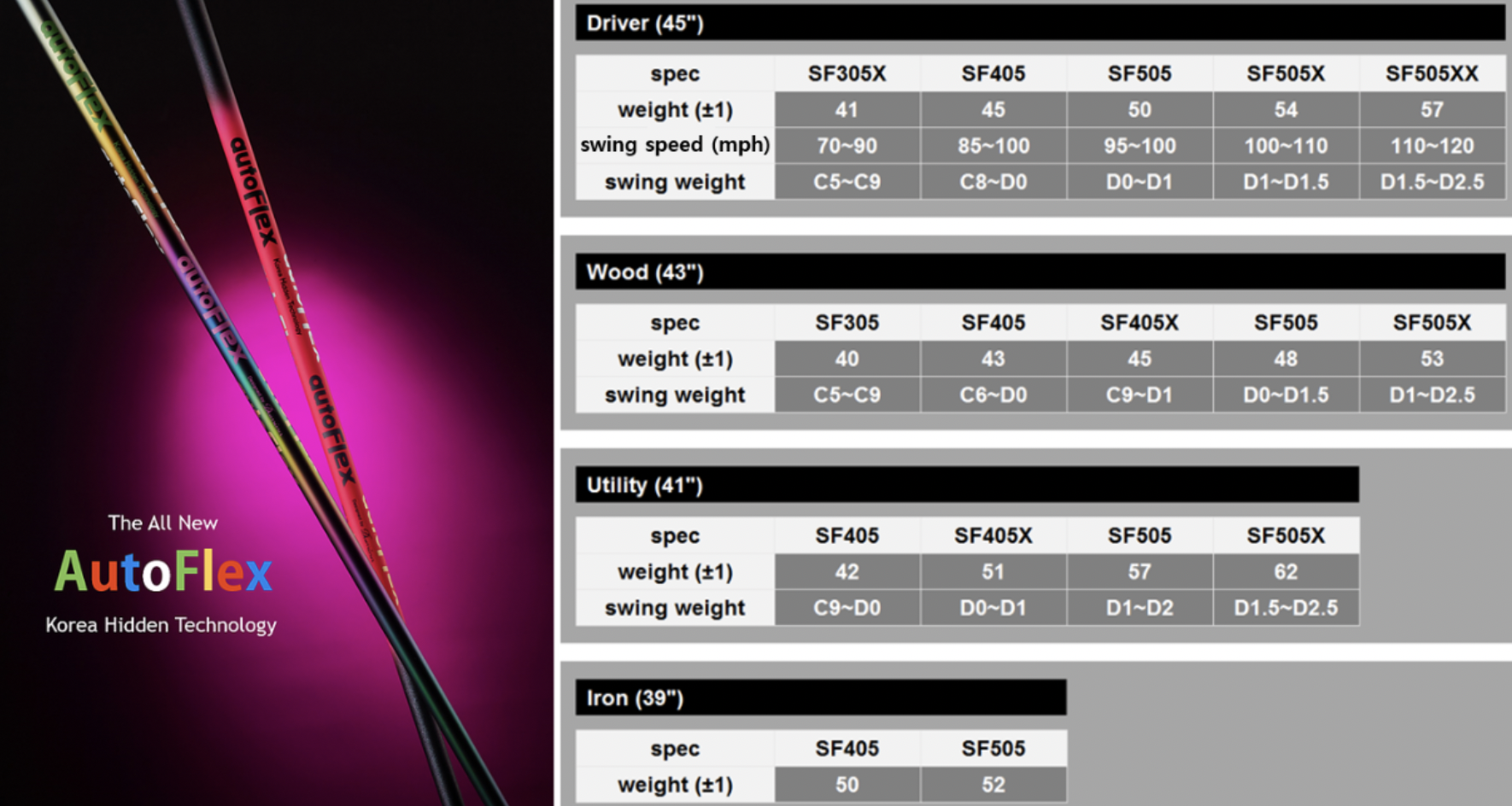
- The shaft seems to work best when the overall swing weight of the driver is between C8 to D0. This is radically different from the ‘normal’ D2~D5 swing weight for heavier, stiffer conventional shafts.
- Many raised the concern that swinging such a flexible shaft would not readily translate to swinging a stiffer shaft on the following shots. However, many users, including myself, reported that the swings felt no different going from Autoflex to a conventional shaft and back again during the round.
- Despite the shaft feeling extremely whippy when waggled, golfers said they came to trust the clubhead to catch up to the ball at impact even when swung hard. A few golfers with an aggressive transition said the shaft actually helped to smooth out their tempo on all their clubs.
- Initially thought to target the slow swing speed golfers with a smooth transition, the shaft has been proven by numerous users to perform well for faster swings in excess of 120mph with aggressive transitions.
The above summary may seem to paint the Autoflex as the new golf messiah, but not all reviews were glowing.
I would be remiss not to mention the handful of golfers who saw no increased benefit whatsoever with the Autoflex. There were also a few golfers who likened the shaft to “snake oil”, but most of them did not seem to have actually tried one for themselves.
Most famous perhaps is the video review by Rick Shiels, who was disappointed at the lower-than-expected results. However, many replies on the channel pointed out that the swing weight may have been too heavy (D4~D5), and needs to be fitted to the recommended balance as it is not a “plug and play” shaft.
There were also some instances where golfers reported their shaft breaking or cracks appearing along the shaft. Luckily, the shafts are equipped with a warranty sticker and many reported that the company was quick in response with a replacement. On their website, Dumina recommends utmost care during club fitting as the walls of the butt end and tip are quite thin (be careful when tightening that vice!).
On the whole, however, the online feedback seemed overwhelmingly positive, and that the Autoflex shaft can indeed improve driving performance when dialed into their specified swing speeds.
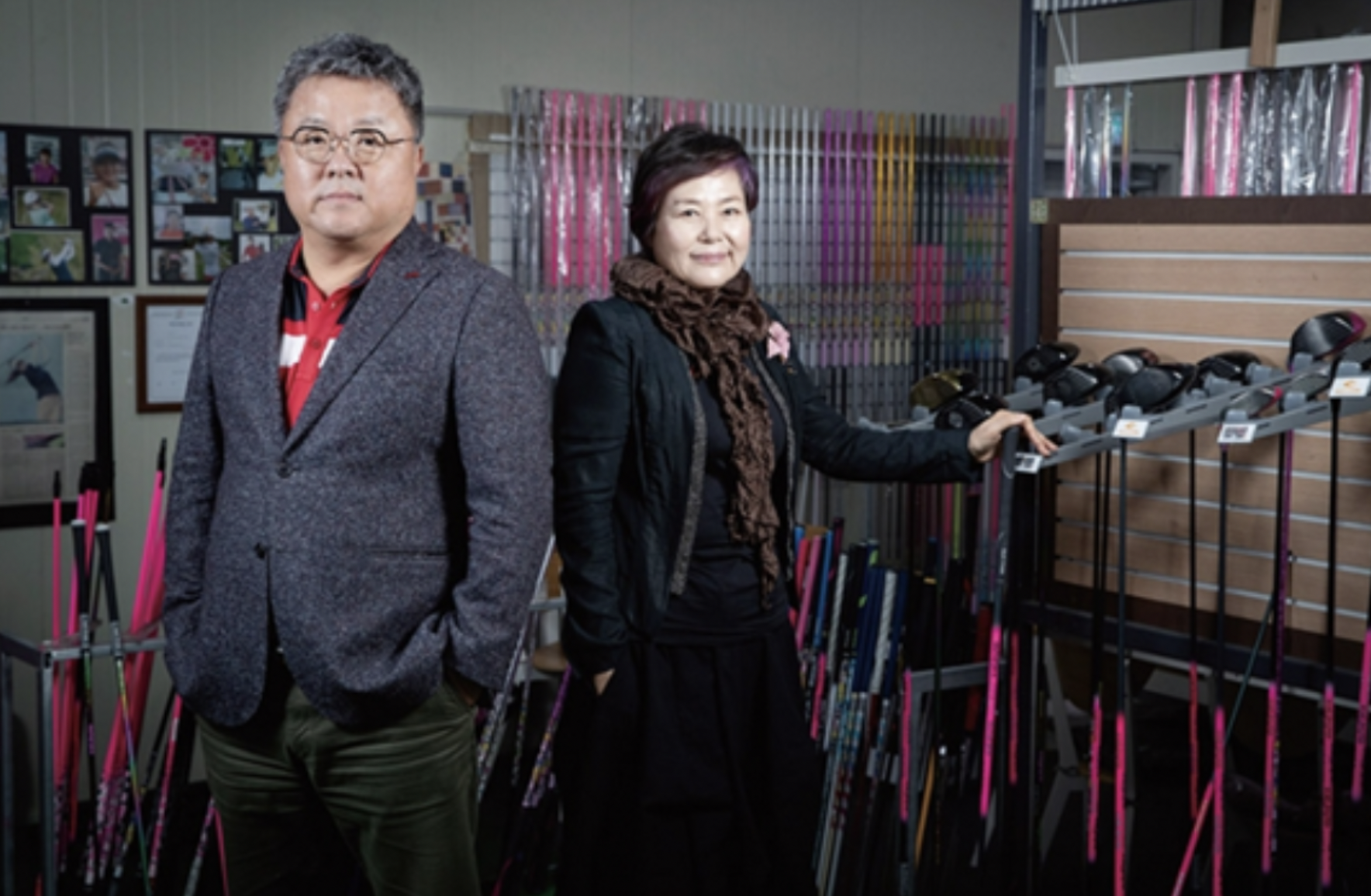
Co-founders of Dumina Co., Chairman Gun-yul Park and CEO Doona Jeong.
The inevitable questions soon followed. What’s their secret? Many guesses were thrown into the hat, ranging from non-Newtonian materials to KHT being an elaborate marketing scheme.
Could it be all along that golfers can benefit from using a much lower-flex shaft than their current gamers? I have tried several times to coax Dumina into giving me some hints, but so far, they gave nothing away other than stating that their tech and materials are capable of hundreds of new combinations.
According to its two-year product cycle, Dumina plans to release its new shaft models in the fall of 2022.
Other common questions I’ve seen were about their fairway and iron shafts. These shafts cost less than the driver shaft ($790) but are still expensive enough to give most golfers pause. The fairway wood and hybrid shafts retail for $675 each, while an iron shaft will set you back at $210 per shaft. Since becoming smitten with the driver shaft last summer, I managed to save up for the SF505 Autoflex shafts to be installed in all my woods and irons 6 months ago.
So are they worth the money? Below is my experience using the Autoflex SF505 shafts in all my woods and irons.
AutoFlex Driver and Woods
I have been using the SF405 shaft in my Cobra F9 since last year, and switched to SF505 with SIM2 Max 9° head early March. Despite the small fortune spent, I have been quite pleased with the results. When built to 45”, my driver came to C8 with the 24g stock weight in the head. It was good, but I wanted to feel the clubhead a bit more on the downswing. I
added about two grams of lead tape to bring the balance slightly past C9, and it is perfect for my average swing speed of 95mph. This setting is very comfortable to swing throughout the round, and my overall driving distance increased just under 20 yards.
As many users have attested online, one amazing benefit of the Autoflex shaft is that it allows me to feel the shaft loading as would a faster player swinging a much stiffer flex at 110+ mph. Thus, even at my slower swing speed I can feel the shaft actively loading and releasing explosively through the impact. The feeling is nothing short of glorious, and I believe this addictive feeling is a big part of the Autoflex charm. With the success of the driver shaft, I changed all the shafts in my woods and irons to the SF505 this March.

Driver: SIM2 Max 9° total 45” @C9; Fairway woods 3,5,7: Knuth High heat @D0; Irons: Yonex CB-301 5-P
@C9~D1
The distance gain with my 3-wood (210-220 yds) was barely noticeable, but the 5- and 7- wood carry distance increased by 10~12 yards. The fairway woods and hybrid are all from Knuth Golf, which came with Fujikura Atmos shafts at D2~D3. After switching to Autoflex, the lighter club heads coupled with the 46g pink shaft came to D0 swing weight. Just like the driver, the woods felt light and whippy compared to their conventional counterparts.
I find I don’t need to swing harder for the extra distance and the smoother tempo allows me to hit the center of the face more often. As a result, there is less chance of cold-topping the ball or pulling it left, and I am less afraid to pull out the longer clubs. The distinct kick at impact is also felt in the woods, but not as much as the driver. Depending on my condition and course, I switch out my 7-wood with the 4-hybrid. The hybrid feels a lot like a regular club, but a much lighter weight can be felt when compared to a normal hybrid club.
AutoFlex Irons
I tested both of the SF405 and SF505 iron shaft models and chose to go with the latter. I used Golf Pride Velvet Lite grips to get the swing weight between C9~D1 throughout the set.
Although the stiffer model of the two, the 505 shaft is still very light at 52g even when uncut. Unlike the driver shafts that range up to SF505XX flex for high-speed swings, the current iron shaft models are for average swing speed golfers between 80-100mph (driver SS).
Before switching, I played MFS Matrix Program 70 shafts weighing 79g uncut, and NS pro 950s steel shafts before that. My idea was to go lighter and still maintain adequate stiffness for control. I had pretty good success with the Matrix graphite shafts and carried on average 140~145 meters (153~158 yds) with my 7-iron on the course.
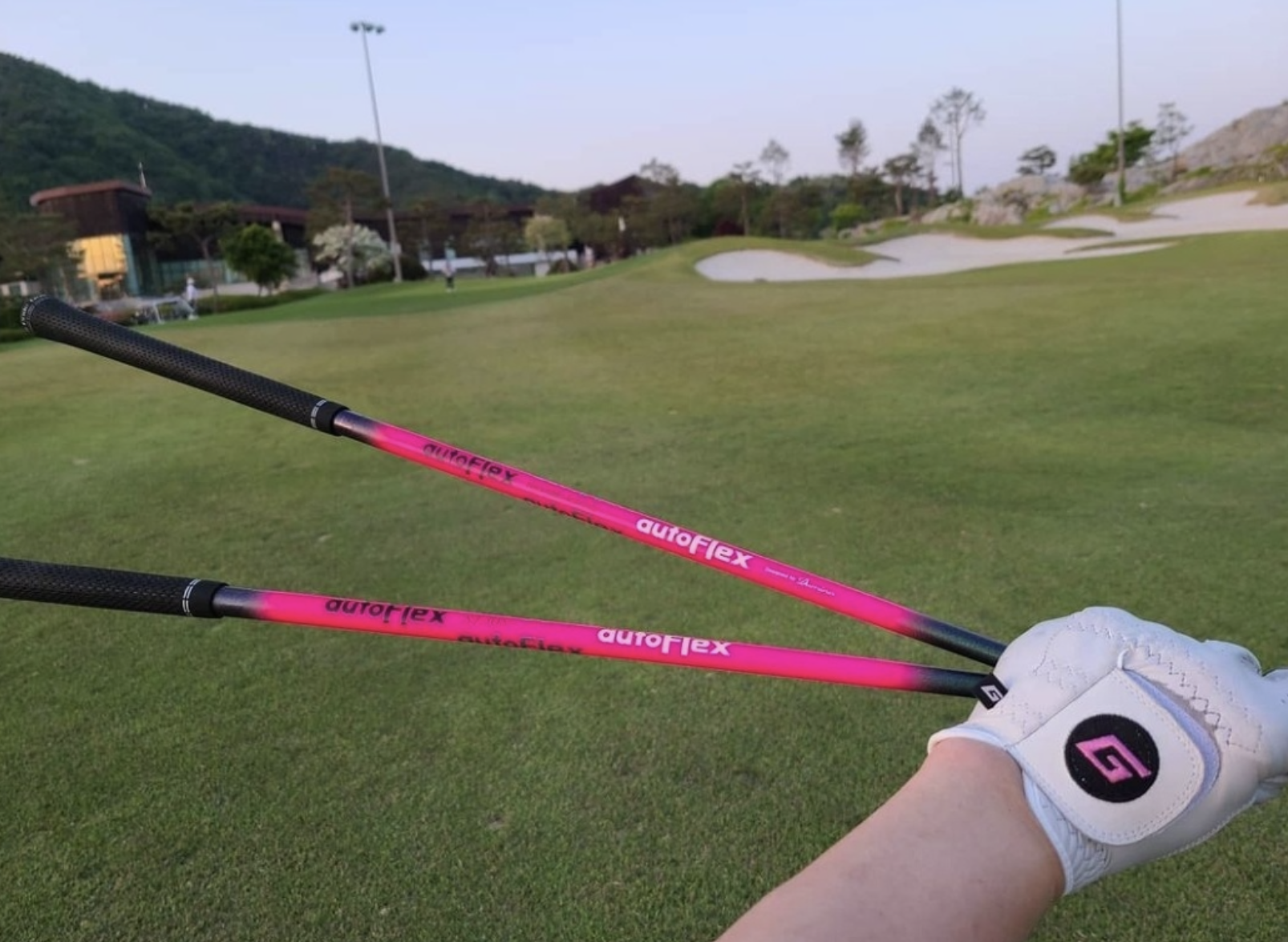
At first, the SF505 shaft actually didn’t feel too different. Perhaps I was already used to the lighter overall club weight from using the Matrix shafts. Also, the waggle test still produced a lot of whip, but not to the level of the driver and fairway shafts. Right away, I felt I could swing hard or smooth and still feel the clubhead following into the impact zone quite nicely.
It took about a week to get better acquainted with the new swing weight, but the overall transition into the new shaft was quite easy. I now average 150~155 meters (164~169 yds) with the same 7 iron (34 degrees loft). The spin is about the same as before at a low 4000rpm range, but the ball launches a tad higher for that extra carry distance. For those who play often in windy conditions, the added peak height may not be beneficial.
On the whole, the Autoflex iron shafts did improve my distance, swing tempo and accuracy over the last two shafts I’ve used. While I have seen equally good distance gains with other premium carbon shafts such as Steelfiber and MCI, there is no doubt that my dispersion got better. My iron play from within 150 yards improved noticeably, and I can swing more uniformly throughout the round.
Also, dropping down one club into the green helped both my GIR and putting average. I was a decent iron player to begin with, but the added distance with less exertion made the game easier on the body and the scorecard.
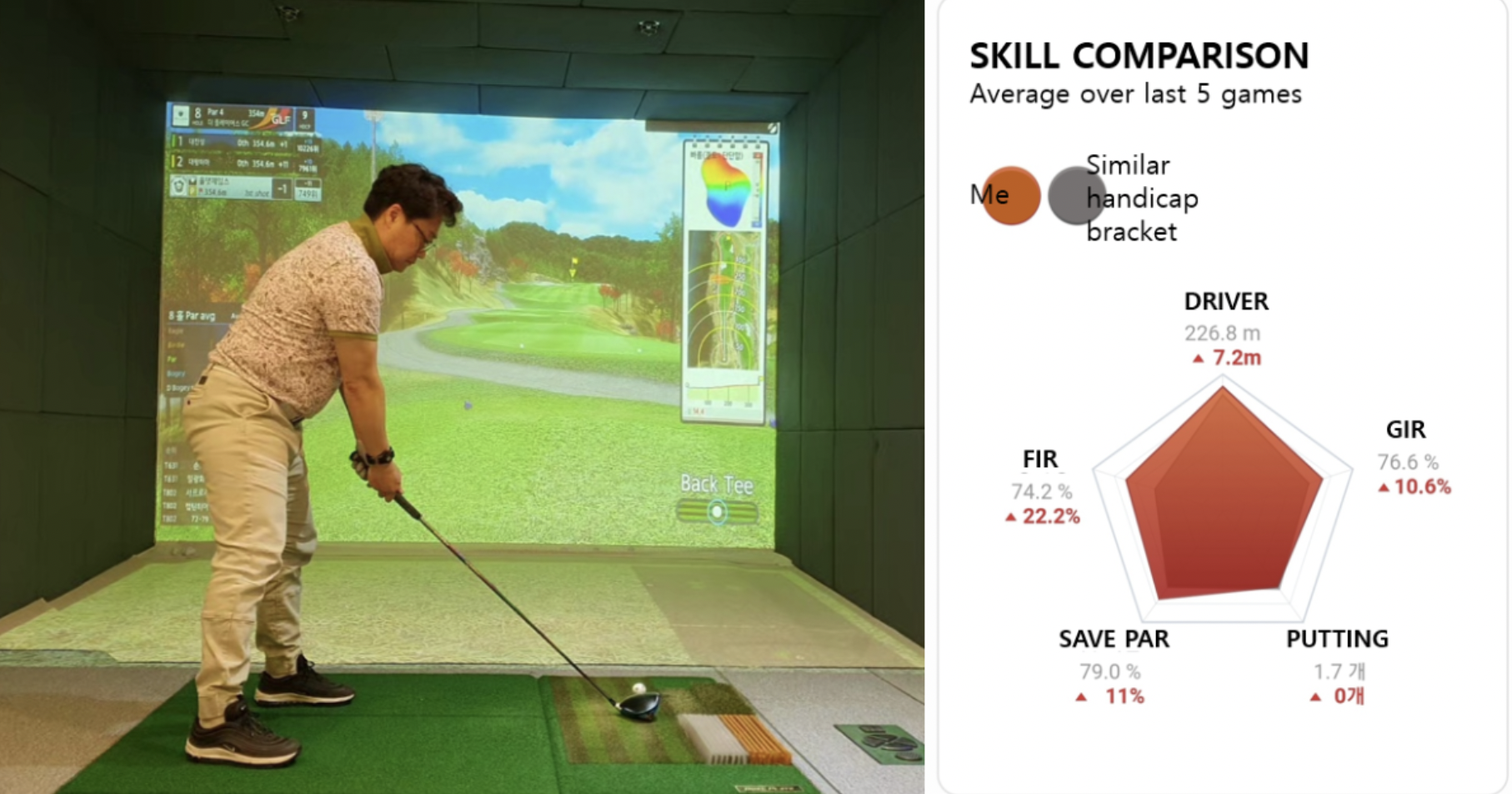
Looking at my past five-game average on a GolfZon simulator, I saw significant gains in all aspects of my game. To be sure, it is a simulated golf round and can’t compare to the actual course, but my numbers have all jumped up.
Compared to the tens of thousands of Korean golfers in my handicap/skills bracket, I am well above average except in putting. My driver averaged 226.8 meters (about 250 yards), launching at around 12~13° with 1900~2000rpm. This is an increase of about 20 yards B.A,
(Before Autoflex) and FIR has also jumped from the previous 55% to 74.2%. Greens in regulation improved by about 11% to 76.6%, and this is the indication that my iron play has gotten much more effective in terms of distance and dispersion. I have played over 370 virtual rounds on GolfZon over the past 12 years, and I can honestly say that my numbers
have never looked better. If I can only take these numbers onto a real course, I’d be golden.
Conclusion
If I had to list the Autoflex shafts in order of performance for my golf game, it would first be the driver followed by iron, fairway, and hybrid shafts. The driver shaft is simply like nothing I had ever used and has proven to be worth every penny. The rest of the shafts are honestly equally good, but in terms of cost and the amount of use during a round, I figured that iron shafts are the better value.
So is Autoflex the answer for all? Of course not. No single product can possibly satisfy the countless number of unique golfer swings in the world. The price of the shafts alone would be a big pill to swallow for most golfers, and the gains may not be enough to justify the cost for some.
But as high-end club manufacturers have shown recently, more and more consumers are willing to pay for products that provide real-world performance. At the end of the day, it’s up to each individual to decide where price and performance intersect for their own budget and golf game.
Moreover, the Autoflex shaft taught me that we may be missing out on playing better golf, simply because we take certain notions in golf to be true without really questioning them. To be sure, I never believed that a more flexible shaft could be both longer and straighter, but I am more than happy to be proven wrong. For me, the Autoflex shafts truly delivered what it promised, and stands out among the dozens of “game-changer” products I have tried over the years.
Lastly, I hope the story of the Autoflex further helps to encourage all golfers and manufacturers to re-think and reexamine other previously-held notions in golf. For, who knows what other benefits we may be overlooking to take this amazing game to the next level?
How about it? What has been your game-changer of late?




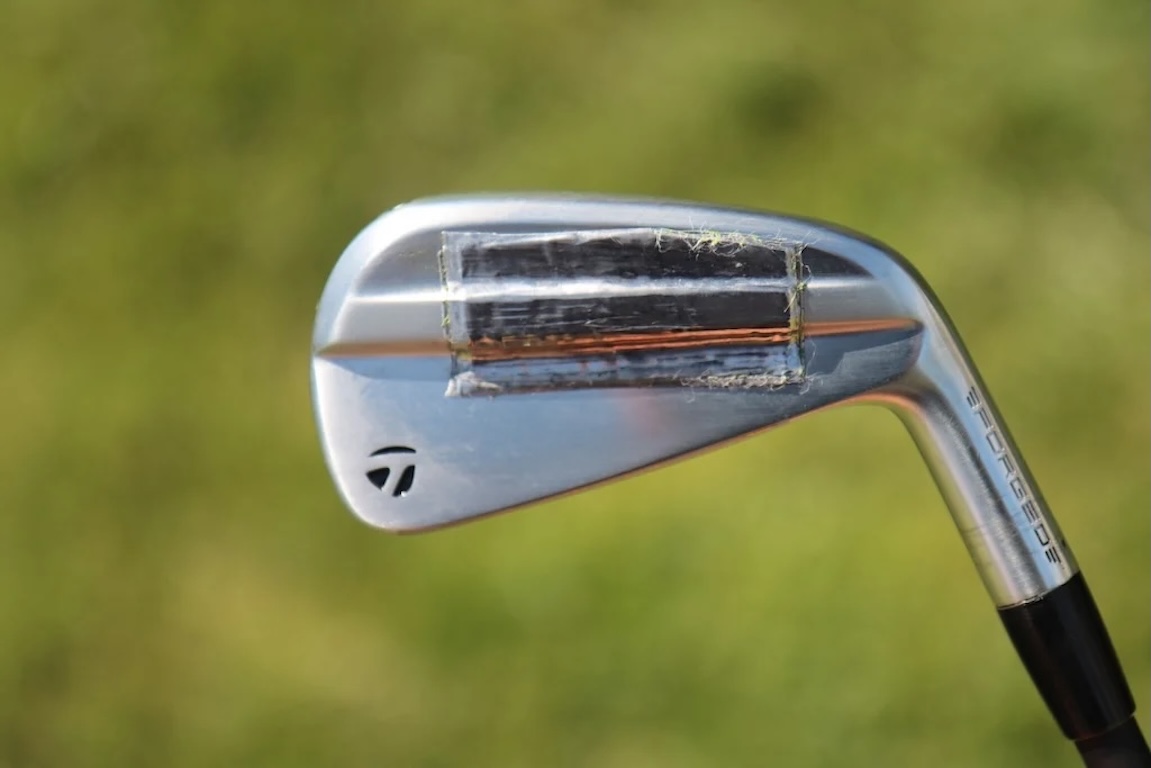
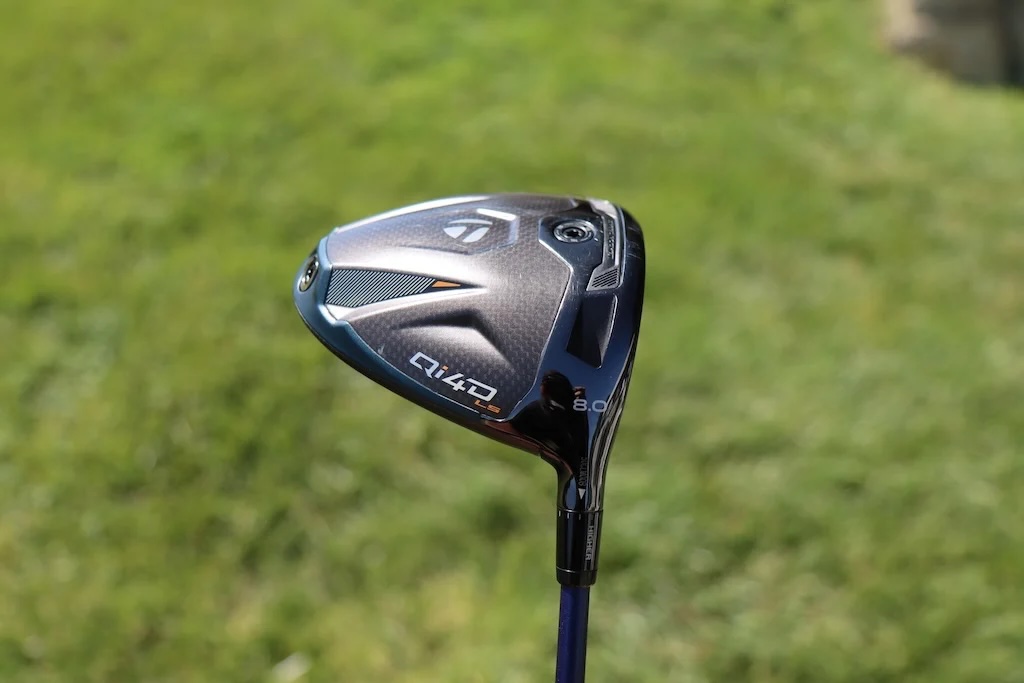
Driver: TaylorMade Qi4D LS (8 degrees)
Shaft: Fujikura Ventus TR Blue 6 X
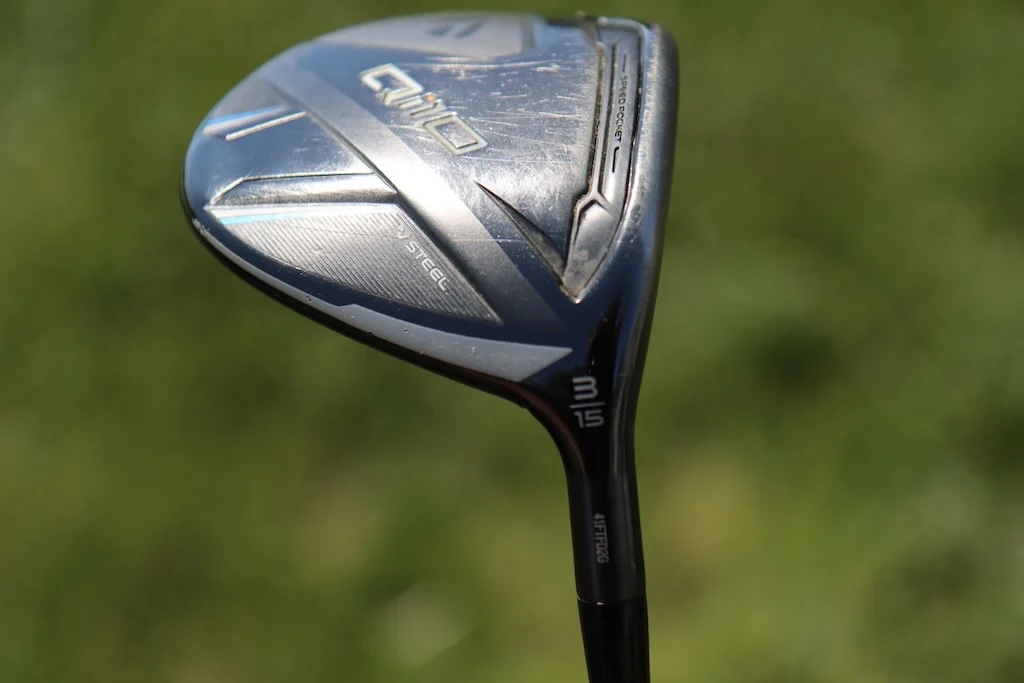
3-wood: TaylorMade Qi10 (15 degrees)
Shaft: Fujikura Ventus Black 9 TX
Irons: TaylorMade P770 (3), TaylorMade P7CB (4), TaylorMade P7TW (5-PW)
Shafts: Fujikura Ventus Black HB 10 X, True Temper Dynamic Gold X100
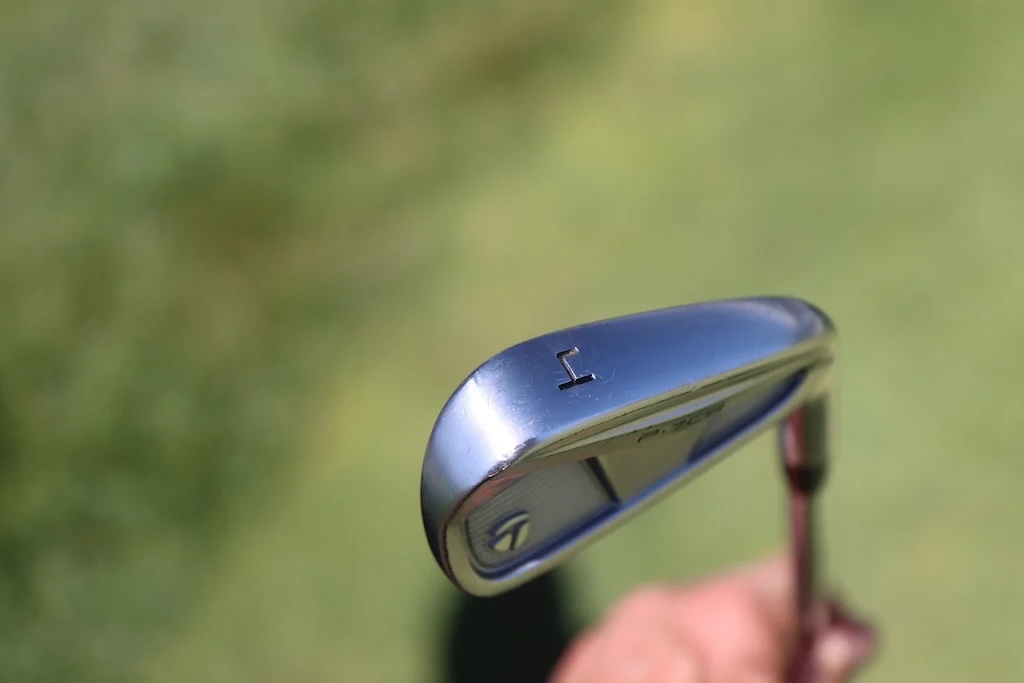
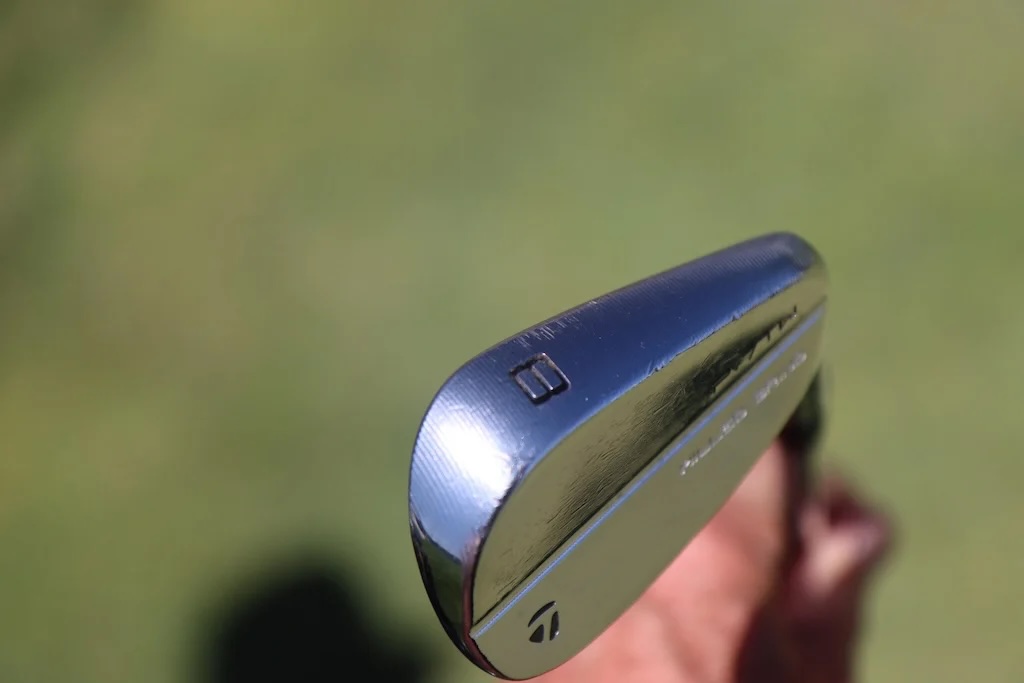
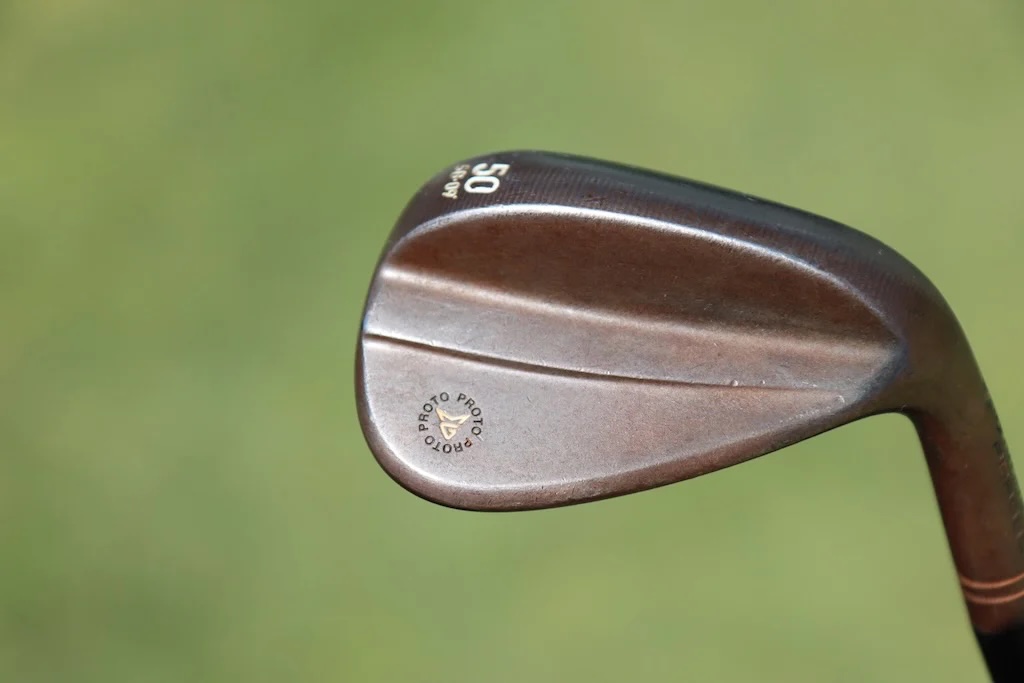
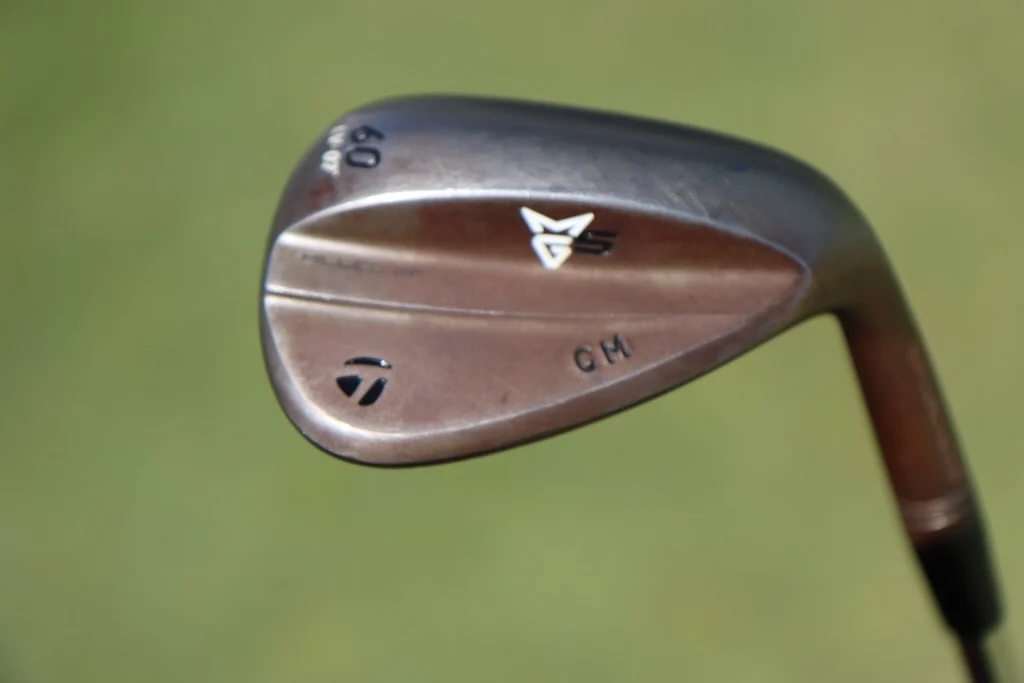
Wedges: TaylorMade Prototype (50-SB09), TaylorMade MG5 (56-HB12, 60-LV07)
Shafts: True Temper Dynamic Gold S400
Putter: TaylorMade TP Juno
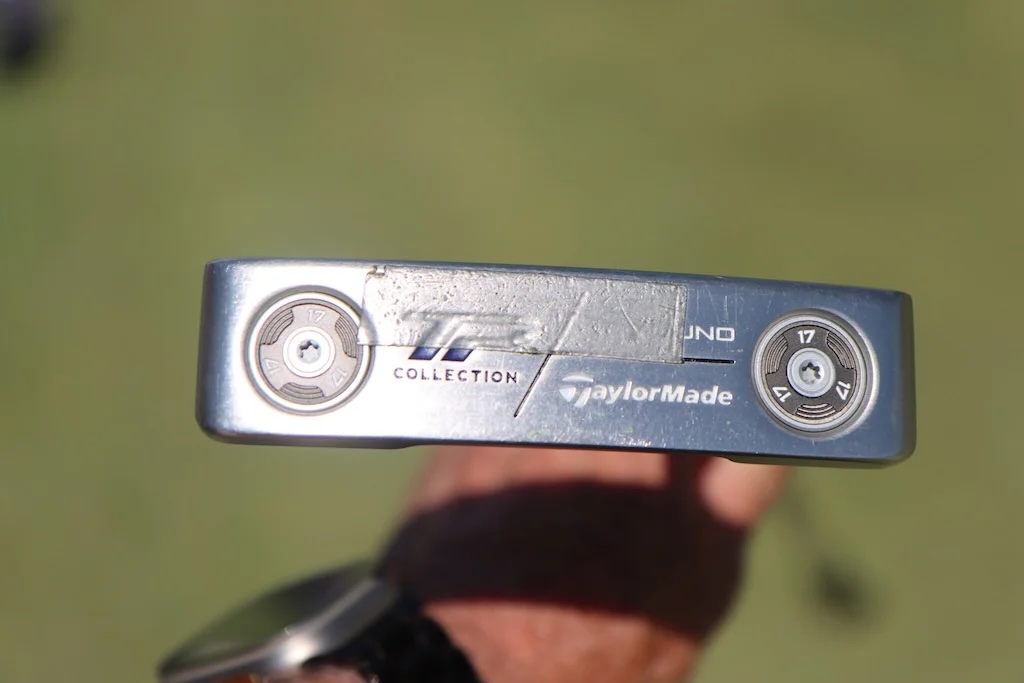
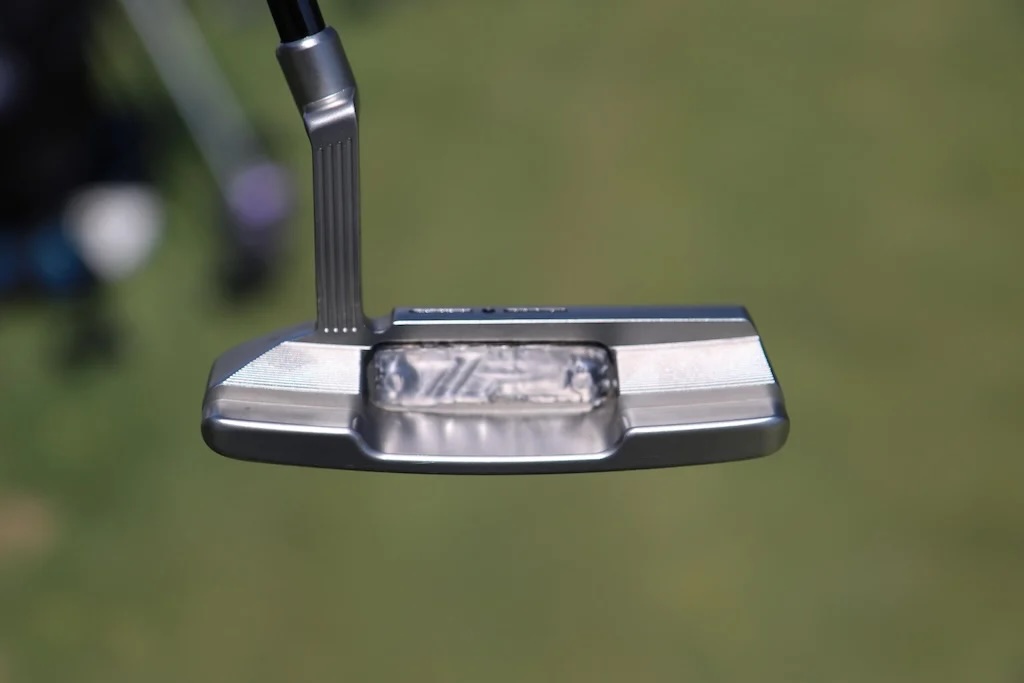
Ball: Titleist Pro V1x
Grips: Golf Pride Tour Velvet Cord
Check out more in-hand photos of Christiaan Maas’ clubs here.
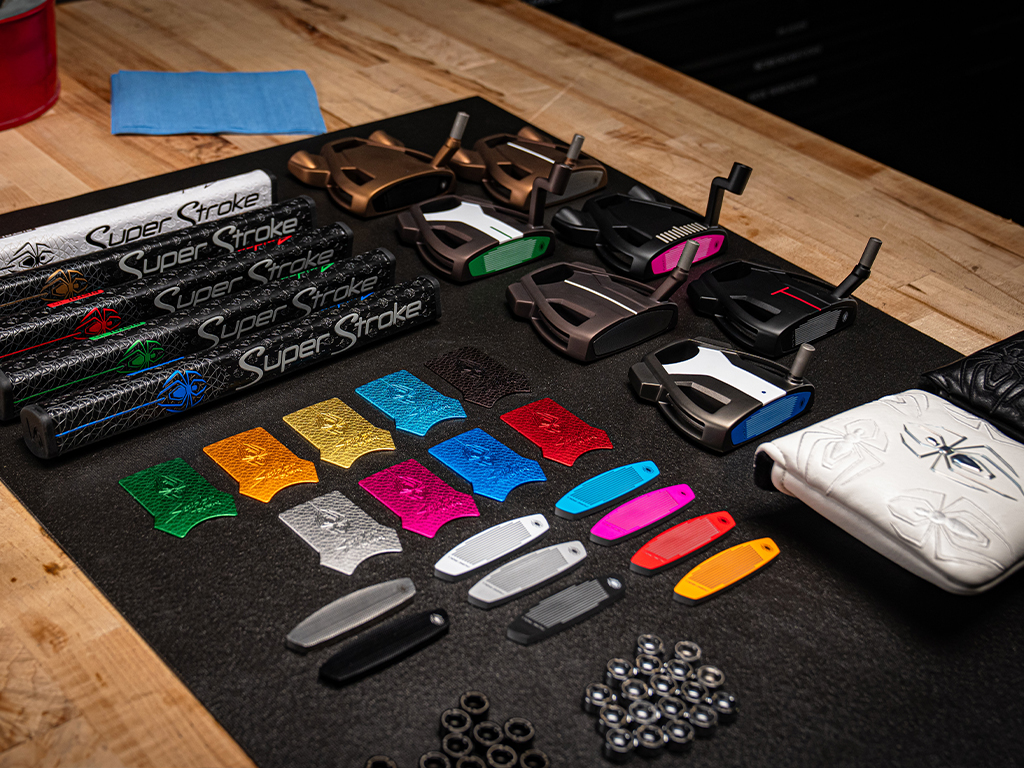
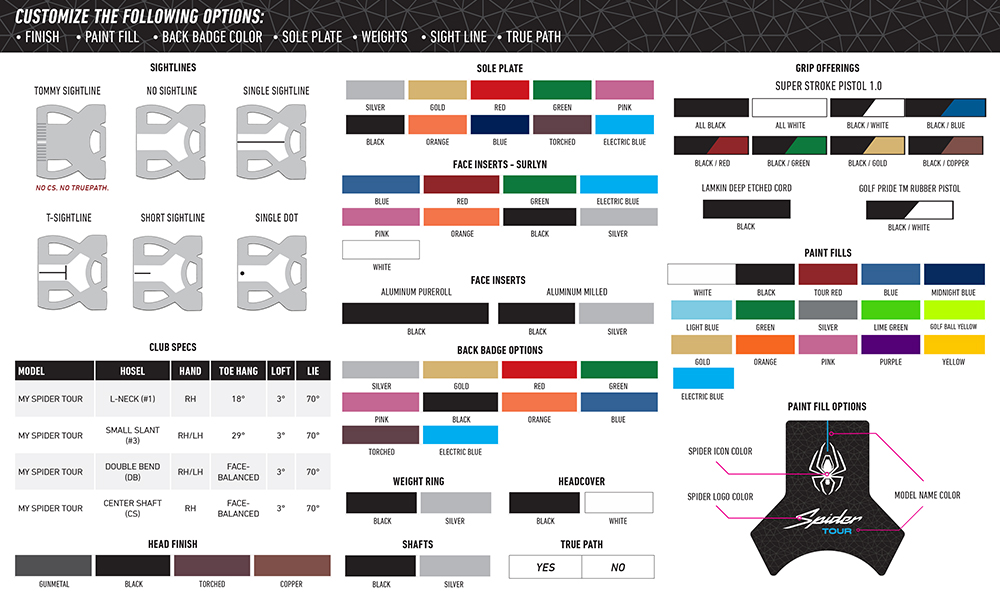
TaylorMade Golf’s MySpider program underwent a substantial overhaul over the last month. Firstly, the company launched the option to customize the Spider ZT model, and now the program has returned with the MySpider Tour and MySpider Tour X.
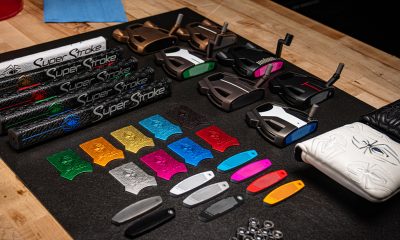
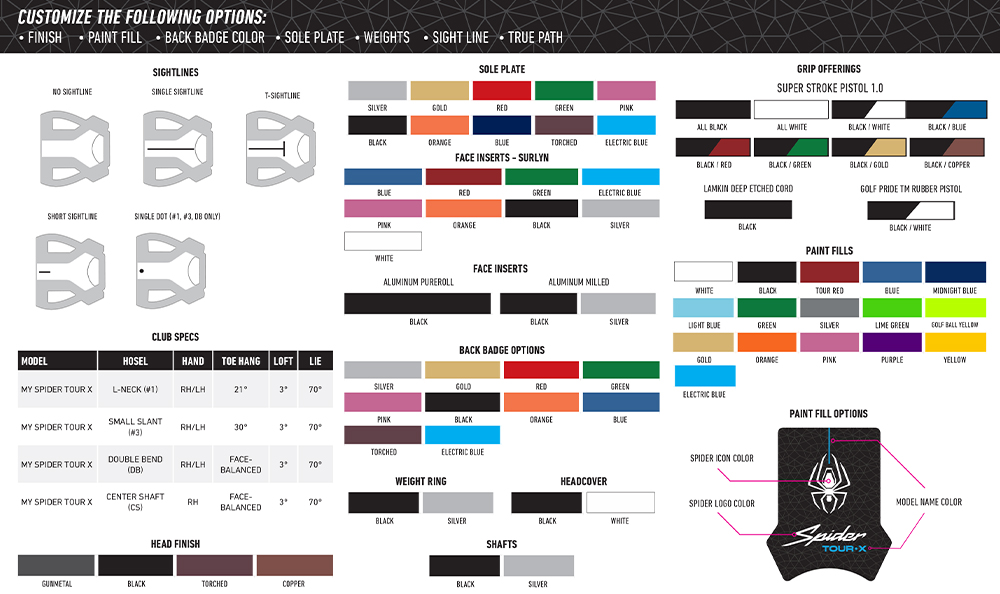
The revamped page now gives golfers complete control over every visual and functional detail of their putter on the popular Tour and Tour X head, with every cosmetic idea thought of. In MySpider Tour, golfers can choose from four head finishes, 16 paint fill colors, nine Surlyn face insert colors, three aluminum insert options, six sightline configurations, and four hosel options — L-neck, small slant, double bend, center shaft. Six sightline options are available in MySpider Tour, including the optically engineered True Path alignment system. MySpider Tour X gives builders the option of four head finishes, four hosel configurations, and five sightline options, also including True Path alignment.
One of the more interesting features of the new MySpider program is the availability of three distinct face insert options. Along with the usual Surlyn Pure Roll insert trusted by Scottie Scheffler and Rory McIlroy, which can be customized from nine colors, golfers can now also select firmer options. Two are offered with the black aluminum Pure Roll insert, slightly firmer than the traditional insert, or for the firmest feel, golfers can choose from two colors of milled aluminum inserts.
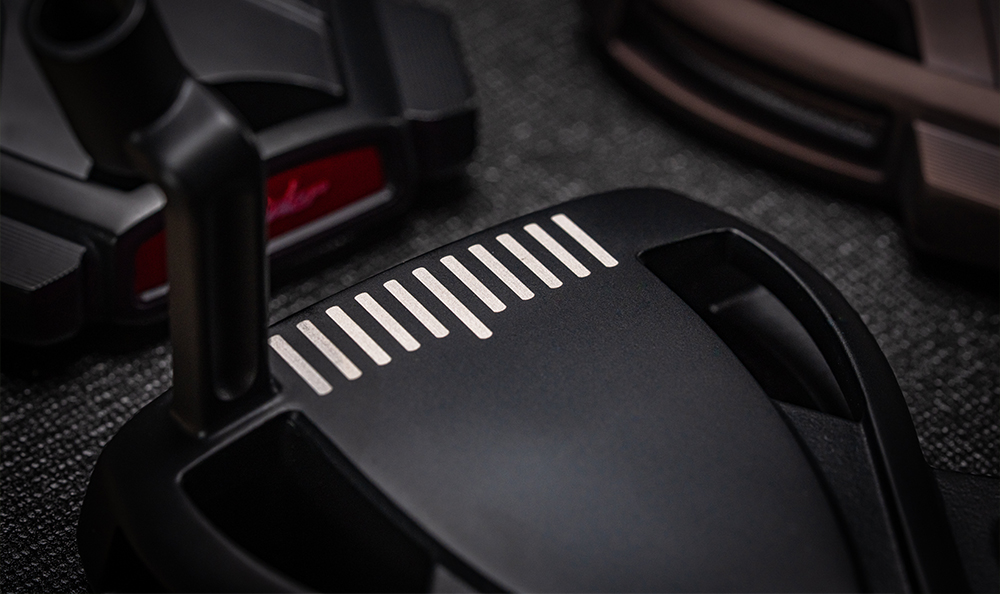
Another fun addition to the MySpider Tour is the ability to use the “Tommy Sightline.” The custom alignment aid design, which was first drawn onto Tommy Fleetwood’s putter by PGA Tour Rep James Holley, is based on the milled sightline on his Spider ZT head. There are five shorter lines on the left and right of a longer central line serving as the traditional short line alignment aid.
See below for the full specifications sheet for MySpider Tour and Tour X:
MySpider Tour
MySpider Tour X
Equipment
Then and now: Comparing Rory McIlroy’s current setup to his record-breaking 2019 Canadian Open victory

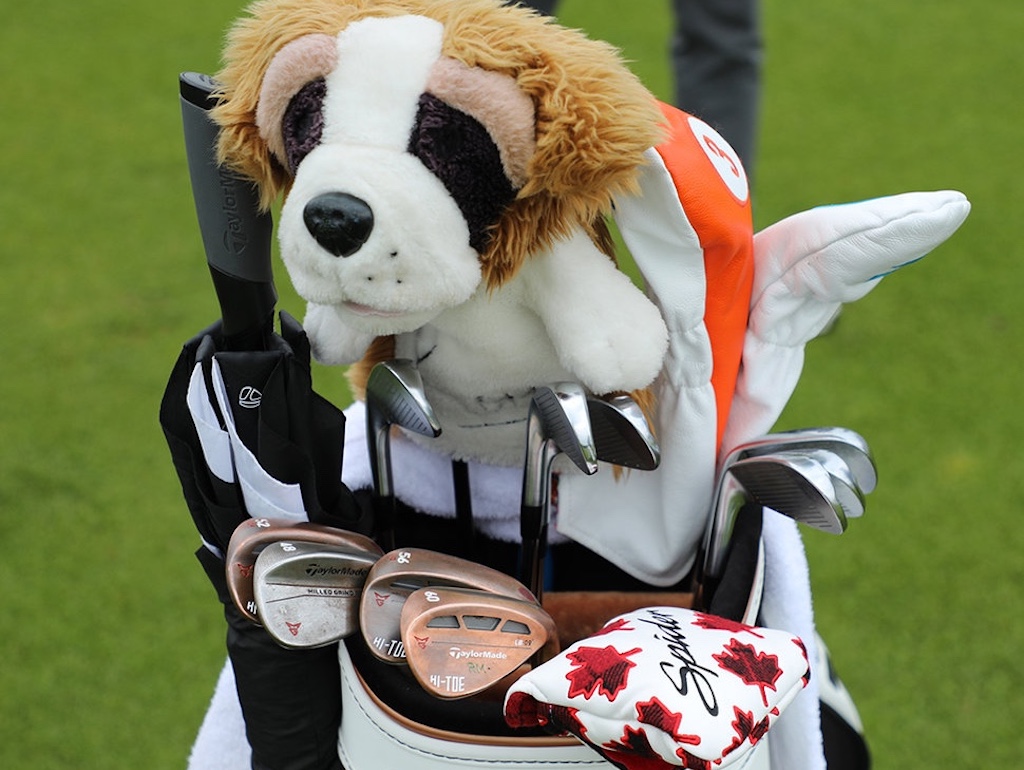
In Rory McIlroy’s first appearance at the 2019 RBC Canadian Open, he crushed the record books to earn his 16th PGA Tour title in dominating fashion, winning by seven shots over Shane Lowry and Webb Simpson.
McIlroy’s score of 22-under-par 258 is the lowest 72-hole score to date at the Canadian Open, and his closing 61 is also the best final-round score in the history of one of golf’s oldest tournaments. Finally, with his win in 2019, McIlroy became only the sixth player to win the career Triple Crown, adding to his victories at the U.S. Open in 2011 and The Open Championship in 2014, joining Tommy Armour, Walter Hagen, Arnold Palmer, Lee Trevino and Tiger Woods in a coveted list.
So, with that, why not compare his current setup to the clubs he used to break all the records?
Driver
2019: TaylorMade M5 (9 degrees), Shaft: Mitsubishi Tensei CK Pro White 70 TX
2026: TaylorMade Qi4D (9 degrees @8), Shaft: Fujikura Ventus Black 7X (45 5/8 inches)
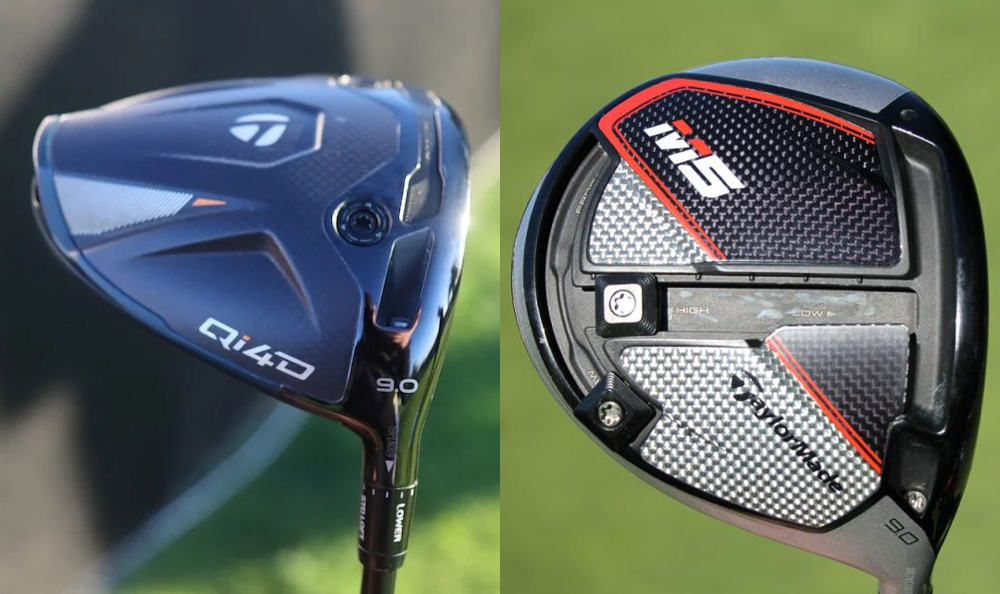
McIroy led the Tour in Strokes Gained: Off-the-Tee in 2019; he’s doing the same in 2026. Between now and then, McIlroy has switched from the Mitsubishi Tensei CK Pro White 70 TX (a shaft with slightly more feeling in the tip) to the original Fujikura Ventus Black 7X, having just made the change to the heavier version from playing the 60X.
What’s interesting about McIlroy’s 2019 setup is that the weighting on his driver is actually set in the high-draw setting, using the T-Track weighting system, whereas in the Qi4D, he’s currently using a heavily rear-weighted setup. (Two 13-gram weights in the rear and only two 4-gram front weights.)
The TaylorMade M5 driver he played in during his Canadian Open win was the company’s first head that they claimed to design to initially exceed the USGA’s COR limit, and then injected with tuning resin to bring it back in bounds.
Fairway woods
2019: TaylorMade M6 3-wood (15 degrees), Shaft: Mitsubishi Tensei CK Pro White 80 TX; TaylorMade M5 5-wood (19 degrees), Shaft: Mitsubishi Tensei CK Pro White 90 TX
2026: TaylorMade Qi4D 3-wood (15 degrees), Shaft: Fujikura Ventus Black 8X; TaylorMade Qi4D 5-wood (18 degrees), Shaft: Fujikura Ventus Black 9X

The TaylorMade M6 fairway wood that McIlroy was using during the 2019 season is still in the bag of some of the best golfers on Tour in 2026. Just check out Justin Rose’s winning setup from the Farmers Insurance Open earlier this year. This year, though, McIlroy has still been searching for his top-end-of-the-bag setup, having played both the new Qi4D and the Qi10, which he won the Masters with.

The same shaft swap can be seen in the fairway woods as the driver, along with slightly less loft on the 5-wood.
Irons
2019: TaylorMade P750 (4) Buy here, TaylorMade P730 (5-9), Shafts: Project X 7.0
2026: TaylorMade P760 (4), TaylorMade Rors Proto (5-9), Shafts: Project X 7.0

The biggest difference between McIlroy’s custom set and the stock P730s is the groove design. While the P730s were constructed with 14 MX-9 grooves on their milled faces, McIlroy’s proto heads instead use the higher-spinning, 16-groove layout of the TW2 grooves. Other big differences between the sets are that McIlroy’s 7- and 8-irons have thinner toplines, are 1 degree stronger in loft, and are 1/4 inch longer than the original P730 builds.
With McIlroy’s 4-iron, the switch from P750 to P760 sees a transition to a two-piece construction with Speed Foam in it, which allows McIlroy to launch the ball slightly higher, with more workability.
Wedges
2019: TaylorMade Milled Grind (48-09SB), TaylorMade MG Hi-Toe (52-09SB, 56-09SB, 60-LB09), Shafts: Project X Rifle 6.5
2026: TaylorMade MG5 (46-09SB, 50-09SB, 54-11SB, 60-08LB @61), Shafts: Project X 6.5 (46-54), Project X 6.5 Wedge (60)

Between 2019 and 2026, McIlroy’s focus on his short game has been much more apparent. It was the reason why he switched back to the TP5 golf ball, to help with launch, spin and control with his wedges leading up to his career Grand Slam victory in 2025. The most apparent changes to McIlroy’s wedge setup are his lofts and bounce. He’s slowly delofted his pitching to a sand wedge, but has increased the loft on the lob wedge, bending his current 60-degree to 61. With that, adding more loft to his lob wedge also slightly increases the bounce and leading-edge sit point, so, as a result, he plays a lower-bounce lob wedge compared to 2019. The MG5 wedges are also softer than the first Milled Grind option from 2019. McIlroy also no longer plays the full-face grooves found on the Hi-Toe.
Putter
2019: TaylorMade Spider X
2026: TaylorMade Spider Tour X
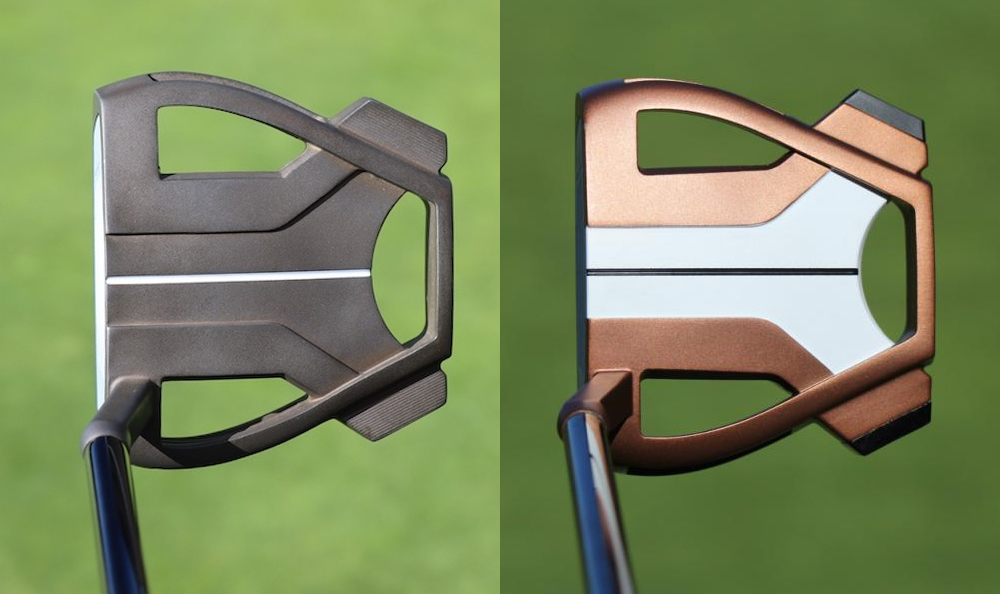
Notice anything similar. Yes, the copper finish on Rory McIlroy’s Spider X putter in 2019 is a slightly more reflective finish than the recently released torched PVD finish. McIlroy was using the True Path alignment system, but now uses only a single white sightline.
Ball
2019: 2019 TaylorMade TP5 (#22)
2026: 2025 TaylorMade TP5 (RORS)
As mentioned above, McIlroy had transitioned from the TP5 to TP5x golf ball since his victory in Canada in 2019, but now is black with the same style of golf ball as his victory at Hamilton Golf & Country Club.
Grips
2019: Golf Pride Tour Velvet Cord
2026: Golf Pride MCC
Interesting, McIlroy actually used Golf Pride’s Tour Velvet Cord grips during his victory in 2019 (it was during a 2+ year switch to the corded TV) as opposed to his usual MCC grips, which he has played for most of his career.

What’s the story behind Webb Simpson’s custom-stamped irons?

Memorial Tournament Tour Report: Rory McIlroy, Cameron Young switch up drivers, and more

Cadillac Championship Tour Report: Spieth’s sizable changes, McLaren Golf launches, and more

Russell Henley’s winning WITB: 2026 Charles Schwab Challenge

Kristoffer Reitan’s winning WITB: 2026 Truist Championship

Best irons 2026: Best irons overall, most forgiving irons, and more

J.T. Poston’s winning WITB: 2026 Memorial Tournament

Aaron Rai’s winning WITB: 2026 PGA Championship

Cameron Young’s winning WITB: 2026 Cadillac Championship

Details on Jason Day’s latest prototype Avoda iron setup


Christiaan Maas WITB 2026 (June)
Driver: TaylorMade Qi4D LS (8 degrees) Shaft: Fujikura Ventus TR Blue 6 X 3-wood: TaylorMade Qi10 (15 degrees) Shaft: Fujikura Ventus Black...


Ryan Palmer WITB 2026 (June)
Driver: Callaway Quantum Triple Diamond (9 degrees) Shaft: Project X HZRDUS Smoke Blue RDX 60 TX 3-wood: TaylorMade Qi10 (15 degrees) Shaft:...


Bud Cauley WITB 2026 (June)
Bud Cauley had >14 clubs in his bag when photographed prior to the Memorial Tournament. Driver: Titleist GTS2 (8 degrees) Shaft: Fujikura...


Hannah Green WITB 2026 (June)
Driver: Titleist GTS3 (10 degrees, D4 SureFit setting) Shaft: Mitsubishi Chemical Diamana RB 53 S 3-wood: Titleist GT3 (15 degrees,...
-
 Equipment6 days ago
Memorial Tournament Tour Report: Rory McIlroy, Cameron Young switch up drivers, and more
-
 News2 weeks ago
Russell Henley’s winning WITB: 2026 Charles Schwab Challenge
-
 Equipment3 days ago
Best irons 2026: Best irons overall, most forgiving irons, and more
-
 Whats in the Bag4 days ago
J.T. Poston’s winning WITB: 2026 Memorial Tournament
-
 Equipment1 week ago
Details on Jason Day’s latest prototype Avoda iron setup
-

 Equipment3 weeks ago
CJ Cup Byron Nelson Tour Report: Koepka and Kim’s newest putters finally get hot
-

 News2 weeks ago
Charles Schwab Challenge Tour Report: MacIntyre, Åberg and Spaun all switch putters, TaylorMade launches new Spider
-

 Equipment2 weeks ago
Details on J.J. Spaun’s surprise putter switch


Pingback: Fore-ward Thinking: Tech Takes Golf Gear to New Heights – Linked Greens
Pingback: Spotted: Jimmy Walker’s Callaway Paradym driver, 3-wood with AutoFlex shafts – GolfWRX
Troy
Nov 26, 2022 at 2:14 pm
What did you like best about the 505 iron shafts inlieu of the 405
Jerry
Sep 12, 2022 at 7:30 pm
Just received mine was very skeptical but I’m a chance taker. This shaft is freaking amazing I’ve gained minimum 20-30 yards hitting the 505x at 109 club head speed hit 2 drivers in the course today over 300 was also very accurate,I would recommend this shaft to AA one,he naysayers just suck at golf imo
Jerry
Sep 12, 2022 at 7:30 pm
Just redid mine was very skeptical but I’m a chance taker. This shaft is freaking amazing I’ve gained minimum 20-30 yards hitting the 505x at 109 club head speed hit 2 drivers in the course today over 300 was also very accurate,I would recommend this shaft to AA one,he naysayers just suck at golf imo
Stu Magnum
Oct 5, 2021 at 9:07 am
Yea what a great shaft…. Really good marketing when Adam Scott had it in play at Riviera earlier this year, hit it all over the yard and the next day it was out of the bag. Piece of junk.
Benny
Oct 4, 2021 at 8:59 am
Thanks for the article James and peaking my interest.
Golf Geisha
Oct 4, 2021 at 2:57 am
Golf is like life. The fewer strokes you have the better.
Jim Thomson
Oct 4, 2021 at 7:12 am
LOL!!! ?
Dave
Oct 3, 2021 at 9:41 am
I’m pretty sure $750 worth of lessons would do more for a persons game than a shaft that gives you 10-12 yards.
larrybud
Oct 3, 2021 at 2:01 pm
They are $750? lol
John
Oct 2, 2021 at 9:19 am
You didn’t introduce us to autoflex. You were introduced to it the same way everyone else was, social media. People were talking about autoflex long before August 2020. Stop trying to take credit as if you were the first English speaking person to know or use autoflex, it’s pathetic.
James
Oct 2, 2021 at 10:56 pm
I went to interview Dumina in April 2020 literally on the week they manufactured it for the first time, and before it was on any SNS. I used it for months before having written the first article for golfWRX.
Lefthack
Oct 1, 2021 at 8:57 pm
I still can’t justify a shaft that costs twice what my driver head costs. Maybe if it hit my drives for me.
T-Bone
Oct 1, 2021 at 1:54 pm
When you have absolutely no idea how shafts actually work, I guess you’ll believe anything.
José dias
Oct 1, 2021 at 12:50 pm
How come AliExpress are selling them for 89.00 euros
Andy Simms
Oct 1, 2021 at 1:26 pm
…because they’re fakes….
Phil
Oct 1, 2021 at 1:28 pm
James,
Very interesting article. I was fit with an Autoflex shaft in a Tsi3 driver a few weeks ago. The SW is about D2.5. Hearing that the recommended SW is much lower, I reached out to TXG and they told me that most of their fittings are in the D2 to D4 range and they think that the SW recommendations are lower for clubs in the east as the weights of the driver heads are lower.
James
Oct 2, 2021 at 11:10 pm
I don’t think head weight is the case. Matt on TXG has a smooth transition despite the powerful impact. But for others who don’t have a steady transition, the club head may wobble and miss the center of the face. For me, any swing weight above D1 does this and I lose accuracy and distance. After many tries, C9 seemed best for me. Looking at various AF foruns online, many golfers have tinkered with weight kits to find their own ideal swing weight which ranged from C8 to D4, so try for your self too. Good luck!
James
Oct 4, 2021 at 2:20 pm
Is there any chance the Autoflex will be in a different color graphics any time soon? I don’t mind the color pink, but a blacked out version would peek my interest like was BST Stability Putter shafts.