
Opinion & Analysis
The Wedge Guy: Mastering the basic pitch shot


As promised in last week’s post about basic chipping technique, this week let’s move back to that dreaded “half wedge” range; I get so much feedback that this is the place where “wedg-ilepsy” so often sets in.
I have to give credit to a friend for that term, and I will admit that I have suffered from “wedge-ilepsy” at times throughout my golf life. It’s like the putting yips, in that it is a maddening “disease”, but there IS a cure. My experience and analysis is that both stem from a drift away from good basic technique—which begets terrible results—and the spiral begins.
But, back to the subject matter at hand today – those mid-range pitch shots that are longer than a chip, but considerably less than a full wedge swing. Please bear with me today, as this post – by necessity of the subject matter – is a bit longer than usual.
As I repeatedly admit, this column is not a substitute for instruction from a PGA professional, but I’ll do my best to give you some basics to work on for this range of shots. And I believe those basics start with the same fundamentals I outlined for chipping last week. You might want to refresh those HERE.
As I’ve written many times before, all golf shots are infinitely easier to master if your starting “geometry” is sound. That means solid posture and ball position, and a grip that is light for maximum feel and to help maintain a slow, smooth tempo. You should feel control of the club in the last three fingers of the left hand, and a light touch in your right fingertips to optimize feel and to keep you from getting quick – it’s almost impossible to get too fast in your swing if your right grip is very light.
Mid-range wedge play is only about distance and trajectory control. Unfortunately, there is just no shortcut to developing that. It takes commitment to a technique, and practice time. I strongly suggest that at least half of your range time – whether a dedicated practice session or your pre-round warm-up – be given to this part of your game. Do that and your scores will reflect the dedication.

While some promote the notion of different swing lengths relating to a clock face, I think this shot is most reliable and repeatable when you make a “half swing” that is long enough to foster some rhythm and tempo. And I think that swing length is where your hands and forearms reach a point at or just past having the lead arm roughly parallel to the ground at the end of this shortened backswing. That allows you to make a mini-swing, longer than the chip shot, but shorter than a full shot.
Once you have found that comfortable backswing length, you can make the same length basic “mini-swing” and achieve the desired distances for this shot by changing clubs and altering the speed of the forward rotation of the body core.
I like to use the analogy of driving speed. And you never swing a wedge at “freeway speed”. That’s for your longer clubs only.
For your longer pitch shots, I like to think rotating my body through impact at “country road” speed – 55 mph and relaxed. Just below that is “city driving”, slower and careful. And for the shortest shots, that forward swing – from the same backswing position – is “school zone” speed, which is the most precise and careful pace of all.

But for all these shots, the key is to finish the backswing! You want to feel the end of the swing and then allow your body core to begin its forward rotation into and through impact and follow-through at your desired speed.
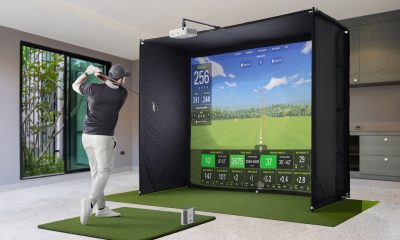
I know many of you are wintered in, but you can learn this technique in your basement or garage. Just take your wedge and practice this approach to see how it feels. Once you have found your comfortable backswing length, and have become familiar with these three speeds, you can further dissect your “distance chart” by learning how far each of your wedges flies and rolls out with these three speeds, and even further by experimenting with gripping down on the club various amounts.
It’s hard to explain this completely in a single blog post, but that’s my best effort. Let me know where you want to get more, and we’ll continue this dialog as long as you wish.
Keep those emails coming, OK? [email protected].








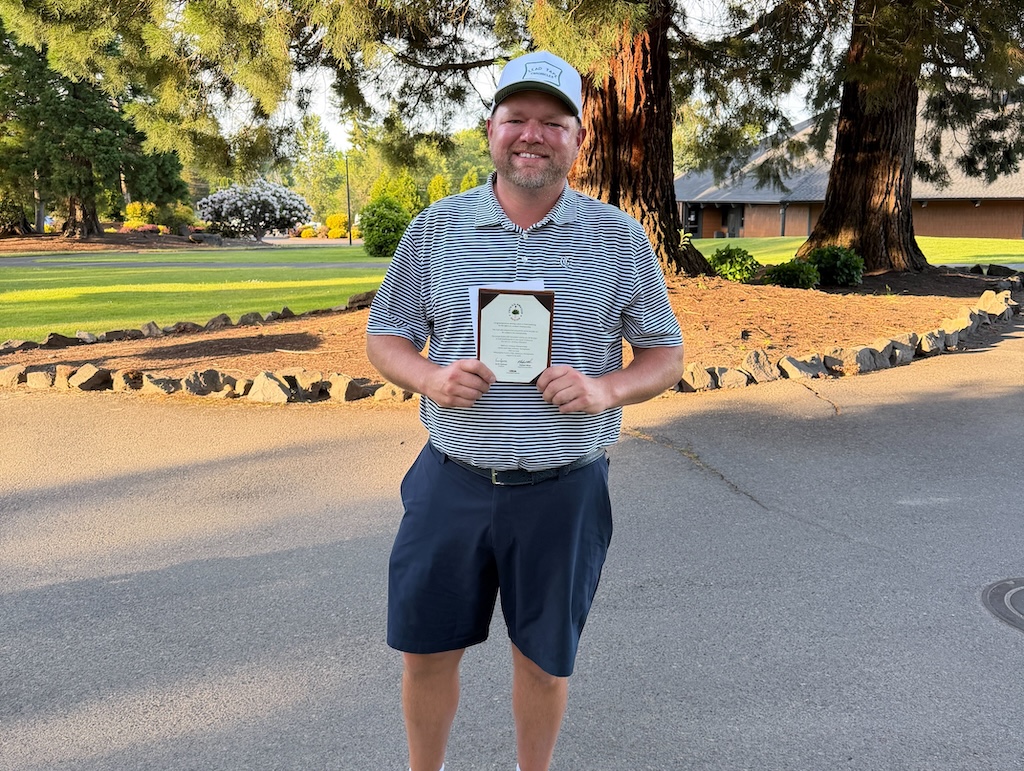
This past Monday, I played in the U.S. Amateur local qualifier at Rock Creek Country Club in Portland, Oregon. A full tee sheet from 7:30 a.m. to 1:55 p.m., the top 11 scores would make it to the U.S. Amateur final qualifying.
I teed off at 10:48 a.m.. With the 7:30 am tee time, you can get a feel for the leaders’ pace, and they were off and running on the challenging setup at Rock Creek.
View this post on Instagram
Getting to the highlight of the round on the par five 17th, a drive up the left side and 212 yards left to the front hole location. I took out a 5-iron with plans of middle of the green. The ball ended up 8 feet left of the hole, pin high. A slight downhill putt dropped in for an eagle 3 on the 17th. With the cut line looking to be anywhere from -2 to even par. This was the boost I had been waiting for all day.
With making par from the trees on 18, it was time to wait for a potential playoff with a posted score of one under par 71.
Three hours later, it was playoff time. 8 players for 6 spots. I made par on the playoff hole, which was good enough to advance to the U.S. Amateur final qualifying in July. USGA qualifiers sure deliver on all of the emotions in golf!
Club Junkie
Building my 2026 gamer WITB: Ranking the contenders and new putter projects – Club Junkie Podcast

The annual What’s In The Bag build is underway, and on this episode of Club Junkie, Brian breaks down the clubs currently leading the race for a spot in his 2026 gamer setup. From drivers and fairway woods to irons, wedges, and shafts, he ranks the equipment that’s performing best and explains what’s separating the front runners from the rest of the field.
Brian also heads into the workshop to discuss several putter projects currently on the bench. From head options and shaft choices to build ideas and testing plans, he shares what he’s working on and which putters could become serious contenders for the bag this season.
If you’re a gear junkie who loves equipment testing, club building, and the never-ending pursuit of the perfect setup, this episode is for you.
Follow Club Junkie:
Instagram: @clubjunkiepod
TikTok: @clubjunkiepod
Threads: @clubjunkiepod
X: @ClubJunkiePod
Club Junkie
Tour Edge Exotics mini driver review + TaylorMade Spider ZT Max first look – Club Junkie

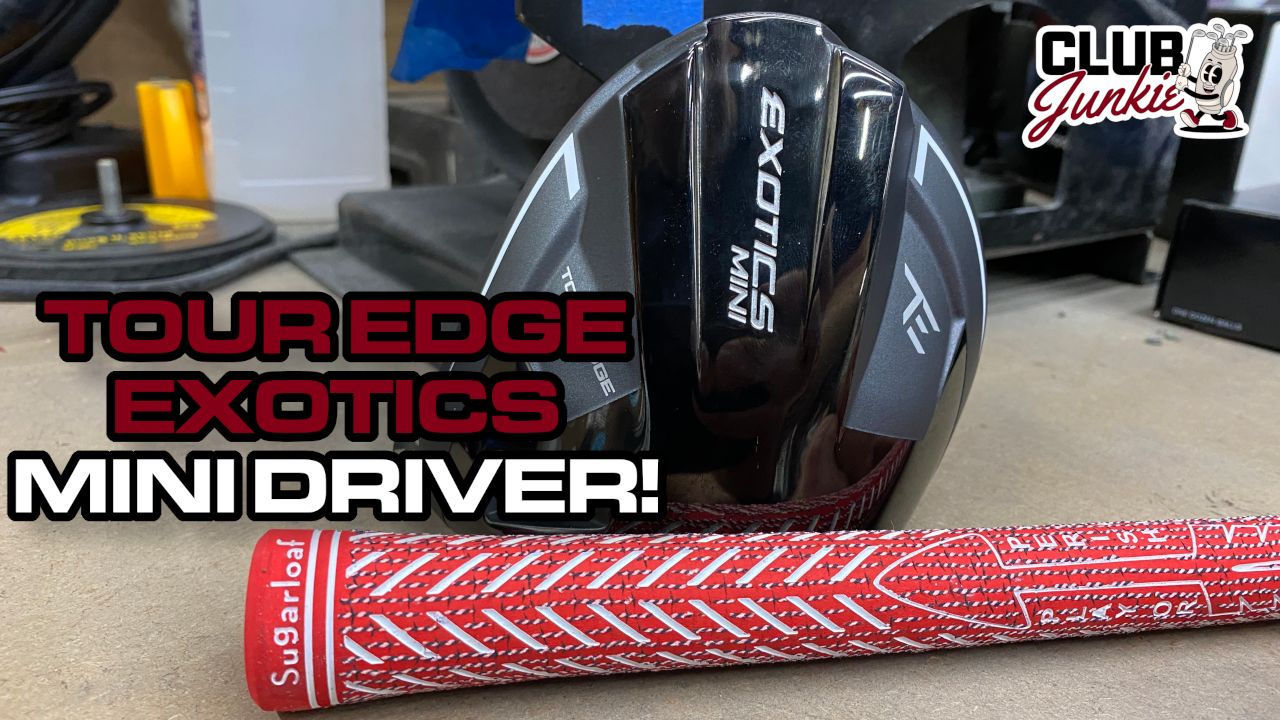
On this episode of Club Junkie, I put the new Tour Edge Exotics Mini Driver to the test and break down the performance, forgiveness, distance, and where it fits compared to a traditional driver or strong fairway wood. If you have been curious about adding a mini driver to the bag, this one is worth a look.
I also dive into the new TaylorMade Spider ZT Max putter that was recently spotted and discuss the growing zero torque putter trend. Plus, there is a closer look at the new Project X Titan Yellow shaft showing up on the PGA Tour and what makes it different from other profiles currently out there.

Justin Rose WITB 2026 (April): Full WITB breakdown with new McLaren irons

What’s the story behind Webb Simpson’s custom-stamped irons?

Memorial Tournament Tour Report: Rory McIlroy, Cameron Young switch up drivers, and more

Cadillac Championship Tour Report: Spieth’s sizable changes, McLaren Golf launches, and more

Russell Henley’s winning WITB: 2026 Charles Schwab Challenge

Kristoffer Reitan’s winning WITB: 2026 Truist Championship

J.T. Poston’s winning WITB: 2026 Memorial Tournament

Aaron Rai’s winning WITB: 2026 PGA Championship

Best irons 2026: Best irons overall, most forgiving irons, and more

Cameron Young’s winning WITB: 2026 Cadillac Championship


Bud Cauley WITB 2026 (June)
Bud Cauley had >14 clubs in his bag when photographed prior to the Memorial Tournament. Driver: Titleist GTS2 (8 degrees) Shaft: Fujikura...


Hannah Green WITB 2026 (June)
Driver: Titleist GTS3 (10 degrees, D4 SureFit setting) Shaft: Mitsubishi Chemical Diamana RB 53 S 3-wood: Titleist GT3 (15 degrees,...


Asterisk Talley WITB 2026 (June)
Driver: TaylorMade Qi4D (9 degrees) Shaft: Fujikura Ventus Blue 6 S 3-wood: TaylorMade Qi4D (16.5 degrees) Shaft: Fujikura Ventus Blue...


Brianna Do WITB 2026 (June)
Driver: Callaway Quantum Triple Diamond (9 degrees) Shaft: KBS PGW 3-wood: Callaway Elyte Titanium (15 degrees) Shaft: KBS PGW 5-wood:...
-
 Equipment6 days ago
Memorial Tournament Tour Report: Rory McIlroy, Cameron Young switch up drivers, and more
-
 News1 week ago
Russell Henley’s winning WITB: 2026 Charles Schwab Challenge
-
 Whats in the Bag3 days ago
J.T. Poston’s winning WITB: 2026 Memorial Tournament
-
 Equipment3 days ago
Best irons 2026: Best irons overall, most forgiving irons, and more
-

 Equipment1 week ago
Details on Jason Day’s latest prototype Avoda iron setup
-

 Equipment3 weeks ago
CJ Cup Byron Nelson Tour Report: Koepka and Kim’s newest putters finally get hot
-

 News2 weeks ago
Charles Schwab Challenge Tour Report: MacIntyre, Åberg and Spaun all switch putters, TaylorMade launches new Spider
-

 Equipment2 weeks ago
Details on J.J. Spaun’s surprise putter switch


PlayInTheRain
Mar 4, 2022 at 9:43 am
Great article, and the length made a good read, long enough to get into and short enough to keep the attention focused. Nice.
For those of you who don’t like the idea of practice, might i suggest playing your local pitch and putt? Mine has hole lengths from 65 to 105 yards. I take the club that will hit the 105 with a full swing (50° for me) and a putter. All tee shots are made with the lofted club. Forces you to work half and 3/4 shots but it isn’t practice exactly.
Tom
Jan 29, 2021 at 11:49 am
For half-wedge distances, it has been much easier for me to control distance by using the same backswing and downswing but use different clubs. So a sand wedge is 55 yards (my distance), gw is 65, and pw is 75. For shorter distances, I still use different clubs but just use a slightly shorter backswing. This approach gives me multiple distances that I am confident about with the only adjustment being two different backswings.
George O
Jan 29, 2021 at 10:25 am
Thanks Terry. Your description created a smooth transition visual in my mind’s eye. The full backswing is paramount for me to stop the dreaded “jab or stab” shortened swing.
Cheers.
ChipNRun
Jan 27, 2021 at 1:15 pm
During my many years of golf, I have used a half-dozen partial wedge methods. Each instructor promised he had “the sure fire way” to a dynamite short game.
Many were dynamite, alright: they blew up when I most needed crucial short wedges.
One that did NOT work was varying the speed of downswing. This led to a combination of overcooked or flubby shots as the error factor.
What has worked is a modified Dave Pelz method. Pelz talks of greenside pitches and full wedges. In between are his clockface “distance/finesse wedges” targeted to the 30-100 yard range. I use the close in, plus 7:30, 9:00 and full wedges. (The 10:30 is too close to full swing, as my backswing stops about ear level).
As per Pelz, I do use a smooth, hip-rotation downswing on all my partial wedges. Power is probably about 3/4 force of a full swing. I realized this after a wedge lesson, before I bought the Pelz book.
This modified-Pelz works for me. Others don’t.
Mark M
Jan 27, 2021 at 11:32 am
A good followup to the chipping article Terry. I think you should have put this line in Bold Red letters:
“It takes commitment to a technique, and practice time. I strongly suggest that at least half of your range time – whether a dedicated practice session or your pre-round warm-up – be given to this part of your game.”
keep ’em coming