
Opinion & Analysis
Wedge Guy: Survey your options for better scoring

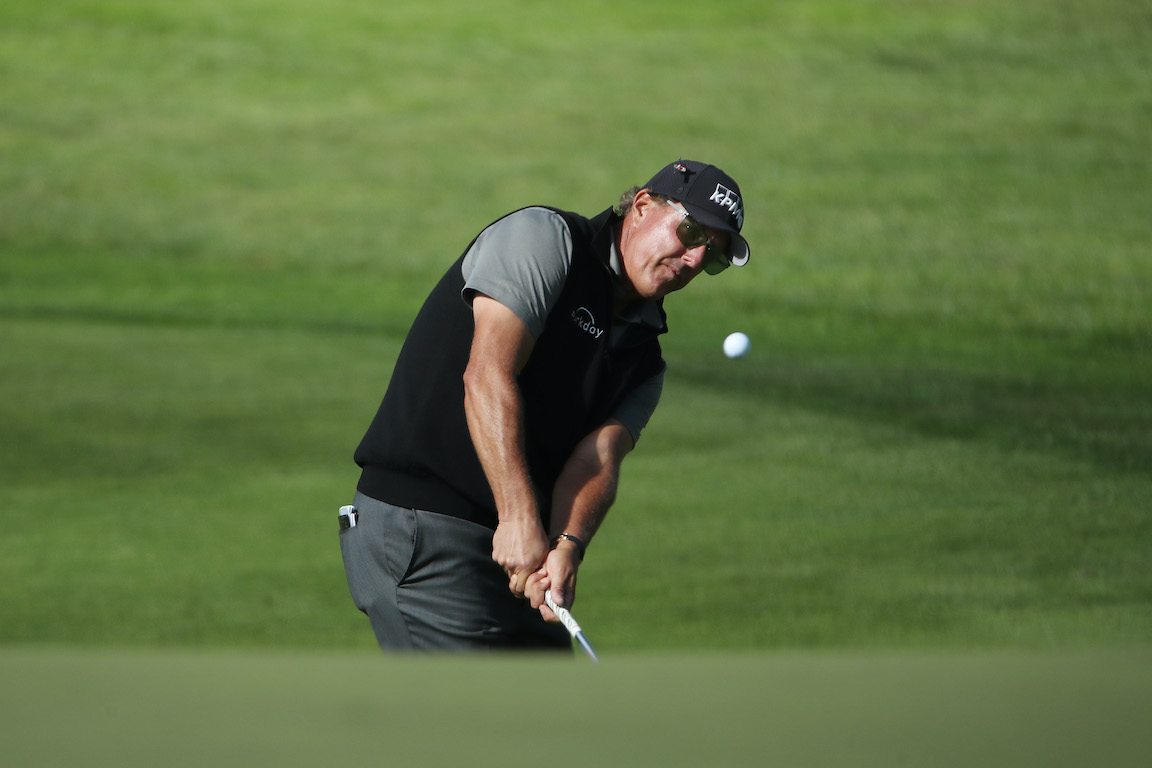
I always find it amazing to watch the pros selection of shots around the greens. Most amateurs I play with don’t use nearly as much imagination in their scoring shots, and their scores suffer because of it.
A few years ago, I got this request from a reader
“An article about options around the greens, suggested clubs, when to use these shots and even how to practice them would be awesome.”
So let’s get to it.
We all have our “go-to” club for recovery shots when we miss the green. For many, it’s the sand or lob wedge, while others might always go to their pitching wedge or even 8- or 9-irons because they are “afraid’ of their wedges. But I suggest that your scores will benefit if you let your imagination run a little wild and open your mind to all the shot options available to you.
For example, if you are not far off the fringe and have some green to work with, a highly-probably shot is what I call the “putt-chip”. Very simply, you just take a middle iron, play the ball back a little in your stance, and use your normal putting grip and stroke. Solid contact is all but assured, and your touch will be similar to that with your putter. The ball gets airborne just enough to carry to the green surface but has minimal spin so it then rolls out to the hole. Tips for executing the “putt-chip” are to grip the club lightly, as it is an overall lighter club than your putter, and to slightly forward press so that you make clean contact. Try this shot and I think you will find it becoming another of your “go-to” shots around the greens.
I often find that the gap or pitching wedge is a better option for a straightforward pitch than either the sand or lob wedges. Situations that scream out for that selection and shot is when you have quite a bit of green to cover after the ball flight, or if you are chipping uphill and want the ball to release some after it lands. To get the lower ball flight and reduced spin you are seeking on this shot, simply play the ball slightly to the rear of your stance, and make your takeaway lower, slower and longer than normal, and your forward swing the same way – low, slow and long. That produces less clubhead speed and reduced spin, along with a lower ball flight. Keep your hands quiet and take the club away with a one-piece rotation of your body core, with an extended arm swing. Don’t set the wrists as much as you would for a bunker shot or normal pitch.
And I’ll give you a third shot that can be your only hope sometimes.
You find yourself short-sided, with a closely mown upslope to a near-cut pin position. A lob shot is low percentage, so trying to run it up the slope is your only hope of getting it close enough to have a chance at par, but you don’t want to get “cute” with a wedge and leave yourself this shot again.
The answer here is to “putt-chip” it with a fairway wood or hybrid. Just take your putting stance and grip on the club, which will tilt the longer club up on its toe a bit – that’s OK. Grip it lightly as these clubs are considerably lighter than your putter and that improves feel. Then just “putt” the ball up the hill and onto the green. And on this shot, make sure the ball gets to the hole. When you have a tough recovery shot, your goal should be to give yourself a chance for an up and down, but make sure you don’t leave yourself the tough chip all over again by being timid or cute.
So, I hope these three shots can find their way into your scoring arsenal. They only take a little practice and you’ll be able to call them up when you need them. When you are out for an afternoon “quick nine” drop some balls around the greens and practice these a bit – they’ll pay off quickly.
When you miss a green, exercise a little creativity and see all your options. Quite often the best shot isn’t the one that’s the most obvious.




This past Monday, I played in the U.S. Amateur local qualifier at Rock Creek Country Club in Portland, Oregon. A full tee sheet from 7:30 a.m. to 1:55 p.m., the top 11 scores would make it to the U.S. Amateur final qualifying.
I teed off at 10:48 a.m.. With the 7:30 am tee time, you can get a feel for the leaders’ pace, and they were off and running on the challenging setup at Rock Creek.
View this post on Instagram
Getting to the highlight of the round on the par five 17th, a drive up the left side and 212 yards left to the front hole location. I took out a 5-iron with plans of middle of the green. The ball ended up 8 feet left of the hole, pin high. A slight downhill putt dropped in for an eagle 3 on the 17th. With the cut line looking to be anywhere from -2 to even par. This was the boost I had been waiting for all day.
With making par from the trees on 18, it was time to wait for a potential playoff with a posted score of one under par 71.
Three hours later, it was playoff time. 8 players for 6 spots. I made par on the playoff hole, which was good enough to advance to the U.S. Amateur final qualifying in July. USGA qualifiers sure deliver on all of the emotions in golf!
Club Junkie
Building my 2026 gamer WITB: Ranking the contenders and new putter projects – Club Junkie Podcast

The annual What’s In The Bag build is underway, and on this episode of Club Junkie, Brian breaks down the clubs currently leading the race for a spot in his 2026 gamer setup. From drivers and fairway woods to irons, wedges, and shafts, he ranks the equipment that’s performing best and explains what’s separating the front runners from the rest of the field.
Brian also heads into the workshop to discuss several putter projects currently on the bench. From head options and shaft choices to build ideas and testing plans, he shares what he’s working on and which putters could become serious contenders for the bag this season.
If you’re a gear junkie who loves equipment testing, club building, and the never-ending pursuit of the perfect setup, this episode is for you.
Follow Club Junkie:
Instagram: @clubjunkiepod
TikTok: @clubjunkiepod
Threads: @clubjunkiepod
X: @ClubJunkiePod
Club Junkie
Tour Edge Exotics mini driver review + TaylorMade Spider ZT Max first look – Club Junkie

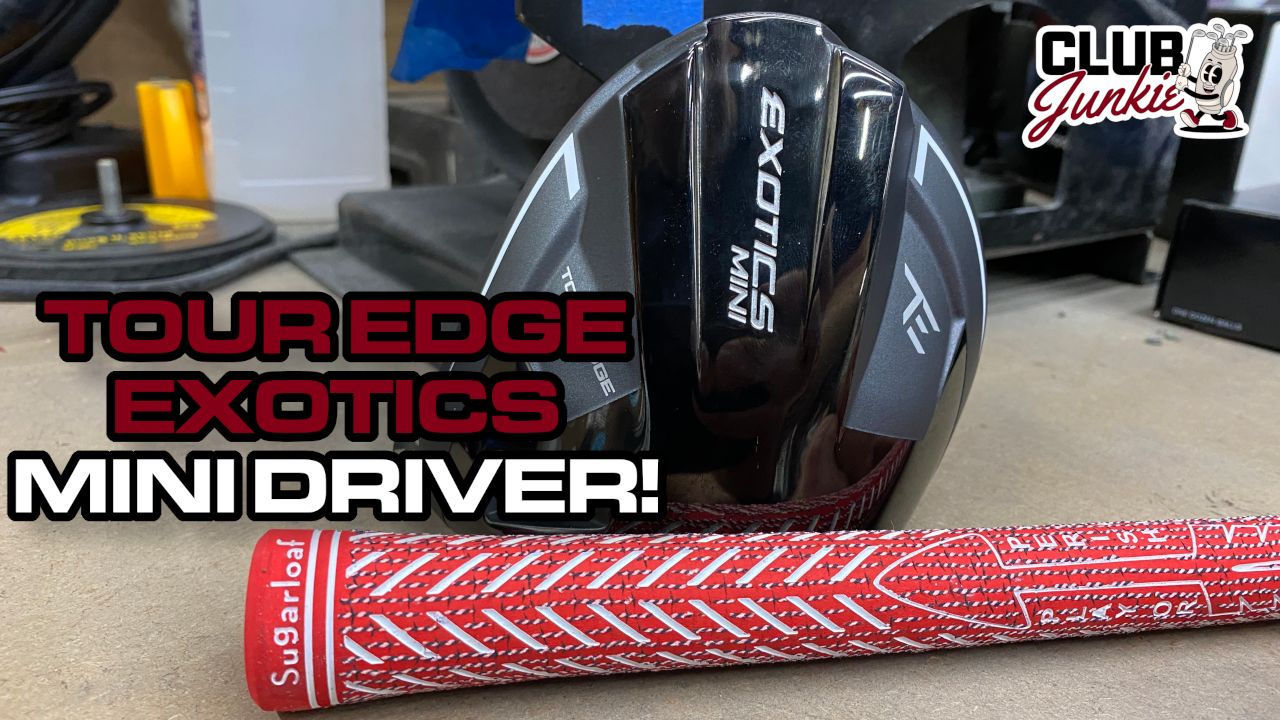
On this episode of Club Junkie, I put the new Tour Edge Exotics Mini Driver to the test and break down the performance, forgiveness, distance, and where it fits compared to a traditional driver or strong fairway wood. If you have been curious about adding a mini driver to the bag, this one is worth a look.
I also dive into the new TaylorMade Spider ZT Max putter that was recently spotted and discuss the growing zero torque putter trend. Plus, there is a closer look at the new Project X Titan Yellow shaft showing up on the PGA Tour and what makes it different from other profiles currently out there.

Justin Rose WITB 2026 (April): Full WITB breakdown with new McLaren irons

What’s the story behind Webb Simpson’s custom-stamped irons?

Memorial Tournament Tour Report: Rory McIlroy, Cameron Young switch up drivers, and more

Cadillac Championship Tour Report: Spieth’s sizable changes, McLaren Golf launches, and more

Russell Henley’s winning WITB: 2026 Charles Schwab Challenge

Kristoffer Reitan’s winning WITB: 2026 Truist Championship

Aaron Rai’s winning WITB: 2026 PGA Championship

J.T. Poston’s winning WITB: 2026 Memorial Tournament

Cameron Young’s winning WITB: 2026 Cadillac Championship

Best irons 2026: Best irons overall, most forgiving irons, and more


Bud Cauley WITB 2026 (June)
Bud Cauley had >14 clubs in his bag when photographed prior to the Memorial Tournament. Driver: Titleist GTS2 (8 degrees) Shaft: Fujikura...


Hannah Green WITB 2026 (June)
Driver: Titleist GTS3 (10 degrees, D4 SureFit setting) Shaft: Mitsubishi Chemical Diamana RB 53 S 3-wood: Titleist GT3 (15 degrees,...


Asterisk Talley WITB 2026 (June)
Driver: TaylorMade Qi4D (9 degrees) Shaft: Fujikura Ventus Blue 6 S 3-wood: TaylorMade Qi4D (16.5 degrees) Shaft: Fujikura Ventus Blue...

Brianna Do WITB 2026 (June)
Driver: Callaway Quantum Triple Diamond (9 degrees) Shaft: KBS PGW 3-wood: Callaway Elyte Titanium (15 degrees) Shaft: KBS PGW 5-wood:...
-
 Equipment6 days ago
Memorial Tournament Tour Report: Rory McIlroy, Cameron Young switch up drivers, and more
-
 News1 week ago
Russell Henley’s winning WITB: 2026 Charles Schwab Challenge
-
 Whats in the Bag3 days ago
J.T. Poston’s winning WITB: 2026 Memorial Tournament
-
 Equipment3 days ago
Best irons 2026: Best irons overall, most forgiving irons, and more
-

 Equipment1 week ago
Details on Jason Day’s latest prototype Avoda iron setup
-
 Equipment3 weeks ago
CJ Cup Byron Nelson Tour Report: Koepka and Kim’s newest putters finally get hot
-

 News2 weeks ago
Charles Schwab Challenge Tour Report: MacIntyre, Åberg and Spaun all switch putters, TaylorMade launches new Spider
-
 Equipment2 weeks ago
Details on J.J. Spaun’s surprise putter switch


Suncoast9
Aug 28, 2020 at 11:58 am
I like to look for the biggest landing area that will produce an acceptable result. Once a pick my landing area I select the appropriate club. For example, chip to a flat landing area but if I hit it too hard the ball lands on an upslope that slows it down. Or a flat landing area but if I hit it too soft it lands on a downslope and pitches forward. I call these win-win situations. The ideal situation is a landing area shaped like a wide U (win-win-win).
I try to avoid crowned landing areas (lose-lose situations) where any miss of the landing area will exaggerate the miss.
ChipNRun
Aug 26, 2020 at 1:41 pm
Good point on #2, the “distance to cover” situation:
“Situations that scream out for that selection and shot is when you have quite a bit of green to cover after the ball flight, or if you are chipping uphill and want the ball to release some after it lands.”
A related rule I have: NEVER hit a lob wedge off an uphill lie, which can translate into too much functional loft. It’s a great way to get a pop fly that stops on the fringe… or, if you try to ignore the upslope, bury the leading edge and chunk the shot.
Acemandrake
Aug 26, 2020 at 12:25 pm
Great advice on using a lighter grip when chipping for increased feel.
I knew about using a putting stroke for chipping but forgot that a putter is much heavier than an iron.