
Opinion & Analysis
The Wedge Guy: How important is the fairway?


I know you all expect me to always write about wedges and wedge play, but my lifetime in golf and 40 years in the industry has caused me to think deeply and investigate all areas of playing better golf. So, today I want to share some thinking about your tee shots that might be a bit different.
My premise is simple and verifiable–golfers of all skill levels are much better with their approach shots from the fairway than from the rough.
I know, “chicks dig the long ball”, but paychecks dig the straight ball. Let’s go to the PGA Tour stats to see just how much.
For this illustration, I picked Seamus Power, who is currently 50th in greens in regulation at 69.25 percent—one of the better iron players obviously. But he’s actually better than most from the rough, ranking 13th in proximity to the hole on those shots. But even so, let’s dig deeper to see just how important it is for him to hit the fairway.
Mr. Power’s average distance from the hole on all shots from 125-150 yards is 21.1 feet…but from the rough that average is twice as far–40.4 feet. To put that in perspective, he averages less than that–under 39 feet–on his approaches from 200-225. Let’s assume Mr. Power could hit every fairway if he would only back off on his drives by 25 yards. What would that mean to him?
Well, his fairways hit success is 59 percent, so that would mean he would have 20-25 birdie putts a tournament that are 15- 20-feet shorter than what he’s getting now. If you look at his putting and scrambling stats, that could translate to 4-5 more birdies per tournament and maybe 3 to 4 fewer bogeys–up to two strokes per round.
So, he’s made $209,000 this season, ranking him 181st. His scoring average of 71.264 ranks him 129th. That’s only four strokes per tournament behind Colin Morikawa, who’s made over $3 million this year.
So, back to what this could all mean to you.
We can talk about those few extra yards all we want, but statistics bear out that fairways hit is one of the more important stats, and that applies even more to recreational golfers. No matter where the course, a drive in the fairway lets you play the hole with an advantage. That goes for your second shot on par-5s as well. If you could hit more of your approach shots from the fairway, your scores will go down for sure.
There are a number of ways to prove this to yourself, but my favorite is to play a practice round and hit every approach shot from the fairway. If you hit a drive in the rough, walk it straight out to the fairway and even back 10-15 yards, and hit your approach shot from there. My own informal research is that it makes a huge impact for golfers of all skill levels.
So, now that you’ve learned that, how do you hit more fairways? That takes some time on the range and/or with your professional, but mostly it takes a huge mental adjustment. We all are coached and coerced into thinking that the purpose of the tee shot is to move the ball as far as humanly possible. We are pounded with millions of dollars of advertising and TV talk about the “long ball.” But statistics prove that a ball in the short grass makes any hole play easier.
To me, there are three keys to hitting straighter drives, and most of them will actually improve your average distance as well:
- Grip the club lightly. If you have a light grip on the club, it prevents you from trying to muscle it too much.
- Swing at 85-90%. Just back off a bit on your entire swing pace, from start to finish. Feel like you are hitting the driver like you would a controlled 7-iron shot into a green.
- Aim small, miss small. That’s a favorite line of mine from Mel Gibson’s “The Patriot”, and it applies to golf. Pick out a specific tree, corner of a house, edge of a bunker, etc. and aim your tee shot precisely. Take time to get set up with a dead aim on where you want the ball to go. Too often, we just aim “at the fairway”, and that’s not good enough.
I hope this helps you hit more fairways as you get the most out of the last half of the 2020 golf season!



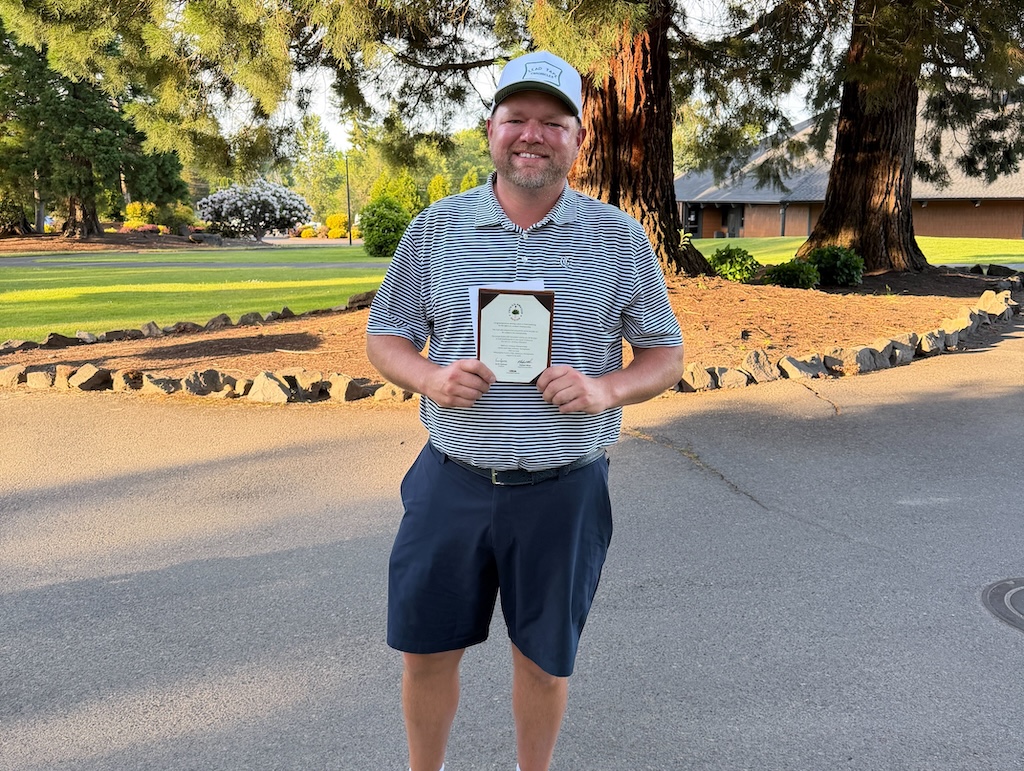
This past Monday, I played in the U.S. Amateur local qualifier at Rock Creek Country Club in Portland, Oregon. A full tee sheet from 7:30 a.m. to 1:55 p.m., the top 11 scores would make it to the U.S. Amateur final qualifying.
I teed off at 10:48 a.m.. With the 7:30 am tee time, you can get a feel for the leaders’ pace, and they were off and running on the challenging setup at Rock Creek.
View this post on Instagram
Getting to the highlight of the round on the par five 17th, a drive up the left side and 212 yards left to the front hole location. I took out a 5-iron with plans of middle of the green. The ball ended up 8 feet left of the hole, pin high. A slight downhill putt dropped in for an eagle 3 on the 17th. With the cut line looking to be anywhere from -2 to even par. This was the boost I had been waiting for all day.
With making par from the trees on 18, it was time to wait for a potential playoff with a posted score of one under par 71.
Three hours later, it was playoff time. 8 players for 6 spots. I made par on the playoff hole, which was good enough to advance to the U.S. Amateur final qualifying in July. USGA qualifiers sure deliver on all of the emotions in golf!
Club Junkie
Building my 2026 gamer WITB: Ranking the contenders and new putter projects – Club Junkie Podcast

The annual What’s In The Bag build is underway, and on this episode of Club Junkie, Brian breaks down the clubs currently leading the race for a spot in his 2026 gamer setup. From drivers and fairway woods to irons, wedges, and shafts, he ranks the equipment that’s performing best and explains what’s separating the front runners from the rest of the field.
Brian also heads into the workshop to discuss several putter projects currently on the bench. From head options and shaft choices to build ideas and testing plans, he shares what he’s working on and which putters could become serious contenders for the bag this season.
If you’re a gear junkie who loves equipment testing, club building, and the never-ending pursuit of the perfect setup, this episode is for you.
Follow Club Junkie:
Instagram: @clubjunkiepod
TikTok: @clubjunkiepod
Threads: @clubjunkiepod
X: @ClubJunkiePod
Club Junkie
Tour Edge Exotics mini driver review + TaylorMade Spider ZT Max first look – Club Junkie

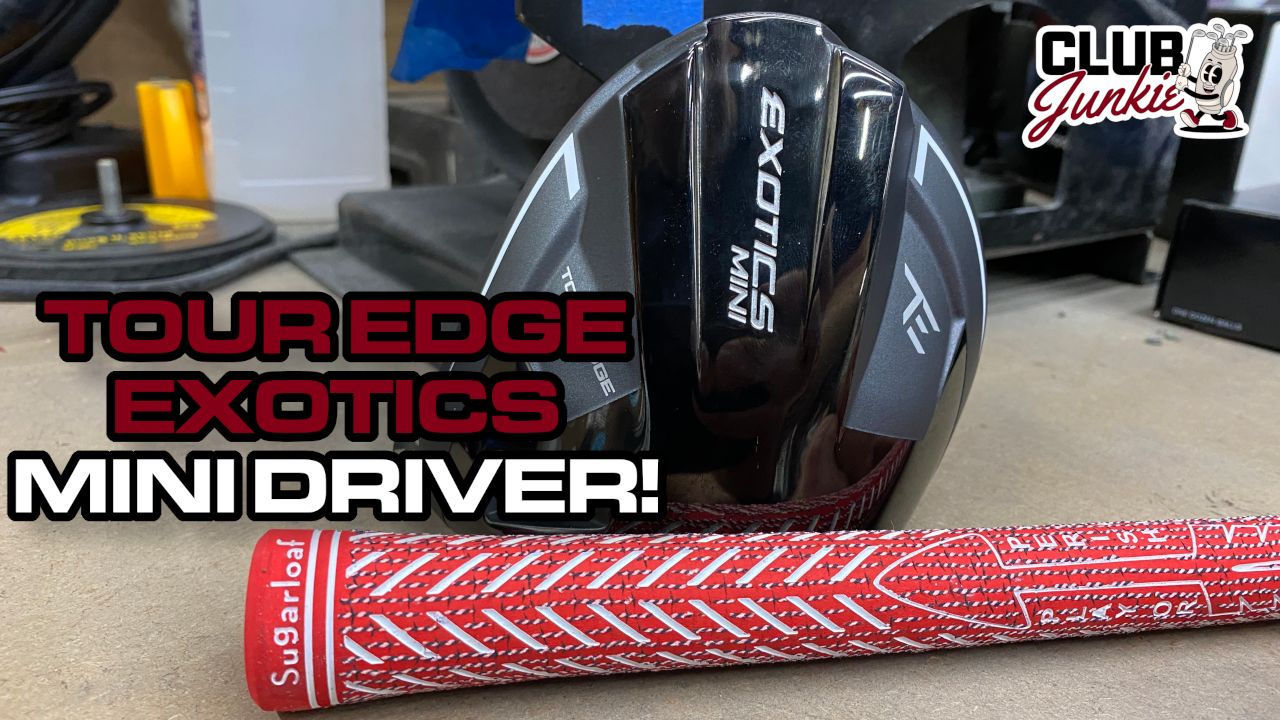
On this episode of Club Junkie, I put the new Tour Edge Exotics Mini Driver to the test and break down the performance, forgiveness, distance, and where it fits compared to a traditional driver or strong fairway wood. If you have been curious about adding a mini driver to the bag, this one is worth a look.
I also dive into the new TaylorMade Spider ZT Max putter that was recently spotted and discuss the growing zero torque putter trend. Plus, there is a closer look at the new Project X Titan Yellow shaft showing up on the PGA Tour and what makes it different from other profiles currently out there.

What’s the story behind Webb Simpson’s custom-stamped irons?

Memorial Tournament Tour Report: Rory McIlroy, Cameron Young switch up drivers, and more

Cadillac Championship Tour Report: Spieth’s sizable changes, McLaren Golf launches, and more

Russell Henley’s winning WITB: 2026 Charles Schwab Challenge

Kristoffer Reitan’s winning WITB: 2026 Truist Championship

Best irons 2026: Best irons overall, most forgiving irons, and more

J.T. Poston’s winning WITB: 2026 Memorial Tournament

Aaron Rai’s winning WITB: 2026 PGA Championship

Cameron Young’s winning WITB: 2026 Cadillac Championship

Details on Jason Day’s latest prototype Avoda iron setup


Ryan Palmer WITB 2026 (June)
Driver: Callaway Quantum Triple Diamond (9 degrees) Shaft: Project X HZRDUS Smoke Blue RDX 60 TX 3-wood: TaylorMade Qi10 (15 degrees) Shaft:...


Bud Cauley WITB 2026 (June)
Bud Cauley had >14 clubs in his bag when photographed prior to the Memorial Tournament. Driver: Titleist GTS2 (8 degrees) Shaft: Fujikura...


Hannah Green WITB 2026 (June)
Driver: Titleist GTS3 (10 degrees, D4 SureFit setting) Shaft: Mitsubishi Chemical Diamana RB 53 S 3-wood: Titleist GT3 (15 degrees,...


Asterisk Talley WITB 2026 (June)
Driver: TaylorMade Qi4D (9 degrees) Shaft: Fujikura Ventus Blue 6 S 3-wood: TaylorMade Qi4D (16.5 degrees) Shaft: Fujikura Ventus Blue...
-
 Equipment6 days ago
Memorial Tournament Tour Report: Rory McIlroy, Cameron Young switch up drivers, and more
-
 News2 weeks ago
Russell Henley’s winning WITB: 2026 Charles Schwab Challenge
-
 Equipment3 days ago
Best irons 2026: Best irons overall, most forgiving irons, and more
-
 Whats in the Bag4 days ago
J.T. Poston’s winning WITB: 2026 Memorial Tournament
-
 Equipment1 week ago
Details on Jason Day’s latest prototype Avoda iron setup
-
 Equipment3 weeks ago
CJ Cup Byron Nelson Tour Report: Koepka and Kim’s newest putters finally get hot
-

 News2 weeks ago
Charles Schwab Challenge Tour Report: MacIntyre, Åberg and Spaun all switch putters, TaylorMade launches new Spider
-
 Equipment2 weeks ago
Details on J.J. Spaun’s surprise putter switch


Bob Jones
Aug 1, 2020 at 3:42 pm
There was a time long ago when the driver was called the play club, because it is what you used to put the ball in play.
Peter
Aug 1, 2020 at 6:23 am
Maybe the guy hitting more fairways will also hit more greens? Or the guy on his day of hitting more fairways will also hit more greens…?
Osnola Kinnard
Jul 30, 2020 at 10:45 am
TK,
I would add something that I have found to be true. I got ‘fitted’ on a Trackman that showed near perfect launch and spin rates and dispersion. I was dead on at the 14* launch and 2000-2400 RPM spin range. I think my driver was set up at 9*.
I got to the course and hit the ball all over the place. I hit a couple of really big bombs…I mean BIG drives…but I lost balls, hit them OB, hit them behind trees, and missed fairways.
I went to the driving range and pretty much did the same thing, hitting it all over the place. I started adding back loft .5* at a time and finally settled at 10* and my dispersion really tightened up as did my consistency. I was astounded at how much difference one additional degree meant.
My point being, the ‘best’ numbers don’t always translate to the ‘best result’.
drkviol801
Jul 30, 2020 at 9:23 am
Hey wedge guy, what are tomorrow’s lottery numbers? You seem so smart and knowledgeable.
Shawn
Jul 30, 2020 at 7:21 am
Thank you for the tip I find my self not making contact with the ball is my undoing However look back at a set up when pros set up thire is a slight lean in the upper club ware grip the club and always faces the target
Gunny
Jul 29, 2020 at 5:13 pm
This is 90% true.
The courses that I and most of us on this site play do not have rough that resembles the PGA tour setups. Many times if I miss the fairway by a few yards it’s no difference because the rough isn’t too thick most days. During our club championship, member guest, etc the rough can get gnarly, but most days the rough isn’t too big of a deal.
Being out of play or having an obstructed shot is a different deal. And that is where the advice in this article ring very true.
Jimmy
Jul 29, 2020 at 9:18 pm
I’ve done a lot of work on this with my own stat tracking (on my game). It’s more nuanced than this article & consistent with your comments. LANDING the ball in the fairway, regardless of whether it stays there, is the most important thing for my score. The reason is that you lose 10-30 yards of distance by landing it in the rough (depending on slope & how deep the rough is). And I’m way better with a 9-iron from the rough than a 6-iron from the fairway so backing off isn’t helpful.
The reason these tour numbers don’t work for amateurs is that tour rough is a much worse penalty, and tour players are way better with a mid/long iron from the fairway than amateurs are.
karsten's ghost
Jul 30, 2020 at 1:25 am
Absolutely nailed it, Jimmy. Driver with rollout is the key. Guys trying to hit it super-high and plugging their drives are missing out on whatever perceived advantage there was about height.
Hit the fairway on the fly, and everything’s gonna work out ok.