
Equipment
The Callaway ball plant: A legacy rooted in innovation

A little over two years ago, I had the opportunity to visit the Callaway golf ball plant in Chicopee, Massachusetts (GolfWRX behind the scenes at the Callaway ball plant). It gave me the chance to take a deep dive into the history of not just the physical structure that is the plant but a look into the people and the machines that work to produce Callaway’s tour line of golf balls.
The one thing that stood out during that visit beyond the massive scale of the operation was the people and the pride they have in producing something in the United States for golfers to enjoy.
Chicopee & Spalding Manufacturing History
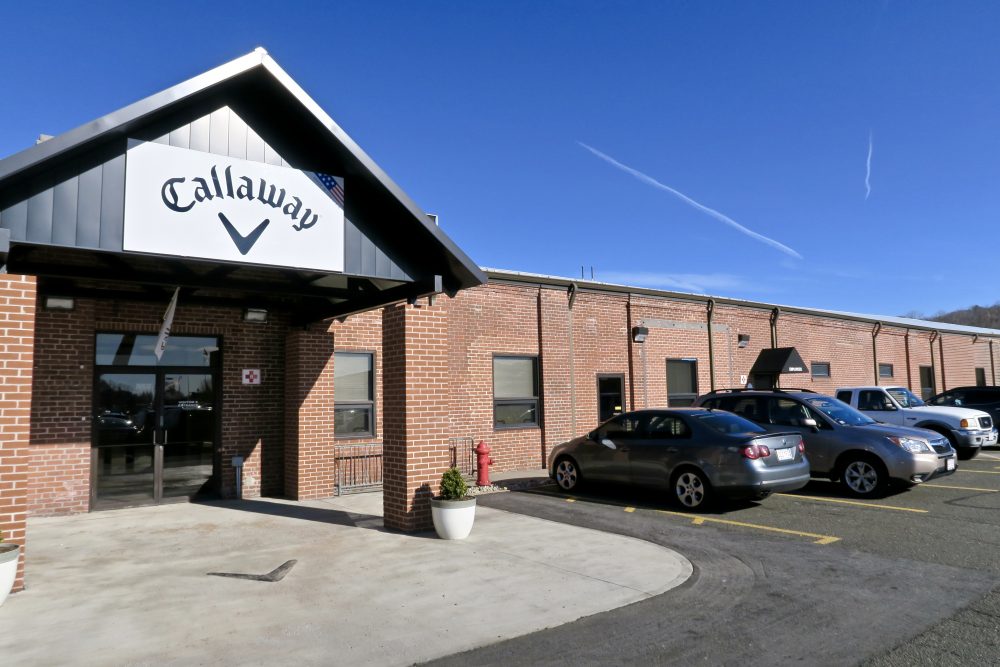
The ball plant and surrounding area where it is located is rich in manufacturing history dating back to the American revolutionary war, and the facade of the historical red brick building in Chicopee has remained mostly unchanged since it was the original Spalding manufacturing plant dating all the way back to the late 1800s. It was during this time in history when the plant produced baseballs, gloves, footballs, basketballs, tennis rackets, persimmon woods, irons—and of course golf balls, starting in 1896.
A lot of innovations relating to various sports have occurred inside of these walls and the funny thing is, Callaway’s marketing slogan for Chrome Soft— “The ball that changed the ball” could apply to a multitude of sports including:
- Baseball – since Spalding developed the first Major League ball to become the official baseball of the National League in 1876.
- Football – with Spalding creating the first American football with a material and workmanship guarantee in 1887.
- Basketball – since Dr. James Naismith (Canadian—just wanted to get that in there—Go Raptors!) had the Spalding company develop the official basketball in 1894.
It is now 2020, and in the same building where all of these sporting innovations have taken place, an innovation of a new kind is underway because the ball plant has undergone multiple renovations and upgrades since 2018. Callaway has invested over $50 million in capital upgrades in order to increase quality control—and the ability to manufacture the newest Chrome Soft and Chrome Soft X balls to the highest level.
Investment in innovation
Although the plant has always operated to the highest possible level of quality control when it comes to balls, Callaway has admitted that, before 2018, there were some small holes in the production process that prevented them from reaching their potential as far as production standards go. The biggest consistency issues revolved around polymer compound mixing and the centeredness of the cores in dual-core golf balls. These weren’t wide-sweeping issues but they were enough of a problem, Callaway knew they needed to be addressed as quickly as possible, especially if they wanted to continue to innovate in the competitive golf ball market.
In an effort to not just be equal to the competition but to surpass them, the initial investment was in state-of-the-art machines that could take and process 3D X-Ray to measure ball construction and the core centeredness of every single ball. It is during this automated process, that if any ball shows an issue, then it is removed from the final stages of production and will never find its way into a golfer’s bag.

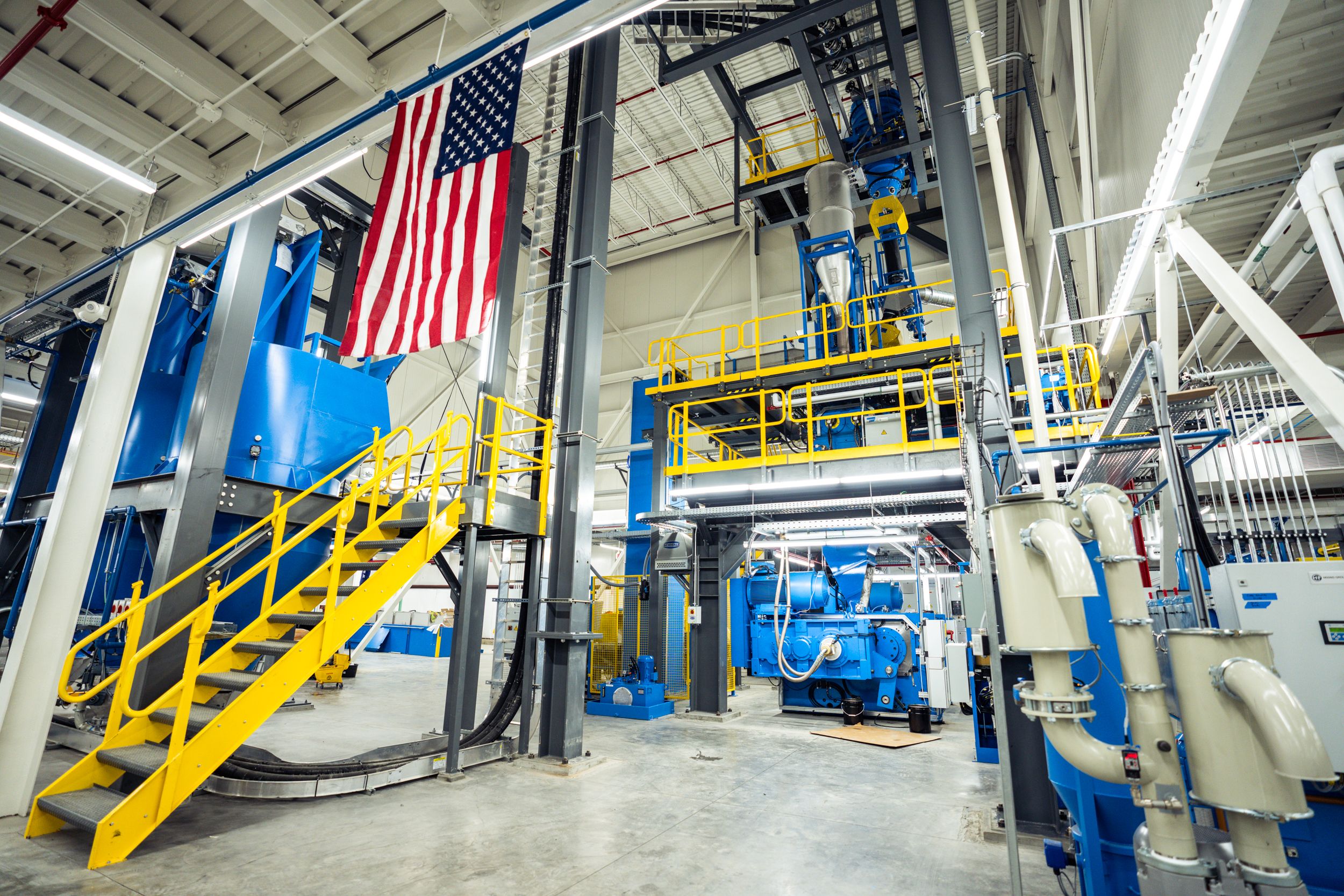
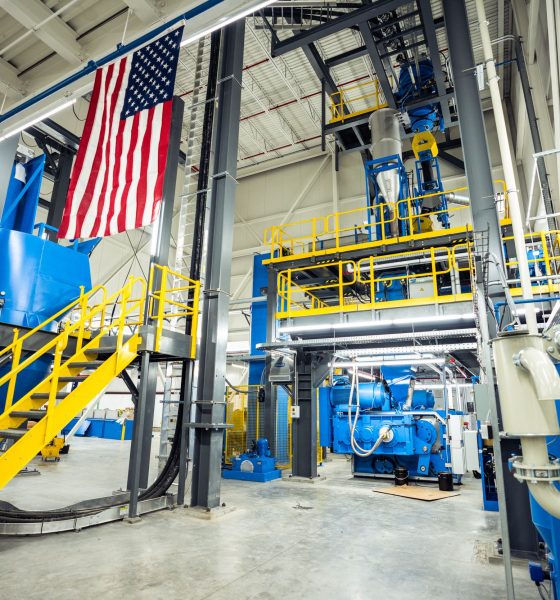
The biggest investment though came in the form of an all-new synthetic polymer mixer allowing Callaway engineers and plant staff to monitor parts of the process with a level of precision that they never could before. Now, if it wasn’t obvious by the pictures, this is not the type of machine that you can just pick up at a local “golf ball plant supply store”— these types of mixers are multiple stories high and offer the same type of precision you would find in the medical industry.

When it comes to the unassuming red brick building, it’s what’s inside that counts. And speaking of “inside,” Callaway engineers are now able to precisely control all of the compounds that go into producing golf ball cores. With the state-of-the-art mixer now in place on the factory floor, from the very start of production through to the final packaging, every Callaway ball is manufactured to the highest level of quality available in the industry.
The state of the art mixer now in place on the factory floor means that from the very start of production through to the final packaging, every Callaway ball is manufactured to the highest level of quality available in the industry.
Technology on the inside and outside

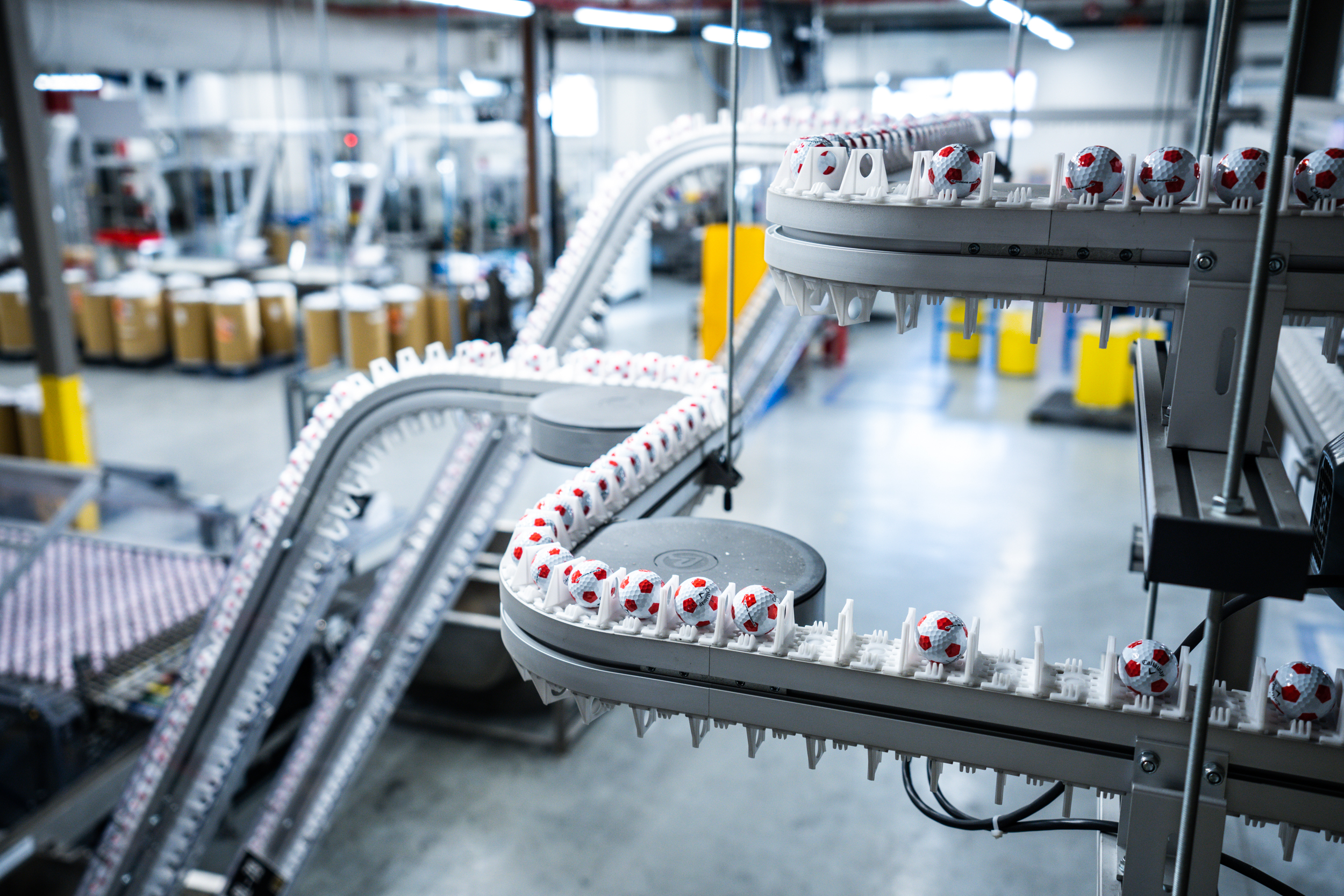
The other part of the plant that continues to see large investments is the Truvis and Triple Track printing area. As we touched on in the original piece, what was perceived by many to at first be a bit of a gimmick, including some of Callaway’s own employees, has proven to be an absolute slam dunk. The pentagon pattern provides a tangible benefit by creating an optical illusion that makes the ball look bigger and also gives visual feedback for short game shots and putting. If you haven’t tried chipping around a green with a Truvis ball, I highly suggest it—you can actually see how much difference in spin you create hitting various shots.
What started as a toe-dip with one machine has turned into an area of the plant with more than a dozen, with Callaway also producing Truvis balls with custom colors and logos.
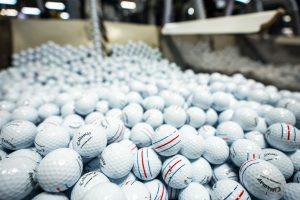
What followed Truvis was the development of Callaway Triple Track, which is three high-resolution parallel lines printed onto the golf ball to help with alignment. It would not have been possible to print this alignment tool without the machines that were developed to precisely print the Truvis patterns. Triple Track has been so popular and effective for golfers that this year, Callaway even introduced the alignment tool onto a number of their Stroke Lab putter models.

Odyssey Stroke Lab 2-Ball with Triple Track
If history is any indication, this investment will continue to push golf ball innovation for Callaway, as well as continue to build on the strong legacy of proud American manufacturing in Chicopee, Massachusetts. To take an inside look inside of the newly renovated plant, as well as get a deeper understanding of the history and the people behind Callaway golf balls, check out their mini-documentary below.
The Ball that Changed a Town




Equipment
Then and now: Comparing Rory McIlroy’s current setup to his record-breaking 2019 Canadian Open victory

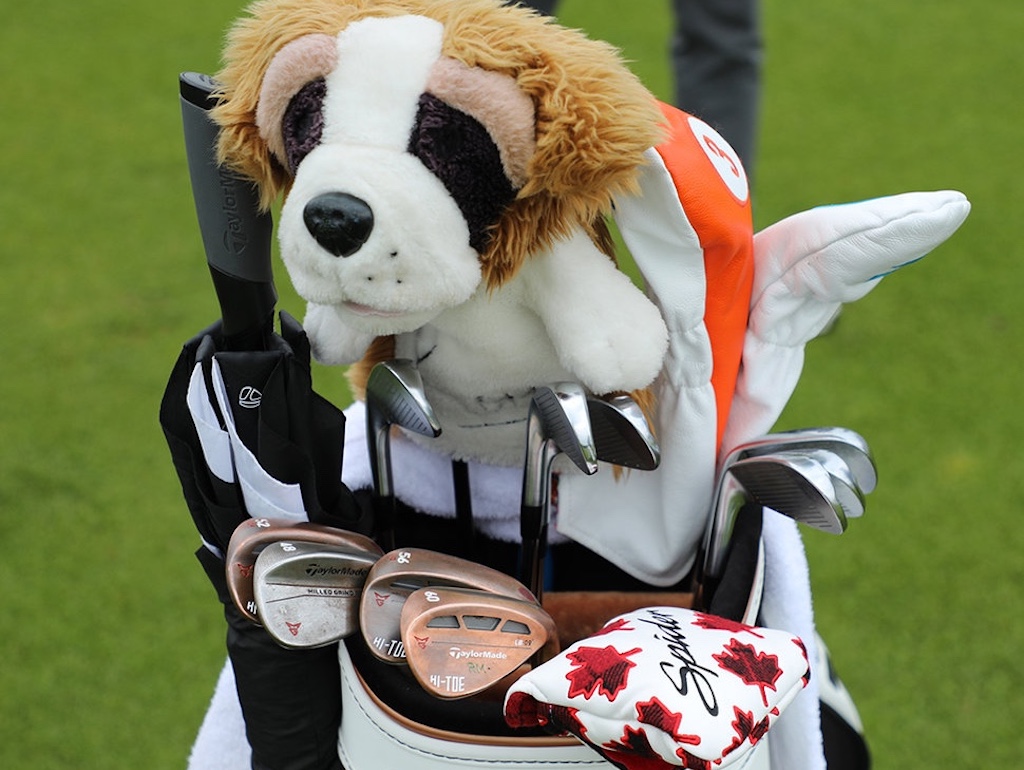
In Rory McIlroy’s first appearance at the 2019 RBC Canadian Open, he crushed the record books to earn his 16th PGA Tour title in dominating fashion, winning by seven shots over Shane Lowry and Webb Simpson.
McIlroy’s score of 22-under-par 258 is the lowest 72-hole score to date at the Canadian Open, and his closing 61 is also the best final-round score in the history of one of golf’s oldest tournaments. Finally, with his win in 2019, McIlroy became only the sixth player to win the career Triple Crown, adding to his victories at the U.S. Open in 2011 and The Open Championship in 2014, joining Tommy Armour, Walter Hagen, Arnold Palmer, Lee Trevino and Tiger Woods in a coveted list.
So, with that, why not compare his current setup to the clubs he used to break all the records?
Driver
2019: TaylorMade M5 (9 degrees), Shaft: Mitsubishi Tensei CK Pro White 70 TX
2026: TaylorMade Qi4D (9 degrees @8), Shaft: Fujikura Ventus Black 7X (45 5/8 inches)
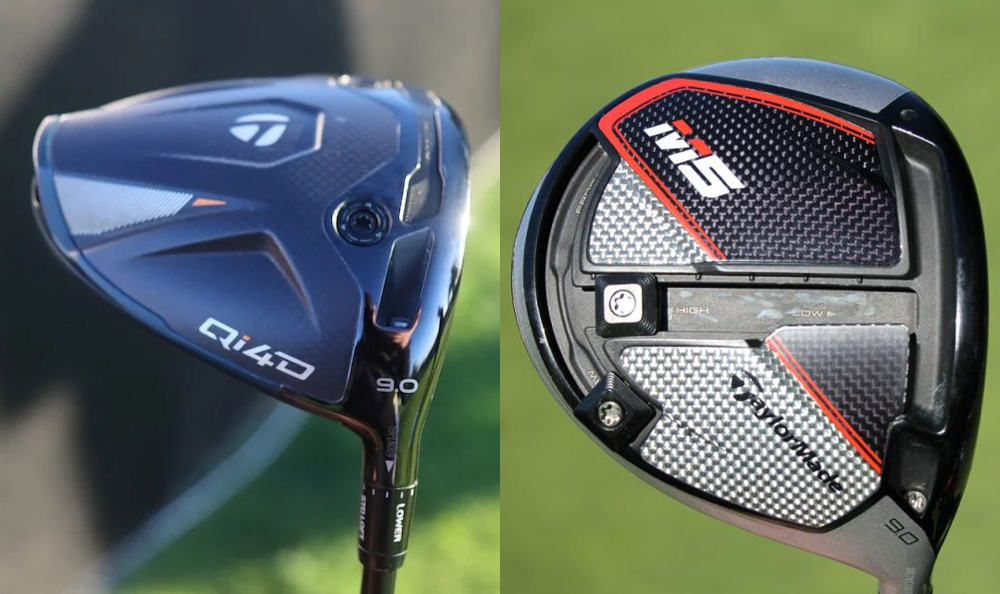
McIroy led the Tour in Strokes Gained: Off-the-Tee in 2019; he’s doing the same in 2026. Between now and then, McIlroy has switched from the Mitsubishi Tensei CK Pro White 70 TX (a shaft with slightly more feeling in the tip) to the original Fujikura Ventus Black 7X, having just made the change to the heavier version from playing the 60X.
What’s interesting about McIlroy’s 2019 setup is that the weighting on his driver is actually set in the high-draw setting, using the T-Track weighting system, whereas in the Qi4D, he’s currently using a heavily rear-weighted setup. (Two 13-gram weights in the rear and only two 4-gram front weights.)
The TaylorMade M5 driver he played in during his Canadian Open win was the company’s first head that they claimed to design to initially exceed the USGA’s COR limit, and then injected with tuning resin to bring it back in bounds.
Fairway woods
2019: TaylorMade M6 3-wood (15 degrees), Shaft: Mitsubishi Tensei CK Pro White 80 TX; TaylorMade M5 5-wood (19 degrees), Shaft: Mitsubishi Tensei CK Pro White 90 TX
2026: TaylorMade Qi4D 3-wood (15 degrees), Shaft: Fujikura Ventus Black 8X; TaylorMade Qi4D 5-wood (18 degrees), Shaft: Fujikura Ventus Black 9X

The TaylorMade M6 fairway wood that McIlroy was using during the 2019 season is still in the bag of some of the best golfers on Tour in 2026. Just check out Justin Rose’s winning setup from the Farmers Insurance Open earlier this year. This year, though, McIlroy has still been searching for his top-end-of-the-bag setup, having played both the new Qi4D and the Qi10, which he won the Masters with.

The same shaft swap can be seen in the fairway woods as the driver, along with slightly less loft on the 5-wood.
Irons
2019: TaylorMade P750 (4) Buy here, TaylorMade P730 (5-9), Shafts: Project X 7.0
2026: TaylorMade P760 (4), TaylorMade Rors Proto (5-9), Shafts: Project X 7.0

The biggest difference between McIlroy’s custom set and the stock P730s is the groove design. While the P730s were constructed with 14 MX-9 grooves on their milled faces, McIlroy’s proto heads instead use the higher-spinning, 16-groove layout of the TW2 grooves. Other big differences between the sets are that McIlroy’s 7- and 8-irons have thinner toplines, are 1 degree stronger in loft, and are 1/4 inch longer than the original P730 builds.
With McIlroy’s 4-iron, the switch from P750 to P760 sees a transition to a two-piece construction with Speed Foam in it, which allows McIlroy to launch the ball slightly higher, with more workability.
Wedges
2019: TaylorMade Milled Grind (48-09SB), TaylorMade MG Hi-Toe (52-09SB, 56-09SB, 60-LB09), Shafts: Project X Rifle 6.5
2026: TaylorMade MG5 (46-09SB, 50-09SB, 54-11SB, 60-08LB @61), Shafts: Project X 6.5 (46-54), Project X 6.5 Wedge (60)

Between 2019 and 2026, McIlroy’s focus on his short game has been much more apparent. It was the reason why he switched back to the TP5 golf ball, to help with launch, spin and control with his wedges leading up to his career Grand Slam victory in 2025. The most apparent changes to McIlroy’s wedge setup are his lofts and bounce. He’s slowly delofted his pitching to a sand wedge, but has increased the loft on the lob wedge, bending his current 60-degree to 61. With that, adding more loft to his lob wedge also slightly increases the bounce and leading-edge sit point, so, as a result, he plays a lower-bounce lob wedge compared to 2019. The MG5 wedges are also softer than the first Milled Grind option from 2019. McIlroy also no longer plays the full-face grooves found on the Hi-Toe.
Putter
2019: TaylorMade Spider X
2026: TaylorMade Spider Tour X
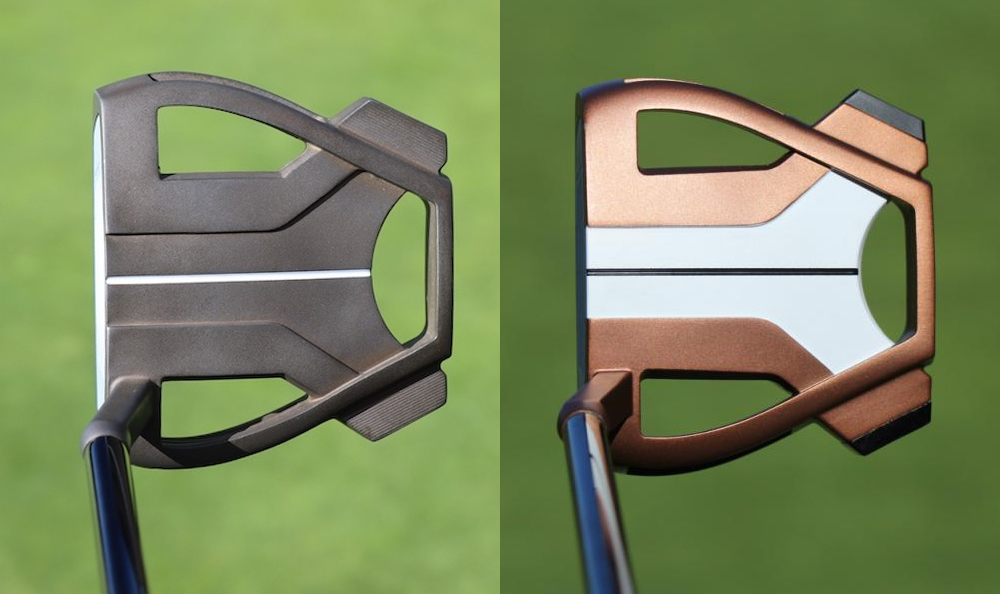
Notice anything similar. Yes, the copper finish on Rory McIlroy’s Spider X putter in 2019 is a slightly more reflective finish than the recently released torched PVD finish. McIlroy was using the True Path alignment system, but now uses only a single white sightline.
Ball
2019: 2019 TaylorMade TP5 (#22)
2026: 2025 TaylorMade TP5 (RORS)
As mentioned above, McIlroy had transitioned from the TP5 to TP5x golf ball since his victory in Canada in 2019, but now is black with the same style of golf ball as his victory at Hamilton Golf & Country Club.
Grips
2019: Golf Pride Tour Velvet Cord
2026: Golf Pride MCC
Interesting, McIlroy actually used Golf Pride’s Tour Velvet Cord grips during his victory in 2019 (it was during a 2+ year switch to the corded TV) as opposed to his usual MCC grips, which he has played for most of his career.


At GolfWRX, we are a community of like-minded individuals who all experience and express our enjoyment of the game in many ways.
It’s that sense of community that drives day-to-day interactions in the forums on topics that range from best driver to what marker you use to mark your ball. It even allows us to share another thing we all love – buying and selling equipment.
Currently, in our GolfWRX buy/sell/trade (BST) forum, @Putt4Dough is selling some prototype wedges from Vokey Wedgeworks. These include a 54 degree wedge with the M grind and a 60 degree wedge with a T grind.
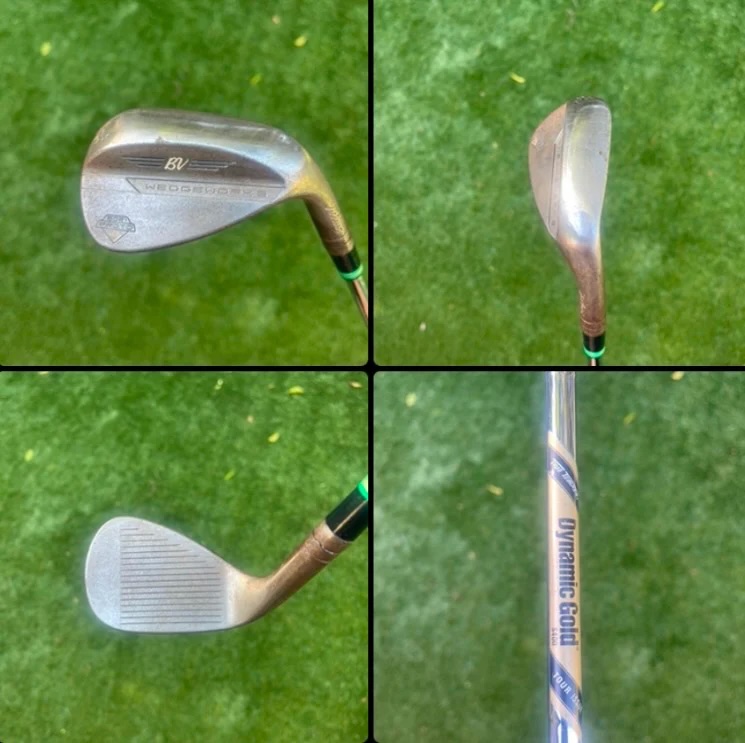
From the listing:
(1) Titleist Vokey Proto Wedge 54M with a Tour Issue DGS400 shaft and Golf Pride Tour Velvet (logo down). Standard length, lie, and loft. BB&F ferrule. Raw wedge in good condition. No initials. Price is $200 shipped. Buy both wedges for $380 shipped.
(2) Titleist Vokey Proto Wedge 60T with a KBS Tour 130X shaft and Golf Pride Tour Velvet. Standard length, lie, and loft. Raw wedge in good condition. No initials. Price is $200 shipped. Buy both wedges for $380 shipped.
To check out the full listing in our BST forum, head through the link. If you are curious about the rules to participate in the BST Forum, you can learn more here: GolfWRX BST Rules.
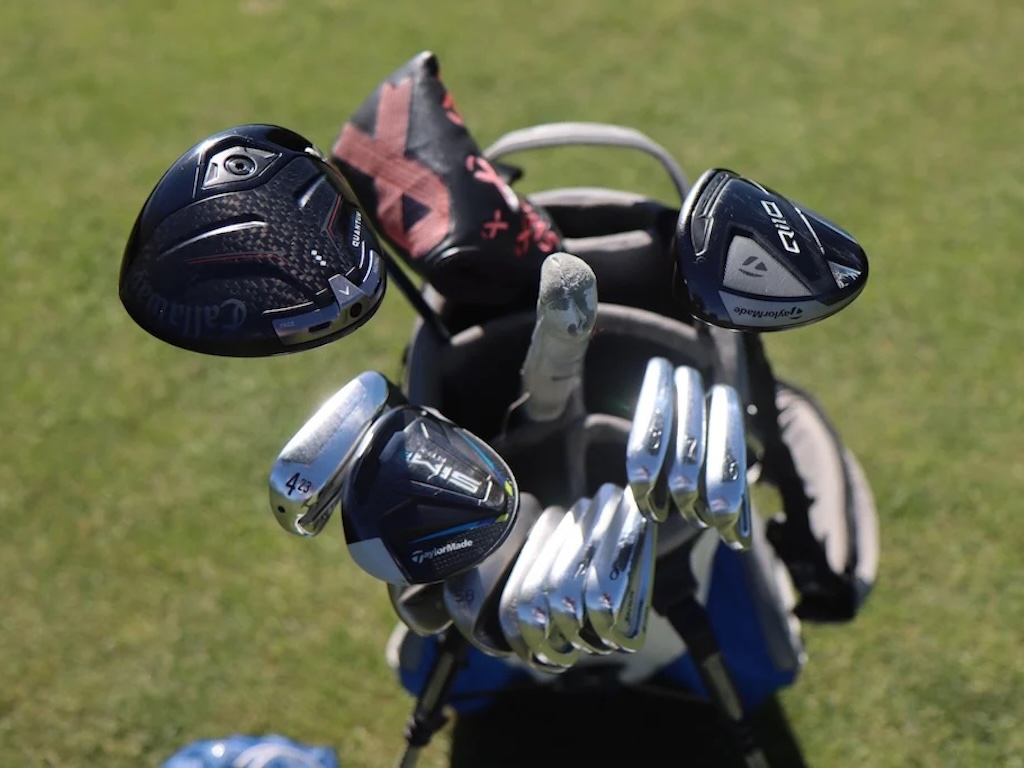
Driver: Callaway Quantum Triple Diamond (9 degrees)
Shaft: Project X HZRDUS Smoke Blue RDX 60 TX
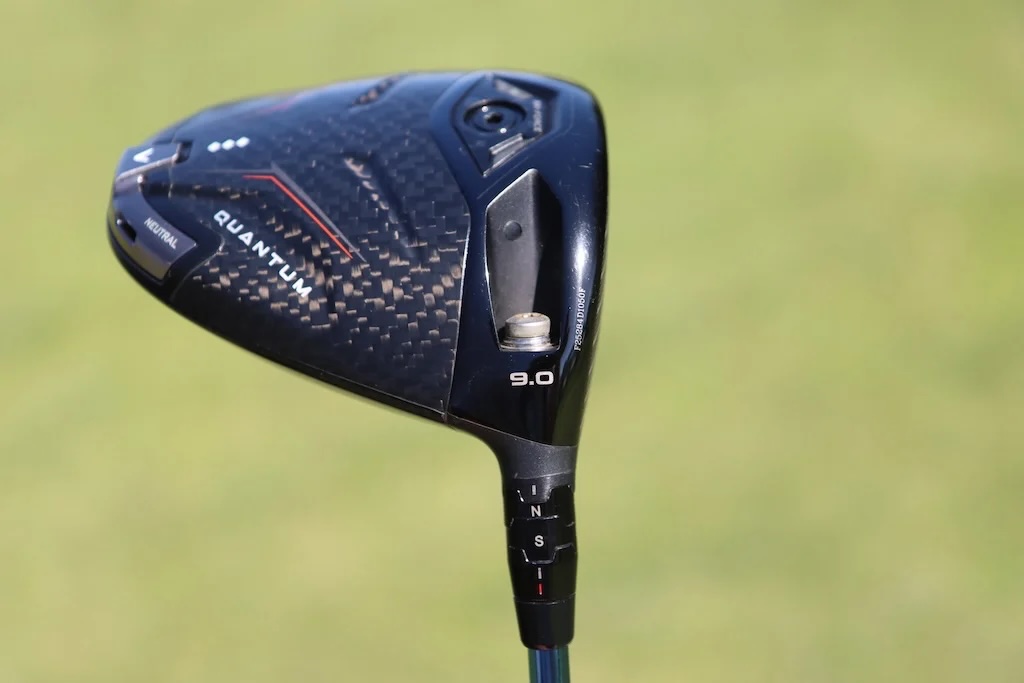
3-wood: TaylorMade Qi10 (15 degrees)
Shaft: Project X HZRDUS T1100 70 6.5
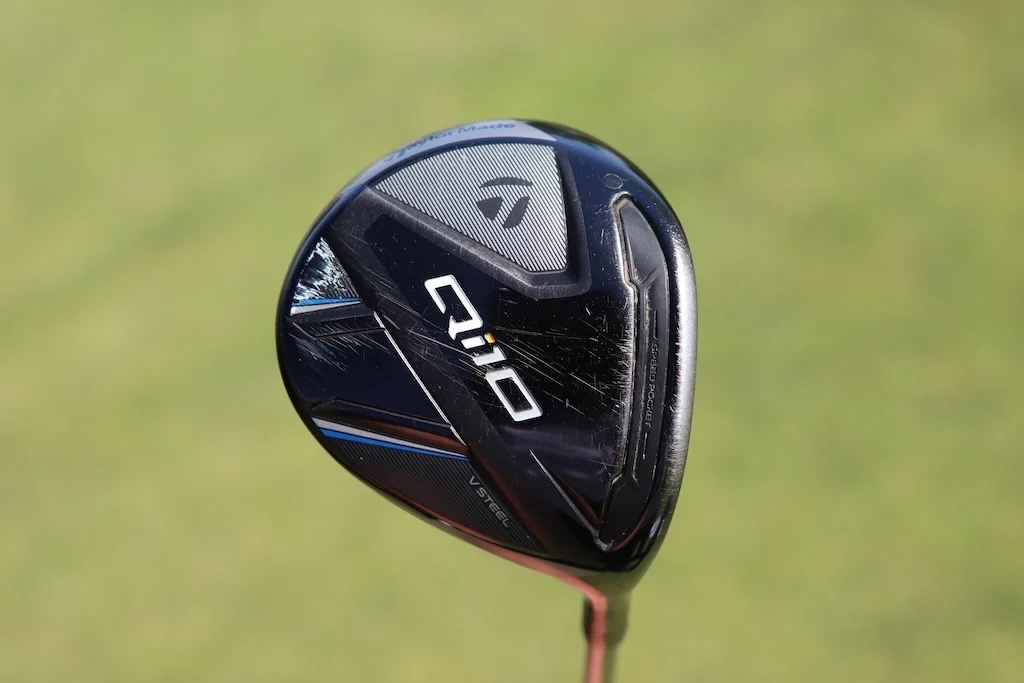
5-wood: TaylorMade SIM2 Max (18 degrees)
Shaft: Project X HZRDUS Smoke Black RDX 80 TX
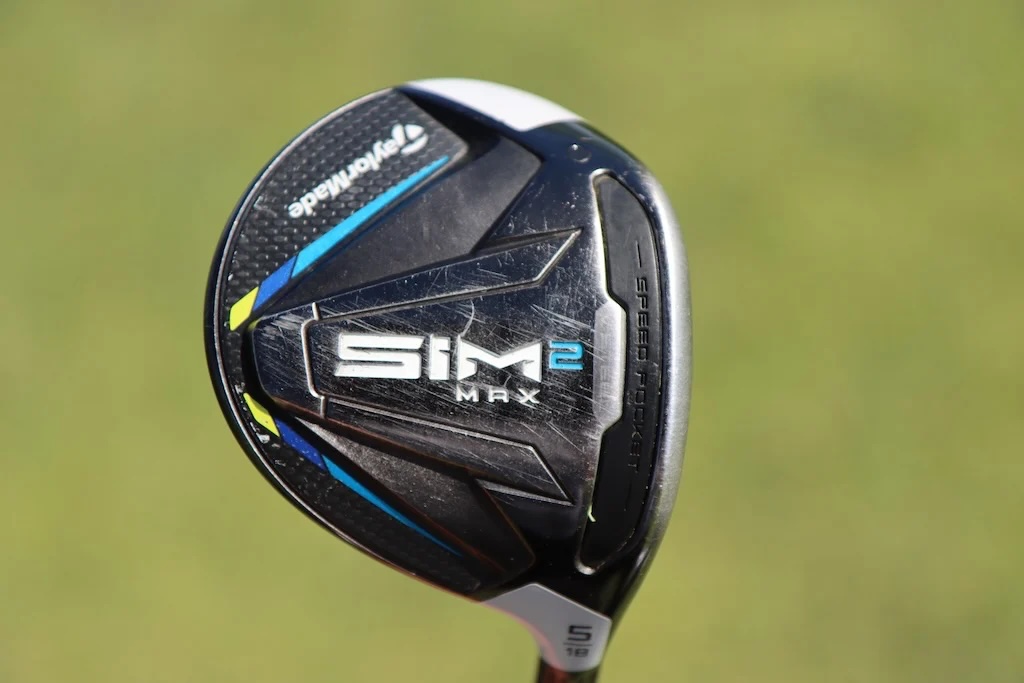
Irons: Srixon ZXiU (23 degrees), Srixon Z785 MB (5-PW)
Shafts: Project X HZRDUS Smoke Black RDX 100 6.5 (4), KBS Tour 130 X
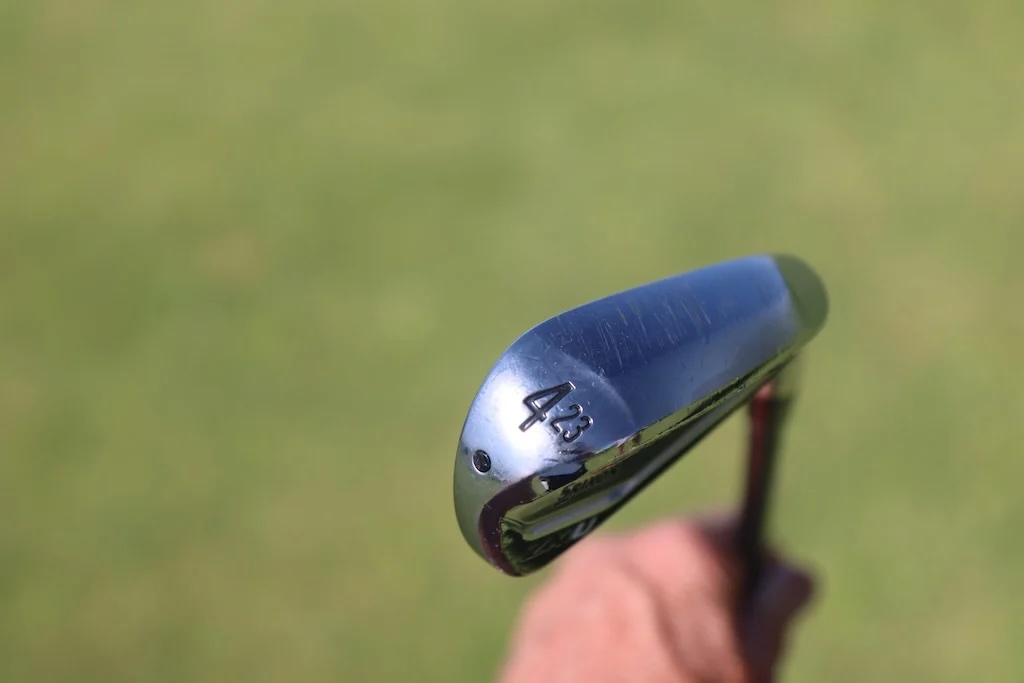
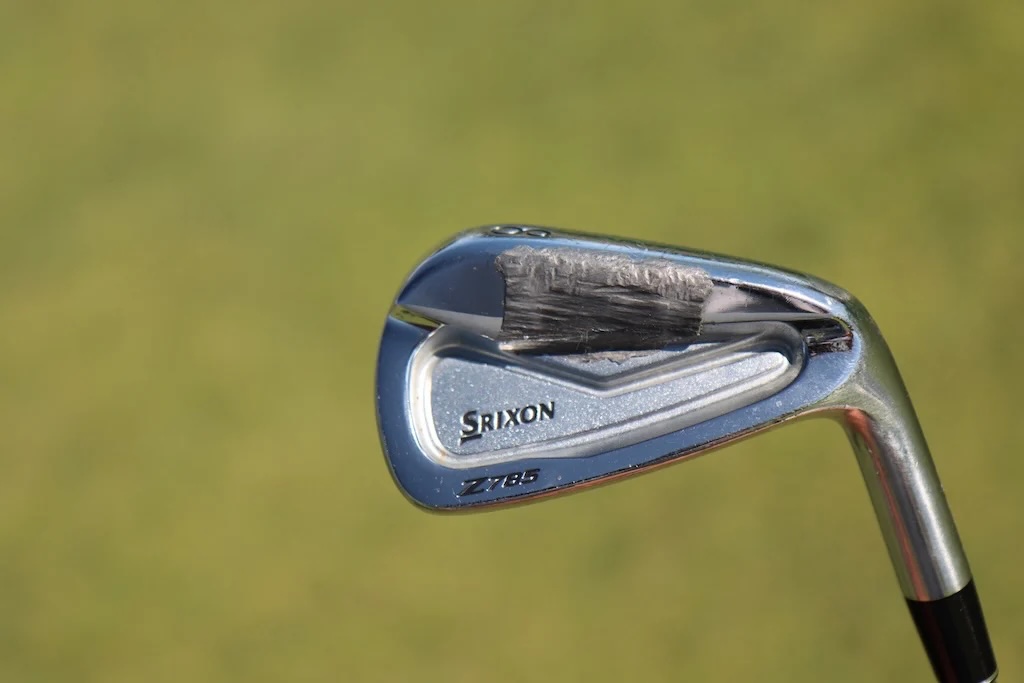
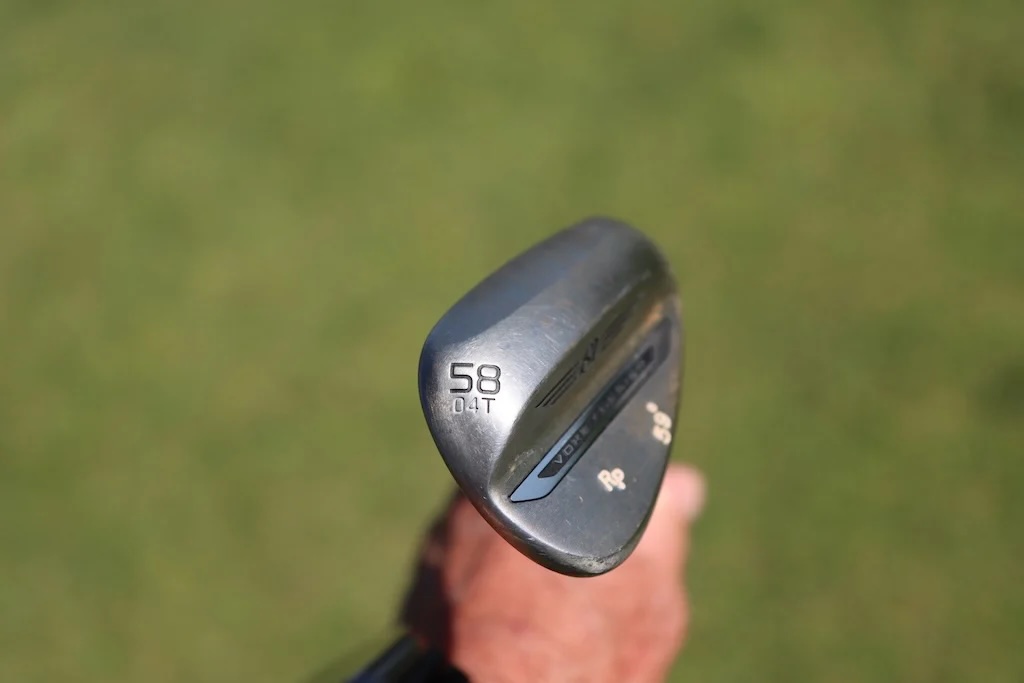
Wedges: Titleist Vokey Design SM11 (50-08F, 54-10S, 58-04T @59)
Shafts: KBS Tour 130 X
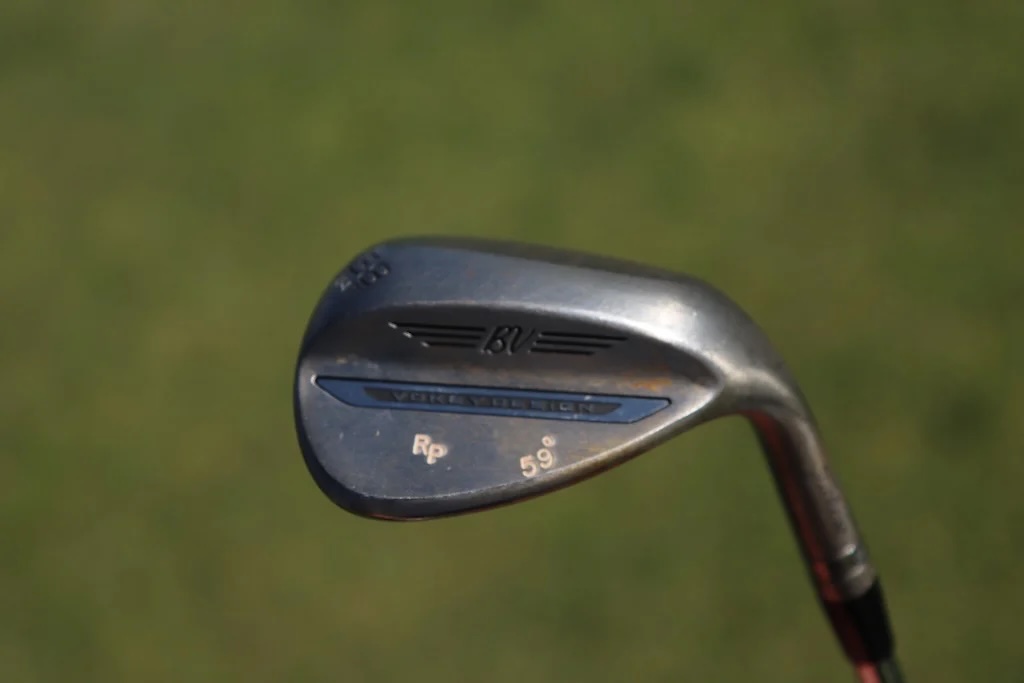
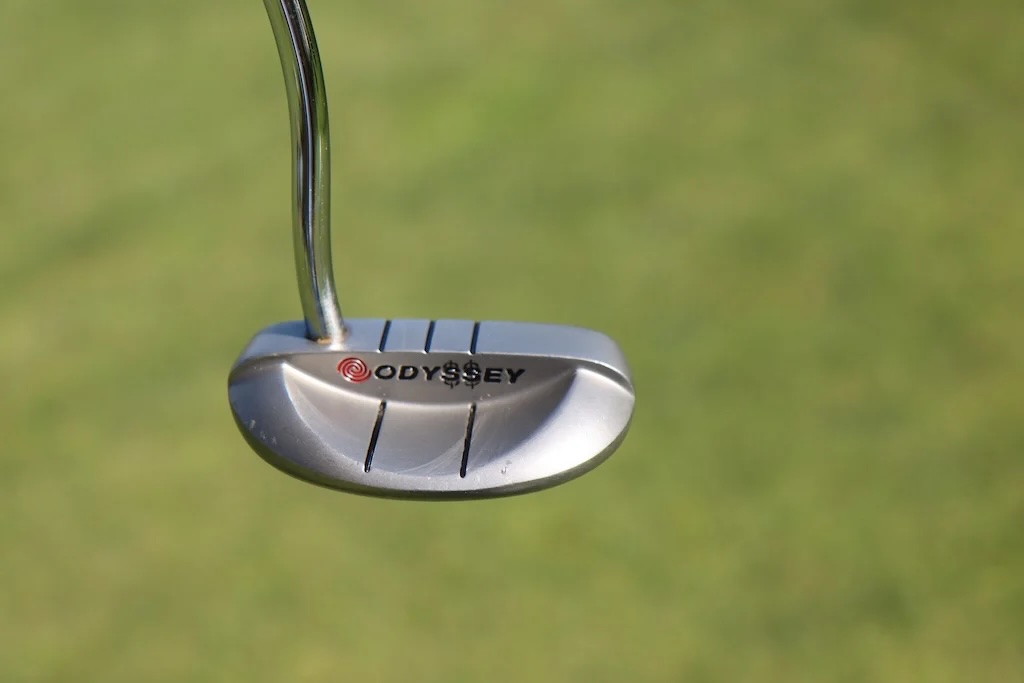
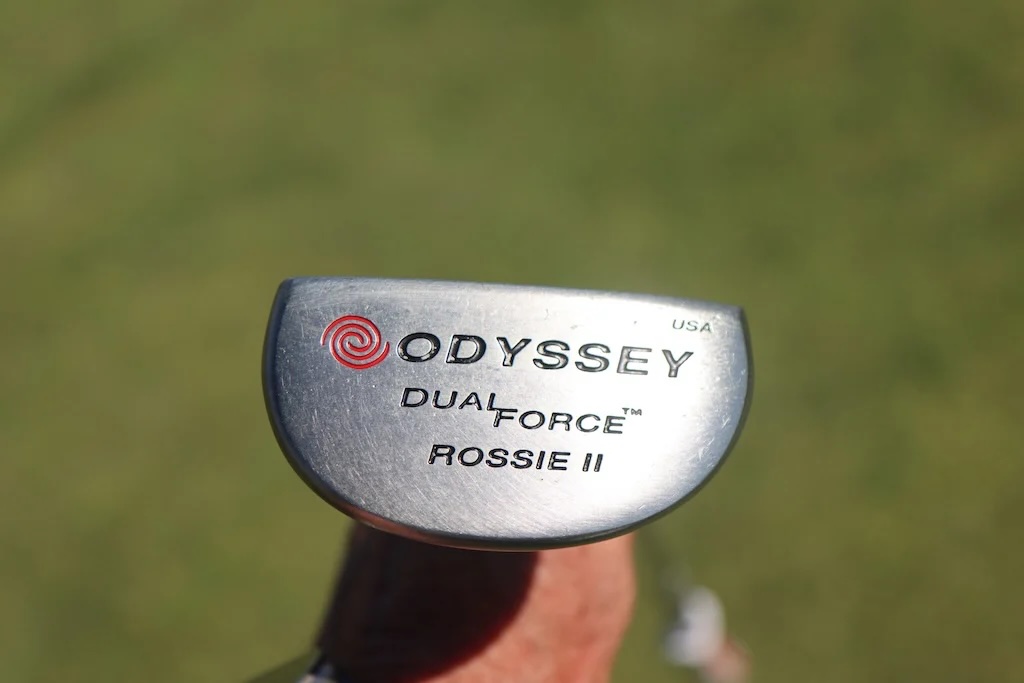
Putter: Odyssey Dual Force Rossie II
Ball: Titleist Pro V1x
Grips: Golf Pride Tour Velvet
-

 Equipment6 days ago
Memorial Tournament Tour Report: Rory McIlroy, Cameron Young switch up drivers, and more
-

 News2 weeks ago
Russell Henley’s winning WITB: 2026 Charles Schwab Challenge
-

 Equipment3 days ago
Best irons 2026: Best irons overall, most forgiving irons, and more
-

 Whats in the Bag4 days ago
J.T. Poston’s winning WITB: 2026 Memorial Tournament
-
 Equipment1 week ago
Details on Jason Day’s latest prototype Avoda iron setup
-
 Equipment3 weeks ago
CJ Cup Byron Nelson Tour Report: Koepka and Kim’s newest putters finally get hot
-

 News2 weeks ago
Charles Schwab Challenge Tour Report: MacIntyre, Åberg and Spaun all switch putters, TaylorMade launches new Spider
-
 Equipment2 weeks ago
Details on J.J. Spaun’s surprise putter switch


Pingback: Callaway Chrome Soft: Building a better golf ball – GolfWRX
Paul Runyan
Aug 7, 2020 at 12:11 pm
Call -a- way we’re always a little off in QC.
I bought a dozen and the seam was not finished and stuck out about an 1/8 of an inch around the call. I can’t believe those actually made it out the door! Unbelievable!!
joe
Aug 5, 2020 at 11:13 am
your point being?
Dave
Aug 5, 2020 at 10:14 am
I’ve been playing the Chromesoft triple track this season and I absolutely love it. Long off the tee and mid irons and performs extremely well from 140-in.
Reid Thompson
Aug 5, 2020 at 9:58 am
Highest possible level of QC….. hahaha
Boydenit
Aug 5, 2020 at 9:20 am
Is this the same plant that made all those Callaway balls that were “Off”
Hpw
Aug 5, 2020 at 5:55 pm
Yes, troll. It is the same plant. They’ve updated the equipment to make sure of the quality of the product. Did you actually read the articles?
Tigergor
Aug 6, 2020 at 6:35 am
If this promotional advert says so, it must be true!
Then again, go cut open a few balls and see what you find!