
Opinion & Analysis
The Wedge Guy: Maybe it’s time to rethink your short irons

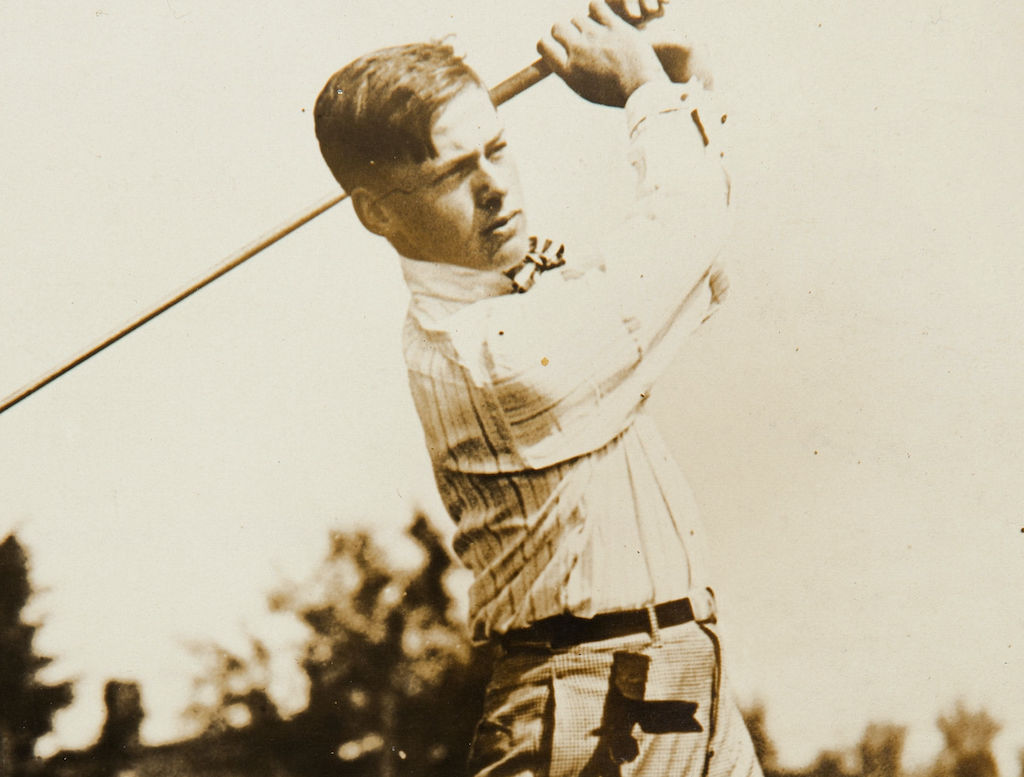
In today’s post, I’m going to put on my “respectful irreverence” hat and challenge the notion of “matched” sets of irons that have been promoted to us since Bobby Jones and Spalding created the concept in the early 1920s. My question is simple: Should iron sets really be “matched”?
I’m going out on a limb and say “NO.”
Here’s why.
When cavity-back, perimeter-weighted irons became popular in the 1970s, long and middle irons immediately became easier to hit. But manufacturers followed industry tradition and continued to make all the irons look alike–3 through PW. Because the short irons had the same cavity as the long and middle irons, the result was excessively high ball flight and reduced spin. That’s when the absurd notion of strengthening lofts began.
Over my many years in the equipment industry, I’ve seen Iron Byron prove time and again that perimeter weighting is increasingly less influential as the loft of an iron increases. In fact, while a low center of gravity and thin face is certainly helpful with a middle or long iron in your hands, most golfers seem to have the exact opposite problem as irons approach the high 30s and 40s in loft – they hit them too high and cannot control their distances.
Most golfers will be surprised by the shotmaking performance of blade short irons, even if you play to a double-digit handicap. The reason is that the more even distribution of mass across the back of the clubhead on a blade short iron of 40 degrees or more greatly equalizes the smash factor – or efficiency of impact – vertically up and down the face. And the simple fact is that most golfers miss their short irons vertically, while long-club misses tend to run heel to toe.
What’s really always baffled me is that the design of almost all wedges exacerbates this issue for golfers, because all the mass is so low in the clubhead. Iron Byron repeatedly proves that misses even a half-inch up the face can reduce smash factor by as much as 20-22 percent on any top-brand wedges. That’s why your high-face misses come up short.
But back to the short iron—here’s what might become an eye-opening experiment for you. Talk to your club fitter or pro about trying out a set of blade demos–just the short irons–for a round or two. Choose some that have a shaft that is reasonably matched to your current irons. Hit some shots side-by-side with your short irons and the blade short irons and see if you don’t notice a measurable trajectory improvement.
Yes, you’ll notice some feel difference when you miss out toward the toe, but my bet is that you will find much more consistent distance control and accuracy.
But remember, the numbers on the bottom of irons have become essentially meaningless. That blade 9-iron might have the same loft as your “tech” pitching wedge. So keep that in mind as you do this evaluation.
Let me know how your experiments play out.









This past Monday, I played in the U.S. Amateur local qualifier at Rock Creek Country Club in Portland, Oregon. A full tee sheet from 7:30 a.m. to 1:55 p.m., the top 11 scores would make it to the U.S. Amateur final qualifying.
I teed off at 10:48 a.m.. With the 7:30 am tee time, you can get a feel for the leaders’ pace, and they were off and running on the challenging setup at Rock Creek.
View this post on Instagram
Getting to the highlight of the round on the par five 17th, a drive up the left side and 212 yards left to the front hole location. I took out a 5-iron with plans of middle of the green. The ball ended up 8 feet left of the hole, pin high. A slight downhill putt dropped in for an eagle 3 on the 17th. With the cut line looking to be anywhere from -2 to even par. This was the boost I had been waiting for all day.
With making par from the trees on 18, it was time to wait for a potential playoff with a posted score of one under par 71.
Three hours later, it was playoff time. 8 players for 6 spots. I made par on the playoff hole, which was good enough to advance to the U.S. Amateur final qualifying in July. USGA qualifiers sure deliver on all of the emotions in golf!
Club Junkie
Building my 2026 gamer WITB: Ranking the contenders and new putter projects – Club Junkie Podcast

The annual What’s In The Bag build is underway, and on this episode of Club Junkie, Brian breaks down the clubs currently leading the race for a spot in his 2026 gamer setup. From drivers and fairway woods to irons, wedges, and shafts, he ranks the equipment that’s performing best and explains what’s separating the front runners from the rest of the field.
Brian also heads into the workshop to discuss several putter projects currently on the bench. From head options and shaft choices to build ideas and testing plans, he shares what he’s working on and which putters could become serious contenders for the bag this season.
If you’re a gear junkie who loves equipment testing, club building, and the never-ending pursuit of the perfect setup, this episode is for you.
Follow Club Junkie:
Instagram: @clubjunkiepod
TikTok: @clubjunkiepod
Threads: @clubjunkiepod
X: @ClubJunkiePod
Club Junkie
Tour Edge Exotics mini driver review + TaylorMade Spider ZT Max first look – Club Junkie

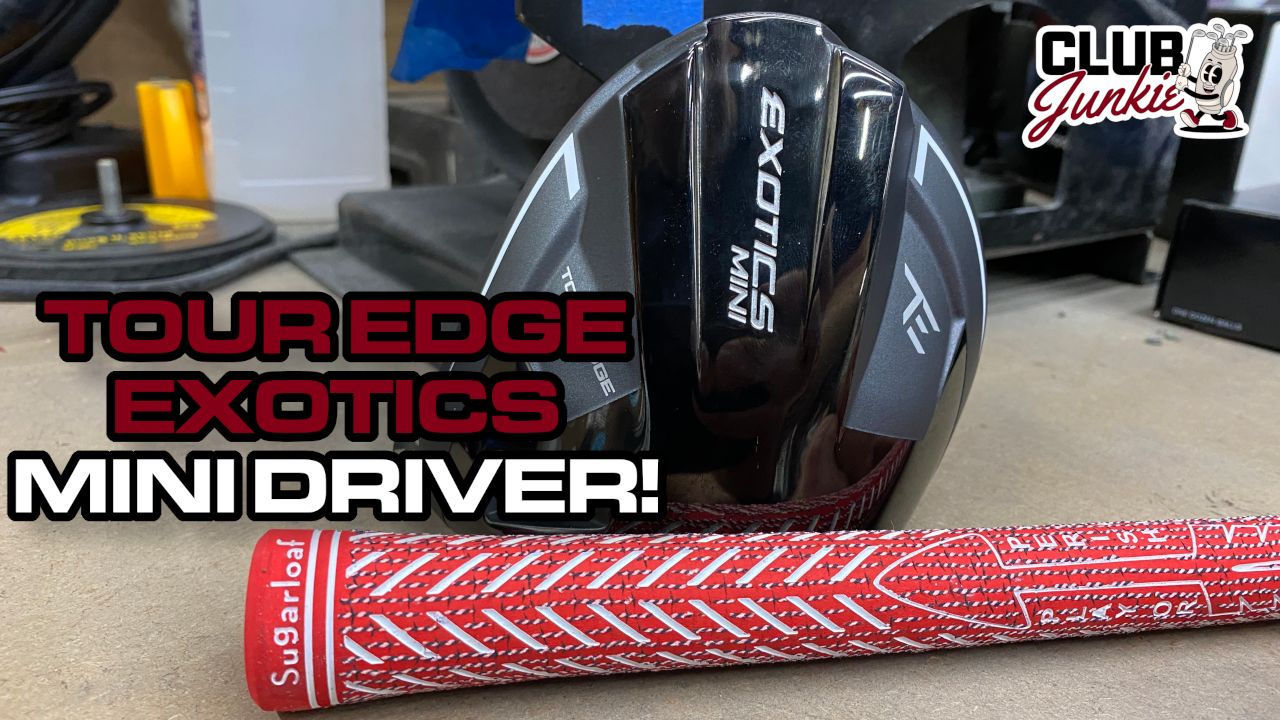
On this episode of Club Junkie, I put the new Tour Edge Exotics Mini Driver to the test and break down the performance, forgiveness, distance, and where it fits compared to a traditional driver or strong fairway wood. If you have been curious about adding a mini driver to the bag, this one is worth a look.
I also dive into the new TaylorMade Spider ZT Max putter that was recently spotted and discuss the growing zero torque putter trend. Plus, there is a closer look at the new Project X Titan Yellow shaft showing up on the PGA Tour and what makes it different from other profiles currently out there.

Justin Rose WITB 2026 (April): Full WITB breakdown with new McLaren irons

What’s the story behind Webb Simpson’s custom-stamped irons?

Memorial Tournament Tour Report: Rory McIlroy, Cameron Young switch up drivers, and more

Cadillac Championship Tour Report: Spieth’s sizable changes, McLaren Golf launches, and more

Russell Henley’s winning WITB: 2026 Charles Schwab Challenge

Kristoffer Reitan’s winning WITB: 2026 Truist Championship

J.T. Poston’s winning WITB: 2026 Memorial Tournament

Best irons 2026: Best irons overall, most forgiving irons, and more

Aaron Rai’s winning WITB: 2026 PGA Championship

Cameron Young’s winning WITB: 2026 Cadillac Championship


Bud Cauley WITB 2026 (June)
Bud Cauley had >14 clubs in his bag when photographed prior to the Memorial Tournament. Driver: Titleist GTS2 (8 degrees) Shaft: Fujikura...


Hannah Green WITB 2026 (June)
Driver: Titleist GTS3 (10 degrees, D4 SureFit setting) Shaft: Mitsubishi Chemical Diamana RB 53 S 3-wood: Titleist GT3 (15 degrees,...


Asterisk Talley WITB 2026 (June)
Driver: TaylorMade Qi4D (9 degrees) Shaft: Fujikura Ventus Blue 6 S 3-wood: TaylorMade Qi4D (16.5 degrees) Shaft: Fujikura Ventus Blue...

Brianna Do WITB 2026 (June)
Driver: Callaway Quantum Triple Diamond (9 degrees) Shaft: KBS PGW 3-wood: Callaway Elyte Titanium (15 degrees) Shaft: KBS PGW 5-wood:...
-
 Equipment6 days ago
Memorial Tournament Tour Report: Rory McIlroy, Cameron Young switch up drivers, and more
-
 News2 weeks ago
Russell Henley’s winning WITB: 2026 Charles Schwab Challenge
-
 Whats in the Bag4 days ago
J.T. Poston’s winning WITB: 2026 Memorial Tournament
-
 Equipment3 days ago
Best irons 2026: Best irons overall, most forgiving irons, and more
-
 Equipment1 week ago
Details on Jason Day’s latest prototype Avoda iron setup
-
 Equipment3 weeks ago
CJ Cup Byron Nelson Tour Report: Koepka and Kim’s newest putters finally get hot
-

 News2 weeks ago
Charles Schwab Challenge Tour Report: MacIntyre, Åberg and Spaun all switch putters, TaylorMade launches new Spider
-
 Equipment2 weeks ago
Details on J.J. Spaun’s surprise putter switch


matt
Feb 5, 2021 at 8:21 am
good read, just found it. there’s another factor making these clubs even harder to control. Since the advent of the ProV1 the cover of a premium ball has been getting harder and harder. They manage to keep spin reasonable with other tech but launch wants to go higher and higher (driver distance is obviously the force here). The wedge makers are on to this, they’re all driving CG higher and higher because these balls want to launch so dang high. But if your pitching wedge/ 9 iron doesn’t have an adequately high CG you’re almost surely going to see some control issues with it IMO.
Osnola Kinnard
Sep 8, 2020 at 8:58 am
What you espouse is what Edel Golf does with their SLS01 irons amd they also tske it a step further with different shaft profiles in the long, mid, short iron/wedges.
Speedy
Aug 11, 2020 at 12:20 pm
Thought Dave Pelz was The Wedge Guy. Retired (80)?
geohogan
Aug 2, 2020 at 3:14 pm
IMO increased offset in cavity backed irons creates inconsistency as much as perimeter weighting.
Bend your cavity back irons to have much less offset; consistency and accuracy will increase.
Note: bending less offset will increase effective loft. ie closer to loft of comparable muscle back irons.
Bladehunter.
Jul 25, 2020 at 3:17 pm
And some of us have been telling you this forever. For all handicaps. Blades in the short irons. Hybrids up top. Done.
Par
Jul 25, 2020 at 6:53 am
I am a mid handicapper, about 12 and in my late 60’s. I fiddle around with hitting various irons. Do see better accuracy and distance with forged or pro series cast iron. Yet over much better consistency and comfort with matched clubs and cast set.
Tokyo Bob
Jul 24, 2020 at 12:54 pm
I happened onto this just by chance/trial and error, The end result was I carry two 9 irons and two 8 irons, with 8-PW being Miura blades and the other 6-9 being PRGR GI irons , which are essentially 4-7 lofts. Numbers on the bottom just are meaningful in a general sense or reference in a single set. I like the Hogan clubs just printing the loft, not the number on the club. Useful.
People may hate on this. But it works for me. MiHLM, mid handicap lives matter, too.
Liked the article and learned some things on the vertical miss on wedges, etc.
Shallowface
Jul 23, 2020 at 7:55 pm
Terry, your comment about how toe hits might feel with a blade is interesting. For a long time I’ve been of the opinion that what people interpret as “forgiveness” is actually just a reduction in vibration due to how it is distributed when a cavity back iron is mis-hit. In my experience, the actual performance differences on mis-hits between blades and cavity backs is not nearly as signifcant as has been sold to the buying public. We just feel them more with a blade. Of course, that vibration reduction may well result in a more enjoyable experience for players, even if it means very little in actual results.
geohogan
Aug 10, 2020 at 12:37 pm
Most golfers have probably not experienced the sweet feel of pure contact on the sweet spot of a soft carbon muscle back iron.
If a golfer never knows that sweet feel, he or she will never have the opportunity to learn to repeat that proper clubface to ball contact.
ie It may be that the lack of reward(sweet feeling) in order to learn, conditioned response restricts learning?
Mike
Jul 23, 2020 at 12:47 pm
I’ve learned to ignore the number on the bottom of the club and just build my set based on loft. What’s the point difference in carrying 6i to gap wedge as I do or carrying a 7i to the second gap wedge. It’s still the same number of irons I’m carrying. The markings on the clothes have gotten idiotic. Always remember the TM commercial with Nick Faldo 10 years ago where he said “Wow, I’m hitting this 7i as far as my old 6i”. Duh, Nick, the loft on that 7 iron you tested was definitely stronger than your old one and it was 1/2″ longer.
Osnola Kinnard
Jul 22, 2020 at 9:30 pm
I was fitted for a set of Edel SLS01 irons 2 years ago and have not looked back. Not only is the weighting of their irons progressive for the long middle and short irons, the Paderson shafts really do help optimize ball flight, spin, and trajectory.
Granted I am taller and the longer short irons feel way more comfortable to me, the Edels seem to take your advice to heart in the short irons and wedges.
JD Masur
Jul 22, 2020 at 5:20 pm
For that matter, I have a gripe with grips being identical. For the LW, GW and SW, I use reverse taper grips, for the PW-6 iron, I use 2 layers of tennis racquet white hand wrapped grips, for 4-iron hybrid and “Ginty” no taper rubber grips, and for the metal 7, 3 and driver, a tacky white tour wrap.
The reverse taper gives me versatile options for distance control, and the white tennis wraps/no taper grips make it easier to hold the clubs in my fingers. All white grips give a visual signal on when to change them.
James
Jul 22, 2020 at 5:08 pm
My son is a scratch junior player and just got fitted into new irons. Iron fitting by a top fitter took almost 3 hours. Ended up in cavity backs 3-6 and blades 7-PW. Accuracy and distance control is far better. This is good advice Wedge Guy.
Brandon
Jul 22, 2020 at 4:09 pm
Wait, haven’t we been told that we can’t even look at blades if we aren’t scratch?
Shallowface
Jul 23, 2020 at 7:46 pm
The lesson here is, don’t believe everything you are told. About anything.
D
Jul 24, 2020 at 12:44 am
True dat
Douglas Spensley
Jul 22, 2020 at 2:54 pm
I agree. I recently got new cavity back irons, and love the 4 to 6, but can’t control distance and spin under 150 yards or so. I’ve put my old blades wedge and 9 back in the bag, still experimenting with 7 and 8.
Acemandrake
Jul 22, 2020 at 12:16 pm
The turf interaction of a blade may shock some non-blade players.
Is there such a thing as a wide-soled blade? Is there a need/demand for this?
Stan The Man
Jul 22, 2020 at 10:56 am
Couldn’t agree more with this notion. In fact, I was fitted at a top club fitter a few years ago and to get the consistency, dispersion we needed, we ended up fitting me into a mixed set of Srixon blades to cavity back to game improvement irons throughout the set. Love them and most importantly, I trust them.
juststeve
Jul 22, 2020 at 10:25 am
Seems that most of the OEMs are already producing sets with long irons designed to be easier to hit, whether by moving the center of gravity, by use of progressive off-set, etc., whether the design is cavity back or blade. A number have designed their clubs to be compatible as parts of split sets. Good ideas all but sort of yesterdy.
drkviol801
Jul 22, 2020 at 10:13 am
Care to explain why a significant number of PGA tour players play with a pw that matches irons? Easily 35-40% do.
Roy
Jul 22, 2020 at 11:39 am
Doesnt that mean 60-65% don’t??? Remember, not everyone switched from persimmon to metal at the same time as well.
But to answer your question, I would say they are far less prone to “vertical misses” as a 5 handicap is
MakoShark
Jul 24, 2020 at 10:07 am
That means 65-70% do not.
Terry Koehler
Jul 24, 2020 at 10:51 am
That’s a pretty easy question, drkviol801. That’s because most tour players are not playing a severe game improvement iron, and their 9-iron and PW are actually more accurate and more forgiving than ‘tour design’ wedges. That is another whole topic I might have to dive into in a future article.