
Opinion & Analysis
The Wedge Guy: Swing Weight Part 2 – Non-standard lengths

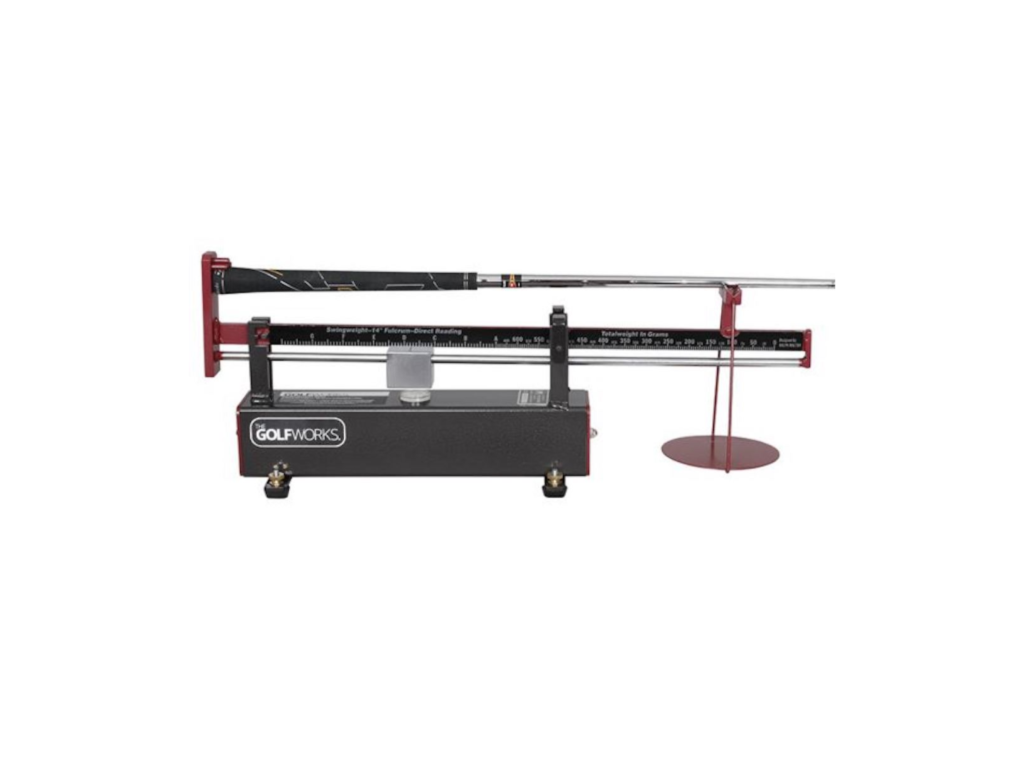
This is the part of the swingweight discussion where I expect to get lots of dialog, so here goes.
The modern trend in clubfitting seems to “fit” many golfers long and upright, which I don’t necessarily agree with, but can sound off on that later. Today, we’re going to talk about this subject, and I’m going to share my theory on what does and should happen to swingweight.
The idea of fitting a golfer with longer shafts is to accommodate his or her height and posture. Let’s say my friend who’s 6’3” really likes my irons, and wants a set “just like them”, but he wants them built to his own specs of 1” overlength. So, to accommodate his larger size and assumed strength, we build him a set of irons just like mine, except that the shafts 1 inch longer than mine are. Now, that one inch in the butt of the golf club shaft only adds about 2 grams to the overall weight of the club, and does nothing to the flex profile. So his new irons are EXACTLY like mine – same shaft flex, same heads, same everything.
BUT, when we put his new irons on the swingweight scale, he goes ballistic, because they read D7-9, rather than the D2 that I play. But they are not heavier than mine: they are just like mine, only altered to accommodate his size.
However, if he insists that they should be only D2, as a clubmaker, I have my work cut out for me. First, I have to grind weight off the clubheads . . . considerable weight, as much as 5-8% of the mass . . . with greatly alters the club, right? And removing that much mass then makes the shafts play much stiffer, increasing the frequency by a half a flex or more. So, in order to “match” the swingweight, I’ve created a tremendously lighter and stiffer club – nothing like the irons I have that he liked so much.
Or I guess I could counter-weight the club significantly, which also is dramatically changing the irons that we wanted to be “just like mine.”
What I have always proposed is that we think in the concept of “swingweight equivalent”. If the club is D2 at standard length, it’s going to be D4-5 at 1/2” over, maybe D8-9 at 1” over. When we are making shaft length adjustments that are shorter, that exact same club will be C9 or so at 1/2” shorter than standard.
I really think it’s just that simple. What about all of you?




This past Monday, I played in the U.S. Amateur local qualifier at Rock Creek Country Club in Portland, Oregon. A full tee sheet from 7:30 a.m. to 1:55 p.m., the top 11 scores would make it to the U.S. Amateur final qualifying.
I teed off at 10:48 a.m.. With the 7:30 am tee time, you can get a feel for the leaders’ pace, and they were off and running on the challenging setup at Rock Creek.
View this post on Instagram
Getting to the highlight of the round on the par five 17th, a drive up the left side and 212 yards left to the front hole location. I took out a 5-iron with plans of middle of the green. The ball ended up 8 feet left of the hole, pin high. A slight downhill putt dropped in for an eagle 3 on the 17th. With the cut line looking to be anywhere from -2 to even par. This was the boost I had been waiting for all day.
With making par from the trees on 18, it was time to wait for a potential playoff with a posted score of one under par 71.
Three hours later, it was playoff time. 8 players for 6 spots. I made par on the playoff hole, which was good enough to advance to the U.S. Amateur final qualifying in July. USGA qualifiers sure deliver on all of the emotions in golf!
Club Junkie
Building my 2026 gamer WITB: Ranking the contenders and new putter projects – Club Junkie Podcast

The annual What’s In The Bag build is underway, and on this episode of Club Junkie, Brian breaks down the clubs currently leading the race for a spot in his 2026 gamer setup. From drivers and fairway woods to irons, wedges, and shafts, he ranks the equipment that’s performing best and explains what’s separating the front runners from the rest of the field.
Brian also heads into the workshop to discuss several putter projects currently on the bench. From head options and shaft choices to build ideas and testing plans, he shares what he’s working on and which putters could become serious contenders for the bag this season.
If you’re a gear junkie who loves equipment testing, club building, and the never-ending pursuit of the perfect setup, this episode is for you.
Follow Club Junkie:
Instagram: @clubjunkiepod
TikTok: @clubjunkiepod
Threads: @clubjunkiepod
X: @ClubJunkiePod
Club Junkie
Tour Edge Exotics mini driver review + TaylorMade Spider ZT Max first look – Club Junkie

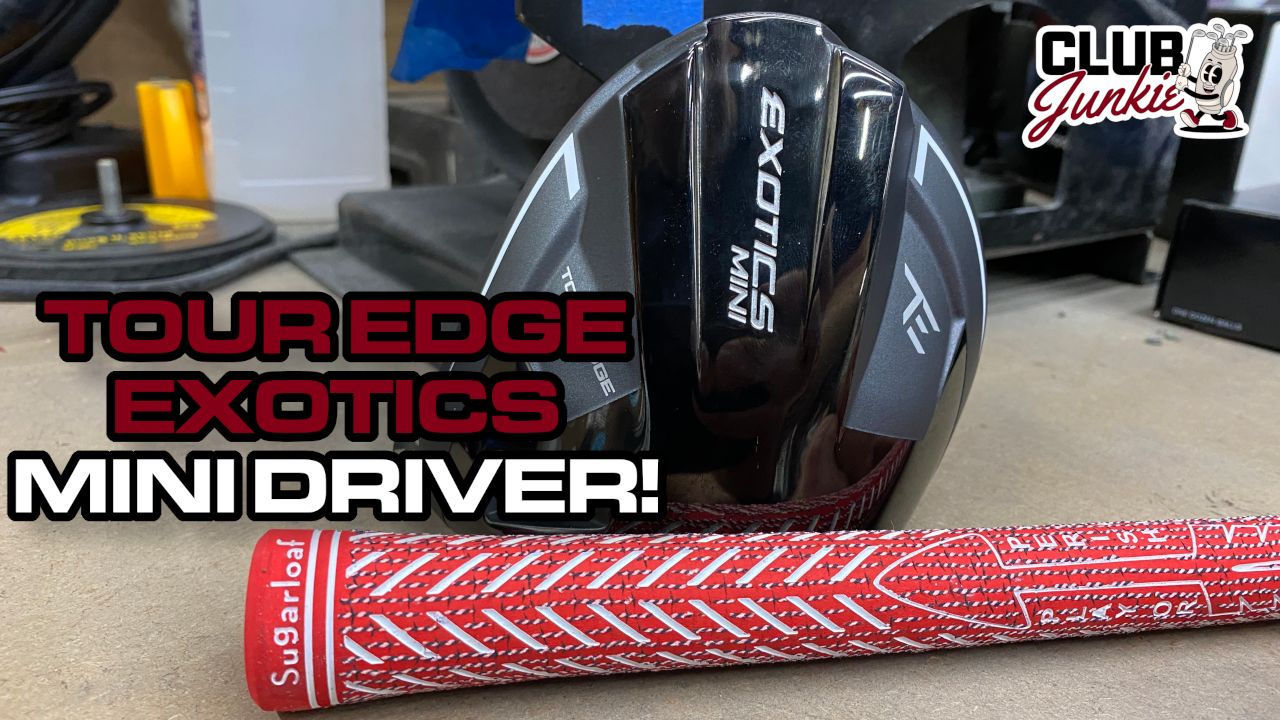
On this episode of Club Junkie, I put the new Tour Edge Exotics Mini Driver to the test and break down the performance, forgiveness, distance, and where it fits compared to a traditional driver or strong fairway wood. If you have been curious about adding a mini driver to the bag, this one is worth a look.
I also dive into the new TaylorMade Spider ZT Max putter that was recently spotted and discuss the growing zero torque putter trend. Plus, there is a closer look at the new Project X Titan Yellow shaft showing up on the PGA Tour and what makes it different from other profiles currently out there.

What’s the story behind Webb Simpson’s custom-stamped irons?

Memorial Tournament Tour Report: Rory McIlroy, Cameron Young switch up drivers, and more

Cadillac Championship Tour Report: Spieth’s sizable changes, McLaren Golf launches, and more

Russell Henley’s winning WITB: 2026 Charles Schwab Challenge

Kristoffer Reitan’s winning WITB: 2026 Truist Championship

Best irons 2026: Best irons overall, most forgiving irons, and more

J.T. Poston’s winning WITB: 2026 Memorial Tournament

Aaron Rai’s winning WITB: 2026 PGA Championship

Cameron Young’s winning WITB: 2026 Cadillac Championship

Details on Jason Day’s latest prototype Avoda iron setup


Ryan Palmer WITB 2026 (June)
Driver: Callaway Quantum Triple Diamond (9 degrees) Shaft: Project X HZRDUS Smoke Blue RDX 60 TX 3-wood: TaylorMade Qi10 (15 degrees) Shaft:...


Bud Cauley WITB 2026 (June)
Bud Cauley had >14 clubs in his bag when photographed prior to the Memorial Tournament. Driver: Titleist GTS2 (8 degrees) Shaft: Fujikura...


Hannah Green WITB 2026 (June)
Driver: Titleist GTS3 (10 degrees, D4 SureFit setting) Shaft: Mitsubishi Chemical Diamana RB 53 S 3-wood: Titleist GT3 (15 degrees,...


Asterisk Talley WITB 2026 (June)
Driver: TaylorMade Qi4D (9 degrees) Shaft: Fujikura Ventus Blue 6 S 3-wood: TaylorMade Qi4D (16.5 degrees) Shaft: Fujikura Ventus Blue...
-
 Equipment6 days ago
Memorial Tournament Tour Report: Rory McIlroy, Cameron Young switch up drivers, and more
-
 News2 weeks ago
Russell Henley’s winning WITB: 2026 Charles Schwab Challenge
-
 Equipment3 days ago
Best irons 2026: Best irons overall, most forgiving irons, and more
-
 Whats in the Bag4 days ago
J.T. Poston’s winning WITB: 2026 Memorial Tournament
-
 Equipment1 week ago
Details on Jason Day’s latest prototype Avoda iron setup
-
 Equipment3 weeks ago
CJ Cup Byron Nelson Tour Report: Koepka and Kim’s newest putters finally get hot
-

 News2 weeks ago
Charles Schwab Challenge Tour Report: MacIntyre, Åberg and Spaun all switch putters, TaylorMade launches new Spider
-
 Equipment2 weeks ago
Details on J.J. Spaun’s surprise putter switch


Jeff
Jan 23, 2022 at 2:32 pm
If he likes your clubs, then why change the specs? Just because he is taller than you,which most people are, (lol) does not mean he needs longer clubs. It is about being able to square the clubface at the ball!!
Jeff
Jan 23, 2022 at 2:14 pm
He hit your clubs and liked them! Why change? Maybe your length is the length he really needs. It may allow him to set up to the ball properly and square the clubface at impact. I am sure he is probably taller than you and because of his height was fitted with longer clubs.
geohogan
Jul 18, 2020 at 10:11 am
@mark brooks, suggest to you that many brilliant scientists and inventors design
off the shelf golf shafts to be as cheap to make as possible.
How much value is in 99% of all shafts in play(off the shelf) when their made for
$5-$10 each.
IMO you need to go to after market shafts in order to get any consistency of CPM.
Xi iron shafts (cpm over 300 within recommended lengths) are as tip stiff as is possible for a graphite shaft within the given hosel diameter. Butt cut only is a good sign of a tip stiff shaft.
Ben Hogan’s clubs were C7-C9 SW for a reason. He swung the grip end of the club
He didnt throw the clubhead which is the tendency with high SW clubs.
Douglas Mael
Jul 17, 2020 at 11:38 am
I agree with this premise, at least in theory, Terry! In addition, many (but certainly far from all) golfers who need or prefer longer-than-standard playing length clubs are also stronger than your average golfer. These guys can, and often do, play much better with clubs that have a slightly higher swingweight. I know that I prefer the swingweight on all of my clubs to be at least D3-D4, and on my wedges, I want the swingweights to be above D5 or D6. I work out extensively and am far stronger than the average guy my age (71) and probably stronger than most guys in their 30s. Thus, I prefer clubs with a heavier swingweight, and play better golf when using them.
Bruce
Jul 17, 2020 at 10:20 am
I am a mechanical engineer and studied objects in motion, like golf clubs, rather extensively. Isaac Newton proposed laws of motion along with mathematical methods in 1687, and these fundamentals have been verified in thousands of experiments and predictions. Newton’s laws and mathematics are not to be questioned: they describe motion of visible objects over a wide range of velocities.
Swingweight is a balance property like two children on a see-saw – swingweight is a length times distance function: the lighter child is on the longer end of the see-saw.
Now the conclusion: Newton’s mathematical equations of motion do NOT contain any length times distance terms. Therefore swingweight is irrelevant to golf club motion. Forget about swingweight and play what works for you!!
Newton does provide a club matching parameter, but that is a topic for a whole different discussion.
Forged MB
Jul 17, 2020 at 9:59 am
It’s not as simple as just excepting the 6 point swing weight increase at 1” over because the MOI is not the same and therefore the feel, performance, and effort required to swing the club are not the same as a standard length D2 swing weighted club.
The problem is that the industry should not be using swing weight to begin with. It’s archaic and pointless. It’s much like building a club to a specific frequency. Swing weight and frequency are only accurate measurements when you are trying to replicate the EXACT SAME CLUB. You cannot build a club at a different length, weight, or with a different shaft and obtain a “match” by using swing weight and frequency.
In regards to the shaft, the amount of deflection does change when you simply lengthen the club even though the ei profile is not altered. So, the dynamic bending of the shaft is changed and influenced by the added length even without a change to the profile.
Bruce
Jul 17, 2020 at 10:26 am
On target: replicate a GIVEN clob, but not match a set. Club MOI is a valid matching parameter; hence the matched feel of single length clubs.
Robert
Jul 16, 2020 at 11:14 am
What about needing shorter lengths – 1/2 to 1 inch length? Have always heard if club already made get out the lead tape. Best to order special from factory and the manufacturer will use slightly heavier heads.
Have wondered if it would be better mfg cut shaft off at both ends differently to achieve the required length with same feel.
geohogan
Jul 15, 2020 at 5:57 pm
“long and upright”?
If longer, wouldnt it be logical to flatten the lie angle?
Dont golfers know by now that upright golf swings take a toll
on the body? After Tiger swung at his best in 2000
the gurus took his swing upright and we see the result
in damaged knees and lower back.
Drop into the Slot and Turn..
like Tiger in 2000, Ben Hogan and the G.O.A.T, Jack Nicklaus.
Forged MB
Jul 17, 2020 at 10:13 am
You think that swinging a shorter club (which typically means more static weight as well) while bent over more to accommodate that is easier on the body and less injury prone? I can’t think of anything worse for your back than trying to bend and turn and a high rate of speed.
A bit anecdotal, but I rarely hear of baseball players having lower back issues yet for golfers back problems are quite common. Granted the swings are on different planes, but the posture and orientation of the spine are quite different between the two while swinging with great amounts of force. I’ll take the golf swing with the more upright posture and increased extension all day long personally over the tilted and increased side bend move that is being taught by so many.
geohogan
Jul 18, 2020 at 9:56 am
IMO my hands want the butt of the club to be the same height from the ground for every club.
If the shaft is shorter or longer the lie angle is changed so hands on every club is swung from the same height from the ground.
Changing the swing (more upright) to adjust to a golf club
is going to lead to injury, IMO.
geohogan
Jul 19, 2020 at 8:27 am
https://www.youtube.com/watch?v=1bUvU4gH1GI
Babe Ruth, arguably the best baseball swing with plane of the swing mimicking the hips, much like Ben Hogans swing, so called flat swing.
Its no wonder baseball doesnt seem to have the knee and back problems golfers experience with upright swings.
Michael
Jul 22, 2024 at 2:05 am
WTF? Tiger went to a flatter plane after 2000. Not upright…lol. Haney had him flatter at the top. Because of Hogan. U cray cray.
Mark Brooks
Jul 15, 2020 at 4:45 pm
An inch longer golf club will not have the same “flex” or CPM reading.
The stiffest section of the vast majority of shafts is in the butt section, effectively there is an inch longer section remaining on the butt end of the shaft at an inch longer provided no tip trimming was done. If the swing weight was indeed adjusted to match the swing weight of the shorter club, the longer club should be stiffer by any measure of “flex”. Allowing the club to just “naturally “ move to a heavier swing weight will generally make that longer, now heavier swing weight club “play” and measure as the softer or more flexible of the two clubs.
The longer shaft is simply easier to bend than the shorter one with equal weight on both ends. The more length added the more dramatic the change. Conversely, a 1/4 inch change will yield very little change in “feel” or performance.
The golf shaft manufacturer’s employ many brilliant scientists and inventors, they design their shafts to perform the best within a reasonable set of parameters, including overall club length. When you stray too far outside designed for parameters, you’re essentially on your own. Hope this helps out !