
Opinion & Analysis
Research shows 5 main benefits of strength training for golf

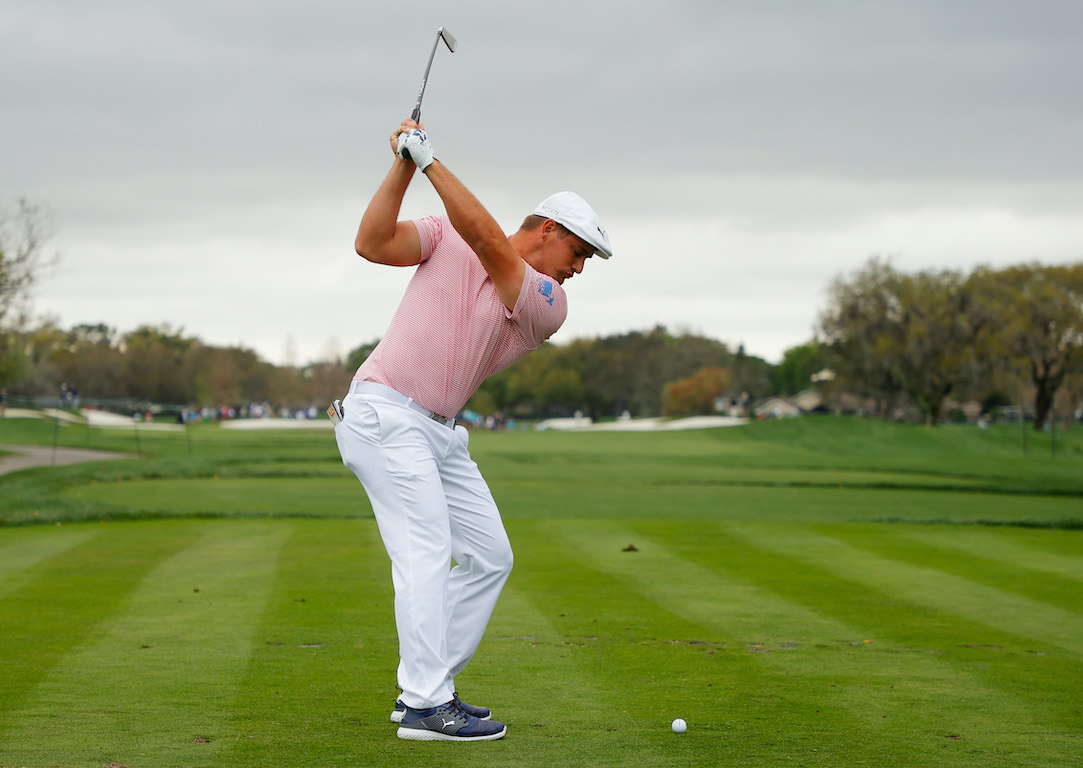
To finally end the myth that strength training is bad for golfers, I researched and analyzed over 130 scientific studies.
This way, the next time a sports commentator wants to criticize a golfer for “working out too much,” there is hard evidence to push back with.
The full research on strength training for golf goes into the details of all the cited studies, but there are five main takeaways that you should be aware of.
The research showed that strength training helps golfers
1. Get more distance on their drives and iron shots
What was impressive about the research was that it was consistent. All golfers saw significant increases in drive distances from strength training. The age, level of competition, physical fitness, and training experience of golfers didn’t matter.
General, maximal, and explosive strength of golfers are directly correlated with driving distance. Meaning traditional, full-body strength training routines are simple and effective options.
The research showed that core and grip strength was incredibly important as well. Multiple studies found that they have a direct correlation with greater drive, iron, and carry distance.
One study actually put it to the test in elite Korean golfers. One group did core training only for eight weeks while the other did the same core training with strength training of the non-dominant arm. The first group saw their drive distance improve by 4.8 percent and the second improved by 10.9 percent. Further highlighting the importance of these two critical muscle groups.
2. Develop a faster, stronger, and more explosive swing
There is a wide range of variables that determine the overall power of your swing.
The research showed that over 6-12 weeks of strength training golfer’s significantly developed their:
- lead arm speed and acceleration
- clubhead speed
- total rotational power, force, and velocity
What is interesting is that many studies favored non-specific strength training over golf-specific forms of training.
For example, an 18-week study had groups of golfers spend preseason training either doing golf-specific strength training or traditional strength training.
Both groups saw significant improvements. Except, the traditional strength training group saw greater improvements in driving distance and swing speed.
3. Improve performance on the green, distance control, and accuracy
One interesting benefit of working out is that you gain greater control of your muscles and body. That is because engaging your muscles in this way helps to improve neuromuscular function and proprioception.
Two factors that empower golfers to more effectively control their body movement and the amount of power put into each swing.
This is why when two professional golfers spent six weeks of strength training, they were able to improve their accuracy by 3.3 and 5.07 meters respectively.
Additionally, when D1 collegiate golfers trained for 11 weeks, they experienced an impressive 29.6 percent improvement in putting distance control.
On top of this, studies demonstrated that golfers having greater muscle strength and endurance were connected with having a shorter 1st putt distance.
Altogether, you are more likely to put the ball on the green, have shorter putts, and leave the ball closer to the hole if you don’t hit your first putt.
4. Maintain and improve flexibility
Many people still believe that working out with weights is going to make you inflexible, like some muscle-bound bodybuilder.
This belief is unfounded. That is because studies have shown that strength training not only maintains flexibility, but it also improves it significantly.
In fact, strength training outperformed static stretching and was just as effective as flexibility training at maintaining and improving flexibility.
5. Reduce the chance of golf-related injuries
60 percent of professional golfers and 40 percent of amateur golfers experience an injury each season.
Due to the level of torque and stress put on the body from the golf swing, the most common injuries are in the shoulders, elbows, wrists, and lower back.
Studies have shown that strength training is able to reduce sport-specific injuries by as much as 33 percent. It also reduced the chance of injuries from overuse, which is common in golf, by 50 percent.



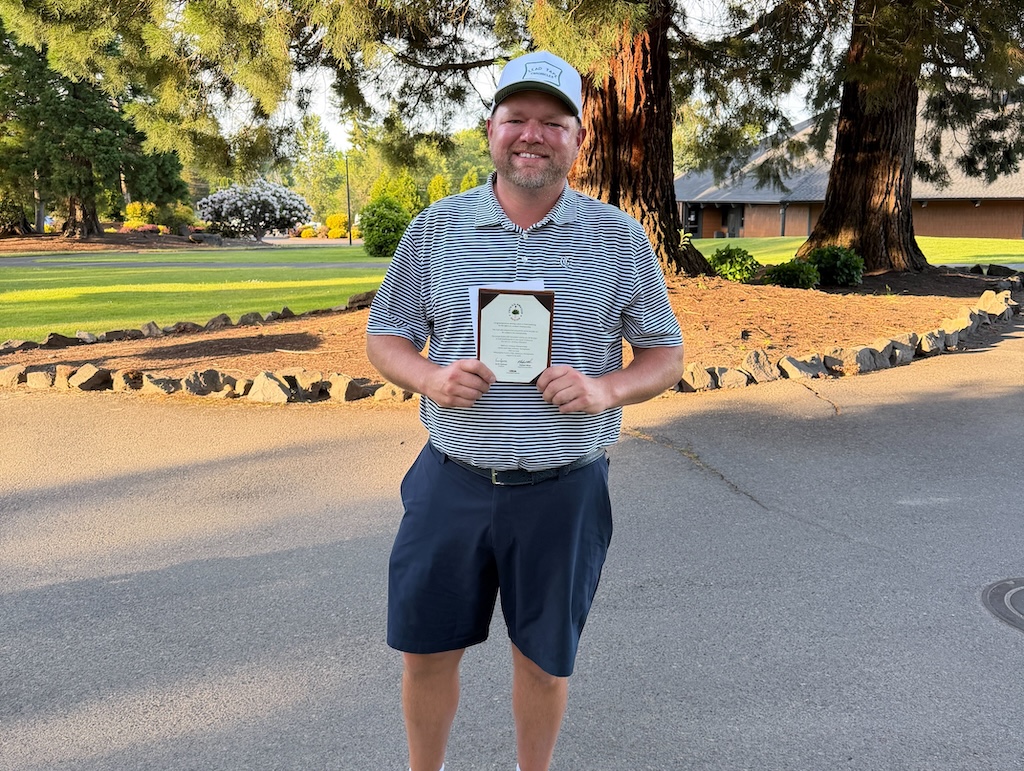
This past Monday, I played in the U.S. Amateur local qualifier at Rock Creek Country Club in Portland, Oregon. A full tee sheet from 7:30 a.m. to 1:55 p.m., the top 11 scores would make it to the U.S. Amateur final qualifying.
I teed off at 10:48 a.m.. With the 7:30 am tee time, you can get a feel for the leaders’ pace, and they were off and running on the challenging setup at Rock Creek.
View this post on Instagram
Getting to the highlight of the round on the par five 17th, a drive up the left side and 212 yards left to the front hole location. I took out a 5-iron with plans of middle of the green. The ball ended up 8 feet left of the hole, pin high. A slight downhill putt dropped in for an eagle 3 on the 17th. With the cut line looking to be anywhere from -2 to even par. This was the boost I had been waiting for all day.
With making par from the trees on 18, it was time to wait for a potential playoff with a posted score of one under par 71.
Three hours later, it was playoff time. 8 players for 6 spots. I made par on the playoff hole, which was good enough to advance to the U.S. Amateur final qualifying in July. USGA qualifiers sure deliver on all of the emotions in golf!
Club Junkie
Building my 2026 gamer WITB: Ranking the contenders and new putter projects – Club Junkie Podcast

The annual What’s In The Bag build is underway, and on this episode of Club Junkie, Brian breaks down the clubs currently leading the race for a spot in his 2026 gamer setup. From drivers and fairway woods to irons, wedges, and shafts, he ranks the equipment that’s performing best and explains what’s separating the front runners from the rest of the field.
Brian also heads into the workshop to discuss several putter projects currently on the bench. From head options and shaft choices to build ideas and testing plans, he shares what he’s working on and which putters could become serious contenders for the bag this season.
If you’re a gear junkie who loves equipment testing, club building, and the never-ending pursuit of the perfect setup, this episode is for you.
Follow Club Junkie:
Instagram: @clubjunkiepod
TikTok: @clubjunkiepod
Threads: @clubjunkiepod
X: @ClubJunkiePod
Club Junkie
Tour Edge Exotics mini driver review + TaylorMade Spider ZT Max first look – Club Junkie

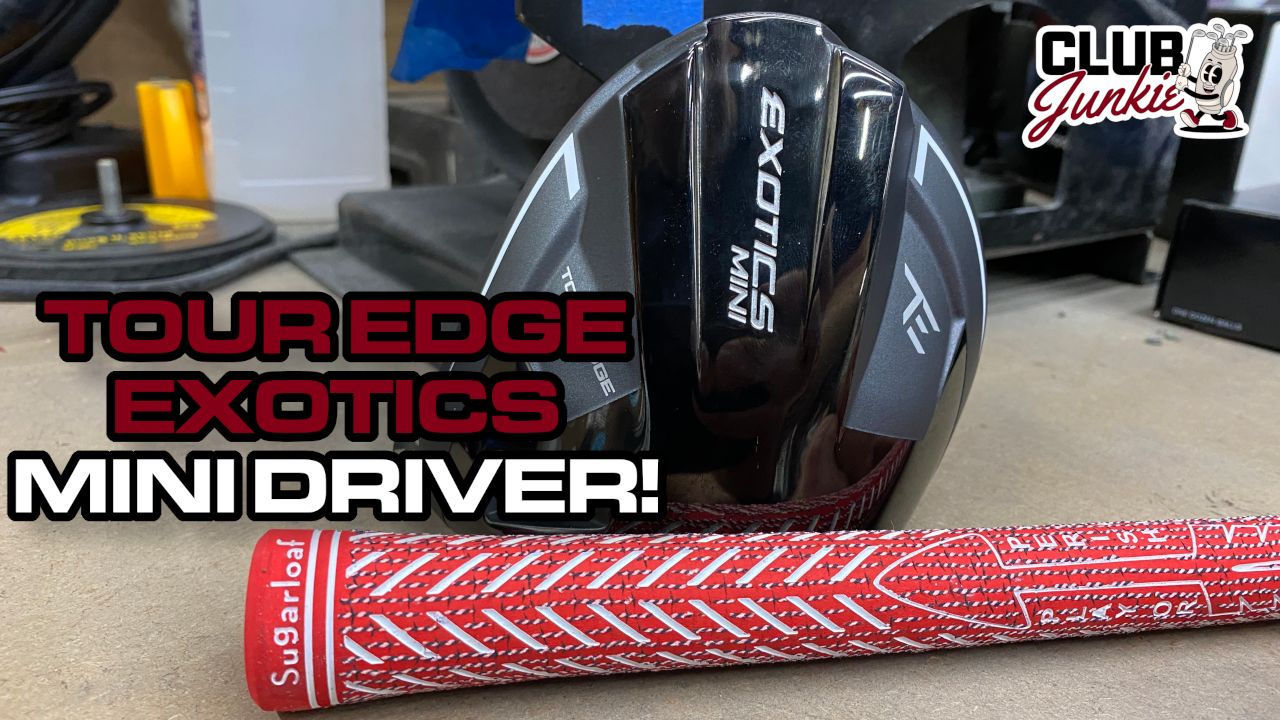
On this episode of Club Junkie, I put the new Tour Edge Exotics Mini Driver to the test and break down the performance, forgiveness, distance, and where it fits compared to a traditional driver or strong fairway wood. If you have been curious about adding a mini driver to the bag, this one is worth a look.
I also dive into the new TaylorMade Spider ZT Max putter that was recently spotted and discuss the growing zero torque putter trend. Plus, there is a closer look at the new Project X Titan Yellow shaft showing up on the PGA Tour and what makes it different from other profiles currently out there.

What’s the story behind Webb Simpson’s custom-stamped irons?

Memorial Tournament Tour Report: Rory McIlroy, Cameron Young switch up drivers, and more

Cadillac Championship Tour Report: Spieth’s sizable changes, McLaren Golf launches, and more

Russell Henley’s winning WITB: 2026 Charles Schwab Challenge

Kristoffer Reitan’s winning WITB: 2026 Truist Championship

Best irons 2026: Best irons overall, most forgiving irons, and more

J.T. Poston’s winning WITB: 2026 Memorial Tournament

Aaron Rai’s winning WITB: 2026 PGA Championship

Cameron Young’s winning WITB: 2026 Cadillac Championship

Details on Jason Day’s latest prototype Avoda iron setup


Ryan Palmer WITB 2026 (June)
Driver: Callaway Quantum Triple Diamond (9 degrees) Shaft: Project X HZRDUS Smoke Blue RDX 60 TX 3-wood: TaylorMade Qi10 (15 degrees) Shaft:...


Bud Cauley WITB 2026 (June)
Bud Cauley had >14 clubs in his bag when photographed prior to the Memorial Tournament. Driver: Titleist GTS2 (8 degrees) Shaft: Fujikura...


Hannah Green WITB 2026 (June)
Driver: Titleist GTS3 (10 degrees, D4 SureFit setting) Shaft: Mitsubishi Chemical Diamana RB 53 S 3-wood: Titleist GT3 (15 degrees,...


Asterisk Talley WITB 2026 (June)
Driver: TaylorMade Qi4D (9 degrees) Shaft: Fujikura Ventus Blue 6 S 3-wood: TaylorMade Qi4D (16.5 degrees) Shaft: Fujikura Ventus Blue...
-
 Equipment6 days ago
Memorial Tournament Tour Report: Rory McIlroy, Cameron Young switch up drivers, and more
-
 News2 weeks ago
Russell Henley’s winning WITB: 2026 Charles Schwab Challenge
-
 Equipment3 days ago
Best irons 2026: Best irons overall, most forgiving irons, and more
-
 Whats in the Bag4 days ago
J.T. Poston’s winning WITB: 2026 Memorial Tournament
-
 Equipment1 week ago
Details on Jason Day’s latest prototype Avoda iron setup
-
 Equipment3 weeks ago
CJ Cup Byron Nelson Tour Report: Koepka and Kim’s newest putters finally get hot
-

 News2 weeks ago
Charles Schwab Challenge Tour Report: MacIntyre, Åberg and Spaun all switch putters, TaylorMade launches new Spider
-
 Equipment2 weeks ago
Details on J.J. Spaun’s surprise putter switch


geohogan
Mar 14, 2020 at 11:16 am
Ball speed is directly related to efficiency of the kinematic sequence, not muscle power.
The source of power in the golf swing derives from rotation of the torso.
Clubhead speed from the kinematic sequence is dependent upon deceleration of proximal resulting in acceleration of the distal. eg deceleration of the torso, results in acceleration of the arms. Deceleration of the arms results in the acceleration of the golf club. The arms and club are levers, with wrists being free hinges.
There are countless examples of excessive strength training, muscle building resulting in physical injury, primarily lower back problems. Just as putting a NASCAR engine in a VW jetta, creates imbalance, so does excessive upper body muscle over burden the tiny portion of the spine fused to the pelvic basin.g
eg Tiger Woods, Rory McIlory, Jason Day, etc etc. Soon to follow Bryson?
Jifmoli
Mar 9, 2020 at 5:32 am
Will find out soon enough, as I just joined a gym again after many years of neglect. I believe it though, as when I started golf in 2011, and was going to the gym regularly and I hit it longer with old clubs than I can now with modern distance clubs despite that my swing mechanics are much better now.
I do believe that stretching is important especially upper and lower body rotation, as traditional weightlifting does not really incorporate that. So I will maintain my short yoga routine.
Brandon
Mar 8, 2020 at 11:11 am
I’m 38 and can bench 300lbs and deadlift 415. My flexibility has gone way downhill as my upper body has grown and I can no longer get to parallel or beyond in my backswing. Although I’m much stronger now than I was in my early 20’s, I’ve probably lost about 10 yards with my driver.
Prime21
Mar 9, 2020 at 11:31 am
Get your #’s, specifically your Attack Angle. I would wager a guess that it is negative and that it what is robbing you of your distance more than anything. Change that # to positive and you’ll get your 10 yards back + in no time!
geohogan
Mar 14, 2020 at 12:58 pm
Damage to soft tissue by excessive weight lifting, can permanently damage proprioception, leading to repeated injury. eg Tiger Woods.
There is no “good as new” when it comes to proprioception.
Are you willing to risk it all by bulking up for a few extra yards, short term?
“How Can Proprioception Be Impaired?
An injury, such as a torn ACL or a strained Achilles tendon, damages the soft tissue where the proprioceptors are located. Damaged tissues do not function normally and thereby resulting in a loss of proprioception. This loss of proprioception can lead to:
The recurrence/chronicity of an acute injury
Joint damage over time, such as tendinopathy and arthritis”