
Opinion & Analysis
The Wedge Guy: Scoring Series Part 5: Putting

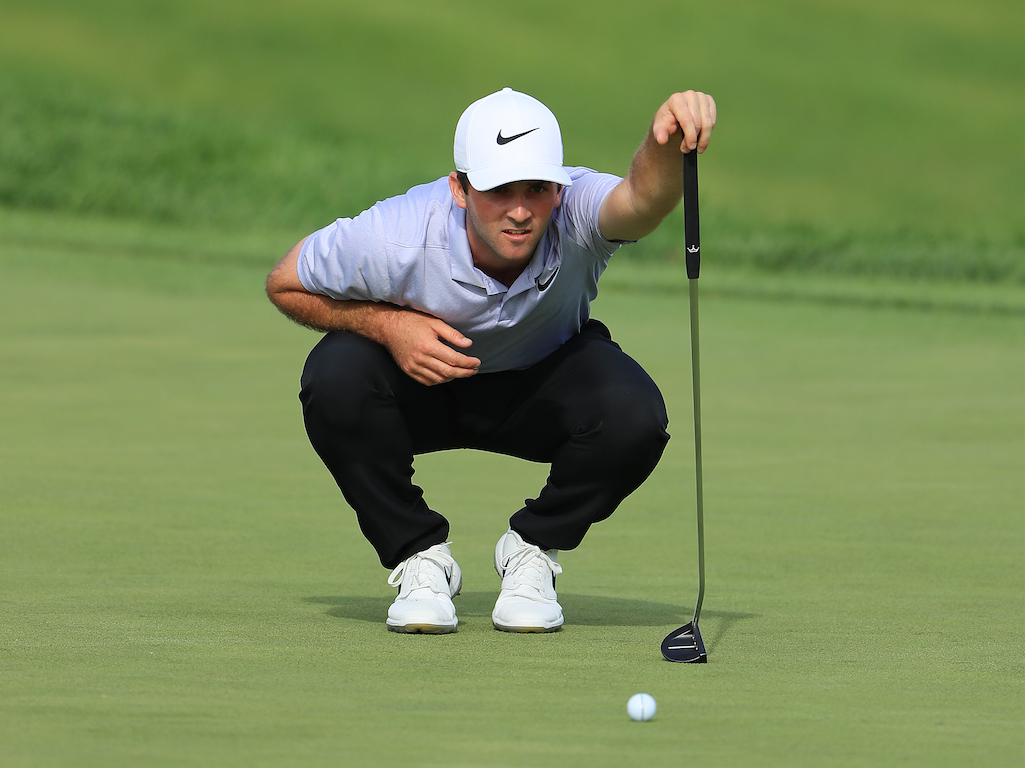
Editor’s note: Denny McCarthy (pictured) is the PGA Tour leader in strokes gained: putting picking up an average of .973 strokes on the field this season.
As we all know, putting is a part of the game far removed from the physical actions required to hit good drives, irons, and even pitch and chip shots. It should be simple, but my experience and feedback reveal that this might be the part of the game that drives more golfers batty than any other. I believe that is because it looks SO SIMPLE, but in fact, is not.
Adding to the “pressure” of putting is that success and failure is so abundantly clear. The balls goes in—SUCCESS. It doesn’t—FAILURE. With all other shots we hit, success is a matter of relativity, isn’t it? But with putting, your “failures” are right out in the open for all to see. And that implies an element of pressure that we don’t really appreciate.
Most of you don’t know that I began my golf club design career back in the early 1980s with a putter design called “Destiny.” It was the culmination of a lifetime of being a mediocre putter at best, and the result of very focused and dedicated research into the mechanics and mental aspect of putting. I read every putting book I could find and watched numerous videos to try to understand this aspect of the game that had been my glaring weakness. The Destiny was the first of over 100 putter designs and three putter patents before I became fixated on wedges and wedge design in about 1990.
In 2008, I actually wrote a book manuscript titled “The Natural Approach to Better Putting,” which I recently revisited and hope to have published by next spring. What this book attempts to do is show you how to optimize your own eye-hand coordination to make you into a better putter of the ball. I am 100 percent convinced that most golfers who struggle on the greens do so because they have allowed a preoccupation on the mechanics to dull their natural eye/hand coordination. And even a brief history of failures (i.e. short misses) makes being “natural” even more difficult.
Obviously, I cannot deliver an entire treatise on putting in a single blog post, and I have a virtual library of putting articles I wrote as “The Wedge Guy” back in the early 2000s; I will revive some of those that are just as relevant today. But what I can do here is give you a few basic tips that should help you improve your fortunes on the greens, regardless of your putting technique or equipment choice.
So here goes:
- It’s all about the target. Putting requires optimizing your eye/hand coordination, so that begins with an acute focus on the target itself. I have proven with my own research that having the hole painted all the way to the surface like they do for PGA Tour events allows your eyes to receive—and your mind to process—a much more vivid impression of the target. While you can’t get your course superintendent to do that, you can pick out a very small point to aim at and focus on for the stroke. All putts are straight. You can only affect the starting line of the putt, not its full curvature, so therefore, all putts must be hit at a specific point, right. And that means…
- The target is rarely the hole. I’m convinced most putts are missed to the low side because it is hard NOT to allow your visual focus to shift from your intended line on the high side back to the hole as the last thing before you make your stroke. But unless the putt is dead straight, you are always putting toward a specific point either right or left of the hole. Once you pick out that spot, if you will try to remove the hole itself from your focus and intently zero in on that spot that represents the starting line, you will find your success rate improving.
- All putts are “speed putts.” That just makes sense, right? One tip that I find very helpful after you have assessed the speed of the putt you have, is to “reset” your target spot to be either well short of the hole for what you believe will be a fast putt, to beyond the hole for those you think will be slower. But that spot has to always be on the starting line you have chosen not directly at the hole.
- The hands have different roles. I am firmly convinced that you putt from your shoulders but with the fingertips and thumb of your master hand. We simply do not do enough things in our lives to have a great feel “backhanding” the putt. But we do countless things every day that require eye/hand coordination with our master hand. And the most sensitive and “connected” nerve endings on your master hand are on the inside of your thumb and your forefinger. (See how those two surfaces connect when you touch them together – that’s by design.) This is where your “touch” is centered, so fully engage them. I believe the lead hand controls the putter, and the master fingertips control the path and speed.
- Finally, it’s about grip pressure. I worked with Ben Crenshaw for a few years and was amazed to see how lightly he held the putter. I believe you cannot hold the putter light enough, and the lighter you hold it, the better your touch.
Those are what I consider the basics, regardless of your putter choice or putting style—left-hand low, claw, conventional—it doesn’t matter as long as you employ these basic concepts. I look forward to your feedback, and let me know if you are interested in having me share more of my insights into putting, putter design, and selection.




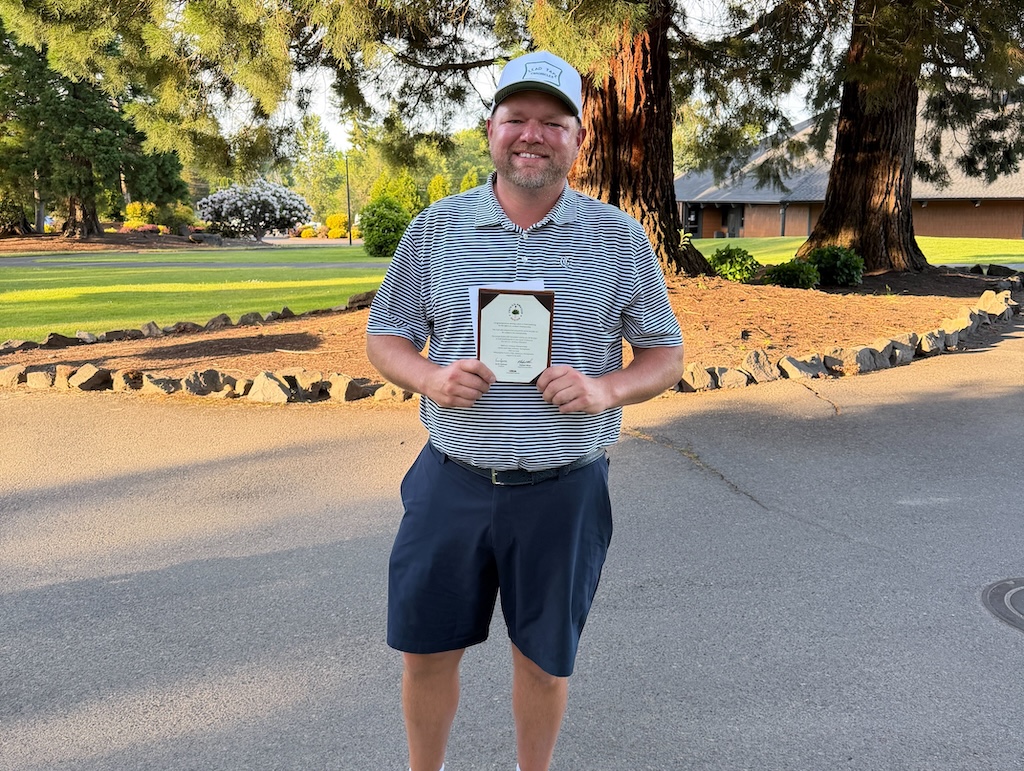
This past Monday, I played in the U.S. Amateur local qualifier at Rock Creek Country Club in Portland, Oregon. A full tee sheet from 7:30 a.m. to 1:55 p.m., the top 11 scores would make it to the U.S. Amateur final qualifying.
I teed off at 10:48 a.m.. With the 7:30 am tee time, you can get a feel for the leaders’ pace, and they were off and running on the challenging setup at Rock Creek.
View this post on Instagram
Getting to the highlight of the round on the par five 17th, a drive up the left side and 212 yards left to the front hole location. I took out a 5-iron with plans of middle of the green. The ball ended up 8 feet left of the hole, pin high. A slight downhill putt dropped in for an eagle 3 on the 17th. With the cut line looking to be anywhere from -2 to even par. This was the boost I had been waiting for all day.
With making par from the trees on 18, it was time to wait for a potential playoff with a posted score of one under par 71.
Three hours later, it was playoff time. 8 players for 6 spots. I made par on the playoff hole, which was good enough to advance to the U.S. Amateur final qualifying in July. USGA qualifiers sure deliver on all of the emotions in golf!
Club Junkie
Building my 2026 gamer WITB: Ranking the contenders and new putter projects – Club Junkie Podcast

The annual What’s In The Bag build is underway, and on this episode of Club Junkie, Brian breaks down the clubs currently leading the race for a spot in his 2026 gamer setup. From drivers and fairway woods to irons, wedges, and shafts, he ranks the equipment that’s performing best and explains what’s separating the front runners from the rest of the field.
Brian also heads into the workshop to discuss several putter projects currently on the bench. From head options and shaft choices to build ideas and testing plans, he shares what he’s working on and which putters could become serious contenders for the bag this season.
If you’re a gear junkie who loves equipment testing, club building, and the never-ending pursuit of the perfect setup, this episode is for you.
Follow Club Junkie:
Instagram: @clubjunkiepod
TikTok: @clubjunkiepod
Threads: @clubjunkiepod
X: @ClubJunkiePod
Club Junkie
Tour Edge Exotics mini driver review + TaylorMade Spider ZT Max first look – Club Junkie

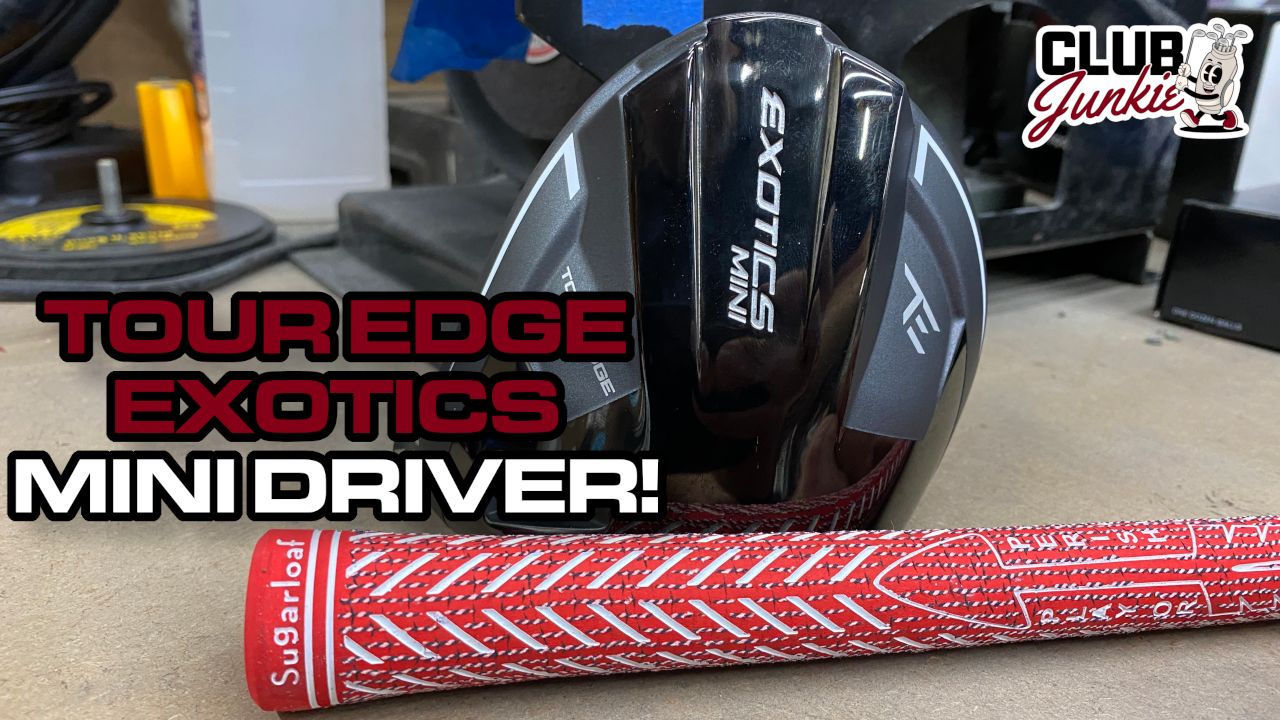
On this episode of Club Junkie, I put the new Tour Edge Exotics Mini Driver to the test and break down the performance, forgiveness, distance, and where it fits compared to a traditional driver or strong fairway wood. If you have been curious about adding a mini driver to the bag, this one is worth a look.
I also dive into the new TaylorMade Spider ZT Max putter that was recently spotted and discuss the growing zero torque putter trend. Plus, there is a closer look at the new Project X Titan Yellow shaft showing up on the PGA Tour and what makes it different from other profiles currently out there.

What’s the story behind Webb Simpson’s custom-stamped irons?

Memorial Tournament Tour Report: Rory McIlroy, Cameron Young switch up drivers, and more

Cadillac Championship Tour Report: Spieth’s sizable changes, McLaren Golf launches, and more

Russell Henley’s winning WITB: 2026 Charles Schwab Challenge

Kristoffer Reitan’s winning WITB: 2026 Truist Championship

Best irons 2026: Best irons overall, most forgiving irons, and more

J.T. Poston’s winning WITB: 2026 Memorial Tournament

Aaron Rai’s winning WITB: 2026 PGA Championship

Cameron Young’s winning WITB: 2026 Cadillac Championship

Details on Jason Day’s latest prototype Avoda iron setup


Ryan Palmer WITB 2026 (June)
Driver: Callaway Quantum Triple Diamond (9 degrees) Shaft: Project X HZRDUS Smoke Blue RDX 60 TX 3-wood: TaylorMade Qi10 (15 degrees) Shaft:...


Bud Cauley WITB 2026 (June)
Bud Cauley had >14 clubs in his bag when photographed prior to the Memorial Tournament. Driver: Titleist GTS2 (8 degrees) Shaft: Fujikura...


Hannah Green WITB 2026 (June)
Driver: Titleist GTS3 (10 degrees, D4 SureFit setting) Shaft: Mitsubishi Chemical Diamana RB 53 S 3-wood: Titleist GT3 (15 degrees,...


Asterisk Talley WITB 2026 (June)
Driver: TaylorMade Qi4D (9 degrees) Shaft: Fujikura Ventus Blue 6 S 3-wood: TaylorMade Qi4D (16.5 degrees) Shaft: Fujikura Ventus Blue...
-
 Equipment6 days ago
Memorial Tournament Tour Report: Rory McIlroy, Cameron Young switch up drivers, and more
-
 News2 weeks ago
Russell Henley’s winning WITB: 2026 Charles Schwab Challenge
-
 Equipment3 days ago
Best irons 2026: Best irons overall, most forgiving irons, and more
-
 Whats in the Bag4 days ago
J.T. Poston’s winning WITB: 2026 Memorial Tournament
-
 Equipment1 week ago
Details on Jason Day’s latest prototype Avoda iron setup
-

 Equipment3 weeks ago
CJ Cup Byron Nelson Tour Report: Koepka and Kim’s newest putters finally get hot
-

 News2 weeks ago
Charles Schwab Challenge Tour Report: MacIntyre, Åberg and Spaun all switch putters, TaylorMade launches new Spider
-

 Equipment2 weeks ago
Details on J.J. Spaun’s surprise putter switch


John J. Reed
Aug 2, 2019 at 1:58 am
“Hello” from Australia, Terry. Love that article! I found it concise and lucid!
I have a ‘collection’ of putters that I have tried over the (say) 65 years I have been playing golf. Only two were fitted! Recently, I was fitted for that second one and, somehow, after THAT fitting, now ‘feel’ I have a putter in which I can be confident is ‘right’ for me and my stroke.
Depending on the position of the ball, of course … I occasionally make that single putt! … I usually make NO MORE than two putts per hole from distance … and very rarely EVER three-putt!
After a fair absence, I’m currently returning to golf so, for my putting efforts, this article will be a focus for me!
Many thanks … with best regards … John Reed
Walt Pendleton
Aug 1, 2019 at 6:51 pm
Good afternoon Terry…hope you’re doing well. As you know, it’s my belief that consistent putting has three basic elements: accurate alignment to intended starting point, extreme control of ball’s speed around the cup, and excellent green reading skills. Here’s why…if you can’t read the putt you can’t aim the putter face, if you can’t control the ball’s speed at the cup it matters not where you aim the putter and finally if you can’t aim the putter accurately…you’re basically putting blind! Conclusion for most golfers…if your practicing putting w/o a training system that can improve all three of skills, it’s normal to have 40 plus putts per round and a freak’n miracle when you don’t. FYI – there is a solution at Nside10.com
@Plotto66
Aug 1, 2019 at 5:51 am
I miss a bit more on aiming. To truly trust your “straight putt” you need to be able to start the out on the right line. I.e. executing a proper aim.
Cullen Jacobs
Jul 31, 2019 at 3:56 pm
Joining your group multiple times in Victoria Golf Course. You are guy who has admitted to hate putting and on several occasions, refused to putt. How do you respond? Why write a story on putting when it is something you do not even do in golf?
Thomas Seisser
Jul 31, 2019 at 3:40 pm
I still use my Scor wedges. Some great information from an acknowledged golf genius. Thanks Terry!
always2putts
Jul 31, 2019 at 2:42 am
This was golden, I have to test the small point as an aimpoint and trying the feeling of putting with my master hands thumb and index finger! I am so tired of missing my 1’st putts by an inch all the freaking time.
Nick
Jul 30, 2019 at 7:49 pm
I agree a lot with this article. One of the things I focus on when putting is utilizing my trail hand to feel like I’m passing the balk towards the hole. I also imagine the putter as a paint brush and that I’m painting a line towards my target. I think I started focusing a lot on that in college after I saw a special on how David Toms putted and liked his philosophy.