
Opinion & Analysis
The Wedge Guy: Scoring Series Part 2: Pitching


As I wrote two weeks ago, I consider there to be five basic elements to “scoring range performance”, and I dove into the full swing shorts irons and wedges last week. This week I’m going to address “pitching,” which I define as those shots with your wedges that require much less than a full swing. In my opinion, this is the most difficult part of golf to master, but the good news is that it is within reach of every golfer, as physical strength is pretty much neutralized in this aspect of the game.
Before I get into this, however, please understand that I am writing a weekly article here, and do not for a minute think that I can deliver to you the same level of insight and depth that you can get from any of the great books on the short game that are available. There are some genuine “gurus” out there who have made a living out of writing books and sharing their expertise—Dave Pelz, Stan Utley, et al. One of my favorites from a long time ago is Tom Watson’s “Getting Up and Down.” The point is, if you are committed to improving this part of your game, it will take much more than a few hundred words from a post of mine to get you there.
I will also suggest that there are no short cuts to an effective short game. I know of no other way to become a deadly chipper and pitcher of the ball than to invest the time to learn a sound technique and develop the touch skills that allow you to hits an endless variety of shots of different trajectories, distances and spin rates. As the old saying goes: “If it were easy everyone would do it.” In my opinion, it is mostly short game skills that separate good players from average, and great ones from good. Those greenside magicians we see on TV every week didn’t get there by spending minimal time learning and practicing these shots.
So, with that “disclaimer” set forth, I will share my thoughts on the basic elements of good pitching technique, as I see it.
As with any golf shot, a sound and proper set up is crucial to hitting great pitch shots
consistently. I believe great pitch shots are initiated by a slightly open stance, which allows you
to clear your body through impact and sets up the proper swing path, as I’ll explain later.
Your weight distribution should be favored to your lead foot, the ball should be positioned for the shot you want to hit (low, medium or high) and maybe most importantly, your hands must be positioned so that they are hanging naturally from your shoulders. I firmly believe that great pitch shots cannot be hit if the hands are too close or too far from your body.
The easy way to check this is to release your left hand from the grip, and let it hang naturally, then move the club so that the left hand can take its hold. The clubhead will then determine how far from the ball you should be. To me, that is the ideal position from which to make a good pitch shot.
Second is the club/swing path. I believe the proper path for good pitch shots has the hands moving straight back along a path that is nearly parallel to the target line, and the through swing moving left after impact. This path is set up by the more open stance at address. The gurus write extensively about swing path, and they all seem to pretty much agree on this as a fundamental. Taking the club back too far inside the line is probably more damaging than too far outside, as the latter is really pretty hard to do actually. My observations of recreational golfers indicate that the inside backswing path is “set up” by the ball being too close or too far from their feet at address, as I explained earlier.
I also believe (from observation and experience) that many recreational golfers do not engage their torso enough in routine pitch shots. This is NOT an arm swing; a rotation of the shoulders is tantamount to good pitch shots, and the shoulders must keep rotating through impact. Stopping the rotation at impact is, in my observation, the main cause of chunks and bladed shots, as that causes the clubhead to move past the hands and get out of plane.
Finally, I’ll address swing speed. Again, in my observation, most recreational golfers get too quick with this part of the game. The swing is shorter for these shots, but that should not make it quicker. One of my favorite analogies is to compare golf to a house painter. In the wide-open areas, he uses a sprayer or big roller for power, and works pretty darn quickly. As he begins to cut in for the windows and doors, he chooses a smaller brush and works much more slowly and carefully. Finally, he chooses very specialized trim brushes to paint the window and door trim, baseboards, etc. I like to compare our wedges to the painter’s trim brushes. Slow and careful wins.
I think learning distance control is the hardest part of becoming a good pitcher of the ball. And there are many approaches to this part of the equation. My opinion is that your expectations and therefore your approach to this aspect of it should be commensurate with your willingness to spend the time on the range or course. And I just do not know of a short cut, I’m sorry to say. But I will share something that I’ve learned works pretty well and is reasonably easy to learn.
First, find a “half swing” length that feels comfortable to you, and by that I mean repeatable. For most, it seems to be where the lead arm is about parallel to the ground. From that position, I like to think of three different downswing speeds – country road (i.e. 50 mph), neighborhood driving (30 mph) and school zone (15 mph). We’ll leave freeway speed for the driver, and regular highway speed for our fairways, hybrids and irons.
If you can internalize what these three speeds feel like for you, it only takes a little time to figure out how far each wedge goes at these three speeds, and then you can further dissect this by gripping down on each wedge to cut those gaps even tighter.
Again, I’m limited by space in this blog, but these ideas will hopefully get you thinking about meaningful practice and implementation. And in no way, are these few words intended to cover the subject as thoroughly as Pelz, Utley and others have done in series of books and videos. The more you learn and practice, the better you will get. That’s just the facts.




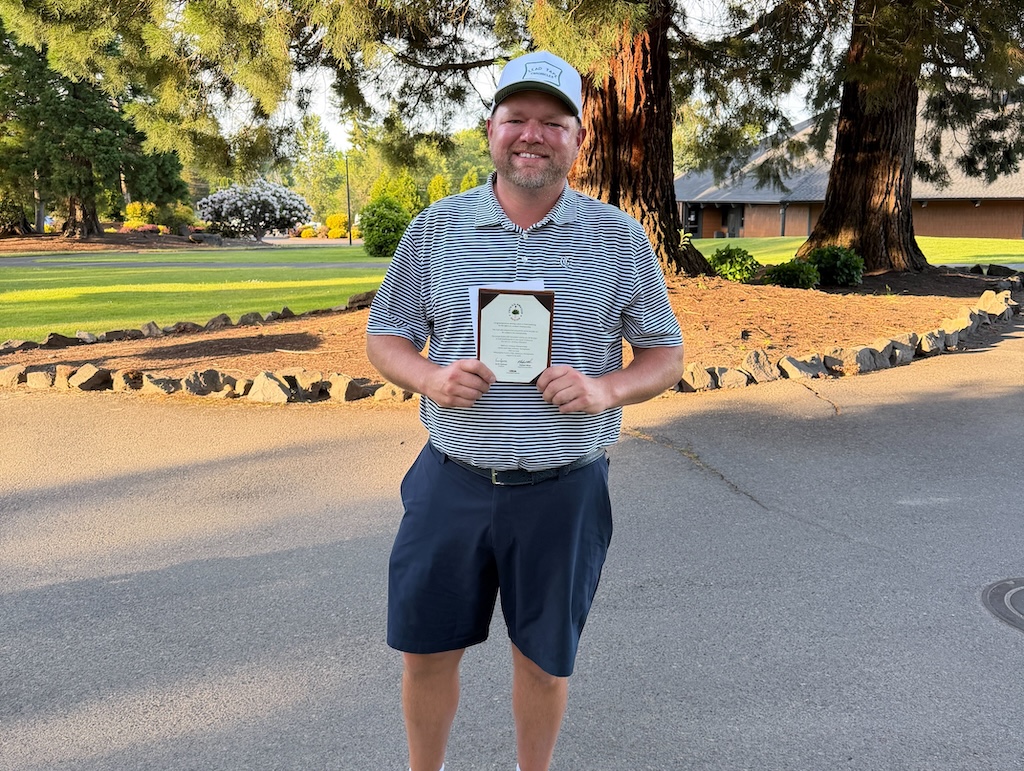
This past Monday, I played in the U.S. Amateur local qualifier at Rock Creek Country Club in Portland, Oregon. A full tee sheet from 7:30 a.m. to 1:55 p.m., the top 11 scores would make it to the U.S. Amateur final qualifying.
I teed off at 10:48 a.m.. With the 7:30 am tee time, you can get a feel for the leaders’ pace, and they were off and running on the challenging setup at Rock Creek.
View this post on Instagram
Getting to the highlight of the round on the par five 17th, a drive up the left side and 212 yards left to the front hole location. I took out a 5-iron with plans of middle of the green. The ball ended up 8 feet left of the hole, pin high. A slight downhill putt dropped in for an eagle 3 on the 17th. With the cut line looking to be anywhere from -2 to even par. This was the boost I had been waiting for all day.
With making par from the trees on 18, it was time to wait for a potential playoff with a posted score of one under par 71.
Three hours later, it was playoff time. 8 players for 6 spots. I made par on the playoff hole, which was good enough to advance to the U.S. Amateur final qualifying in July. USGA qualifiers sure deliver on all of the emotions in golf!
Club Junkie
Building my 2026 gamer WITB: Ranking the contenders and new putter projects – Club Junkie Podcast

The annual What’s In The Bag build is underway, and on this episode of Club Junkie, Brian breaks down the clubs currently leading the race for a spot in his 2026 gamer setup. From drivers and fairway woods to irons, wedges, and shafts, he ranks the equipment that’s performing best and explains what’s separating the front runners from the rest of the field.
Brian also heads into the workshop to discuss several putter projects currently on the bench. From head options and shaft choices to build ideas and testing plans, he shares what he’s working on and which putters could become serious contenders for the bag this season.
If you’re a gear junkie who loves equipment testing, club building, and the never-ending pursuit of the perfect setup, this episode is for you.
Follow Club Junkie:
Instagram: @clubjunkiepod
TikTok: @clubjunkiepod
Threads: @clubjunkiepod
X: @ClubJunkiePod
Club Junkie
Tour Edge Exotics mini driver review + TaylorMade Spider ZT Max first look – Club Junkie

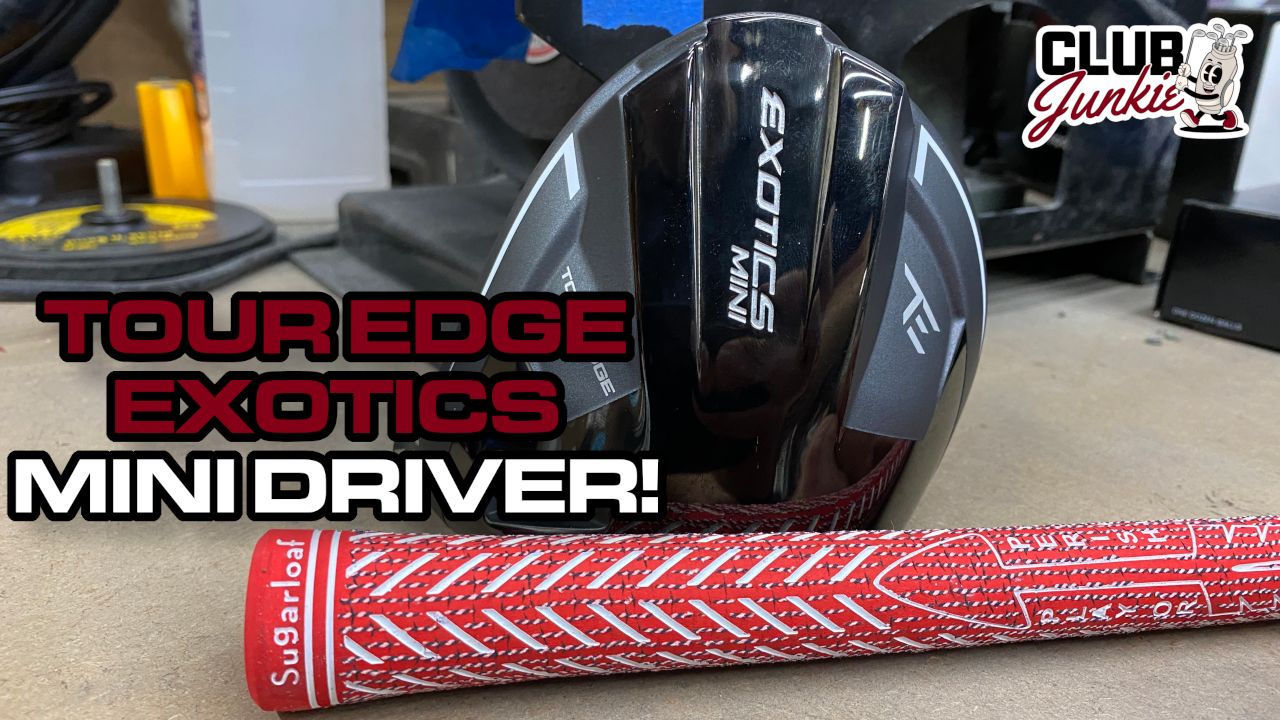
On this episode of Club Junkie, I put the new Tour Edge Exotics Mini Driver to the test and break down the performance, forgiveness, distance, and where it fits compared to a traditional driver or strong fairway wood. If you have been curious about adding a mini driver to the bag, this one is worth a look.
I also dive into the new TaylorMade Spider ZT Max putter that was recently spotted and discuss the growing zero torque putter trend. Plus, there is a closer look at the new Project X Titan Yellow shaft showing up on the PGA Tour and what makes it different from other profiles currently out there.

What’s the story behind Webb Simpson’s custom-stamped irons?

Memorial Tournament Tour Report: Rory McIlroy, Cameron Young switch up drivers, and more

Cadillac Championship Tour Report: Spieth’s sizable changes, McLaren Golf launches, and more

Russell Henley’s winning WITB: 2026 Charles Schwab Challenge

Kristoffer Reitan’s winning WITB: 2026 Truist Championship

Best irons 2026: Best irons overall, most forgiving irons, and more

J.T. Poston’s winning WITB: 2026 Memorial Tournament

Aaron Rai’s winning WITB: 2026 PGA Championship

Cameron Young’s winning WITB: 2026 Cadillac Championship

Details on Jason Day’s latest prototype Avoda iron setup


Ryan Palmer WITB 2026 (June)
Driver: Callaway Quantum Triple Diamond (9 degrees) Shaft: Project X HZRDUS Smoke Blue RDX 60 TX 3-wood: TaylorMade Qi10 (15 degrees) Shaft:...


Bud Cauley WITB 2026 (June)
Bud Cauley had >14 clubs in his bag when photographed prior to the Memorial Tournament. Driver: Titleist GTS2 (8 degrees) Shaft: Fujikura...


Hannah Green WITB 2026 (June)
Driver: Titleist GTS3 (10 degrees, D4 SureFit setting) Shaft: Mitsubishi Chemical Diamana RB 53 S 3-wood: Titleist GT3 (15 degrees,...


Asterisk Talley WITB 2026 (June)
Driver: TaylorMade Qi4D (9 degrees) Shaft: Fujikura Ventus Blue 6 S 3-wood: TaylorMade Qi4D (16.5 degrees) Shaft: Fujikura Ventus Blue...
-
 Equipment6 days ago
Memorial Tournament Tour Report: Rory McIlroy, Cameron Young switch up drivers, and more
-
 News2 weeks ago
Russell Henley’s winning WITB: 2026 Charles Schwab Challenge
-
 Equipment3 days ago
Best irons 2026: Best irons overall, most forgiving irons, and more
-
 Whats in the Bag4 days ago
J.T. Poston’s winning WITB: 2026 Memorial Tournament
-
 Equipment1 week ago
Details on Jason Day’s latest prototype Avoda iron setup
-
 Equipment3 weeks ago
CJ Cup Byron Nelson Tour Report: Koepka and Kim’s newest putters finally get hot
-

 News2 weeks ago
Charles Schwab Challenge Tour Report: MacIntyre, Åberg and Spaun all switch putters, TaylorMade launches new Spider
-
 Equipment2 weeks ago
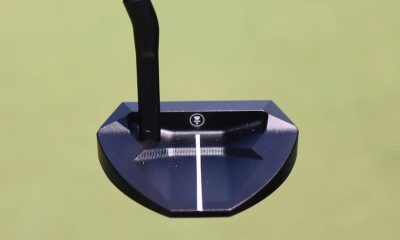
Details on J.J. Spaun’s surprise putter switch


Jamho3
Jul 17, 2019 at 3:33 pm
Nicely done TK thanks!
Ready for the TK20’s now
Robert
Jul 17, 2019 at 11:35 am
Well done Terry. A lot of wisdom shared here for better short pitching.