
Opinion & Analysis
Preventing injuries on the LPGA Tour: A case study with Madelene Sagstrom

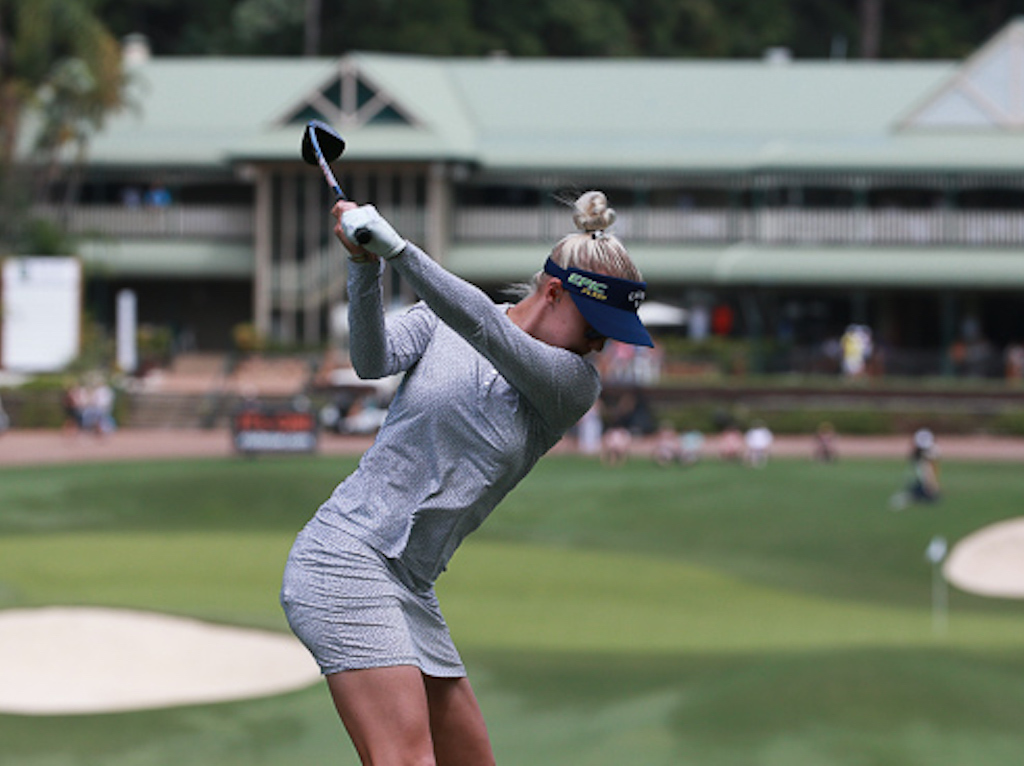
This article is co-authored with Anne-Lise Bidou.
Anne-Lise is a French physiotherapist (trained in France and Australia), currently working on the LPGA Tour. Her current stable of players includes Hannah Green, Lizette Salas, Morgan Pressel, Paula Creamer, Mel Reid, Maria Fassi, Madelene Sagstrom, Mariah Stackhouse, Alena Sharp, Ashleigh Buhai, Laura Gonzalez Escallon and Tiffany Chan.
You can follow Anne-Lise and her life / work on tour – Instagram and Facebook

Anne-Lise Bidou – Physio 4 Golf
Source of Injuries
My primary role as a physiotherapist working on tour, is to keep my players injury free. I’m obsessed with prevention over cure, and really want to avoid “treating” my players for constant niggles and issues. There are, of course, several factors that contribute to injury risk, but the one that is most important and often neglected or misunderstood, is stability. Creating stable joints and spinal segments is all about activating and strengthening deep muscles, whilst holding good posture or position.
In my experience working with elite female players, a lack of stability in the spine and especially around the shoulder girdle, combined with poor upper body strength, is the cause of many of the common injuries that occur in the upper body (wrist, shoulder, neck and upper back/ribs).
All golfers, but especially highly skilled players, will do anything to try and make great contact with the ball. If that means they have to contort their body into an unnatural position, then they will! Now if they repeat that contortion thousands of times, without having great strength and stability around the shoulder girdle, those common injury sites are going to take a beating!

Michelle Wie has recently undergone season-ending wrist surgery
Key for Prevention
One of the key stabilizers for the shoulder girdle is actually located on our back: the shoulder blade (scapula) has a huge influence on the shoulder joint and its mechanics, which has a ripple effect up and down the chain (neck, elbow, wrist). Gaining control and stability of the shoulder blade will contribute hugely to removing strain from these common injury sites, and usually results in better movement and swing mechanics also.
This is why a key focus for my approach to creating more robust players, is to really increase the activation and strength of the deep muscle system surrounding the shoulder blade. Usually, Trapezius, Serratus Anterior and Rhomboids get a lot of attention—they are often weak and not controlled very well.

The muscles that attach to the shoulder blade
Madelene
A good example of how I aim to address this problem with my players is the work I have done with Madelene Sagstrom in 2019. You may recognise Madelene from her incredible rookie year as a pro, when she dominated the Symetra Tour, smashing the tour’s performance records on her way to the LPGA Tour.
Last year Madelene suffered from right shoulder pain (shoulder impingement), and when we started working together in February this year, she presented with reduced shoulder range of motion, due to a combination of poor tissue extensibility and altered motor control. These are often the result of common movement compensations seen when a player lacks strength in their rotator cuff muscles and scapular stabilizers.
For Madelene, this resulted in severe scapular dyskinesia (lack of control of the shoulder blade) and certainly wasn’t helped by significant general upper body weakness.

Sagstrom racked up 11 top 5 finishes in 15 starts on the Symetra Tour
Lots of reps combined with that weakness and instability was a significant factor for Madelene and her shoulder issues; she is very dedicated with her practice and spends a lot of time at the range (pretty common for a Swede!). She also moves the club very fast (11th on LPGA Tour in driving distance), and adding speed to any unstable system only aggravates issues.
On the plus side, her high work high ethic also applies to her gym work and guided rehab exercises; Madelene really enjoys training and working out with intensity. All I needed to do was introduce some key principles and equipment in order to make sure she was able to focus on building strength and stability around that all-important shoulder, upper spine and scapula.
Exercise Examples
Our sessions usually include some mobility exercises, cardio, movement prep including activation exercises with the GravityFit TPro and then strength/power exercises, during which we also use the GravityFit TPro, mainly for postural feedback and axial loading.
With so much else going on during a tournament week, workout time is limited and precious on tour. So I find exercises that kill two or even three birds with one stone really effective. The example below is part core stability (narrow base of support), part shoulder stability (row movement and bracing), part postural awareness (GravityFit TPro on Madelene’s back).
The exercise below is significantly harder than Madelene is making it look, and one of my favorite ways to train the elements that I see as critical to preventing upper-body injuries.
Below is another of my favorite multi-purpose gym moves; here Madelene performs a reverse lunge with cable wood chop. This time we are hitting those areas in a different way: core strength (rotational movement under load, using shifting and narrow base of support: the lunge), shoulder stability (bracing against wide grip on the bar), postural awareness via the GravityFit TPro. We also get additional lower body balance and stability work via the lunge component.
Since we started working together, incorporating the GravityFit TPro into exercises such as those demonstrated above, Madelene has improved her scapular stability significantly. This has helped to eliminate her shoulder pain, improved her movement quality and even contributed to an increase in clubhead speed of 2 mph!
If you suffer from upper extremity injury, or simply want to move a little better in your golf swing, then I highly recommend addressing the stability around your shoulder blade and upper back, along with improving overall upper body strength and posture.







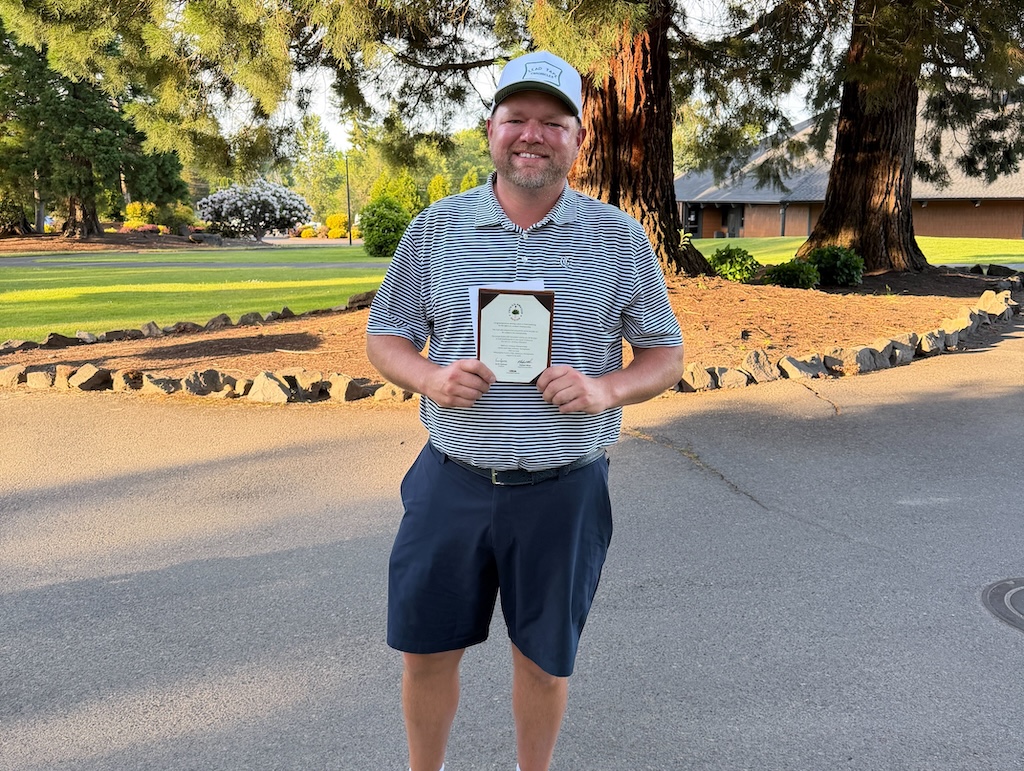
This past Monday, I played in the U.S. Amateur local qualifier at Rock Creek Country Club in Portland, Oregon. A full tee sheet from 7:30 a.m. to 1:55 p.m., the top 11 scores would make it to the U.S. Amateur final qualifying.
I teed off at 10:48 a.m.. With the 7:30 am tee time, you can get a feel for the leaders’ pace, and they were off and running on the challenging setup at Rock Creek.
View this post on Instagram
Getting to the highlight of the round on the par five 17th, a drive up the left side and 212 yards left to the front hole location. I took out a 5-iron with plans of middle of the green. The ball ended up 8 feet left of the hole, pin high. A slight downhill putt dropped in for an eagle 3 on the 17th. With the cut line looking to be anywhere from -2 to even par. This was the boost I had been waiting for all day.
With making par from the trees on 18, it was time to wait for a potential playoff with a posted score of one under par 71.
Three hours later, it was playoff time. 8 players for 6 spots. I made par on the playoff hole, which was good enough to advance to the U.S. Amateur final qualifying in July. USGA qualifiers sure deliver on all of the emotions in golf!
Club Junkie
Building my 2026 gamer WITB: Ranking the contenders and new putter projects – Club Junkie Podcast

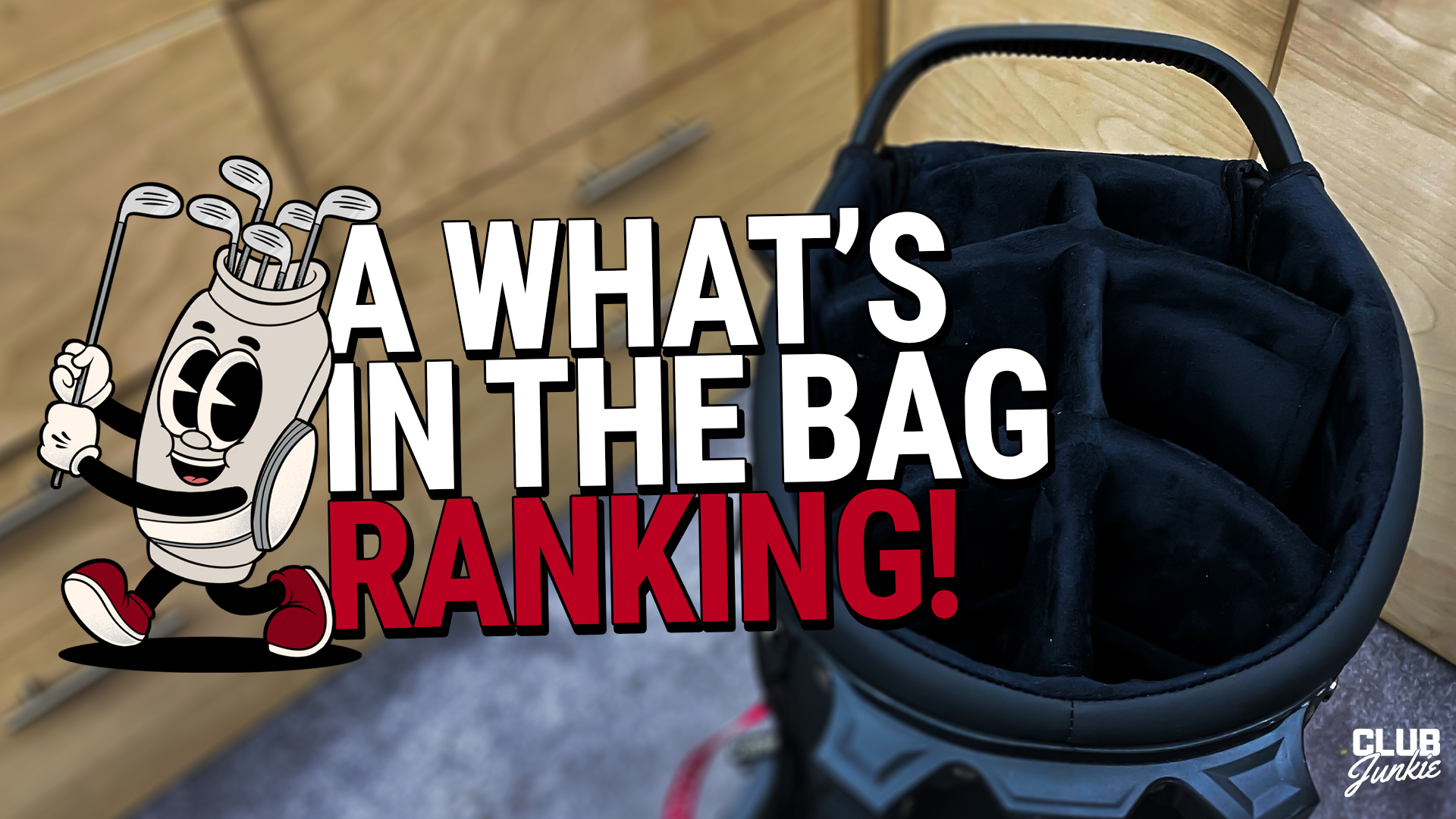
The annual What’s In The Bag build is underway, and on this episode of Club Junkie, Brian breaks down the clubs currently leading the race for a spot in his 2026 gamer setup. From drivers and fairway woods to irons, wedges, and shafts, he ranks the equipment that’s performing best and explains what’s separating the front runners from the rest of the field.
Brian also heads into the workshop to discuss several putter projects currently on the bench. From head options and shaft choices to build ideas and testing plans, he shares what he’s working on and which putters could become serious contenders for the bag this season.
If you’re a gear junkie who loves equipment testing, club building, and the never-ending pursuit of the perfect setup, this episode is for you.
Follow Club Junkie:
Instagram: @clubjunkiepod
TikTok: @clubjunkiepod
Threads: @clubjunkiepod
X: @ClubJunkiePod
Club Junkie
Tour Edge Exotics mini driver review + TaylorMade Spider ZT Max first look – Club Junkie

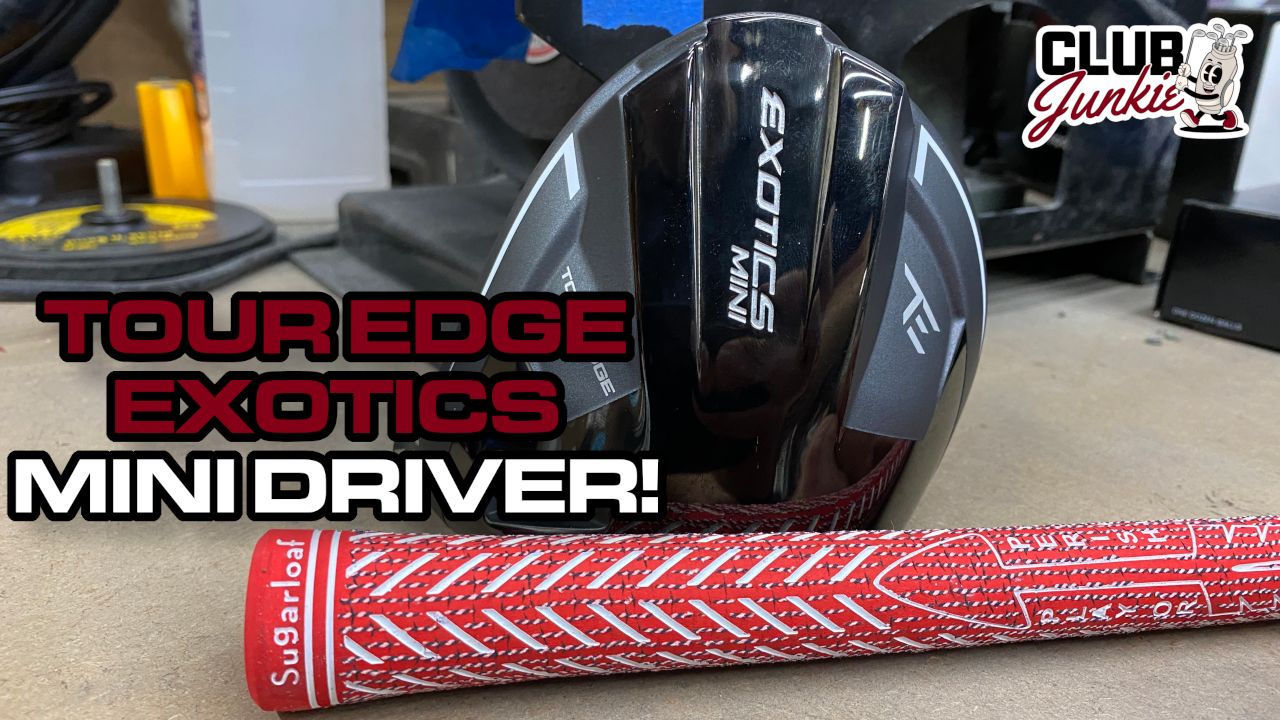
On this episode of Club Junkie, I put the new Tour Edge Exotics Mini Driver to the test and break down the performance, forgiveness, distance, and where it fits compared to a traditional driver or strong fairway wood. If you have been curious about adding a mini driver to the bag, this one is worth a look.
I also dive into the new TaylorMade Spider ZT Max putter that was recently spotted and discuss the growing zero torque putter trend. Plus, there is a closer look at the new Project X Titan Yellow shaft showing up on the PGA Tour and what makes it different from other profiles currently out there.

Justin Rose WITB 2026 (April): Full WITB breakdown with new McLaren irons

What’s the story behind Webb Simpson’s custom-stamped irons?

Memorial Tournament Tour Report: Rory McIlroy, Cameron Young switch up drivers, and more

Cadillac Championship Tour Report: Spieth’s sizable changes, McLaren Golf launches, and more

Russell Henley’s winning WITB: 2026 Charles Schwab Challenge

Kristoffer Reitan’s winning WITB: 2026 Truist Championship

Aaron Rai’s winning WITB: 2026 PGA Championship

J.T. Poston’s winning WITB: 2026 Memorial Tournament

Best irons 2026: Best irons overall, most forgiving irons, and more

Cameron Young’s winning WITB: 2026 Cadillac Championship


Bud Cauley WITB 2026 (June)
Bud Cauley had >14 clubs in his bag when photographed prior to the Memorial Tournament. Driver: Titleist GTS2 (8 degrees) Shaft: Fujikura...


Hannah Green WITB 2026 (June)
Driver: Titleist GTS3 (10 degrees, D4 SureFit setting) Shaft: Mitsubishi Chemical Diamana RB 53 S 3-wood: Titleist GT3 (15 degrees,...


Asterisk Talley WITB 2026 (June)
Driver: TaylorMade Qi4D (9 degrees) Shaft: Fujikura Ventus Blue 6 S 3-wood: TaylorMade Qi4D (16.5 degrees) Shaft: Fujikura Ventus Blue...


Brianna Do WITB 2026 (June)
Driver: Callaway Quantum Triple Diamond (9 degrees) Shaft: KBS PGW 3-wood: Callaway Elyte Titanium (15 degrees) Shaft: KBS PGW 5-wood:...
-
 Equipment6 days ago
Memorial Tournament Tour Report: Rory McIlroy, Cameron Young switch up drivers, and more
-
 News1 week ago
Russell Henley’s winning WITB: 2026 Charles Schwab Challenge
-
 Whats in the Bag3 days ago
J.T. Poston’s winning WITB: 2026 Memorial Tournament
-
 Equipment3 days ago
Best irons 2026: Best irons overall, most forgiving irons, and more
-

 Equipment1 week ago
Details on Jason Day’s latest prototype Avoda iron setup
-
 Equipment3 weeks ago
CJ Cup Byron Nelson Tour Report: Koepka and Kim’s newest putters finally get hot
-

 News2 weeks ago
Charles Schwab Challenge Tour Report: MacIntyre, Åberg and Spaun all switch putters, TaylorMade launches new Spider
-
 Equipment2 weeks ago
Details on J.J. Spaun’s surprise putter switch


Trevor Montgomery
Aug 16, 2019 at 5:38 pm
Having worked with tour players and winners on the USPGA and European tours for the last 20 years I find that scapula stability is a key component that needs to be assessed and addressed appropriately to reduce injury risk and improve performance and consistency. Addressing scapula control issues can lead to increases in trunk rotational range by upward of 20% and certainly decreases injury risk to segments above and below. Kibbler reported that 68-100% of people with should joint problems had concurrent scapula dyskinesia. It is my experience that scapula stability is often unaddressed with athletes – great article for highlighting this important segment.
ZQ
Aug 1, 2019 at 12:15 pm
Shoulder girdle main issue for injuries LOL!
Back, hips, and elbow/wrist = way more prominent. Terrible article.
MhtLion
Aug 1, 2019 at 6:15 pm
How I’m reading the article is that because typical females have week shoulder girdles which provide the stability, they tend to overuse back, hips, elbow, and writs, and end up injuring those.
North Hinkle
Jul 31, 2019 at 10:28 pm
I find this article limited in its discussion, specifically to the upper body and shoulder. Almost all of my injuries are knee and ankle and are due to core weakness creating stress on the lead leg joints. It is typical for men to have leg injuries when their core is weak (note Steph Curry his first 2 seasons in the NBA until he fixed his core).
When I had good core, my strain was always the lead shoulder infraspinatinus – it would get worn out mid season and I just had to deal with it.
Overall, I just think this article lacks depth and general applicability. A bunch of talk about LPGA players (women) having weak upper bodies, and then one story about a player the author helped.
I find no unique insight or advancement preventing golf injury other than LPGA players pay the author money. Then again, LPGA players have believed in KT tape and I remember seeing a stupid number of PGA players wearing copper bracelets.
Enough said.