
Opinion & Analysis
It takes a village: How to improve at golf


Roy: I’m catching it on the hosel, right?
Romeo: Yeah right, right, right.
Roy: Moving my head?
Romeo: Yeah
Roy: I’m laying it off?
Romeo: Well that too.
Roy: I’m pronating.
Romeo: Well you’re not supinating.
Roy: I’m clearin too early, I’m clearin too late. My God, my swing feels like an unfoldin lawn chair!
Romeo: All right…take all your change and put it in your left-hand pocket. Go on, do it Roy.
Roy: All right
Romeo: Alright now, tie your…left shoe in a double knot.
Roy: Tie my left shoe?
Romeo: Right now Roy, do it! Turn the hat around backwards. Turn your hat around. Do it, Roy! Now take this tee and stick it …[pause] …behind your left ear.
Roy: Stick it…I look like a fool!
Romeo: Well what the hell you think you look like shootin them chili peppers up Lee Janzen’s ass? And you do it right now or I swear to God I’m gonna quit. I swear to God I’ll quit.
Roy: All right
Romeo: All Right, good. Now, Take this little ball, and hit it the hell up the fairway. You’re ready…[sigh]
[Roy hits the ball straight]
Roy: How’d I do that?
Romeo: Because you’re not thinking about shankin, you’re not thinkin about the Doctor Lady. You’re not thinking period. You’re just looking like a FOOL!, and you’re hitting the ball pure and simple…
Roy: That’s it?
Romeo: Yeah, That’s it. Your BRAIN was getting in the way.
We are all on this golfing journey together and sometimes, okay, a lot of times, we need a little help from our friends on GolfWRX. Even the great ball-striker Roy “Tin-Cup” McAvoy needs swing knowledge dropped on him, and he obviously needs cabeza training performed by his “Doctor Lady” head shrink.
Romeo does a masterful job of removing the technical jargon and gets Tin Cup to stop getting his “brain in the way”. But there’s more to golf than some on range swing band-aides. Roy didn’t almost win the U.S. Open on his own; he had help, a lot of help. We too need help to fully understand the swing like Roy does, understand psychology, train our moves, and even more importantly, take all this knowledge, simplify it, and “get the ball up the fairway”.
Where do WE, #AverageJoeGolfers and #AverageJaneGolfers, go if we don’t have Romeo as a caddy, a Doctor Lady psychologist, or a “Team” like Jordan? It Takes a Village, so we build one. Reading about golf on GolfWRX is just one very small aspect of building your Village and improving your game. We need knowledge AND we need to arm ourselves with a host of skillsets and build our own Village on the cheap, particularly since we don’t have Tour Player bankrolls?
Each part of your Village can be thought of as a cog in a machine, and if you remove a cog, or it gets rusty or doesn’t fit right…you get the picture, your Village won’t help you hit the ball straight or score well. While adding additional villagers is important, to improve, you need to have exposure to every one of the following
factors.
1. Find a Coach – My Golf Coach, Tim Overman, is my friend and has a diversified set of golf knowledge from various sources, aka a high #Golf-IQ. He’s also someone with good communication skills and has a ‘Village Philosophy’ as opposed to a “My Way” of doing things. He is a voracious researcher of the golf swing, is agnostic to one “swing theory”, and isn’t afraid of the process of creative destruction, which means he’s constantly searching for ways to get better and utilize input from a multitude of sources. [Don’t get me wrong, he isn’t wavering and doesn’t change my move each week, he is simply a knowledge sponge.] He listens more than he speaks, has a training plan that is focused on making students “do the reps”, and participates in playing lessons and situational practice routines with each of his students. Tim also explains the “why?” of what he’s teaching, and arms me with the knowledge to be my own coach when he isn’t around. Be selective because unfortunately, Tim is part of a small subset of quality instructors, so do your homework! Tim is also a huge contributor to this, and future, articles by the way.
2. Read & Listen – A good place to start your Village is in the absorption category. Tim and I both try to read any books we can get our hands on relating to psychology, course management, swing theory, teaching, and the game of golf. You may want to throw in some entertaining books in the mix as well; start with Dead Solid Perfect, Golf in the Kingdom, and A Course Called Ireland. We like to listen to podcasts of world-class instructors to get their perspective on instruction. Start with Earn Your Edge by Cameron McCormick and Corey Lundberg of Altus Performance. Caution: Don’t head out to the range or worse your local muni with all your newfound knowledge looking for the secret; the Read & Listen suggestion is primarily to arm yourself with knowledge. We’ll get to the ‘How to get better?’ in a bit.
3. Prepare Psychologically – The easiest way for #AverageJoeGolfers to prepare mentally is to work on the head game. For starters there are some online affordable games you can sign up for that will help you concentrate, check out THINQ. Another option is to work with your buddies. Play rounds where you mess with each other by coughing, jingling keys, or allow other sensible distractions while playing. The key here is to have fun with distractions as opposed to being annoyed by them. It’s hard, a lot of people struggle here, but the effort will pay off hugely as you improve as a golfer. See #2 (Read & Listen).
4. Train your Move – It doesn’t take a country club membership to get better at golf, all you need is a little space in your garage, living room, or backyard. You need to put in the work, start slow, and do reps without that little white devil staring you in the face. The ball tends to make us make funky moves that don’t resemble what we need to do to have success striking a golf ball. So we want to train your body to move properly before we introduce a club or ball. We strongly believe you can make massive improvements in the comfort of your own home in front of a mirror or camera.
5. Ingrain your Move – When you transition from moving your body to moving your body with a club in your hand and then moving your body with a club in your hand and a ball in front of you, you need to add complexity slowly. You also need to do a lot of chunky practice to make sure you are moving properly. Think about learning to drive…You didn’t jump into the seat and enter the Indy 500 a week after you first got your permit; you learned in a classroom, got in a simulator before live action in a parking lot, then put around backcountry roads, and finally you took your mom’s Thunderbird to the dragstrip to see what it could do.
6. Situational Practice (with a Purpose) – Once you feel your move is properly ingrained into your muscle memory, you’ll want to practice under stress (golf isn’t played on a driving range). This is the opposite of heading to the range and raking ball after ball in front of you, mindlessly hitting at air targets. Go to a muni at night, find a tree, put a few balls behind it and try to work the ball around it, and then switch to different situations that are progressively more difficult. If you can’t find a muni or course where you can hop on to practice shots, use your imagination at the range.
7. Get Fit for your Clubs using real data (Launch Monitor) – For regular GolfWRXers this isn’t new, but for anyone stumbling on this article, make sure your clubs fit you, Full STOP!
8. Get a Routine and Warm Up before rounds – You can time PGA Tour players with a stopwatch, and they’d all have similar times it takes them to pull a club and then hit their shot. This is a simple adjustment that you need to train into your game, and it takes zero skills and pays huge dividends. You should also warm-up prior to rounds if your muni has a range, and even if it doesn’t, hit some chips and get your green speed nailed down before your round. Scoring will greatly improve.
9. Join a Community – I play in the Harding Park Men’s club for less and $200 a year and train virtually with Tim, my partner, coach, and good buddy. Tim and I also challenge each other on how to train, what to do to improve, how to dissect new swing theories and what we can do to help others like you in a simple and effective way.
We train, we read, we research, we listen and absorb the teachings and coaching of some well-known, and some less well known, instructors. This makes us feel like we have built a pretty good VILLAGE. To “Make the Big Dog Eat”, and ensure that that “Tuning Fork Rings in Your Loins” more often than not, make sure you Build Your Village.



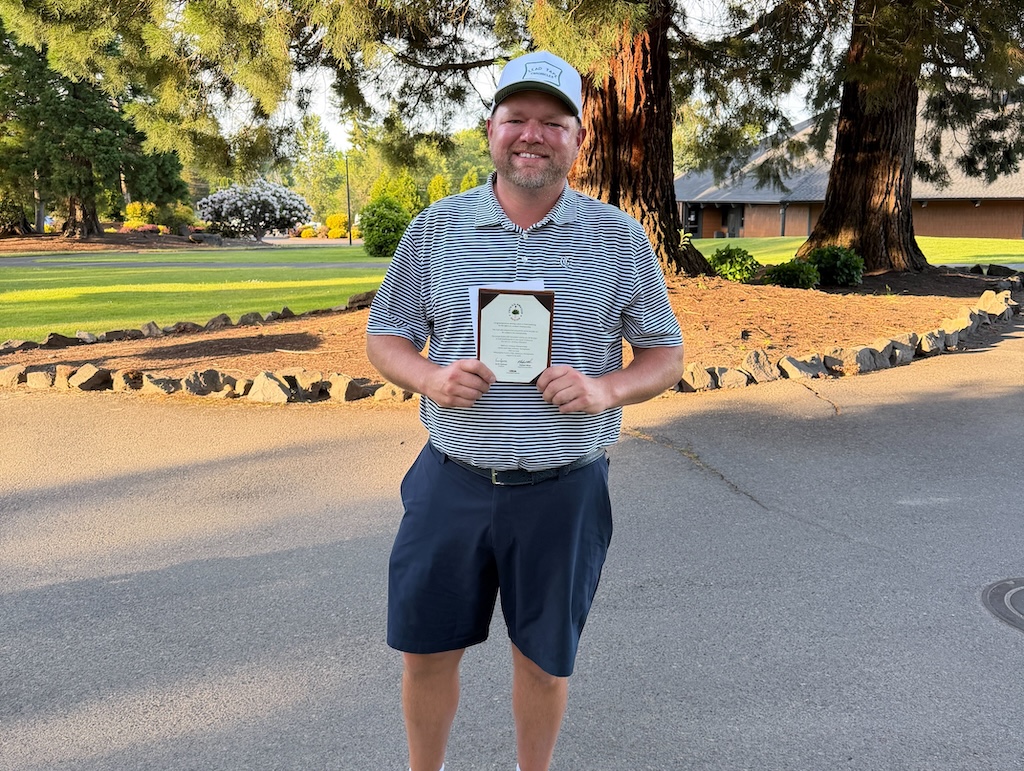
This past Monday, I played in the U.S. Amateur local qualifier at Rock Creek Country Club in Portland, Oregon. A full tee sheet from 7:30 a.m. to 1:55 p.m., the top 11 scores would make it to the U.S. Amateur final qualifying.
I teed off at 10:48 a.m.. With the 7:30 am tee time, you can get a feel for the leaders’ pace, and they were off and running on the challenging setup at Rock Creek.
View this post on Instagram
Getting to the highlight of the round on the par five 17th, a drive up the left side and 212 yards left to the front hole location. I took out a 5-iron with plans of middle of the green. The ball ended up 8 feet left of the hole, pin high. A slight downhill putt dropped in for an eagle 3 on the 17th. With the cut line looking to be anywhere from -2 to even par. This was the boost I had been waiting for all day.
With making par from the trees on 18, it was time to wait for a potential playoff with a posted score of one under par 71.
Three hours later, it was playoff time. 8 players for 6 spots. I made par on the playoff hole, which was good enough to advance to the U.S. Amateur final qualifying in July. USGA qualifiers sure deliver on all of the emotions in golf!
Club Junkie
Building my 2026 gamer WITB: Ranking the contenders and new putter projects – Club Junkie Podcast

The annual What’s In The Bag build is underway, and on this episode of Club Junkie, Brian breaks down the clubs currently leading the race for a spot in his 2026 gamer setup. From drivers and fairway woods to irons, wedges, and shafts, he ranks the equipment that’s performing best and explains what’s separating the front runners from the rest of the field.
Brian also heads into the workshop to discuss several putter projects currently on the bench. From head options and shaft choices to build ideas and testing plans, he shares what he’s working on and which putters could become serious contenders for the bag this season.
If you’re a gear junkie who loves equipment testing, club building, and the never-ending pursuit of the perfect setup, this episode is for you.
Follow Club Junkie:
Instagram: @clubjunkiepod
TikTok: @clubjunkiepod
Threads: @clubjunkiepod
X: @ClubJunkiePod
Club Junkie
Tour Edge Exotics mini driver review + TaylorMade Spider ZT Max first look – Club Junkie

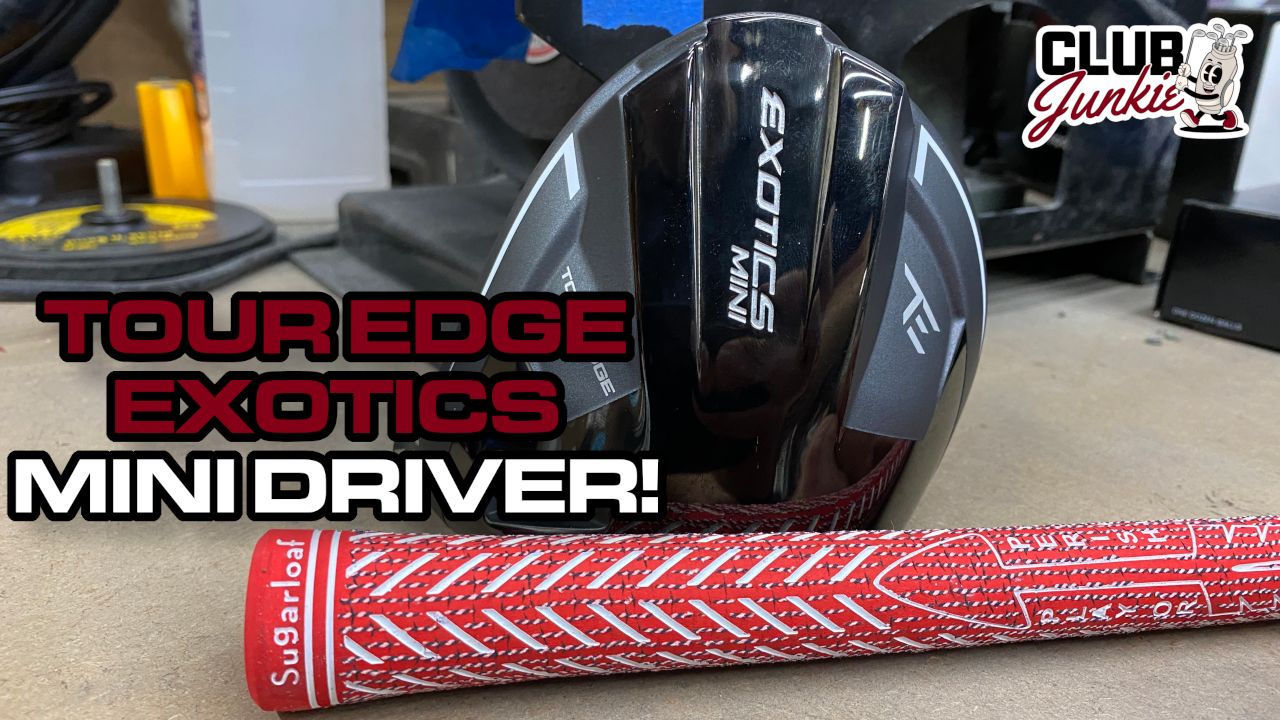
On this episode of Club Junkie, I put the new Tour Edge Exotics Mini Driver to the test and break down the performance, forgiveness, distance, and where it fits compared to a traditional driver or strong fairway wood. If you have been curious about adding a mini driver to the bag, this one is worth a look.
I also dive into the new TaylorMade Spider ZT Max putter that was recently spotted and discuss the growing zero torque putter trend. Plus, there is a closer look at the new Project X Titan Yellow shaft showing up on the PGA Tour and what makes it different from other profiles currently out there.

Justin Rose WITB 2026 (April): Full WITB breakdown with new McLaren irons

What’s the story behind Webb Simpson’s custom-stamped irons?

Memorial Tournament Tour Report: Rory McIlroy, Cameron Young switch up drivers, and more

Cadillac Championship Tour Report: Spieth’s sizable changes, McLaren Golf launches, and more

Russell Henley’s winning WITB: 2026 Charles Schwab Challenge

Kristoffer Reitan’s winning WITB: 2026 Truist Championship

Best irons 2026: Best irons overall, most forgiving irons, and more

J.T. Poston’s winning WITB: 2026 Memorial Tournament

Aaron Rai’s winning WITB: 2026 PGA Championship

Cameron Young’s winning WITB: 2026 Cadillac Championship


Ryan Palmer WITB 2026 (June)
Driver: Callaway Quantum Triple Diamond (9 degrees) Shaft: Project X HZRDUS Smoke Blue RDX 60 TX 3-wood: TaylorMade Qi10 (15 degrees) Shaft:...


Bud Cauley WITB 2026 (June)
Bud Cauley had >14 clubs in his bag when photographed prior to the Memorial Tournament. Driver: Titleist GTS2 (8 degrees) Shaft: Fujikura...


Hannah Green WITB 2026 (June)
Driver: Titleist GTS3 (10 degrees, D4 SureFit setting) Shaft: Mitsubishi Chemical Diamana RB 53 S 3-wood: Titleist GT3 (15 degrees,...


Asterisk Talley WITB 2026 (June)
Driver: TaylorMade Qi4D (9 degrees) Shaft: Fujikura Ventus Blue 6 S 3-wood: TaylorMade Qi4D (16.5 degrees) Shaft: Fujikura Ventus Blue...
-
 Equipment6 days ago
Memorial Tournament Tour Report: Rory McIlroy, Cameron Young switch up drivers, and more
-
 News2 weeks ago
Russell Henley’s winning WITB: 2026 Charles Schwab Challenge
-
 Equipment3 days ago
Best irons 2026: Best irons overall, most forgiving irons, and more
-
 Whats in the Bag4 days ago
J.T. Poston’s winning WITB: 2026 Memorial Tournament
-

 Equipment1 week ago
Details on Jason Day’s latest prototype Avoda iron setup
-

 Equipment3 weeks ago
CJ Cup Byron Nelson Tour Report: Koepka and Kim’s newest putters finally get hot
-

 News2 weeks ago
Charles Schwab Challenge Tour Report: MacIntyre, Åberg and Spaun all switch putters, TaylorMade launches new Spider
-

 Equipment2 weeks ago
Details on J.J. Spaun’s surprise putter switch


DS
Jul 6, 2019 at 1:57 am
Thoughtful column. Other than 1-2 minor differences (like, it’s hard to keep someone new to the game interested enough to groove a repeatable swing without actually hitting a ball), I agree completely with the Village concept. The typical approach of lessons on the range simply doesn’t work. Add in that getting most pros to take the time to do playing lessons is typically pretty difficult, and throw in the cost-prohibitive nature of them, and is it any wonder most good players were either top high school or college players? Access to consistent coaching tailored to your individual needs and ingrained with playing lessons and competitive reinforcement. Perfect, right? But not doable for the vast majority of recreational players.
So how do you improve? I’ve done it via a combination of short bursts of intense instruction from different teachers (golf schools; part of my own Village), absorbing what works for me and quickly discarding what doesn’t, and Hogan’s dirt approach by making time to practice at least 5 hours a week. I was a 17 index 15 months ago, am a 10.1 currently, and this week was able to shoot 84, 83, and 76. My trend is 9.1 and I’ll get 2-3 more rounds in before the next revision. My goal is to be a 7.x by November and my stretch goal is to get to 5.x. Part of my practice involves simulated play and I’m also incorporating a Par 3 course to get more granular with my wedge game. I love the practice element and using an objective analytical approach for where to focus my practice time helps and fits my personality. I’m also reading golf books like Every Shot Must Have A Purpose, Every Shot Counts, and How To Make Every Putt. Lastly, I spend 2-3 hours a week reviewing YouTube instructional videos on the things I’m focusing on that week(s). It gets as granular as ‘what should the left shoulder be doing during the downswing’ and the focus + the amount of time spent understanding these details has been immensely beneficial. It has changed me from a swayer to a turner, and from a guy who lost 15 balls in 18 holes 3 summers ago to a guy who went 2 rounds in a row without losing one (practically a miracle to a former sprayer like me).
Thanks for the column. Looking forward to subsequent ones.
Matt Strube
Aug 20, 2019 at 11:37 am
DS, thank you so much for your comments; we really appreciate the kind words. Keep at it, and let me know if you have any questions. M
Radim Pavlicek
Jul 3, 2019 at 7:52 am
Take notes during practice. Write performance notebook.
MattStrube
Jul 3, 2019 at 12:23 pm
Radim, We agree 100%, that helps out immensely. Thank you for the comment.
MattStrube
Jul 2, 2019 at 5:05 pm
Frank, Thank you for the comment. It sounds like you’re a ‘get on the bike and ride it’ kinda guy, which is great. 🙂 The point of the article was to illustrate that to shoot lower scores and improve your game, golfers need help from a number of different sources.
To be clear, we aren’t preaching “perfect” swing mechanics, and the article does not mention that at all, however, I want to answer your comment. While your suggestion of working on hitting the sweet spot is a great one, I wish it was as easy as just focusing there.
In our experience, we know golfers can improve much faster if they learn to properly move their body first, then train those moves without a ball, over-and-over before they even think about hitting a ball. We’ve had much more success with all levels of golfers when we take this approach and then slowly transition to hitting the little devil of a golf ball. I hope this helps.
Frank
Jul 2, 2019 at 3:16 pm
The PGA Tour TrackMan averages chart show that their launch direction and spin axis are positive, meaning they hit a push-fade. How about instead of focusing on your “perfect” swing mechanics, you just focus on hitting the sweet spot and creating a push-fade (not with a leftward club path, the path needs to be just right of target with the club face angle just a bit more right than the path) and making sure the body movement doesn’t cause injury? If it doesn’t hurt then keep doing it, no matter how strange it may look. It is a lot more simple to focus on one ball than multiple different body movements.
MattStrube
Jul 2, 2019 at 5:07 pm
Frank, See above