
Opinion & Analysis
The Wedge Guy: What’s your short game handicap?

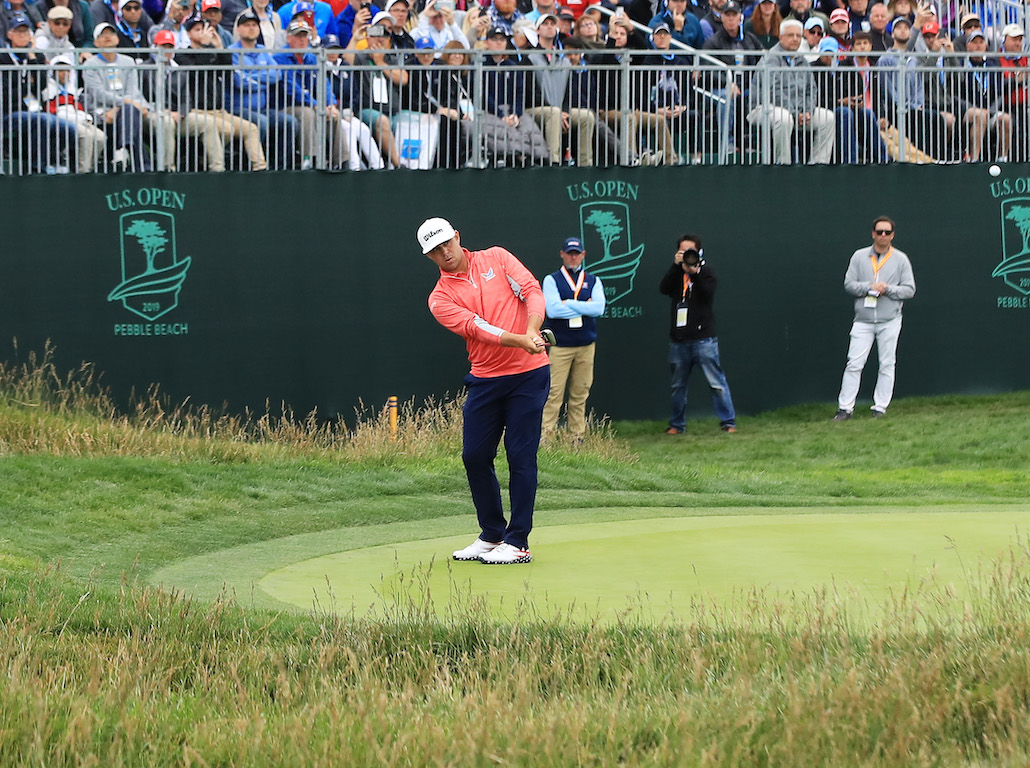
Well, that was a U.S. Open for the ages, in my book. Hallowed Pebble Beach held its own against the best players in the world and proved that small greens can really give these guys fits. Kudos and congratulations to Gary Woodland for putting on quite a show and outlasting all the others. And to Brooks Koepka for giving us reason to believe a three-peat could really happen.
To me, of course, what stands out is how Woodland elevated his short game for this event. Coming in he was ranked something like 165th on tour in greenside saves but went 16-for-20 last week. Of course, that also means he hit 52 of those small greens in regulation, which certainly outdistanced most of the field. Justin Rose was putting on a scrambling clinic for three days, but his inability to hit fairways and greens finally did him in. So that brings me to today’s topic – an honest assessment of your own “short game handicap.” Regardless of skill level, I have long believed that the key to better scoring is the same for us as for these tour-elite players – improving your ability to get up-and-down.
Almost all reasonably serious golfers have a handicap, just to allow us to keep track of our overall improvement with our golf games. But wouldn’t it be more useful if that handicap was such that it told us where we could improve the most? Unfortunately, that’s not the purpose of the USGA handicap program, so I’ve devised my own “Short Game Handicap” calculation to help golfers understand that this is where they are most likely going to improve their scoring.
The premise of my short game handicapping formula is the notion that once we get inside short iron range, the physical differences between golfers is increasingly neutralized. For most of us, our physical skills and abilities will never let us hit drives and longer approach shots like the best players. But I believe anyone can learn to execute good quality chips and pitches, and even full swing wedge and short iron shots. It really doesn’t matter whether your full-swing 9-iron goes 140 or 105, if you can execute shots from there on into the green, you can score better than you do now.
So, the starting point is to know exactly where you stand in relation to “par” when you are inside scoring range…regardless of how many strokes it took you to get there. Once your ball is inside that range where you can reach the flag with a comfortable full-swing 9-iron or less, you should be able to get up and down in 3 strokes or fewer almost all the time. In fact, I think it is a realistic goal for any golfer to get down in two strokes more often than it takes more than three, regardless of your skill level.
So, let’s start with understanding what this kind of scoring range skill set can do for your average score. I created this exercise as a starting point, so I’m encouraging you guys and ladies to chime in with your feedback.
What was your last (or typical) 18 hole score? ______
_____ Number of times you missed a green with a 9-iron or less
_____ Number of times you got up and down afterward
_____ Number of other holes where you hit a chip or pitch that ended up more than 10’ from the cup
Subtract #2 from #1, then add 1/2 of #3. That total ______ is your short game handicap under this formula. [NOTE: The logic of #3 is that you can learn to make roughly 1/2 of your putts under 10 feet, so improving your ability to hit chips and pitches inside that range will also translate to lower scores.]
I believe this notion of a short game handicap is an indication of how many shots can potentially come off your average scores if you give your short game and scoring clubs the attention they deserve.
I would like to ask all of you readers to do this simple calculation and share with the rest of us what you find out.








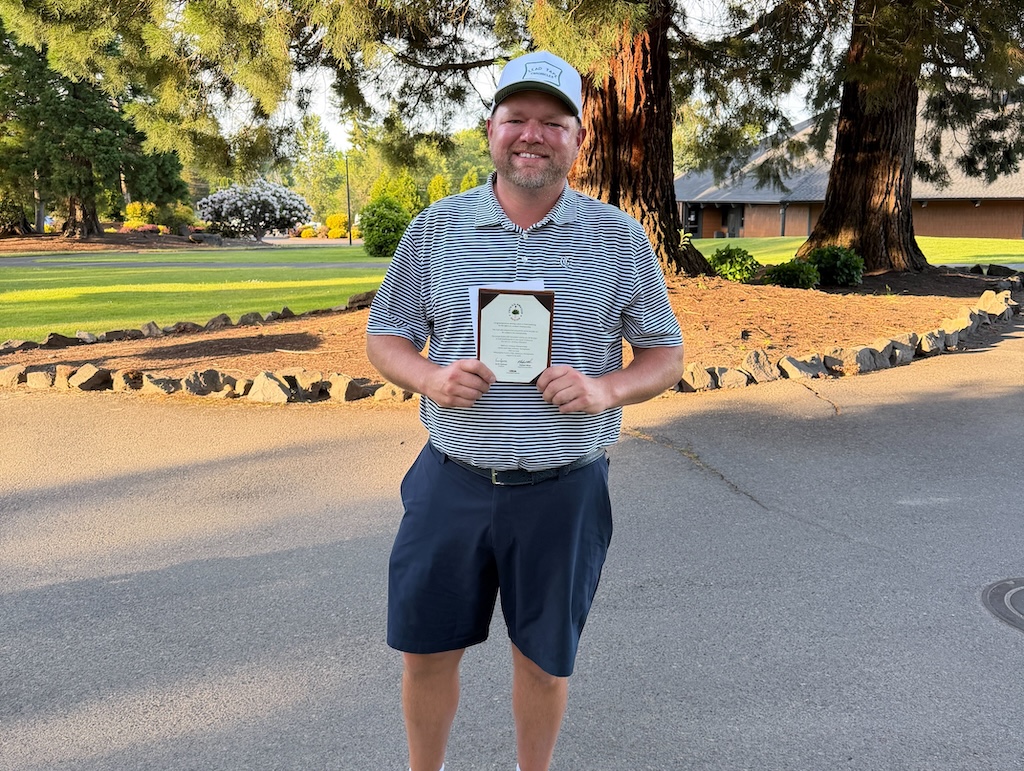
This past Monday, I played in the U.S. Amateur local qualifier at Rock Creek Country Club in Portland, Oregon. A full tee sheet from 7:30 a.m. to 1:55 p.m., the top 11 scores would make it to the U.S. Amateur final qualifying.
I teed off at 10:48 a.m.. With the 7:30 am tee time, you can get a feel for the leaders’ pace, and they were off and running on the challenging setup at Rock Creek.
View this post on Instagram
Getting to the highlight of the round on the par five 17th, a drive up the left side and 212 yards left to the front hole location. I took out a 5-iron with plans of middle of the green. The ball ended up 8 feet left of the hole, pin high. A slight downhill putt dropped in for an eagle 3 on the 17th. With the cut line looking to be anywhere from -2 to even par. This was the boost I had been waiting for all day.
With making par from the trees on 18, it was time to wait for a potential playoff with a posted score of one under par 71.
Three hours later, it was playoff time. 8 players for 6 spots. I made par on the playoff hole, which was good enough to advance to the U.S. Amateur final qualifying in July. USGA qualifiers sure deliver on all of the emotions in golf!
Club Junkie
Building my 2026 gamer WITB: Ranking the contenders and new putter projects – Club Junkie Podcast

The annual What’s In The Bag build is underway, and on this episode of Club Junkie, Brian breaks down the clubs currently leading the race for a spot in his 2026 gamer setup. From drivers and fairway woods to irons, wedges, and shafts, he ranks the equipment that’s performing best and explains what’s separating the front runners from the rest of the field.
Brian also heads into the workshop to discuss several putter projects currently on the bench. From head options and shaft choices to build ideas and testing plans, he shares what he’s working on and which putters could become serious contenders for the bag this season.
If you’re a gear junkie who loves equipment testing, club building, and the never-ending pursuit of the perfect setup, this episode is for you.
Follow Club Junkie:
Instagram: @clubjunkiepod
TikTok: @clubjunkiepod
Threads: @clubjunkiepod
X: @ClubJunkiePod
Club Junkie
Tour Edge Exotics mini driver review + TaylorMade Spider ZT Max first look – Club Junkie

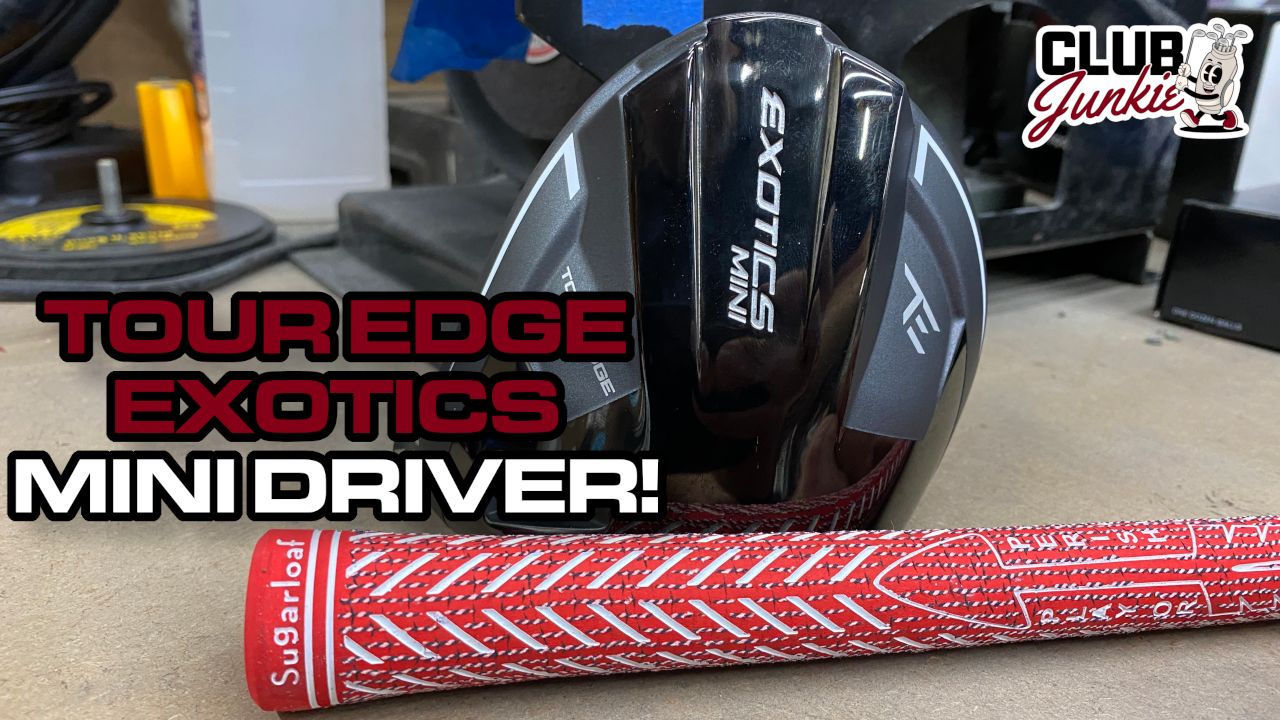
On this episode of Club Junkie, I put the new Tour Edge Exotics Mini Driver to the test and break down the performance, forgiveness, distance, and where it fits compared to a traditional driver or strong fairway wood. If you have been curious about adding a mini driver to the bag, this one is worth a look.
I also dive into the new TaylorMade Spider ZT Max putter that was recently spotted and discuss the growing zero torque putter trend. Plus, there is a closer look at the new Project X Titan Yellow shaft showing up on the PGA Tour and what makes it different from other profiles currently out there.

Justin Rose WITB 2026 (April): Full WITB breakdown with new McLaren irons

What’s the story behind Webb Simpson’s custom-stamped irons?

Memorial Tournament Tour Report: Rory McIlroy, Cameron Young switch up drivers, and more

Cadillac Championship Tour Report: Spieth’s sizable changes, McLaren Golf launches, and more

Russell Henley’s winning WITB: 2026 Charles Schwab Challenge

Kristoffer Reitan’s winning WITB: 2026 Truist Championship

Best irons 2026: Best irons overall, most forgiving irons, and more

J.T. Poston’s winning WITB: 2026 Memorial Tournament

Aaron Rai’s winning WITB: 2026 PGA Championship

Cameron Young’s winning WITB: 2026 Cadillac Championship


Bud Cauley WITB 2026 (June)
Bud Cauley had >14 clubs in his bag when photographed prior to the Memorial Tournament. Driver: Titleist GTS2 (8 degrees) Shaft: Fujikura...


Hannah Green WITB 2026 (June)
Driver: Titleist GTS3 (10 degrees, D4 SureFit setting) Shaft: Mitsubishi Chemical Diamana RB 53 S 3-wood: Titleist GT3 (15 degrees,...


Asterisk Talley WITB 2026 (June)
Driver: TaylorMade Qi4D (9 degrees) Shaft: Fujikura Ventus Blue 6 S 3-wood: TaylorMade Qi4D (16.5 degrees) Shaft: Fujikura Ventus Blue...

Brianna Do WITB 2026 (June)
Driver: Callaway Quantum Triple Diamond (9 degrees) Shaft: KBS PGW 3-wood: Callaway Elyte Titanium (15 degrees) Shaft: KBS PGW 5-wood:...
-
 Equipment6 days ago
Memorial Tournament Tour Report: Rory McIlroy, Cameron Young switch up drivers, and more
-
 News2 weeks ago
Russell Henley’s winning WITB: 2026 Charles Schwab Challenge
-
 Equipment3 days ago
Best irons 2026: Best irons overall, most forgiving irons, and more
-
 Whats in the Bag4 days ago
J.T. Poston’s winning WITB: 2026 Memorial Tournament
-

 Equipment1 week ago
Details on Jason Day’s latest prototype Avoda iron setup
-
 Equipment3 weeks ago
CJ Cup Byron Nelson Tour Report: Koepka and Kim’s newest putters finally get hot
-

 News2 weeks ago
Charles Schwab Challenge Tour Report: MacIntyre, Åberg and Spaun all switch putters, TaylorMade launches new Spider
-
 Equipment2 weeks ago
Details on J.J. Spaun’s surprise putter switch


Ron
Jun 20, 2019 at 8:55 am
You hit the nail on the head here. This is one area of the game where physical strength requirement becomes negligible.
Mike
Jun 19, 2019 at 2:47 pm
3,3,0. best part of my game.
Harry Steele
Jun 19, 2019 at 6:08 am
I will start today 6/19/19
Jason W
Jun 19, 2019 at 5:30 am
This note actually had nothing to do with the post… which is a good post by the way.
It’s just a personal thanks to Terry Koehler for reviving the Ben Hogan brand. I have Scor, Ft Worth 15s (the first in Australia I believe) and now Ptx. All are ground breaking in their own right….. especially the Ft. Worth 15s. Which I love the most even if they are a little better than I am… hence the PTX in the bag now.
But thanks Terry. No other manufacturers clubs have given me so much enjoyment.
VF
Jun 19, 2019 at 4:32 am
“Once your ball is inside that range where you can reach the flag with a comfortable full-swing 9-iron or less, you should be able to get up and down in 3 strokes or fewer almost all the time. In fact, I think it is a realistic goal for any golfer to get down in two strokes more often than it takes more than three, regardless of your skill level.”
This part is super misleading and also uninformed. From 100 yards a tour pro averages approximately 2.8 shots. You are saying that everyone REGARDLESS of skill level should expect to perform to basically that level – with even further out with a 9-iron as well!
Knowledge is power, and realizing what a realistic expectation is can help a lot on the course with the mental side – pressuring everyone to expect playing like a tour pro is a bit extreme for my taste and also why I despise articles like these because you are only further misinforming the masses.
Terry Koehler
Jun 24, 2019 at 3:54 pm
Sorry for taking so long to reply to this, VF, but I apparently did not make my point very clear — my apologies. What I was trying to communicate is that from 100 yards and in, physical strength is pretty much neutralized, and most golfers can improve in that area with some instruction and practice. And that is where scores can really be improved. I don’t expect any recreational golfer to achieve tour pro stats, but I do believe it is realistic to not average much over 3 shots, regardless of handicap . . . again, with some instruction and practice. Realize that to average 2.8 strokes requires a pro to get down in two one out of five times (allowing never taking more than 3). For a recreational golfer to average 3.1, he could rarely get down in 2, but take more than three shots from that range not more often than 1 out of ten. I think that is attainable for most . . . again, with some instruction and practice.
Conor
Jun 19, 2019 at 1:13 am
Subtract #2 from #1, then add 1/2 of #3. What is #1, your Score on 18 holes? I shot 89, my other numbers were 3, 1 and 2. So my shortgame hcp is 87?
Terry Koehler
Jun 19, 2019 at 11:49 am
That score question is just for reference. Based on your numbers, your short game handicap would be 3-1+1=3. Just a guide . . .
Conor
Jun 21, 2019 at 3:41 am
My short game is terrible, no way I have a 3 Hcp
Sahil
Jun 20, 2019 at 5:49 am
ja, its unclear. @wedgeguy give us an example please. my math ain’t so good.
Michael R Lederle
Jun 18, 2019 at 10:16 pm
Use strokes gained greenside and putting, there are spreadsheets and apps. It is a pain to measure every shot but is exactly comparable to the average tour pro.
Bond
Jun 18, 2019 at 1:36 pm
Pros make 50% from 8 feet. 50% Mkes drop to 6-7 feet for good amateurs. So I would revise factor #3.
Kool-Aid Man
Jun 18, 2019 at 11:14 am
My short game handicap no matter how you calculate it is most assuredly higher than my USGA HC. I know I need to work on the short game as probably most of us do. Knowing something and actually doing it are two vastly different things. However, TakeMyMoney club manufacturer just came out with a new XCFDGHE grind with a variable bounce wedge in a murdered color scheme that is going to cure all my ills!
Alex
Jun 18, 2019 at 11:04 am
Handicap right around 0 short game handicap of 2 which is dead on because I make up the difference on par 5s. Only thing that throws it off is I play on big greens with pretty severe breaks so I’d like to see how the 3 Jack impacts it. Probably brings it up another half stroke. Hitting greens is really important on small greens…hitting the right spot on greens or missing in an ok spot it’s more important on big greens.
Scooter
Jun 18, 2019 at 10:17 am
2 handicap according to my GHIN. And according to the formula above and averaging the calculation over my last 6 rounds, I have a short game handicap of 4. Which I actually think is spot on. Just further solidifying I need to get to the chipping and putting green more often.
Next step; how to practice most efficiently?
Dave Lawrence
Jun 18, 2019 at 1:41 pm
I think your situation might be similar to someone that needs to elevate their putting-from-distance numbers: learning to read the greens and the breaks, figuring out your target (where to land the ball), and learning to execute that shot. Knowing when to flop the ball to the hole, vs. bumping and running and using the green and speed to get next to the hole is where I’m figuring out my game. I’ve been making “landing zone” hoops on the practice green with neon tees. I’ll survey the green, figure out where the ball needs to land in order to get to the hole, and then try to land all my chips in that target zone. If you’re nailing the zone, but missing the hole, then the read/assessment of the green is off. If you’re consistently missing the zone and rolling out/staying short, then it’s the execution, not the analysis that needs work. Just my two cents on how I’m trying to get better here.
Jimmy
Jun 18, 2019 at 11:33 pm
Play by yourself when it’s not busy. Any pitch or chip that’s not inside three feet, hit it two or three more times. Consider different approaches/clubs, type of strike, etc. Then move on. By the fourth or fifth try, your brain has turned off and you’re just banging balls. Do this for the whole round. Breeze through putting – keep your focus on the short game. Do this just a handful of rounds and you’ll find you magically get much better.
I’m a 2 who is a generally poor ball-striker and wild driver for my handicap. 100mph swing speed with driver, 7-iron only 150 because I play older forged clubs with shafts that are “too stiff” for my swing speed because my top priority is distance control. The best way to gain strokes in the short game is to not miss in the spot that screws you. As you gain confidence with short pitches, you’ll find yourself favoring the “good side” of the hole more & shooting lower scores even if you miss the green more often. Short up-and-downs from the short side are often easier than 60-foot two-putts.