
Opinion & Analysis
The Wedge Guy: The highest loft you should carry


I am starting to get more and more emails from you all, sharing your own personal questions and comments about what I’m writing. Thank you all for doing that and for taking the time to share. I will do my best to answer all of you individually, but realize that as the mailbox gets more and more full, that may be hard to do.
That said, I did get a few emails this past week asking for my thoughts about the highest loft wedge you should carry, so I thought that would make a good topic for today’s post. But first, let me share that I did my first GolfWRX podcast this week, and had a great time doing it. You can listen here.
So, now on to the big question that so many golfers have: What is the highest loft wedge I should carry?
Let me start with a bit of history of putting wedges in our bags, as that might help make sense of the subject for each of you.
After the invention of the sand wedge in the 1930s, a design generally credited to Gene Sarazen, most golfers began to carry one. Did you know that the 1930s was also the decade that witnessed one of the greatest contributions to modern golf clubs, the numbered and matched set of irons? Well, from that time through the 1940s, most golfers relegated that club to only those shots hit from the sand. Most “sand wedges” from that time until the mid-1980s were about 55-56 degrees in loft, but loft was not a specification that many paid much attention to. Sets of irons had a “pitching wedge” of about 50-52 degrees, and that was the more generally used wedge for greenside shots. However, in his 1949 book, “Power Golf,” Ben Hogan wrote that the sand wedge could be a great tool for certain greenside shots.
Through the 1940s, 50s, 60s, 70s, and 80s, most of golf’s biggest stars only carried one “wedge” after their set-match pitching wedge. Many of them used that club to great success, and we witnessed near genius in the likes of Tom Watson, Phil Rogers, Seven Ballesteros and others.
It was the late 1980s, I believe, when Tom Kite began using the first 60-degree wedge to great success. They say he was deadly from his “magic number” — 63 yards, as I remember. I do know those first 60-degree wedges had very large heavy soles, with very pronounced camber from front to back. And they were very difficult to master for most recreational golfers.
Since that time, the higher lofted wedges began to take on more of the look of the traditional sand wedge, and the loft selection was expanded in both directions, with this design applied to wedges as low as 46 degrees and as high as 64. I believe Phil Mickelson gave the lofts over 60 degrees more visibility and curiosity than anyone.
So, with all these choices, what do each of you do with regard to deciding how high to go with the loft of your wedges? The reality is that the answer to that question is different for everyone but let me try to help you make sense of the process.
My observation is that the lofts over about 57-58 degrees are much more challenging to master for most recreational golfers. As loft increases above that level, controlling ball flight and distance becomes more and more difficult. Most golfers just have a hard time making as full a swing as required to move the ball a given distance with these high loft wedges. That said, I have seen recreational golfers that do a great job and use their high-loft wedges to great utility. But that number is very small in my estimation.
The biggest “fail” with the high loft wedges is making contact with the leading edge or very low on the face, either of which imparts much more dynamic force to the ball and sends it screaming over the green into a worse lie than you started with. Right behind that is the tendency to “bail out” on this fuller swing and decelerate before impact, laying the sod over on the ball, and having a similar result.
I do believe that mastering the higher lofted wedges of 60-64 degrees requires a great deal of practice, hitting all kinds of shots from whatever distance you consider “full” to delicate greenside chips and pitches. If you can take the time to do that, then you might turn that high-loft wedge into a powerful scoring tool. But if you don’t…well, my bet is that it will cost you more shots than it saves.
As I’ve already shared, I firmly believe you should select wedges that give you consistent distance differentials on full swings from your set-match 9-iron or “P-club,” all the way down to your 56-58 wedge. For most golfers that differential should be not more than 12-13 yards for optimum scoring. Depending on your strength profile, those loft differences could be as wide as 5-6 degrees, but 4 seems like it works for the vast majority of golfers.
Whether you choose to carry a wedge with a higher loft than that should be left to your own experiences with it, and an honest assessment as to whether that club should have a place in your bag.







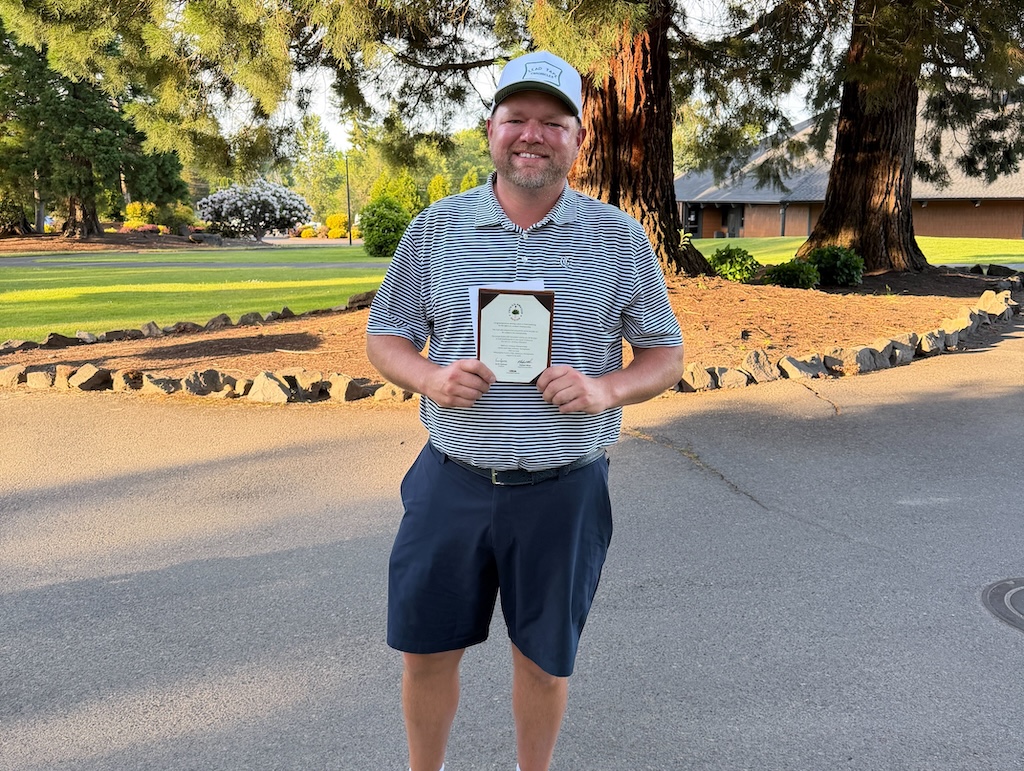
This past Monday, I played in the U.S. Amateur local qualifier at Rock Creek Country Club in Portland, Oregon. A full tee sheet from 7:30 a.m. to 1:55 p.m., the top 11 scores would make it to the U.S. Amateur final qualifying.
I teed off at 10:48 a.m.. With the 7:30 am tee time, you can get a feel for the leaders’ pace, and they were off and running on the challenging setup at Rock Creek.
View this post on Instagram
Getting to the highlight of the round on the par five 17th, a drive up the left side and 212 yards left to the front hole location. I took out a 5-iron with plans of middle of the green. The ball ended up 8 feet left of the hole, pin high. A slight downhill putt dropped in for an eagle 3 on the 17th. With the cut line looking to be anywhere from -2 to even par. This was the boost I had been waiting for all day.
With making par from the trees on 18, it was time to wait for a potential playoff with a posted score of one under par 71.
Three hours later, it was playoff time. 8 players for 6 spots. I made par on the playoff hole, which was good enough to advance to the U.S. Amateur final qualifying in July. USGA qualifiers sure deliver on all of the emotions in golf!
Club Junkie
Building my 2026 gamer WITB: Ranking the contenders and new putter projects – Club Junkie Podcast

The annual What’s In The Bag build is underway, and on this episode of Club Junkie, Brian breaks down the clubs currently leading the race for a spot in his 2026 gamer setup. From drivers and fairway woods to irons, wedges, and shafts, he ranks the equipment that’s performing best and explains what’s separating the front runners from the rest of the field.
Brian also heads into the workshop to discuss several putter projects currently on the bench. From head options and shaft choices to build ideas and testing plans, he shares what he’s working on and which putters could become serious contenders for the bag this season.
If you’re a gear junkie who loves equipment testing, club building, and the never-ending pursuit of the perfect setup, this episode is for you.
Follow Club Junkie:
Instagram: @clubjunkiepod
TikTok: @clubjunkiepod
Threads: @clubjunkiepod
X: @ClubJunkiePod
Club Junkie
Tour Edge Exotics mini driver review + TaylorMade Spider ZT Max first look – Club Junkie

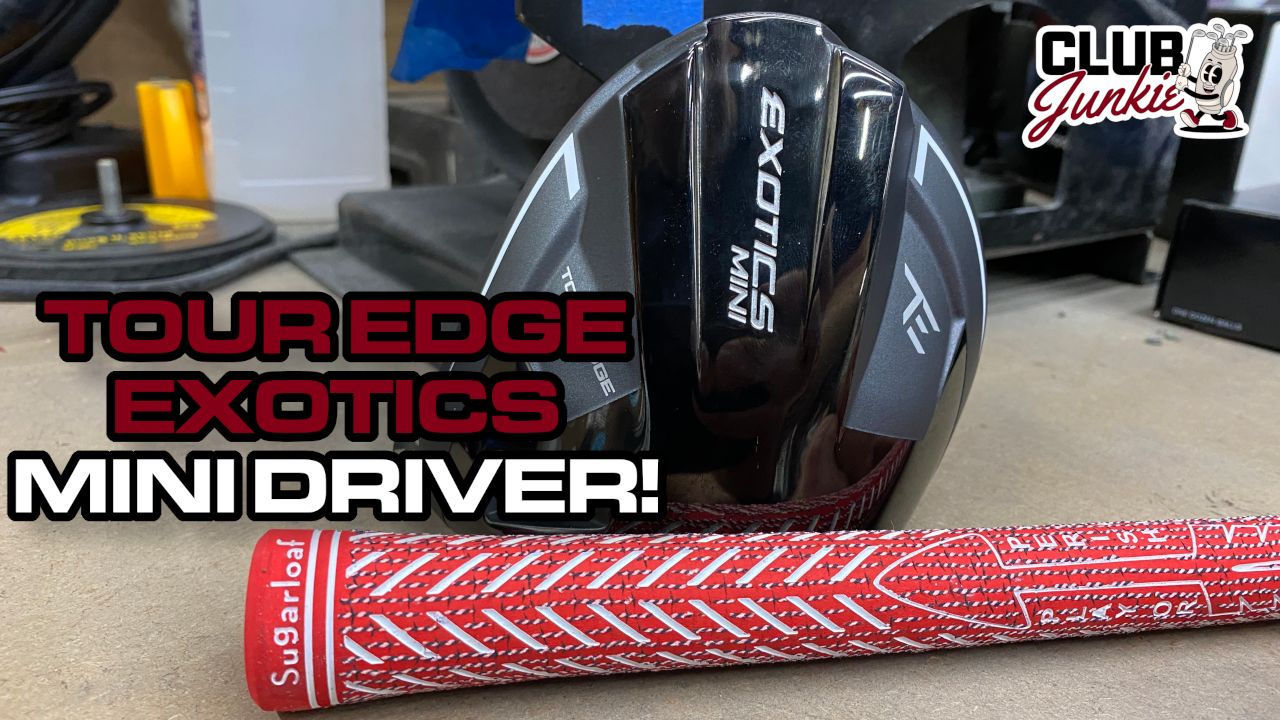
On this episode of Club Junkie, I put the new Tour Edge Exotics Mini Driver to the test and break down the performance, forgiveness, distance, and where it fits compared to a traditional driver or strong fairway wood. If you have been curious about adding a mini driver to the bag, this one is worth a look.
I also dive into the new TaylorMade Spider ZT Max putter that was recently spotted and discuss the growing zero torque putter trend. Plus, there is a closer look at the new Project X Titan Yellow shaft showing up on the PGA Tour and what makes it different from other profiles currently out there.

Justin Rose WITB 2026 (April): Full WITB breakdown with new McLaren irons

What’s the story behind Webb Simpson’s custom-stamped irons?

Memorial Tournament Tour Report: Rory McIlroy, Cameron Young switch up drivers, and more

Cadillac Championship Tour Report: Spieth’s sizable changes, McLaren Golf launches, and more

Russell Henley’s winning WITB: 2026 Charles Schwab Challenge

Kristoffer Reitan’s winning WITB: 2026 Truist Championship

Aaron Rai’s winning WITB: 2026 PGA Championship

J.T. Poston’s winning WITB: 2026 Memorial Tournament

Cameron Young’s winning WITB: 2026 Cadillac Championship

Best irons 2026: Best irons overall, most forgiving irons, and more


Bud Cauley WITB 2026 (June)
Bud Cauley had >14 clubs in his bag when photographed prior to the Memorial Tournament. Driver: Titleist GTS2 (8 degrees) Shaft: Fujikura...


Hannah Green WITB 2026 (June)
Driver: Titleist GTS3 (10 degrees, D4 SureFit setting) Shaft: Mitsubishi Chemical Diamana RB 53 S 3-wood: Titleist GT3 (15 degrees,...


Asterisk Talley WITB 2026 (June)
Driver: TaylorMade Qi4D (9 degrees) Shaft: Fujikura Ventus Blue 6 S 3-wood: TaylorMade Qi4D (16.5 degrees) Shaft: Fujikura Ventus Blue...

Brianna Do WITB 2026 (June)
Driver: Callaway Quantum Triple Diamond (9 degrees) Shaft: KBS PGW 3-wood: Callaway Elyte Titanium (15 degrees) Shaft: KBS PGW 5-wood:...
-
 Equipment6 days ago
Memorial Tournament Tour Report: Rory McIlroy, Cameron Young switch up drivers, and more
-
 News1 week ago
Russell Henley’s winning WITB: 2026 Charles Schwab Challenge
-
 Whats in the Bag3 days ago
J.T. Poston’s winning WITB: 2026 Memorial Tournament
-
 Equipment3 days ago
Best irons 2026: Best irons overall, most forgiving irons, and more
-
 Equipment1 week ago
Details on Jason Day’s latest prototype Avoda iron setup
-
 Equipment3 weeks ago
CJ Cup Byron Nelson Tour Report: Koepka and Kim’s newest putters finally get hot
-

 News2 weeks ago
Charles Schwab Challenge Tour Report: MacIntyre, Åberg and Spaun all switch putters, TaylorMade launches new Spider
-
 Equipment2 weeks ago
Details on J.J. Spaun’s surprise putter switch


Pingback: What Is The Loft On A 7 Wood | Golfing Revolution
Lefthack
Dec 13, 2020 at 10:34 am
When I decided to refresh my 20 year old bag, I got an AW, a 56 and a 60 thinking I was missing something having only a SW bellow my set matched PW. After getting new irons, I realized I wasn’t using either the AW or the 60 and was doing everything with either the PW or 56.
It might be due to the fact I used my old SW for anything 20 yards or more off the green. The rest is PW out to 80 yards. But now I have 2 wedges I don’t use.
ChipNRun
Jan 25, 2020 at 9:40 am
PGA tour stats validate Terry’s comment on 57*-58* being upper limit on what most amateur golfers can handle. On tour, half the golfers have 58* as their highest lofted wedge.
When I redid my wedges two seasons back, I went with Callaway MD3 in 48* and 54* and an MD-PM in a high-toe 60*/10.
The 60* was good for certain greenside shots, but I had distance control problems and it was iffy for anything more than a half swing. It did NOT work out of junk lies – 54* much better.
An MD4 58*/8 C-grind has replaced the 60*. MD4 much easier to control on distance, and just overall easier to use. Took me about 10 shots to get used to it.
My brother, however, is a different story. I gave him a brand X 60* that was a golf clinic give-away, and he does magic tricks with the thing. (He does limit it to half swings). Whatever works!
joro
Jun 20, 2019 at 9:25 am
I looked at a 64 the other day and it looked like the Ball would come straight up hit he in my Juevos. No Thanks, 58 is just fight.
Christopher Hansen
Jun 12, 2019 at 5:45 pm
5 index. I have carried a 4-wedge setup for years. 45, 52, 56, 60. Why? Because I get predictable coverage at all distances inside of 140 yds. I can open up the 60 to flop or for delicate bunker shots.
My favorite wedge of all time has to be the SM5 64 from Titelist. Sadly, they don’t make them anymore (but I still have one, heavily used). A 64 imparts big spin, and you can get balls to stop on a dime if executed properly. Very handy for sand, delicate greenside chips, and tight pin placements over hazards with very little green to work with. I only stopped carrying my 64 because it was so worn its grooves looked a bit questionable. I never picked up the Mac Daddy 64 when it came out. I’ve generally avoided Callaway as a brand (although I’m sure there’s no *real* difference for most people). Call me a wedge snob, but Vokey’s are still king.
I’d love to see the 64 made in a Taylor Made wedge (or bring back the Titelist model).
Bob vokey
Dec 6, 2019 at 9:50 pm
Wedge snob and wrong. Look at any flight monitor and Vokey is king in name only.
Distance Compression Dude
Jun 9, 2019 at 3:46 pm
90 degrees.
James T
May 25, 2019 at 7:26 pm
“…we witnessed near genius in the likes of Tom Watson, Phil Rogers, Seven Ballesteros and others.”
Terry… I’m glad your word correction program fixed it for you. Just a bit surprised it didn’t change it to Seven Ball and Stereos!
Wally
May 24, 2019 at 11:57 am
I have a 60* and an old TM 64* wedge but I don’t carry them because I’m so inconsistent with them. You almost have to have the perfect lie to hit those clubs and at the courses that I play, very seldom do I get the manicured grass needed to hit those clubs. The highest lofted club that I carry is a 58* Ping Stealth or Cleveland RTX4 and even then I don’t take full swings with them.
ChipNRun
May 22, 2019 at 11:58 am
Terry K. said…
“My observation is that the lofts over about 57-58 degrees are much more challenging to master for most recreational golfers.”
A couple of years ago, Golf Digest reported that half the male tour pros use a 58* as their highest-lofted wedge.
As for pre-1980s role of SW, I would differ with Terry. Lots of players – including me – used a SW for greenside cut shots long before the LW arrived. First-cut lie = PW, shaggy lie = SW.
Also, golf-ball designer Dean Snell has another angle on wedge problems of mid-HDCP golfers: harder distance balls. Dean suggests that a urethane ball will grab the clubface better on higher-lofted clubs such as wedges, and give better spin and control to ALL golfer.
I carry a 48-54-60, mainly because I found a 60* I could hit. Big distance control problems with earlier 60* adventures.
Also, many golfers only hit partial shots with SW and LW, as per Juststeve.
G
May 21, 2019 at 2:51 pm
I remember the year G Mac won the U.S. Open at Pebble Beach. The lowest wedge in his bag was a 56*. Spoke with him during the Wednesday practice round and asked him why only one sand wedge. he said because it’s his best club for that course!
slash
May 20, 2019 at 8:38 pm
46* is the squish club for an 85% shot that the 54* can’t be relied upon for a full swing
54* is for long bunker and squishable 60* shots
60* is for a rare full swing, bunkers, lobs (long and short) as well as big rough
Howard Clark
May 20, 2019 at 8:32 am
I am scratch but, having said that, I can atke anyone’s 56, fan it open going back, and turn it into a 64.
Steve O
May 29, 2019 at 6:02 am
I’m a 3 and if I fan it open I can get the shanks. So I carry the loft that requires no adjustments, just as I do with my other irons.
Hank Hill
Dec 6, 2019 at 9:52 pm
I’m sure you can, Boomer.
Frank
May 19, 2019 at 5:49 pm
Play in a real pro tournament and all those short side misses with the real tucked pins will 100% convince you to carry a 64 degree wedge, there’s a reason both DJ and Phil carry 64 degree wedges and it’s absolutely for those short shots with no green to work with.
Tiger Noods
Jun 24, 2019 at 5:36 am
Play as much as a pro, and you too can play any loft your heart desires.
Sp4cetime
May 19, 2019 at 4:28 pm
In your podcast you suggest that forged tour wedges are a detriment to your average golfer. What do you suggest as an alternative?
Andrew
May 21, 2019 at 6:38 pm
Cleveland CBX. I have the 52, 56, and 60 degree.
Phillip Pearson
May 18, 2019 at 3:14 pm
I love my 62* wedge. Yes it took practice BUT when you learn it , it’s a great club. From 65 yards in I can get it close most of the time. If you go out and practice the high lofted wedge at the practice range I think you will learn to love that high lofted wedge
Zach Bartness
May 19, 2019 at 2:12 pm
What’s your wedge setup with the 62*?
Geoffrey Holland
May 18, 2019 at 3:43 am
“It was the late 1980s, I believe, when Tom Kite began using the first 60-degree wedge to great success.”
Actually he started playing a lob wedge in 1980. Quite a big difference from your completely incorrect anecdotal evidence.
I bought my first 60 degree wedge not long after Tom Watson won the US open in 1982 and Ram released the wedge series with his name on them. I’ve carried a Ram Tom Watson 60 degree wedge in my bag for probably 95% of the rounds I’ve ever played in my life.
JG
May 15, 2019 at 9:25 am
The gapping and the sole is the most important in my estimation. I have rolled with setups like 50/55/60 and I currently game 50/54/58. If your scoring wedges aren’t properly dialed in correctly what’s the point. You just eliminated your ability to score…
James
May 15, 2019 at 9:12 am
No one going to pick up on the seven Ballesteros’ in the list of great names?
JThunder
May 15, 2019 at 1:58 am
“The highest loft you should carry” is like saying “the largest size shoes you should wear”. People are individuals. The corporate world and the internet desperately wish they were not, so it would be easier to make profits by selling everyone the same thing. This includes advice.
If you want to know “the highest loft”, either work with a pro you trust who knows your swing and game, or find out for yourself. You can carry 14 clubs according to the rules. Generic advice won’t get you any further than what you already know, unless you’re new to the game.
TD
May 15, 2019 at 12:41 am
I have a Ping G25 PW(45°) UW(50°) and a Vokey SM6 56°/M-8 and that’s all i ever need
CG
May 14, 2019 at 5:13 pm
I like a 60* wedge with low bounce and wide flange. It’s my go to club around the greens. I honestly don’t see how people get by without a lob wedge. I watch them hit chips that run out too far and think, why? Learn to use a lob wedge!
JG
May 15, 2019 at 9:22 am
Because an average golfer (practice or plays once a week) who knows how to chip properly will see far lower scores than if they attempt to master a 60. Learning how to chip is just proper setup and making a putting stroke. Mastering a 60 takes practice and touch which the average once a week player doesn’t have at their disposal.
Boris Yeltsin
Dec 6, 2019 at 9:55 pm
Learning how to chip is the same with any club. Making the same stroke with different clubs is how you control distance. Good try.
Buckeye Doug
Jan 3, 2020 at 4:41 pm
Agreed a weekend duffer has a difficult time adjusting to a 60*. I used to play 52/56, now I play 52/56/60, i am not sure it has changed my score, but have several shots on my courses which are pitches between 10-30 yards
JP
May 14, 2019 at 4:35 pm
Phil has been doing it wrong!
Thomas Prosserr
May 14, 2019 at 3:06 pm
48pw a 56sw an a 60lw covers it all. Feel is the most important aspect of it. If it feels good do it. Me an my buds arent good enough to say you gota hit a certain club from a particular yardage an we all shoot about 10hdcp. yrstlawy in pa
Nanananana
May 14, 2019 at 3:04 pm
Nobody will take away my 64 degree bent to 67 away from me. It does wonders around tight lies and checks the ball like it has a string attached
3puttPar
May 29, 2019 at 12:55 pm
Sounds like you need to hit more GIR’s.
Rich Douglas
May 14, 2019 at 2:45 pm
I play Wishon Sterling single-length irons. My set is 4-iron through lob wedge (60 degrees).
I started out playing traditional SW and LW, but those clubs began to feel funny. I added the Wishon versions–which are the length of an 8-iron and struggled with them at first. Some back-and-forth ensued, but I stuck with the SW first, then the LW. I’m not interested in going back.
I play a course that’s short and all the greens are Donald Ross-style pop-ups; small and elevated. Almost every approach shot is hit with a wedge, and all shots around the green have to be hit high and soft or they won’t stay. Sure, you can try to run them up the slopes, but that’s a guessing game. I have no trouble anymore hitting lob shots with my LW opened way up. The swing is a little flatter, but it’s not a problem.
But the best part of these wedges is hitting them from the fairway. It’s nice to use the same swing planes (back and down) I use with all my other wedges. That was the point of going to single-length clubs; the SW and LW complete the experiment. I’m never going back!
Pete
May 14, 2019 at 2:02 pm
Funny, the 60′ is one of the few clubs I goet a consistent distance with full swing. Handy 18
Scratchscorer
May 14, 2019 at 1:46 pm
If the bounce and lie angle are a good match then I see no problem with 60 degrees. It’s all about getting those two things right and then finding the lofts that fit your eye and give you the ball flight you expect from your shots.
PSG
May 14, 2019 at 1:26 pm
Right. So “in your estimation” you “have seen a lot” of high handicappers that are not good with high lofted wedges.
It is the exhaustive research and hard-hitting data that makes this article so good.
I’ll save everyone else some time: “I think 57-58 is too much, because I can see the loft on the wedge watching most people hit. So, eh, have good gaps I guess. Who knows. This changes if you practice some.”
RudyV
May 14, 2019 at 1:23 pm
I’m 62 and I never carried anything more than my Pitching wedge until about 15 years ago…my PW has a loft of 46 degrees so my next wedge is 50 then 54…I find it very difficult, for myself, to hit a loft larger than that consistently but I do almost always take a full swing with my wedges…I’m not as long as I used to be but I do find it advantageous on wedge shots to try and take full swings…as I said, that works for me…then again if I can’t get to the green on my second shot I will put myself as close to 100 yards out as I can…for me, that’s my 50 degree at a full swing
Dayunski
May 14, 2019 at 10:57 am
I’m a 12. I use 50, 54 and 58. My benchmark distances for regular full swings are 100, 85 and 70. I practice 3/4 and 2/3 swings. In theory, I have a swing in 5 yard increments from 60-105 yards. The wedge I use also depends on how I want to land the ball and how much green to work with. Works for me 70% of the time.
~j~
May 14, 2019 at 10:44 am
when first swinging a club around age 16-17, I had an old dunlop 64* I used to mess around with in a park beside my house, walk out at anytime with a few cold beers and spend an hour + just hitting it back and forth to things (had 100y or so of ample space).
I wouldn’t touch a 64* now, but I bank on my 60* Vokey from 105y and in every round. I wouldn’t recommend it to my golfing peers but I’ve always been able to scale the 60* to whatever distance needed, and it sticks like a dart.
I’ve hear the arguments against it, things like one could lay a 56* open and have the same effect. True, but I’d rather take a full swing with a squared club than one that’s held wide open.
My 2 wedges I carry are 50-08* and 60-04*. 60* gets me up to 105y max, and a 75% 50* gets me from 100y up to 130 comfortably before my PW takes over. Just enough space between wedges to allow a choice, but anything within 100y is normally my 60-04* vokey, unless I need a little more bounce.
Christian Larsson
May 22, 2019 at 2:29 am
You had a habit of drinking a few beers….at 16 years of age?
James T
May 25, 2019 at 7:46 pm
Swing lubricant.
Gene Seretore
Dec 9, 2019 at 12:58 pm
Upon further review, this comment has been flagged as fake news.
Juststeve
May 14, 2019 at 10:23 am
Consistent full swing distance gaps, 12-13 yards is of little significance to me since it is very seldom I make a full swing with any of my “distance wedges”. I carry a 50, a 54, and a 58, but, inside about 80 yards I will most likely be making a partial swing with any of my wedges depending on the trajectory I want and how I want the ball to act after it lands. Full swing carry distances are irrelevant to me.
Alex Corona
May 14, 2019 at 11:11 am
So you don’t hit full swing wedges? what do you hit at 135yrds pin but carry 132 yrds? Full swing wedges matter as well as charting partial swing wedges. Both are valuable but saying full carry distances are irrelevant doesn’t make a ton of sense to me.
Juststeve
May 14, 2019 at 12:24 pm
From 135 I hit a nine iron, in real life, on the internet it’s a little sand wedge.
It’s not that I never hit a stock wedge, but it’s seldom I find myself on the number just to hit a full wedge. Much more often I am inside the full wedge range for any of my wedges trying to figure out how to best get the ball close to the hole. In that large majority of cases how far I hit the club with a full swing has very little to do with the club I choose. I’m not going to make a full swing with any of the wedges.