
Opinion & Analysis
The Wedge Guy: A discussion of bounce


Based on my 25+ years as a wedge designer and marketer, I can easily say that ‘bounce’ is the most mis-understood aspect of wedges and wedge-fitting. I’ve learned that a great number of golfers are totally confused about this very important design feature of wedges. So here goes.
A primer: What is bounce?
Very simply, “bounce” is the design feature of the sole of a wedge (or actually, any golf club) that helps it perform properly when it makes contact with the turf. A “worm’s eye view” of any wedge shows that the sole of the club has a downward angle from the leading edge back to the trailing edge. That angle, in relation to the horizontal line of the turf is what is defined as the “bounce angle”.
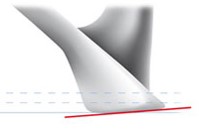
low bounce
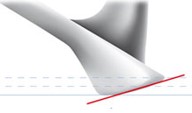
high bounce
In general, the higher that angle (measured in degrees from the horizontal plane of the turf), the more the club will tend to be “rejected” by the turf upon impact. Conversely, the lower the angle the less “rejection force” will be experienced. But also realize that the width of the sole and the bounce angle combine to produce a certain playability. A wide sole with a low bounce angle might perform very similar to (but also very differently than) a narrow sole with a higher bounce angle. Bounce is just not a simple subject.
How do I pick the right bounce?
To further compound the confusion you might have, the wedge marketplace offers hundreds of choices of loft/bounce combinations, and the industry has settled on this basic advice to help you navigate through this maze.
- For soft turf or fluffier lies, you want a higher bounce angle.
- For firm turf or tighter, you want a lower bounce angle.
- If you have a steep angle of attack, you want a high bounce.
- If you have a shallower angle of attack, you want a lower bounce.
Here is where I’ll call on my analysis of over 40,000 wedge-fitting “interviews” through the online fitting tools I have designed to share a couple of interesting facts that challenge that entire line of reasoning
- Over 80 percent of golfers of all skill levels say that the turf they play on is varying in its firmness (I can’t imagine the golf course the other 20% play that they think has the same turf quality throughout), and
- Over 75 percent of golfers of all skill levels say they vary their swing path; either on purpose to hit various shots…or unintentionally because they are not tour pros! (Again, I am suspect that 25 percent of golfers take the same divot all the time.)
Here is where my “respectful irreverence” to the industry’s reasoning about bounce fitting comes out, and I offer a few more examples of why I challenge the entire concept
- What if I have a tight lie on soft turf?
- What if I have a fluffy lie on firm turf? (And just where are these courses that have the same kind of turf conditions everywhere on them?)
- What if I have a shallower angle of attack, but the lie is on soft turf?
- Conversely, what if I have a steep angle of attack but the shot is on firm turf?
- Wait, I’m a good player and vary my angle of approach based on the shot I’m facing; what kind of bounce should I play?
And the biggest one: I’m not a tour pro, but a mid- to high-handicapper. The courses I play have every kind of lie, turf firmness and sand texture imaginable (and some that aren’t). My angle of approach is not consistent (duh, I’m a mid- to high handicapper). How the heck do I sort through this?
Bear with me, because I’m going to offer you some advice after I cover this last piece of the puzzle.
Custom grinds
This seems to be a growing trend offered by some wedge brands, always at a premium price over their standard offerings. But who really needs a “custom grind” and how would you know what you need?
Understand that tour players typically spend lots of time with their equipment sponsors to have their wedges custom ground because they spend hundreds of hours and hit thousands of shots perfecting their skills. They have the most highly refined set of skills and sense of touch . . . you can’t even imagine. As a result, they can do things with a wedge that your best local club players don’t even dream of. Even more importantly, if they get to a tournament where course conditions change, all they have to do is go to the equipment trailer and get some more grinding, or even new wedges that are right for that particular course that particular week. Oh, and they are F-R-E-E.
Tour players have their wedges made so that the sole gets “out of the way” of their skills. Amateurs need wedges that have a sole that gets in the way, to help compensate for the fact that they didn’t hit 2-300 wedge shots since their last round of golf.
So, what do you do?
In my opinion, you simply cannot select a wedge out of a retail display and expect to be satisfied. You cannot test wedges on a hitting mat in a store and learn anything about how they are going to perform for you on the courses you play. I’ll apply that same advice to selecting wedges based on a driving range session.
I firmly believe the only way to figure out what wedge sole configuration works best for you is through trial-and-error…on YOUR golf course(s), with the shots YOU face on a round-by-round basis. You simply must take demo wedges onto the course and hit the shots you know you will have, from the lies you will be required to navigate and the sand you will play from.
If you cannot demo the exact wedges you are considering, then you might think about moving on until you can. My bet is that your golf professional will have demo wedges you can take out on the course to see how they work for you. And he or she can also help you learn some wedge techniques and skills that will broaden your short-range options to quickly impact your scoring.
I hope that helps, and I look forward to sharing more equipment industry insight and opinions with you next week.









This past Monday, I played in the U.S. Amateur local qualifier at Rock Creek Country Club in Portland, Oregon. A full tee sheet from 7:30 a.m. to 1:55 p.m., the top 11 scores would make it to the U.S. Amateur final qualifying.
I teed off at 10:48 a.m.. With the 7:30 am tee time, you can get a feel for the leaders’ pace, and they were off and running on the challenging setup at Rock Creek.
View this post on Instagram
Getting to the highlight of the round on the par five 17th, a drive up the left side and 212 yards left to the front hole location. I took out a 5-iron with plans of middle of the green. The ball ended up 8 feet left of the hole, pin high. A slight downhill putt dropped in for an eagle 3 on the 17th. With the cut line looking to be anywhere from -2 to even par. This was the boost I had been waiting for all day.
With making par from the trees on 18, it was time to wait for a potential playoff with a posted score of one under par 71.
Three hours later, it was playoff time. 8 players for 6 spots. I made par on the playoff hole, which was good enough to advance to the U.S. Amateur final qualifying in July. USGA qualifiers sure deliver on all of the emotions in golf!
Club Junkie
Building my 2026 gamer WITB: Ranking the contenders and new putter projects – Club Junkie Podcast

The annual What’s In The Bag build is underway, and on this episode of Club Junkie, Brian breaks down the clubs currently leading the race for a spot in his 2026 gamer setup. From drivers and fairway woods to irons, wedges, and shafts, he ranks the equipment that’s performing best and explains what’s separating the front runners from the rest of the field.
Brian also heads into the workshop to discuss several putter projects currently on the bench. From head options and shaft choices to build ideas and testing plans, he shares what he’s working on and which putters could become serious contenders for the bag this season.
If you’re a gear junkie who loves equipment testing, club building, and the never-ending pursuit of the perfect setup, this episode is for you.
Follow Club Junkie:
Instagram: @clubjunkiepod
TikTok: @clubjunkiepod
Threads: @clubjunkiepod
X: @ClubJunkiePod
Club Junkie
Tour Edge Exotics mini driver review + TaylorMade Spider ZT Max first look – Club Junkie

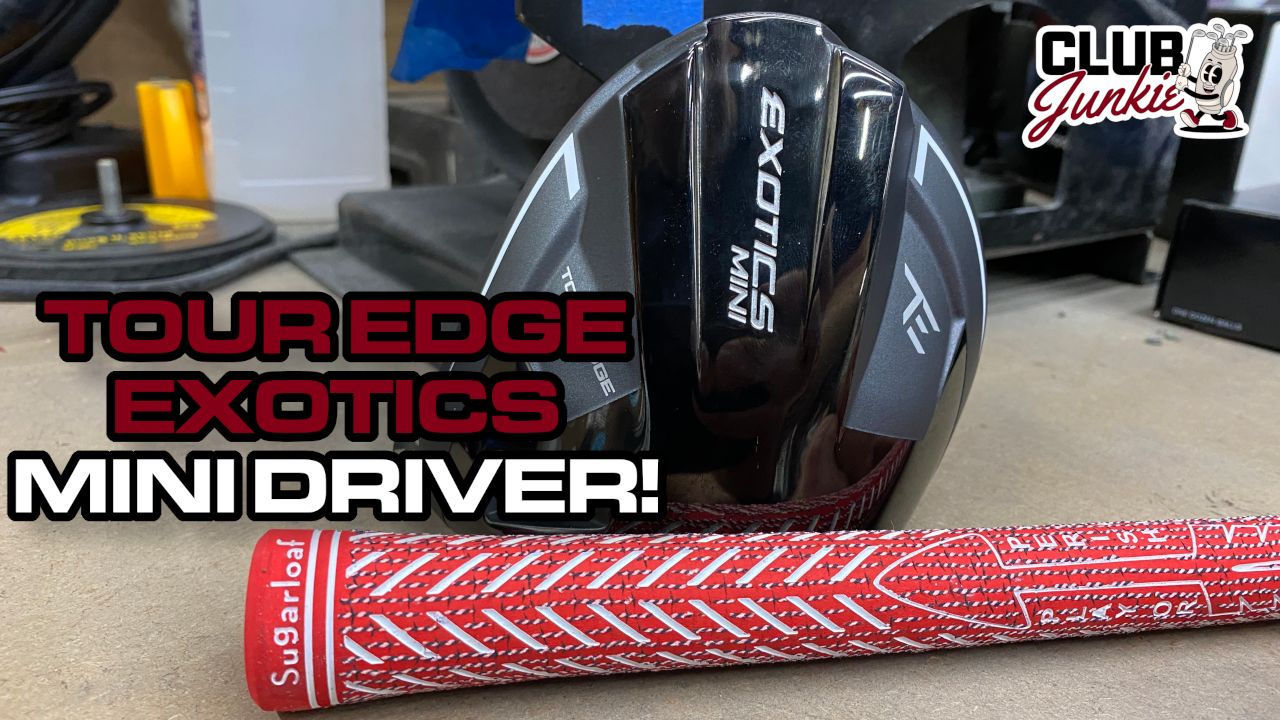
On this episode of Club Junkie, I put the new Tour Edge Exotics Mini Driver to the test and break down the performance, forgiveness, distance, and where it fits compared to a traditional driver or strong fairway wood. If you have been curious about adding a mini driver to the bag, this one is worth a look.
I also dive into the new TaylorMade Spider ZT Max putter that was recently spotted and discuss the growing zero torque putter trend. Plus, there is a closer look at the new Project X Titan Yellow shaft showing up on the PGA Tour and what makes it different from other profiles currently out there.

Justin Rose WITB 2026 (April): Full WITB breakdown with new McLaren irons

What’s the story behind Webb Simpson’s custom-stamped irons?

Memorial Tournament Tour Report: Rory McIlroy, Cameron Young switch up drivers, and more

Cadillac Championship Tour Report: Spieth’s sizable changes, McLaren Golf launches, and more

Russell Henley’s winning WITB: 2026 Charles Schwab Challenge

Kristoffer Reitan’s winning WITB: 2026 Truist Championship

Aaron Rai’s winning WITB: 2026 PGA Championship

J.T. Poston’s winning WITB: 2026 Memorial Tournament

Cameron Young’s winning WITB: 2026 Cadillac Championship

Best irons 2026: Best irons overall, most forgiving irons, and more


Bud Cauley WITB 2026 (June)
Bud Cauley had >14 clubs in his bag when photographed prior to the Memorial Tournament. Driver: Titleist GTS2 (8 degrees) Shaft: Fujikura...


Hannah Green WITB 2026 (June)
Driver: Titleist GTS3 (10 degrees, D4 SureFit setting) Shaft: Mitsubishi Chemical Diamana RB 53 S 3-wood: Titleist GT3 (15 degrees,...


Asterisk Talley WITB 2026 (June)
Driver: TaylorMade Qi4D (9 degrees) Shaft: Fujikura Ventus Blue 6 S 3-wood: TaylorMade Qi4D (16.5 degrees) Shaft: Fujikura Ventus Blue...

Brianna Do WITB 2026 (June)
Driver: Callaway Quantum Triple Diamond (9 degrees) Shaft: KBS PGW 3-wood: Callaway Elyte Titanium (15 degrees) Shaft: KBS PGW 5-wood:...
-
 Equipment6 days ago
Memorial Tournament Tour Report: Rory McIlroy, Cameron Young switch up drivers, and more
-
 News1 week ago
Russell Henley’s winning WITB: 2026 Charles Schwab Challenge
-
 Whats in the Bag3 days ago
J.T. Poston’s winning WITB: 2026 Memorial Tournament
-
 Equipment3 days ago
Best irons 2026: Best irons overall, most forgiving irons, and more
-

 Equipment1 week ago
Details on Jason Day’s latest prototype Avoda iron setup
-
 Equipment3 weeks ago
CJ Cup Byron Nelson Tour Report: Koepka and Kim’s newest putters finally get hot
-

 News2 weeks ago
Charles Schwab Challenge Tour Report: MacIntyre, Åberg and Spaun all switch putters, TaylorMade launches new Spider
-
 Equipment2 weeks ago
Details on J.J. Spaun’s surprise putter switch


ChipNRun
May 1, 2019 at 12:11 pm
Terry,
Some of the Golf Evolution pros suggest short-game wedge play of “engaging the bounce.” This means for chips and pitches the golfer skims a high bounce wedge along the ground to contact, rather than engaging the leading edge (hitting down) on the shot. This supposedly encourages more consistent contact.
Edel wedges (some sole grinds with 20+ degrees bounce) are popular with this group.
Any thoughts on this technique which encourages higher wedge bounce for everyone?
A. Commoner
Apr 25, 2019 at 12:52 pm
By last count, there were a half dozen characters labeled “THE wedge expert” (or some sort descriptor)…..Will the real ace of clubs please stand? and pretenders bow out!
Donn Rutkoff
Apr 23, 2019 at 10:53 am
Anybody tell or feel if any difference in feel in the new Mizuno wedges with boron, beginning with the T7 and now S18? I love my pre-boron S5. Wonder whether to buy another S5 or move up to S18 when the S5 grooves are too worn?
Steve Wozeniak PGA
Apr 20, 2019 at 11:34 am
Still got my Eidolon 60 degree, guess you can tell I can’t play much!!!!!
About to order my new Black Hogan 60 degree to replace!!!!! Going to LOVE having that Hogan name on it, Thanks Terry.
Steve Wozeniak PGA
David Bloom
Apr 18, 2019 at 8:20 pm
A great explanation. If you have time in the future would you comment of wedge shafts? Just purchased a new set of Titleist wedges(50 and54) with light weight steel shafts. My irons have UST senior shafts in them and these new Titleist wedges feel so very heavy. Should I have the same shafts in my wedges as my regular irons, or is there another way to determine which shafts would work? Thanks
Jamho3
Apr 6, 2019 at 5:35 am
Jeez was it 1998 or 1997 I think I heard something similar..
Four Scottish Gents played the 1st round of golf in the America’s
Former Hogan exec
No big box
Green grass only
Sound familiar to anyone not named TK? Here’s a pic of the old boys Reid is in the middle.
h ttp://www.fathersofgolf.com/uploads/3/1/0/6/31065683/2731918.jpg?428
Jamho3
Apr 6, 2019 at 5:23 am
Terry you’re still the man! Stop pre-selling & get out and start manufacturing! Seriously.
David Bloom
Apr 5, 2019 at 8:00 pm
Hard Sand. Very little sand Our traps are poor…Any ideas for a sand wedge
kevin moran
Apr 5, 2019 at 4:06 pm
The article makes sense and I think the writer was trying to stress the difficulties in following the manufacturers oft-repeated fitting suggestions. I will say however as to the demo part of the article, that too many of these things are aimed at country club types where the pro may offer these services. I’m a daily fee and public course guy. We don’t have the option to try and then buy.
Simms
Apr 15, 2019 at 7:30 pm
Amen brother, it would be great if someone would start a site for the public golfer and give tips and ideas that are not for the low handicapper or Pro. But then no one is going to fund anything that is aimed at the non Country Club types..no money in it.
Alfredo Smith
Apr 22, 2019 at 1:33 pm
Not completely wrong about finding new demo equipment, you need the access to a local shop or GC that supports demos. Another option would be to purchase older wedges to test out which bounce options work for you.
Terry Koehler
Apr 4, 2019 at 8:00 am
To all,
Thank you for both the kudos and the challenges to my article on bounce. As I said, this is the most complex aspect of wedges and you all make very good points. In this article I was trying to cover bounce from the most basic angle, so I could not get into as much detail as the subject demands and should get. Based on your input, this next Tuesday I will take a bit deeper dive into the subject, specifically those comments about manipulating the face angle to affect the bounce, carrying a variety of loft/bounce combinations and ways to get around that “on course trial” issue.
I appreciate all of you taking the time to comment, as that helps me become a better resource for you as we go forward together.
Terco
Apr 4, 2019 at 7:52 am
I play on thigh turf but soft soil. To make it worse I have an steep downswing. The fat shot happens all the time with low bounce. Tried all kinds of 60’s . My teacher allways said that the 60 is a dangerous club. Probably a 58/8 is the best club for the amateurs.
Leftshot
Apr 3, 2019 at 8:39 pm
Wish I could give two reactions. Because I thought his analysis was honest and insightful and his advice on what to do terrible. As noted by others, it isn’t practical or possible to put his trial and error suggestion into practice. Plus as the author himself stated we don’t have the finely tuned senses the pros have to detect the best fit anyway.
W
Apr 3, 2019 at 5:46 pm
Terry bring back the SCOR wedges still the best…
Steve Cartwright
Apr 3, 2019 at 4:29 pm
That’s what not to do now let’s hear how to do it. Just hitting shots during a round is not sufficient. You need a practice routine off grass with the same make of ball hitting a number of different shots. If you can’t measure the results reliably you cannot compare the results.
I liked the article but it’s not complete
By the way I have just changed my wedges after a process sonos to the above.
Jack Nash
Apr 3, 2019 at 4:03 pm
I would think the grain would effect how or what wedge you would use?
Dave r
Apr 3, 2019 at 3:22 pm
I don’t know where this gentleman plays but my pro would be like are you nuts demo wedge. Here’s one for $150.00 it will work now run along can’t you see I’m busy . Never heard of a demo wedge or a place that has them for that fact . Oh I have some the ones I bought that didn’t do the job want some ? Thanks for the article but no thanks.
Tee Lassar
Apr 3, 2019 at 2:27 pm
It’s not just about the bounce–there’s the issue of GRIND. If you look at, for example Vokey wedges there are T, C, P, L, R grinds which in combination with different lofts and bounce give a massive number of choices. Only trial and error on the range will help pick out the right ones. I suggest getting your gapping right, then select the wedges that work for the majority of lies and turf conditions you are likely to encounter, then take a short game course from Pelz et al and learn how to use your wedges properly
Brian Terry
Apr 3, 2019 at 11:43 am
WOW! The guy simply tells the truth and everybody piles on cause they didn’t hear what they expected. What he’s saying is the wedges YOU NEED will vary from course to course and sometimes from hole to hole. What does this mean???? You need to learn how to hit the right shots when you don’t have the ideal wedge. Sure, get the wedges that suit your typical swing and course, but practice in those areas that aren’t typical so you have experience to overcome NON-typical situations.
BT
Jack Wullkotte
Apr 3, 2019 at 10:29 am
Sorry, but this article is nothing but a bunch of double talk. Time and again, I have seen the touring pros skull shots, shank them, chili dip them and even whiff them. They very seldom show these shots on “the shot of the day.” How do you determine the amount of bounce you need to prevent skulling the ball? Duh.
Mark
Apr 3, 2019 at 9:13 am
Mr. Koehler, after reading your opening statement, and I quote “Based on my 25+ years as a wedge designer and marketer”, I thought here is an article which will add to my knowledge of wedges and bounce angles. Sadly, it did not. At all.
Alex
Apr 2, 2019 at 6:46 pm
Or maybe vary bounce per wedge…fluffy sand but also like to slide under it on chips go 56/14 and a 60/04 or 06 or 54/14 58/04 or something. Bounce doesn’t seem to be a full shot issue, but a partial shot or bunker issue. Maybe you are a 52 58 guy that uses your 58 for everything bunkers and chipping then go 8 bounce with a versatile grind that allows you some bounce in sand but not so much or versatile enough to slide under it. You really just gotta step up and hit the shot and rule of thumb bounce helps in the bunker unless the bunkers are rock hard then chip it out anyway and low bounce helps a lot on hitting the nipper with tons of spin. Personally think the worst is having a shot that calls for a ton of spin where you are short sided or need to really clip it and you stare down and find out you are holding a shovel and you know you are most likely gonna skull it cause the leading edge is 1/4 of the way up the ball.
Alex Fong
Apr 4, 2019 at 3:00 am
Bravo! Best answer of the bunch. This is what I do as well. One sand and one lob wedge will never be perfect for every situation, but if they are different in bounce and sole width, they can handle a wider variety of lies than if they are very similar. And in addition to their aspects on paper, the bounce of each wedge can varied by opening and closing the face. This expert could have taught us something by saying this and explaining how to handle his mixed-demand lies with the players differing angles of attacks. He could have also explained the difference uses/effects of wide vs. narrow sole as they are mixed with high bounce vs. low bounce. He gave us problems but gave us no guidance to think through the situation so each player could and pick the best tool for the job for them. Just suggested that we do what we’re already doing, experiment.
Larry
Apr 2, 2019 at 3:35 pm
I had to check the date on this article because it reads like an April fools joke. So, to sum-up the only way to know what wedge works the best is to try it on the course. That’s brilliant!
Rick
Apr 3, 2019 at 2:08 am
I was thinking the same…lol. Also the courses I usually play dont have a pro,they have “the guy at the desk”. This article is worthless.
A. Commoner
Apr 16, 2019 at 2:24 pm
This article will be followed by “The Sun Rises in the East and Other Useful Information.”
Richard
Apr 2, 2019 at 3:12 pm
I have a steep angle of attack. This is why, even as a single-digit handicap, I played Ping G series clubs instead of the I series.
When I switched to single-length clubs more than 2 years ago, I went to Wishon Sterlings. Loved them–and still game them without ever looking back at the Pings I left behind. But I really struggled with the gap wedge. I kept sweeping the club under the ball and popping it up. Then I looked over the specs and found that the bounce angle in the Sterling GW was 4 degrees shallower than in the Ping. No wonder! In fact, this was true throughout the set.
I still play with the same angle of attack, but I have the ball slightly further back in my stance. (Easy to do since it is the same with every iron!) I’m trapping it more, which actually increased both distance and spin, which I like. I don’t know if I could even return to a higher-bounce set, especially in the wedges.