
Opinion & Analysis
Changing St. Andrews: “Like drawing a mustache on the Mona Lisa”

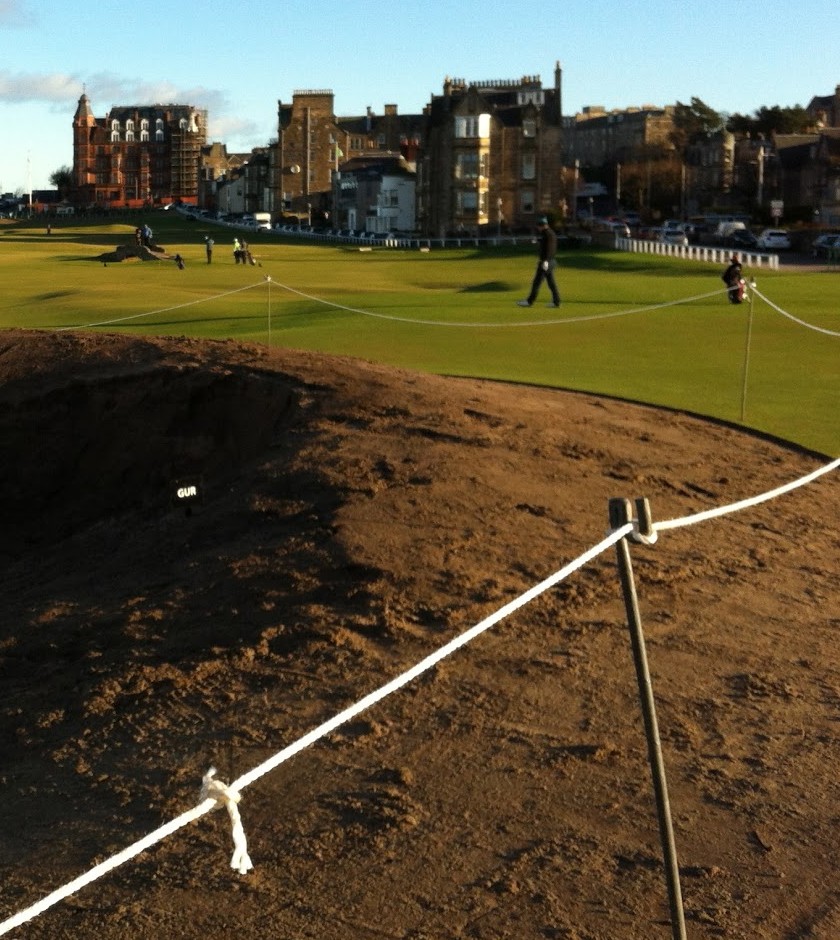
It’s a common occurrence: a golf course is cosmetically and strategically altered in preparation for a major championship.
The problem?
The course in question is The Old Course at St. Andrews, and the modifications—ahead of the 2015 Open Championship—will be the first changes to the “home of golf” in more than 70 years.
Further, the R&A’s simultaneous approval of architect Martin Hawtree’s proposed changes to the course and opposition to putter anchoring is strange, to say the least.
Matt Ginella from Golf Digest and Geoff Shackelford had an interesting back-and-forth on Twitter last week about the proposed modifications to the Old Course.
Ginella, the Senior Travel Editor at Golf Digest, took a “wait-and-see” attitude towards the changes. Additionally, he felt that both the “dramatic resistance” to the course alterations and the advent of the #savetheoldcourse hashtag on Twitter were unwarranted and overly-dramatic.
In the other corner: golf writer Geoff Shackelford, a hardline opponent of changes to the course.
Shackelford called Ginella out, assuming that any changes to the Old Course would be tantamount to butchery. He said the proposed changes are a “travesty” and likened the construction zone to a “crime scene,” on his website.
Shackelford may be acting primarily out of some theoretical opposition to any change to St. Andrews, but his nuanced breakdown of and objection to the changes is spot on. Additionally, Ginella is wrong to suggest that we ought to withhold judgment until the completion of the project because the public details of the specific changes Hawtree seeks to implement prove them to be overwhelmingly unnecessary.
As Golfweek’s Bradley Klein wrote, “I don’t know if these changes are all needed. What I do know is the reasons given for making them are unconvincing and not enough basis for tinkering with sacred ground.”
In judging Hawtree’s master plan for the Fife, Scotland treasure, it’s appropriate to look at what’s being proposed.
From Doug Ferguson’s AP piece:
Three bunkers will be moved closer to the putting surface – two on the second hole, one on the fourth hole. Two bunkers well to the right of the second hole – close to the third tee – will be removed. On the third hole, one fairway bunker will be removed, and one will be added about 275 yards off the tee. Another bunker will be added on the short par-4 ninth hole, about 25 yards short and to the left of the green.
The corners of six greens will be recontoured, which includes lowering the back of the green on the par-3 11th hole. A large depression in the landing area of the seventh fairway will be filled and a slight mound created.
As a variety of people indicate, the most egregious alterations to St. Andrews are those at the exceptional 11th hole and the Road Hole—St. Andrew’s iconic 17th.
The 17th green in front of the Road Bunker will be reshaped, and the bunker itself will be fiddled with. This act alone is comparable to a novice, with chisel in hand, attempting to alter the musculature of Michelangelo’s David.
The 11th green will be reshaped to accommodate a hole location on the left portion of the green. The left side of the green is, apparently, presently too quick in championship play to have such a hole location, according to Dawson. Of course, as a few people have suggested in the Twittersphere, the R&A could set an example and slow the greens down in line with the way they have rolled for the majority of the Old Course’s existence…or even the green speeds of the 1980s.
Of course, all of this was put into motion well before the R&A and USGA’s joint announcement of Rule 14-1b earlier this week.
Regardless, altering the most historic golf course in the world for flimsy reasons while complaining that a minority approach to putting is altering the game and offering little empirical data to support the conclusion seems like attacking tradition and then turning around and using it as a shield.
With the vagaries of Scottish weather in mind, the winning scores of the Open Championships contested at St. Andrew’s since 1984 have been 12-under, 18-under, 6-under, 19-under, 14-under and 16-under. True, recent winners are scoring better than the gents who were swinging persimmons, but there has not been a dramatic change in the past 30 years. Additionally, the R&A does not share the USGA’s belief in the sanctity of par and the scores are not alarming by tour standards.
Even if changes in golf club and ball technology enabled pros to routinely shoot 59s on the Old Course, alterations would have to be considered very, very carefully. As this is not the case (the 2010 Open winner, Louis Oosthuizen shot 65, 67, 69, 71) there is absolutely no need for any changes to the course based on how the pros have played it. Further, the assertion that the game’s best players have been manhandling the masterpiece in recent years is absurd.
As it is, there is no need to change the Old Course in order to make it competitive. With this in mind, I’m reminded of what someone once said regarding cosmetic changes to St. Andrew’s: “It’s a bit like drawing a mustache on the Mona Lisa,” said…Peter Dawson, the current head of the R&A in a 2002 Golf World interview.
Apparently, some ten years later, Dawson is ready to draw the mustache.
Click here for more discussion in the “Tour Talk” forum.
image c/o livingasalinksgolfer.blogspot.co.uk




This past Monday, I played in the U.S. Amateur local qualifier at Rock Creek Country Club in Portland, Oregon. A full tee sheet from 7:30 a.m. to 1:55 p.m., the top 11 scores would make it to the U.S. Amateur final qualifying.
I teed off at 10:48 a.m.. With the 7:30 am tee time, you can get a feel for the leaders’ pace, and they were off and running on the challenging setup at Rock Creek.
View this post on Instagram
Getting to the highlight of the round on the par five 17th, a drive up the left side and 212 yards left to the front hole location. I took out a 5-iron with plans of middle of the green. The ball ended up 8 feet left of the hole, pin high. A slight downhill putt dropped in for an eagle 3 on the 17th. With the cut line looking to be anywhere from -2 to even par. This was the boost I had been waiting for all day.
With making par from the trees on 18, it was time to wait for a potential playoff with a posted score of one under par 71.
Three hours later, it was playoff time. 8 players for 6 spots. I made par on the playoff hole, which was good enough to advance to the U.S. Amateur final qualifying in July. USGA qualifiers sure deliver on all of the emotions in golf!
Club Junkie
Building my 2026 gamer WITB: Ranking the contenders and new putter projects – Club Junkie Podcast

The annual What’s In The Bag build is underway, and on this episode of Club Junkie, Brian breaks down the clubs currently leading the race for a spot in his 2026 gamer setup. From drivers and fairway woods to irons, wedges, and shafts, he ranks the equipment that’s performing best and explains what’s separating the front runners from the rest of the field.
Brian also heads into the workshop to discuss several putter projects currently on the bench. From head options and shaft choices to build ideas and testing plans, he shares what he’s working on and which putters could become serious contenders for the bag this season.
If you’re a gear junkie who loves equipment testing, club building, and the never-ending pursuit of the perfect setup, this episode is for you.
Follow Club Junkie:
Instagram: @clubjunkiepod
TikTok: @clubjunkiepod
Threads: @clubjunkiepod
X: @ClubJunkiePod
Club Junkie
Tour Edge Exotics mini driver review + TaylorMade Spider ZT Max first look – Club Junkie

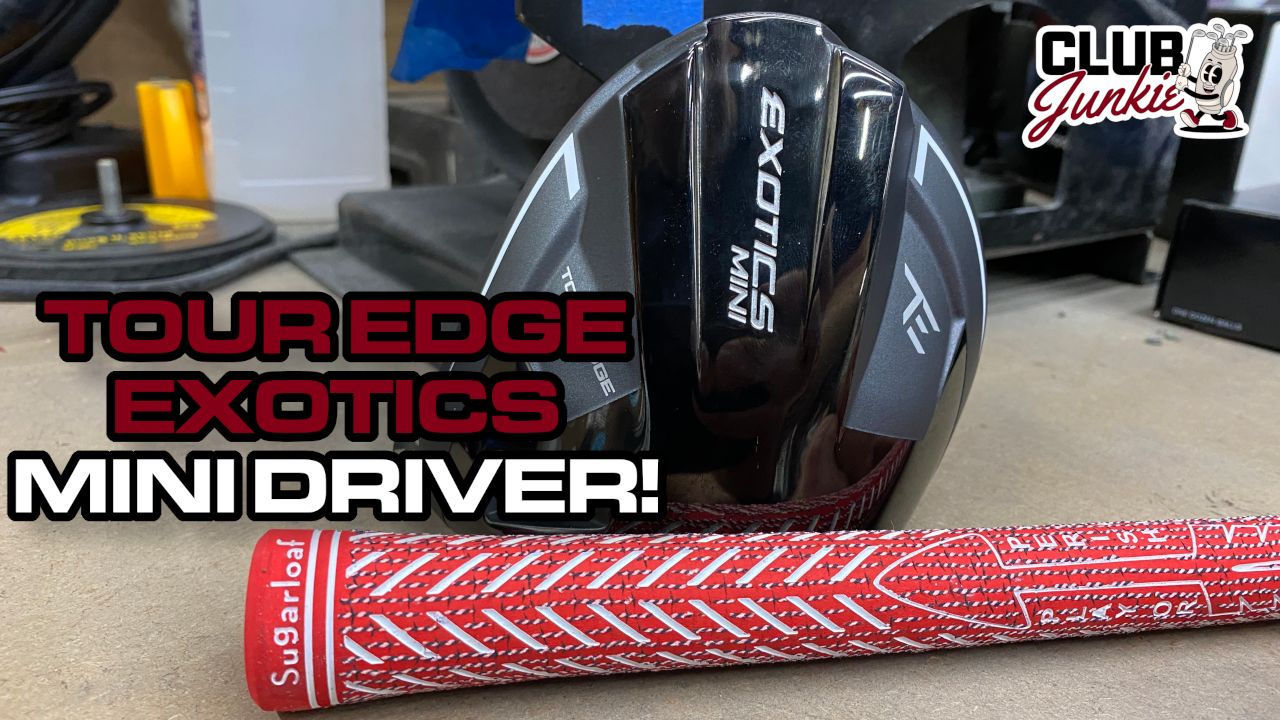
On this episode of Club Junkie, I put the new Tour Edge Exotics Mini Driver to the test and break down the performance, forgiveness, distance, and where it fits compared to a traditional driver or strong fairway wood. If you have been curious about adding a mini driver to the bag, this one is worth a look.
I also dive into the new TaylorMade Spider ZT Max putter that was recently spotted and discuss the growing zero torque putter trend. Plus, there is a closer look at the new Project X Titan Yellow shaft showing up on the PGA Tour and what makes it different from other profiles currently out there.

Justin Rose WITB 2026 (April): Full WITB breakdown with new McLaren irons

What’s the story behind Webb Simpson’s custom-stamped irons?

Memorial Tournament Tour Report: Rory McIlroy, Cameron Young switch up drivers, and more

Cadillac Championship Tour Report: Spieth’s sizable changes, McLaren Golf launches, and more

Russell Henley’s winning WITB: 2026 Charles Schwab Challenge

Kristoffer Reitan’s winning WITB: 2026 Truist Championship

J.T. Poston’s winning WITB: 2026 Memorial Tournament

Best irons 2026: Best irons overall, most forgiving irons, and more

Aaron Rai’s winning WITB: 2026 PGA Championship

Cameron Young’s winning WITB: 2026 Cadillac Championship


Bud Cauley WITB 2026 (June)
Bud Cauley had >14 clubs in his bag when photographed prior to the Memorial Tournament. Driver: Titleist GTS2 (8 degrees) Shaft: Fujikura...


Hannah Green WITB 2026 (June)
Driver: Titleist GTS3 (10 degrees, D4 SureFit setting) Shaft: Mitsubishi Chemical Diamana RB 53 S 3-wood: Titleist GT3 (15 degrees,...


Asterisk Talley WITB 2026 (June)
Driver: TaylorMade Qi4D (9 degrees) Shaft: Fujikura Ventus Blue 6 S 3-wood: TaylorMade Qi4D (16.5 degrees) Shaft: Fujikura Ventus Blue...

Brianna Do WITB 2026 (June)
Driver: Callaway Quantum Triple Diamond (9 degrees) Shaft: KBS PGW 3-wood: Callaway Elyte Titanium (15 degrees) Shaft: KBS PGW 5-wood:...
-
 Equipment6 days ago
Memorial Tournament Tour Report: Rory McIlroy, Cameron Young switch up drivers, and more
-
 News2 weeks ago
Russell Henley’s winning WITB: 2026 Charles Schwab Challenge
-
 Whats in the Bag4 days ago
J.T. Poston’s winning WITB: 2026 Memorial Tournament
-
 Equipment3 days ago
Best irons 2026: Best irons overall, most forgiving irons, and more
-

 Equipment1 week ago
Details on Jason Day’s latest prototype Avoda iron setup
-

 Equipment3 weeks ago
CJ Cup Byron Nelson Tour Report: Koepka and Kim’s newest putters finally get hot
-

 News2 weeks ago
Charles Schwab Challenge Tour Report: MacIntyre, Åberg and Spaun all switch putters, TaylorMade launches new Spider
-

 Equipment2 weeks ago
Details on J.J. Spaun’s surprise putter switch


03trdblack
Dec 3, 2012 at 1:47 pm
These new changes are obviously a direct result of the massive negative impact the belly putter has had on the game. They have nothing to do with the titanium drivers, graphite shafts, or modern golf balls….