
Opinion & Analysis
Don’t know the National Association of Intercollegiate Athletics? Here’s why you should

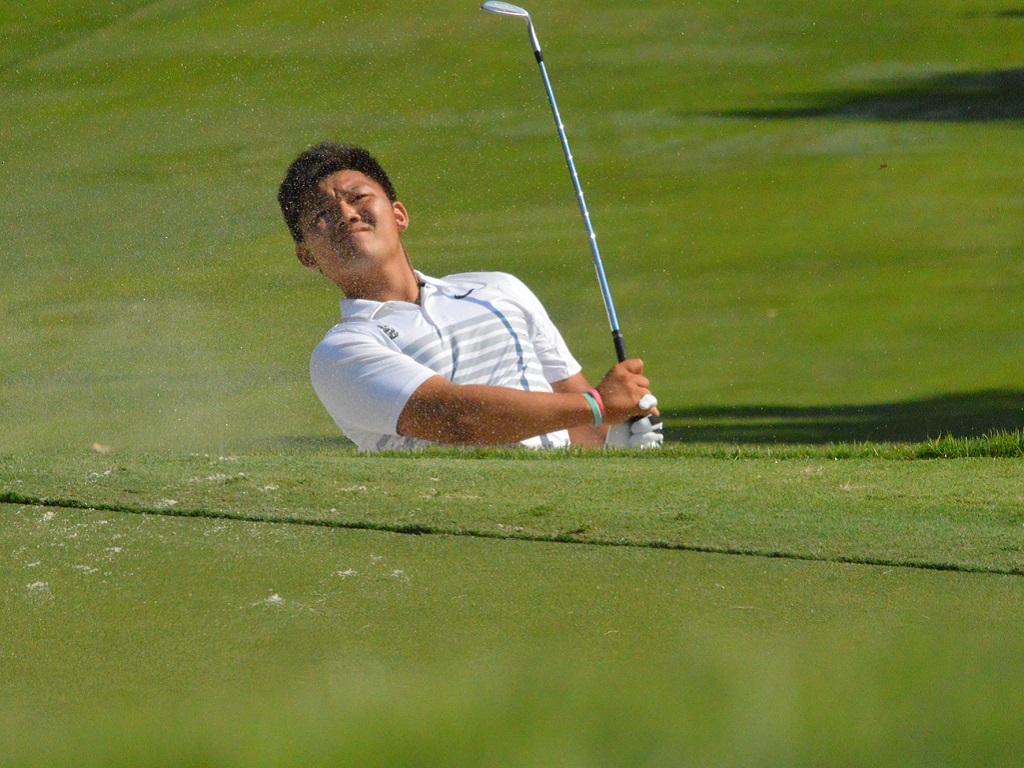
Let’s start with a little college golf quiz: Name the college golfer who, in 2017, won the Nicklaus Award, played a PGA Tour event, won five times and earned a spot on the Palmer Cup? Hint: it’s not Braden Thornberry, Justin Suh or Norman Xiong. The answer is Dalton State’s outstanding freshman S.M. Lee (pictured in the featured image).
For many reading this article, you may be confused. Who’s S.M. Lee and even more importantly, where is Dalton State? If that’s your reaction, great! This article is written to help introduce you to the emerging world of National Association of Intercollegiate Athletics, golfers, including players like S.M. Lee, and schools, like Oklahoma City, Texas Wesleyan, Coastal Georgia, Wayland Baptist, Marymount University (California), Keiser University, University of South Carolina Beaufort, Ottawa University Arizona and Dalton State.
Oklahoma City University
When discussing NAIA golf, it is important to note the success of one person: Kyle Blaser. Blaser, the coach of the 2018 NAIA National Champion Oklahoma City University Stars, is a 21-year veteran of the NAIA. During his career, he has won 11 national championships, 11 regional championships, 19 conference championships, and 107 tournament titles.
However, maybe the most important contribution Blaser has made is setting a high bar for other coaches — this year, his team shot net under par for three of nine events including 9 under at the national championship, a team low round of 263, and a team individual scoring average of 71.64 per player or 286.5 per team round.
The standard set by Blaser has resulted in a fiercely competitive group of teams. According to GolfStat, seven teams in the NAIA finished the season with team scoring averages of 73 or better. According to my data, this would put them among approximately the top 60 teams in Division I Golf. This is demonstrated by several schools including Keiser University and Dalton State. Overall, in 2018 Keiser had a 16-3 record vs. NCAA DI teams and 18-3 record vs. NCAA DII. Similarly, when Dalton State had the opportunity to compete in the prestigious Carpet Capital hosted by Georgia Tech in the fall, they finished 12th out of 15 teams, beating Virginia, UT-Chattanooga, and Troy.
NAIA golf is also starting to attract younger, professional coaches. Recently, Johnson and Wales University hired Danny Randolph to lead their men’s team. Randolph’s resume includes time in the Big 12 at Texas Christian University, as well as two team national championships during his time at Lynn University. Randolph follows in the footsteps of individuals like Ben Rickett, who left University of Tennessee Chattanooga to start Dalton State after helping Steven Fox win the 2012 U.S. Amateur at Cherry Hills on the 37th hole.
Danny Randolph, the head coach at Johnson and Wales, came to the program from Lynn University where his team won back to back NCAA Division II titles. According to Randolph,
“I grew up in the NAIA, first watching and then playing at Bethel College. There are very good athletes and programs at the NAIA level in all sports but especially golf. Many teams travel the country competing on tour level golf courses against very good competition, often NCAA DI and DII schools. Universities invest time and resources, so the student-athletes have a tremendous college experience.”
The players
In 2017, the NAIA also featured 13 players in Golfstat Cup, each with an adjusted stroke average below par. The highest player ranked is S.M. Lee of Dalton State at six. He is also No. 103 in the World Amateur Golf Rankings, a two-time Nickulas Award Winner who played in the 2017 Barbasol Championship and will represented the United States in the 2018 Palmer Cup.
Another player of note is Rowan Lester of Texas Wesleyan. A review I did after the fall semester demonstrated his tournament handicap to be +4.5. Pretty impressive, however the NAIA has a tradition of attracting talented players: Jim Renner and Tyrone Van Aswegen are a couple examples of individuals who used NAIA golf as a path to the PGA Tour.
Like teams from other divisions, NAIA coaches spend countless hours searching out the world’s best talent. As a result, a review of rosters demonstrated that many teams have both significant diversity and skill. For example, Keiser University features players from eight countries and seven states and have inked No. 197 on NJGS, Kritchayapol Sinchai and four other players with WAGR rankings for 2018.
According to Keiser Coach Brandon Miller, “the NAIA has been getting stronger and deeper every year. The talent pool of players in our fields and the depth of school’s with talented players are impressive. We are at the point where our NAIA tournaments are deeper and more competitive than the mid-major NCAA D1 events we play. I think many NAIA school’s can offer the same if not more to the student-athlete’s development as a golfer, student, and person in terms of facilities, tournament schedule, academics, and support. NAIA golf is on the rise; it’s exciting to see where we’ll be in a few years.”
The facilities
Beyond the quality of the play, maybe the most impressive (and overlooked) aspect of NAIA golf is the quality facilities. For example, Keiser University has an on-campus practice facility, as well as access to PGA National, host of the Honda Classic. Likewise, according to Ben Rickett, the head men’s coach Dalton State,
“We have access to so many good golf courses that allows us to draw some quality golfers to the school including The Farm and Dalton Golf and Country Club. We also have The Honors Course (2010 NCAA venue), Barnsley Gardens and Council Fire within an hour.”
I saw the nature of these facilities first hand, as I recently visited Ottawa University Arizona and head coach Clayton Sikorski in Phoenix, Arizona. Between touring campus and learning more about this dynamic new university, we had the opportunity to play rounds at Wigwam and Quintero. I quickly fell in love with Quintero, not only because I won, but because of the immaculate condition and breath-taking change of evaluation. Simply spectacular.
Why not NAIA?
Based on this the question is, “Why not NAIA?” At the root, it’s about stigma: People want the cache of dropping terms like “Division I” and “full scholarship.” However, I hope that readers will consider a different paradox: Schools should not be characterized by division, but instead by funding — either funded or not funded. A student athlete who is serious about pursuing golf should be less worried about the “division” and more about the school’s commitment to funding the program. By having this perspective, student athletes will find a school, coach, and team that is more likely to meet their golf expectations and enhance the experience of college golf.



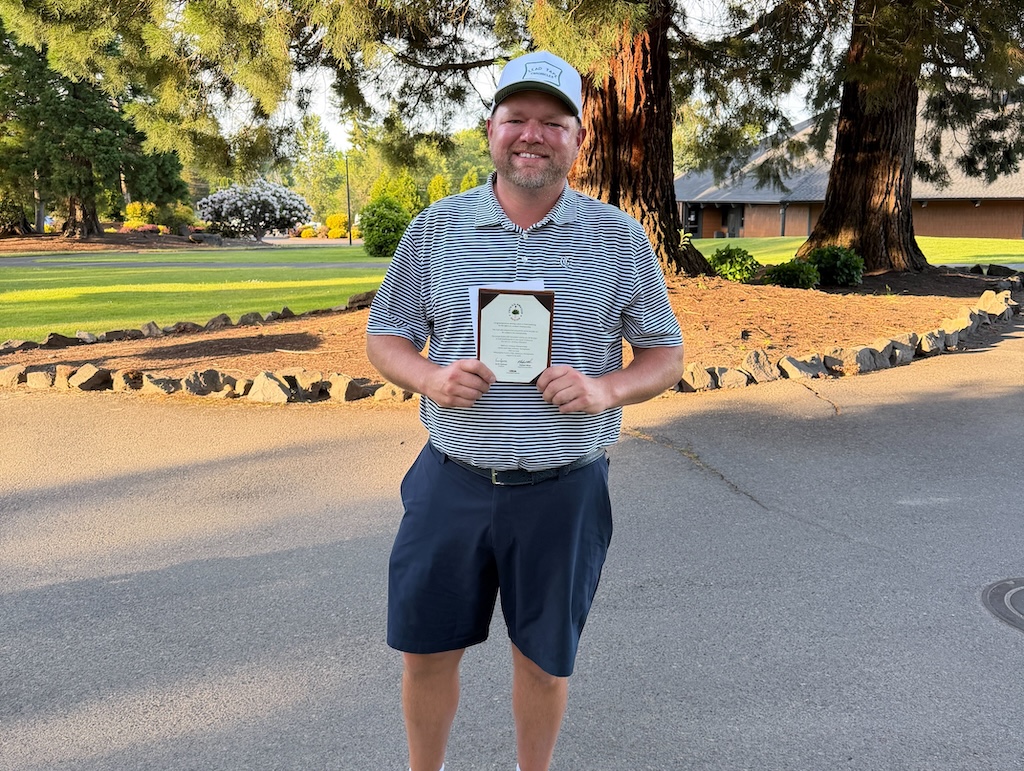
This past Monday, I played in the U.S. Amateur local qualifier at Rock Creek Country Club in Portland, Oregon. A full tee sheet from 7:30 a.m. to 1:55 p.m., the top 11 scores would make it to the U.S. Amateur final qualifying.
I teed off at 10:48 a.m.. With the 7:30 am tee time, you can get a feel for the leaders’ pace, and they were off and running on the challenging setup at Rock Creek.
View this post on Instagram
Getting to the highlight of the round on the par five 17th, a drive up the left side and 212 yards left to the front hole location. I took out a 5-iron with plans of middle of the green. The ball ended up 8 feet left of the hole, pin high. A slight downhill putt dropped in for an eagle 3 on the 17th. With the cut line looking to be anywhere from -2 to even par. This was the boost I had been waiting for all day.
With making par from the trees on 18, it was time to wait for a potential playoff with a posted score of one under par 71.
Three hours later, it was playoff time. 8 players for 6 spots. I made par on the playoff hole, which was good enough to advance to the U.S. Amateur final qualifying in July. USGA qualifiers sure deliver on all of the emotions in golf!
Club Junkie
Building my 2026 gamer WITB: Ranking the contenders and new putter projects – Club Junkie Podcast


The annual What’s In The Bag build is underway, and on this episode of Club Junkie, Brian breaks down the clubs currently leading the race for a spot in his 2026 gamer setup. From drivers and fairway woods to irons, wedges, and shafts, he ranks the equipment that’s performing best and explains what’s separating the front runners from the rest of the field.
Brian also heads into the workshop to discuss several putter projects currently on the bench. From head options and shaft choices to build ideas and testing plans, he shares what he’s working on and which putters could become serious contenders for the bag this season.
If you’re a gear junkie who loves equipment testing, club building, and the never-ending pursuit of the perfect setup, this episode is for you.
Follow Club Junkie:
Instagram: @clubjunkiepod
TikTok: @clubjunkiepod
Threads: @clubjunkiepod
X: @ClubJunkiePod
Club Junkie
Tour Edge Exotics mini driver review + TaylorMade Spider ZT Max first look – Club Junkie

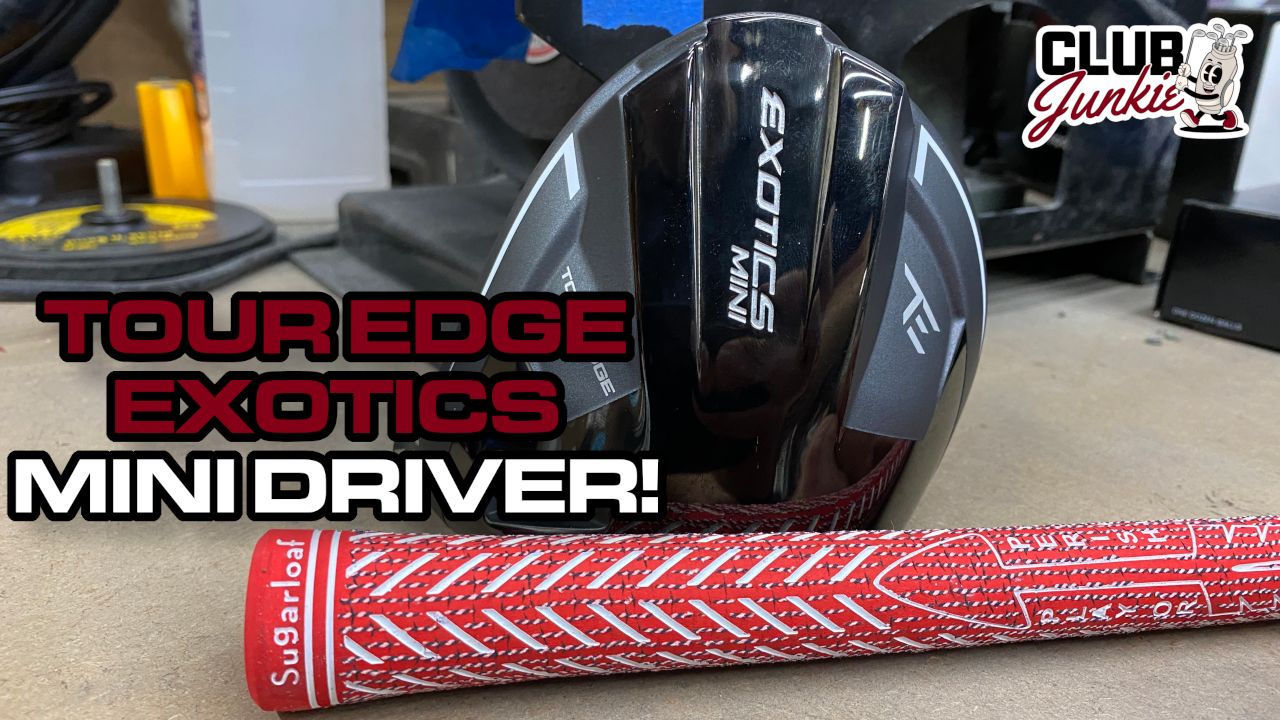
On this episode of Club Junkie, I put the new Tour Edge Exotics Mini Driver to the test and break down the performance, forgiveness, distance, and where it fits compared to a traditional driver or strong fairway wood. If you have been curious about adding a mini driver to the bag, this one is worth a look.
I also dive into the new TaylorMade Spider ZT Max putter that was recently spotted and discuss the growing zero torque putter trend. Plus, there is a closer look at the new Project X Titan Yellow shaft showing up on the PGA Tour and what makes it different from other profiles currently out there.

What’s the story behind Webb Simpson’s custom-stamped irons?

Memorial Tournament Tour Report: Rory McIlroy, Cameron Young switch up drivers, and more

Cadillac Championship Tour Report: Spieth’s sizable changes, McLaren Golf launches, and more

Russell Henley’s winning WITB: 2026 Charles Schwab Challenge

Kristoffer Reitan’s winning WITB: 2026 Truist Championship

Best irons 2026: Best irons overall, most forgiving irons, and more

J.T. Poston’s winning WITB: 2026 Memorial Tournament

Aaron Rai’s winning WITB: 2026 PGA Championship

Cameron Young’s winning WITB: 2026 Cadillac Championship

Details on Jason Day’s latest prototype Avoda iron setup


Christiaan Maas WITB 2026 (June)
Driver: TaylorMade Qi4D LS (8 degrees) Shaft: Fujikura Ventus TR Blue 6 X 3-wood: TaylorMade Qi10 (15 degrees) Shaft: Fujikura Ventus Black...


Ryan Palmer WITB 2026 (June)
Driver: Callaway Quantum Triple Diamond (9 degrees) Shaft: Project X HZRDUS Smoke Blue RDX 60 TX 3-wood: TaylorMade Qi10 (15 degrees) Shaft:...


Bud Cauley WITB 2026 (June)
Bud Cauley had >14 clubs in his bag when photographed prior to the Memorial Tournament. Driver: Titleist GTS2 (8 degrees) Shaft: Fujikura...


Hannah Green WITB 2026 (June)
Driver: Titleist GTS3 (10 degrees, D4 SureFit setting) Shaft: Mitsubishi Chemical Diamana RB 53 S 3-wood: Titleist GT3 (15 degrees,...
-
 Equipment6 days ago
Memorial Tournament Tour Report: Rory McIlroy, Cameron Young switch up drivers, and more
-
 News2 weeks ago
Russell Henley’s winning WITB: 2026 Charles Schwab Challenge
-
 Equipment3 days ago
Best irons 2026: Best irons overall, most forgiving irons, and more
-
 Whats in the Bag4 days ago
J.T. Poston’s winning WITB: 2026 Memorial Tournament
-
 Equipment1 week ago
Details on Jason Day’s latest prototype Avoda iron setup
-

 Equipment3 weeks ago
CJ Cup Byron Nelson Tour Report: Koepka and Kim’s newest putters finally get hot
-

 News2 weeks ago
Charles Schwab Challenge Tour Report: MacIntyre, Åberg and Spaun all switch putters, TaylorMade launches new Spider
-

 Equipment2 weeks ago
Details on J.J. Spaun’s surprise putter switch


Lorne Kelly
Nov 14, 2018 at 2:31 am
A fantastic article! If the infrastructure is there and there’s a good tournament schedule why would anyone dismiss NAIA!? Decent SAT’s and GPA’s can give fantastic financial packages which makes it affordable. Ultimately, if all of these things are in place it’s up to the individual to succeed anyway. There’s no magic formula with Governing bodies and Divisions! Take note people…well said Sam Russell ????????????
Dan
Nov 10, 2018 at 3:58 pm
Division doesn’t matter if you’re not playing. The most important decision is to find a school you fee you’ll be able to play tournaments for.