
Opinion & Analysis
The numbers you need to get a college golf scholarship

One of the most perplexing issues for junior golfers and their families is understanding where to look and how much scholarship (if any) they should expect. In this article, I want to introduce you to the coach’s perspective in recruiting, explain their thought process and then help you understand where to look and approximately how much to expect.
As a college student I was blessed to work a lot of college golf camps with a ton of great coaches. These coaches quickly taught me a lot, including a key rule when recruiting; when you first watch a player, image you can make four more copies. Then imagine with a team of five of them, where would you be ranked? Would you make regionals? Nationals? Match Play? Win it all?
Obviously at each level these numbers are different. So, let’s start by looking at some numbers:
In Division I Men’s Golf, the No. 1 team in Golfstat Cup finished with a scoring average of 69.99. The last team to make regionals (Michigan State) had an average score for their top four of 72.86. The 125th team at the end of the year last year was UC Riverside. The best player on the team averaged 73.93 for the year, while the fourth player averaged 77.51. Dartmouth was the 200th team had three players average better than 75 with the fourth player averaging 76.74.
In Division I Women’s, the No. 1 team in Golfstat Cup was Alabama which boasted an average of 70.93 among their top four. The last team to make regionals on the women’s side was Missouri. For the season, Missouri had a stroke average of 295.4. The 100th best team was Georgetown, with a scoring average of 303.64 (75.91 per player). The 200th best team in women’s golf was Appalachian State women’s golf. They had a team average of 312 (78 per player).
In DII Golf, West Florida Men were the best regular season team with a scoring average among their top four of 70.75. For Women, the best team, as well as eventual National Champions, was Indianapolis with a scoring average of 73.45 among their top four. The 25th team in DII Men’s Golf had an average among their top four of 73.47 and for women the number was 77.03. The 50th ranked team for Men averaged 294.7 as a team (73.675 per player), while the 50th women’s team averaged 322.3 (80.5 per player).
For DIII, the best men’s team was Methodist. Their top four averaged 73, while the top four for the best women’s team averaged 75.32. The 25th best men’s team top four averaged 74.96 and the top four for the 25th ranked women’s team averaged 81.37. The 50th ranked men’s team averaged 302.4 as a team (75.6 per player).
In the NAIA, the best men’s team top four averaged 71.64, while in women’s golf the number was 75.32. The 25th best men’s team averaged 73.13, while the 25th best women’s number was 78.53.
Now, let’s consider where you fit. Many students reading this article will have a ranking on Junior Golf Scoreboard. One aspect of the ranking is your scoring differential. Look that number up. Once you have it, add approximately one shot. Why one? For lots of reasons, including: college golf is likely harder, for many reasons not limited to having to balance school and golf, courses are less familiar, there can be more travel and you are often playing 72 holes in three grueling days.
Based on the competitive nature of college golf, most teams ranked within the top 30 percent of DI, 20 percent of DII and five percent of DIII and NAIA will likely require a scoring differential of one or better to even become a candidate since the data suggests that they need players who in college can average 73 or better (at worst). When considering allotting their scholarships, coaches are going to strongly consider your ability to contribute “countable rounds”; what is the likelihood and how often will your score count. When coaches think you will count at least 75 percent of the time is when they are most likely to make substantial offers.
Obviously, not everyone reading this article has a scoring differential of one or better. This does not mean that you cannot play college golf, nor does it mean that you cannot get a scholarship. The data suggests that as schools move towards the mean, they become less interested in pure golf results and more interested in the player’s “fit;” that is how they will represent the school and preform academically, as well as shoot scores which can contribute to the team’s ability to finish within the top three at their conference tournament.
Players with higher scoring differentials should certainly be concerned about their golf, but it is likely that the most appealing thing they can do is earn good grades and high test scores. Since approximately 50 percent of programs at every level don’t have full scholarship allotments, they often rely on academic money to package intriguing financial packages to attract prospective student athletes.
For girls, the range is much greater. Likely girls with scoring differentials of four or better are going to get significant attention, but it is likely that anyone with a scoring differential of six or better has a chance to not only get a large scholarship but likely that will come at the Division I level. Again, for female perspective student athletes with scoring differentials above six, don’t worry, there are lots of opportunities, however, like your male counterparts, make sure to get the best grades and test scores possible. They are likely to help and save you thousands of dollars!




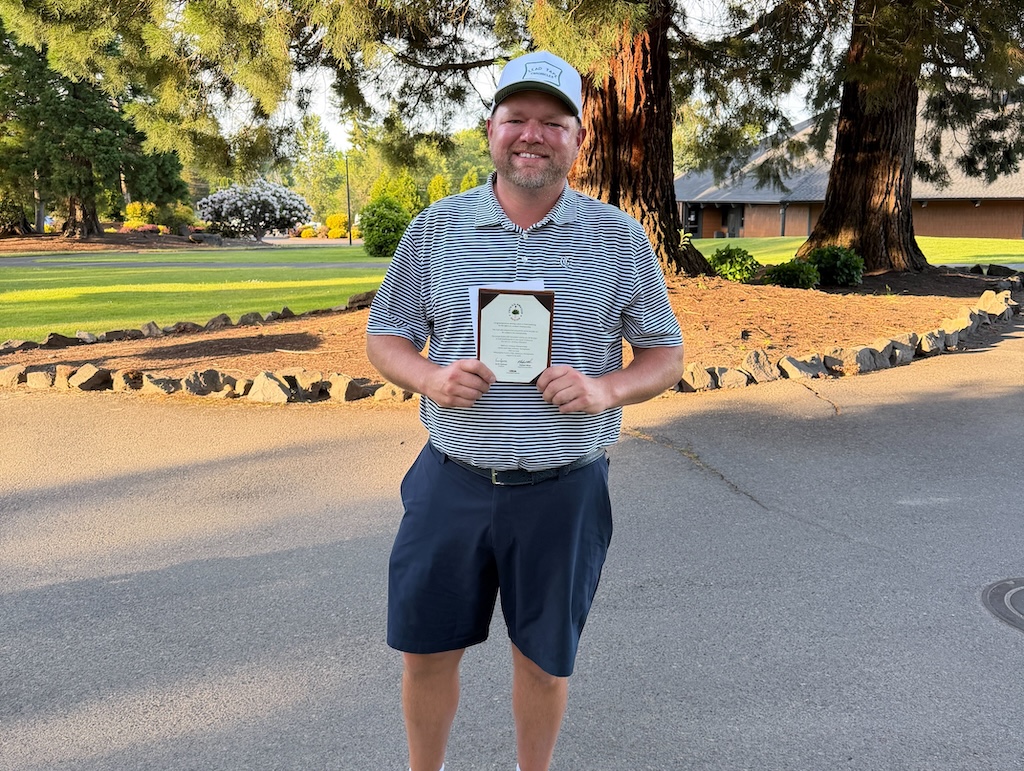
This past Monday, I played in the U.S. Amateur local qualifier at Rock Creek Country Club in Portland, Oregon. A full tee sheet from 7:30 a.m. to 1:55 p.m., the top 11 scores would make it to the U.S. Amateur final qualifying.
I teed off at 10:48 a.m.. With the 7:30 am tee time, you can get a feel for the leaders’ pace, and they were off and running on the challenging setup at Rock Creek.
View this post on Instagram
Getting to the highlight of the round on the par five 17th, a drive up the left side and 212 yards left to the front hole location. I took out a 5-iron with plans of middle of the green. The ball ended up 8 feet left of the hole, pin high. A slight downhill putt dropped in for an eagle 3 on the 17th. With the cut line looking to be anywhere from -2 to even par. This was the boost I had been waiting for all day.
With making par from the trees on 18, it was time to wait for a potential playoff with a posted score of one under par 71.
Three hours later, it was playoff time. 8 players for 6 spots. I made par on the playoff hole, which was good enough to advance to the U.S. Amateur final qualifying in July. USGA qualifiers sure deliver on all of the emotions in golf!
Club Junkie
Building my 2026 gamer WITB: Ranking the contenders and new putter projects – Club Junkie Podcast

The annual What’s In The Bag build is underway, and on this episode of Club Junkie, Brian breaks down the clubs currently leading the race for a spot in his 2026 gamer setup. From drivers and fairway woods to irons, wedges, and shafts, he ranks the equipment that’s performing best and explains what’s separating the front runners from the rest of the field.
Brian also heads into the workshop to discuss several putter projects currently on the bench. From head options and shaft choices to build ideas and testing plans, he shares what he’s working on and which putters could become serious contenders for the bag this season.
If you’re a gear junkie who loves equipment testing, club building, and the never-ending pursuit of the perfect setup, this episode is for you.
Follow Club Junkie:
Instagram: @clubjunkiepod
TikTok: @clubjunkiepod
Threads: @clubjunkiepod
X: @ClubJunkiePod
Club Junkie
Tour Edge Exotics mini driver review + TaylorMade Spider ZT Max first look – Club Junkie

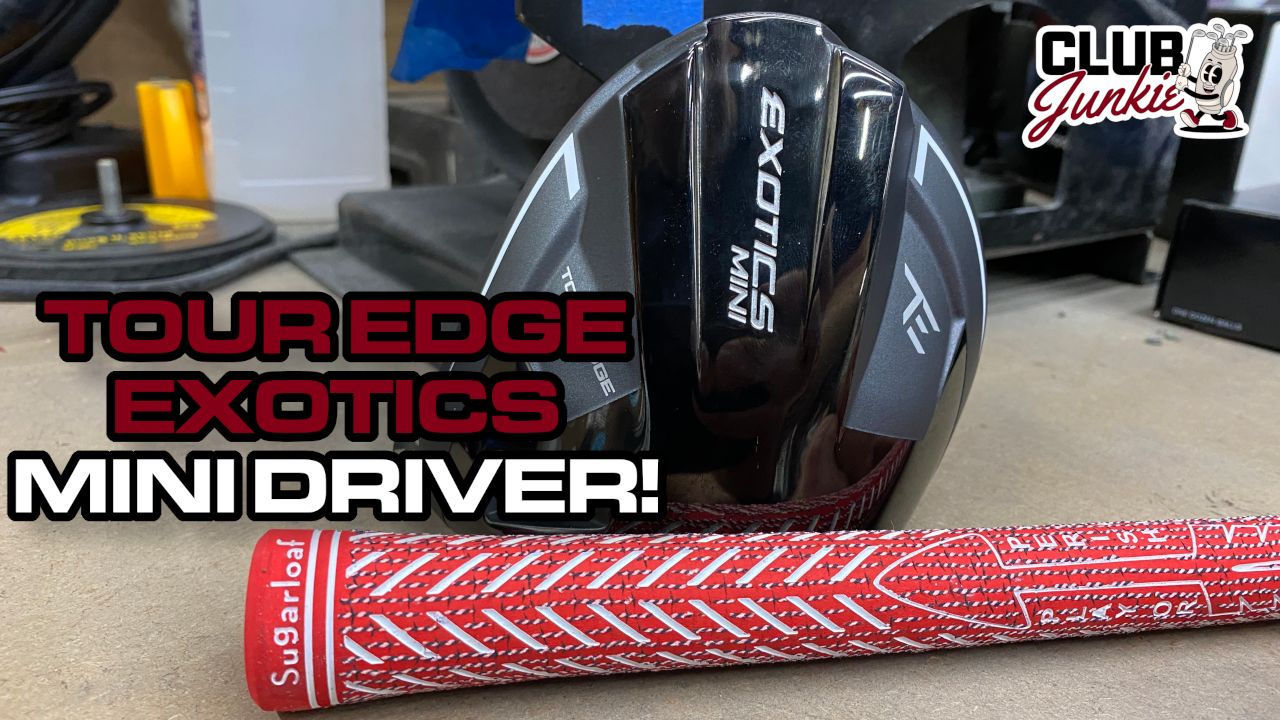
On this episode of Club Junkie, I put the new Tour Edge Exotics Mini Driver to the test and break down the performance, forgiveness, distance, and where it fits compared to a traditional driver or strong fairway wood. If you have been curious about adding a mini driver to the bag, this one is worth a look.
I also dive into the new TaylorMade Spider ZT Max putter that was recently spotted and discuss the growing zero torque putter trend. Plus, there is a closer look at the new Project X Titan Yellow shaft showing up on the PGA Tour and what makes it different from other profiles currently out there.

What’s the story behind Webb Simpson’s custom-stamped irons?

Memorial Tournament Tour Report: Rory McIlroy, Cameron Young switch up drivers, and more

Cadillac Championship Tour Report: Spieth’s sizable changes, McLaren Golf launches, and more

Russell Henley’s winning WITB: 2026 Charles Schwab Challenge

Kristoffer Reitan’s winning WITB: 2026 Truist Championship

Best irons 2026: Best irons overall, most forgiving irons, and more

J.T. Poston’s winning WITB: 2026 Memorial Tournament

Aaron Rai’s winning WITB: 2026 PGA Championship

Cameron Young’s winning WITB: 2026 Cadillac Championship

Details on Jason Day’s latest prototype Avoda iron setup


Ryan Palmer WITB 2026 (June)
Driver: Callaway Quantum Triple Diamond (9 degrees) Shaft: Project X HZRDUS Smoke Blue RDX 60 TX 3-wood: TaylorMade Qi10 (15 degrees) Shaft:...


Bud Cauley WITB 2026 (June)
Bud Cauley had >14 clubs in his bag when photographed prior to the Memorial Tournament. Driver: Titleist GTS2 (8 degrees) Shaft: Fujikura...


Hannah Green WITB 2026 (June)
Driver: Titleist GTS3 (10 degrees, D4 SureFit setting) Shaft: Mitsubishi Chemical Diamana RB 53 S 3-wood: Titleist GT3 (15 degrees,...


Asterisk Talley WITB 2026 (June)
Driver: TaylorMade Qi4D (9 degrees) Shaft: Fujikura Ventus Blue 6 S 3-wood: TaylorMade Qi4D (16.5 degrees) Shaft: Fujikura Ventus Blue...
-
 Equipment6 days ago
Memorial Tournament Tour Report: Rory McIlroy, Cameron Young switch up drivers, and more
-
 News2 weeks ago
Russell Henley’s winning WITB: 2026 Charles Schwab Challenge
-
 Equipment3 days ago
Best irons 2026: Best irons overall, most forgiving irons, and more
-
 Whats in the Bag4 days ago
J.T. Poston’s winning WITB: 2026 Memorial Tournament
-
 Equipment1 week ago
Details on Jason Day’s latest prototype Avoda iron setup
-
 Equipment3 weeks ago
CJ Cup Byron Nelson Tour Report: Koepka and Kim’s newest putters finally get hot
-

 News2 weeks ago
Charles Schwab Challenge Tour Report: MacIntyre, Åberg and Spaun all switch putters, TaylorMade launches new Spider
-

 Equipment2 weeks ago
Details on J.J. Spaun’s surprise putter switch


Walter
Oct 24, 2018 at 9:31 pm
I am a 48 year old with eligibility left. (2.0 handicap) LOL. What is the average yardage and course rating these players play?
Austin
Nov 13, 2018 at 1:36 pm
I play college golf for a high level division II team… I would say the average course we play is about 7,000-7,200 yards and has a course rating of around 74.5. In 4 rounds of qualifying, it typically takes a final score around Even (or roughly 288) to make the starting 5.
Nuno
Oct 24, 2018 at 2:51 pm
Do you have any college preparation coaches recommendations in Northern California for a 13 year old with a tournament play 1.3 handicap?
Dan
Oct 24, 2018 at 3:19 pm
keep it up! work on your shortgame
Christian
Oct 25, 2018 at 10:03 am
Develop speed, the courses get much longer. Get used to walking 36 holes.
Ryan Michael
Oct 24, 2018 at 1:17 pm
So simply break 80 and you’ll have numerous schools knocking at your doorstep. Yawn.
Adkskibum
Oct 24, 2018 at 7:30 pm
Data analysis is not your strong suit is it?
Left Hand Down
Dec 7, 2018 at 9:42 am
Did you even read the article?
Jamie
Oct 24, 2018 at 11:08 am
2 things:
1. Makes no mention of the difference in course difficulty between DI and DIII and NAIA. Yes, there is a difference.
2. Next time make a table and don’t bury the information in useless verbage.
Nancy
Mar 2, 2019 at 12:58 pm
Not 100% sure on your comment about course difficulty based on D1 vs NAIA.
My NAIA school played , this Fall, PGA National West Palm, Doral Red Tiger and Blue Monster, Kinderlou plus Innisbrooke.
mel
Oct 24, 2018 at 10:30 am
went through this whole scenario with my female junior player.
i like to think that i was realistic about the possibility of scholarships.
small D1 schools did not even reply to emails, resumes, phone calls, school
visit to meet the coach. even though a few D1 schools offered scholarship ,ended up getting a partial scholarship to a small D2 program. she just did not like the campus and went with her gut feeling.
in the end, i think it’s best for the student-athlete to happy with school and academics first.
then golf would most likely be easier.
Dan
Oct 23, 2018 at 7:33 pm
I was offered scholarships in 1994. I would’ve been laughed at today.
AKaufman
Oct 23, 2018 at 5:34 pm
Its tough, I graduated in 2005. Had a -0.5 under par average in high school.
won some local amateur stuff.
Was living in CA, best full ride offers I was getting was East coast D1’s not the big time programs. Most big western schools invited me to walk on and try out.
Adkskibum
Oct 24, 2018 at 7:33 pm
So, what did you do? did you take the East Coast offer? If so, how’d it work out?