
Opinion & Analysis
Data Study: Does climate matter for young golfers looking to reach top levels of golf?

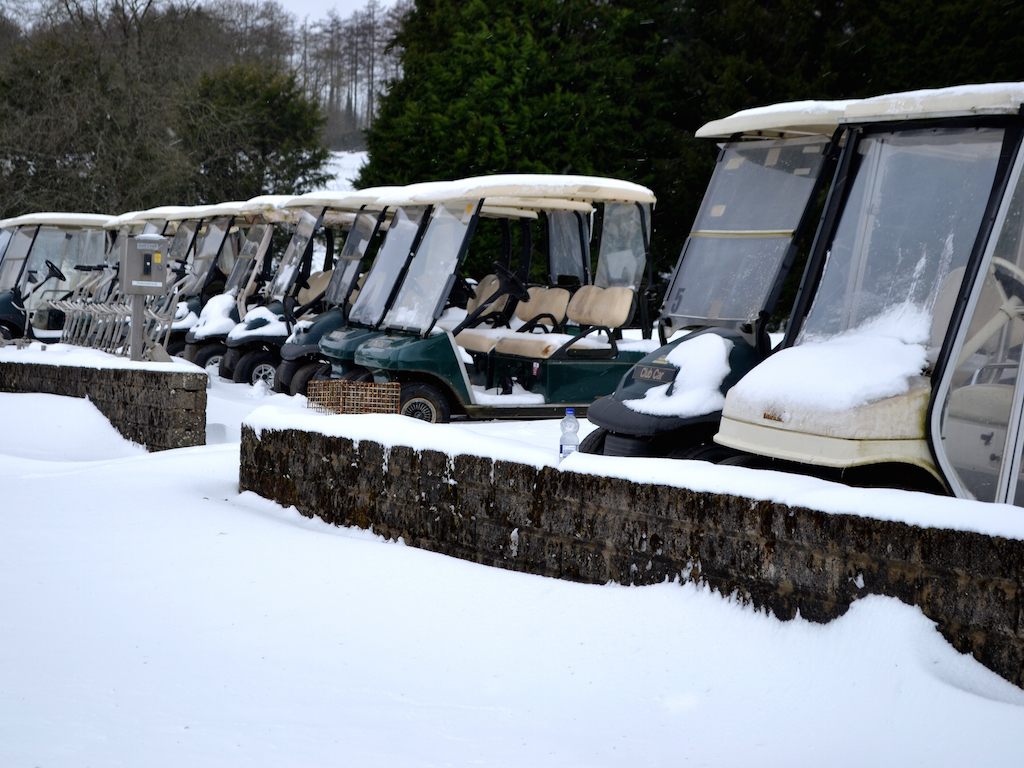
Let me ask you a question: When considering college, what’s the most important thing to you? Based on data collected on thousands of junior golfers, the top 3 answers are: academics, the coach and weather.
Since I love data, I thought it would be interesting to see how much weather actually matters for the development of golfers. I examined the weather for junior golf homes of top 20 male professional golfers, current top 20 amateurs in the World Amateur Golf Rankings and the last 20 individual NCAA National Champions. When gathering the data, I categorized each player on the list based on data from weather.com into 3 categories:
- 300+ days of golf per year with weather of at least 60 degrees
- 225+ days of golf per year with weather of at least 60 degrees
- 150 or so days of golf per year with weather of at least 60 degrees
Examples of 1’s are Florida, Arizona, Texas, Georgia, South Carolina and California, examples of 2’s are Ohio, Oklahoma, Texas and examples of 3 are South Korea, Northern Ireland, Wisconsin, Canada and the Dakota’s.
Please note: while players might be from the same country, the regions have very different climates. Since the climates are different, the players ended in dissimilar categories.
The top 20 Players in the World
Category 1
Dustin Johnston (South Carolina), Brooks Keopka (Florida), Jordan Spieth (Texas), Rickie Fowler (California), Jason Day (Australia), Patrick Reed (Texas), Bubba Watson (Florida), Phil Mickelson (California), Marc Leishman (Australia), Sergio (Spain)
Total = 10
Category 2
Justin Thomas (Kentucky), John Rahm (Spain), Hideki Matsuyama (Japan), Franscesco Molinari (Italy)
Total = 4
Category 3
Justin Rose (England), Rory McIlroy (N. Ireland), Tommy Fleetwood (England), Paul Casey (England), Alex Noren (Sweden), Henrik Stenson (Sweden)
Total = 6
Top 20 Players in the World Amateur Golf Ranking
Category 1
Braden Thornberry (Mississippi), Justin Suh (California), Collin Morikawa (California), Min Woo Lee (Australia), Chandler Phillips (Texas, Fredrik Nilehn (Texas), Sadom Kaewkanjana (Thailand), Andy Zhang (Florida), Matthew Wolff (California / Oklahoma), Angel Hidalgo Portillo (Spain), Shintaro Ban (Nevada)
Total = 11
Category 2
Zach Bauchou (Oklahoma/Virginia)
Total = 1
Category 3
Victor Hovland (Oklahoma/Norway), Matthew Jordan (England), Oliver Gillbery (Sweden), Nicolai Hojgaard (Denmark), Robin Dawson (Ireland), Todd Clements (England), , David Micheluzzi (Australia), Stewart Hagestad (New York)
Total = 8
The last 20 Individual NCAA Champions
Category 1
Braden Thornberry (Mississippi), Aaron Wise (Cape Town, SA / Live in California), Max Homa (California), John Peterson (Texas), Kevin Chappell (California), Jamie Lovemark (California), Jonathan Moore (California), Alejandro Canizares (Spain), Troy Matteson (Florida), Charles Howell (Georgia) and James Mclean (Australia)
Total = 11
Category 2
James Lepp (Canada)
Total = 1
Category 3
Broc Everett (Iowa), Cameron Wilson (Connecticut), Thomas Pieters (Belgium), Scott Langley (Illinois), Matt Hill (Canada), Ryan Moore (Washington), Nick Gilliam (Wisconsin), Luke Donald (England)
Total = 8
Conclusion
Based on the data, 53 percent (32/60) came from category 1 climates, 10 percent (6/60) came from category 2 climates and 37 percent (22/60) came from category 3 climates. Surprised? While more research is needed to fully understand the nuances, environment is certainly tied to the individuals learning. Based on this, here are some takeaways for players from different climates.
Ideal Climates: While you have the best opportunity based on the weather and course conditions to shoot a good score, it is important to invest in developing different shot shapes and trajectories, as well as learning to play in the rain / wind when it comes; next time it’s raining in Southern California run to the first tee and get in 9 holes. When the weather is idea, consider playing different games to sharpen your skills. For example, play with just irons, or ever other iron, or the rough out of bounds or play where your competitor names the shot shape you need to hit each shot.
Less than Ideal Climates: While you have less opportunity to shoot low scores in perfect weather and conditions, you have great opportunities to invest in skills that will serve you in the long run. In my experience the best players from these climates use cold months very carefully to refine technical skills through lots of block practice. They are also diligent about the time they have on the course, keeping careful stats and making sure nice days are spent at the course engaged in competition. When the weather is not ideal, don’t be afraid to play from a much shorter yardage to ensure you can still shoot good scores.



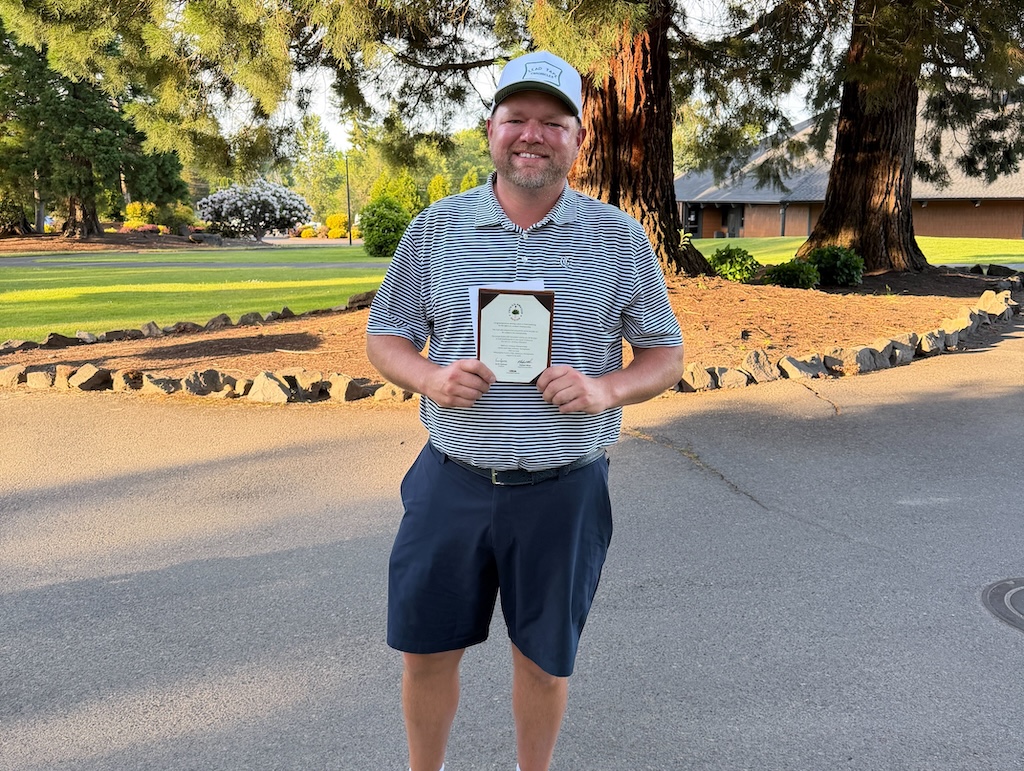
This past Monday, I played in the U.S. Amateur local qualifier at Rock Creek Country Club in Portland, Oregon. A full tee sheet from 7:30 a.m. to 1:55 p.m., the top 11 scores would make it to the U.S. Amateur final qualifying.
I teed off at 10:48 a.m.. With the 7:30 am tee time, you can get a feel for the leaders’ pace, and they were off and running on the challenging setup at Rock Creek.
View this post on Instagram
Getting to the highlight of the round on the par five 17th, a drive up the left side and 212 yards left to the front hole location. I took out a 5-iron with plans of middle of the green. The ball ended up 8 feet left of the hole, pin high. A slight downhill putt dropped in for an eagle 3 on the 17th. With the cut line looking to be anywhere from -2 to even par. This was the boost I had been waiting for all day.
With making par from the trees on 18, it was time to wait for a potential playoff with a posted score of one under par 71.
Three hours later, it was playoff time. 8 players for 6 spots. I made par on the playoff hole, which was good enough to advance to the U.S. Amateur final qualifying in July. USGA qualifiers sure deliver on all of the emotions in golf!
Club Junkie
Building my 2026 gamer WITB: Ranking the contenders and new putter projects – Club Junkie Podcast

The annual What’s In The Bag build is underway, and on this episode of Club Junkie, Brian breaks down the clubs currently leading the race for a spot in his 2026 gamer setup. From drivers and fairway woods to irons, wedges, and shafts, he ranks the equipment that’s performing best and explains what’s separating the front runners from the rest of the field.
Brian also heads into the workshop to discuss several putter projects currently on the bench. From head options and shaft choices to build ideas and testing plans, he shares what he’s working on and which putters could become serious contenders for the bag this season.
If you’re a gear junkie who loves equipment testing, club building, and the never-ending pursuit of the perfect setup, this episode is for you.
Follow Club Junkie:
Instagram: @clubjunkiepod
TikTok: @clubjunkiepod
Threads: @clubjunkiepod
X: @ClubJunkiePod
Club Junkie
Tour Edge Exotics mini driver review + TaylorMade Spider ZT Max first look – Club Junkie

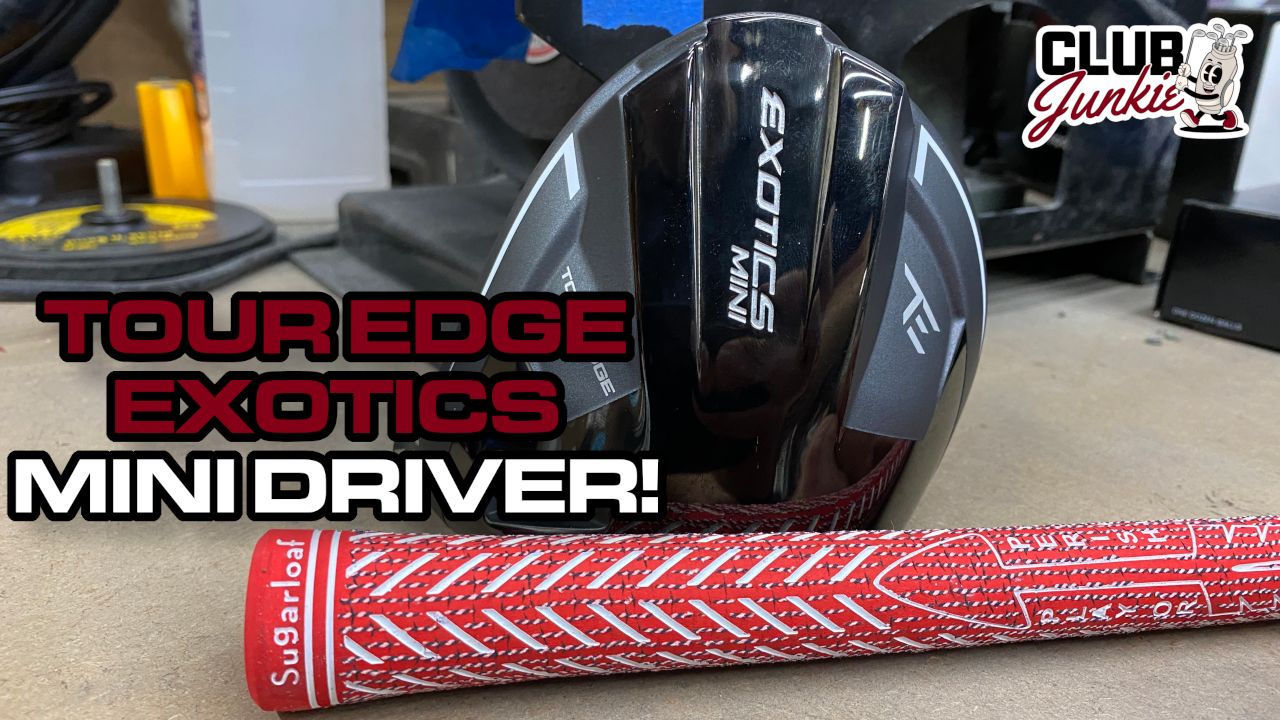
On this episode of Club Junkie, I put the new Tour Edge Exotics Mini Driver to the test and break down the performance, forgiveness, distance, and where it fits compared to a traditional driver or strong fairway wood. If you have been curious about adding a mini driver to the bag, this one is worth a look.
I also dive into the new TaylorMade Spider ZT Max putter that was recently spotted and discuss the growing zero torque putter trend. Plus, there is a closer look at the new Project X Titan Yellow shaft showing up on the PGA Tour and what makes it different from other profiles currently out there.

What’s the story behind Webb Simpson’s custom-stamped irons?

Memorial Tournament Tour Report: Rory McIlroy, Cameron Young switch up drivers, and more

Cadillac Championship Tour Report: Spieth’s sizable changes, McLaren Golf launches, and more

Russell Henley’s winning WITB: 2026 Charles Schwab Challenge

Kristoffer Reitan’s winning WITB: 2026 Truist Championship

Best irons 2026: Best irons overall, most forgiving irons, and more

J.T. Poston’s winning WITB: 2026 Memorial Tournament

Aaron Rai’s winning WITB: 2026 PGA Championship

Cameron Young’s winning WITB: 2026 Cadillac Championship

Details on Jason Day’s latest prototype Avoda iron setup


Christiaan Maas WITB 2026 (June)
Driver: TaylorMade Qi4D LS (8 degrees) Shaft: Fujikura Ventus TR Blue 6 X 3-wood: TaylorMade Qi10 (15 degrees) Shaft: Fujikura Ventus Black...


Ryan Palmer WITB 2026 (June)
Driver: Callaway Quantum Triple Diamond (9 degrees) Shaft: Project X HZRDUS Smoke Blue RDX 60 TX 3-wood: TaylorMade Qi10 (15 degrees) Shaft:...


Bud Cauley WITB 2026 (June)
Bud Cauley had >14 clubs in his bag when photographed prior to the Memorial Tournament. Driver: Titleist GTS2 (8 degrees) Shaft: Fujikura...


Hannah Green WITB 2026 (June)
Driver: Titleist GTS3 (10 degrees, D4 SureFit setting) Shaft: Mitsubishi Chemical Diamana RB 53 S 3-wood: Titleist GT3 (15 degrees,...
-
 Equipment7 days ago
Memorial Tournament Tour Report: Rory McIlroy, Cameron Young switch up drivers, and more
-
 News2 weeks ago
Russell Henley’s winning WITB: 2026 Charles Schwab Challenge
-
 Equipment4 days ago
Best irons 2026: Best irons overall, most forgiving irons, and more
-
 Whats in the Bag4 days ago
J.T. Poston’s winning WITB: 2026 Memorial Tournament
-
 Equipment1 week ago
Details on Jason Day’s latest prototype Avoda iron setup
-
 Equipment3 weeks ago
CJ Cup Byron Nelson Tour Report: Koepka and Kim’s newest putters finally get hot
-

 News2 weeks ago
Charles Schwab Challenge Tour Report: MacIntyre, Åberg and Spaun all switch putters, TaylorMade launches new Spider
-

 Equipment2 weeks ago
Details on J.J. Spaun’s surprise putter switch


2Putt
Oct 4, 2018 at 9:32 am
I thought Texas was category 2…?
Polar Bear
Oct 4, 2018 at 4:07 am
Fredrik Nilehn is from Gothenburg in Sweden but goes to Texas Tech