
Opinion & Analysis
What makes Bryson DeChambeau so good? A deep dive into the numbers


I can relate, in a way, to this mad scientist of golf. When I had the idea to create a better method of analyzing golf by comparing each shot to a computer model of “scratch” performance 29 years ago, I was considered quite strange. My idea is now what is known as strokes gained analysis and has become the accepted standard for golf analysis. If you are interested in my journey, read The History of Strokes Gained on my website, ShotByShot.com.
Given Bryson’s recent success, will we all soon be switching to 7-iron length irons and practicing Bryson’s one-plane swing? I doubt it, but it is clear that Bryson is here to stay, so I decided to see exactly how his recent winning performance compares to that of other winners on the PGA Tour. Accordingly, I ran my analysis of Bryson’s ShotLink data for his three wins (The Memorial, The Northern Trust and the most recent Dell Technologies Championship). I compared this analysis to a similar analysis of all of the PGA Tour winners in 2017. For added perspective, I ran the same analysis for the entire 2017 Tour and for all the players that missed cuts in 2017.
As Bryson’s data sample is only 12 rounds on three courses, one might question how the numbers might be skewed by the differences in relative course difficulty as well as the relative strength of the fields. I believe we can agree that Bryson has won on relatively difficult courses and against very strong fields. Accordingly, I will overlook these factors.
Tee Game: Driving
Bryson’s driver is normal length. It is his irons that are all 37.5 inches long, or about the length of a standard 7 iron – why do the TV commentators always say “6 iron”? Anyway, Bryson’s unique one-plane swing produces long, straight drives. He averaged over 300 yards, 15 yards longer than the field, and hit more fairways than the 2017 winners. Further, Bryson (Blue arrows below) had 35% fewer driving errors than those made by the 2017 winners. So LONG and STRAIGHT! Perhaps we all should be working on our 1-plane swings?

Approach shots
I put Bryson’s approach game as not quite as good as the 2017 winners. His strokes gained relative to the field’s is not as strong (perhaps this can be attributed to stronger fields?). Bryson did hit more greens-in-regulation (blue arrows below). BUT remember he hit more fairways and made fewer errors. Finally, Bryson’s proximity when he hits the greens* is closer to the 2017 Tour average than it is to the 2017 winners.

*I look at “Proximity” much differently than the PGA Tour. The Tour’s proximity to hole includes approach shots that miss the green within 30 yards of the green’s edge. I believe a miss is a miss and should not be counted at all. For more on why, read my 2/26/18 GolfWRX article: “Is Tiger’s “No.1 Proximity to the Hole” a meaningless stat?”
Short Game (shots from within 50 yards of the hole)
Again, Bryson’s wedges are 7-iron length, about two to three inches longer than a standard sand wedge. His short game data would indicate that the extra length does not present an issue from the sand. I chalk this up to the fact that for the most part greenside sand shots tend to be full swings. It is the shape of the swing that controls distance not the length.
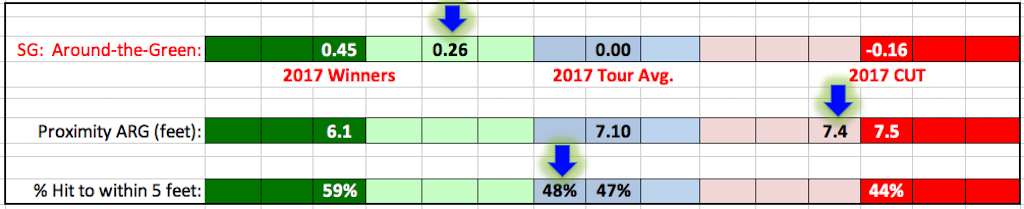
Chipping and pitching, on the other hand, require a myriad of different swings and touch shots. The longer shafts seem to have a negative impact here which has been mentioned many times in the TV coverage. Below (Blue arrows) show that Bryson’s strokes gained around-the-green are about half the margin from the field’s as the 2017 winners. His chipping and pitching results are nowhere near the 2017 Winners. Perhaps Bryson should consider at least one normal length wedge for use around the greens? To support this, Bryson was ranked No. 118 in strokes gained around the green, with a negative .034 strokes gained thru the Well Fargo Championship (more than half way thru the season). He has improved since to No. 63 and a +.15 strokes gained in this category.
Putting
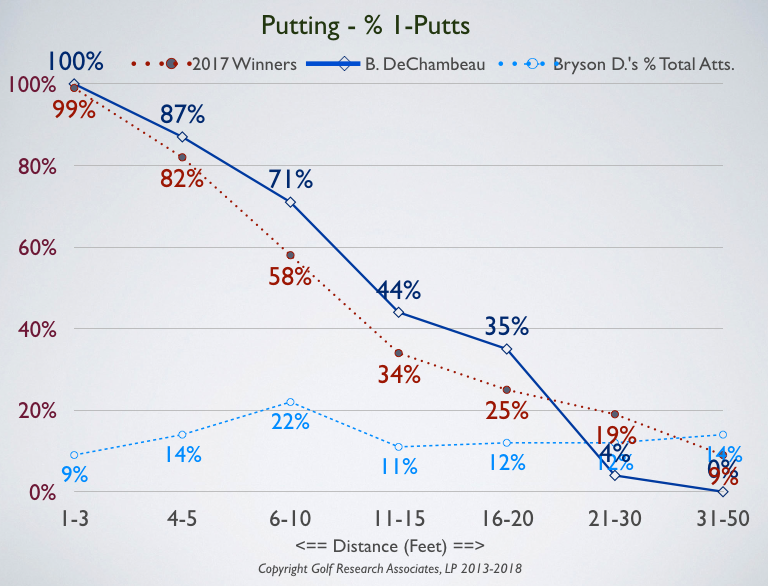
Bryson’s putter is 39 inches long, about three inches longer than standard, and he rests the grip against his left forearm. Personally, I believe his stance and stroke look very stiff and mechanical, which may account for what I discovered in his putting stats. Bottom line, he is outstanding from fairly close range (inside 20 feet), but very average from 30-plus feet. Bryson has almost TWICE as many three-putts as the 2017 winners from 30-plus feet (.5/round vs. .29/round for the 2017 winners). This makes sense to me as stiff and mechanical do not seem compatible with “feel” and optimal distance control.
That said, his success from close range might more than offset his apparent long-range weakness. Note below that Bryson’s one-putt success is noticeably better than the 2017 winners from every distance up to 20 feet. Incidentally, these ranges represent 68 percent of Bryson’s first putt opportunities. Very impressive! I may look more closely into Bryson’s short putting technique.
In conclusion, while Bryson DeChambeau is a maverick, he has found a unique method that works for him and has now made the entire golf world take notice. Will he change golf? Possibly. If he continues to have success, and I believe he will, I can see the aspiring, young players trying to adopt his methods just as many started to learn to putt while anchoring. As an aside, I firmly believe that the ultimate ban on anchoring had little to do with those of us that were struggling with the skill but everything to do with the fast-growing number of juniors that were having success using OUR crutch.
That is not to say that anything that Bryson is currently doing could be construed to be illegal. But he is clearly being watched. His side-saddle putting was thwarted by the USGA, and more recently, his use of a compass to help read his putts. Who knows what he will come up with next? I will be watching too!
For a complete Strokes Gained Analysis of your game, log on to ShotByShot.com and sign up for a one-round free trial.




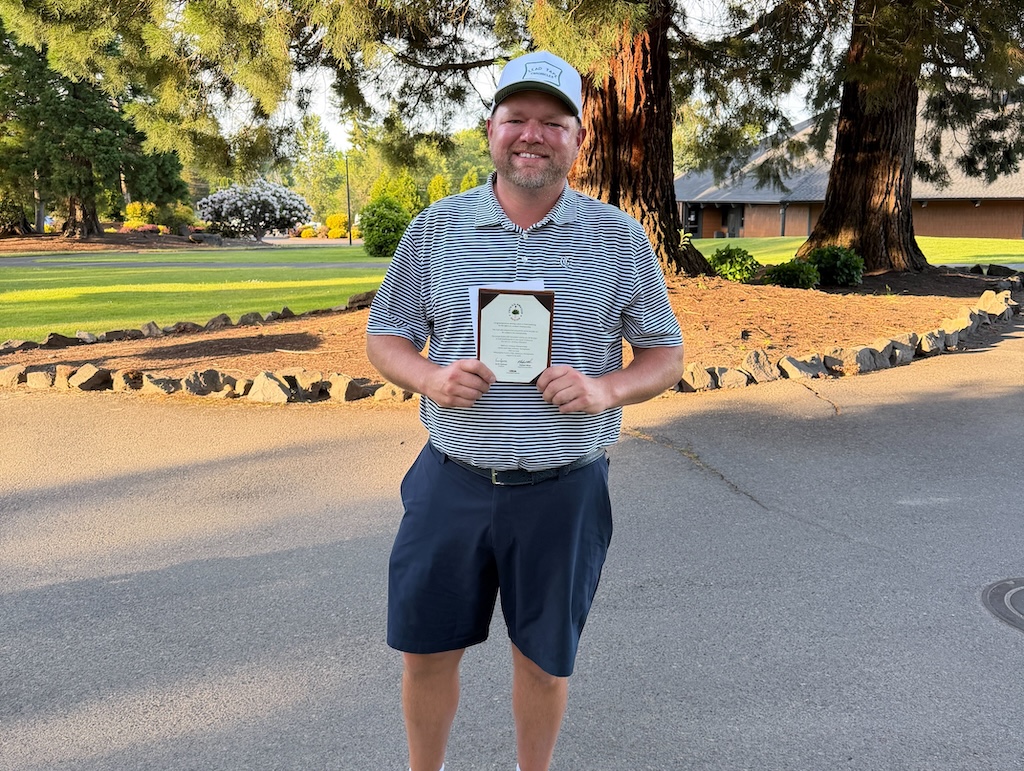
This past Monday, I played in the U.S. Amateur local qualifier at Rock Creek Country Club in Portland, Oregon. A full tee sheet from 7:30 a.m. to 1:55 p.m., the top 11 scores would make it to the U.S. Amateur final qualifying.
I teed off at 10:48 a.m.. With the 7:30 am tee time, you can get a feel for the leaders’ pace, and they were off and running on the challenging setup at Rock Creek.
View this post on Instagram
Getting to the highlight of the round on the par five 17th, a drive up the left side and 212 yards left to the front hole location. I took out a 5-iron with plans of middle of the green. The ball ended up 8 feet left of the hole, pin high. A slight downhill putt dropped in for an eagle 3 on the 17th. With the cut line looking to be anywhere from -2 to even par. This was the boost I had been waiting for all day.
With making par from the trees on 18, it was time to wait for a potential playoff with a posted score of one under par 71.
Three hours later, it was playoff time. 8 players for 6 spots. I made par on the playoff hole, which was good enough to advance to the U.S. Amateur final qualifying in July. USGA qualifiers sure deliver on all of the emotions in golf!
Club Junkie
Building my 2026 gamer WITB: Ranking the contenders and new putter projects – Club Junkie Podcast

The annual What’s In The Bag build is underway, and on this episode of Club Junkie, Brian breaks down the clubs currently leading the race for a spot in his 2026 gamer setup. From drivers and fairway woods to irons, wedges, and shafts, he ranks the equipment that’s performing best and explains what’s separating the front runners from the rest of the field.
Brian also heads into the workshop to discuss several putter projects currently on the bench. From head options and shaft choices to build ideas and testing plans, he shares what he’s working on and which putters could become serious contenders for the bag this season.
If you’re a gear junkie who loves equipment testing, club building, and the never-ending pursuit of the perfect setup, this episode is for you.
Follow Club Junkie:
Instagram: @clubjunkiepod
TikTok: @clubjunkiepod
Threads: @clubjunkiepod
X: @ClubJunkiePod
Club Junkie
Tour Edge Exotics mini driver review + TaylorMade Spider ZT Max first look – Club Junkie

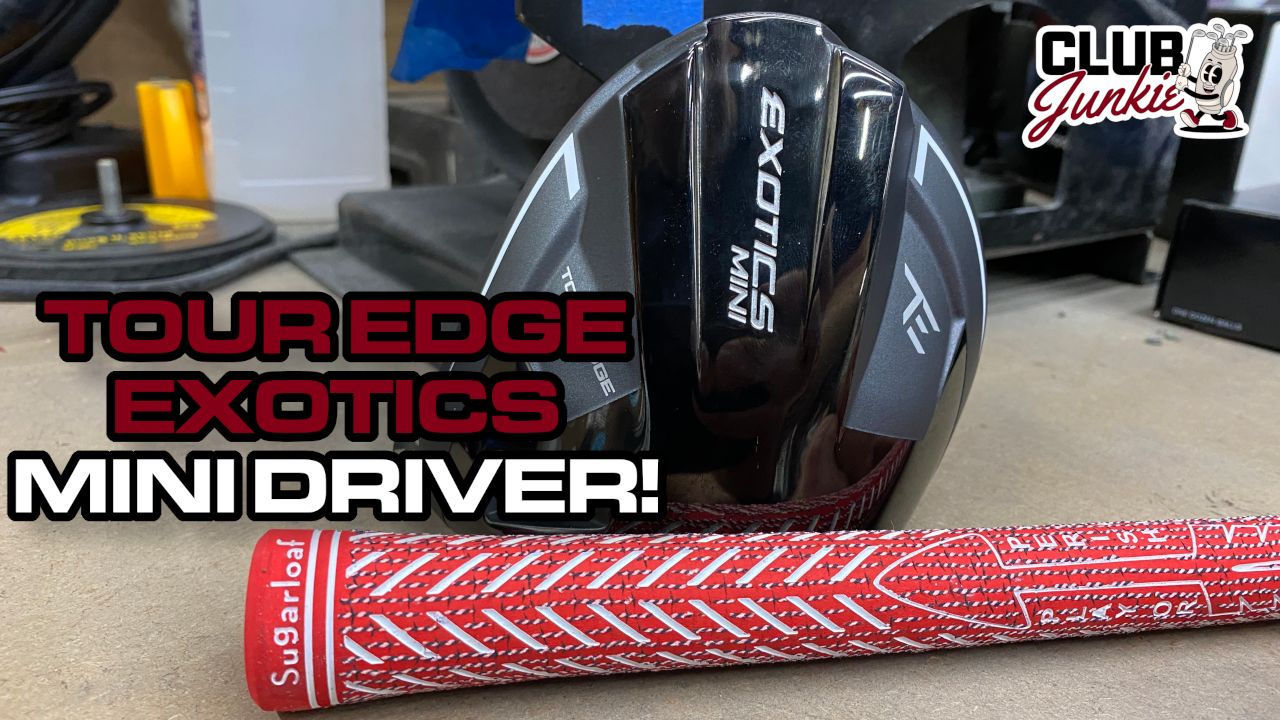
On this episode of Club Junkie, I put the new Tour Edge Exotics Mini Driver to the test and break down the performance, forgiveness, distance, and where it fits compared to a traditional driver or strong fairway wood. If you have been curious about adding a mini driver to the bag, this one is worth a look.
I also dive into the new TaylorMade Spider ZT Max putter that was recently spotted and discuss the growing zero torque putter trend. Plus, there is a closer look at the new Project X Titan Yellow shaft showing up on the PGA Tour and what makes it different from other profiles currently out there.

What’s the story behind Webb Simpson’s custom-stamped irons?

Memorial Tournament Tour Report: Rory McIlroy, Cameron Young switch up drivers, and more

Cadillac Championship Tour Report: Spieth’s sizable changes, McLaren Golf launches, and more

Russell Henley’s winning WITB: 2026 Charles Schwab Challenge

Kristoffer Reitan’s winning WITB: 2026 Truist Championship

Best irons 2026: Best irons overall, most forgiving irons, and more

J.T. Poston’s winning WITB: 2026 Memorial Tournament

Aaron Rai’s winning WITB: 2026 PGA Championship

Cameron Young’s winning WITB: 2026 Cadillac Championship

Details on Jason Day’s latest prototype Avoda iron setup


Ryan Palmer WITB 2026 (June)
Driver: Callaway Quantum Triple Diamond (9 degrees) Shaft: Project X HZRDUS Smoke Blue RDX 60 TX 3-wood: TaylorMade Qi10 (15 degrees) Shaft:...


Bud Cauley WITB 2026 (June)
Bud Cauley had >14 clubs in his bag when photographed prior to the Memorial Tournament. Driver: Titleist GTS2 (8 degrees) Shaft: Fujikura...


Hannah Green WITB 2026 (June)
Driver: Titleist GTS3 (10 degrees, D4 SureFit setting) Shaft: Mitsubishi Chemical Diamana RB 53 S 3-wood: Titleist GT3 (15 degrees,...


Asterisk Talley WITB 2026 (June)
Driver: TaylorMade Qi4D (9 degrees) Shaft: Fujikura Ventus Blue 6 S 3-wood: TaylorMade Qi4D (16.5 degrees) Shaft: Fujikura Ventus Blue...
-
 Equipment6 days ago
Memorial Tournament Tour Report: Rory McIlroy, Cameron Young switch up drivers, and more
-
 News2 weeks ago
Russell Henley’s winning WITB: 2026 Charles Schwab Challenge
-
 Equipment3 days ago
Best irons 2026: Best irons overall, most forgiving irons, and more
-
 Whats in the Bag4 days ago
J.T. Poston’s winning WITB: 2026 Memorial Tournament
-
 Equipment1 week ago
Details on Jason Day’s latest prototype Avoda iron setup
-
 Equipment3 weeks ago
CJ Cup Byron Nelson Tour Report: Koepka and Kim’s newest putters finally get hot
-

 News2 weeks ago
Charles Schwab Challenge Tour Report: MacIntyre, Åberg and Spaun all switch putters, TaylorMade launches new Spider
-
 Equipment2 weeks ago
Details on J.J. Spaun’s surprise putter switch


Bill
Jul 17, 2020 at 6:52 pm
Give them a balata and lets watch the havoc.
carlos
Sep 20, 2018 at 7:05 pm
Improve yer golf potency with single length… shorter is sweeter… 😮
Kevin
Sep 20, 2018 at 5:03 pm
37.5″ is considered by most to be the standard 6 iron length. Check your measurements.
Nack Jicklaus
Sep 20, 2018 at 1:23 pm
I can’t imagine having my wedges be the length of my 7 iron. Seems like it would be detrimental.
shawn
Sep 20, 2018 at 12:03 pm
Bryson believes in Homer Kelley’s TGM ultra-scientific golfswing theories… for his fantastic one plane machine swing.
ogo
Sep 20, 2018 at 12:00 pm
Gearhead golfers will trend towards single length irons to emulate Bryson and hope that is enough to boost their pathetic golf game. Forget practicing; buy new clubs.
Richard Douglas
Sep 20, 2018 at 11:09 am
His side-saddle putting stance was NOT deemed against the Rules of Golf. Rather, the putter he was using was deemed non-conforming because–alleged by the USGA–it could be used to negate the requirement that all clubs have no more than an 80-degree lie angle. Bryson’s putter had a sole that could be flush with the putting surface AND be held at a 90-degree angle (perfectly upright). The sole also allowed for the putter to be held and used with a lie angle within the USGA’s limit.
It is not against the rules to putt side-saddle. It is also not against the rules to hold the putter at a 90-degree lie angle. But it IS against the rules if the putter is DESIGNED to be held at a 90-degree angle. A putter with a conforming lie angle held at a 90-degree angle would strike the ball with the heel off the ground. Bryson’s allowed the putter to (a) have the heel on the ground and (b) create the same effect while holding it at a standard lie angle. This curved sole is what got the putter–not the putting style–into trouble with the USGA.
Peter Sanders
Sep 21, 2018 at 11:19 am
Thanks Richard, I was aware that it was the putter that was deemed to be illegal but did not want to go into all that in the article. That said, I also did not research it to the extent you have. Interesting!