
Opinion & Analysis
Is the secret found “in the dirt” or through instruction?

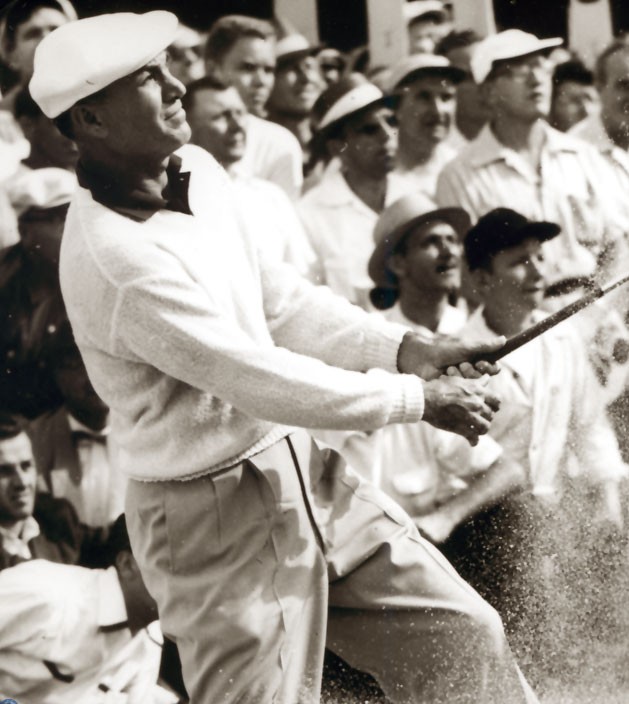
Ben Hogan once wrote:
“I have learned by laborious trial and error, watching a good player do something that looked right to me, stumbling across something that felt right to me … adopting it if it helped … sometimes discarding it later if it proved undependable in competition.”
In the decades since Hogan and Herbert Warren Wind penned Five Lessons, golf instruction has been dissected, codified and homogenized. It has become a cottage industry comprised of swing gurus, bio-mechanic experts and mental coaches always ready to help golfers shave strokes off their score or plunge elbow deep into a swing reconstruction.
There really isn’t any reason why the average weekend player should attempt to dig it out of the dirt with a homemade swing — what I affectionately refer to as the “swing and hope” technique of learning. Golf instruction is ubiquitous. Being a serious golfer or belonging to a private country club are not pre-requisites for getting help.
Click here for more discussion in the “Instruction & Academy” forum.
I’m like most people in that somebody else introduced me to the game. My father-in-law handed me one of his ancient Ping Eye 2 irons at the driving range and said, “swing away.” So swing away I did and from that moment four years ago I forged a love for the game and ingrained some nasty habits that I decided to break with the help of one-on-one lessons.
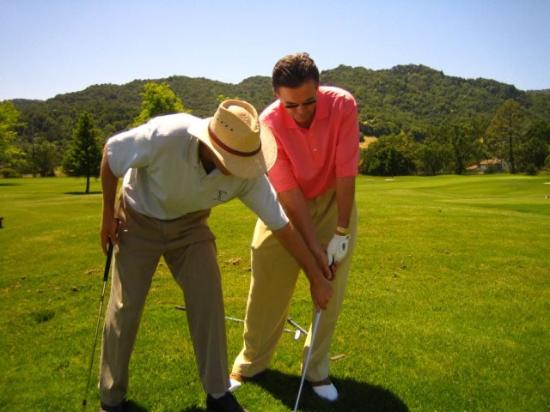
Working side-by-side with a PGA Professional is the most common and direct way to fix your game. There isn’t a sure fire way to be sure you and your instructor will form successful partnership — I’ve crashed and burned through three instructors — but there’s some rules of thumb that have to be followed.
Before you take a single lesson, you should ask yourself the following questions:
- What are your goals? Be realistic about them. If you are 40 years old and just starting out, a spot on the PGA Tour is probably out of reach.
- How much time do you have on your hands? Swing overhauls typically take one to two years to ingrain. Most people don’t have the patience or dedication of a Nick Faldo or Tiger Woods to take this on.
- Is it your swing that really needs work? Sometimes an adequate swing is all a person needs. You might get more mileage from your golf instruction if you take lessons on putting or short game.
- What type of learning do you best respond to? Some people are very analytical and every action needs to be explained; other people simply want to be shown what to do and don’t care about the causes and effects.
Of course, the average weekend player will probably disregard all sound advice. Messing around with one’s golf swing to wring out a few extra yards isn’t something only professionals do. I worked with “my guy” twice a month for the better part of a year on pretty much the same thing week in and week out — getting my body into a better impact position on my downswing. Lessons mainly consisted of my PGA pro grabbing me by the hips and shoulders and twisting me around like a G.I. Joe action figure with the kung-fu grip. For feedback, we’d watch the ball flight for answers.
Unfortunately, I felt like the answers never came, or like a shooting star, I might experience them for a brief instant before they vanished into distant memory. For a change of pace (translation: I wanted to hear the same things in a different way), I took a lesson with another instructor. I drove up to the golf course on a crisp, but not unpleasant October day and spent a half-hour laying sod over the ball. Don’t get me wrong, my instructor was a nice enough person and he was nobody’s fool. But the communication between us just wasn’t there. The brief and entire affair played out like that surfing lesson scene from the movie, “Forgetting Sarah Marshall.” Instead of being told to “pop up,” I was asked to hit down. And yes, I was encouraged to “do less.”
In-person lessons being what they are (generally expensive, sometimes difficult to schedule), I decided to experiment with taking lessons online. Increasingly, this is becoming a more popular method of receiving golf instruction, thanks in no small part to the explosion of smart phones. If my 73-year-old father-in-law can take a video of his swing, chances are so can you. Once you’ve taken a video of your swing (you’ll need to film it both face-on and down-the-line), you upload it for analysis.
In my experience, you’ll receive feedback within 24 to 72 hours. Savvy golfers will quickly realize that in order to get better feedback it’s important to describe your swing issues in great detail. Don’t be embarrassed to treat your online lesson like a heartfelt submission to Dear Abby – after all that’s what these instructors are there for. However, do be prepared to accept that online lessons can’t take the place of the personal attention you receive with one-on-one instruction. If you end up feeling like a cog on the assembly line, well, it’s because you are.
That isn’t to say that online golf instruction is mediocre to it’s in-person counterpart. Some of the best golf teachers in the industry have turned to online instruction to cast a wider net and to offer students a less expensive alternative to taking an individual lesson. For those golfers who have always balked at taking lessons due to cost or time commitments, embrace technology if you haven’t already. To that end, embrace communication — it’s the common denominator in determining if your lessons are going to help or hinder, irrespective of how you take them.
To their credit, golfers are rarely shy about experimenting with any gizmo, swing tip or school of thought that can help their games. Driving ranges are always packed with old and young, men and women, scratch players and duffers beating balls from summer to winter with unrelenting optimism in their hearts. Pause for a moment and take a lesson or two. Golf instructors are here to help with keeping that beat going.
Click here for more discussion in the “Instruction & Academy” forum.



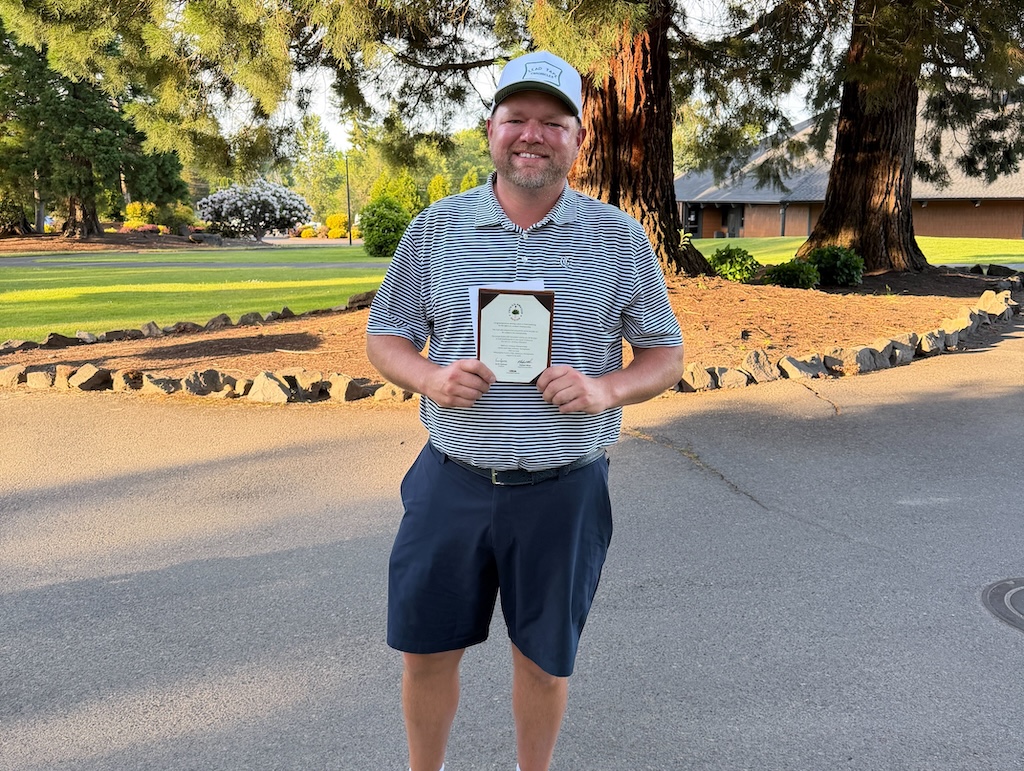
This past Monday, I played in the U.S. Amateur local qualifier at Rock Creek Country Club in Portland, Oregon. A full tee sheet from 7:30 a.m. to 1:55 p.m., the top 11 scores would make it to the U.S. Amateur final qualifying.
I teed off at 10:48 a.m.. With the 7:30 am tee time, you can get a feel for the leaders’ pace, and they were off and running on the challenging setup at Rock Creek.
View this post on Instagram
Getting to the highlight of the round on the par five 17th, a drive up the left side and 212 yards left to the front hole location. I took out a 5-iron with plans of middle of the green. The ball ended up 8 feet left of the hole, pin high. A slight downhill putt dropped in for an eagle 3 on the 17th. With the cut line looking to be anywhere from -2 to even par. This was the boost I had been waiting for all day.
With making par from the trees on 18, it was time to wait for a potential playoff with a posted score of one under par 71.
Three hours later, it was playoff time. 8 players for 6 spots. I made par on the playoff hole, which was good enough to advance to the U.S. Amateur final qualifying in July. USGA qualifiers sure deliver on all of the emotions in golf!
Club Junkie
Building my 2026 gamer WITB: Ranking the contenders and new putter projects – Club Junkie Podcast

The annual What’s In The Bag build is underway, and on this episode of Club Junkie, Brian breaks down the clubs currently leading the race for a spot in his 2026 gamer setup. From drivers and fairway woods to irons, wedges, and shafts, he ranks the equipment that’s performing best and explains what’s separating the front runners from the rest of the field.
Brian also heads into the workshop to discuss several putter projects currently on the bench. From head options and shaft choices to build ideas and testing plans, he shares what he’s working on and which putters could become serious contenders for the bag this season.
If you’re a gear junkie who loves equipment testing, club building, and the never-ending pursuit of the perfect setup, this episode is for you.
Follow Club Junkie:
Instagram: @clubjunkiepod
TikTok: @clubjunkiepod
Threads: @clubjunkiepod
X: @ClubJunkiePod
Club Junkie
Tour Edge Exotics mini driver review + TaylorMade Spider ZT Max first look – Club Junkie

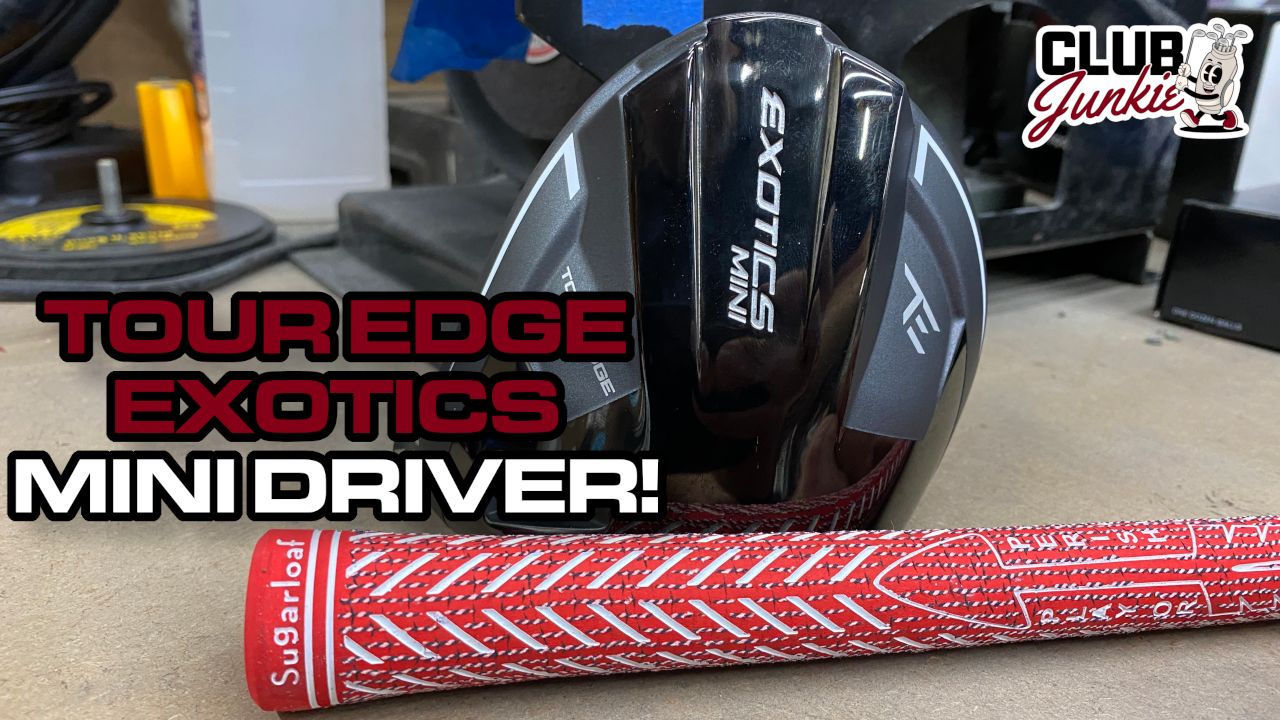
On this episode of Club Junkie, I put the new Tour Edge Exotics Mini Driver to the test and break down the performance, forgiveness, distance, and where it fits compared to a traditional driver or strong fairway wood. If you have been curious about adding a mini driver to the bag, this one is worth a look.
I also dive into the new TaylorMade Spider ZT Max putter that was recently spotted and discuss the growing zero torque putter trend. Plus, there is a closer look at the new Project X Titan Yellow shaft showing up on the PGA Tour and what makes it different from other profiles currently out there.

Justin Rose WITB 2026 (April): Full WITB breakdown with new McLaren irons

What’s the story behind Webb Simpson’s custom-stamped irons?

Memorial Tournament Tour Report: Rory McIlroy, Cameron Young switch up drivers, and more

Cadillac Championship Tour Report: Spieth’s sizable changes, McLaren Golf launches, and more

Russell Henley’s winning WITB: 2026 Charles Schwab Challenge

Kristoffer Reitan’s winning WITB: 2026 Truist Championship

Aaron Rai’s winning WITB: 2026 PGA Championship

J.T. Poston’s winning WITB: 2026 Memorial Tournament

Cameron Young’s winning WITB: 2026 Cadillac Championship

Best irons 2026: Best irons overall, most forgiving irons, and more


Bud Cauley WITB 2026 (June)
Bud Cauley had >14 clubs in his bag when photographed prior to the Memorial Tournament. Driver: Titleist GTS2 (8 degrees) Shaft: Fujikura...


Hannah Green WITB 2026 (June)
Driver: Titleist GTS3 (10 degrees, D4 SureFit setting) Shaft: Mitsubishi Chemical Diamana RB 53 S 3-wood: Titleist GT3 (15 degrees,...


Asterisk Talley WITB 2026 (June)
Driver: TaylorMade Qi4D (9 degrees) Shaft: Fujikura Ventus Blue 6 S 3-wood: TaylorMade Qi4D (16.5 degrees) Shaft: Fujikura Ventus Blue...


Brianna Do WITB 2026 (June)
Driver: Callaway Quantum Triple Diamond (9 degrees) Shaft: KBS PGW 3-wood: Callaway Elyte Titanium (15 degrees) Shaft: KBS PGW 5-wood:...
-
 Equipment6 days ago
Memorial Tournament Tour Report: Rory McIlroy, Cameron Young switch up drivers, and more
-
 News1 week ago
Russell Henley’s winning WITB: 2026 Charles Schwab Challenge
-
 Whats in the Bag3 days ago
J.T. Poston’s winning WITB: 2026 Memorial Tournament
-
 Equipment3 days ago
Best irons 2026: Best irons overall, most forgiving irons, and more
-

 Equipment1 week ago
Details on Jason Day’s latest prototype Avoda iron setup
-
 Equipment3 weeks ago
CJ Cup Byron Nelson Tour Report: Koepka and Kim’s newest putters finally get hot
-

 News2 weeks ago
Charles Schwab Challenge Tour Report: MacIntyre, Åberg and Spaun all switch putters, TaylorMade launches new Spider
-
 Equipment2 weeks ago
Details on J.J. Spaun’s surprise putter switch


Ron Owens
Nov 28, 2012 at 4:36 pm
It’s in the dirt. Mr. Hogan was correct. However, you have to know what you’re doing or what to work on or you’re wasting your time. That’s where instruction comes in. Get your fundamentals right with proper instruction then work on them, as well as playing/scoring, in the dirt.
joro3743
Nov 28, 2012 at 12:15 pm
I have been teaching Golf for over 40 yrs and if anything I have found that instruction is usually over done by a lot of teachers who should not be teaching. They teach theory, they teach confusion, and the vast majority of “students” will reach a certain level and not go any farther. Progression depends on ability and to most it is limited by age, physical problems, athletic ability, mind acceptance, or by just no talent. Also there is the aspect of other priorities.
I am not saying instruction is not a good thing, but it is limited to the basics and then talent and ability. “In the dirt” is a great description to get repetitive, play Golf and it will happen to those who can.
Over teaching is not the answer, it is taking a person, being realistic about what you can do, and do it.
Frank Dolan
Nov 25, 2012 at 3:16 pm
A very well written article which put out several different aspects of learning the game of golf. After playing golf for 25 years, I never thought of taking online lessons. Great idea – I’m going to give it a shot and hope it improves my game.
Frank Dolan