
Opinion & Analysis
A new NCAA transfer rule gets passed… and college coaches are NOT happy

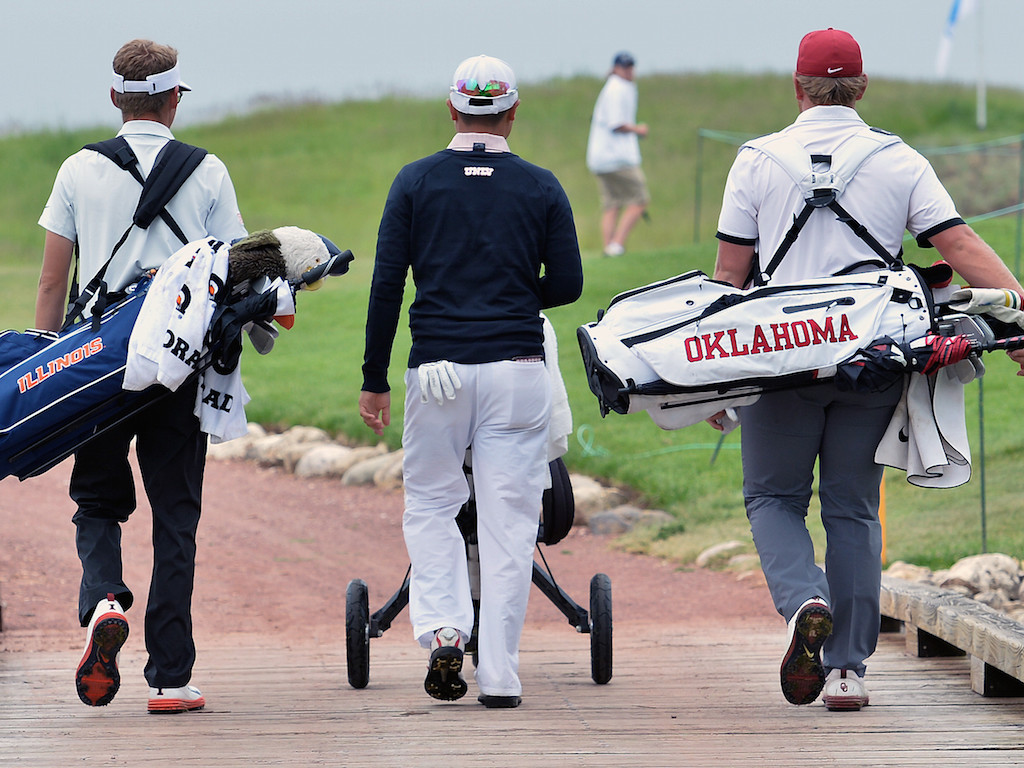
New rules just keep on coming from the NCAA; college coaches are not happy about this one.
In a summer of block buster coaching changes, the NCAA has done its best to stay atop the news cycle by making some significant changes, which will impact the recruitment process. In an article two months ago entitled “The effect the NCAA’s new recruiting rules will have on college golf,” I spoke to college coaches about a new rule, which will not allow unofficial or official visits until September 1 of the players Junior Year. To go along with this rule, the NCAA has also put in place a new recruiting calendar which will limit the sum of the days of off campus recruiting between a head and assistant coach to 45 days starting August 1, 2018.
The 45-day rule will have several potential impacts for both recruits and assistant coaches. For recruits, it is likely that after a couple (2-3) evaluations, coaches will make offers and ask for speed responses to ensure they are not missing out on other options. I also think you will see far less assistant coaches recruiting, which ultimately hurts their opportunities to learn the art of recruitment.
The new transfer rule
In the past, players were subject to asking their present institution for either permission to contact other schools regarding transfer, or a full release.
Now, starting October 15, players can simply inform their institution of their intensions to leave and then start contacting other schools to find an opportunity. This is a drastic shift in policy, so I decided to poll college coaches to get their reactions.
The poll was conducted anonymously via Survey Monkey. Participation was optional and included 6 questions:
- New NCAA Legislation will allow players to transfer without a release starting October 2018. Do you support this rule change?
- Do you believe that this rule will have APR implications?
- Who do you think will benefit most from this rule?
- What are the benefits of allowing students to transfer without a release? What are the potential harms?
- New NCAA Legislation will make December a dead period for recruiting off campus. Do you support this legislation?
- What implications do you see for this rule?
In all, 62 Division I golf coaches responded, or about 10 percent of all Division I coaches in Men’s and Women’s Golf. The results show that 81.25 percent of DI coaches said that they do NOT support the rule change for transfers.
Also, 90 percent of coaches polled believe that the rule will have APR implications. APR is Academic Progress Rate which holds institutions accountable for the academic progress of their student-athletes through a team-based metric that accounts for the eligibility and retention of each student-athlete for each academic term.
The APR is calculated as follows:
- Each student-athlete receiving athletically related financial aid earns one point for staying in school and one point for being academically eligible.
- A team’s total points are divided by points possible and then multiplied by 1,000 to equal the team’s Academic Progress Rate.
- In addition to a team’s current-year APR, its rolling four-year APR is also used to determine accountability.
Teams must earn a four-year average APR of 930 to compete in championships.
While the APR is intended as an incentive-based approach, it does come with a progression of penalties for teams that under-perform academically over time.
The first penalty level limits teams to 16 hours of practice per week over five days (as opposed to 20 over six days), with the lost four hours to be replaced with academic activities.
A second level adds additional practice and competition reductions, either in the traditional or non-championship season, to the first-level penalties. The third level, where teams could remain until their rate improves, includes a menu of possible penalties, including coaching suspensions, financial aid reductions and restricted NCAA membership.
Clearly coaches are not happy about the move and feel that the rule unfairly benefits both the student athletes and major conference schools, who may have a swell of calls around middle of October as Student athletes play great fall golf and look to transfer. Although coaches are unhappy about the new rule, it is very difficult to predict what direct impact the rule will have on teams; coaches are extremely smart and understand recruiting and development within the frame work of college better than anyone can imagine. As a result, I think coaches will react in many ways which are impossible to predict.
The survey also asked, “new NCAA Legislation will make December a dead period for recruiting off campus. Do you support this legislation?” For this, coaches were more divided with 45 percent in favor of the rule, and 55 percent not.
Although coaches supported the legislation, many (41/62) suggested that it would potentially hurt international recruiting at tournaments like Doral and the Orange Bowl and they had, in the past, used December as a time to recruit.
As we move forward with these changes, here are some potential things that recruits, and their families should consider, including consequences of the rules:
- With a limit of 45 days and these transfer rules, it is likely that coaches will be doing significantly more investigation into a player’s personalities and family situation to make sure they know what they are getting.
- Coaches may also start skipping over better players in favor of kids they think will be a good fit and are likely to stay
- Rosters may get bigger, as coaches are trying to have larger numbers to potentially offset transfers
Unfortunately, we enter a new era of rules at the worst time; we have never had a more competent and deep group of college coaches, the clear majority of whom are tremendous stewards of the game. Hopefully this rule will have insignificant effect on the continued growth of college golf but only time will tell.










This past Monday, I played in the U.S. Amateur local qualifier at Rock Creek Country Club in Portland, Oregon. A full tee sheet from 7:30 a.m. to 1:55 p.m., the top 11 scores would make it to the U.S. Amateur final qualifying.
I teed off at 10:48 a.m.. With the 7:30 am tee time, you can get a feel for the leaders’ pace, and they were off and running on the challenging setup at Rock Creek.
View this post on Instagram
Getting to the highlight of the round on the par five 17th, a drive up the left side and 212 yards left to the front hole location. I took out a 5-iron with plans of middle of the green. The ball ended up 8 feet left of the hole, pin high. A slight downhill putt dropped in for an eagle 3 on the 17th. With the cut line looking to be anywhere from -2 to even par. This was the boost I had been waiting for all day.
With making par from the trees on 18, it was time to wait for a potential playoff with a posted score of one under par 71.
Three hours later, it was playoff time. 8 players for 6 spots. I made par on the playoff hole, which was good enough to advance to the U.S. Amateur final qualifying in July. USGA qualifiers sure deliver on all of the emotions in golf!
Club Junkie
Building my 2026 gamer WITB: Ranking the contenders and new putter projects – Club Junkie Podcast


The annual What’s In The Bag build is underway, and on this episode of Club Junkie, Brian breaks down the clubs currently leading the race for a spot in his 2026 gamer setup. From drivers and fairway woods to irons, wedges, and shafts, he ranks the equipment that’s performing best and explains what’s separating the front runners from the rest of the field.
Brian also heads into the workshop to discuss several putter projects currently on the bench. From head options and shaft choices to build ideas and testing plans, he shares what he’s working on and which putters could become serious contenders for the bag this season.
If you’re a gear junkie who loves equipment testing, club building, and the never-ending pursuit of the perfect setup, this episode is for you.
Follow Club Junkie:
Instagram: @clubjunkiepod
TikTok: @clubjunkiepod
Threads: @clubjunkiepod
X: @ClubJunkiePod
Club Junkie
Tour Edge Exotics mini driver review + TaylorMade Spider ZT Max first look – Club Junkie


On this episode of Club Junkie, I put the new Tour Edge Exotics Mini Driver to the test and break down the performance, forgiveness, distance, and where it fits compared to a traditional driver or strong fairway wood. If you have been curious about adding a mini driver to the bag, this one is worth a look.
I also dive into the new TaylorMade Spider ZT Max putter that was recently spotted and discuss the growing zero torque putter trend. Plus, there is a closer look at the new Project X Titan Yellow shaft showing up on the PGA Tour and what makes it different from other profiles currently out there.

Justin Rose WITB 2026 (April): Full WITB breakdown with new McLaren irons

What’s the story behind Webb Simpson’s custom-stamped irons?

Memorial Tournament Tour Report: Rory McIlroy, Cameron Young switch up drivers, and more

Cadillac Championship Tour Report: Spieth’s sizable changes, McLaren Golf launches, and more

Russell Henley’s winning WITB: 2026 Charles Schwab Challenge

Kristoffer Reitan’s winning WITB: 2026 Truist Championship

J.T. Poston’s winning WITB: 2026 Memorial Tournament

Best irons 2026: Best irons overall, most forgiving irons, and more

Aaron Rai’s winning WITB: 2026 PGA Championship

Cameron Young’s winning WITB: 2026 Cadillac Championship


Bud Cauley WITB 2026 (June)
Bud Cauley had >14 clubs in his bag when photographed prior to the Memorial Tournament. Driver: Titleist GTS2 (8 degrees) Shaft: Fujikura...


Hannah Green WITB 2026 (June)
Driver: Titleist GTS3 (10 degrees, D4 SureFit setting) Shaft: Mitsubishi Chemical Diamana RB 53 S 3-wood: Titleist GT3 (15 degrees,...


Asterisk Talley WITB 2026 (June)
Driver: TaylorMade Qi4D (9 degrees) Shaft: Fujikura Ventus Blue 6 S 3-wood: TaylorMade Qi4D (16.5 degrees) Shaft: Fujikura Ventus Blue...


Brianna Do WITB 2026 (June)
Driver: Callaway Quantum Triple Diamond (9 degrees) Shaft: KBS PGW 3-wood: Callaway Elyte Titanium (15 degrees) Shaft: KBS PGW 5-wood:...
-
 Equipment6 days ago
Memorial Tournament Tour Report: Rory McIlroy, Cameron Young switch up drivers, and more
-
 News2 weeks ago
Russell Henley’s winning WITB: 2026 Charles Schwab Challenge
-
 Whats in the Bag4 days ago
J.T. Poston’s winning WITB: 2026 Memorial Tournament
-
 Equipment3 days ago
Best irons 2026: Best irons overall, most forgiving irons, and more
-

 Equipment1 week ago
Details on Jason Day’s latest prototype Avoda iron setup
-
 Equipment3 weeks ago
CJ Cup Byron Nelson Tour Report: Koepka and Kim’s newest putters finally get hot
-

 News2 weeks ago
Charles Schwab Challenge Tour Report: MacIntyre, Åberg and Spaun all switch putters, TaylorMade launches new Spider
-

 Equipment2 weeks ago
Details on J.J. Spaun’s surprise putter switch


College Golfer
Nov 29, 2018 at 8:18 am
I think the new rules are great. Student Athletes at some schools are taken for granted by their coaches. I’ve experienced this. When students are treated without respect perhaps a change is a good thing. Yes, even players who compete in every tournament can be unhappy at their current school. Coaches have made it clear that if you ask to be placed on transfer list, you will have aid money pulled, lose access to practice facility and not compete.
I think you’ll see better players make moves after the competition schedule is completed in the fall or late spring. If a golfer has a scoring average of 70, has all rounds count for team scores, high tournament finishes but is under compensated in the form of scholarship he should be free to leave without penalty. When coaching changes happen, players should be free to move without threats from the current university. Frankly if a coach signals that he feels one of his best players is average with low scholarship money, then that coach should recognize that he may lose that player.
College golf requires greater expenses then just tuition, room and board. First they need a car to get back and forth to
Practice, that means expenses for gas, insurance, maintenance and parking. Many campuses don’t have parking for freshmen and sophomores so off campus housing is required (at greater expense), add time demands of meeting with donors, academic requirements, fitness training, practice and travel the lifestyle can be tough. If I’m getting 50% COA on a team with 9 players, mathematically that means coaches think I’m average. If I play all events, all my scores count and another player is at 100% and he doesn’t play and scores don’t always count why not leave if coaches don’t consider my requests for more $.
The reality is that for a dedicated college golfer it costs about 50% more than COA to attend. Then add off season amateur events between semesters and over summer and that’s easily another $12-15,000.
The challenge for top players is selecting their time to get on the new transfer list. I think spring after conference, regionals and NCAA will see the better players making moves.
Golf Mom
Jun 29, 2018 at 3:10 pm
Thank goodness someone is finally looking out for these young people. From a parents perspective, my experience kids are used as pawns. Rather harsh but honest! There is definitely a lack of integrity and transparency. Hopefully this will allow young people that have worked so hard to have a voice in planning their future.
Jeremy Ellis
Jun 23, 2018 at 9:36 am
If coaches could switch schools without a waiver, then players should have the same opportunity. If a player does switch, do you have to sit out a year or is that only in D1 football?
Doug Gordin
Jun 22, 2018 at 6:51 pm
As the old indian saying says, do not judge until you have walked a mile in my moccasins…Until you have coached college teams you can’t understand. This rule gives all the authority to the athletes, they can now come and go as they please. One little thing going wrong and they will want to move on or as I call it, give up. It is reflective of our society today. Very rare for a kid to buck up and tough it out. Not being taught that at home anymore and this new rule just encourages that attitude. The Coaches will now be basically powerless over the players, only thing they have control of now is playing time. Not a good move at all in my opinion.
Fred
Jun 23, 2018 at 9:33 pm
AMEN to that, Doug!
Commoner
Jun 25, 2018 at 7:01 pm
Boo hoo!!! Get real Buster! Imagine the temerity of the indentured servant seeking blessed permission to ‘run his own life.’
Coaches are hypocrites
Jun 22, 2018 at 3:33 pm
Until there is restrictions on coaches quitting and taking new jobs while the players they signed are still in school I will have no sympathy for them.
Oh that cannot happen because there’s restrictions on how to treat employees? Fine, realize the student athletes are employees too and are compensated with tuition and they are free to leave like the coaches.
Retired Mizuno Rep
Jun 22, 2018 at 1:15 pm
The scholarship athlete should have some skin in the game and not be allowed to pick up and leave without any recourse.
He is getting a paid for education .
Put a price on that .
Richard Douglas
Jun 23, 2018 at 3:01 am
YOU are allowed to “pick up and leave without any recourse” in your job, right? You’re getting paid, right? You can put a price on that, right?
How are student athletes any different?
Let’s stop treating athletes like chattel and instead treat them like people. Let’s protect their rights and let them make an income, too. If they want to change schools, fine, it should be their right to do so. If another school wants to compete for their services, fine, let them.
Finally, don’t over-estimate the value of a scholarship. First, it’s an “at will” situation; a scholarship can be withdrawn for any reason without recourse. Second, it hardly constitutes a “paid for” experience–student athletes often face huge expenses with little ability to accept other assistance in meeting them. Finally, a great number of athletes put in so much time towards athletics that they cannot fully leverage their scholarships–nor defer them to a later date when they’re done competing.
Commoner
Jun 25, 2018 at 7:12 pm
Excellent comment. Many people have been persuaded (conned) by the carnival barker only to be disappointed (crushed) once inside the tent. Suggested remedies?
Steve
Jun 22, 2018 at 12:46 pm
“Clearly coaches are not happy about the move and feel that the rule unfairly benefits both the student athletes and major conference schools”
Oh no. How dare those student athletes. Why should they benefit from the rules? Don’t they know the rules were designed to take advantage of them?
JJVas
Jun 22, 2018 at 11:58 am
The new rules are a great first step. I understand that this complicates recruiting, but guess what? Coaches also need to MAINTAIN good relationships with their players, not just lock them up. Since eligibility works like a clock, one bad move can effectively end a college playing career. Coaches are also willing and able to move on to different schools, and those players should never be bound to a school in that instance.
Zi1ian
Jun 22, 2018 at 11:05 am
81.25% of D1 coaches care less about their unpaid student-athletes and more about their career and professional legacy.
regripped
Jun 22, 2018 at 10:57 am
Who cares what coaches think? Colleges are there to benefit the students and the NCAA has for too long restricted student-athletes and this is a first good step to treating them like human beings rather than property of an institution.
Brooky03
Jun 22, 2018 at 10:52 am
The rule change was necessary and the right move to benefit the student-athletes. There are only APR concerns if a player doesn’t finish the semester. Since most transfers occur between semesters, the APR impact should be minimal. If a kid transfers at the end of the Fall semester, the Spring semester doesn’t count against the team.