
Opinion & Analysis
5 things we learned on Thursday at the 2018 U.S. Open


Jon Jennings, superintendent at Shinnecock Hills golf club, tells the story of the linksy look of the property. In the days of coal-fired train engines, embers would occasionally light the land where the course now rests, prohibiting the sustained growth of anything tall. On Thursday, some of those embers returned in a metaphoric sense. As the winds whipped along Peconic Bay, as firm yet wide fairways ricocheted balls into rough and worse, major-championship hopes were burned to a crisp for some, while fires of contention were lit for others. With that poetic opener, let’s find out what the engine dragged out of round one, with 5 things we learned on Thursday at the US Open
5) The U.S. Open is golf’s version of Survivor
In the 1970s and 80s, many bemoaned the high rough at fairways’ edge and greens’ side. This year, 2018 brings a different version of this torture, thanks to the antithesis of those traditional venues. Where trees once pinched fairways, eliminating recovery shots to greens, absence of trees allows winds to dance and hex the flight of golfers’ shots. Firm greens demand that shots land short or else! What is else? Closely-mown recovery areas, extensive strands of fescue, and bunkers galore. Offer 3 more rounds of 1-under to any of the golfers at that figure (or any others in the field) and they would sign that contract immediately.
We've all been there…#USOpen pic.twitter.com/If71gN7urb
— U.S. Open (USGA) (@usopengolf) June 14, 2018
4) If anyone tells you that experience matters…
Take a look at the top 19 golfers (there are 17 tied for 20th, so we won’t go there) and you find just 5 major champions. Each (Rose, Reed, Johnson, Stenson, Dufner) has one major title on his resume. The multiple-major names that were expected to stake a claim on Thursday (Mickelson, Spieth, McIlroy, Woods) could not summon similar results. Mickelson was low among that foursome with 77 on the day. Called by some “the sternest test in golf,” the U.S. Open is never the same from year to year. In fact, it’s never the same on the same course. Shinnecock in 1986 differed greatly in 2004, and 2018 is its own unique experience. If destiny taps you on the shoulder, Brian Gay or anyone else, take advantage!
We ???? you @BrianGayPGA! #USOpen pic.twitter.com/Ixf3k7fQtY
— U.S. Open (USGA) (@usopengolf) June 14, 2018
3) There’s always room for anyone to shine
Whether your name is Dean Burmester or David Bransdon, many frustrating swings can be erased by one glorious execution. Be it the long putt, the dunked bunker shot, or the fairway hole-out, the U.S. Open sends many away with a cherished memory. When you troll the bottom of the leader board, where the weekend is no more than travel time, keep in mind that most experience a spotlight moment.
Slam. Dunk. What a way to end your round, @BurmyGolf! #USOpen pic.twitter.com/dDilmkueuS
— U.S. Open (USGA) (@usopengolf) June 14, 2018
2) If you have to put your money somewhere …
It won’t be on Ian Poulter, Scott Piercy, or Russell Henley. Although they are tied with Dustin Johnson atop the sheet at minus-one, their odds at victory are slim. IF Poulter were to win, however, Lee Westwood and Colin Montgomerie would grind their teeth to nubbins. Neither won a major title, despite being the best British golfers of their day. Poulter’s individual record has not measured up to that of his Ryder Cup persona. Same goes for Piercy. Imagine the history of golf, with Scott Piercy as a U.S. Open champion, but not Phil Mickelson. The golf gods are truly mad on some days. Instead, put your money on the world number one, Dustin Johnson. He has won this tournament recently, on a course of similar brawn, and he has the demeanor to shrug off the bad and the good, and keep the ship headed toward shore.
Sharing is caring! @DJohnsonPGA wanted to join @JasonDufner at the top of the leader board. #USOpen pic.twitter.com/mGGKkSRUoP
— U.S. Open (USGA) (@usopengolf) June 14, 2018
1) What can we expect on Friday?
First, more combing through fescue for golf balls. Next, more decisions on whether to clip-and-spin, bump-and-run, or putt the ball from areas around the green. Third, rejection of driver off the tee, replaced by hybrids and irons for position and a chance to make par or birdie. Fourth, one golfer at 1-under will toss up a sub-par second round, and be at or near the top of the board. Joining him will be the first person to shoot 67 or 66 for the tournament. It will feel like 61. Finally, a farewell to a number of pre-tournament favorites, drummed falsely to the top by media hype, shaking their heads, wondering how it went so bad, so quickly.
The #USOpen return of @TigerWoods got off to a rocky start. One in which he never fully recovered. pic.twitter.com/GeKMgqxmFK
— U.S. Open (USGA) (@usopengolf) June 14, 2018




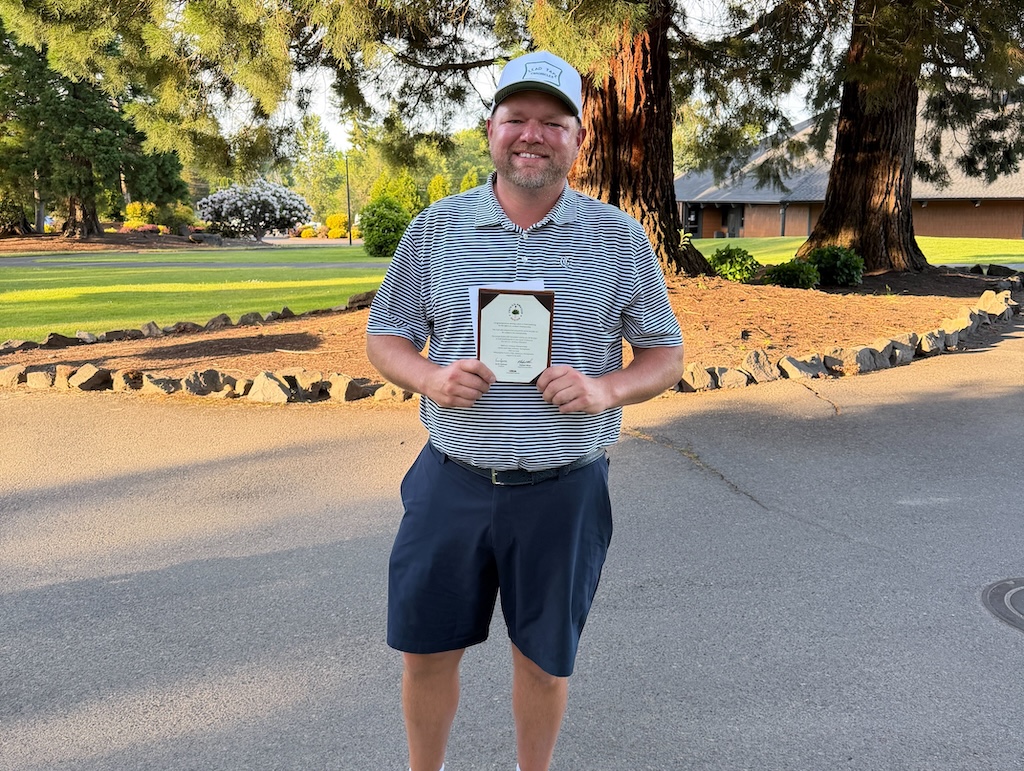
This past Monday, I played in the U.S. Amateur local qualifier at Rock Creek Country Club in Portland, Oregon. A full tee sheet from 7:30 a.m. to 1:55 p.m., the top 11 scores would make it to the U.S. Amateur final qualifying.
I teed off at 10:48 a.m.. With the 7:30 am tee time, you can get a feel for the leaders’ pace, and they were off and running on the challenging setup at Rock Creek.
View this post on Instagram
Getting to the highlight of the round on the par five 17th, a drive up the left side and 212 yards left to the front hole location. I took out a 5-iron with plans of middle of the green. The ball ended up 8 feet left of the hole, pin high. A slight downhill putt dropped in for an eagle 3 on the 17th. With the cut line looking to be anywhere from -2 to even par. This was the boost I had been waiting for all day.
With making par from the trees on 18, it was time to wait for a potential playoff with a posted score of one under par 71.
Three hours later, it was playoff time. 8 players for 6 spots. I made par on the playoff hole, which was good enough to advance to the U.S. Amateur final qualifying in July. USGA qualifiers sure deliver on all of the emotions in golf!
Club Junkie
Building my 2026 gamer WITB: Ranking the contenders and new putter projects – Club Junkie Podcast

The annual What’s In The Bag build is underway, and on this episode of Club Junkie, Brian breaks down the clubs currently leading the race for a spot in his 2026 gamer setup. From drivers and fairway woods to irons, wedges, and shafts, he ranks the equipment that’s performing best and explains what’s separating the front runners from the rest of the field.
Brian also heads into the workshop to discuss several putter projects currently on the bench. From head options and shaft choices to build ideas and testing plans, he shares what he’s working on and which putters could become serious contenders for the bag this season.
If you’re a gear junkie who loves equipment testing, club building, and the never-ending pursuit of the perfect setup, this episode is for you.
Follow Club Junkie:
Instagram: @clubjunkiepod
TikTok: @clubjunkiepod
Threads: @clubjunkiepod
X: @ClubJunkiePod
Club Junkie
Tour Edge Exotics mini driver review + TaylorMade Spider ZT Max first look – Club Junkie

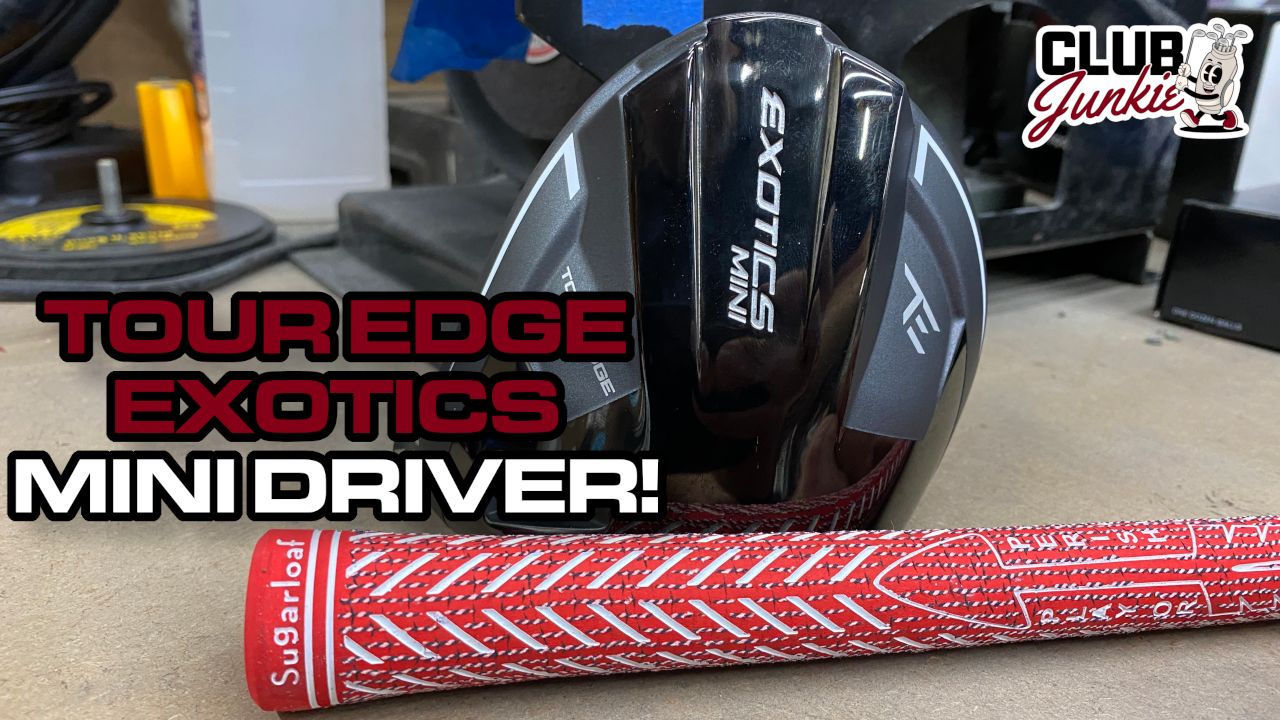
On this episode of Club Junkie, I put the new Tour Edge Exotics Mini Driver to the test and break down the performance, forgiveness, distance, and where it fits compared to a traditional driver or strong fairway wood. If you have been curious about adding a mini driver to the bag, this one is worth a look.
I also dive into the new TaylorMade Spider ZT Max putter that was recently spotted and discuss the growing zero torque putter trend. Plus, there is a closer look at the new Project X Titan Yellow shaft showing up on the PGA Tour and what makes it different from other profiles currently out there.

What’s the story behind Webb Simpson’s custom-stamped irons?

Memorial Tournament Tour Report: Rory McIlroy, Cameron Young switch up drivers, and more

Cadillac Championship Tour Report: Spieth’s sizable changes, McLaren Golf launches, and more

Russell Henley’s winning WITB: 2026 Charles Schwab Challenge

Kristoffer Reitan’s winning WITB: 2026 Truist Championship

Best irons 2026: Best irons overall, most forgiving irons, and more

J.T. Poston’s winning WITB: 2026 Memorial Tournament

Aaron Rai’s winning WITB: 2026 PGA Championship

Cameron Young’s winning WITB: 2026 Cadillac Championship

Details on Jason Day’s latest prototype Avoda iron setup


Ryan Palmer WITB 2026 (June)
Driver: Callaway Quantum Triple Diamond (9 degrees) Shaft: Project X HZRDUS Smoke Blue RDX 60 TX 3-wood: TaylorMade Qi10 (15 degrees) Shaft:...


Bud Cauley WITB 2026 (June)
Bud Cauley had >14 clubs in his bag when photographed prior to the Memorial Tournament. Driver: Titleist GTS2 (8 degrees) Shaft: Fujikura...


Hannah Green WITB 2026 (June)
Driver: Titleist GTS3 (10 degrees, D4 SureFit setting) Shaft: Mitsubishi Chemical Diamana RB 53 S 3-wood: Titleist GT3 (15 degrees,...


Asterisk Talley WITB 2026 (June)
Driver: TaylorMade Qi4D (9 degrees) Shaft: Fujikura Ventus Blue 6 S 3-wood: TaylorMade Qi4D (16.5 degrees) Shaft: Fujikura Ventus Blue...
-
 Equipment6 days ago
Memorial Tournament Tour Report: Rory McIlroy, Cameron Young switch up drivers, and more
-
 News2 weeks ago
Russell Henley’s winning WITB: 2026 Charles Schwab Challenge
-
 Equipment3 days ago
Best irons 2026: Best irons overall, most forgiving irons, and more
-
 Whats in the Bag4 days ago
J.T. Poston’s winning WITB: 2026 Memorial Tournament
-
 Equipment1 week ago
Details on Jason Day’s latest prototype Avoda iron setup
-
 Equipment3 weeks ago
CJ Cup Byron Nelson Tour Report: Koepka and Kim’s newest putters finally get hot
-

 News2 weeks ago
Charles Schwab Challenge Tour Report: MacIntyre, Åberg and Spaun all switch putters, TaylorMade launches new Spider
-

 Equipment2 weeks ago
Details on J.J. Spaun’s surprise putter switch


jeffrey monnich
Jun 16, 2018 at 5:09 pm
the most important thing I learned from day one and forgot about from last year was TURN THE VOLUME DOWN ON FOX. and today I’m having a more pleasant viewing experience.
Justin
Jun 15, 2018 at 8:40 am
Harvest Hill forever
Ronald Montesano
Jun 16, 2018 at 5:57 am
The Hill
seabass
Jun 15, 2018 at 6:40 am
I love this. Make it hard like it was years ago. No more fairways 100 yards wide, and 1/2 inch rough.
Make this about penalties for mistakes. Force them to hit fairways not just long bombs with easy rough.
Ronald Montesano
Jun 16, 2018 at 6:15 am
For the most part, it’s a different type of hard, or difficult. Shinny allows for the fast/firm/frenetic, in a way that dark-earth courses do not. Oakmont is an inland exception, perhaps why Mike Davis likes it so much. The rest of the arable-land courses need a different set-up. Going back to “hit in high rough, chop out, save par, repeat” is not the ideal manner.
Mike Davis has hinted that 3 courses (Shinny, Oaky and Pebble Beach) should host the US Open once every 8 years. If we take an 8-year period, that gives us those three, plus room for 5 more. Since June is way better for an Open than July or August, and since it is a priority to bring the event to as many geographic regions as possible, here is a list of 10 courses that might be interest in hosting a US Open:
Pinehurst #2
Trinity Forest
Erin Hills
Chambers Bay
Winged Foot
Southern Hills
Places like Olympic and Merion are in a bind, as they don’t have access to the space required to host a modern Open. I’m hoping that Torrey Pines sees its last Open in 2021, as the course is more “tour” than “USGA.” The two most important playings in the next 10 years are 2022 and 2023. The USGA needs another northeastern site, since Bethpage went the way of the PGA stable. The Country Club, outside Boston, fits the bill. The association would love to have LA country club on the rolls every 10-12 years, but the question is whether the membership will be one-and-done or embrace it.
ND Hickman
Jun 15, 2018 at 3:38 am
Colin Montgomerie isn’t English, pal.
Ronald Montesano
Jun 15, 2018 at 7:49 am
Ach, ye lads! Ye’ve caught me. No research went into the publication of this piece, as you can tell. It’s my addled brain that connected those two Brits. Thanks for being the astute readers and critics that you are, Craig Goodwin and others. Keep reading, continue commenting, and find my flaws!!
…RM
Ronald Montesano
Jun 15, 2018 at 7:50 am
ND,
Good to know we’re pals
…RM
ND Hickman
Jun 15, 2018 at 7:37 pm
All credit to fact checking.
Craig Goodwin
Jun 15, 2018 at 2:34 am
Monty is scottish not English good research
Man
Jun 14, 2018 at 10:09 pm
“…one FROM which he never recovered.”
Come on USGA…. you can’t even speak English. No wonder it’s a mess.
Reeves
Jun 14, 2018 at 9:45 pm
Finally, a farewell to a number of pre-tournament favorites, drummed falsely to the top by media hype, shaking their heads, wondering how it went so bad, so quickly. US OPEN about the only course set up that club and ball companies know even the best players cannot make their equipment magic. If courses were set up week in and week out like this Pros would need handicaps to win.
Ronald Montesano
Jun 15, 2018 at 7:52 am
You’re on to something, but would we tune in? Once a year is quite all right, and I suspect that the USGA has cards to play, to soften the course in case the wind whips with greater fury. The sun is the greater enemy, in my opinion. We’ll see how it plays out.