
Opinion & Analysis
How good do you REALLY have to be to compete at a high-level in college golf?

One of the major complaints I hear from parents is, “schools don’t email my son back.”
In October of last year, I published a story with data from college coaches called “Stop Bothering Me! Why NCAA coaches already get too many emails.” The story demonstrated the overwhelming demand of time coaches need to respond to emails from a melee of people from junior golfers to donors to members of their own administration. That article, however, tells only half the story; the other half is for junior players, their parents and coaches to understand the level it takes to contribute to a NCAA Division I team, which has the potential to make the post season (regional championship). For this story, we examine the college rankings of Oklahoma State and Alabama, who just met in the NCAA match play final, as well as Michigan State. Michigan State, ranked No. 54 in the final GolfStat rankings, was the highest and last team to make the post season after automatic bids.
When reviewing the data, keep in mind that currently 62 Power-5 schools have golf teams. If only the top-54 schools make regionals, after automatic qualifiers, it means that 8 Power-5 conference schools are not going to make regionals. Considering the strength of mid-major schools overall, that makes regionals a tough order.
So, what does it take to play at this level? Let me present some data; the teams, their scoring average per player, their averaged dropped score, the Golfweek rankings of the players when they signed to attend the schools and the average Golfweek rankings of the traveling team. Please note that no international players where included because none where ranked by Golfweek, and I did not want to include the World Amateur Golf Rankings.
Oklahoma State (Ranking: No. 1)
Scoring Average: 69.85
Average Dropped Score: 74.13
Players (Golfweek Rank)
- Zach Bauchou (8)
- Austin Eckroat (18)
- Mathew Wolff (36)
- Nick Heinin (31)
- Hayden Wood (55)
- Sam Stevens (26)
- Stratton Nolen (40)
- Brandon Jelley (24)
Overall Average Ranking: 29.75
Alabama (Ranking: No. 6)
Scoring Average: 71.04
Average Dropped Score: 75.92
Players
- Alex Green (70)
- Davis Riley (6)
- Johnathan Hardee (21)
- Ben Fuller (407)
- Wilson Furr (6)
- Davis Shore (3)
- Lee Hodges (Transfer)
Overall Average ranking: 85.5
Average ranking of starters: 9
Michigan State (Ranking: No. 54)
Scoring Average: 72.86
Average dropped score: 76.6
Players
- Devin Deogun (96)
- Dylan Deogun (Transfer)
- James Poit (81)
- Zach Rosendale (436)
- Andrew Walker (44)
- Austin Jenner (93)
- Kaleb Johnson (565)
- Michael Sharpe (170)
- Charlie Green (204)
Overall Average ranking: 219
Average ranking of starters: 212.8
Do you see a pattern? Although the sample size is small, teams who compete at the national level (including playing regionals) need difference makers who in college can average 73 or better. Historically, the data suggests that difference makers usually have scoring differential that is negative, and they are ranked in the top 100-150 in their class. How good is the 20th ranked player in the class? According to Junior Golf Scoreboard, the 20th player in the 2018 class has a scoring differential of -3.92, and the 20th player for the 2019 has a scoring differential of -2.51. Likewise, the scoring differential for the 220-ranked player in the 2018 class is -.14, and the 220th player for the 2019 class is +.18. This means that a player recruited at 20 in the country, who typically ends up at Alabama or Oklahoma State, is about 3.5 shots per round better than a recruit at 220 (which make sense since the data above suggests that Oklahoma State’s average counting score is about 3 shots better than Michigan State).
The simply fact is that coaches need difference makers and it is not getting any easier. Under title IX, most teams are only allowed 8-10 players. In a 4-year recruiting cycle, this means 2 players per year. Being wrong is quite literally a matter of being fired. As a result, you better believe that coaches take recruiting seriously and are carefully weighing all options. For the most part, coaches are likely to prefer not only a negative scoring differential but strong physical ability, sound technique and a love of competition. Occasionally, a coach will take a risk. The data suggests this happens about 1/10 times for a team ranked in the top 100. For example, Casey Lubhan at Michigan State, decided to give Kaleb Johnson a chance because of his power and work ethic. The result? Kaleb is now a as a sophomore is a Big Ten All Conference player. Nice call, Casey! Over time, coaches like Casey who make the right calls are rewarded by making regionals, getting incentives and keep their jobs. However, some many make similar investments and get stuck with a player who does not develop; taking up a valuable roster spot.
For coaches who are in programs where they are held accountable and funded fully, the clear majority are expected to make the regional tournament. The data collected demonstrated to have a chance at regionals, a team must average about 292 or better, or 73 shots per player. Most of the players capable of doing this consistently are going to have junior rankings in the top 100 in their class, with scoring differentials at or near 0. It is important to remember many athletic administrators expect coaches to make at least the regional tournament. Since the best way to do this is recruit talent, data suggests that administrators from nearly all institutions carefully monitor the rankings of signees, expecting coaches to get top talent ranked within the top 100 players in the class (at least).
Beyond the pressure to recruit, it is likely coaches will need to have a strong background in player development. Why? My data suggests that the average AJGA Open boy’s tournament is played from a distance 6849 on a course rating of 71.9. This year’s national championship at Karsten Creek was played at 7460 with a course rating of 77.2. To keep scores the same from junior golf to college, coaches need to make players approximately 5 shots better. Five shots, that’s a lot!
Karsten Creek is not the only hard golf course; for Michigan State to even have a chance to make regionals, they needed to have 4 players per round average about 72 in a tournament schedule which featured places like Inverness, Crooked Stick, Collection River and Ohio State. This means at a course like Ohio State with a course rating of 76.2 and yardage of 7455, you would need to be approximately a +3 handicap to help Michigan State. That’s ridiculous at the best of times; now consider the tournament is in March when the weather can be 40 degrees. Scarlett, 7500ish yards, 40 degrees, and a 73 average?! There are only several hundred players in the world that can do this and Michigan State needs four of them (at least).
If you have a scoring differential that’s not negative, it does not mean that you cannot play college golf. It also does not mean that you don’t have a future in golf. However, it likely means considering schools outside of the top 125 in Golfstat Cup in Division One Golf. When doing the search, if you are serious about a future playing golf, I would encourage you to carefully weigh more than just ranking; find a place where you will have the opportunity to play every event. This will give you 100+ college starts over 4 years, which is likely to provide you a solid foundation in tournament golf to prepare you for the next level.
I hope this article has given junior golfers, their parents and coaches insight into recruiting from a coach’s perspective. Having been involved in college athletics for 15+ years, it has been my experience that college golf is a meritocracy and follows the simple principal; if you are good enough, you will make it. So even if right now your game is not at that level, find a place, work hard and compete. No reason we will not see you on TV someday.




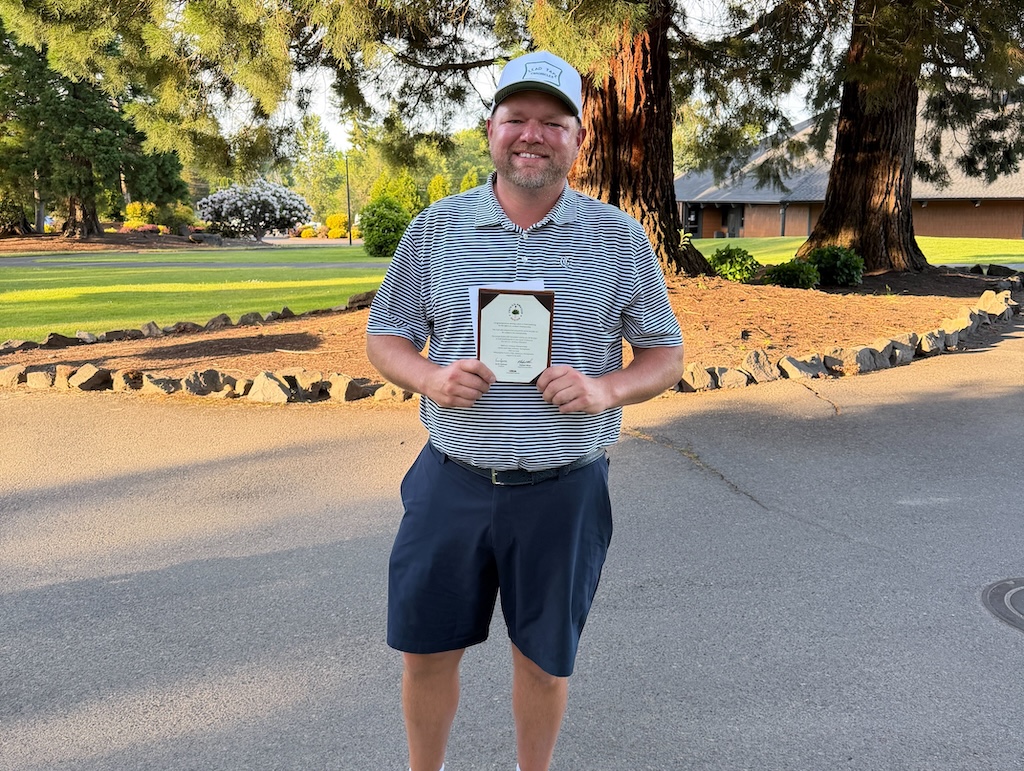
This past Monday, I played in the U.S. Amateur local qualifier at Rock Creek Country Club in Portland, Oregon. A full tee sheet from 7:30 a.m. to 1:55 p.m., the top 11 scores would make it to the U.S. Amateur final qualifying.
I teed off at 10:48 a.m.. With the 7:30 am tee time, you can get a feel for the leaders’ pace, and they were off and running on the challenging setup at Rock Creek.
View this post on Instagram
Getting to the highlight of the round on the par five 17th, a drive up the left side and 212 yards left to the front hole location. I took out a 5-iron with plans of middle of the green. The ball ended up 8 feet left of the hole, pin high. A slight downhill putt dropped in for an eagle 3 on the 17th. With the cut line looking to be anywhere from -2 to even par. This was the boost I had been waiting for all day.
With making par from the trees on 18, it was time to wait for a potential playoff with a posted score of one under par 71.
Three hours later, it was playoff time. 8 players for 6 spots. I made par on the playoff hole, which was good enough to advance to the U.S. Amateur final qualifying in July. USGA qualifiers sure deliver on all of the emotions in golf!
Club Junkie
Building my 2026 gamer WITB: Ranking the contenders and new putter projects – Club Junkie Podcast

The annual What’s In The Bag build is underway, and on this episode of Club Junkie, Brian breaks down the clubs currently leading the race for a spot in his 2026 gamer setup. From drivers and fairway woods to irons, wedges, and shafts, he ranks the equipment that’s performing best and explains what’s separating the front runners from the rest of the field.
Brian also heads into the workshop to discuss several putter projects currently on the bench. From head options and shaft choices to build ideas and testing plans, he shares what he’s working on and which putters could become serious contenders for the bag this season.
If you’re a gear junkie who loves equipment testing, club building, and the never-ending pursuit of the perfect setup, this episode is for you.
Follow Club Junkie:
Instagram: @clubjunkiepod
TikTok: @clubjunkiepod
Threads: @clubjunkiepod
X: @ClubJunkiePod
Club Junkie
Tour Edge Exotics mini driver review + TaylorMade Spider ZT Max first look – Club Junkie

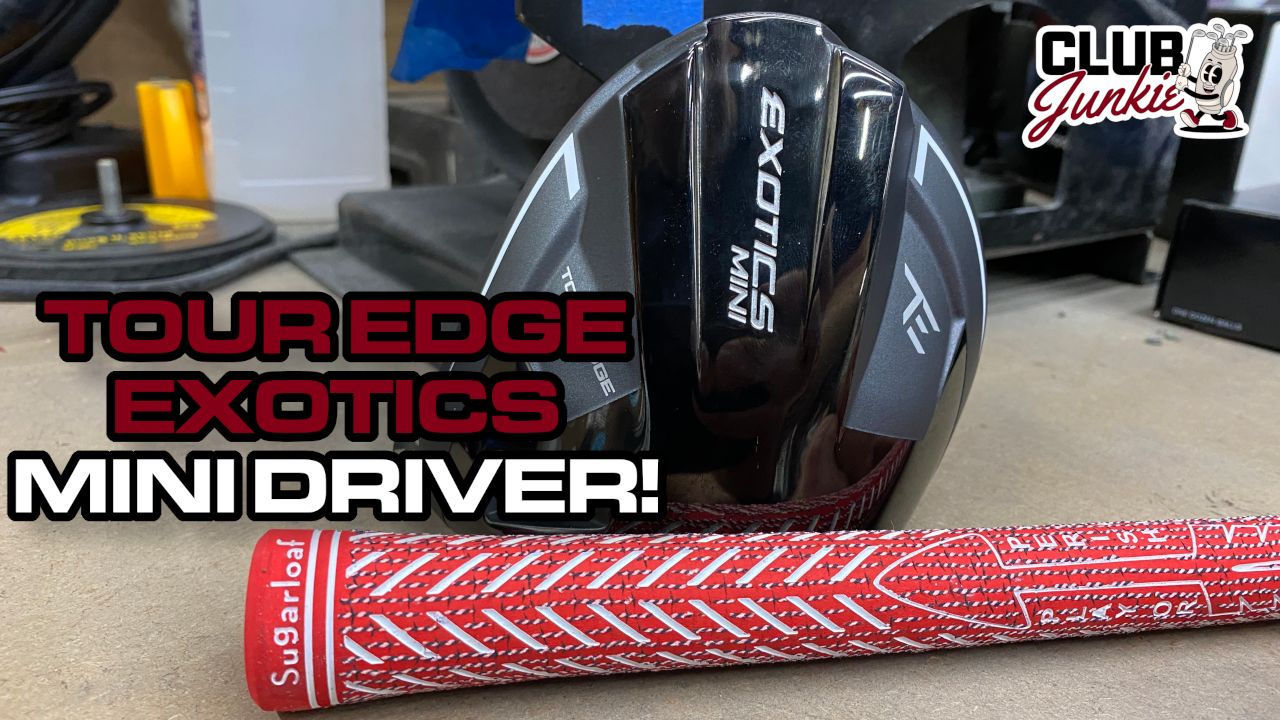
On this episode of Club Junkie, I put the new Tour Edge Exotics Mini Driver to the test and break down the performance, forgiveness, distance, and where it fits compared to a traditional driver or strong fairway wood. If you have been curious about adding a mini driver to the bag, this one is worth a look.
I also dive into the new TaylorMade Spider ZT Max putter that was recently spotted and discuss the growing zero torque putter trend. Plus, there is a closer look at the new Project X Titan Yellow shaft showing up on the PGA Tour and what makes it different from other profiles currently out there.

What’s the story behind Webb Simpson’s custom-stamped irons?

Memorial Tournament Tour Report: Rory McIlroy, Cameron Young switch up drivers, and more

Cadillac Championship Tour Report: Spieth’s sizable changes, McLaren Golf launches, and more

Russell Henley’s winning WITB: 2026 Charles Schwab Challenge

Kristoffer Reitan’s winning WITB: 2026 Truist Championship

Best irons 2026: Best irons overall, most forgiving irons, and more

J.T. Poston’s winning WITB: 2026 Memorial Tournament

Aaron Rai’s winning WITB: 2026 PGA Championship

Cameron Young’s winning WITB: 2026 Cadillac Championship

Details on Jason Day’s latest prototype Avoda iron setup


Christiaan Maas WITB 2026 (June)
Driver: TaylorMade Qi4D LS (8 degrees) Shaft: Fujikura Ventus TR Blue 6 X 3-wood: TaylorMade Qi10 (15 degrees) Shaft: Fujikura Ventus Black...


Ryan Palmer WITB 2026 (June)
Driver: Callaway Quantum Triple Diamond (9 degrees) Shaft: Project X HZRDUS Smoke Blue RDX 60 TX 3-wood: TaylorMade Qi10 (15 degrees) Shaft:...


Bud Cauley WITB 2026 (June)
Bud Cauley had >14 clubs in his bag when photographed prior to the Memorial Tournament. Driver: Titleist GTS2 (8 degrees) Shaft: Fujikura...


Hannah Green WITB 2026 (June)
Driver: Titleist GTS3 (10 degrees, D4 SureFit setting) Shaft: Mitsubishi Chemical Diamana RB 53 S 3-wood: Titleist GT3 (15 degrees,...
-
 Equipment6 days ago
Memorial Tournament Tour Report: Rory McIlroy, Cameron Young switch up drivers, and more
-
 News2 weeks ago
Russell Henley’s winning WITB: 2026 Charles Schwab Challenge
-
 Equipment4 days ago
Best irons 2026: Best irons overall, most forgiving irons, and more
-
 Whats in the Bag4 days ago
J.T. Poston’s winning WITB: 2026 Memorial Tournament
-
 Equipment1 week ago
Details on Jason Day’s latest prototype Avoda iron setup
-

 Equipment3 weeks ago
CJ Cup Byron Nelson Tour Report: Koepka and Kim’s newest putters finally get hot
-

 News2 weeks ago
Charles Schwab Challenge Tour Report: MacIntyre, Åberg and Spaun all switch putters, TaylorMade launches new Spider
-

 Equipment2 weeks ago
Details on J.J. Spaun’s surprise putter switch


Dan
Jun 10, 2018 at 10:45 pm
Great article. As a former college player it’s really eye opening the amount of talent competing for so few spots.
Aaron
Jun 10, 2018 at 5:52 pm
It’s shocking to me how many high schoolers think they’re going to play golf at Auburn or Duke just because they start for four years.
Nick
Jun 10, 2018 at 3:54 pm
I also believe in being able to play somewhere all the time. I would also suggest looking at competitive Division II schools. I was about a 75-76 average golfer in high school and went to a DII school where we were ranked in the top-10 every year and had chances to win national titles. The competition was great, but I also liked the fact that DII still had a strong focus on academics, which I think is great. We still traveled and played great courses. Personally, if a golfer can’t play for a top-50 team in DI, I would strongly suggest a top tier DII school. I may not have have played against many guys who made it out on tour, but there were still quite a few who played on tour and won that I competed against.
Dan
Jun 10, 2018 at 10:47 pm
Perfectly said. Go somewhere you can play
Lorne Kelly
Jun 12, 2018 at 4:36 pm
Excellent post. Top 10 D2 school over a mid-low D1 school all day long! No brainer
Jack
Jun 10, 2018 at 2:57 pm
Agree with everything said except…over 4 years at a school where you play EVERY event, if your team has 10 regular tournaments, a conference championship, regionals, and the national championship, that’s 13 events a year. 52 over four years, not 100+? Are you assuming that the player is playing a full amateur schedule in addition to college golf, or are you counting each individual round as a start? Sorry to nitpick, just don’t want parents or kids thinking a school is gonna have them play in 25+ events over an 8 month season.
shawn
Jun 10, 2018 at 2:02 pm
Deer coach. I am a jr goffer an I reely reely luv goff and I wanna play fer u if u giv me a chance. I once scored a 59 an had a hole in 1. I feeel i will be a toor goffer if u giv me a chance to play fer u. thanx a lot.
The dude
Jun 10, 2018 at 10:15 pm
Haha….sent from his iPhone
Radim Pavlicek
Jun 11, 2018 at 1:52 am
:-D. Good
Tom
Jun 10, 2018 at 12:09 pm
sub 70’s in competetion on a regular basis