
Opinion & Analysis
5 reasons why The Masters is the most difficult tournament to win


Everyone’s favorite time of year is here: The Masters! Truth be told, it’s the only tournament I watch every single shot possible. It’s such great theater and it’s the mecca for golfers all over the world. Having been there and played the course, I can tell you it’s a different set of conditions than most have ever seen. Therefore, I would like to give you my five reasons why Augusta is the most difficult tournament to win in the world… and putting is not one of them!
1) History
The Masters is the one tournament where everyone knows the history and the course. Even casual sports fans who have never touched a club know what Amen Corner is, and what the Green jacket means.
It’s also the tournament you grow up pretending to win. “Ok, this one is for The Masters,” you’ll say to yourself while night putting as a junior. The Masters just means a little something more to the fans and participants because of it’s history.
Playing Amen Corner on Thursday is one thing, but playing Amen Corner on Sunday with the Green Jacket hanging in the balance is quite another. And it takes a special golfer to get the job done on Sunday with a place in that history on the line.
2) The Pressure of Forever
The Masters invite is highly coveted, even among players who have already played in the event. You see the guys on Twitter and Facebook and Instagram showing off their Masters invite like it’s a trophy.
As we all know, winning the tournament gives you the Masters invite for life. Who wouldn’t want to be a part of this special even for perpetuity? You can’t tell me that having that special perk on your resume wouldn’t make your entire career, not to mention being the highlight of your year, every year until even after your career is over. If you don’t think I’m right, look at how many of the old timers come back just for the Par-3 Contest and/or just to enjoy the week as Augusta’s special guests?
This too may weigh heavily on the minds of the leaders the night before Masters Sunday.
3) Shot Shaping
Everyone knows Augusta is a right-to-left biased course off the tee, and all the players know that this is a requirement. So everyone works on their right-to-left game with their driver; I don’t think many players hit a soft fade off the tee on 13 towards the trees on the right… they try and hammer it around the corner to give them a shorter shot into the green.
Additionally, you will find that the different pin placements and green slopes will also force you to move the ball both directions with your irons if you truly want to have an easier shot at birdies. I don’t know about you, but if I had to go at that Sunday pin on hole No. 12, a soft fade off the center of the green would be a much easier shot to hit than starting it over the water with a draw if I had to go at that pin… it gives you a bit of leeway if you get a touch froggy.
Anyone can move it both directions on Tour, but can you rely on your non-typical shot shape with the tile on the line if the shot calls for it?
4) Trajectory Control combined with Distance Control
The biggest issue for players at Augusta is that you cannot hit the ball into the greens with your normal trajectory for 72 holes… you must alter your trajectory to control your landing angles so the ball stops quicker, or you can get the ball on the proper shelf. Think hole No. 15; you simply cannot hit a low draw into that green with a long iron, or you will quickly cascade over the back of the green leaving yourself with an impossible pitch to an elevated green running downhill toward the water. No thanks.
But here is the issue… do you know your distances when hitting the ball with different trajectories? And can you trust those numbers down the stretch, or when the adrenaline gets pumping on the back nine on Sunday?
Getting to know the shots you need to hit into the different pins at Augusta National takes time to learn, and is possibly a more complicated process than at any other golf course in the world. My advice for new Masters participants would be to work on TrackMan to understand how your different swing feels effect launch angle, and then figure out exactly how far those different feels hit the golf ball. Sometimes, you’ll need to hit a flighted draw into a certain pin location, and a yard-or-two off your distance could lead to a double bogey and cost you a made cut or a Green Jacket. Dial in those distances on shots with different trajectories!
5) Pitching Control
First timers who have never played on the perfectly-manicured, yet extremely firm conditions at Augusta National are at a distinct disadvantage compared to the veterans. There’s simply no course in the world that can perfectly mimic the conditions around the green.
I know the Houston event tries to accommodate some of these Augusta-like conditions, but it’s not really the same because you are hitting off of Bermuda grass. And players know the golf ball won’t react like it does off Rye. So you come into Augusta on Monday-Wednesday trying to practice as much as you can to get used to the different grass and different ball reactions. For some, this will mean changing lofts and grinds of their wedges. For others, a shift in technique or mindset may be necessary.
Your short game must be a strength at Augusta, but have you really simulated it enough for it to work when you get there?
By now, you should have a better understand of what players face when trying to win The Masters. And, in my opinion, it’s the most difficult tournament to win in golf. Who do you think will jump the 5 hurdles above and win come Sunday?



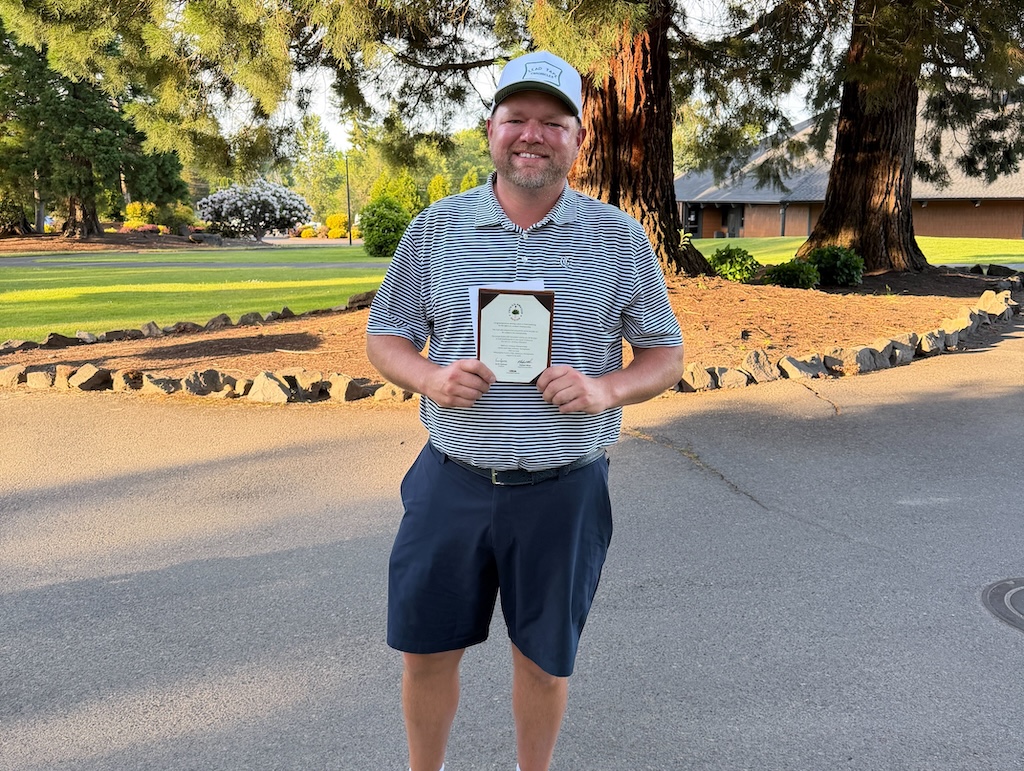
This past Monday, I played in the U.S. Amateur local qualifier at Rock Creek Country Club in Portland, Oregon. A full tee sheet from 7:30 a.m. to 1:55 p.m., the top 11 scores would make it to the U.S. Amateur final qualifying.
I teed off at 10:48 a.m.. With the 7:30 am tee time, you can get a feel for the leaders’ pace, and they were off and running on the challenging setup at Rock Creek.
View this post on Instagram
Getting to the highlight of the round on the par five 17th, a drive up the left side and 212 yards left to the front hole location. I took out a 5-iron with plans of middle of the green. The ball ended up 8 feet left of the hole, pin high. A slight downhill putt dropped in for an eagle 3 on the 17th. With the cut line looking to be anywhere from -2 to even par. This was the boost I had been waiting for all day.
With making par from the trees on 18, it was time to wait for a potential playoff with a posted score of one under par 71.
Three hours later, it was playoff time. 8 players for 6 spots. I made par on the playoff hole, which was good enough to advance to the U.S. Amateur final qualifying in July. USGA qualifiers sure deliver on all of the emotions in golf!
Club Junkie
Building my 2026 gamer WITB: Ranking the contenders and new putter projects – Club Junkie Podcast


The annual What’s In The Bag build is underway, and on this episode of Club Junkie, Brian breaks down the clubs currently leading the race for a spot in his 2026 gamer setup. From drivers and fairway woods to irons, wedges, and shafts, he ranks the equipment that’s performing best and explains what’s separating the front runners from the rest of the field.
Brian also heads into the workshop to discuss several putter projects currently on the bench. From head options and shaft choices to build ideas and testing plans, he shares what he’s working on and which putters could become serious contenders for the bag this season.
If you’re a gear junkie who loves equipment testing, club building, and the never-ending pursuit of the perfect setup, this episode is for you.
Follow Club Junkie:
Instagram: @clubjunkiepod
TikTok: @clubjunkiepod
Threads: @clubjunkiepod
X: @ClubJunkiePod
Club Junkie
Tour Edge Exotics mini driver review + TaylorMade Spider ZT Max first look – Club Junkie

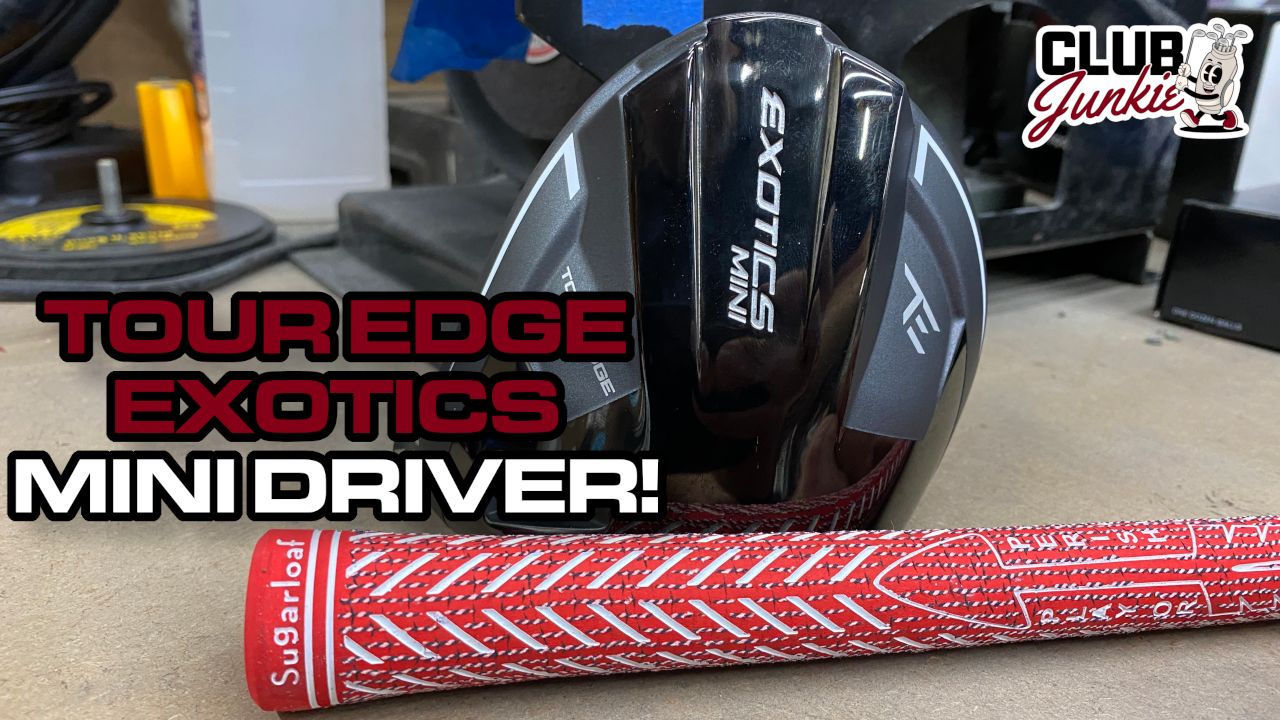
On this episode of Club Junkie, I put the new Tour Edge Exotics Mini Driver to the test and break down the performance, forgiveness, distance, and where it fits compared to a traditional driver or strong fairway wood. If you have been curious about adding a mini driver to the bag, this one is worth a look.
I also dive into the new TaylorMade Spider ZT Max putter that was recently spotted and discuss the growing zero torque putter trend. Plus, there is a closer look at the new Project X Titan Yellow shaft showing up on the PGA Tour and what makes it different from other profiles currently out there.

What’s the story behind Webb Simpson’s custom-stamped irons?

Memorial Tournament Tour Report: Rory McIlroy, Cameron Young switch up drivers, and more

Cadillac Championship Tour Report: Spieth’s sizable changes, McLaren Golf launches, and more

Russell Henley’s winning WITB: 2026 Charles Schwab Challenge

Kristoffer Reitan’s winning WITB: 2026 Truist Championship

Best irons 2026: Best irons overall, most forgiving irons, and more

J.T. Poston’s winning WITB: 2026 Memorial Tournament

Aaron Rai’s winning WITB: 2026 PGA Championship

Cameron Young’s winning WITB: 2026 Cadillac Championship

Details on Jason Day’s latest prototype Avoda iron setup


Ryan Palmer WITB 2026 (June)
Driver: Callaway Quantum Triple Diamond (9 degrees) Shaft: Project X HZRDUS Smoke Blue RDX 60 TX 3-wood: TaylorMade Qi10 (15 degrees) Shaft:...


Bud Cauley WITB 2026 (June)
Bud Cauley had >14 clubs in his bag when photographed prior to the Memorial Tournament. Driver: Titleist GTS2 (8 degrees) Shaft: Fujikura...


Hannah Green WITB 2026 (June)
Driver: Titleist GTS3 (10 degrees, D4 SureFit setting) Shaft: Mitsubishi Chemical Diamana RB 53 S 3-wood: Titleist GT3 (15 degrees,...


Asterisk Talley WITB 2026 (June)
Driver: TaylorMade Qi4D (9 degrees) Shaft: Fujikura Ventus Blue 6 S 3-wood: TaylorMade Qi4D (16.5 degrees) Shaft: Fujikura Ventus Blue...
-
 Equipment6 days ago
Memorial Tournament Tour Report: Rory McIlroy, Cameron Young switch up drivers, and more
-
 News2 weeks ago
Russell Henley’s winning WITB: 2026 Charles Schwab Challenge
-
 Equipment3 days ago
Best irons 2026: Best irons overall, most forgiving irons, and more
-
 Whats in the Bag4 days ago
J.T. Poston’s winning WITB: 2026 Memorial Tournament
-
 Equipment1 week ago
Details on Jason Day’s latest prototype Avoda iron setup
-
 Equipment3 weeks ago
CJ Cup Byron Nelson Tour Report: Koepka and Kim’s newest putters finally get hot
-

 News2 weeks ago
Charles Schwab Challenge Tour Report: MacIntyre, Åberg and Spaun all switch putters, TaylorMade launches new Spider
-

 Equipment2 weeks ago
Details on J.J. Spaun’s surprise putter switch


Pingback: The Masters Tournament: The Epitome of Prestigious Golf Events - Virtual Hangar Media
Steve Wozeniak
Apr 4, 2018 at 9:24 pm
Typical for this site……it’s actually the exact opposite of what the “pro” thinks……
Steve Wozeniak PGA
Tom54
Apr 4, 2018 at 5:54 pm
I agree the field is smaller but I would hardly call it weaker. I think the history and how it has remained true to its origins is why it is so special. Multiple winners I believe is because of course familiarity. More you play more you become comfortable with it. That’s why very few first time winners. I believe it’s the most prestigious of the majors because of all the attention given to past champions. Other majors are important and hard to win too. There is something a little different about being a Masters Champion
Tony Lee
Apr 4, 2018 at 11:33 am
Putting?
Markallister
Apr 4, 2018 at 1:55 am
it is the easiest major, because the field is weakest. everybody knows that. in fact, it should not be a major, but rather a silly-season invitational which would better fit with the strength of the field.
ND Hickman
Apr 4, 2018 at 5:09 am
Won many green jackets then, have you?
Zach Bartness
Apr 4, 2018 at 7:23 am
On flip side, hardest to win because the field is so limited. If you aren’t in you can’t win it. Goes both ways….
Man
Apr 3, 2018 at 9:14 pm
It’s the easiest to win. That’s why so many Spaniards win it, and why there are so many multiple winners
aman
Apr 3, 2018 at 10:45 pm
Tiger is a mix of African and European on his father’s side and Thai, Chinese and Dutch on his mother’s side. He was raised as a Buddhist. He has no Spanish ancestry.
Javier
Apr 4, 2018 at 8:17 am
Quite the contrary.
Multiple winners: Byron Nelson, Ben Hogan, Sam Snead, Arnold Palmer, Gary Player, Jack Nicklaus, Seve Ballesteros, Tom Watson, Phil Mickelson, Tiger Woods…
Spaniards: (i) Seve, one of the best players of the golf History, (ii) Ollie, included in the golf Hall of Fame, and (iii) Sergio, one of the best players of the last 20 years.
Therefore, just the best ones (some exceptions as in the other majors) are able to win the Masters.
Man, just think a little before say/write anything.
fuzz
Apr 3, 2018 at 6:42 pm
How about the bikini-waxed greens… 😮
juststeve
Apr 3, 2018 at 3:47 pm
On the other hand it has the weakest field of any major, weaker than most regular tournaments.
Sean Foster-Nolan
Apr 3, 2018 at 6:12 pm
I agree with this. While the field is strong, it is limited. I would think of all the majors it would be the “easiest” to win.