
Opinion & Analysis
Is specializing in golf necessary to get recruited for a college golf scholarship?

The college golf recruiting process is complicated and often causes undue stress on players and parents, resulting in exhausting financial and emotional resources to secure college placement. Throughout the process, players and parents often attempt to better understand how and why certain players are recruited aggressively while others are often overlooked. To complicate matters, colleges appear to be recruiting players younger and younger, creating an urgency for players to play more competitive, regional and national events at an earlier age.
To help parents, coaches and junior golfers in the process, with the cooperation of the American Junior Golf Association (AJGA), the Golf Coaches Association of America (GCAA) and Dr. Bhrett McCabe, we created a survey for players participating in the AJGA Senior Showcase in Florida. The goal of the survey was to collect information and to help tailor tools to assist players and parents through the collegiate recruiting process.
The online, optional survey created by Dr. McCabe, the AJGA and myself had 8 questions and was sent via email to participants the week of the tournament. The survey was optional. Fifty of the 71 participants in the field completed the survey and spent an average of three minutes. The survey asked players:
- At what age did you first become interested in golf?
- At what age did you play your first 36-hole tournament?
- At what age did you start the college recruitment process?
- What other sports do you play competitively? Please list the sports, as well as the number of years you have participated
- To play Division I golf, do you believe you need to specialize in golf?
- How many hours (in total) do you think you have spent on the college recruitment process?
- How much control do you believe you have over the recruitment process (1= very little, 100=Total Control)
What We Learned about the Participants
In the AJGA Senior Showcase field, the average age to become interested in golf was 9.2 years with 30 percent of golfers starting at 5 years of golf or younger, 54 percent of golfers starting between the ages of 10-14, and 10 percent starting between the ages of 6-9 years old. The average age for the participants first 36-hole tournament was 13.48 years and only 10 percent reported playing a 36-hole event before their 10th birthday. We also know that the average player started the recruitment process early into their junior year and have spent, on average, about 43 hours of time emailing and calling coaches.
What the Data Tells Us
The data highlights that many respondents to the survey were at one-time, multi-sport athletes, and while many started playing young, the average player took a larger interest in golf as they grew older. Nearly 75 percent of the respondents felt it was necessary to specialize in golf to be recruited to play collegiately. In our opinion, this is likely creating a struggle, in that players are transitioning to golf from other sports in their early teenage years, but feel that specialization is necessary for collegiate advancement, particularly in Division I. The perception of successful early specialization only creates greater concern when those that have played longer have early success and separate themselves from the field as compared to those that are learning to play at a prominent level after transitioning in from other sports. When the “optimal recruiting window” is shifting younger and younger, those who do not specialize, but who have enormous potential, may be overlooked, feel greater pressure, or possibly overtrain in order to level the playing field.
Although early commitments often get media attention, there is data to suggest that players still have significant opportunities well into their Senior year of high school. Data collected by reviewing numbers on Junior Golf Scoreboard up to 35 percent of people sign scholarships in the late signing period.
Further, a review of data from previous senior showcases (2013 to present) shows a pattern of winners having opportunities at Major Conference schools with past participants getting opportunities at schools like University of South Florida, Oklahoma State, Ohio State and University of Arkansas to name a few. Overall, since the Senior Showcase concept started in 2012, the AJGA reports a better than 60 percent success rate among all players in these events ending up on a college golf team that next Fall.
Below, please see data on previous Senior Showcase participants, the school they attended and their finish in the showcase.
Boys
2016 (Feb)
- Sebastian Diaz: USF (W)
- Michael Spinger: Coastal Georgia (T3)
- Daniel Faccini: Barry University (10)
2016
- Branden Meyer: South Mountain Comm. College (W)
- Michael Jura: Stanislaus State (T6)
- Eric Duarte: South Mountain Com. College (T10)
2015
- Paul Gunness-Bendetti: Dominican University (W)
- Sam Yamauchi: Cal State Fullerton (6th)
- Newport Laparojkit: University of South Carolina Beaufort (10)
2014
- Colin Hamilton: Oklahoma State (W)
- Noah Lubberding: South Dakota State (5th)
- Blake DiPola: Rhode Island (10th)
2013
- Jeffery Yamaguchi: University of Hawaii Hilo (W)
- Harrison Frye: Coastal Carolina University (W)
- Ty Macias: Dominican University (5th)
- Riley Schank: University of South Carolina Beaufort
Girls
2016
- Elle Otten: University of Colorado (T1, lost in playoff)
- Audrey Kennett: Elon University (T4)
- Staesha Flock: Portland (10)
2015
- Alex Wright: Ohio State (W)
- Noemie Pare: Barry University (5th)
- Marisa Hisaki: Northern Colorado (T8th)
2014
- Hannah Haythorne: Pepperdine (W)
- Claire Carlin: University of Kentucky (5th)
- Ximena Name: Newman University (10th)
2013
- Shu-Lin Lin: Academy of Art (W)
- Alana Uriell: University of Arkansas (6th)
- Kirsten Leigh Campbell: Dallas Baptist University (11th)
Although the population data here is small and likely involves more than just one week of good golf, it does demonstrate that strong results in tournaments after the November signing period can lead junior golfers to fantastic opportunities. The data is also supported by other tournaments, such as Doral where former winners Hurley Long and Ivan Ramirez, both uncommitted before the tournament, signed to play major conference golf at Oregon and Texas Tech, respectively.
It is important to note that for the class of 2015, the NCAA changed the rules on contacts — when coaches are initially allowed to text, call and email recruits. Up until the class of 2015, coaches were not allowed to contact players until July 1 between their Junior and Senior years. Now, coaches can contact Prospective Student Athletes September 1 of their Junior Year. This rule has had significant consequences for recruiting; now coaches can look at players in their junior years and senior years concurrently. Before this rule, it was more likely to have coaches take a player late, because they did not know the potential for future recruits. With the new rule, now coaches are more likely to opt out of late players and put money into the younger player. Coaches rely heavily on ranking to determine fit and when two players are ranked similarly, they are more likely to take the younger player who has more room for development.
Early Specialization
The survey also tells us that 72 percent of participants believe that you must specialize in golf to play Division I golf. Of the data collected, this might be the most significant; clearly young people are getting the message that specialization is necessary if they have dreams of playing Division I golf. This message is understandable; as players see information online which perpetuates the stigma that the best athletes are early developers and have experienced relatively linear development, consistently getting better each year.
Early specialization has gained significant attention over the last few years. In a 2013 American Medical Society for Sports Medicine survey, 88 percent of college athletes who were surveyed played more than one sport as a child. Specialization is continuing to increase, however, despite its reported consequences. In a 2017 TIME article about the growth of the youth sports industry, the industry is estimated to reach beyond $15 billion per year and the pressure to secure college scholarships is only intensifying the specialization urgency. Early experiences in the game of golf were fantastic and in efforts to grow the game, exposing players to positive benefits of the game such as sportsmanship, motor learning, and resiliency, can prepare them for life ahead. It is important that we continue to educate and refine resources to maximize the recruiting process and allow those players ready to compete the opportunity to compete at the school that is right for them. Research done by Dr Neeru Jayanthi of Emory University and associates, suggests early specialization in a single sport is one of the strongest predictors of injury. Athletes in the study who specialized were 70 percent to 93 percent more likely to be injured than children who played multiple sports.
Although some PGA Tour players have significant success at every level like Rory McIlroy and Jordan Speith, many take years to develop their games and represent a comprehensive, longer path to professional success. For instance, I (Brendan Ryan) went to school at Campbell University with PGA Tour player, Brad Fritsch. As a junior at Campbell University in 1998-99, Brad averaged 73.79, which was the 4th best average on the team. As a Senior, he got a half shot worse and averaged 74.32. Today, however, he has played in the U.S. Open, won on the Nationwide Tour, and has earned over $1.2 million as a professional golfer. This story demonstrates that too many parents, coaches and student put emphasis on current results, rather than a commitment to long-term development.
Concluding Thoughts
The data collected in the survey demonstrates participants of the AJGA Senior Showcase are on a very healthy development track which includes playing multiple sports background. Many of these players will go on to play college golf and should be aware with further dedication to the sport have possibilities, if they wish, to pursue golf at the professional level, while others will combine academics and athletics to learn invaluable life skills which will give them advantages as they enter the work force and become tomorrow’s leaders.
References
Jayanthi NA, Pinkham C, Dugas L, Patrick B, LaBella C, “Evidence-Based Recommendations: Counseling the Young Athlete on Sports Specialization,” Journal of Sports Health: A Multidisciplinary Approach, May 2013 5:251-257



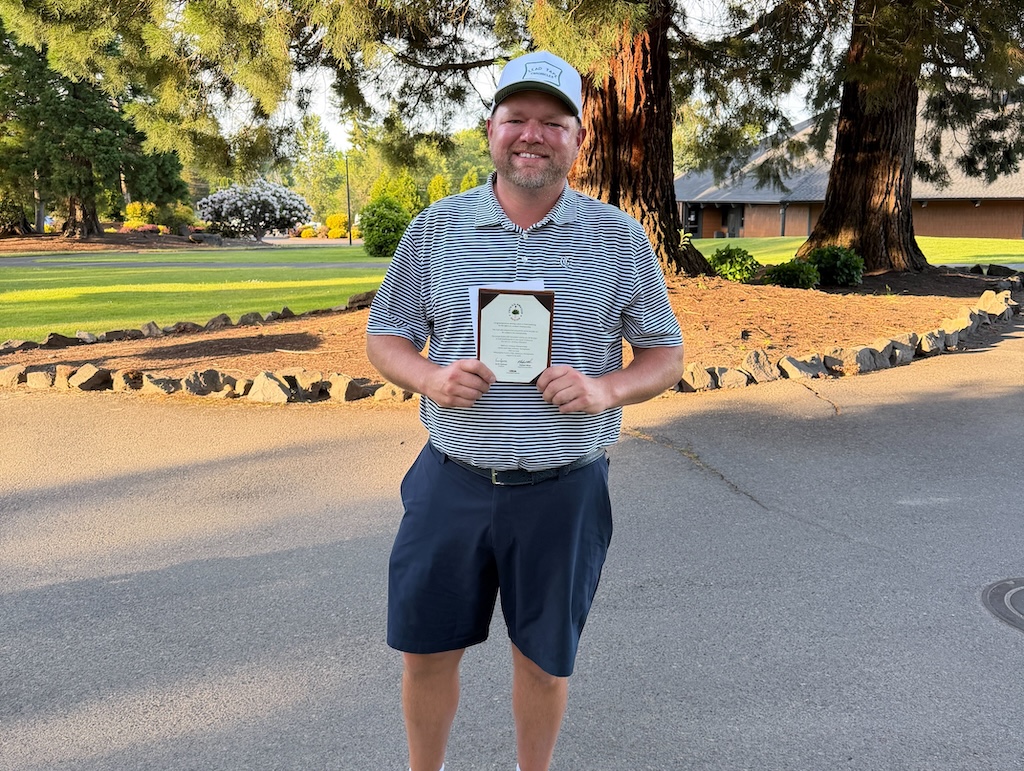
This past Monday, I played in the U.S. Amateur local qualifier at Rock Creek Country Club in Portland, Oregon. A full tee sheet from 7:30 a.m. to 1:55 p.m., the top 11 scores would make it to the U.S. Amateur final qualifying.
I teed off at 10:48 a.m.. With the 7:30 am tee time, you can get a feel for the leaders’ pace, and they were off and running on the challenging setup at Rock Creek.
View this post on Instagram
Getting to the highlight of the round on the par five 17th, a drive up the left side and 212 yards left to the front hole location. I took out a 5-iron with plans of middle of the green. The ball ended up 8 feet left of the hole, pin high. A slight downhill putt dropped in for an eagle 3 on the 17th. With the cut line looking to be anywhere from -2 to even par. This was the boost I had been waiting for all day.
With making par from the trees on 18, it was time to wait for a potential playoff with a posted score of one under par 71.
Three hours later, it was playoff time. 8 players for 6 spots. I made par on the playoff hole, which was good enough to advance to the U.S. Amateur final qualifying in July. USGA qualifiers sure deliver on all of the emotions in golf!
Club Junkie
Building my 2026 gamer WITB: Ranking the contenders and new putter projects – Club Junkie Podcast

The annual What’s In The Bag build is underway, and on this episode of Club Junkie, Brian breaks down the clubs currently leading the race for a spot in his 2026 gamer setup. From drivers and fairway woods to irons, wedges, and shafts, he ranks the equipment that’s performing best and explains what’s separating the front runners from the rest of the field.
Brian also heads into the workshop to discuss several putter projects currently on the bench. From head options and shaft choices to build ideas and testing plans, he shares what he’s working on and which putters could become serious contenders for the bag this season.
If you’re a gear junkie who loves equipment testing, club building, and the never-ending pursuit of the perfect setup, this episode is for you.
Follow Club Junkie:
Instagram: @clubjunkiepod
TikTok: @clubjunkiepod
Threads: @clubjunkiepod
X: @ClubJunkiePod
Club Junkie
Tour Edge Exotics mini driver review + TaylorMade Spider ZT Max first look – Club Junkie

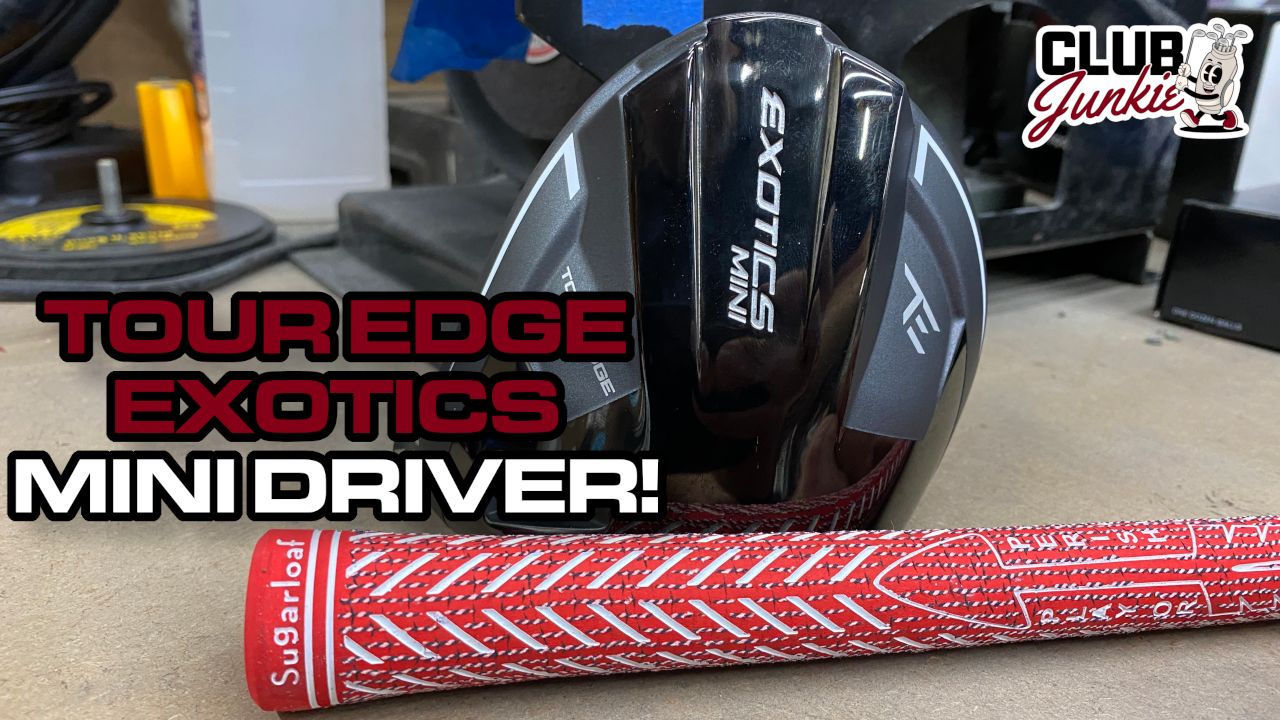
On this episode of Club Junkie, I put the new Tour Edge Exotics Mini Driver to the test and break down the performance, forgiveness, distance, and where it fits compared to a traditional driver or strong fairway wood. If you have been curious about adding a mini driver to the bag, this one is worth a look.
I also dive into the new TaylorMade Spider ZT Max putter that was recently spotted and discuss the growing zero torque putter trend. Plus, there is a closer look at the new Project X Titan Yellow shaft showing up on the PGA Tour and what makes it different from other profiles currently out there.

Justin Rose WITB 2026 (April): Full WITB breakdown with new McLaren irons

What’s the story behind Webb Simpson’s custom-stamped irons?

Memorial Tournament Tour Report: Rory McIlroy, Cameron Young switch up drivers, and more

Cadillac Championship Tour Report: Spieth’s sizable changes, McLaren Golf launches, and more

Russell Henley’s winning WITB: 2026 Charles Schwab Challenge

Kristoffer Reitan’s winning WITB: 2026 Truist Championship

Best irons 2026: Best irons overall, most forgiving irons, and more

J.T. Poston’s winning WITB: 2026 Memorial Tournament

Aaron Rai’s winning WITB: 2026 PGA Championship

Cameron Young’s winning WITB: 2026 Cadillac Championship


Ryan Palmer WITB 2026 (June)
Driver: Callaway Quantum Triple Diamond (9 degrees) Shaft: Project X HZRDUS Smoke Blue RDX 60 TX 3-wood: TaylorMade Qi10 (15 degrees) Shaft:...


Bud Cauley WITB 2026 (June)
Bud Cauley had >14 clubs in his bag when photographed prior to the Memorial Tournament. Driver: Titleist GTS2 (8 degrees) Shaft: Fujikura...


Hannah Green WITB 2026 (June)
Driver: Titleist GTS3 (10 degrees, D4 SureFit setting) Shaft: Mitsubishi Chemical Diamana RB 53 S 3-wood: Titleist GT3 (15 degrees,...


Asterisk Talley WITB 2026 (June)
Driver: TaylorMade Qi4D (9 degrees) Shaft: Fujikura Ventus Blue 6 S 3-wood: TaylorMade Qi4D (16.5 degrees) Shaft: Fujikura Ventus Blue...
-
 Equipment6 days ago
Memorial Tournament Tour Report: Rory McIlroy, Cameron Young switch up drivers, and more
-
 News2 weeks ago
Russell Henley’s winning WITB: 2026 Charles Schwab Challenge
-
 Equipment3 days ago
Best irons 2026: Best irons overall, most forgiving irons, and more
-
 Whats in the Bag4 days ago
J.T. Poston’s winning WITB: 2026 Memorial Tournament
-

 Equipment1 week ago
Details on Jason Day’s latest prototype Avoda iron setup
-
 Equipment3 weeks ago
CJ Cup Byron Nelson Tour Report: Koepka and Kim’s newest putters finally get hot
-

 News2 weeks ago
Charles Schwab Challenge Tour Report: MacIntyre, Åberg and Spaun all switch putters, TaylorMade launches new Spider
-

 Equipment2 weeks ago
Details on J.J. Spaun’s surprise putter switch


bill
Mar 10, 2018 at 2:00 pm
You can’t think yourself into a golf swing… as most adult beginners seem to believe. You gotta start when you are a pre-teen and then play in an organized club environment.
Even adult athletes from other sports cannot conquer the game with an aged swing. You gotta be hard wired from childhood to make the golfswing a natural part of your neuro-muscular system and brain. Why? Because the golfswing is unnatural for the human body.