
Opinion & Analysis
How much does it cost to chase the dream of playing pro golf?

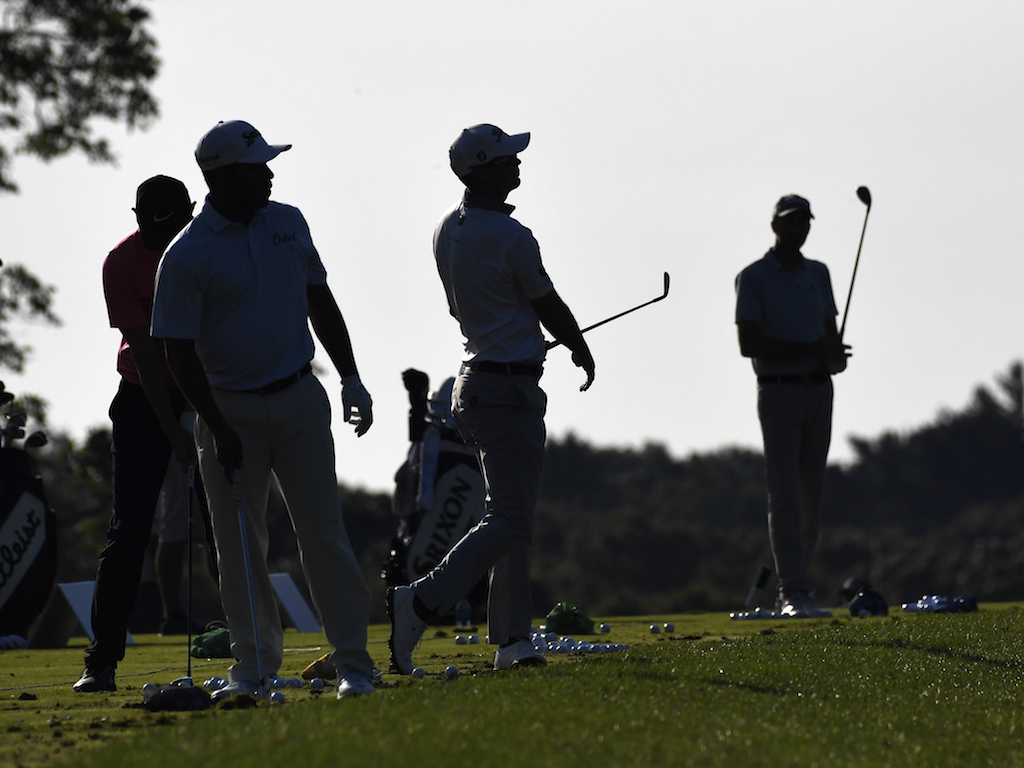
The 30-and-under crowd is taking over a sport which once represented a very different demographic.
This particular age group, also affectionately referred to as millennials, tend to show a strong enthusiasm for the occupation of “entrepreneur.” Could this be why so many golfers are now pursuing the dream of playing professionally? The lifestyle closely mimics that of a budding startup–though instead of laying the groundwork for a business, you are marketing a more personal product: your own game.
Not unlike the life of an entrepreneur, there are many expenses associated with the first few years of growth. Life on the mini tour is expensive and doesn’t guarantee returns; if your score isn’t in the red, your bank account most definitely will be. So how much must a player invest in order to chase their dream? The odds are slim, but for those who achieve status as a professional player, the rewards are abundant.
One example of this is Boris Stantchev, a California native who began his professional golf career in 2014. Finances are often a source of anxiety, especially when your income relies heavily on consistent performance in a game that is so often unpredictable.
“I’m currently looking for a sponsor,” Stantchev said. “It’s important to be around the right people when chasing your dream, but those that don’t have a sponsor do what they can to play in as many events as they can afford. I work outside service at the golf course down the street and rely on tip money to help pay for tournaments. It’s a decent way to save money and play some events in the summer months, but it’s not enough income to fund a full schedule.”
Let’s assume our player has a 30-week schedule planned, as well as Qualifying School. We have to factor in memberships to each mini tour that she (or he) plans to join–membership isn’t required, but the price break per tournament is significant. With that in mind, we’ll account for a tournament every other week within our 30-week calendar. Tournament fees range from $250-$850, so 15 tournaments at about $550 a pop sets our budget at $8,250.
Tack on Pre-qualifying, which is the first phase of Q-school. This costs between $2,700 and $3,500 depending on when you sign up, so we’ll be optimistic and plan for the former fee. This brings our total to $10,950. If our player isn’t one of the three percent that will advance through all four stages this year, s/he’ll have to pay the same entry fee on his/her next attempt (ouch).
We’ve paid for our schedule at this point, but what about other living expenses? Rent, food, and access to a gym are a given; so at about $1,000 a month, these bump our budget to $18,450.
Let’s assume that our player gets to practice at a facility free of expense–we need to factor in flights to and from each event, as well as travel fees while they are there. About $250 per flight, plus a car to and from the course, adds up to $5,250. If you have a couch to crash on for half of your events, you need a hotel for the other half — toss in $1,500 for that as well.
When all is said and done, we’ve reached $25,200 for the minimal expenses. Making the cut at most events gets you a check for about $1,400–so your scores need to be consistently solid to break even. The high cost of tour golf doesn’t stop players from pursuing the dream, even if only for a short time. In 2013, 420 players attempted the first stage, and that number continues to grow.
Not to be forgotten are the expenses that are measured through intangible currency: the sacrifice of a life on the road, the emotional stressors that come along with professional athletics, and the choice to be absent for many a family event. Though this paints a rather pessimistic portrait of chasing the tour, there are still many who join in hopes of becoming the next big player.
The beginning of Boris’s journey reflected this dynamic.
“First year was rough, a good wake up call,” Stantchev said. “I was playing my best but what really got me was how competitive it is even out here in the mini tours. I definitely felt underprepared compared to the guys that were constantly around the lead.”
The opportunity to play with the best comes with just as many opportunities for disappointment. According to Boris, the players who succeed are the ones who look past those obstacles and have a short memory of the difficulties they encounter.
“You can shoot 69-70 and miss the cut by a couple of shots in some of these events, that’s just the way it goes,” Stantchev said. “The patient guys are the ones that have the best chance at success…You just never know with this game. If you play well at the right time, it can change your life. It’s important to trust your practice and just go out and keep it simple.”



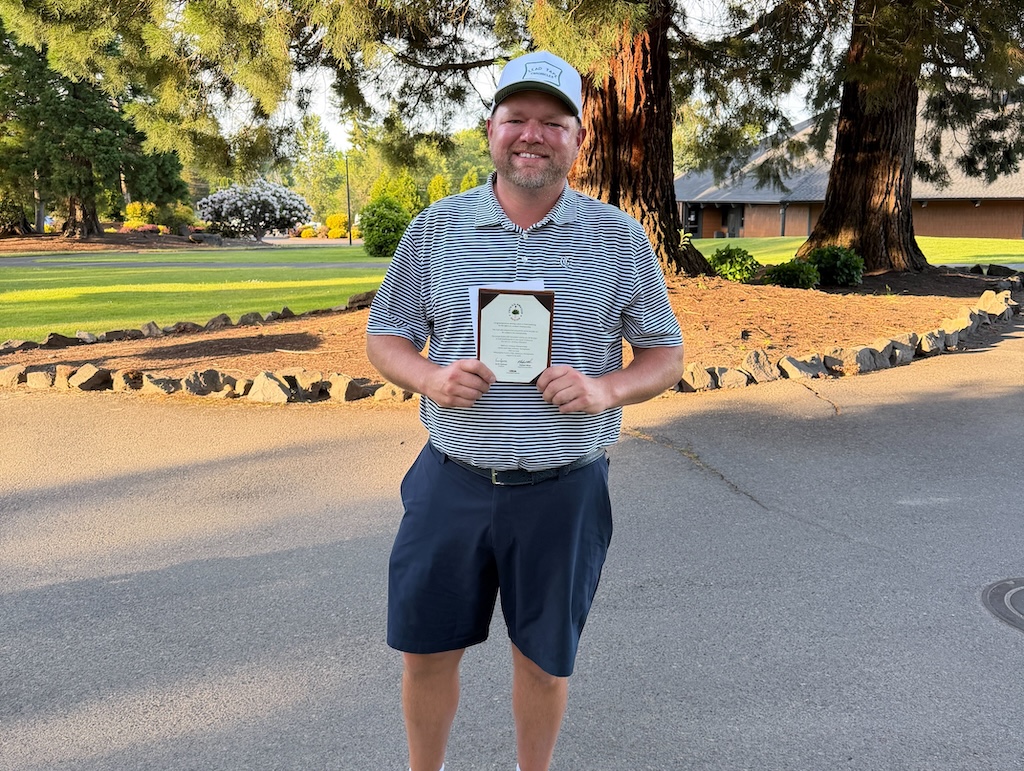
This past Monday, I played in the U.S. Amateur local qualifier at Rock Creek Country Club in Portland, Oregon. A full tee sheet from 7:30 a.m. to 1:55 p.m., the top 11 scores would make it to the U.S. Amateur final qualifying.
I teed off at 10:48 a.m.. With the 7:30 am tee time, you can get a feel for the leaders’ pace, and they were off and running on the challenging setup at Rock Creek.
View this post on Instagram
Getting to the highlight of the round on the par five 17th, a drive up the left side and 212 yards left to the front hole location. I took out a 5-iron with plans of middle of the green. The ball ended up 8 feet left of the hole, pin high. A slight downhill putt dropped in for an eagle 3 on the 17th. With the cut line looking to be anywhere from -2 to even par. This was the boost I had been waiting for all day.
With making par from the trees on 18, it was time to wait for a potential playoff with a posted score of one under par 71.
Three hours later, it was playoff time. 8 players for 6 spots. I made par on the playoff hole, which was good enough to advance to the U.S. Amateur final qualifying in July. USGA qualifiers sure deliver on all of the emotions in golf!
Club Junkie
Building my 2026 gamer WITB: Ranking the contenders and new putter projects – Club Junkie Podcast

The annual What’s In The Bag build is underway, and on this episode of Club Junkie, Brian breaks down the clubs currently leading the race for a spot in his 2026 gamer setup. From drivers and fairway woods to irons, wedges, and shafts, he ranks the equipment that’s performing best and explains what’s separating the front runners from the rest of the field.
Brian also heads into the workshop to discuss several putter projects currently on the bench. From head options and shaft choices to build ideas and testing plans, he shares what he’s working on and which putters could become serious contenders for the bag this season.
If you’re a gear junkie who loves equipment testing, club building, and the never-ending pursuit of the perfect setup, this episode is for you.
Follow Club Junkie:
Instagram: @clubjunkiepod
TikTok: @clubjunkiepod
Threads: @clubjunkiepod
X: @ClubJunkiePod
Club Junkie
Tour Edge Exotics mini driver review + TaylorMade Spider ZT Max first look – Club Junkie

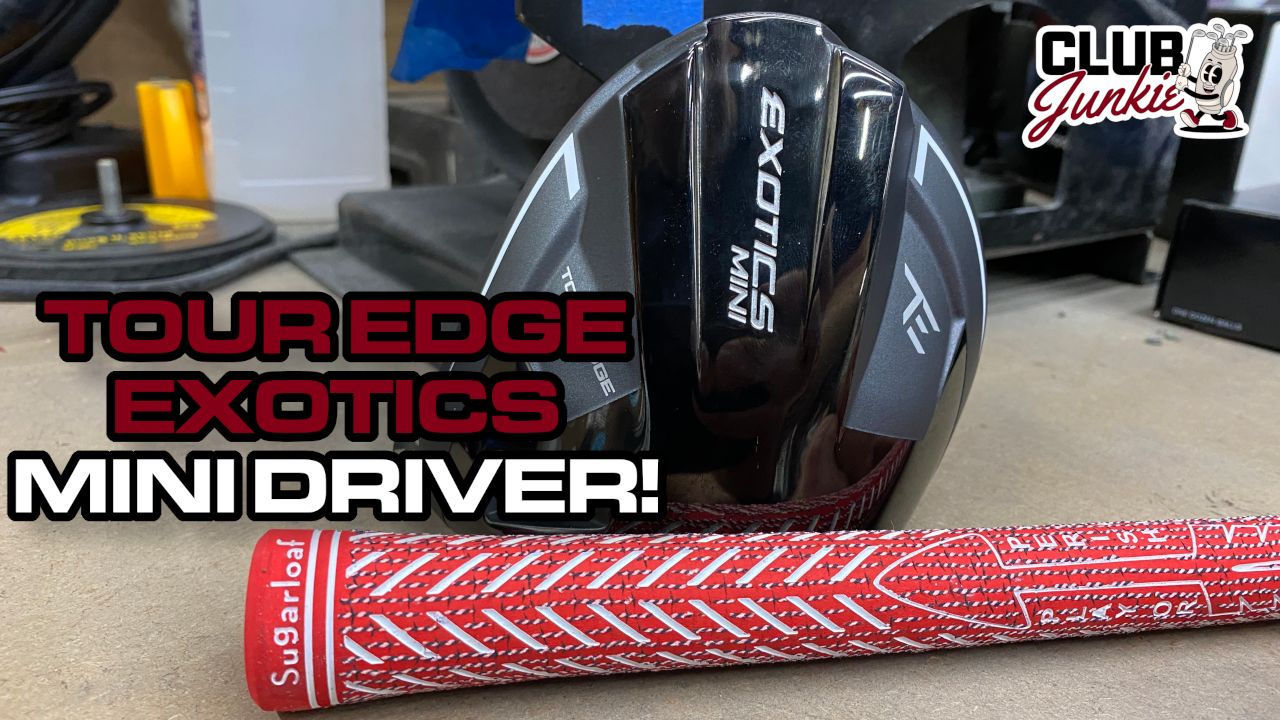
On this episode of Club Junkie, I put the new Tour Edge Exotics Mini Driver to the test and break down the performance, forgiveness, distance, and where it fits compared to a traditional driver or strong fairway wood. If you have been curious about adding a mini driver to the bag, this one is worth a look.
I also dive into the new TaylorMade Spider ZT Max putter that was recently spotted and discuss the growing zero torque putter trend. Plus, there is a closer look at the new Project X Titan Yellow shaft showing up on the PGA Tour and what makes it different from other profiles currently out there.

Justin Rose WITB 2026 (April): Full WITB breakdown with new McLaren irons

What’s the story behind Webb Simpson’s custom-stamped irons?

Memorial Tournament Tour Report: Rory McIlroy, Cameron Young switch up drivers, and more

Cadillac Championship Tour Report: Spieth’s sizable changes, McLaren Golf launches, and more

Russell Henley’s winning WITB: 2026 Charles Schwab Challenge

Kristoffer Reitan’s winning WITB: 2026 Truist Championship

Best irons 2026: Best irons overall, most forgiving irons, and more

J.T. Poston’s winning WITB: 2026 Memorial Tournament

Aaron Rai’s winning WITB: 2026 PGA Championship

Cameron Young’s winning WITB: 2026 Cadillac Championship


Bud Cauley WITB 2026 (June)
Bud Cauley had >14 clubs in his bag when photographed prior to the Memorial Tournament. Driver: Titleist GTS2 (8 degrees) Shaft: Fujikura...


Hannah Green WITB 2026 (June)
Driver: Titleist GTS3 (10 degrees, D4 SureFit setting) Shaft: Mitsubishi Chemical Diamana RB 53 S 3-wood: Titleist GT3 (15 degrees,...


Asterisk Talley WITB 2026 (June)
Driver: TaylorMade Qi4D (9 degrees) Shaft: Fujikura Ventus Blue 6 S 3-wood: TaylorMade Qi4D (16.5 degrees) Shaft: Fujikura Ventus Blue...

Brianna Do WITB 2026 (June)
Driver: Callaway Quantum Triple Diamond (9 degrees) Shaft: KBS PGW 3-wood: Callaway Elyte Titanium (15 degrees) Shaft: KBS PGW 5-wood:...
-
 Equipment6 days ago
Memorial Tournament Tour Report: Rory McIlroy, Cameron Young switch up drivers, and more
-
 News2 weeks ago
Russell Henley’s winning WITB: 2026 Charles Schwab Challenge
-
 Equipment3 days ago
Best irons 2026: Best irons overall, most forgiving irons, and more
-
 Whats in the Bag4 days ago
J.T. Poston’s winning WITB: 2026 Memorial Tournament
-

 Equipment1 week ago
Details on Jason Day’s latest prototype Avoda iron setup
-

 Equipment3 weeks ago
CJ Cup Byron Nelson Tour Report: Koepka and Kim’s newest putters finally get hot
-

 News2 weeks ago
Charles Schwab Challenge Tour Report: MacIntyre, Åberg and Spaun all switch putters, TaylorMade launches new Spider
-

 Equipment2 weeks ago
Details on J.J. Spaun’s surprise putter switch


Pingback: Former LPGA pro shares detailed breakdown of expenses for a year on Symetra Tour – GolfWRX
Pingback: Symetra pro opens up on the harsh financial realities of life on Tour – GolfWRX
D
Mar 28, 2018 at 12:24 pm
Not even in the ballpark with a ~$25k estimate. You need have at least ~$50k to start each year and that’s if you can keep living costs at an absolute minimum by living with family etc. Which could add another $20k onto your costs.
DW
Mar 28, 2018 at 12:09 pm
7 years mini-tour experience
50k-60k minimum costs. Anything less is a pipe dream.
leo vincent
Mar 26, 2018 at 5:42 pm
The expenses in the article were for a 15 tournament schedule.Not really enough to be fully prepared.Fought this grind for many years back when the Hooter’s tour was big.Throw in some monday tour and Web.com qualifiers and expenses $5000 a month bare minimum living with 3 other guys in a cheap house.A lot of fun and adventure but no fortunes were being made.There is still Champions tour q school to look forward to. Some dreams never die they just run out of time
Ben
Mar 23, 2018 at 6:32 pm
I need to know where this guy is living in California if he’s getting living expenses etc for $1k
Michael
Mar 22, 2018 at 6:17 am
In my job, I meet guys from mini tours once in a while trying to help them with their equipment. Most of the time, it takes just one session to know, if they can make it or not. In Europe, the expenses for playing the Pro Tour (Mini Tour compareable to e.g. Latina America Tour) are already pretty high, since travel cost will kill you. You have to fly to different countries, get used to different food, and you make next to nothing, even if you make the cut. Only top 5 finishers make a reasonable amount and only top 2 will have enough to cover their expenses for the tournament week.
It’s a tough life and you better be prepared to go that route. It can be rewarding in the end, but you need talent, mental sanity and money to cover you.
Best of luck to all of those who give it a shot.
Todd Richards
Mar 19, 2018 at 1:20 pm
Who’s getting rent, food and living expenses for $1,000 a month? lol Not in California for sure…and not even in the sticks of central Florida I can vouch for that!!
stephenf
Mar 10, 2018 at 8:56 pm
I wasn’t aware that anybody really did this without a sponsor or group of sponsors. Without that, and without a good player-sponsor agreement to allow for significant time out there — how could that be less than at least two or three years? — I don’t know how anybody does this.
ual to airfare estimated.
Mar 10, 2018 at 11:52 am
First off, you left out the cost for a caddy throughout the timeframe you based the costs on. Also, the estimated costs for travel and travelre=lated expenses are very low. I would guess the real number is close to double even being conservative. Even if a person drives to events during the off week there would be expenses much higher than your low airfare estimate.
Gary
Mar 10, 2018 at 8:46 am
Money isn’t what stops dreams of PGA Tour level golf, it’s skill. What is the lowest score you ever posted on a course without a clown’s mouth? If it isn’t in the low 60s you must get better. Golf becomes your job so your enjoyment of it will go down and the frustration it causes will explode. Add in the financial pressures and there better be some success just to keep your sanity. Playing in the best amateur events you can will help you see where the top talent is. I’m too old now but 20-25-30 years ago my handicap was low single digit and about once a year I entered one of those serious amateur events and got my butt kicked. It’s the guy who wins the state amateur tournament who has a shot. It’s the guy who shoots 66 on a course set up for tough tournament golf who has a shot. My opinion, chase the dream when you’re young and work at it but be realistic about your chances. You will need to win events, not just be top 10, win. Every sport tells players if they can make it as a pro. Golf is no exception.
stephenf
Mar 12, 2018 at 10:30 pm
You’re right in most cases, but to see this as absolute would’ve kept Tom Kite off the tour, and at one point he was the leading money-winner in history.
It has to do with type of game as much as how many times you’ve shot in the low 60s. Some, like Kite, didn’t shoot a lot of mega-low scores but had the kind of 69s and 68s that would travel. And boy, did they.
But your overall point about it having to do with skill rather than money is mostly true. It’s hard to find examples of guys who were legitimately good enough but who never got a chance because the money wasn’t there. It’s all about sponsors. I don’t think anybody really does it even at minor-league level for any amount of time without sponsors.
Craig
Mar 18, 2018 at 7:41 pm
While the ability to shoot low/mid 60’s is a prerequisite, there are a lot of players who could do that and have been chewed up and spat out. There are so many factors, from opportunity, luck, work ethic, mental toughness.
tim
Mar 9, 2018 at 9:15 pm
knew an instructor in Florida that spent 70k a year on the mini tours and after 2 years had to call it quits with 140k in debt.
Axel
Mar 9, 2018 at 6:56 pm
You’re unfortunately way conservative in your estimates. I had to make 60 grand per year to cover myself. I never had a sponsor, but if I did, I would have needed much more than 50 grand per year. You don’t need this pile of money at once, but you’ll spend that much by December. If you want to live with your parents forever, then maybe a bit less. Meek some cuts and build up that bankroll.
GolfCodeWeekly.com
Mar 9, 2018 at 5:00 pm
It must be seriously hard to give up
I play golf still and think tomorrow I will play just a little better, for these guys just a little better could mean their lives taking a totally different trajectory if they can build on it. Fact is most cannot, there is simply not enough room at the top.
I am glad I have never been good enough to be as close to the PGA Tour as peope who you are writing about, their lives must suck telling people no i am not rich each time they say they play golf for a living
Please let me know what you think of our blog (30 days old~)
Jon
Mar 9, 2018 at 11:18 am
Also, many of those mini tour players are playing in many Web.com Monday qualifyiers at $500 a pop
Jon
Mar 9, 2018 at 11:16 am
Most mini tour events (that you are making $1400 if you make the cut) are $1000 to $1600 entry fees. I think your numbers are way off
JM
Mar 9, 2018 at 6:01 am
You also forgetting the additional $2,500 after you make it past pre-qualifying. You can’t go to first stage without paying the other half of Q-school.
Zac
Mar 8, 2018 at 4:15 pm
Adams tour events are $1,000. And $1,300 if you’re not a member of that tour. I think $850 for winter series events.
baddomes
Mar 8, 2018 at 10:42 am
Where is Rent/Food/Gym membership only $1,000/month?
Rick
Mar 8, 2018 at 11:56 pm
if you dont have to commute locally for work you can get a cheap one bedroom apartment way out in a suburb or just a standalone small town for very cheap. There is also no requirement to live in an expensive state if, again, your “job” is all over the place. $1000 is easily doable, but you won’t be living in a luxury loft on main street.
emil
Mar 8, 2018 at 8:16 am
Playing the game of golf full time stunts one’s intelligence. It is not an activity that will grow your brain for a real job. We see all the successes earning million$$$, but not the many who have failed and remain childish and empty.
Axel
Mar 9, 2018 at 7:01 pm
Sounds like someone’s jealous of others. If you have the balls, tee one of them up. You never know what’s on the other side.
James T
Mar 7, 2018 at 4:35 pm
Way to ruin the dream Hannah! Actually a good, realistic article. You’d better be dam good and mentally mature at the same time to even consider a pro tour golf career. When I was a kid in St. Louis and the #1 player on my high school golf team I had this same dream. After graduation I picked up and moved to Miami so I could play year ’round. I played or practiced every day, hooked up with some very good players, lost some bets. Discovered my limitations. But at least I can say, when I become old, that I gave it a shot. Nobody can take that away from me. Nevertheless I went on to play college golf on a full athletic scholarship and am now an amateur with a 2.8 handicap. Life is good.
kevin
Mar 9, 2018 at 9:38 am
i think a large majority of guys trying to make it know deep down they’ll never make it and it doesn’t take long for them to figure it out, but they simply want to be able to say they gave it a shot. no regrets.