
Opinion & Analysis
How good are the best college golfers, exactly? Here are their estimated handicaps…

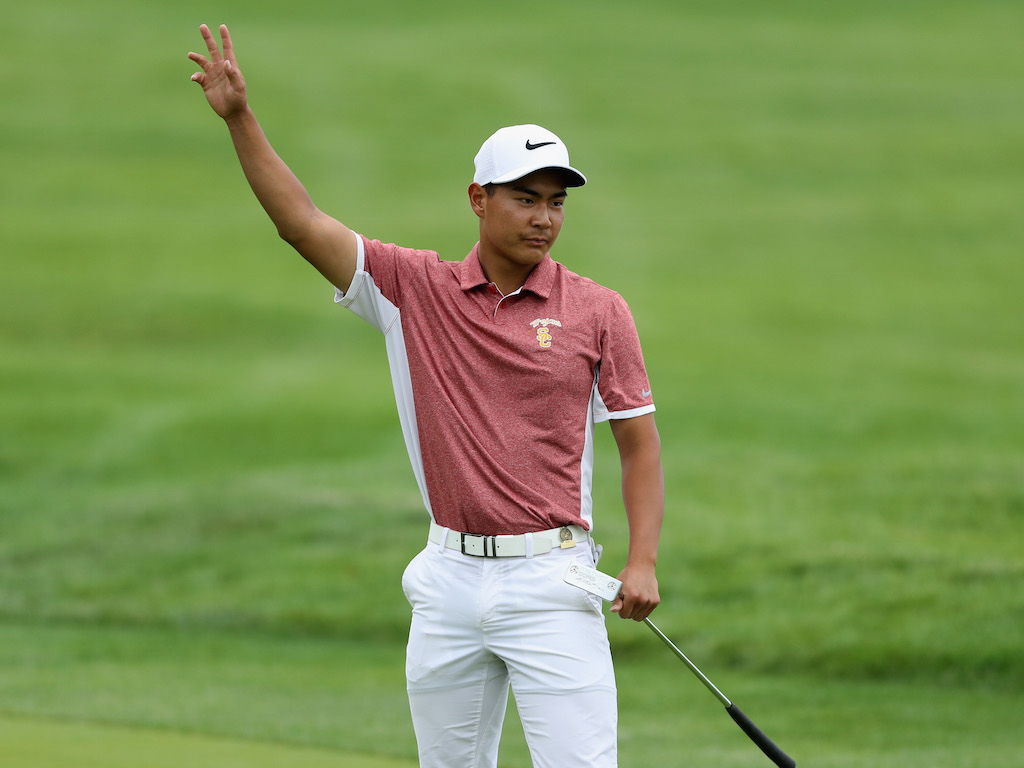
Here’s a question: How good are the best players who are playing Division I, Division II, NAIA and Junior College Men’s Golf? With the help of Jim Cowan, director of course rating and handicapping for the Northern California Golf Association, I set out to examine the tournament handicaps of each of these players from their results in the 2017 fall season and answer this question!
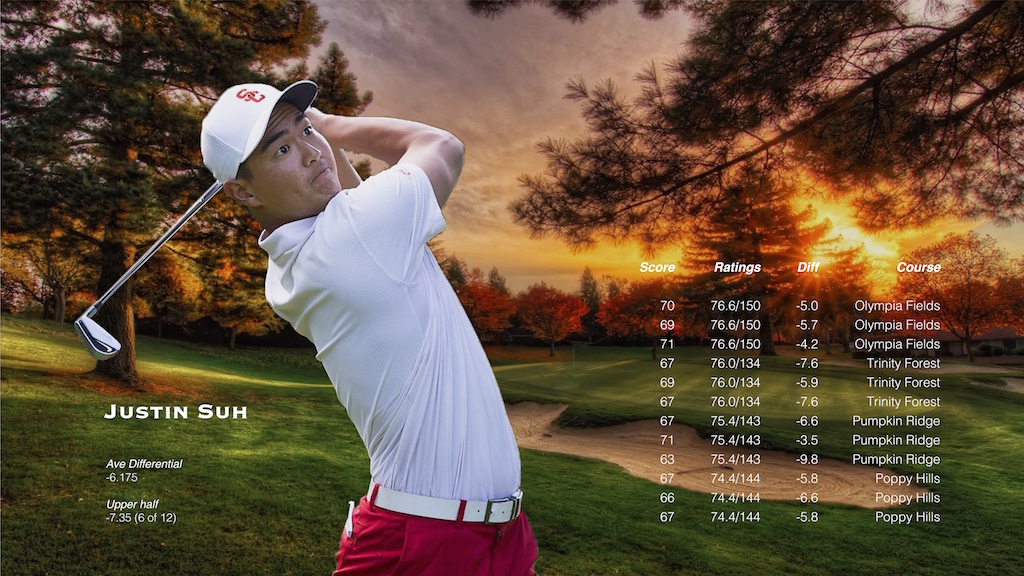
According to GolfStat.com, the best Division I golfer in the fall of 2017 was Justin Suh of the University of Southern California. Justin was the best player at any level with an adjusted scoring average of 68.5 for 12 rounds. The best player for Division II golf was Jacob Huizinga of the University of West Florida. For 12 rounds Jacob averaged 69.4. The best NAIA player was Rowan Lester from Texas Wesleyan University. For 11 rounds Rowan averaged 70.27. The best Junior College player was Mathias Lorentzen from McLennan CC. For 7 rounds Mathias averaged 69.71. After identifying the players, I build a spread sheet for each player with each of their rounds, the yardage and the course rating. Weather was not taken into consideration. Yardage was also based on the numbers listed on tournament results and may not be absolute, however, they are close enough to provide a baseline.
Justin Suh
Rowan Lester

Jacob Huizinga
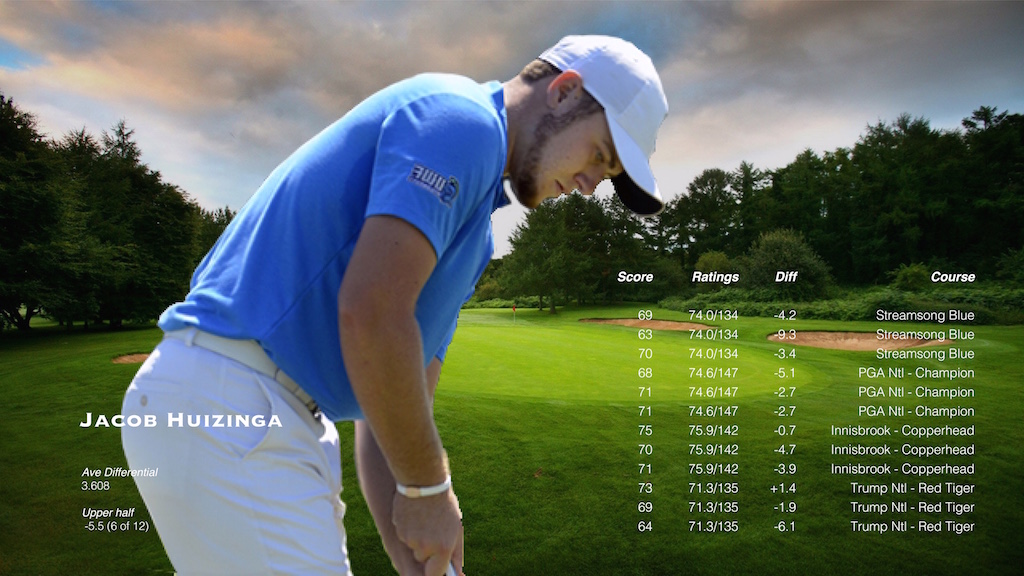
In the data we have listed, both the average differential, as well as an upper-half calculation. The average differential considers all the rounds recorded by the golfer, both good and bad. The upper half is a crude approximation of a handicap.
Last year, Golf Placement Services (my college consulting business) reported that there were over 900 rounds played under par by boys in AJGAs and over 700 rounds played under par by girls. In my own experience, playing with many elite junior players including Won Jun Lee, Karl Villips and Aiden Ye, it is common for them to shoot significantly under par at their home golf courses and often shoot between 3-under and 7-under on their home golf course during practice.
What does this mean for a junior golfer and their family reading this article? Breaking par is a skill and like any other skill should be practiced. I would strongly recommend that tournament golfers play frequently from shorter tee boxes (as close as 5400 yards) with goals of shooting lower and lower. For example, a good junior tournament golfer might have the following goals:
- Shoot 70 or better a lot from 6800 yards
- Shoot 68 or better from 6400 yards
- Shoot 65 or better from 6000 yards
These numbers should be tweaked slightly depending on the junior, their skill level and tournament experience.
Investing in breaking par is an important skill for junior golfers since men’s college coaches certainly seek players who have experience breaking par in tournaments. Also, it is likely that tournament golf will be 1-4 shots harder than playing your home golf course. If earning a college scholarship requires a scoring average of 75 or better, this means that the player might need to average as little as 71 on their home golf course!
Remember that, like any skill, shooting under par is going to take time. When working on the skill, players might want to start by segmenting rounds into smaller groups, maybe groups of 3 holes. Then try and have as many 3-hole scores under par per round as possible. As the player’s skill increases, they might make the segments bigger, for example 9 holes, until the player can accomplish their goal over 18 holes.
Please also remember that whenever possible, players should be playing at least 18 holes per day. Elite golf is about continuous steady play. Shooting outstanding scores over 54 holes requires not only great technical skill but also endurance, hydration, nutrition, focus, stress management and the ability to make birdies. In the summer, when juniors don’t have any academic responsibilities, it would not be impossible to play 36 holes or more of golf per day. As players improve skills, they should not be afraid to play other golfers of a similar level in competition. It would be ideal if the competition had a consequence; the loser may have to clean the winners clubs or if appropriate for a snack after the round.



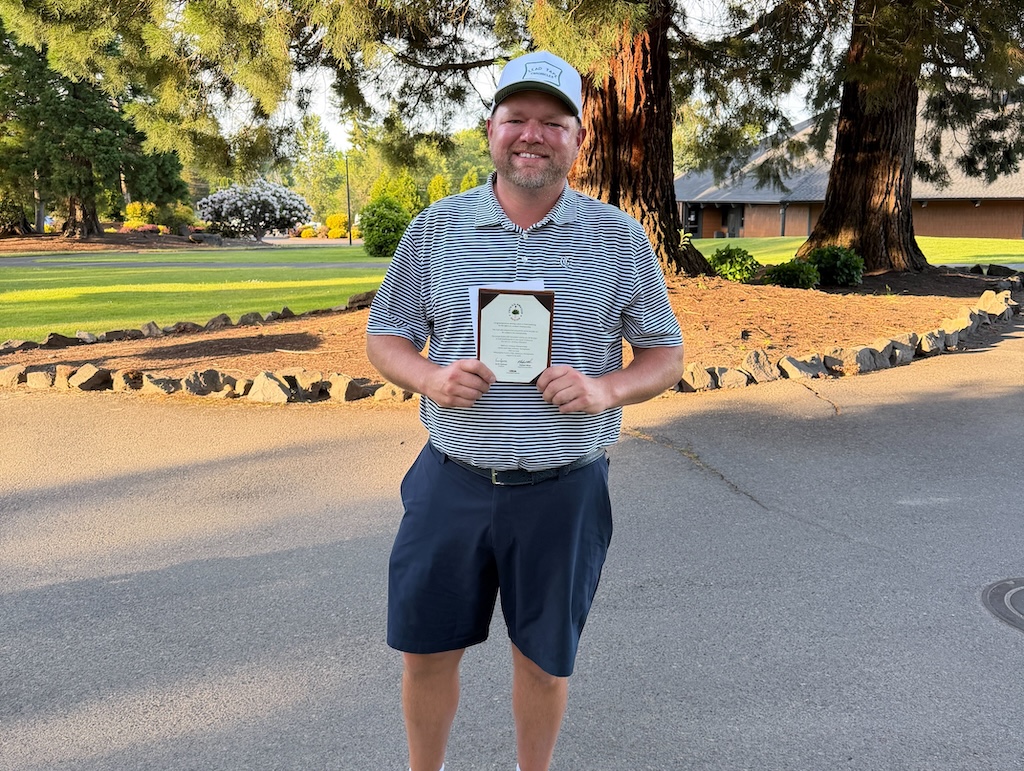
This past Monday, I played in the U.S. Amateur local qualifier at Rock Creek Country Club in Portland, Oregon. A full tee sheet from 7:30 a.m. to 1:55 p.m., the top 11 scores would make it to the U.S. Amateur final qualifying.
I teed off at 10:48 a.m.. With the 7:30 am tee time, you can get a feel for the leaders’ pace, and they were off and running on the challenging setup at Rock Creek.
View this post on Instagram
Getting to the highlight of the round on the par five 17th, a drive up the left side and 212 yards left to the front hole location. I took out a 5-iron with plans of middle of the green. The ball ended up 8 feet left of the hole, pin high. A slight downhill putt dropped in for an eagle 3 on the 17th. With the cut line looking to be anywhere from -2 to even par. This was the boost I had been waiting for all day.
With making par from the trees on 18, it was time to wait for a potential playoff with a posted score of one under par 71.
Three hours later, it was playoff time. 8 players for 6 spots. I made par on the playoff hole, which was good enough to advance to the U.S. Amateur final qualifying in July. USGA qualifiers sure deliver on all of the emotions in golf!
Club Junkie
Building my 2026 gamer WITB: Ranking the contenders and new putter projects – Club Junkie Podcast

The annual What’s In The Bag build is underway, and on this episode of Club Junkie, Brian breaks down the clubs currently leading the race for a spot in his 2026 gamer setup. From drivers and fairway woods to irons, wedges, and shafts, he ranks the equipment that’s performing best and explains what’s separating the front runners from the rest of the field.
Brian also heads into the workshop to discuss several putter projects currently on the bench. From head options and shaft choices to build ideas and testing plans, he shares what he’s working on and which putters could become serious contenders for the bag this season.
If you’re a gear junkie who loves equipment testing, club building, and the never-ending pursuit of the perfect setup, this episode is for you.
Follow Club Junkie:
Instagram: @clubjunkiepod
TikTok: @clubjunkiepod
Threads: @clubjunkiepod
X: @ClubJunkiePod
Club Junkie
Tour Edge Exotics mini driver review + TaylorMade Spider ZT Max first look – Club Junkie

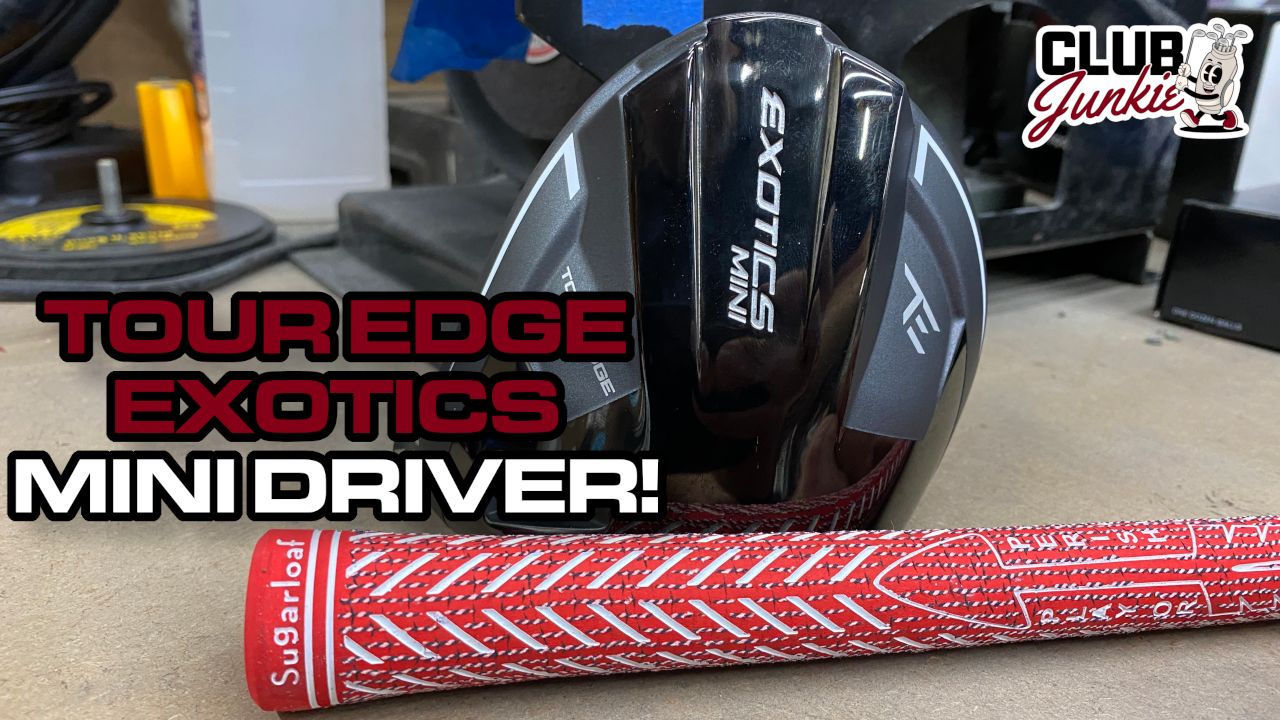
On this episode of Club Junkie, I put the new Tour Edge Exotics Mini Driver to the test and break down the performance, forgiveness, distance, and where it fits compared to a traditional driver or strong fairway wood. If you have been curious about adding a mini driver to the bag, this one is worth a look.
I also dive into the new TaylorMade Spider ZT Max putter that was recently spotted and discuss the growing zero torque putter trend. Plus, there is a closer look at the new Project X Titan Yellow shaft showing up on the PGA Tour and what makes it different from other profiles currently out there.

What’s the story behind Webb Simpson’s custom-stamped irons?

Memorial Tournament Tour Report: Rory McIlroy, Cameron Young switch up drivers, and more

Cadillac Championship Tour Report: Spieth’s sizable changes, McLaren Golf launches, and more

Russell Henley’s winning WITB: 2026 Charles Schwab Challenge

Kristoffer Reitan’s winning WITB: 2026 Truist Championship

Best irons 2026: Best irons overall, most forgiving irons, and more

J.T. Poston’s winning WITB: 2026 Memorial Tournament

Aaron Rai’s winning WITB: 2026 PGA Championship

Cameron Young’s winning WITB: 2026 Cadillac Championship

Details on Jason Day’s latest prototype Avoda iron setup


Christiaan Maas WITB 2026 (June)
Driver: TaylorMade Qi4D LS (8 degrees) Shaft: Fujikura Ventus TR Blue 6 X 3-wood: TaylorMade Qi10 (15 degrees) Shaft: Fujikura Ventus Black...


Ryan Palmer WITB 2026 (June)
Driver: Callaway Quantum Triple Diamond (9 degrees) Shaft: Project X HZRDUS Smoke Blue RDX 60 TX 3-wood: TaylorMade Qi10 (15 degrees) Shaft:...


Bud Cauley WITB 2026 (June)
Bud Cauley had >14 clubs in his bag when photographed prior to the Memorial Tournament. Driver: Titleist GTS2 (8 degrees) Shaft: Fujikura...


Hannah Green WITB 2026 (June)
Driver: Titleist GTS3 (10 degrees, D4 SureFit setting) Shaft: Mitsubishi Chemical Diamana RB 53 S 3-wood: Titleist GT3 (15 degrees,...
-
 Equipment7 days ago
Memorial Tournament Tour Report: Rory McIlroy, Cameron Young switch up drivers, and more
-
 News2 weeks ago
Russell Henley’s winning WITB: 2026 Charles Schwab Challenge
-
 Equipment4 days ago
Best irons 2026: Best irons overall, most forgiving irons, and more
-
 Whats in the Bag5 days ago
J.T. Poston’s winning WITB: 2026 Memorial Tournament
-
 Equipment1 week ago
Details on Jason Day’s latest prototype Avoda iron setup
-
 Equipment3 weeks ago
CJ Cup Byron Nelson Tour Report: Koepka and Kim’s newest putters finally get hot
-

 News2 weeks ago
Charles Schwab Challenge Tour Report: MacIntyre, Åberg and Spaun all switch putters, TaylorMade launches new Spider
-

 Equipment2 weeks ago
Details on J.J. Spaun’s surprise putter switch


Dave
Mar 28, 2018 at 7:52 pm
LOL @ “spread sheet.”
Morr
Mar 25, 2018 at 3:07 am
Not if golf is your job and could provide you with the opportunity to become a millionaire while being out in the fresh air enjoying lovely placess and surroundings. There are plenty of mindless occupations that people have to do for a living that are REALLY horrible and degrading that barely sustain them let alone gives them the chance of being a millionaire ‘overnight’ if they are good enough. What bothers me is how many pro aspirants there are, and how few actually make it. At least, they will have a college degree to fall back on.
mal harris
Mar 5, 2018 at 9:48 pm
any idea for Womens golf
Russell
Mar 5, 2018 at 10:29 pm
How can u say “The best college golfers” but not include Braden Thornbury from Ole Miss who won the individual national championship last year who returned to college instead of going Pro!
kevin
Mar 22, 2018 at 2:37 pm
because just as the article stated…he named only the top player according to golfstat.com.
Scooter
Mar 5, 2018 at 9:44 am
I actually caddied for Justin Suh in the 2012 US Junior Amateur as a volunteer caddy. This was cool to see him in this article as the No. 1 ranked college golfer. He truly acted like a professional even in 2012 when he was only 15. I remember just trying to do my job and stay out of his way. The 4 days I worked for him he was one of the nicest kids and most talented golfers I have ever met. Extremely respectful and very appreciative of the work others do. Very rare to find in a young talented player. I’m excited to keep tabs on him as he progresses into professional golf.
Daniel Escobedo
Mar 5, 2018 at 7:21 am
What about for gurls golf?
Chip
Mar 4, 2018 at 3:25 pm
Um…you didn’t tell us what their handicaps are….these guys handicaps aren’t in the (-), they’re (+).
kevin
Mar 22, 2018 at 2:39 pm
do you know the difference between handicap and rating differential?
ted
Mar 4, 2018 at 2:27 pm
What a mindless waste of time… playing golf endlessly…. !!!!!
RS
Mar 30, 2018 at 1:30 am
This from someone who’s negatively commenting on a website about other people getting outside and playing a sport for hours? Won’t go into detail about how your punctuation doesn’t exactly scream ‘mensa’, but trust me when I say you might want to consider being a bit less critical of others and a bit more critical of yourself.