
Opinion & Analysis
What is “feel” in putting… and how do you get it?


You’re playing a course for the first time, so you arrive an hour early to warm-up. You make your way toward the practice green and you see a sign at the first tee that reads, “GREEN SPEED TODAY 11.” That brings up two issues:
- How did they arrive at that number?
- How is that information valuable to me?
How did they arrive at that number?
They used what’s known as a stimpmeter — a device that’s used to measure the speed of a green. With a stimpmeter, the green’s surface is tested by rolling a ball down the 30-inch ramp that is tilted downward at a 20-degree angle. The number of feet the ball rolls after leaving the ramp is an indication of the green’s speed. The green-speed test is conducted on a flat surface. A total of three balls are rolled in three different directions. The three balls must then finish within eight inches of each other for the test to be valid.
For example, if the ball is rolled down the ramp and were to stop at 8 feet, the green would be running at an “8.” Were the ball to roll down the ramp and stop at 12 feet, the green would be running at a “12.”
Stimpmeter history
The stimpmeter was invented by Edward S. Stimpson, Sr., a Massachusetts State Amateur Champion and former Harvard Golf Team Captain. After attending the 1935 U.S. Open at Oakmont, he saw the need for a universal testing device after watching Gene Sarazen, who was at the top of his game, putt a ball off the green. He was of the opinion that the greens were unreasonably fast, but he had no way to prove it — thus the motivation for creating the invention.
The device is now used by superintendents to make sure all of their greens are rolling close to the same speed. This ensures that golfers are not guessing from one putt to another if a green is fast or slow based on the way it is maintained. The device is also used by tournament officials who want to make sure that green speed is not too severe.
Do Stimp readings matter for my game?
Not very much. That piece of abstract knowledge is of little value until you can translate it into your own personal feel for the speed of the putt. There is a method that will allow you to turn green speed into a legitimate feel, however, and you don’t even need a stimpmeter or a stimp reading to do it. I call it “Setting Your Own Stimpmeter.”
Before we get to how to do it, the first step is to determine if the putting green is the same speed as the greens on the course. The best source of information in this regard are the professionals working in the golf shop. They will be happy to share this information with you. You only need to ask. Assuming that the speed of the putting green is close to the speed of the greens on the course, you are ready to begin setting your own stimpmeter. This is done by inputting data into your neuromuscular system by rolling putts and visually observing the outcome.
Contrary to what most golfers believe, a golfer’s feel for distance is based in the eyes — not in the hands, which only records tactile information. It’s just like basketball. On the court, you look at the distance to the hoop and respond accordingly. While you would feel the ball in your hands, it doesn’t play a role in determining the proper distance to the hoop. Based on what you saw with your eyes, you would access the data that had been previously inputted through shooting practice.
Setting your own Stimpmeter
- Start by finding a location on the putting green that is flat and roughly 15 feet away from the fringe.
- Using five balls, start rolling putts one at a time toward the fringe. The objective is to roll them just hard enough for them to finish against the edge.
- You may be short of the fringe or long, but it is important that you do not judge the outcome— just observe, because the feel for distance is visually based.
- You should not try and judge the feel of the putt with your hands or any other part of your body. You can only process information in one sensory system at a time — that should be the eyes.
- You should continue to roll balls until you’ve reach the point that most of them are consistently finishing against the fringe. Once you can do that, you have successfully set you stimpmeter.
The key to the entire process is allowing yourself to make a subconscious connection between what your eyes have observed and the associated outcome. You must then trust what you have learned at a sub-conscious level. A conscious attempt to produce a given outcome will short-circuit the system. When it comes to judging speed, you must be prepared to surrender your conscious mind to your sub-conscious mind, which is infinitely wiser and more capable of calculating speed. Want proof? Work through the steps I’ve outlined below. .
- After having loaded the data as described in the exercise above, pace off a 25-foot putt.
- Using the same five balls, putt to the hole as you would normally using your conscious mind to control the outcome.
- Mark the location of the five balls with a tee pushing them down until they are level with the surface of the green.
- Allow your eyes to work slowly from the ball to the hole while clearing your conscious mind of any thought.
- Using the same five balls, putt to the hole allowing your subconscious mind to control the outcome.
- Compare the proximity of the five putts that you just hit to those marked with a tee. What do you observe?
Did you have trouble clearing your mind of any conscious thought? Assuming that your conscious mind intruded at any point, the outcome would be negatively affected. You should then repeat the exercise but this time, emptying your mind of any thought. You will have mastered the technique when you are able to quiet your conscious mind and allow your subconscious to take over.
This technique will improve your proximity to the hole on longer putts. And you know what that means? Fewer three-putts!
Editor’s Note: Rod Lindenberg has authored a book entitled “The Three-Putt Solution” that is now available through Amazon.









This past Monday, I played in the U.S. Amateur local qualifier at Rock Creek Country Club in Portland, Oregon. A full tee sheet from 7:30 a.m. to 1:55 p.m., the top 11 scores would make it to the U.S. Amateur final qualifying.
I teed off at 10:48 a.m.. With the 7:30 am tee time, you can get a feel for the leaders’ pace, and they were off and running on the challenging setup at Rock Creek.
View this post on Instagram
Getting to the highlight of the round on the par five 17th, a drive up the left side and 212 yards left to the front hole location. I took out a 5-iron with plans of middle of the green. The ball ended up 8 feet left of the hole, pin high. A slight downhill putt dropped in for an eagle 3 on the 17th. With the cut line looking to be anywhere from -2 to even par. This was the boost I had been waiting for all day.
With making par from the trees on 18, it was time to wait for a potential playoff with a posted score of one under par 71.
Three hours later, it was playoff time. 8 players for 6 spots. I made par on the playoff hole, which was good enough to advance to the U.S. Amateur final qualifying in July. USGA qualifiers sure deliver on all of the emotions in golf!
Club Junkie
Building my 2026 gamer WITB: Ranking the contenders and new putter projects – Club Junkie Podcast

The annual What’s In The Bag build is underway, and on this episode of Club Junkie, Brian breaks down the clubs currently leading the race for a spot in his 2026 gamer setup. From drivers and fairway woods to irons, wedges, and shafts, he ranks the equipment that’s performing best and explains what’s separating the front runners from the rest of the field.
Brian also heads into the workshop to discuss several putter projects currently on the bench. From head options and shaft choices to build ideas and testing plans, he shares what he’s working on and which putters could become serious contenders for the bag this season.
If you’re a gear junkie who loves equipment testing, club building, and the never-ending pursuit of the perfect setup, this episode is for you.
Follow Club Junkie:
Instagram: @clubjunkiepod
TikTok: @clubjunkiepod
Threads: @clubjunkiepod
X: @ClubJunkiePod
Club Junkie
Tour Edge Exotics mini driver review + TaylorMade Spider ZT Max first look – Club Junkie

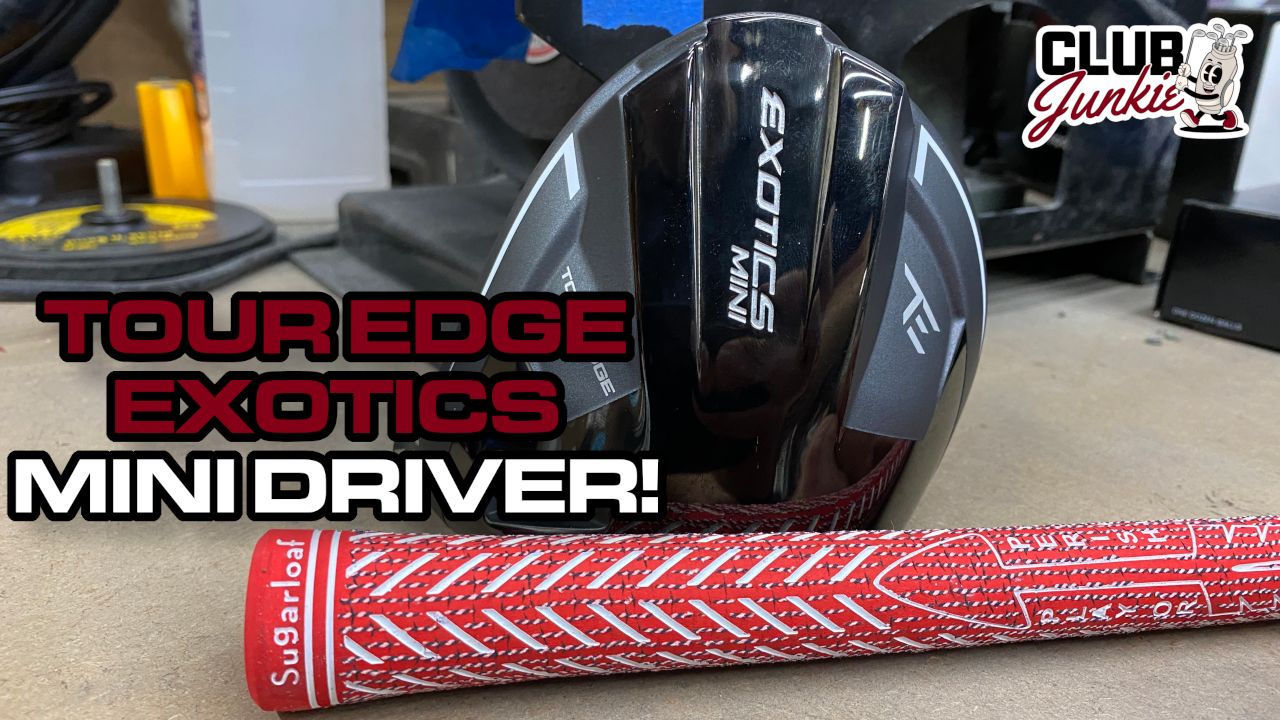
On this episode of Club Junkie, I put the new Tour Edge Exotics Mini Driver to the test and break down the performance, forgiveness, distance, and where it fits compared to a traditional driver or strong fairway wood. If you have been curious about adding a mini driver to the bag, this one is worth a look.
I also dive into the new TaylorMade Spider ZT Max putter that was recently spotted and discuss the growing zero torque putter trend. Plus, there is a closer look at the new Project X Titan Yellow shaft showing up on the PGA Tour and what makes it different from other profiles currently out there.

Justin Rose WITB 2026 (April): Full WITB breakdown with new McLaren irons

What’s the story behind Webb Simpson’s custom-stamped irons?

Memorial Tournament Tour Report: Rory McIlroy, Cameron Young switch up drivers, and more

Cadillac Championship Tour Report: Spieth’s sizable changes, McLaren Golf launches, and more

Russell Henley’s winning WITB: 2026 Charles Schwab Challenge

Kristoffer Reitan’s winning WITB: 2026 Truist Championship

Best irons 2026: Best irons overall, most forgiving irons, and more

J.T. Poston’s winning WITB: 2026 Memorial Tournament

Aaron Rai’s winning WITB: 2026 PGA Championship

Cameron Young’s winning WITB: 2026 Cadillac Championship


Bud Cauley WITB 2026 (June)
Bud Cauley had >14 clubs in his bag when photographed prior to the Memorial Tournament. Driver: Titleist GTS2 (8 degrees) Shaft: Fujikura...


Hannah Green WITB 2026 (June)
Driver: Titleist GTS3 (10 degrees, D4 SureFit setting) Shaft: Mitsubishi Chemical Diamana RB 53 S 3-wood: Titleist GT3 (15 degrees,...


Asterisk Talley WITB 2026 (June)
Driver: TaylorMade Qi4D (9 degrees) Shaft: Fujikura Ventus Blue 6 S 3-wood: TaylorMade Qi4D (16.5 degrees) Shaft: Fujikura Ventus Blue...

Brianna Do WITB 2026 (June)
Driver: Callaway Quantum Triple Diamond (9 degrees) Shaft: KBS PGW 3-wood: Callaway Elyte Titanium (15 degrees) Shaft: KBS PGW 5-wood:...
-
 Equipment6 days ago
Memorial Tournament Tour Report: Rory McIlroy, Cameron Young switch up drivers, and more
-
 News2 weeks ago
Russell Henley’s winning WITB: 2026 Charles Schwab Challenge
-
 Equipment3 days ago
Best irons 2026: Best irons overall, most forgiving irons, and more
-
 Whats in the Bag4 days ago
J.T. Poston’s winning WITB: 2026 Memorial Tournament
-

 Equipment1 week ago
Details on Jason Day’s latest prototype Avoda iron setup
-

 Equipment3 weeks ago
CJ Cup Byron Nelson Tour Report: Koepka and Kim’s newest putters finally get hot
-

 News2 weeks ago
Charles Schwab Challenge Tour Report: MacIntyre, Åberg and Spaun all switch putters, TaylorMade launches new Spider
-

 Equipment2 weeks ago
Details on J.J. Spaun’s surprise putter switch


Roy
Jun 24, 2018 at 11:09 pm
This drill is legit. Sounds crazy to “not think” but that doesn’t mean to not have a plan or try; it means trust yourself and don’t “control”. The brain nows what we’re trying to do… it’ll make the necessary calculations and come up with a firing solution IF you load the correct data (speed in this case). This drill definitely works and’ll will help a player learn to get out of their own way.
Ray Bennett
Jun 23, 2018 at 9:48 am
I agree that the eyes organise our body movements. When we turn our head the very first thing to move is our eyes. Try turning your head and moving your eyes in the opposite direction in the one movement. How did you do?
Our eyes have two different muscles, one set to focus sight and the other set to move the eyes. The latter are directly connected to the shoulders. Therefore, it is important to activate the focus eye muscles and not the eye movement muscles during the putting stroke – putt with still eyes.
millennial82
Jun 22, 2018 at 10:27 am
“feel” is lining up to putt and understanding how to get the ball in the hole with 1 stroke.. you only “learn feel” after you hit a million balls.. practice till you “feel”.
or when you miss your putt blame the putter/ greens/ slope/ sky/ earth/ wind/ government/ tariffs and everything else.. but, not your lack of practice you hacker!
Boyo
Jun 22, 2018 at 8:16 am
I know exactly what I’m feelin’
I’m sorry that I care, care
It’s really not that fair
JZ
Jun 21, 2018 at 11:54 am
Is it just me, or are the majority of courses I play practice greens different than the actual playing greens? The practice greens are usually in pristine condition while the actual greens are slower and not in the shape. The courses want the playing areas around the proshop in perfect shape and don’t put as much time and money into the actualy playing greens.
Or that’s my excuse for being a streaky putter….
etc.
Jun 21, 2018 at 3:13 pm
Feel is found between the bedsheets…. or mastergearheadbater’s WITB beauties…
Boyo
Jun 22, 2018 at 7:59 am
You are absolutely correct. I can’t count how many times I’ve putted on practice greens only to get on the course and they are as similar as cats and dogs….
~j~
Jun 21, 2018 at 10:21 am
Not sure I’d go through all of that above, but my best putts come when I lose all focus on everything except the putting motion. Line up, zone out, putt. On the practice greens before rounds I’ll set up & line up, then close my eyes and make putts a certain distance until I’m comfortable with my motion.
lance
Jun 21, 2018 at 11:45 am
I just focus on the hole…. my girlfriend’s…. 😮
david
Jun 21, 2018 at 7:38 am
very original
GearBoi
Jun 21, 2018 at 12:13 am
I get the best feel with my new Scotty Cameron Futura X7 Counter Balance Putter. They are beauties.
Realist
Jun 21, 2018 at 10:04 am
Subjective and what does using a Scotty have to do with this article.
lance
Jun 21, 2018 at 11:46 am
He loves his putter…. otherwise his life is lonely….
Jake
Jun 21, 2018 at 12:02 am
Putter head weight has increased substantially in the last 10 years. That will obviously deaden “feel” and control of the stroke. What is your take on “heavy” putters and feel? Thanks.
Acemandrake
Jun 21, 2018 at 9:59 am
This has been my experience. Heavy putters are great for short putts but I struggle to gauge the feel/distance on medium & long putts.
I’ve gone back to my Odyssey 2-Ball putter after using a Futura 6M and improved my distance control.
geoh
Jun 21, 2018 at 9:42 pm
Would we have more or less feel using a pen that was 5 times larger in diameter than normal?
or for an artist to use a brush as large as the latest putter grips?
The heavier putters and larger grips provide less feel and is an attempt to boil putting down to
a big muscle movement. Loss of feel ?
Heavy putter heads and grips, (the placebo effect is true 60% of the time).
another very costly WOOD
geoh
Jun 21, 2018 at 9:07 pm
Is it a coincidence that heavier and larger grips come with those heavier heads?
The heavier heads require counter weighting. How much different is he SW in the end?
its about marketing, and maybe putters are the last frontier for mfg.
K
Jun 20, 2018 at 9:58 pm
Think Lee Trevino said something like “You want to get good at this game? Then you gotta move a lot of dirt!” Hogan might have said something similar too…..
Aaron
Jun 21, 2018 at 12:15 am
So, do you take a divot with your putts?!!
Realist
Jun 21, 2018 at 10:06 am
This person is saying you have to practice to have feel…
lance
Jun 21, 2018 at 11:47 am
No, practice will make you numb to feel. You got it or you don’t.
Geohogan
Jun 20, 2018 at 8:49 pm
The intent to clear the mind of thought is a thought.
That thought will be followed by another and another. its how our minds work.
We need the proper intent for every endeavor. That doesnt mean to consciously
try to direct each body part. That would be internal focus.
Proven most effective (ref Gabrielle Wulf) is external focus.(a thought)
Jake
Jun 21, 2018 at 12:10 am
Correct. You can increase the accuracy of your golf shots with an external focus of attention. Concentrating on body movements (internal focus of attention) generally results in non-optimal performance and learning, whereas an external focus enhances automaticity and leads to better movement outcomes. Most golfer’s focus is in limbo.
lance
Jun 21, 2018 at 11:50 am
Most golfers feel nothing but confusion during their insecure golfswing…. they think “feel” is impact and nothing else. Oh, then their is their “feel” for their lovely clubs… aka romantic attachment.
Boyo
Jun 22, 2018 at 8:14 am
https://knowitall.org/
Paul
Jun 20, 2018 at 8:16 pm
Definitely a good idea.
My method works and is for people with less time. First find a level area on the practice green with a hole about 6′ away. Make 5 putts and just focus on stopping the ball in the hole or a few inches past. Next move back to 15-20′ and repeat. Then take some putts at the farthest holes on the practice green and then done. Takes less then 3 minutes.
etc.
Jun 21, 2018 at 3:15 pm
Feel is fleeting and you most certainly cannot carry it from the practice green to the course greens… because what you call ‘feel’ is only feeeelings …