
Opinion & Analysis
Military and Golf: Rich History, Challenging Future


It’s my turn to tee off in the match I’ve got going with my buddy on the course at Fort Bragg, N.C., where we’re stationed with the 82nd Airborne Division. And since I don’t have an ice pick handy, I grab some of the fallen pine needles to make a little “bed” for my ball to lay on. No way a tee is going in the ground. It’s freezing outside and the ground is rock hard, but we’re playing golf anyway. Because we love it, the course is open, and it keeps us out of trouble.
Fort Bragg is in the Sand Hills region near Pinehurst and Southern Pines, otherwise known as The Home of American Golf. And while our modest little military base track pales compared to the sprawling, iconic Pinehurst courses, it’s as good as Augusta National to us. It’s our course, we can play it at a bargain-basement rate, and it provides almost everything the elite courses do – fun, competition, camaraderie, tradition, the great outdoors, and a place to make birdies.
And it’s responsible for one of my favorite and most enduring golf memories – watching Jack’s back-nine charge to his last green jacket with a clubhouse full of fellow service members. The roars emanating from our little building raised the roof. Nothing like sharing a special moment with kindred spirits. That’s one of golf’s great charms. But I digress…
Golf and the military have a long, rich history in this country. For as long as the game has flourished in America, military members have embraced the game, perhaps none more so than our Commander-in-Chiefs. Ike was an Augusta National member, and Gerald Ford skulled more than one spectator while playing (poorly yet avidly). Donald Trump owns courses and reportedly mixes rounds with running America, as did Obama, Clinton and the Bushes before him. When was the last time the POTUS didn’t avidly play golf? Jimmy Carter? Ronald Reagan?
Leave that to the fact-checkers, and it doesn’t matter. The point is that golf and the U.S. Military are deeply interwoven – from the highest level to the rank-and-file troops who comprise the vast majority. There are 145 American base golf facilities globally (111 in the U.S.). That portfolio makes it one of the largest collections of courses in the world. Add that there are tens of millions of past and present service members who golf, and countless generations to come, and it’s clear that military golf is, pardon the pun, a force to be reckoned with – good and bad.
The Good
The spectrum of courses ranges from modest, municipal-type tracks to top-notch layouts combining outstanding design with spectacular locations and views. Think Hawaii, California and Colorado, Virginia, Texas and South Carolina. As an Army vet who has worked in the golf industry for the past 20 years, I’ve experienced both first-hand, and I can honestly say that I got as much benefit from playing the military courses as from the swankiest resort or private club course.
Benefit is the key word when it comes to judging or evaluating military golf, which falls under the military’s department of Morale, Welfare and Recreation (MWR). Those three words perfectly describe the benefits that base golf facilities provide service members past and present, as well as their families.
Many service members – former and current – suffer from significant stress and physical disability. It is well-documented that they experience relief and enjoyment while they’re on the golf course, practice range or putting green. It helps them cope, heal and recover — to experience life as fun, hopeful and free from mental anguish again, even if for a short period of time. In many cases, these golf experiences serve as springboards to enhanced wellness. That’s good for their mental health and physical well-being and that of their families, as well as our military readiness overall.
The Bad
Since 2011, there have been zero funds appropriated for stateside golf courses. Most income base golf courses receive comes from green and cart fees. This creates annual revenue shortfalls as many base courses provide very low rates for service members past and present. Hence, many are falling into disrepair – both on and off course (practice facilities, on-course accessories, restrooms, additional accessibility, cart barns, maintenance equipment/facilities, clubhouses, etc.).
Left unchecked, this scenario spells, if not doom for military courses, certainly a slow, steady decline, and along with it the benefits afforded our selfless, patriotic soldiers.
The Solution
Operation Support Military Golf (OSMG) is a non-profit organization that was formed to address this challenge. To understand OSMG is to understand Founder Jennifer Poth and her father, Lt. Col. John E. Poth. USAF Ret. Jennifer was born with Congenital Adrenal Hyperplasia, a condition that prevented her from following her father into military service, which was her dream.
After playing junior golf four years in high school, she signed with Texas A&M University. Its strong academics, athletic standards, and military presence inspired her. Jennifer left competitive golf after college and focused on using her Sports Management degree. Her goal was to work for the PGA Tour, so she packed her truck and drove from College Station, TX, to Ponte Vedra Beach, Fla. She spent her first six months in Florida scrubbing clubs, working the bag drop, and in the pro shop at TPC Sawgrass, ultimately earning a position traveling 26 weeks per year as a Shotlink Producer for the Tour. After seven years with the Tour, she parted ways, earned her master’s degree in Sports Management, then founded JP Golf Consulting and Design.
While working for herself was rewarding, bettering Florida golf courses did not fulfill her lifetime desire of serving her country. Shortly after the Boston Marathon terrorist bombings in 2013, Jennifer realized a way to serve our military through the game she loves. Since then, she has devoted her professional career to combining her love and passion for our United States Military and golf through OSMG.
OSMG is dedicated to “Reviving the Golf Courses that Revitalize our Heroes.” They are green-space havens that at some overseas bases are the only safe and/or affordable recreational space for service members and their families. Who does OSMG serve?
- Active Duty & Reserve Personnel – as a means of R&R and unit bonding
- Medically Retired, aka Wounded Warriors – in their life adjustment recovery process
- Retired Veterans after an honorable career – as a well-earned perk for their service
- Future Generations of service members – investing in our future and our people
- Families of all the above – providing service members the knowledge that their dependents have a safe environment to learn and play a game that teaches positive, lifelong lessons, such as the values of integrity and tradition. This is especially important during deployments or as a means of reintegration upon their return.
With $1 million targeted per course for renovations and many facilities falling into disrepair, the Poths need many people and groups to rally together.
After five years traveling the country, putting countless pieces together (and using their personal savings to do so) – from navigating the protocol required to get military approval at the highest levels, to recruiting leading golf organizations to pledge their support – Jennifer and Lt. Col. Poth have built the runway. Now it’s time to fly. Work on OSMG’s inaugural project – at Naval Station Mayport in Jacksonville, FL – is scheduled to begin this spring.
Arnold Palmer Design Company has made the in-kind contribution of providing the architectural drawing for a practice facility, and MacCurrach Golf Construction is scheduled to implement it this year. And several leading industry organizations have answered the call and pledged support though in-kind services to OSMG, including Golf Course Superintendents Association of America, American Society of Golf Course Architects and the Golf Course Builders Association of America.
There are not enough funds to replace the cart barn and two on-course restrooms at Mayport, but OSMG is striving to secure them. The second upgrade project will occur at MacDill Air Force Base, assuming funds are secured to complement the generous in-kind services already donated.
With the support of individual and corporate donors, Military Golf will have a solid future. That’s good for everyone.



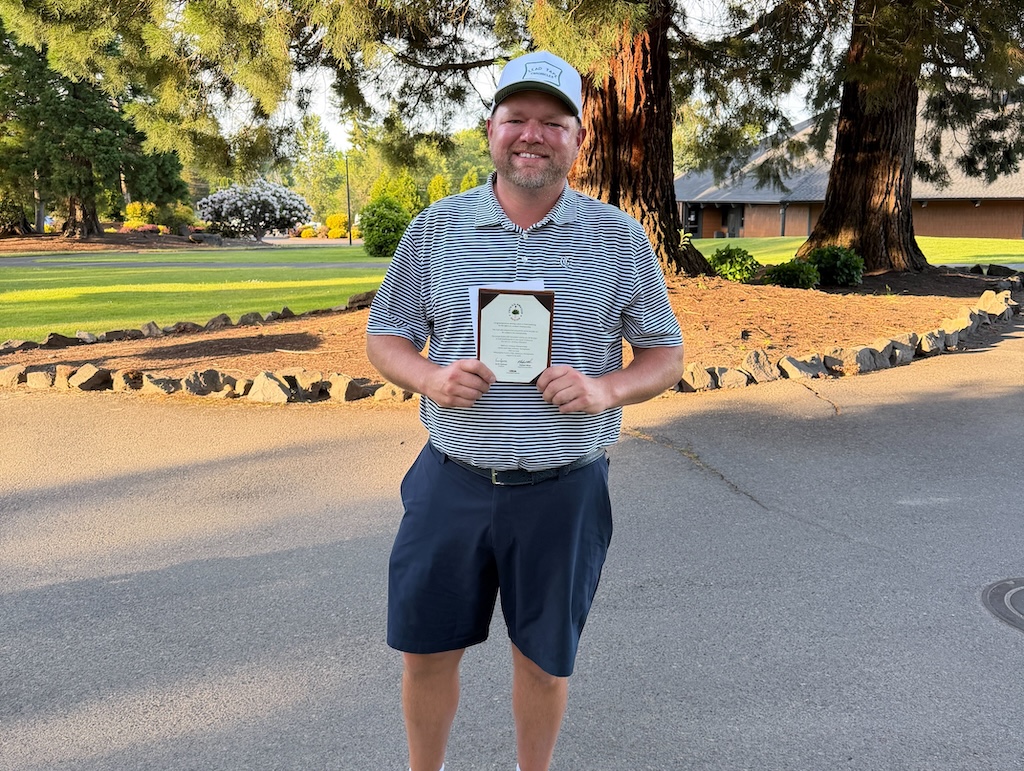
This past Monday, I played in the U.S. Amateur local qualifier at Rock Creek Country Club in Portland, Oregon. A full tee sheet from 7:30 a.m. to 1:55 p.m., the top 11 scores would make it to the U.S. Amateur final qualifying.
I teed off at 10:48 a.m.. With the 7:30 am tee time, you can get a feel for the leaders’ pace, and they were off and running on the challenging setup at Rock Creek.
View this post on Instagram
Getting to the highlight of the round on the par five 17th, a drive up the left side and 212 yards left to the front hole location. I took out a 5-iron with plans of middle of the green. The ball ended up 8 feet left of the hole, pin high. A slight downhill putt dropped in for an eagle 3 on the 17th. With the cut line looking to be anywhere from -2 to even par. This was the boost I had been waiting for all day.
With making par from the trees on 18, it was time to wait for a potential playoff with a posted score of one under par 71.
Three hours later, it was playoff time. 8 players for 6 spots. I made par on the playoff hole, which was good enough to advance to the U.S. Amateur final qualifying in July. USGA qualifiers sure deliver on all of the emotions in golf!
Club Junkie
Building my 2026 gamer WITB: Ranking the contenders and new putter projects – Club Junkie Podcast


The annual What’s In The Bag build is underway, and on this episode of Club Junkie, Brian breaks down the clubs currently leading the race for a spot in his 2026 gamer setup. From drivers and fairway woods to irons, wedges, and shafts, he ranks the equipment that’s performing best and explains what’s separating the front runners from the rest of the field.
Brian also heads into the workshop to discuss several putter projects currently on the bench. From head options and shaft choices to build ideas and testing plans, he shares what he’s working on and which putters could become serious contenders for the bag this season.
If you’re a gear junkie who loves equipment testing, club building, and the never-ending pursuit of the perfect setup, this episode is for you.
Follow Club Junkie:
Instagram: @clubjunkiepod
TikTok: @clubjunkiepod
Threads: @clubjunkiepod
X: @ClubJunkiePod
Club Junkie
Tour Edge Exotics mini driver review + TaylorMade Spider ZT Max first look – Club Junkie

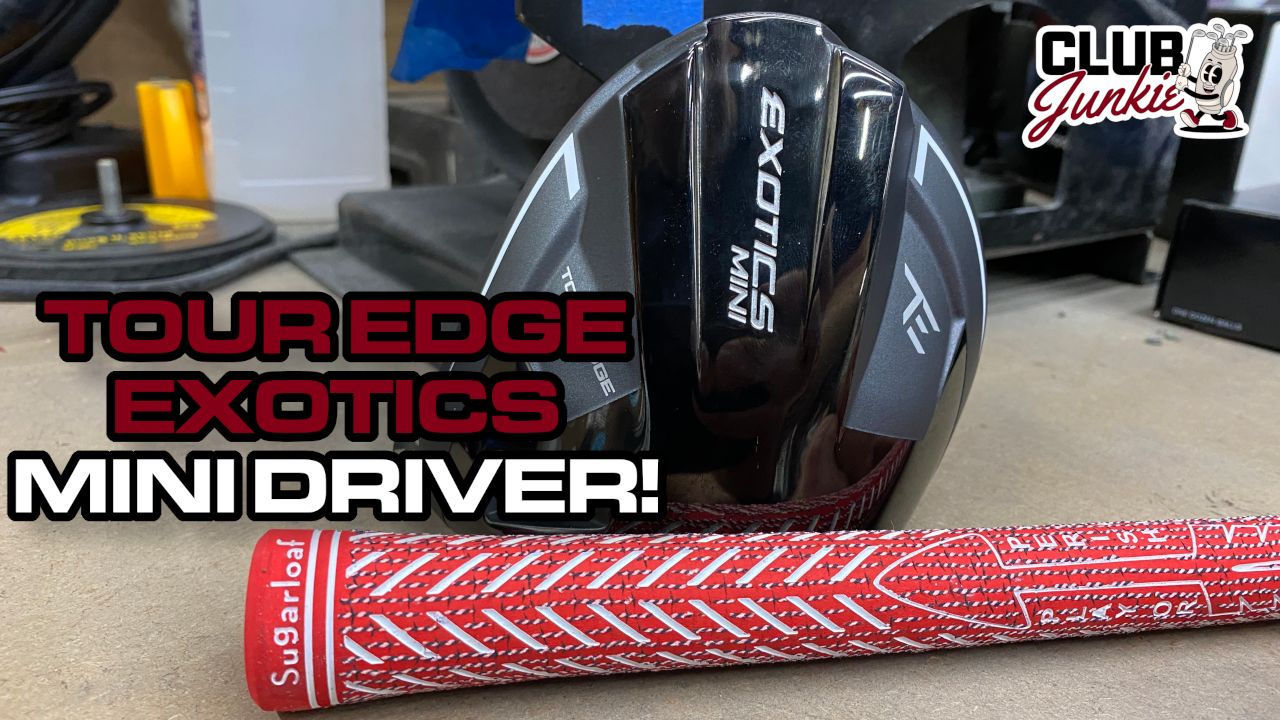
On this episode of Club Junkie, I put the new Tour Edge Exotics Mini Driver to the test and break down the performance, forgiveness, distance, and where it fits compared to a traditional driver or strong fairway wood. If you have been curious about adding a mini driver to the bag, this one is worth a look.
I also dive into the new TaylorMade Spider ZT Max putter that was recently spotted and discuss the growing zero torque putter trend. Plus, there is a closer look at the new Project X Titan Yellow shaft showing up on the PGA Tour and what makes it different from other profiles currently out there.

Justin Rose WITB 2026 (April): Full WITB breakdown with new McLaren irons

What’s the story behind Webb Simpson’s custom-stamped irons?

Memorial Tournament Tour Report: Rory McIlroy, Cameron Young switch up drivers, and more

Cadillac Championship Tour Report: Spieth’s sizable changes, McLaren Golf launches, and more

Russell Henley’s winning WITB: 2026 Charles Schwab Challenge

Kristoffer Reitan’s winning WITB: 2026 Truist Championship

Best irons 2026: Best irons overall, most forgiving irons, and more

J.T. Poston’s winning WITB: 2026 Memorial Tournament

Aaron Rai’s winning WITB: 2026 PGA Championship

Cameron Young’s winning WITB: 2026 Cadillac Championship


Bud Cauley WITB 2026 (June)
Bud Cauley had >14 clubs in his bag when photographed prior to the Memorial Tournament. Driver: Titleist GTS2 (8 degrees) Shaft: Fujikura...


Hannah Green WITB 2026 (June)
Driver: Titleist GTS3 (10 degrees, D4 SureFit setting) Shaft: Mitsubishi Chemical Diamana RB 53 S 3-wood: Titleist GT3 (15 degrees,...


Asterisk Talley WITB 2026 (June)
Driver: TaylorMade Qi4D (9 degrees) Shaft: Fujikura Ventus Blue 6 S 3-wood: TaylorMade Qi4D (16.5 degrees) Shaft: Fujikura Ventus Blue...


Brianna Do WITB 2026 (June)
Driver: Callaway Quantum Triple Diamond (9 degrees) Shaft: KBS PGW 3-wood: Callaway Elyte Titanium (15 degrees) Shaft: KBS PGW 5-wood:...
-
 Equipment6 days ago
Memorial Tournament Tour Report: Rory McIlroy, Cameron Young switch up drivers, and more
-
 News2 weeks ago
Russell Henley’s winning WITB: 2026 Charles Schwab Challenge
-
 Equipment3 days ago
Best irons 2026: Best irons overall, most forgiving irons, and more
-
 Whats in the Bag4 days ago
J.T. Poston’s winning WITB: 2026 Memorial Tournament
-

 Equipment1 week ago
Details on Jason Day’s latest prototype Avoda iron setup
-

 Equipment3 weeks ago
CJ Cup Byron Nelson Tour Report: Koepka and Kim’s newest putters finally get hot
-

 News2 weeks ago
Charles Schwab Challenge Tour Report: MacIntyre, Åberg and Spaun all switch putters, TaylorMade launches new Spider
-

 Equipment2 weeks ago
Details on J.J. Spaun’s surprise putter switch

