
Opinion & Analysis
Is golf actually a team sport?

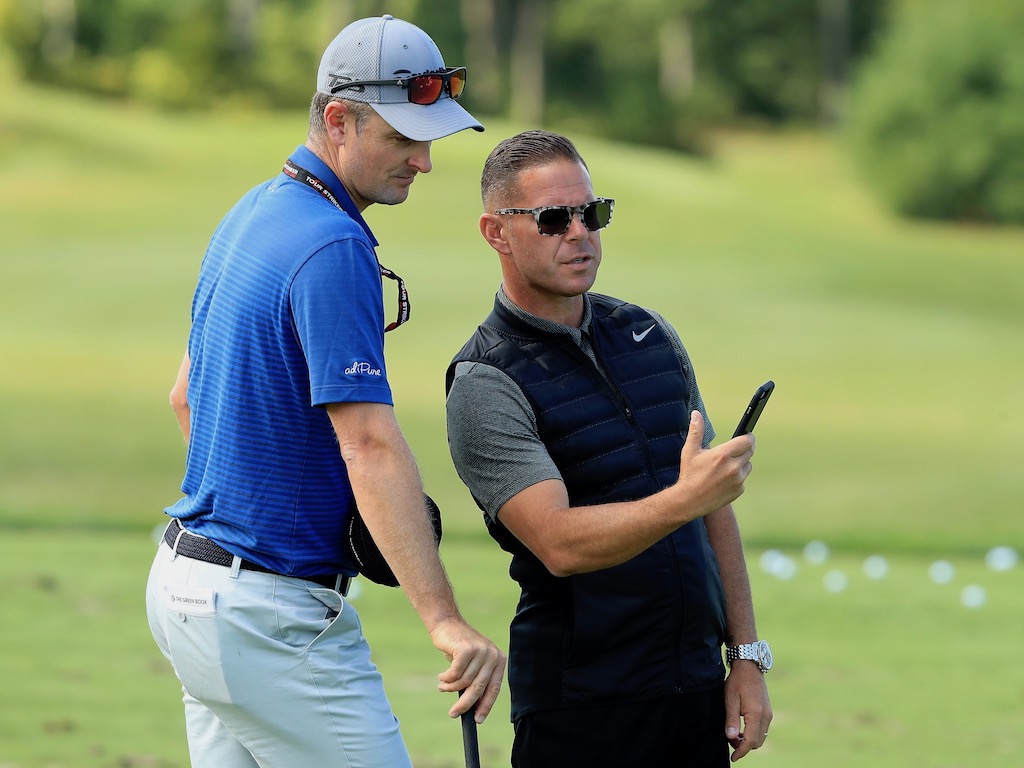
Do a little research on the top PGA Tour players, and what you’ll see is that most (if not all of them) employ a team of diverse professionals that support their efforts to perform on the golf course. Take two-time major champion Zach Johnson; he has a team that includes a caddie, a swing instructor, a sports psychologist, a physiotherapist, an agent, a statistician, a spiritual mentor, a financial adviser… and of course his wife.
“I know this seems like a lot, and maybe even too much,” Johnson readily admitted. “But each individual has their place. Each place is different in its role and capacity. In order for me to practice, work out and just play golf, I need these individuals along the way. There is a freedom that comes with having such a great group that allows me to just play.”
My best guess is that Zach Johnson commits hundreds of thousands of dollars each year to this team, and I assume most players on the leading professional tours are making significant investments in their “teams.” There are three questions that jump out at this point. First, is a team necessary? Second, how can anyone compete without one? And third, how to pay for it?
From the club player to the collegiate player to the aspiring/touring professional, everyone can benefit from a team that offers individual instruction, support, guidance, and encouragement. Such a team, however, needs to be credible, timely, beneficial and affordable.
To be affordable, serious golfers should build their team one piece at a time. The obvious first choice is a swing coach. Golf swing coaches charge from $100-$1,500 per hour. The cost explains why players have historically been responsible for their own practice. The next piece, which is a newly developing trend, should be a performance coach who specializes in the supervision of practice, training and tournament preparation. Performance coaching on-site fees range from $200 to $3,000 per day.
So is team support essential for a player to be as good as he/she can be? My research says it is. When a player schedules a practice session, that session is usually based on what the player likes to do or wants to do. “Best Practices” utilized by world-class athletes suggest strongly that great progress in training always occurs when someone other than the player writes, administers and supervises the programs and sessions. The team approach says the player should focus on what needs to be done. Sometimes what the player wants to do and the things needed to be done are the same thing; sometimes they aren’t.
Now for the question of how to pay for it all. Wealthy players, or those with substantial or institutional support, have access to what they need or want… whatever the cost. If you use an on-site coach, teacher or other professional you will be paying for blocks of time. Fees can be hourly, weekly, monthly, yearly or lifetime arrangements based upon several factors. If your coach of choice is not local, you can also incur travel and per diem expenses. The process of paying for someone’s time can really add up. You can review what I charge for various services that require my attendance at edmyersgolf.com.
For those of you who don’t have easy access to on-site expertise or don’t want to incur the expense, I want to offer an approach that business, industry, colleges/universities and entrepreneurs are turning to: “Distance Coaching.” Distance learning is made possible through modern technology. In today’s world, expertise can be delivered using FaceTime, Skype, texting, email and (old fashion) phone calls. Textbooks, videos, specific programs and workbooks can be accessed from anywhere at any time by anyone with a desire to do so… and who knows what’s coming in the future. Through Distance Coaching, individuals can employ professional expertise on an as-needed basis without incurring huge costs or expenses.
The primary team expenses that can be avoided are those associated with face-to-face, on-site visits or experiences. Distance Coaching brings whatever any player needs, wants or desires within financial reach. For example, a player in Australia can walk onto the practice ground and have that day’s practice schedule delivered to a personal device by his/her performance coach. The player then forwards the results of that session back to the coach — let’s say in Memphis, Tennessee. The player is then free to move onto other activities knowing that the performance, training and preparation process is engaged and functioning. In the same vein, that same player in Australia may have moved into learning mode and he/she is now recording the golf swing and is sending it to the swing teacher of choice for analysis and comment.
So what is the cost of Distance Coaching? Teachers, trainers and coaches set their own fees based upon their business plan. Some require membership, partnership or some other form of commitment. For example, I offer free performance coaching with the purchase of one of my books or programs, as do others. Where face-to-face, on-site fees for performance coaching is available for $200 a day, the same expertise from the same coach can cost as little as $50 a month using the distance format, tools and technology. I highly recommend that players responsibly research the options available to them and then build the best team that fits their games, desires and goals. I’m happy to forward a guide of what to look for in a performance coach; just ask for it at [email protected].
Back to Zach Johnson; he recently admitted that his lack of recent success could be traced to his lack of focus and practice discipline. Additional, he concedes that he has been practicing the wrong things. “It goes back to the basics,” he said. “I have to do what I do well. Truth be told, what I’m practicing now is more on my strengths than my weaknesses.”
Zach Johnson has a great team, but as he concedes, he still needs to put in the work.









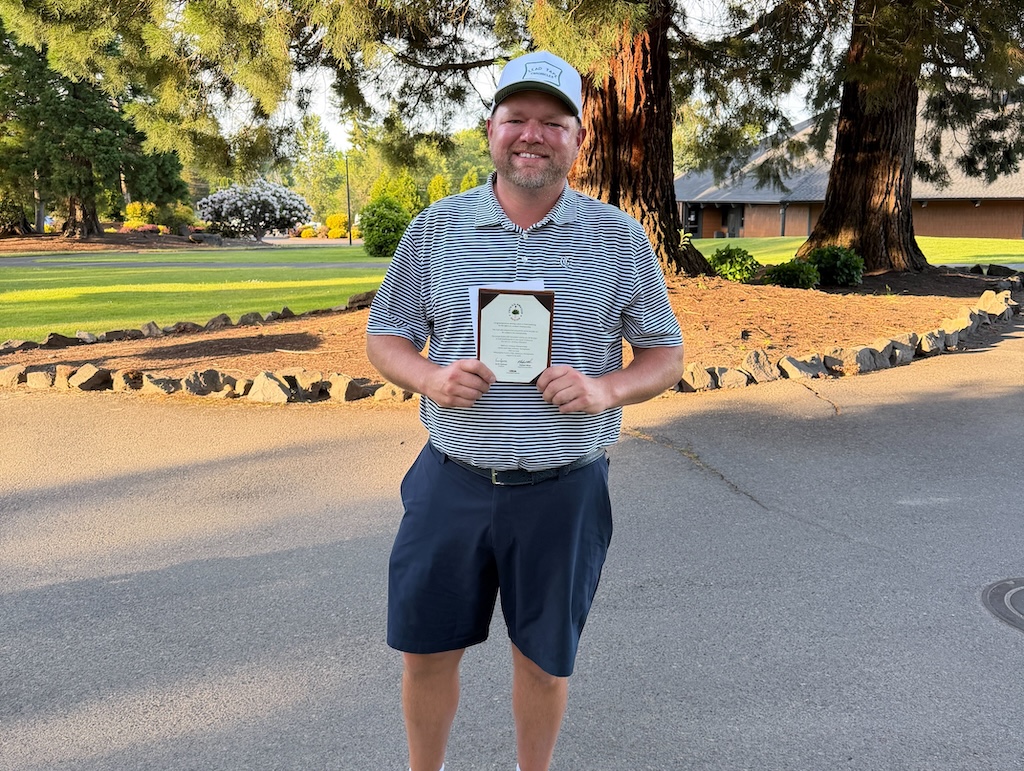
This past Monday, I played in the U.S. Amateur local qualifier at Rock Creek Country Club in Portland, Oregon. A full tee sheet from 7:30 a.m. to 1:55 p.m., the top 11 scores would make it to the U.S. Amateur final qualifying.
I teed off at 10:48 a.m.. With the 7:30 am tee time, you can get a feel for the leaders’ pace, and they were off and running on the challenging setup at Rock Creek.
View this post on Instagram
Getting to the highlight of the round on the par five 17th, a drive up the left side and 212 yards left to the front hole location. I took out a 5-iron with plans of middle of the green. The ball ended up 8 feet left of the hole, pin high. A slight downhill putt dropped in for an eagle 3 on the 17th. With the cut line looking to be anywhere from -2 to even par. This was the boost I had been waiting for all day.
With making par from the trees on 18, it was time to wait for a potential playoff with a posted score of one under par 71.
Three hours later, it was playoff time. 8 players for 6 spots. I made par on the playoff hole, which was good enough to advance to the U.S. Amateur final qualifying in July. USGA qualifiers sure deliver on all of the emotions in golf!
Club Junkie
Building my 2026 gamer WITB: Ranking the contenders and new putter projects – Club Junkie Podcast

The annual What’s In The Bag build is underway, and on this episode of Club Junkie, Brian breaks down the clubs currently leading the race for a spot in his 2026 gamer setup. From drivers and fairway woods to irons, wedges, and shafts, he ranks the equipment that’s performing best and explains what’s separating the front runners from the rest of the field.
Brian also heads into the workshop to discuss several putter projects currently on the bench. From head options and shaft choices to build ideas and testing plans, he shares what he’s working on and which putters could become serious contenders for the bag this season.
If you’re a gear junkie who loves equipment testing, club building, and the never-ending pursuit of the perfect setup, this episode is for you.
Follow Club Junkie:
Instagram: @clubjunkiepod
TikTok: @clubjunkiepod
Threads: @clubjunkiepod
X: @ClubJunkiePod
Club Junkie
Tour Edge Exotics mini driver review + TaylorMade Spider ZT Max first look – Club Junkie

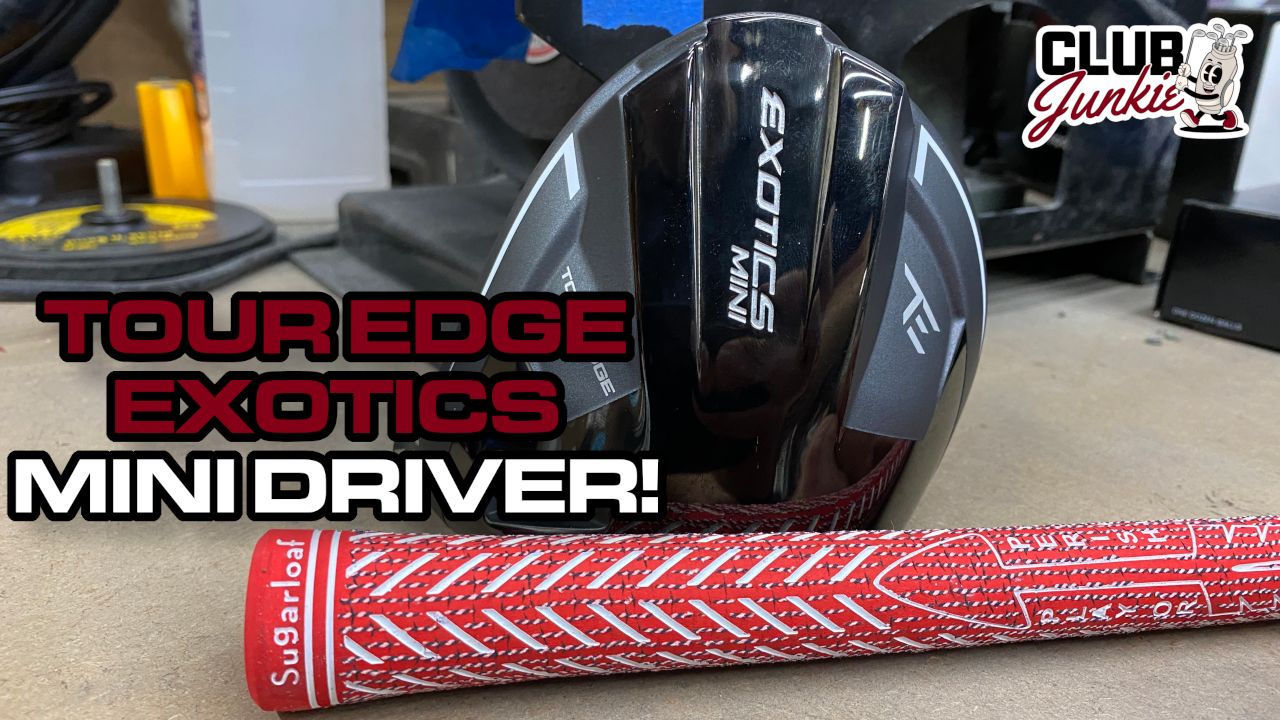
On this episode of Club Junkie, I put the new Tour Edge Exotics Mini Driver to the test and break down the performance, forgiveness, distance, and where it fits compared to a traditional driver or strong fairway wood. If you have been curious about adding a mini driver to the bag, this one is worth a look.
I also dive into the new TaylorMade Spider ZT Max putter that was recently spotted and discuss the growing zero torque putter trend. Plus, there is a closer look at the new Project X Titan Yellow shaft showing up on the PGA Tour and what makes it different from other profiles currently out there.

Justin Rose WITB 2026 (April): Full WITB breakdown with new McLaren irons

What’s the story behind Webb Simpson’s custom-stamped irons?

Memorial Tournament Tour Report: Rory McIlroy, Cameron Young switch up drivers, and more

Cadillac Championship Tour Report: Spieth’s sizable changes, McLaren Golf launches, and more

Russell Henley’s winning WITB: 2026 Charles Schwab Challenge

Kristoffer Reitan’s winning WITB: 2026 Truist Championship

Aaron Rai’s winning WITB: 2026 PGA Championship

J.T. Poston’s winning WITB: 2026 Memorial Tournament

Cameron Young’s winning WITB: 2026 Cadillac Championship

Best irons 2026: Best irons overall, most forgiving irons, and more


Bud Cauley WITB 2026 (June)
Bud Cauley had >14 clubs in his bag when photographed prior to the Memorial Tournament. Driver: Titleist GTS2 (8 degrees) Shaft: Fujikura...


Hannah Green WITB 2026 (June)
Driver: Titleist GTS3 (10 degrees, D4 SureFit setting) Shaft: Mitsubishi Chemical Diamana RB 53 S 3-wood: Titleist GT3 (15 degrees,...


Asterisk Talley WITB 2026 (June)
Driver: TaylorMade Qi4D (9 degrees) Shaft: Fujikura Ventus Blue 6 S 3-wood: TaylorMade Qi4D (16.5 degrees) Shaft: Fujikura Ventus Blue...


Brianna Do WITB 2026 (June)
Driver: Callaway Quantum Triple Diamond (9 degrees) Shaft: KBS PGW 3-wood: Callaway Elyte Titanium (15 degrees) Shaft: KBS PGW 5-wood:...
-
 Equipment6 days ago
Memorial Tournament Tour Report: Rory McIlroy, Cameron Young switch up drivers, and more
-
 News1 week ago
Russell Henley’s winning WITB: 2026 Charles Schwab Challenge
-
 Whats in the Bag3 days ago
J.T. Poston’s winning WITB: 2026 Memorial Tournament
-
 Equipment3 days ago
Best irons 2026: Best irons overall, most forgiving irons, and more
-

 Equipment1 week ago
Details on Jason Day’s latest prototype Avoda iron setup
-
 Equipment3 weeks ago
CJ Cup Byron Nelson Tour Report: Koepka and Kim’s newest putters finally get hot
-

 News2 weeks ago
Charles Schwab Challenge Tour Report: MacIntyre, Åberg and Spaun all switch putters, TaylorMade launches new Spider
-
 Equipment2 weeks ago
Details on J.J. Spaun’s surprise putter switch


Jamie
Jun 22, 2018 at 11:30 am
Seriously? They help a player prepare and that’s all. Receiving advice during a tournament is a 2-stroke penalty. No, golf is not a team sport. A team has the privilege of communication during. Please don’t overcomplicate simple concepts with collectivist trash.
Lee
Jun 21, 2018 at 5:23 pm
I wonder who fills these roles of a swing instructor, a sports psychologist, a physiotherapist, an agent, a statistician, a spiritual mentor, and a financial adviser for TW.