
Opinion & Analysis
More Distance Off the Tee (Part 1 of 3): Upper Body Training

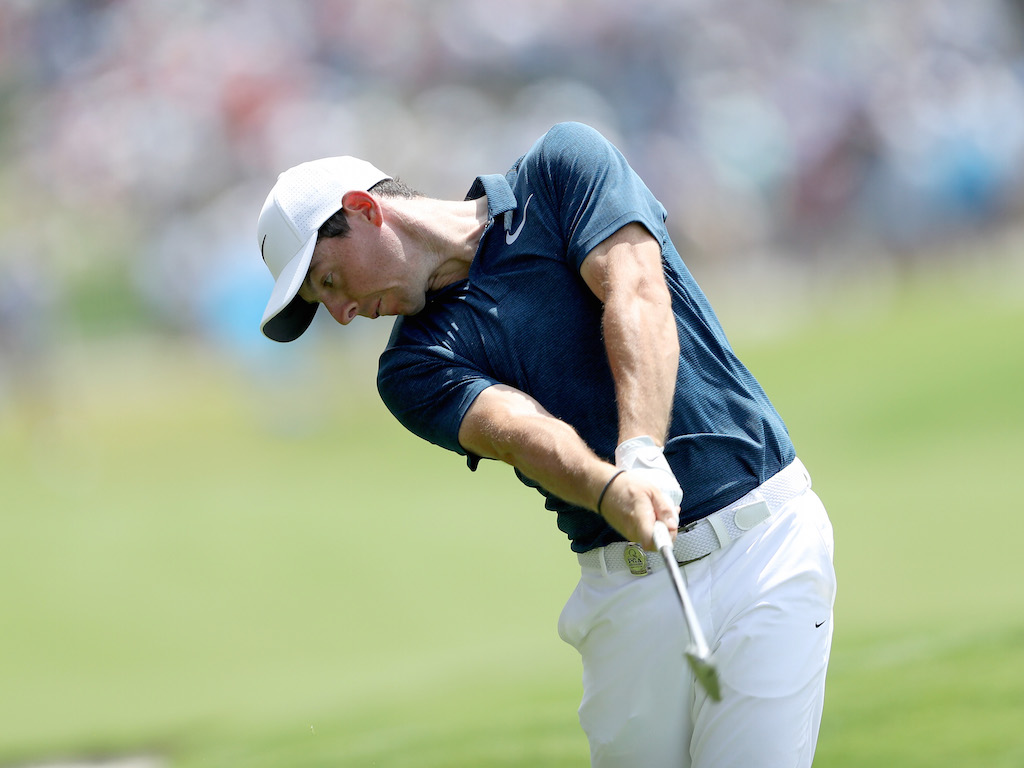
If you read my previous story, Tour Pro’s Revealed: 3 Tests to See How You Stack Up, you are well aware of the fact that improving your upper body power is one of three sure ways to increase your distance off the tee. If you have not, I strongly suggest you check it out to gain some context about what is to follow and what is critical for your golf game.
Through our testing and the testing done of many of the industry leaders in golf performance, we have found that the ability of golfers to generate “push power” from their upper body is critical to maximize efficiency and speed in the swing. The way that you can test your power is simple. Sit in a chair with your feet flat on the ground. Keeping your back on the chair, chest pass with both hands a 6-pound medicine ball as far as you can. When you compare this to your vertical jump as described in More Distance Off the Tee (Part 2 of 3): Lower Body Training Plan, the number in feet you threw the ball should be relatively close to your jump in inches.
If you threw the ball and it went 5 feet, you have an upper body power problem. If you threw the ball 25 feet and jumped only 14 inches, your upper body is not the problem — you probably need to focus on your lower body. It’s not rocket science once you understand what you are looking for. What can be challenging is knowing how to improve your power once you identify a problem. That is where the rest of this article comes in. What I am going to outline below are three of the most common upper body power exercises that we use with our amateur, senior and professional golfers.
The key with any power training exercise is to make sure you are as rested as possible between sets so that you can be as explosive as possible for the repetitions. Try not to do more than 6 repetitions in a set to assure that each one is as fast and explosive as possible.
Med Ball Chest Pass on Wall
This is one of the most basic exercises there is for developing upper body push power. Make sure your feet are about shoulder-width apart and don’t be afraid to use your legs to help maximize the punishment you deliver to against the wall!
Med Ball Wall Ball
Watching the video, you may be scratching you head and wondering why this is in the upper body power article when clearly the athlete is using his legs. The reason is that in the golf swing, power starts with the legs.
Med Ball Sky Chest Throws
This one is simple. Laying on your back, all you need to do is push the ball up as high as you can, catch it on the way down and the explode it back up into the air as high as you can. If you incorporate this exercise into your routine even once a week, you will see huge gains in your ability to swing faster if this was a problem area for you.
That being said, power creation requires not only speed but also strength development. It is also important that you have a solid strength program to increase your ability to generate more force. While this is beyond the scope of this article, finding yourself a solid golf fitness expert will help you create your ideal program.







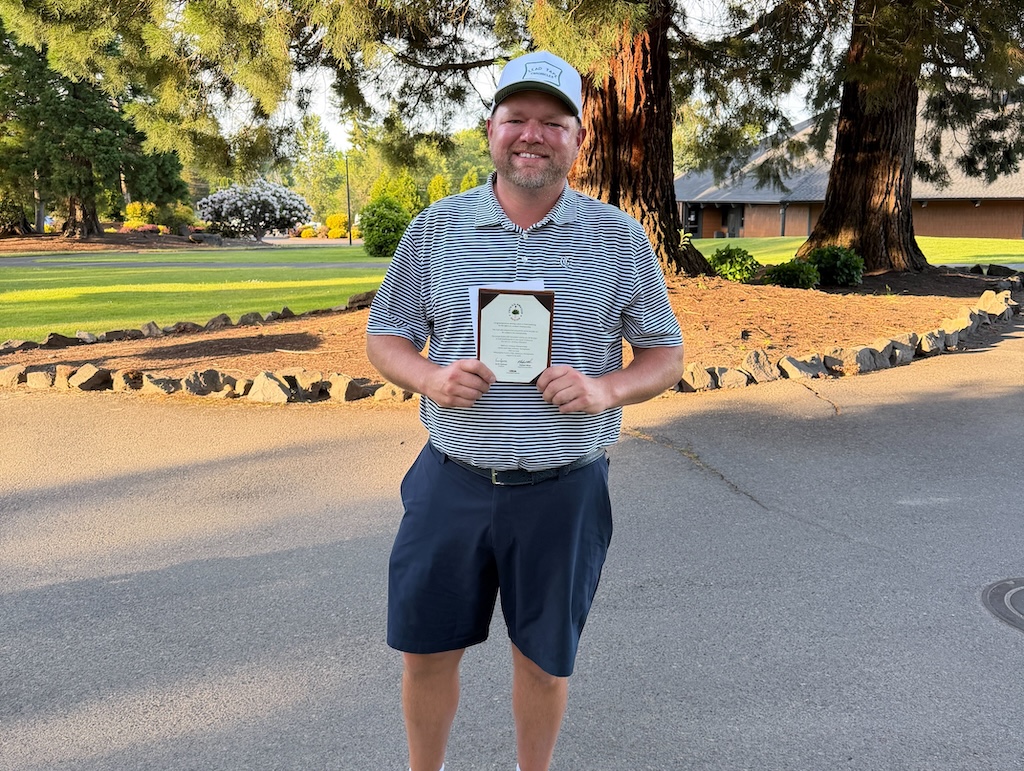
This past Monday, I played in the U.S. Amateur local qualifier at Rock Creek Country Club in Portland, Oregon. A full tee sheet from 7:30 a.m. to 1:55 p.m., the top 11 scores would make it to the U.S. Amateur final qualifying.
I teed off at 10:48 a.m.. With the 7:30 am tee time, you can get a feel for the leaders’ pace, and they were off and running on the challenging setup at Rock Creek.
View this post on Instagram
Getting to the highlight of the round on the par five 17th, a drive up the left side and 212 yards left to the front hole location. I took out a 5-iron with plans of middle of the green. The ball ended up 8 feet left of the hole, pin high. A slight downhill putt dropped in for an eagle 3 on the 17th. With the cut line looking to be anywhere from -2 to even par. This was the boost I had been waiting for all day.
With making par from the trees on 18, it was time to wait for a potential playoff with a posted score of one under par 71.
Three hours later, it was playoff time. 8 players for 6 spots. I made par on the playoff hole, which was good enough to advance to the U.S. Amateur final qualifying in July. USGA qualifiers sure deliver on all of the emotions in golf!
Club Junkie
Building my 2026 gamer WITB: Ranking the contenders and new putter projects – Club Junkie Podcast

The annual What’s In The Bag build is underway, and on this episode of Club Junkie, Brian breaks down the clubs currently leading the race for a spot in his 2026 gamer setup. From drivers and fairway woods to irons, wedges, and shafts, he ranks the equipment that’s performing best and explains what’s separating the front runners from the rest of the field.
Brian also heads into the workshop to discuss several putter projects currently on the bench. From head options and shaft choices to build ideas and testing plans, he shares what he’s working on and which putters could become serious contenders for the bag this season.
If you’re a gear junkie who loves equipment testing, club building, and the never-ending pursuit of the perfect setup, this episode is for you.
Follow Club Junkie:
Instagram: @clubjunkiepod
TikTok: @clubjunkiepod
Threads: @clubjunkiepod
X: @ClubJunkiePod
Club Junkie
Tour Edge Exotics mini driver review + TaylorMade Spider ZT Max first look – Club Junkie

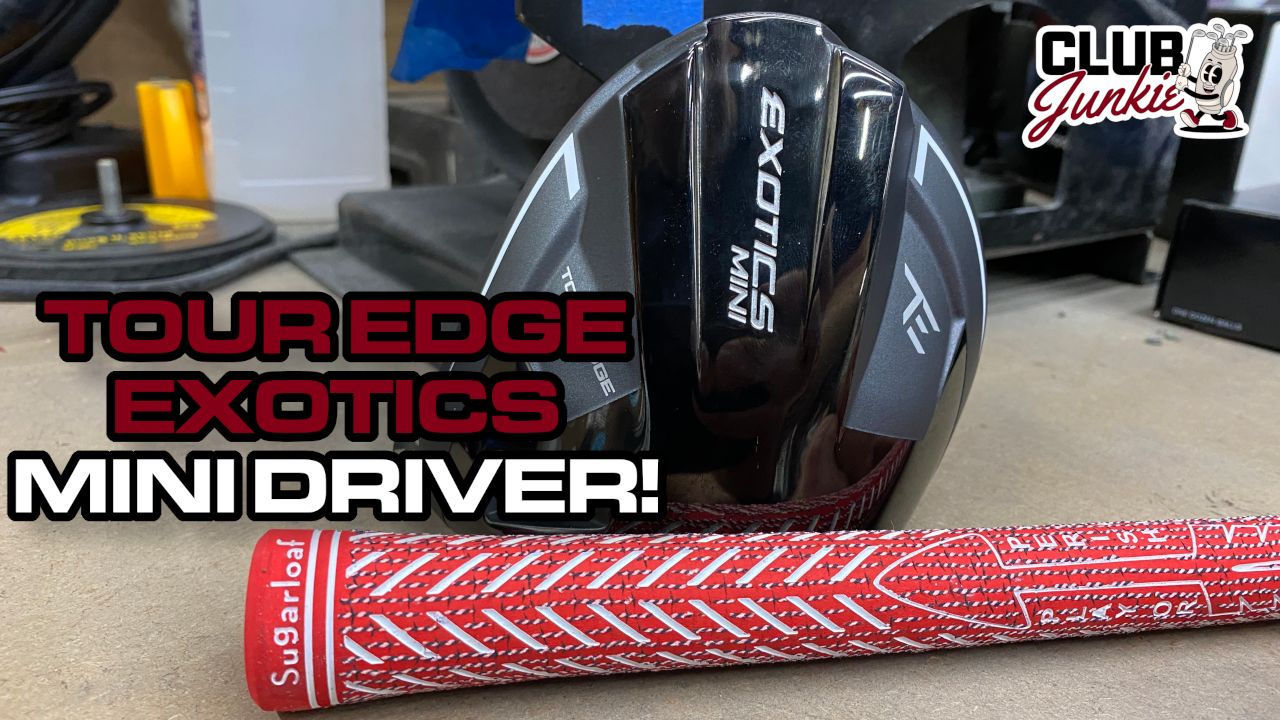
On this episode of Club Junkie, I put the new Tour Edge Exotics Mini Driver to the test and break down the performance, forgiveness, distance, and where it fits compared to a traditional driver or strong fairway wood. If you have been curious about adding a mini driver to the bag, this one is worth a look.
I also dive into the new TaylorMade Spider ZT Max putter that was recently spotted and discuss the growing zero torque putter trend. Plus, there is a closer look at the new Project X Titan Yellow shaft showing up on the PGA Tour and what makes it different from other profiles currently out there.

Justin Rose WITB 2026 (April): Full WITB breakdown with new McLaren irons

What’s the story behind Webb Simpson’s custom-stamped irons?

Memorial Tournament Tour Report: Rory McIlroy, Cameron Young switch up drivers, and more

Cadillac Championship Tour Report: Spieth’s sizable changes, McLaren Golf launches, and more

Russell Henley’s winning WITB: 2026 Charles Schwab Challenge

Kristoffer Reitan’s winning WITB: 2026 Truist Championship

Best irons 2026: Best irons overall, most forgiving irons, and more

J.T. Poston’s winning WITB: 2026 Memorial Tournament

Aaron Rai’s winning WITB: 2026 PGA Championship

Cameron Young’s winning WITB: 2026 Cadillac Championship


Bud Cauley WITB 2026 (June)
Bud Cauley had >14 clubs in his bag when photographed prior to the Memorial Tournament. Driver: Titleist GTS2 (8 degrees) Shaft: Fujikura...


Hannah Green WITB 2026 (June)
Driver: Titleist GTS3 (10 degrees, D4 SureFit setting) Shaft: Mitsubishi Chemical Diamana RB 53 S 3-wood: Titleist GT3 (15 degrees,...


Asterisk Talley WITB 2026 (June)
Driver: TaylorMade Qi4D (9 degrees) Shaft: Fujikura Ventus Blue 6 S 3-wood: TaylorMade Qi4D (16.5 degrees) Shaft: Fujikura Ventus Blue...

Brianna Do WITB 2026 (June)
Driver: Callaway Quantum Triple Diamond (9 degrees) Shaft: KBS PGW 3-wood: Callaway Elyte Titanium (15 degrees) Shaft: KBS PGW 5-wood:...
-
 Equipment6 days ago
Memorial Tournament Tour Report: Rory McIlroy, Cameron Young switch up drivers, and more
-
 News2 weeks ago
Russell Henley’s winning WITB: 2026 Charles Schwab Challenge
-
 Equipment3 days ago
Best irons 2026: Best irons overall, most forgiving irons, and more
-
 Whats in the Bag4 days ago
J.T. Poston’s winning WITB: 2026 Memorial Tournament
-

 Equipment1 week ago
Details on Jason Day’s latest prototype Avoda iron setup
-
 Equipment3 weeks ago
CJ Cup Byron Nelson Tour Report: Koepka and Kim’s newest putters finally get hot
-

 News2 weeks ago
Charles Schwab Challenge Tour Report: MacIntyre, Åberg and Spaun all switch putters, TaylorMade launches new Spider
-
 Equipment2 weeks ago
Details on J.J. Spaun’s surprise putter switch


Randy Bernard
Feb 17, 2018 at 8:09 pm
A next-level version of the third exercise would be to do it with your shoulders and head on a stability ball, rather than from the floor.
Jim Marlow
Jan 24, 2018 at 10:41 am
I am 76 years old and spend an hour in the gym 5-6 times a week. I might as well incorporate some exercises that have the potential to increase distance off the tee. My gym has weighted balls but they are much smaller than what you show. How important is the size of the ball and where can you get the type of ball that you demonstrated?
Chris Finn
Jan 31, 2018 at 11:05 am
The size of the ball is not important Jim, rather the weight. Somewhere between 8-12 lbs typically works to allow you to get the nervous system firing faster.
Ray Bennett
Jan 23, 2018 at 4:35 am
Haha..is this article a joke?? If not, then the author knows nothing about the golf swing. Must be desperate for articles to publish, if this is typical.
Chris Finn
Jan 31, 2018 at 11:08 am
Thanks for the comment Ray. This is based off the latest sports science and statistics relative to the three physiological movements that generate power in the golf swing (vertical thrust, rotation and push power). This article is about training the latter of the three.
There are technical changes, equipment improvements and many other ways to improve swing speed that are “golfy”, but this is what science is showing to most efficient physically. I would be happy to discuss further with you if you would like to learn. My you can reply back here or email me directly at [email protected] and we can set up a call.
The dude
Jan 21, 2018 at 5:14 pm
How heavy the Med ball?
George
Jan 22, 2018 at 4:39 am
Six pound heavy.
Chris Finn
Jan 22, 2018 at 8:16 am
10-20 lbs generally but depends on the athlete and how much weight they can move with speed and proper technique.
Kurt
Jan 22, 2018 at 1:23 pm
Okay, but now tell us this ballistic medicine ball exercise is NOT recommended for the untrained recreational golfer. You final sentences hints at this but you should be more specific.
Chris Finn
Jan 31, 2018 at 11:11 am
Thanks for the comment Kurt. There are times and places for lateralizations, regressions and progressions for power training. These three exercises shown are relatively low risk compared to higher level power training. If a golfer is unable to walk, I would agree there might be some lower hanging fruit that you want to address first.
Kurt
Jan 21, 2018 at 12:39 pm
” It is also important that you have a solid strength program to increase your ability to generate more force.” This means general conditioning before you attempt golf-specific training. Anybody?
Here’s the problem: “…the golf swing, power starts with the legs.” If you can’t walk the golf course your legs are too weak or you’re too lazy. Plain and simple.
ben
Jan 21, 2018 at 1:24 pm
… or yer too decrepit and hopeless. 😛
BG
Jan 21, 2018 at 3:55 pm
..or just buy a set of PXGs and problemo solved. It’s all in the clubs.
Jp
Jan 21, 2018 at 6:41 pm
You forget about those of us who have disabilities that prevent under doctors order that can not walk a golf course, but can enjoy good golf and this type of training.
Will
Jan 21, 2018 at 9:02 pm
Simple …. give up golf if you can’t walk.