
Opinion & Analysis
The Magic of Heavy Metal in Golf

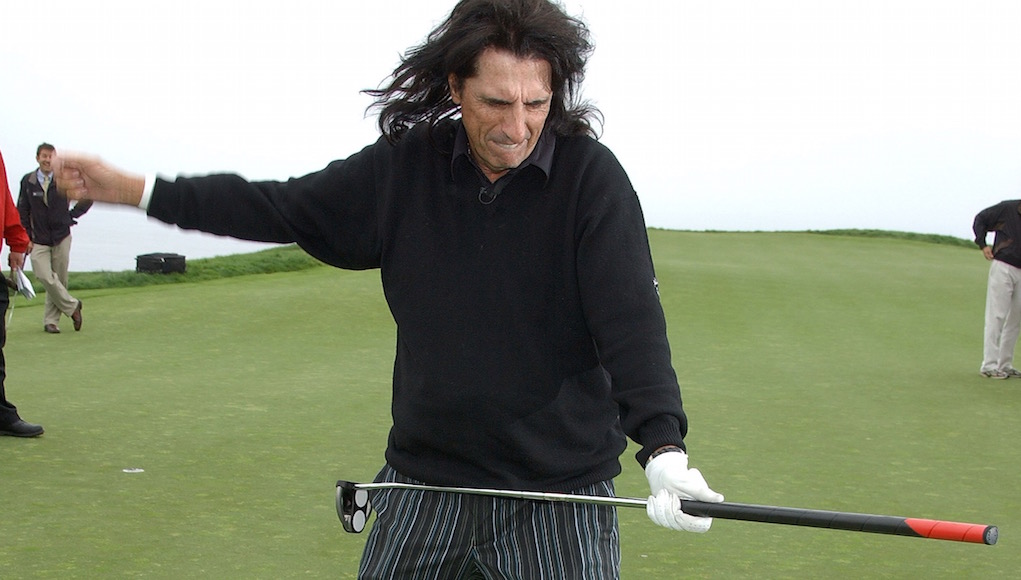
OK, it’s time to come clean. I know the clean cut image of a child of the ’80s and a serious golf nut don’t exactly go hand in hand with playing bass in a rock band and being a metal-head, but that’s in fact what I was. Now, you won’t be able to Google any images of me sporting leather pants, spiked wrist-bands, or God-forbid a mullet. And while my band, The Air-Flow Souls, did churn out one cult hit (Y.A.A.), we never made any official recordings. And the only truly big gig we had the opportunity to play, opening for the then wildly popular hardcore punk band 7 Seconds, we turned down due to our lead singer’s realistic fear of having things thrown at us while onstage. So just in case you’re looking, you won’t likely turn up any golden footage of us on YouTube either.
Ahhh, the good old days, though. Driving my ‘74 Plymouth Duster to golf matches and listening to the classics of heavy metal by the likes of The Scorpions, Iron Maiden, and Y&T. Or standing on the range or the putting green, hour after hour, hooked up to that old Sony Walkman while the metal anthems of Judas Priest, Saxon, and AC/DC kept me company (and out there) despite my father’s insistence that it was nothing short of rotting my brain. There are some who might think the head-banging rhythm of one of popular music’s more aggressive inventions wouldn’t seem an inherently natural thing to want to be bombarded with while you’re trying to putt for birdies and pars, but the fact was it worked for me and I know I’m not alone.
So I bring this up, not simply to take a stroll down memory lane, but because there is now actual evidence that heavy metal not only wasn’t contributing to any decline in gray matter, but it might actually have been at least partially responsible for some of my finer moments on the links. If you’ve been paying attention, you’re likely aware of the USGA’s decision a couple of years ago to ban the playing of music during competition based on an interpretation of an existing rule. Rule 14-3 states that a player may not use any artificial device or unusual equipment that “might assist him in making a stroke or in his play.” In its interpretation, the USGA claimed that listening to music or a broadcast while making a stroke or for a prolonged period might assist a player by eliminating distractions or promoting good tempo. Really?
When I first heard this, I, like a good number of my members, thought, “Here were go again.” Under the guise of protecting the game, The USGA, golf’s occasionally cantankerous governing body, seems at times bound and determined do away with about just about every non-traditional invention that comes along and adds a bit more fun to the game (square grooves, belly putters, long putters, driver heads as big as Volkswagens, etc.), and here was just another prime example. And in my mind, at least, this was where they’d finally crossed the line. So I had to go in search of evidence, because I needed to know whether or not there was any research backing up their decision to pick on my precious metal anthems.
We often witness professional athletes in other sports using music to pump themselves up, calm themselves down, or even help to synchronize their movement. But since most of these athletes are pretty young, I’d instinctively written that off as an affectation of youth. Either that or savvy business-folk are seizing an opportunity to get their products into the public eye with the aid of all-too willing (and compensated) accomplices. As it turns out, though, there is a mounting body of research highlighting the benefits listening to music can have on performance in areas ranging from running and cycling to weight-lifting. Certain music can increase arousal levels, raising your heart rate and blood pressure, helping you to lift more, push on, or train longer.
Fast and loud, bass-driven music, with a tempo range somewhere between 170 and 190 beats per minute, is perfect when gearing up for a workout. It has been proven particularly effective with running, where synchronizing your stride pattern with the tempo has been found to increase endurance by as much as 15 percent. The results of this research lead Costas Karageorghis, one of the leading researchers on the psychological and ergogenic effects of music, to claim music as the one “legal performance-enhancing drug.” When it comes to golf, though, the current interpretation of rule 14-3 means that it isn’t legal, at least not while you’re playing. And elevated arousal levels aren’t always ideal when it comes to some activities that involve fine motor skills, so was the mean old USGA actually barking up the wrong tree?
Well, at least one recent study attempted to measure whether or not music could enhance a golfer’s performance. Researchers examined the effects it had on putting, and in the end they concluded that most music had an almost magical effect on performance, with smooth jazz being the most effective. In the study, 22 Division I college golfers listened to five different types of music (country, classical, rock, jazz, and hip/hop), as well as no music, while putting 20 times under six different conditions. Both male and female golfers scored best when listening to jazz and worst when listening to rock music, hip/hop, and finally no music at all. Men scored almost two putts better listening to jazz versus no music. They averaged their poorest scores while listening to hip-hop. And the ladies?… Well, they performed worst with no music or rock playing and best with jazz as well.
So as much as I didn’t like it, when you consider this, I had to conclude that maybe just this one time the USGA had a point. But since I wasn’t about to just do away with my Whitesnake collection, I figured I had to find a legal way to keep enjoying it while employing the magic of it for myself and others. As it turns out, music has a couple of other nifty little side-effects, and they have to do with all that reminiscing I forced upon you a few paragraphs ago. There are many studies out there now highlighting music’s ability to both enhance the storage and recall of memories while affecting mood. Now I’m not going to get into the neuroscience of it in this short space, but if like me you’ve ever remembered an exact time, place, or event and how you felt when a certain song comes on the radio, then you know how well it works. So when I considered these things, alongside it’s now proven performance enhancing abilities, I saw my opportunity, and I decided to develop a training tool to augment my competitive students’ preparation for events.
I call this tool an enhanced visualization video. It’s a highlight reel of clips that I film of players hitting full shots, shots around the green, and putts (putts that go in) of varying distances that I pair to a favorite song or two that they have to both the mood and tempo we’re striving to attain during competition. Players are instructed to watch them a few times a day during a quiet moment and, if they listen to music during practice, listen to the same songs and/or songs of a similar mood and tempo that they enjoy. If you have an iPhone and the included iMovie app, they’re really quite simple to make. They’re also incredibly effective once you start employing the practice regularly. Many players find that they even start to incorporate the replaying of these songs in their heads, or even quietly humming them during their pre-shot routines (a practice I encourage) once they’re actually in competition. Try to stop that USGA!
So while that old Duster ended up being donated to the high school auto-shop when its engine finally gave out, and the Walkman fell out favor for a Discman (and ultimately an iPod), fortunately my affinity for that classic music never died. And though we can’t use it during competition, we can all use music to help enhance our preparation and increase the level of enjoyment we get out of the time we spend doing so. The key is to match the mood, tempo, and intensity to the activity and what you are hoping to achieve… and to make sure it’s something you enjoy. For me, much to my wife’s dismay, The Magic of Heavy Metal evokes memories of a time when I enjoyed some of the best golf of my life. And so despite the fact that studies might first suggest a bit of smooth jazz, when I want to really roll the rock, there’s nothing like some good old fashioned Rock’N’Roll.
See if it works for you.



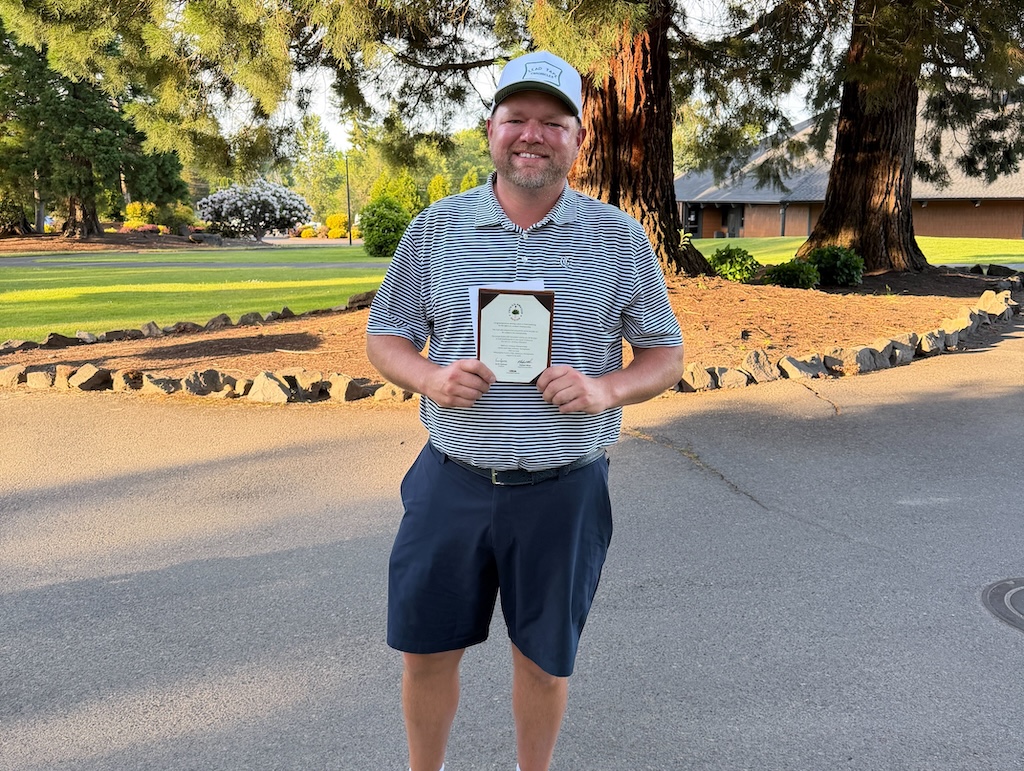
This past Monday, I played in the U.S. Amateur local qualifier at Rock Creek Country Club in Portland, Oregon. A full tee sheet from 7:30 a.m. to 1:55 p.m., the top 11 scores would make it to the U.S. Amateur final qualifying.
I teed off at 10:48 a.m.. With the 7:30 am tee time, you can get a feel for the leaders’ pace, and they were off and running on the challenging setup at Rock Creek.
View this post on Instagram
Getting to the highlight of the round on the par five 17th, a drive up the left side and 212 yards left to the front hole location. I took out a 5-iron with plans of middle of the green. The ball ended up 8 feet left of the hole, pin high. A slight downhill putt dropped in for an eagle 3 on the 17th. With the cut line looking to be anywhere from -2 to even par. This was the boost I had been waiting for all day.
With making par from the trees on 18, it was time to wait for a potential playoff with a posted score of one under par 71.
Three hours later, it was playoff time. 8 players for 6 spots. I made par on the playoff hole, which was good enough to advance to the U.S. Amateur final qualifying in July. USGA qualifiers sure deliver on all of the emotions in golf!
Club Junkie
Building my 2026 gamer WITB: Ranking the contenders and new putter projects – Club Junkie Podcast

The annual What’s In The Bag build is underway, and on this episode of Club Junkie, Brian breaks down the clubs currently leading the race for a spot in his 2026 gamer setup. From drivers and fairway woods to irons, wedges, and shafts, he ranks the equipment that’s performing best and explains what’s separating the front runners from the rest of the field.
Brian also heads into the workshop to discuss several putter projects currently on the bench. From head options and shaft choices to build ideas and testing plans, he shares what he’s working on and which putters could become serious contenders for the bag this season.
If you’re a gear junkie who loves equipment testing, club building, and the never-ending pursuit of the perfect setup, this episode is for you.
Follow Club Junkie:
Instagram: @clubjunkiepod
TikTok: @clubjunkiepod
Threads: @clubjunkiepod
X: @ClubJunkiePod
Club Junkie
Tour Edge Exotics mini driver review + TaylorMade Spider ZT Max first look – Club Junkie

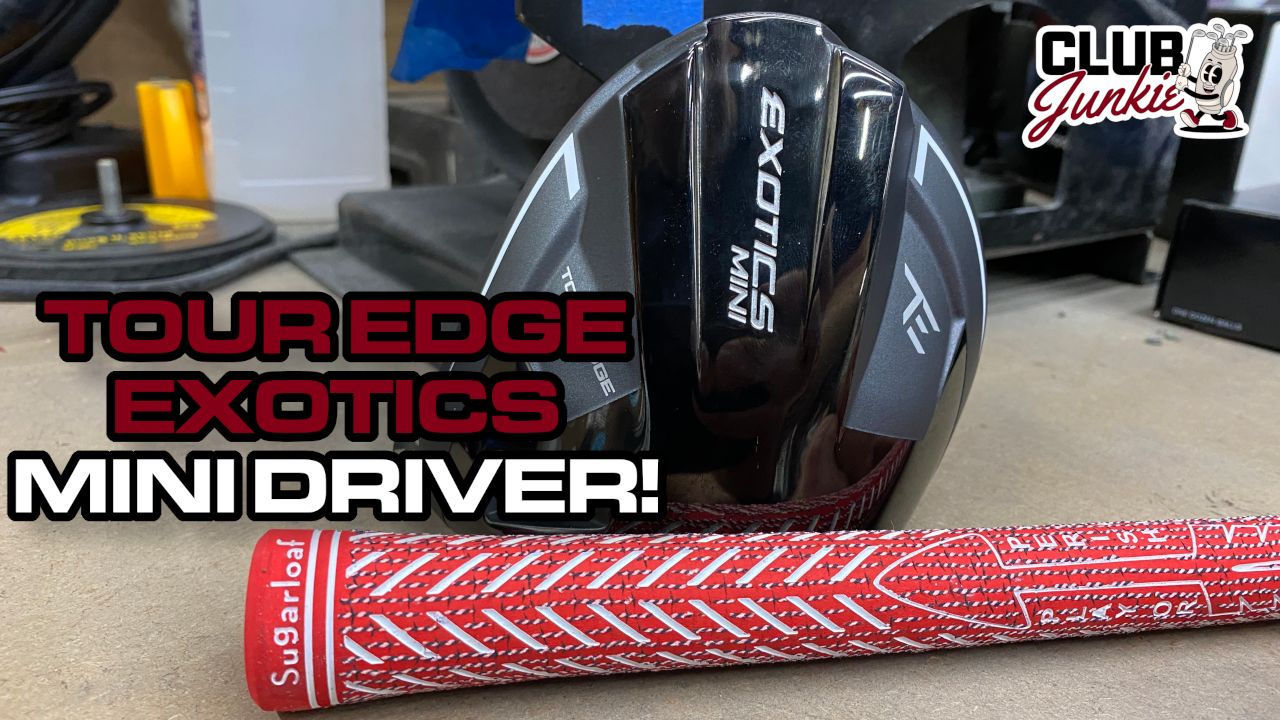
On this episode of Club Junkie, I put the new Tour Edge Exotics Mini Driver to the test and break down the performance, forgiveness, distance, and where it fits compared to a traditional driver or strong fairway wood. If you have been curious about adding a mini driver to the bag, this one is worth a look.
I also dive into the new TaylorMade Spider ZT Max putter that was recently spotted and discuss the growing zero torque putter trend. Plus, there is a closer look at the new Project X Titan Yellow shaft showing up on the PGA Tour and what makes it different from other profiles currently out there.

Justin Rose WITB 2026 (April): Full WITB breakdown with new McLaren irons

What’s the story behind Webb Simpson’s custom-stamped irons?

Memorial Tournament Tour Report: Rory McIlroy, Cameron Young switch up drivers, and more

Cadillac Championship Tour Report: Spieth’s sizable changes, McLaren Golf launches, and more

Russell Henley’s winning WITB: 2026 Charles Schwab Challenge

Kristoffer Reitan’s winning WITB: 2026 Truist Championship

Best irons 2026: Best irons overall, most forgiving irons, and more

J.T. Poston’s winning WITB: 2026 Memorial Tournament

Aaron Rai’s winning WITB: 2026 PGA Championship

Cameron Young’s winning WITB: 2026 Cadillac Championship


Ryan Palmer WITB 2026 (June)
Driver: Callaway Quantum Triple Diamond (9 degrees) Shaft: Project X HZRDUS Smoke Blue RDX 60 TX 3-wood: TaylorMade Qi10 (15 degrees) Shaft:...


Bud Cauley WITB 2026 (June)
Bud Cauley had >14 clubs in his bag when photographed prior to the Memorial Tournament. Driver: Titleist GTS2 (8 degrees) Shaft: Fujikura...


Hannah Green WITB 2026 (June)
Driver: Titleist GTS3 (10 degrees, D4 SureFit setting) Shaft: Mitsubishi Chemical Diamana RB 53 S 3-wood: Titleist GT3 (15 degrees,...


Asterisk Talley WITB 2026 (June)
Driver: TaylorMade Qi4D (9 degrees) Shaft: Fujikura Ventus Blue 6 S 3-wood: TaylorMade Qi4D (16.5 degrees) Shaft: Fujikura Ventus Blue...
-
 Equipment6 days ago
Memorial Tournament Tour Report: Rory McIlroy, Cameron Young switch up drivers, and more
-
 News2 weeks ago
Russell Henley’s winning WITB: 2026 Charles Schwab Challenge
-
 Equipment3 days ago
Best irons 2026: Best irons overall, most forgiving irons, and more
-
 Whats in the Bag4 days ago
J.T. Poston’s winning WITB: 2026 Memorial Tournament
-

 Equipment1 week ago
Details on Jason Day’s latest prototype Avoda iron setup
-
 Equipment3 weeks ago
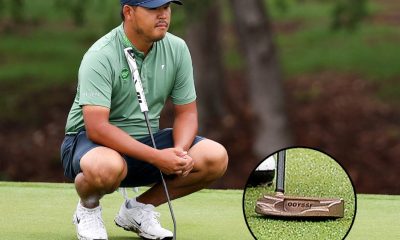
CJ Cup Byron Nelson Tour Report: Koepka and Kim’s newest putters finally get hot
-

 News2 weeks ago
Charles Schwab Challenge Tour Report: MacIntyre, Åberg and Spaun all switch putters, TaylorMade launches new Spider
-
 Equipment2 weeks ago
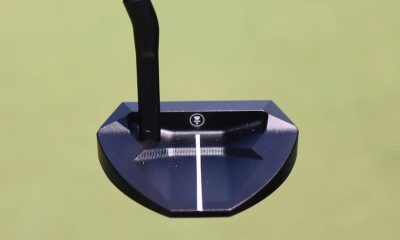
Details on J.J. Spaun’s surprise putter switch

