
Opinion & Analysis
Scoring Practice: How I took my success on the range to the course


This is what typically happens with me. I hit an extra large bucket on the range and I am fairly consistent and feel confident. I put in 30 minutes chipping and 30 minutes putting. I think, “I’ve got this!” Then I go out on the course and make 7 pars, a birdie, 3 triples and two doubles on simple par 3s.
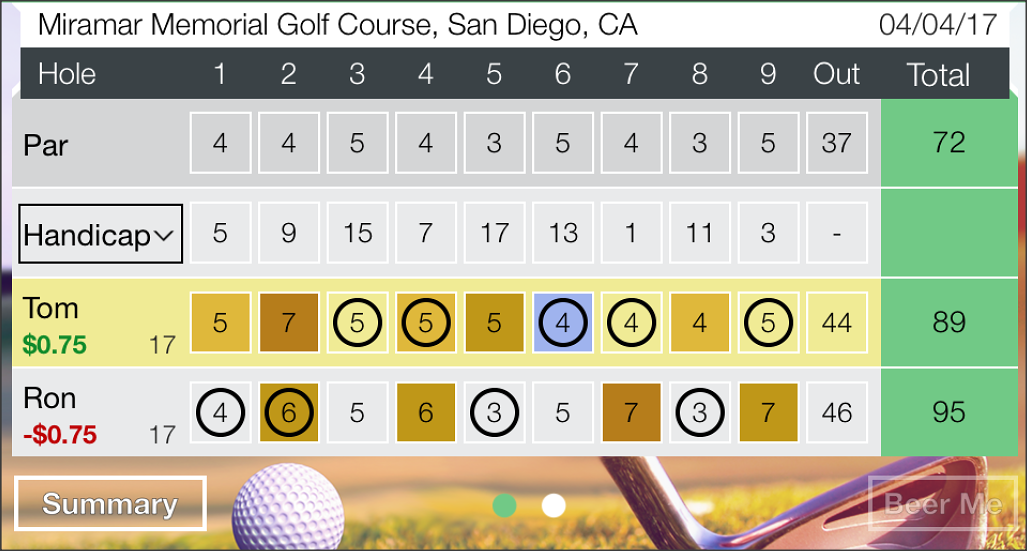
Front 9, ‘nemesis’ shots on a couple of holes.
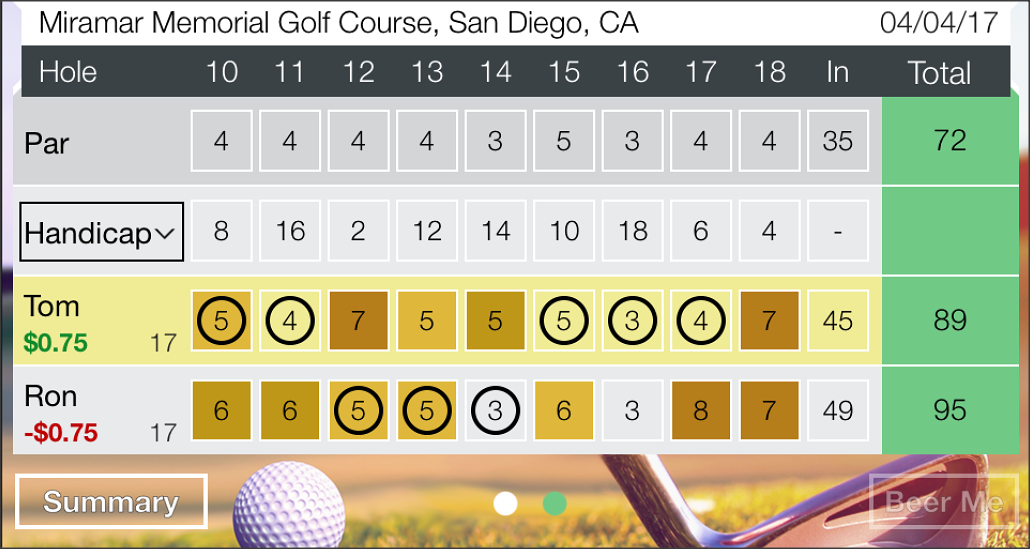
Back 9, after blocked practice.
What happened? Why did great practice not translate to consistent play on the golf course? The problem is that my practice sessions consist of one club that I hit many times in a row, called “blocked practice.” I also discount the first worm-burner or occasional duck-hook to not being “warmed up.”
When I warm up, I typically move through my bag sequentially, ensuring after a dozen or so shots that I am satisfied with my ability with each club. Next, I go to the putting green, and before I know it, I’m lipping out 50-foot putts and draining 8-footers from every angle. Feeling like the Champions Tour is probably Google-searching me, I go to the chipping area, where 30 minutes later, Mickelson would be impressed. I am SO ready! I confidently walk to the first tee, and on the second hole I barely hole that 3-footer for a triple bogey.
After a round like that, I started to think about how an actual round of golf works. I make a couple of practice swings, then have one chance, with one ball, to execute a good shot with one club. I then walk for 4 or 5 minutes, decide how far I need to hit the ball, select a club, take a couple of practice swings, and again have one chance with one club and one time to hit a good shot. A few minutes later, one chance at a pitch, then one chance to lag putt, then (hopefully) one chance at a short putt. Now I’m on the second tee box. I last hit my driver about 15 minutes ago, and perhaps the image of a big slice is burned into my memory. I take two practice swings, then have one chance, with one ball to hit a good shot.
Think about the less common shots. A green-side bunker, or the flop shot, or the long, uphill bump-and-run. You might have just a few of those in a four-hour round of golf. You still only have one chance with one ball to make a decent shot, but you haven’t done it in hours or days. The point is, I realized I tend to practice totally differently than I play, then wonder why I was not able to score… or can score on half the holes in a round of golf, but not the other half. I have reasonable consistency, but I can’t seem to take it out to the course and post a better score. “How can I be more effective,” I wondered.
Five years ago, I played golf with a friend that had been playing a couple of months at Torrey Pines. He almost beat me the first time we played, and I’ve played for decades! I was shocked, and determined to improve. I started downloading golf apps, but I was frustrated with all of them because they were so cumbersome to use. I found that I was focusing on using the app, not my golf game, and playing more slowly as a result. Therefore I decided to design and built my own app. In ended up calling it 80BREAKR, and I wanted it to have the best scorecard as the core, as well as an integrated game improvement mode modeled after spreadsheets I developed trying to improve with my friend at Torrey Pines.
Since my app has an easy way to track the quality of my shots on the golf course, it is equally effective on the range. Using this feature in my app, an idea came to me that I call Scoring Practice. It’s not very fast, and I get some strange looks at the practice area, but it is extremely effective. I go to the range, and after warming up like I would for a regular round of golf, I pretend to play a round of golf. I use an iPad and an app, but it works fine with a piece of paper and a pencil. I pick my most frequently played golf course, and pretend I’m walking around that particular course. When I start, I imagine I’m on the first tee and do my normal routine. I imagine the fairway, pick markers on the range that are trouble left, sand traps right, etc., and then play the shot.
I carefully note how far I hit that shot and if it lands in the fairway, left, right, and project what kind of shot and distance I needed next. I characterize shots as Good, OK, or Bad, and enter how far from the hole I would estimate I am for my next shot.
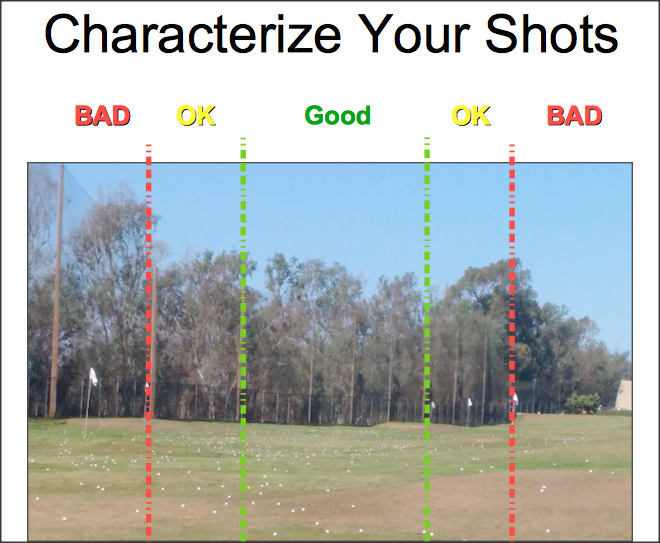
On the range, I pick my Good, OK, and Bad Targets
Here’s how I last played that hole in Scoring Practice. After my “drive,” I picked up my clubs and walked to the far edge of the driving range. The first shot was in the fairway (per the markers I picked before the tee shot), so I estimated I needed an 8 iron to the green. I took out my 8 iron and selected the size of the green with features or markers on the driving range. I took my practice swings, and then I hit one 8 iron shot noting if it was “on the green,” and if not, how far off the green the shot ended up. Then, I picked up my clubs and range balls and walked to the chipping area. I dropped one ball about as far away from the green as I imagined I was after my 8-iron shot. Next, I placed it for the kind of shot I would be facing on the imaginary course. For instance, I imagined I missed the green right, which has an uphill pitch to a close pin location. Therefore, I selected the wedge I would normally take, selected my landing spot, took a couple of practice swings, and hit one shot, one time to that pin, noting how far from the pin the ball ended up.
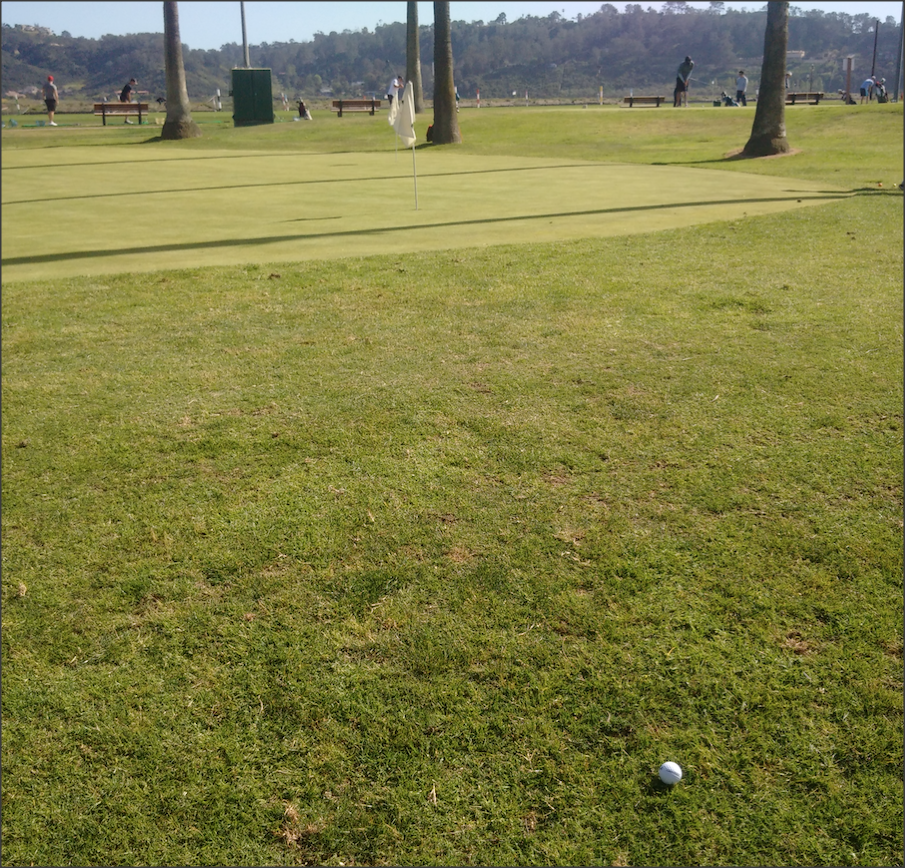
First hole approach short-sided, on upslope
Now, I was on the green of that imagined first hole for this Scoring Practice round of golf. I took out my putter and walked to the practice putting green and set the ball down as far away and on as similar of a slope as possible for the result of the previous pitch. I did my normal ball-marking routine, set up, practice stroke, and then hit the putt. If I missed, I would finish putting as if this were actually the first hole on my favorite course, and I would record each shot and characterize if they were Good, OK, or Bad.
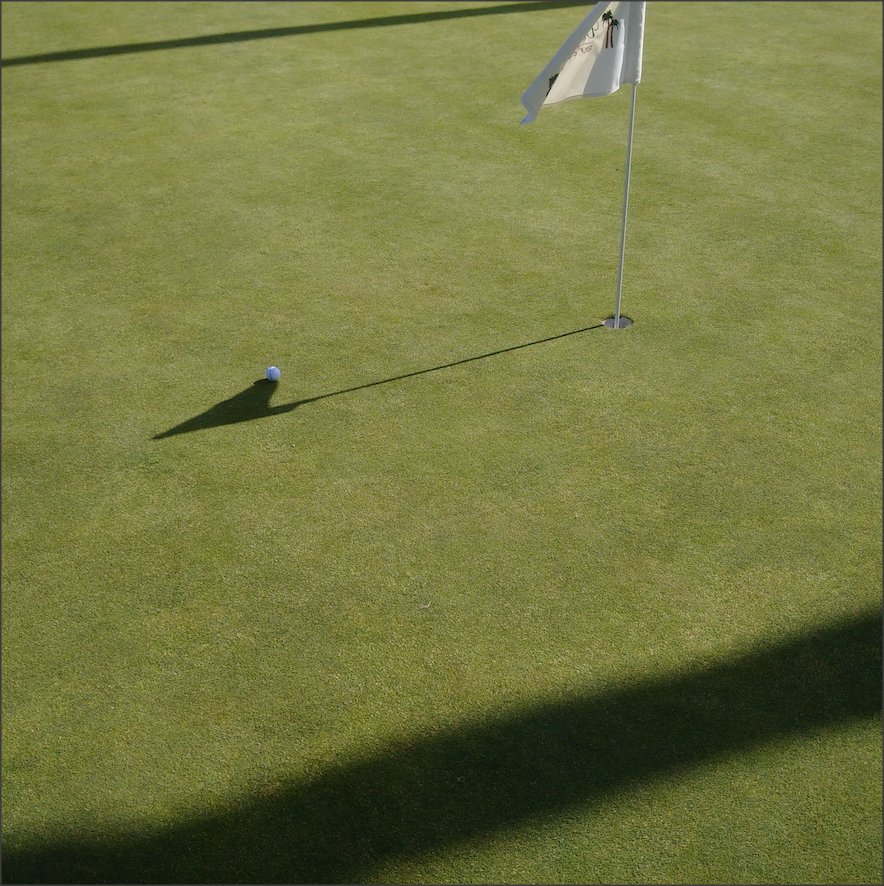
Actual distance left after pitch. It was an “OK” shot.
One hole was completed on my imaginary round. Next, I picked up my clubs and range balls and walked back to one side of the driving range. I then imagined the look of hole No. 2, and picked targets again for trouble left, right, and continued in this manner. I recorded the quality of every shot, and I made my way around the imaginary first nine holes of my favorite course this way one shot at a time.
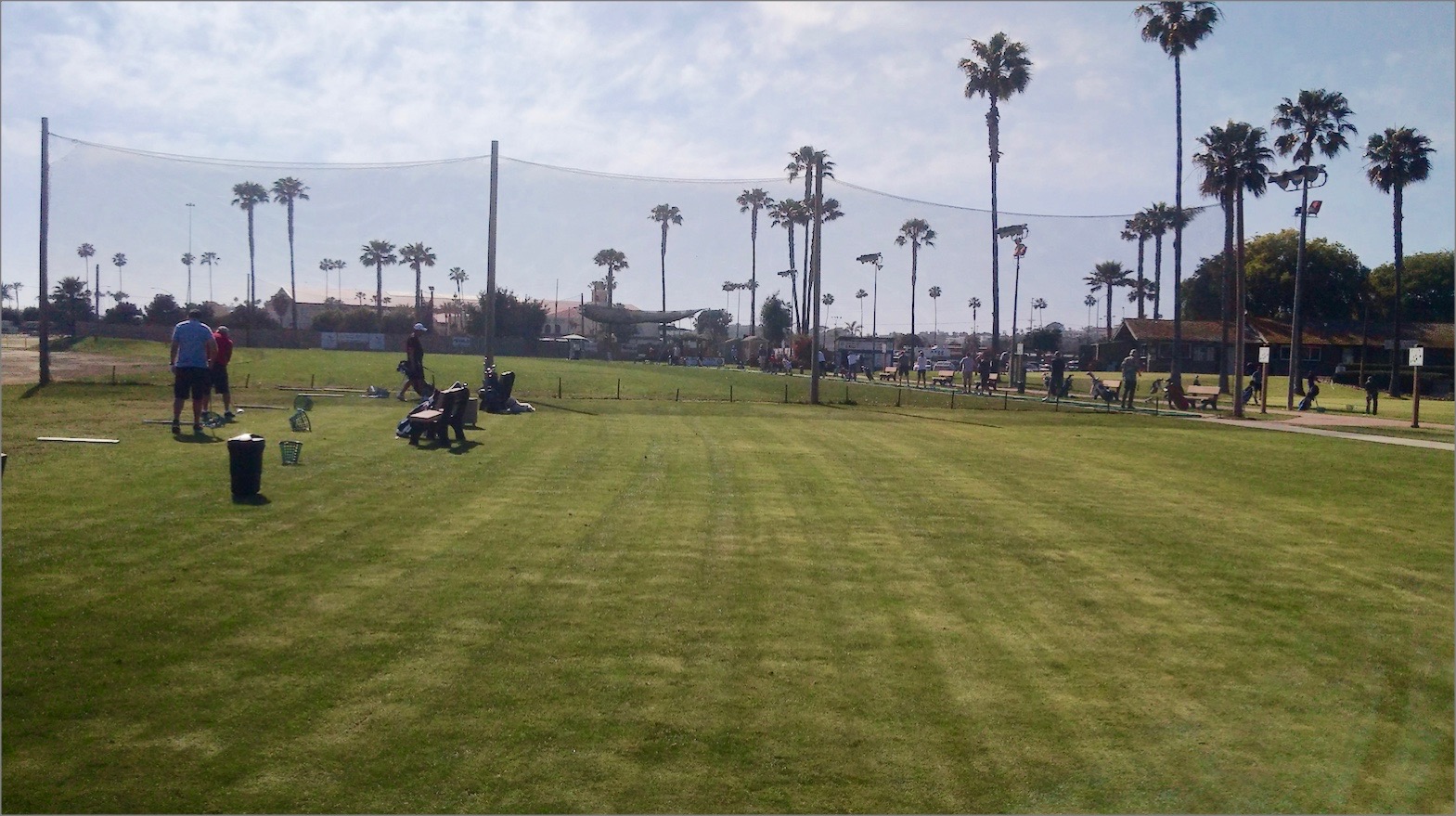
I usually leave my bag right in the center of the practice facility
It goes faster than a normal round, and sometimes I’ll leave the bag at the middle of the practice facility and just grab a new club and put the previous one back in on my way by.
So how did Scoring Practice work for me? The reason I came up with this idea was that every time I got to the fourth hole at a local course, it would typically be the first 7 iron of the round (or week). Routinely, I would pull this shot into the hazard left, top it into the stream in front of the tee and get a big score. It occurred to me that my 7-iron practice of hitting 30 in a row was completely different than having one chance on the par-3 fourth.
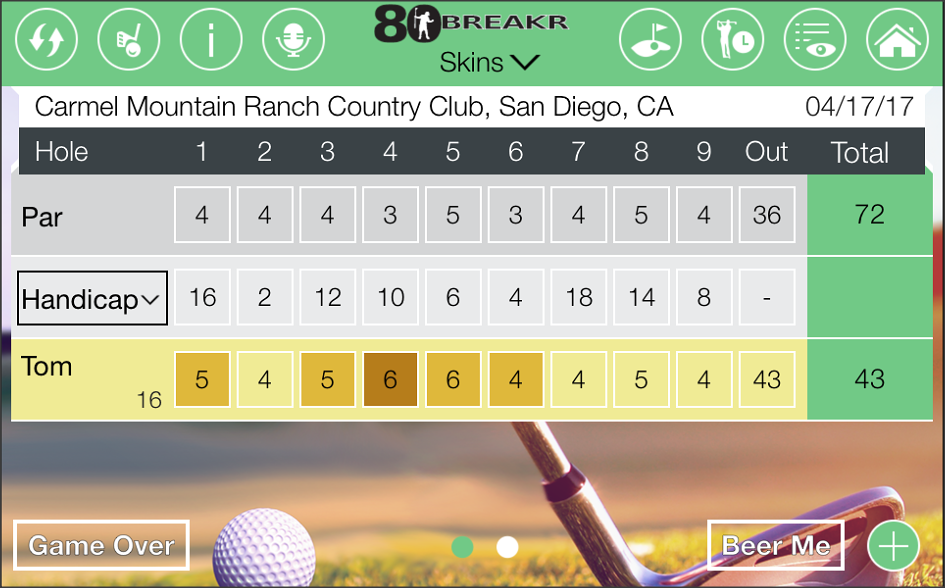
First Scoring Practice Matched On-Course Problem!
Shown above is an imaginary round played using Scoring Practice for the same course. Identical results! I knew I was on to something. I did scoring practice for this course two more days in a row, and then on the third day I actually played the first few holes late in the afternoon. I hit a decent 7 iron on the third hole! Why does this work? From this Golf Digest article, apparently there’s science behind the idea of “random” practice. Although this isn’t exactly random, it does focus your brain on changing shots at the same pace as on the golf course.
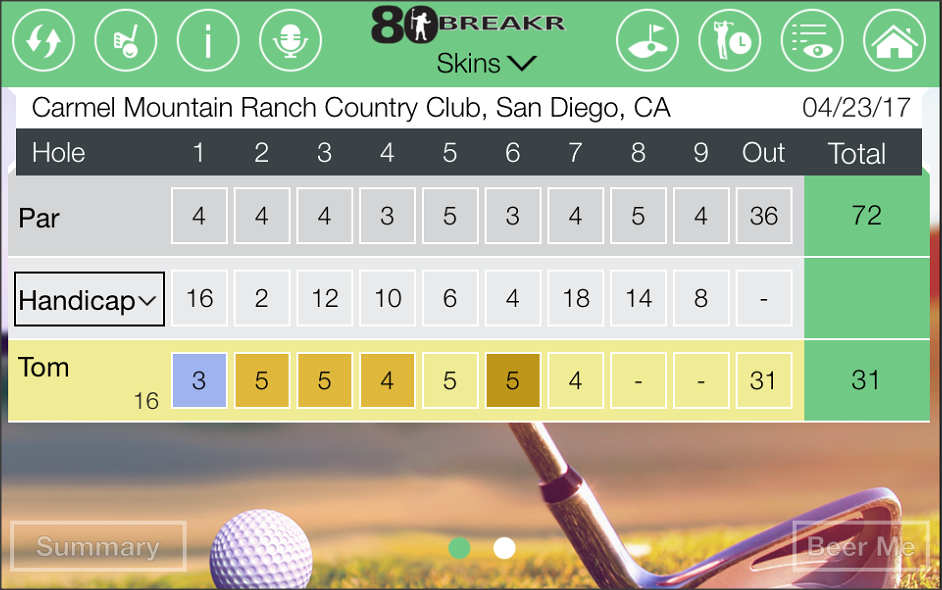
After just three days using Scoring Practice on my local course, my “Nemesis ” hole was conquered!
What are the other benefits I found from Scoring Practice? Very interesting things started to happen while practicing. All of a sudden, I was facing “real” situations, like a 10-foot birdie putt at the range with only one chance to make it. I was facing what felt like a real 4-foot, par-saving putt, and trying to recover from a poor bump and run. I realized I was actually practicing scoring situations, practicing my pre-shot routine, practicing reading putts, practicing alignment, and actually making a difference in my game!



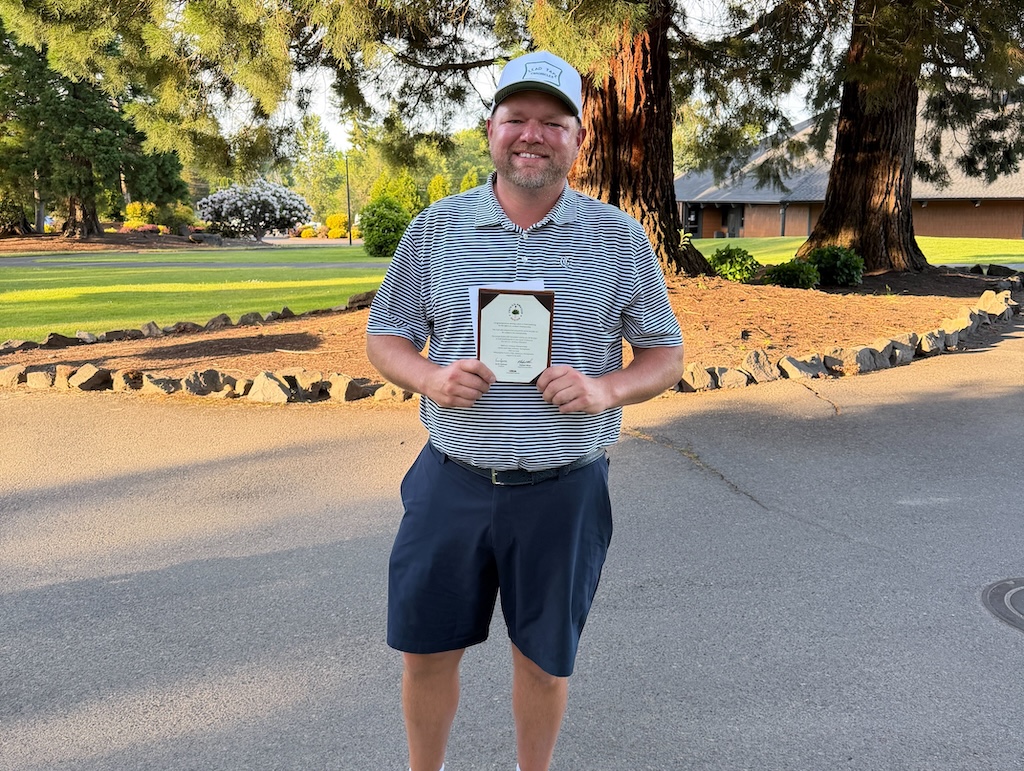
This past Monday, I played in the U.S. Amateur local qualifier at Rock Creek Country Club in Portland, Oregon. A full tee sheet from 7:30 a.m. to 1:55 p.m., the top 11 scores would make it to the U.S. Amateur final qualifying.
I teed off at 10:48 a.m.. With the 7:30 am tee time, you can get a feel for the leaders’ pace, and they were off and running on the challenging setup at Rock Creek.
View this post on Instagram
Getting to the highlight of the round on the par five 17th, a drive up the left side and 212 yards left to the front hole location. I took out a 5-iron with plans of middle of the green. The ball ended up 8 feet left of the hole, pin high. A slight downhill putt dropped in for an eagle 3 on the 17th. With the cut line looking to be anywhere from -2 to even par. This was the boost I had been waiting for all day.
With making par from the trees on 18, it was time to wait for a potential playoff with a posted score of one under par 71.
Three hours later, it was playoff time. 8 players for 6 spots. I made par on the playoff hole, which was good enough to advance to the U.S. Amateur final qualifying in July. USGA qualifiers sure deliver on all of the emotions in golf!
Club Junkie
Building my 2026 gamer WITB: Ranking the contenders and new putter projects – Club Junkie Podcast

The annual What’s In The Bag build is underway, and on this episode of Club Junkie, Brian breaks down the clubs currently leading the race for a spot in his 2026 gamer setup. From drivers and fairway woods to irons, wedges, and shafts, he ranks the equipment that’s performing best and explains what’s separating the front runners from the rest of the field.
Brian also heads into the workshop to discuss several putter projects currently on the bench. From head options and shaft choices to build ideas and testing plans, he shares what he’s working on and which putters could become serious contenders for the bag this season.
If you’re a gear junkie who loves equipment testing, club building, and the never-ending pursuit of the perfect setup, this episode is for you.
Follow Club Junkie:
Instagram: @clubjunkiepod
TikTok: @clubjunkiepod
Threads: @clubjunkiepod
X: @ClubJunkiePod
Club Junkie
Tour Edge Exotics mini driver review + TaylorMade Spider ZT Max first look – Club Junkie

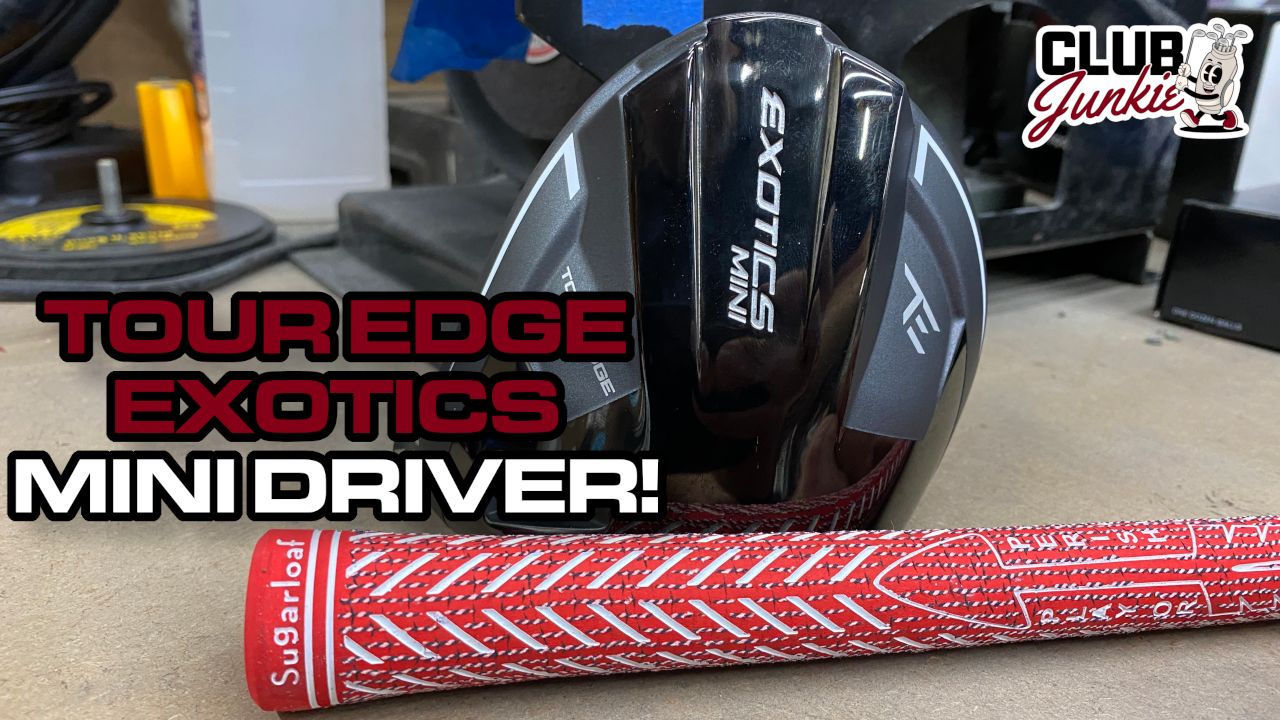
On this episode of Club Junkie, I put the new Tour Edge Exotics Mini Driver to the test and break down the performance, forgiveness, distance, and where it fits compared to a traditional driver or strong fairway wood. If you have been curious about adding a mini driver to the bag, this one is worth a look.
I also dive into the new TaylorMade Spider ZT Max putter that was recently spotted and discuss the growing zero torque putter trend. Plus, there is a closer look at the new Project X Titan Yellow shaft showing up on the PGA Tour and what makes it different from other profiles currently out there.

Justin Rose WITB 2026 (April): Full WITB breakdown with new McLaren irons

What’s the story behind Webb Simpson’s custom-stamped irons?

Memorial Tournament Tour Report: Rory McIlroy, Cameron Young switch up drivers, and more

Cadillac Championship Tour Report: Spieth’s sizable changes, McLaren Golf launches, and more

Russell Henley’s winning WITB: 2026 Charles Schwab Challenge

Kristoffer Reitan’s winning WITB: 2026 Truist Championship

Aaron Rai’s winning WITB: 2026 PGA Championship

J.T. Poston’s winning WITB: 2026 Memorial Tournament

Best irons 2026: Best irons overall, most forgiving irons, and more

Cameron Young’s winning WITB: 2026 Cadillac Championship


Bud Cauley WITB 2026 (June)
Bud Cauley had >14 clubs in his bag when photographed prior to the Memorial Tournament. Driver: Titleist GTS2 (8 degrees) Shaft: Fujikura...


Hannah Green WITB 2026 (June)
Driver: Titleist GTS3 (10 degrees, D4 SureFit setting) Shaft: Mitsubishi Chemical Diamana RB 53 S 3-wood: Titleist GT3 (15 degrees,...


Asterisk Talley WITB 2026 (June)
Driver: TaylorMade Qi4D (9 degrees) Shaft: Fujikura Ventus Blue 6 S 3-wood: TaylorMade Qi4D (16.5 degrees) Shaft: Fujikura Ventus Blue...


Brianna Do WITB 2026 (June)
Driver: Callaway Quantum Triple Diamond (9 degrees) Shaft: KBS PGW 3-wood: Callaway Elyte Titanium (15 degrees) Shaft: KBS PGW 5-wood:...
-
 Equipment6 days ago
Memorial Tournament Tour Report: Rory McIlroy, Cameron Young switch up drivers, and more
-
 News1 week ago
Russell Henley’s winning WITB: 2026 Charles Schwab Challenge
-
 Whats in the Bag3 days ago
J.T. Poston’s winning WITB: 2026 Memorial Tournament
-
 Equipment3 days ago
Best irons 2026: Best irons overall, most forgiving irons, and more
-

 Equipment1 week ago
Details on Jason Day’s latest prototype Avoda iron setup
-
 Equipment3 weeks ago
CJ Cup Byron Nelson Tour Report: Koepka and Kim’s newest putters finally get hot
-

 News2 weeks ago
Charles Schwab Challenge Tour Report: MacIntyre, Åberg and Spaun all switch putters, TaylorMade launches new Spider
-
 Equipment2 weeks ago
Details on J.J. Spaun’s surprise putter switch


ooffa
Jul 2, 2017 at 4:23 pm
Everything in your post is wrong.
Jack
Jun 30, 2017 at 10:01 am
Playing on a simulator with movable platform and rough and a cheap sand bunker doesn’t really help though and that’s even a step bone this. It’s still too easy.
T
Jun 29, 2017 at 3:07 am
As a teacher, I get asked this all the time: “How does beating balls on a flat range help me when I get out to a real course with slopes and hills and I have to hit those shots but I have no idea how to?”
Yes. The only real way to practice those full swing shots from tricky sloped lies, also with tricky thick lies on a slope, is go out there and practice those on the course. Until you conquer those tricky shots, it’s hard to break 80, unless you can find the fairway with your drive 9 out of 10 times on to safe, relatively flat areas on the fairway.
Either that, or, you must get your arm and hand strengths up. Be ready to brace for hard hits and still be able to keep the face square. That’s more important than just going through the bag. How hard can you grip the club and how hard can you beat the ball with the shortest swings and still hit it really square and with enough speed? Henry Cotton would have told you it’s more important to beat the tyre and learn to hang onto the club that hard and develop strength before you start to beat balls meaninglessly. Most people can’t control their clubhead because they’re too weak to hold on through the tough impacts.
Denny Jones
Jun 28, 2017 at 3:29 pm
Another nice way to practice if the putting and or chipping green are in close proximity. Several courses I play have two separate greens, one for putting and another for chipping. This approach would not be practical at theses courses.
I was interested but found that this is “click-bait” for iOS.
Tom
Jun 28, 2017 at 2:53 pm
I try to do the best I can with the technique that’s burned into my neuro-muscular system for the last few decades. I’m not talking about taking a change in my swing from the range to the course in a few hours, just a mental tune-up to help me better face the on-course challenge. YMMV.
Mat
Jun 28, 2017 at 2:03 pm
I found this to be an interesting read and I am do something similar in my practice sessions.
I would be very interested in knowing how you created your app as I have a similar Idea that I have been toying with for a while that makes practice fun and challenging.
Regards.
Edge of Lean
Jun 28, 2017 at 1:08 pm
Retired IndE here. Agree, this is logical advice, and very practical and useful. Good article. Why so many haters?
Daniel
Jun 28, 2017 at 12:00 pm
Good concept for sure. The best practice then is to play a round or 9 holes as if it’s a real comp game? There’s a time and place for practicing your swing and other techniques at the range and practice facilities. Only one place to practice golf… the golf course.
The dude
Jun 28, 2017 at 10:36 am
Bingo…
Radim Pavlicek
Jun 28, 2017 at 2:07 am
Nice read. I downloaded the app from iTunes Store and will try it.
Speedy
Jun 27, 2017 at 6:14 pm
Basics and good tempo, that’s all you need.
Adam
Jun 27, 2017 at 5:53 pm
I’ve been practicing this way after my old swing coach suggested it maybe 12 years ago. Not every time, as there are certainly practice sessions where I’ll work on one thing/club exhaustively.
When “game practicing”, I’m not as thorough as you are, but I will go through holes 1-18 and hit every shot that I would outside of putts and bunkers. (Shot from the rough are “cheated”, as well)
Funny enough, I do this routinely at Torrey and use basically the same lines that you illustrated in the downrange shot in the article.
Strongly recommend this method as one for the last practice day before a tournament/outing/serious round. At that point in time, you want to get your mind acclimated to playing golf, not fixing your swing.
Bishop
Jun 27, 2017 at 5:08 pm
This is a great suggestion! I actually already use Random Practice, to be able to better “Gamify” while on the range. However, the addition of keeping score though writing my shots, and then the implementation of using the chipping and putting green, as well as the walk to and from would really help further.
Thanks!