
Opinion & Analysis
A Quick Nine: Q&A with Robert Trent Jones Jr.

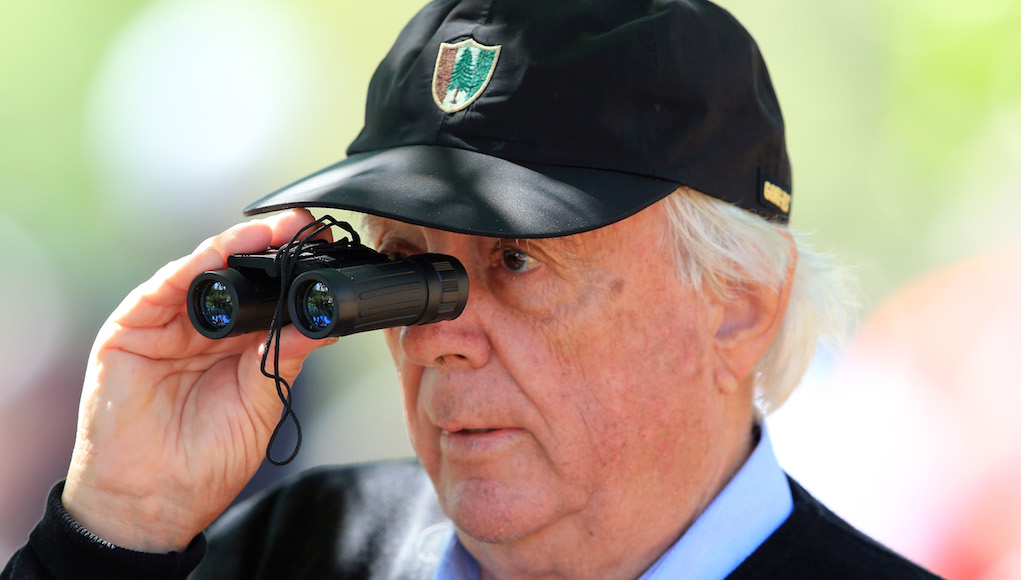
If there is a Royal Family of Golf Architecture, it is surely the Jones clan. Robert Trent Jones Jr. has amassed a portfolio that is a match for any designer in history, including his Hall of Fame father and brother. He is a living history of modern golf with the span of his lifetime ranging from Bobby Jones to Rory McIlroy. Artist, scholar, poet, gentleman… RTJ2 is all of these and more.
In this edition of A Quick Nine, Jones talks about his special relationship with the Masters, the 2015 U.S. Open at Chambers Bay, and his no-holds-barred take on the golf courses of Jack Nicklaus and other players-turned-designer. (Note: this Q&A has been lightly edited for brevity and style).
WRX: It’s Masters Week. Why is it so special? And will you be there?
Robert Trent Jones, Jr.: Would you miss church on Easter Sunday? I’ll be there. For me it’s a special homecoming with friends from all over the golf world. I’ve been there with my dad, and I have memories of him and my mother and my family in the in the 60’s and 70’s when we all went together. Its just the place to be; it’s a great gathering, like going to Scarborough Fair…it’s the celebration of spring. It’s like the Easter of the golf world, and very often the tournament takes place on Easter weekend. We’re finally out of our homes in the Northern parts of our country and when the Masters is televised, it’s a celebration of Spring and our great game.
WRX: How did your father Robert Trent Jones make Augusta National what it is today?
RTJ2: Well, Bobby Jones together with Alister MacKenzie, the great golf architect of the 20s and early 30s, designed the original Augusta National Golf Course in what was a lovely, heavily rolling field with very strong contours, and down along Rae’s Creek there were lots of lovely trees there since it was tree nursery at one time. The tournament was played starting in the early 30s, but some things changed in the game. Gene Sarazen invented the sand wedge, (he also holed out on No. 15 in 1935 for double eagle, the “Shot Heard ‘Round the World”) and so these fierce beautiful bunkers that MacKenzie built had less significance and were not as fearsome. After World War II there had been a long hiatus in advance of the game; from the beginning of the Great Depression through World War II nothing much happened in terms of course design… in fact many courses went out of business. So when Augusta National came back to its tournament Bobby Jones invited my father, who was then a young golf architect of some note, to help.
My father said, “Look, you have a lot of bunkers but they are no longer fearsome.” So he said, “Let’s put ponds in so that if your ball lands in a pond it’s clear that it’s going to be a hazard, lost ball, lost stroke.” So Bobby Jones agreed to that and he put the pond in on No. 11 on the left hand side of the green. No. 15 already had a small pond so one that was enlarged, and at No. 16 he completely changed the hole. It’s now one of the most beautiful holes in golf; it used to run perpendicular to the creek and now you hit toward the pond. So that’s what he did; he added strength back to the course and added beauty.
Bobby Jones used to say, “When your ball ends up in one of our bunkers at Augusta it’s like getting into a car crash. But if you go into one of the ponds it’s more like an airplane crash because you can recover from a car crash but never from an airplane crash.” When you think about the Masters, they say the tournament really starts on the back nine on Sunday, meaning that you have to deal with all of those hazards; it’s kind of an obstacle course and when you are fighting for the championship anything can happen. And that’s the beauty and the drama that we always love to watch. My father did that.
WRX: Do you think the tournament is diminished without Tiger Woods being there?
RTJ2: Well, no because it’s an invitational tournament unlike the [U.S.] Open where all participants must qualify. Tiger is always invited to play as a former champion as was Hogan, Snead, Palmer and Nicklaus. But at some point they say that they can’t make it for whatever reason that they have and in this case Tiger’s demise has been somewhat unexpected and much earlier in his career than the others due to his back surgery and all sorts of other physical ailments. It’s sad and we’ll miss him, but there will be new champions to usher in and we’ll cheer them. The competition will be tight and it will be interesting, but we’ll have many more glories to enjoy. There’s a lot going on in the golf world and the younger players are shooting phenomenal numbers now. I think I’ve seen more 60s and 59s than I ever expected. But the architects are on defense and you have to think of ways to defeat (the players), but also make sure that the game is playable for everybody else … we have to make more golf courses that are enjoyable for the tourists rather than all of the public and private courses that try to mimic Augusta National, because it’s too expensive to maintain and too hard to play. So the architecture world should want to take note of these great cathedrals of golf, but not necessarily copy them.
WRX: You have described Chambers Bay (site of the 2015 U.S. Open) as a “laboratory on how to protect par against the modern player.” Did you expect the course to generate such controversy? And are you tired of talking about it?
RTJ2: Well, I never get tired of talking about Chambers Bay! No, I didn’t expect the controversy to get to the crescendo that it did during the championship itself, but I don’t think it had to do with the design; I think it had to do with the conditioning of the course in that particular week. It was designed to play very long, very wide open, no vertical hazards like Augusta (meaning no trees) and no horizontal hazards like Augusta (meaning no water), none at all. So how do we defend against the greatest players in the world during an Open championship? Well, we have wide open, fast running contours. Even the tees were undulating … the fairways had countours, and of course the greens had contours and the whole thing is covered in fescue grasses. Fescue is a very interesting grass; it’s kind of slippery and it’s a grass that comes from Northern Europe where links courses are predominant. It’s different that what the players normally see on tour, where they can throw darts into these bent grass greens were the ball sticks when it lands. At Chambers the name of the game isn’t how far you can hit it, it’s how far you hit it and then control it because it could roll on the ground for prodigious distances and roll into a bunker or a bad lie or an awkward angle for the approach shot. And the same thing was true on the greens. The greens were like pool tables; you could use ‘cushions’ to bank a shot off.
It’s a different sort of game. It’s not target or artillery golf like you see at Augusta National, and these player aren’t used to that and we wanted to get into their minds. If we are in their minds, we are in their backswing and that’s what happened. The other good thing about Chambers Bay is that it’s a public course owned by the community. At the end of the day the championship has come and gone, but people are playing there every day and so it has to be a fun golf course, so the width and the lack of hazards make it a fun experience if you play it from the forward tees. It’s a hard thing to do, to be all things to all people, but I think that but I think we achieved that. The hunt on Sunday afternoon in 2015 was like the hunt at a Masters. There were six people who came to the 10th tee with a chance to win the championship and we you know the drama that ensued. That’s the success of a championship course; a national championship where the players really hit their stride at the end of the tournament.
WRX: What is your favorite golf course?
RTJ2: I’ve been asked that many times and my answer is always, “The next one I either play or design” (laughs). When you are involved in a project and you’re thinking about it all the time and all the details of it … you get excited. And when you’re playing a golf course, it captures your imagination. If you are a skilled shot maker it gives you so many options and choices, then you are engaged with the course. For me, the so-called “Golden Era” of golf was a wonderful time. It was also the same time that the predominant cars were Duesenbergs or Model T’s; and we’re now in the Tesla, Maserati and Porsche era. A lot of things have changed in car world, and they have in the golf world too over a 100-year period. I think we are in our own new Golden Era, maybe a Platinum Era of golf architecture. Many people are doing wonderful golf courses here and there. What I get concerned about is that we’re also in an era where so many people think they are course designers — that anybody can hire anybody and they’ll get a good golf course — and that’s not true. You have to pay a lot of time and attention to each project and for the owners, they have to be in tune and engaged and hopefully they love golfers and love the game.
WRX: There are many former great players who became course designers. Do you think there is one of them that can be called a superior golf course architect?
RTJ2: There are very few, and the most honest ones among them admit that. You think of Bobby Jones, the great player working with Mackenzie and then my father. I think you get the best courses from a collaboration, a Yin and Yang where the designer has creativity and an understanding of the game. Because they are proficient players themselves, they will propose a concept and then the expert player such as Bobby Jones hits shots into a shaped green and says, “Hey, can we move that bunker a little bit farther right, I need a little more entrance.” That’s what results in a fine-tuned creation over time.
Even after the course is built and finished, it can be remodeled or adjusted to change the playing characteristics, but most players are about offense. You wouldn’t ask Barry Bonds to be a hitting coach for a pitcher; the pitcher has different skills so it’s not going to translate. That’s true in golf architecture, too. Players tend to be all about attack and score, and golf course architects tend to be more like goalies on soccer or hockey. We are on defense and the players are trying to beat us to the net. But we ultimately want them to use their skill and creativity to score. Are there some players who have made the transition? There are some (former PGA Tour great) Mike Souchak was one, but it’s rare. Those that I think of that have done well have paired with other good golf architects, like [Ben] Crenshaw and [Bill] Coore. I paired with Tom Watson and Sandy Tatum for Spanish Bay. Those are great collaborations. Sometimes they come together for a one special course at a specific location like Pebble Beach. Other time, they make an ongoing business out of the collaboration. But Jack Nicklaus, and he’s a personal friend of mine, he changed golf architecture into big business. It certainly helped the poor struggling artist like me get a little higher fee out of it, but it also became a little bit like a Four Seasons Hotel. You know that when you go there you are going to get a perfect pillow, the colors are going to be pleasant and so on. There’s a certain predictability in the work.
If you’ve played one Jack Nicklaus course you’ve probably played many of them in the sense that he favors kind of small greens, small targets, a little bailout on the right because he hit high fades, and so forth. That’s not to say that they weren’t proficient; they were very well built and he had a good team that helped him. But he came on the scene and other golf professionals tried to copy him, even the great ones like Arnold Palmer. And you’re not going to hear too much about great Arnold Palmer golf courses or Gary Player golf courses. They’re OK, but they’re not in the nature of high art, such as a Monet or a Rembrandt.
WRX: Isn’t some of that on the owners who play a Nicklaus course in France and want to build one in Venezuela to be just like it?
RTJ2: Yes, some of that is on the owners who want what we call “production” golf architecture. Jack Nicklaus had a great team of people who are very busy because there’s only one Jack Nicklaus, and he and his team would work hard in Florida and they would send plans from Florida to South Korea. Well, Florida is flat and South Korea is mountainous, so it doesn’t always fit the landscape. That’s “production” design; it’s not necessarily out of the earth, it’s imposed on the earth. I think the best golf courses are drawn out of the earth. Now, we are in the age of naturalism where everything is about keeping it natural. When you have great land, especially great land that meets the sea, of course you’re going to get excited for the visual. And if you have sand [as a base] that’s even better because you can grow fescue grasses and the sand allows for perfect draining that leads to a firm playing surface. But those kinds of sites are hard to come by, and when you have them it should be collaboration between a loving owner and a very skillful architect and perhaps a player or even a journalist to serve as a critic. At the end of the day, the composition has to hold together like music, more like jazz music because you can riff a little bit and it still holds together.
WRX: Name the three other players in your all-time dream foursome?
RTJ2: Wow, I’ve never been asked that question. Id like to play with people who are sociable. Skilled players like Hogan, they’re pretty quiet. He didn’t talk much other than, “You’re away” (laughs). I have played a lot of golf with Tom Watson, who I find to be very intellectual and fun to play with and a great competitor. He has the eyes of an eagle. He can see the line of a put from way across the green and it was always amazing to me how many long putts he made. He would be in the group. If could get into the time machine, I’d like to play with Bobby Jones because I have a similar name and because he’s so lionized not only for his skill as a great player but for Augusta and working with my Dad. And I would like to play with A.W. Tillinghast because he’s my favorite architect. A lot of people don’t know that after (architect George) Crump died while doing his Pine Valley creation, Tillinghast came and helped finish those holes that weren’t yet finished, the four holes that were left to be built. I grew up on Tillinghast-type courses and I’m a member of one now, San Francisco Golf Club. So that’s my foursome. I’m not sure they’d want to play with me because I’m not as good as them but I sure would enjoy it (laughs)!
WRX: If you were the King of Golf for a day, what would you do?
RTJ2: The first change would be to simplify the rules of golf, which the USGA and the R&A are doing, so that the rulebook doesn’t look like a legal treatise. The rules are written for competition, and trying to cover every possible happening in golf is impossible. So I’d like to simplify the rules and speed up the game. I’m not personally in favor of bifurcation; different rues for pros and amateurs. I’m a traditionalist in that sense. That’s the way it’s been for a long long time. You have to understand that the professional tour is like an elite labor union. They are paid to do what they do and they want definitive rules because there’s a lot of money at stake. And they should know the rules; they are in fact professionals and they shouldn’t make mistakes like what Dustin Johnson made at the PGA Championship at Whistling Straits or the thing that just happened with Lexi Thompson. But for minor situations, they should just play on. I remember Harry Bradshaw, he found his ball in the 1948 British Open and it was in part of a broken whiskey bottle and he just played it, glass and all. That’s the nature of the game…hit it, go find it and hit it again. If you just do that you can get around a course in 3-3.5 hours. But if you look over every shot and keep thinking about the rules, it’s going to add another hour and it’s slower for everyone. Maybe we can get people to play faster if you give them a time card when they go out and if they finish in 3.5 hours they get a free drink at the bar…and if they finish in four, maybe some peanuts.
I’d also like to see courses be a little more “rough and ready,” less perfectly maintained so that the cost of maintenance would go down, which would make the cost of playing thee game go down. The impact of fertilizers and the like would be less impactful. And water would be conserved, all of which we did at Chambers Bay. Frugal, fun, interesting, challenging, but not overly hard to play. It should feel like you can’t wait to get to the next tee box so you can try your skill and luck again. Not overwhelming, and not underwhelming. From the architectural sense, the suit should fit the body it’s cut for. And in the game itself, I think the pros take too much time preparing for a shot and that translates to the youth. And finally, we want to see more caddy programs. Youth On Course is a program initiated by the Northern California Golf Association where they pay clubs to let kids come out after school and play their course when there’s nobody on their private course. That’s very important for the future of the game. We gotta get them away from their cellphones and PlayStations and enjoying themselves on the course, and the only way to do that is to make it accessible because kids have the time but they don’t have the money.
WRX: At the 19th Hole: Beer, Wine, Whiskey or a Martini?
RTJ2: All of the above, but not all at once (laughs)! No, I prefer wine so for me it would be a buttery Chardonnay, a Malbec or a Pinot Noir. I guess it’s because I live in wine country in California. But what I really enjoy is the camaraderie and talking over the round afterwards with my fellow players.
WRX: Would you rather win an Oscar, a Nobel, the Lottery or the Grand Slam?
RTJ2: You can drop the last one because I believe money is overrated. Many rich people that I know are unhappy people and sadly money doesn’t solve their pursuit of happiness. But all of the rest are worthy, extraordinary accomplishments by well-deserving recipients. For me personally, I would prefer a Nobel prize. If I had done something that advanced humanity — or something in the science arena, like say discovering how we cure poa annua from overcoming fescue, or in the negotiating area, like where we assisted Corazon Aquino to transfer power from Ferdinand Marcos in the Philippines so the people could enjoy peace in their country — well, that would be as important as any other accomplishment. And the fact is that I have worked on both of those things in my private life. So I think that Nobel Prize would be something that would be wonderful.



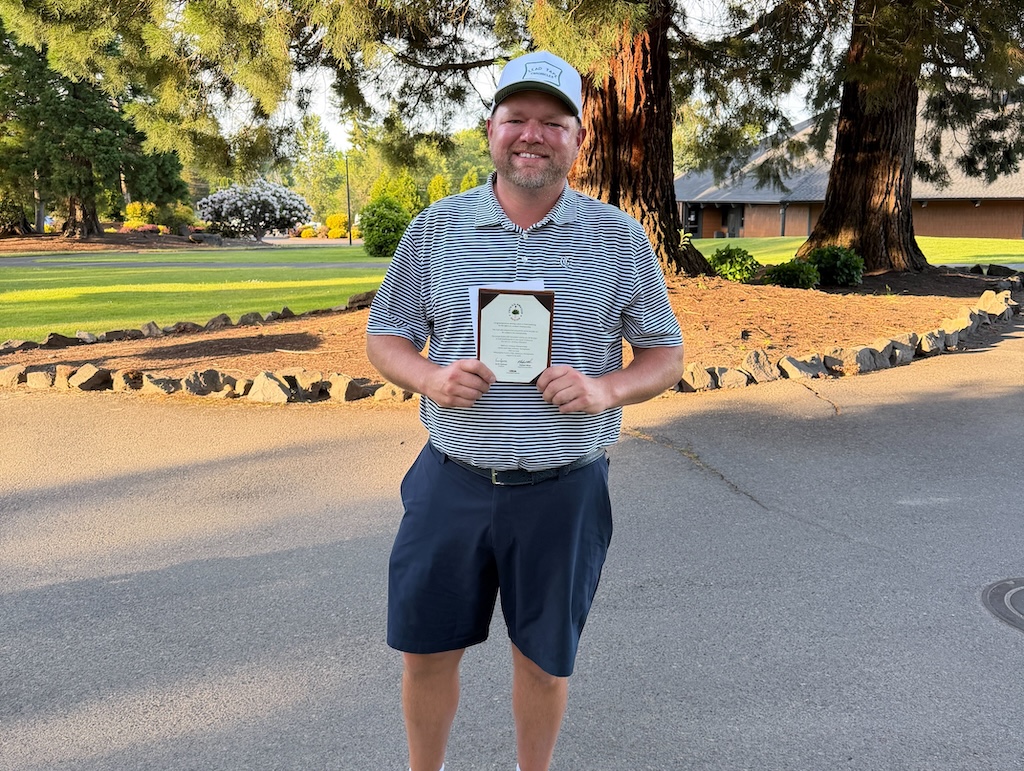
This past Monday, I played in the U.S. Amateur local qualifier at Rock Creek Country Club in Portland, Oregon. A full tee sheet from 7:30 a.m. to 1:55 p.m., the top 11 scores would make it to the U.S. Amateur final qualifying.
I teed off at 10:48 a.m.. With the 7:30 am tee time, you can get a feel for the leaders’ pace, and they were off and running on the challenging setup at Rock Creek.
View this post on Instagram
Getting to the highlight of the round on the par five 17th, a drive up the left side and 212 yards left to the front hole location. I took out a 5-iron with plans of middle of the green. The ball ended up 8 feet left of the hole, pin high. A slight downhill putt dropped in for an eagle 3 on the 17th. With the cut line looking to be anywhere from -2 to even par. This was the boost I had been waiting for all day.
With making par from the trees on 18, it was time to wait for a potential playoff with a posted score of one under par 71.
Three hours later, it was playoff time. 8 players for 6 spots. I made par on the playoff hole, which was good enough to advance to the U.S. Amateur final qualifying in July. USGA qualifiers sure deliver on all of the emotions in golf!
Club Junkie
Building my 2026 gamer WITB: Ranking the contenders and new putter projects – Club Junkie Podcast


The annual What’s In The Bag build is underway, and on this episode of Club Junkie, Brian breaks down the clubs currently leading the race for a spot in his 2026 gamer setup. From drivers and fairway woods to irons, wedges, and shafts, he ranks the equipment that’s performing best and explains what’s separating the front runners from the rest of the field.
Brian also heads into the workshop to discuss several putter projects currently on the bench. From head options and shaft choices to build ideas and testing plans, he shares what he’s working on and which putters could become serious contenders for the bag this season.
If you’re a gear junkie who loves equipment testing, club building, and the never-ending pursuit of the perfect setup, this episode is for you.
Follow Club Junkie:
Instagram: @clubjunkiepod
TikTok: @clubjunkiepod
Threads: @clubjunkiepod
X: @ClubJunkiePod
Club Junkie
Tour Edge Exotics mini driver review + TaylorMade Spider ZT Max first look – Club Junkie


On this episode of Club Junkie, I put the new Tour Edge Exotics Mini Driver to the test and break down the performance, forgiveness, distance, and where it fits compared to a traditional driver or strong fairway wood. If you have been curious about adding a mini driver to the bag, this one is worth a look.
I also dive into the new TaylorMade Spider ZT Max putter that was recently spotted and discuss the growing zero torque putter trend. Plus, there is a closer look at the new Project X Titan Yellow shaft showing up on the PGA Tour and what makes it different from other profiles currently out there.

Justin Rose WITB 2026 (April): Full WITB breakdown with new McLaren irons

What’s the story behind Webb Simpson’s custom-stamped irons?

Memorial Tournament Tour Report: Rory McIlroy, Cameron Young switch up drivers, and more

Cadillac Championship Tour Report: Spieth’s sizable changes, McLaren Golf launches, and more

Russell Henley’s winning WITB: 2026 Charles Schwab Challenge

Kristoffer Reitan’s winning WITB: 2026 Truist Championship

Best irons 2026: Best irons overall, most forgiving irons, and more

J.T. Poston’s winning WITB: 2026 Memorial Tournament

Aaron Rai’s winning WITB: 2026 PGA Championship

Cameron Young’s winning WITB: 2026 Cadillac Championship


Bud Cauley WITB 2026 (June)
Bud Cauley had >14 clubs in his bag when photographed prior to the Memorial Tournament. Driver: Titleist GTS2 (8 degrees) Shaft: Fujikura...


Hannah Green WITB 2026 (June)
Driver: Titleist GTS3 (10 degrees, D4 SureFit setting) Shaft: Mitsubishi Chemical Diamana RB 53 S 3-wood: Titleist GT3 (15 degrees,...


Asterisk Talley WITB 2026 (June)
Driver: TaylorMade Qi4D (9 degrees) Shaft: Fujikura Ventus Blue 6 S 3-wood: TaylorMade Qi4D (16.5 degrees) Shaft: Fujikura Ventus Blue...


Brianna Do WITB 2026 (June)
Driver: Callaway Quantum Triple Diamond (9 degrees) Shaft: KBS PGW 3-wood: Callaway Elyte Titanium (15 degrees) Shaft: KBS PGW 5-wood:...
-
 Equipment6 days ago
Memorial Tournament Tour Report: Rory McIlroy, Cameron Young switch up drivers, and more
-
 News2 weeks ago
Russell Henley’s winning WITB: 2026 Charles Schwab Challenge
-
 Equipment3 days ago
Best irons 2026: Best irons overall, most forgiving irons, and more
-
 Whats in the Bag4 days ago
J.T. Poston’s winning WITB: 2026 Memorial Tournament
-

 Equipment1 week ago
Details on Jason Day’s latest prototype Avoda iron setup
-

 Equipment3 weeks ago
CJ Cup Byron Nelson Tour Report: Koepka and Kim’s newest putters finally get hot
-

 News2 weeks ago
Charles Schwab Challenge Tour Report: MacIntyre, Åberg and Spaun all switch putters, TaylorMade launches new Spider
-

 Equipment2 weeks ago
Details on J.J. Spaun’s surprise putter switch


Ron
Apr 13, 2017 at 10:49 pm
seems like these questions were more like softball, lob-it-over-the-plate style.
I’ve met RTJ in passing and he seems a bit “all about him”.
Golf channel did a piece on him and his brother around the 2015 US Open timeframe. here is a related article.
http://www.golf.com/tour-and-news/history-rees-jones-vs-robert-trent-jones-jr-feud
XLee2000
Apr 11, 2017 at 2:40 pm
Wow…very impressed by how well-spoken he is as well as how current he seems to be with things. Not a knock on his age…it’s just that I’ve seen older folks tend to stay within an intellectual bubble sometimes. I applaud his last answer btw regarding the Noble Prize…making the world a better place should always be the desired legacy of man.
Jack Nash
Apr 10, 2017 at 11:50 am
I posted on the Bubba appoligizing to the reporter page. I mentioned something about reporters not appoligizing about stupid questions they ask. Well, lookie here, we have one. RTJ2 is asked about Tiger Woods not being at the Tournament. This article is about the Jones family, their history, and course design. Why the question about Woods? This is exactly why I stated that in his piece Bubba needant appoligize.
DAniel
Apr 8, 2017 at 10:13 pm
Thoroughly enjoyed reading this article. More like this please.
Ronald Montesano
Apr 8, 2017 at 10:09 pm
I don’t think that the last Q/A makes sense. Other than that, very enjoyable interview. We love his Seneca Hickory Stick course here in western New York.